-
-
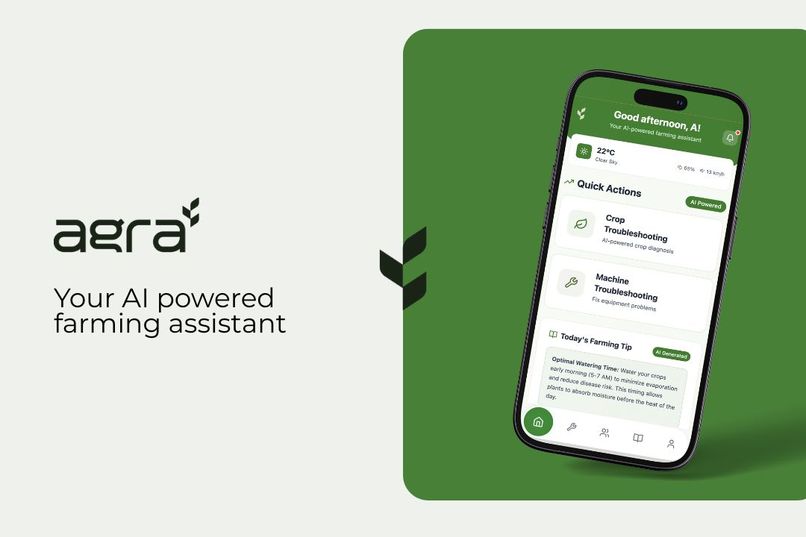
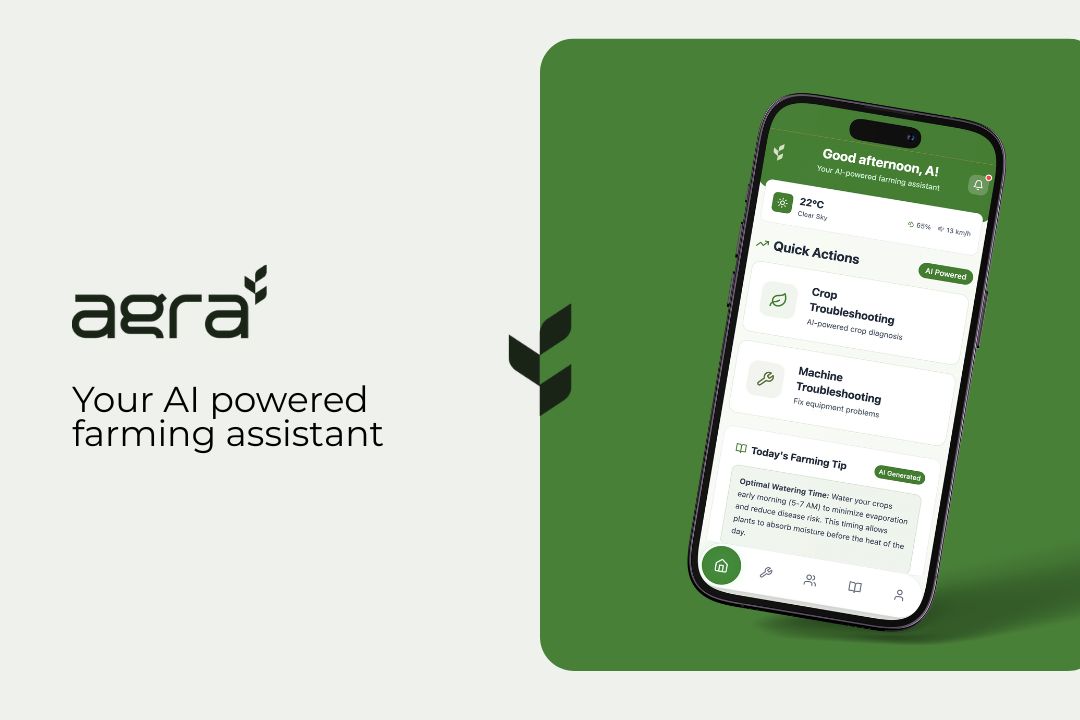
AI-powered assistant for diagnosing crop and machine issues, tracking farm activity, and getting personalized tips, all in one simple app.
Inspiration
We were inspired by the struggles of small-scale farmers who often lack access to affordable, expert advice. Many rely on outdated methods or guesswork when diagnosing crop issues, machine issues, or other on-field problems, which leads to lower yields and wasted resources. Hiring agricultural consultants is extremely expensive, often completely out of reach for smaller farms operating on tight margins. At the same time, AI and mobile technology are becoming more accessible than ever. We saw an opportunity to bridge that gap. AGRA was born from the belief that smart, effective farming tools should be accessible to everyone, regardless of farm size, location, or income. No consultants, no expensive or hardware but just simple, actionable help.
What it does
AGRA is an AI-powered assistant for small farmers. Users can instantly diagnose crop issues like diseases, pests, or nutrient deficiencies, and troubleshoot machine issues based on error codes or behavior. The platform then offers clear, step-by-step advice tailored to their specific problem. It also includes a community where farmers can ask questions and get feedback from peers, a local marketplace for renting farming equipment, and a logbook where farmers can record and track everything they do on their land. Everything is designed to be fast, simple, and accessible.
How we built it
We built AGRA entirely using Bolt.new, which allowed us to rapidly develop a responsive, mobile-first interface optimized for ease of use. We integrated GPT-4o via the OpenAI API to analyze crop issues and generate natural language diagnoses and solutions. For machine troubleshooting, we use GPT to interpret error codes and behavioral descriptions.
We also integrated the OpenWeather API to provide localized weather insights, helping farmers make better-informed decisions. Supabase handles user authentication, image storage, logbook entries, and community features. Our backend coordinates the flow between user inputs, APIs, and clean, structured responses.
In the near future, we plan to integrate Stripe to support monetization through premium subscriptions.
Challenges we ran into
One of the biggest challenges we faced was getting the image diagnosis feature to work. Despite spending countless hours on it, it's not functioning yet, and that became a major blocker. We’re still working on refining how the AI interprets photos to provide accurate, visual-based crop analysis.
Another major challenge was ensuring the AI could give helpful and context-aware advice based on written descriptions. We had to carefully guide the model to provide correct information for both machine troubleshooting (via error codes and behavioral clues) and crop-related issues.
It was also tricky to design a user interface that’s both intuitive and powerful, especially considering many of our users may have limited experience with digital tools. And finally, combining crop and machine diagnostics, a community board, a marketplace, and a logbook into one cohesive experience within the time limits of a hackathon pushed us to move fast, make tough decisions, and prioritize the most impactful features.
Accomplishments that we're proud of
We’re proud to have developed a fully functional prototype in three weeks. While the image recognition feature is still in progress, we built a solid foundation for AI-generated advice based on user input. Our platform includes a live interface with login, community discussions, a working equipment marketplace, and a personal logbook all designed for simplicity and real-world use.
The feedback we’ve received so far shows that this platform has real potential to make a difference in the lives of small farmers. We managed to bring together a wide range of features under one clean and accessible experience, and we're excited about where it can go next.
What we learned
Throughout the build, we learned how powerful AI can be when it’s focused on solving real problems. We gained hands-on experience integrating GPT-4o into a working application and saw firsthand the importance of user-centered design. We also learned how to build something that is both technically robust and impactful on a large scale. Most importantly, we were reminded that technology is at its best when it helps people who have historically been left behind.
What’s next for AGRA
Our first step is to launch an open beta so farmers can begin testing AGRA in real-world conditions. Based on their feedback, we’ll refine the platform, improve the AI responses, and prioritize the most impactful features.
A major priority is to fix and launch the image-based diagnosis feature, which is currently not working. This will involve training the AI on crop data to ensure accurate and useful visual analysis.
We also plan to partner with agricultural organizations and NGOs to pilot AGRA in farming communities, helping us gather deeper insights and validate its impact on the ground.
The community board will be expanded to support more peer-to-peer learning, and the marketplace will grow to include additional services and providers.
Lastly, we’ll develop offline mode support, Allowing farmers to make requests even without internet which will automatically process once they reconnect to WiFi.
Built With
- bolt.new
- html
- openai
- openweather
- react
- supabase
- tailwind
- typescript
- vite


Log in or sign up for Devpost to join the conversation.