-
-
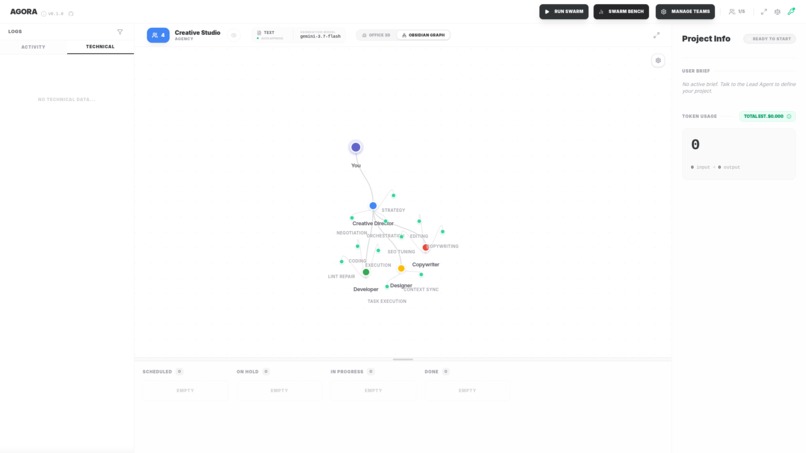
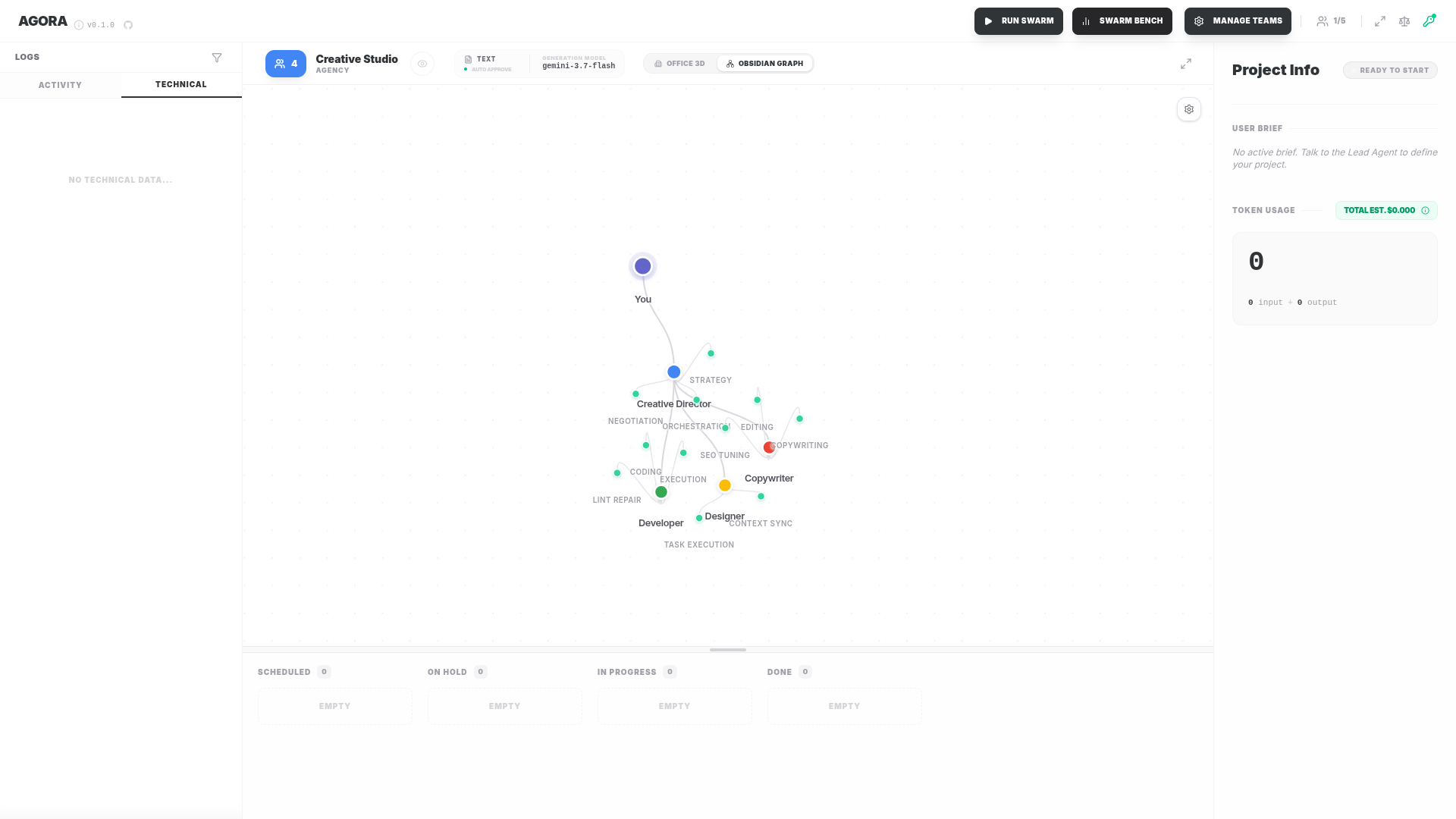
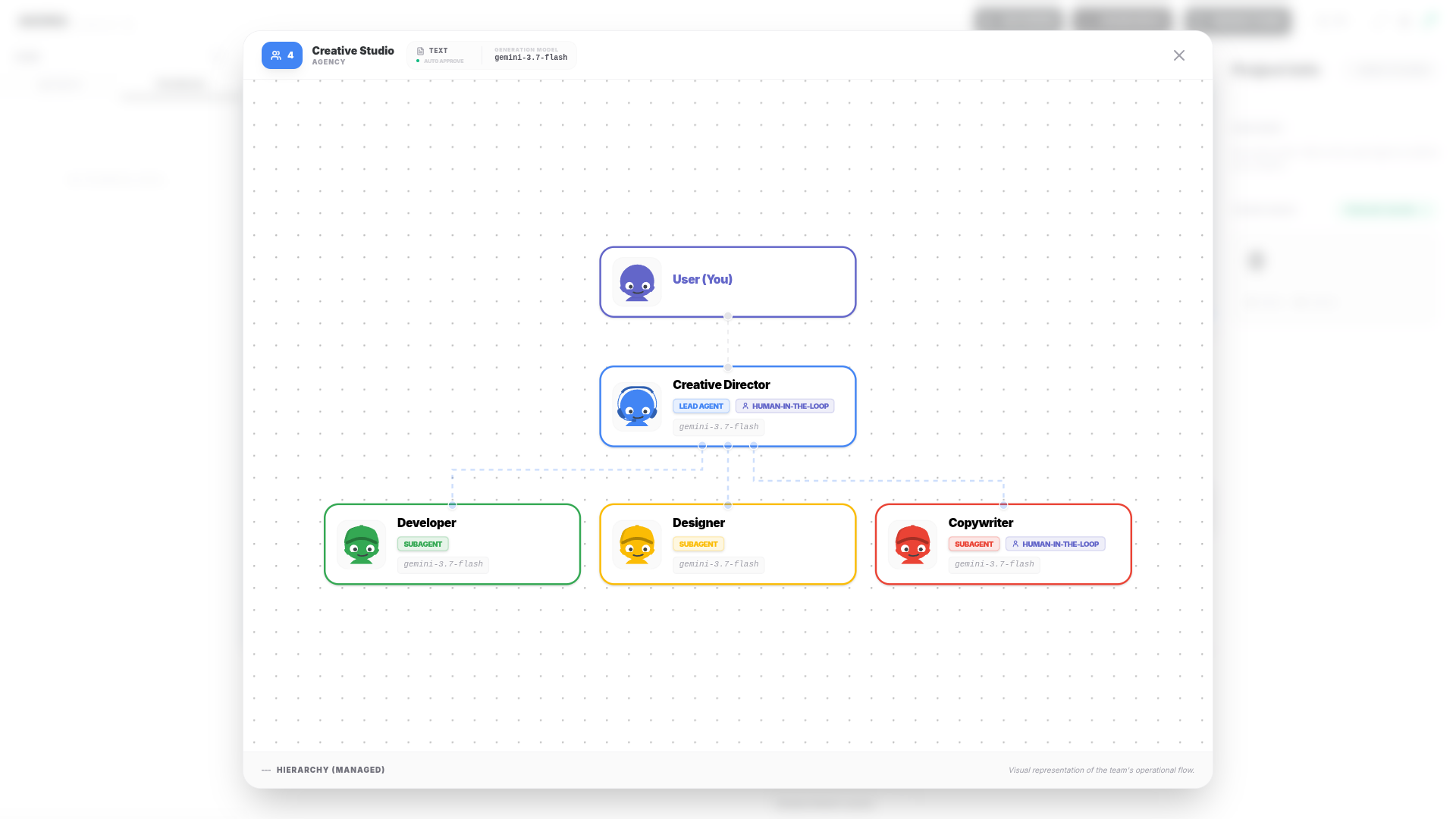
obsidian view if WebGPU is disabled
-
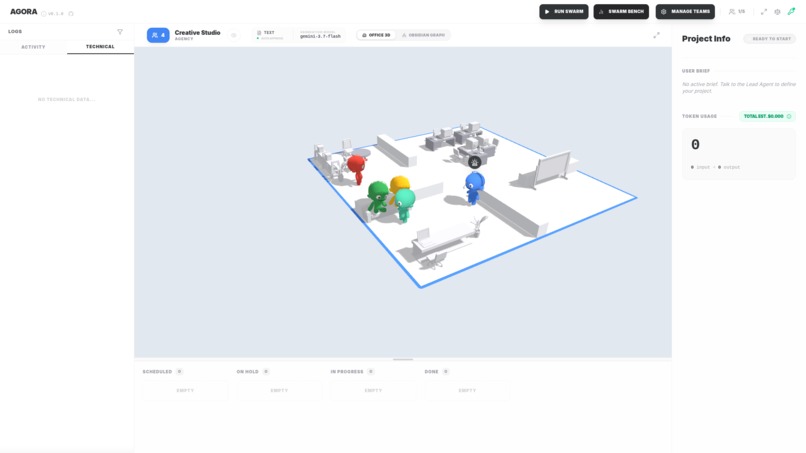
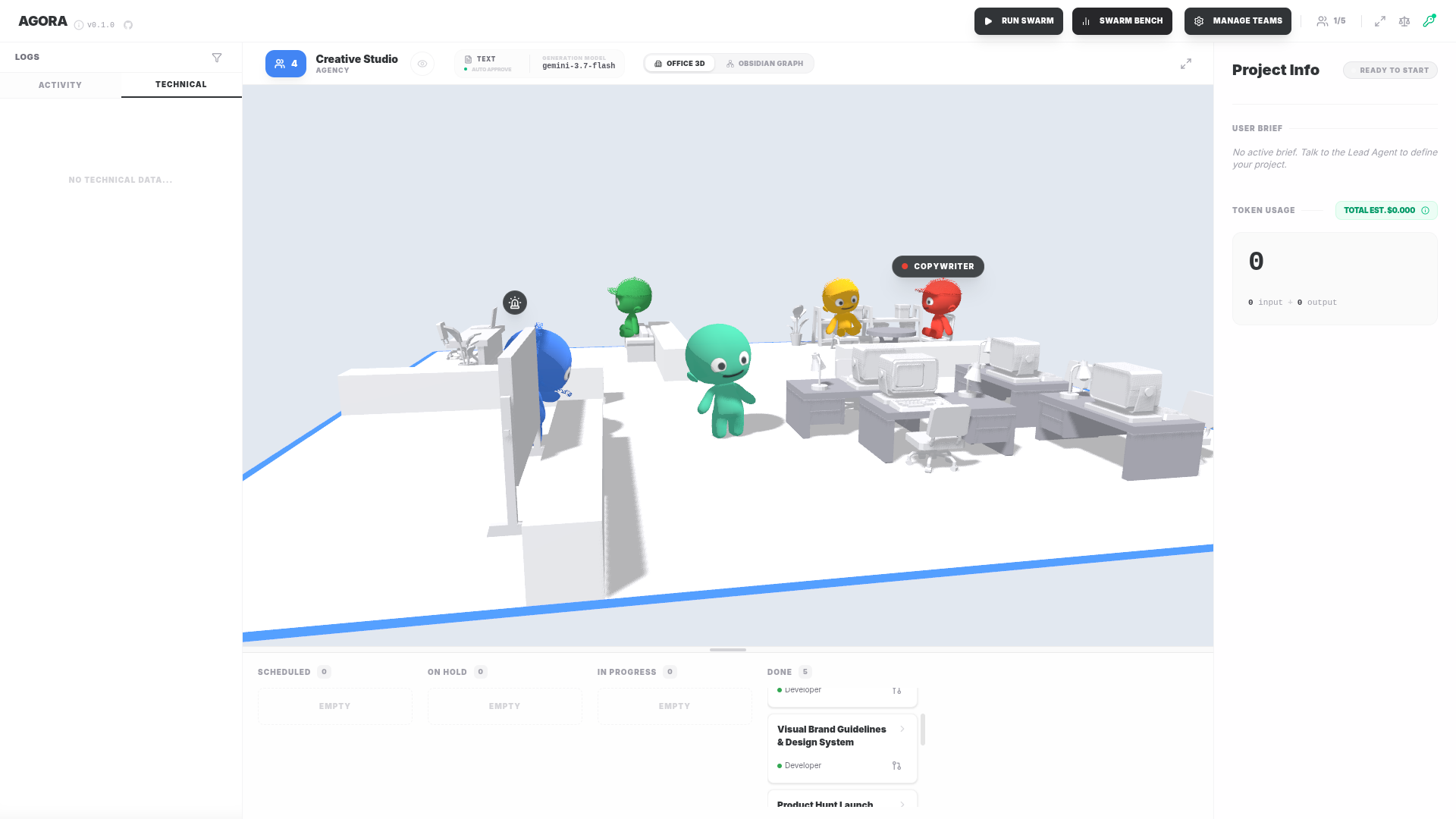
main ui
-
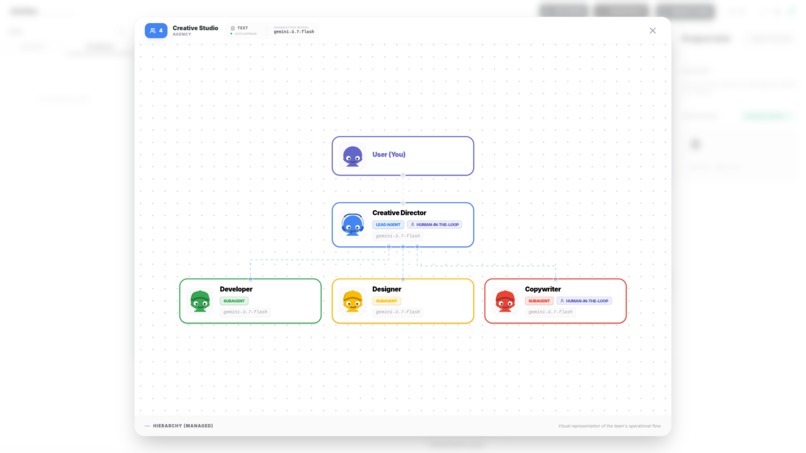
default agent orchastration
-
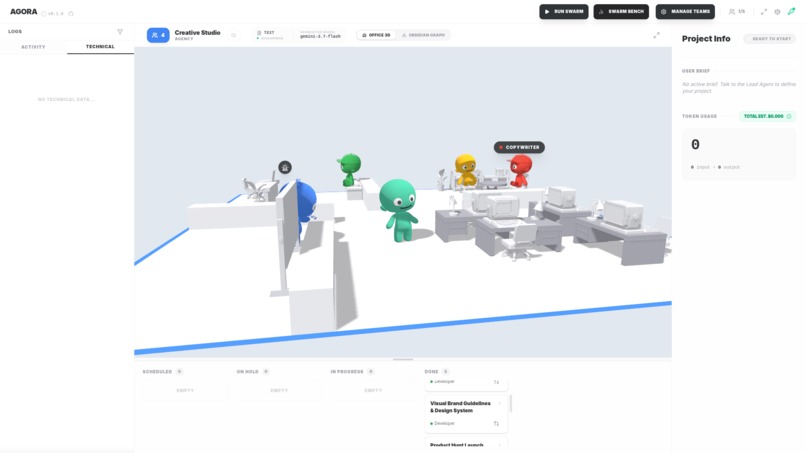
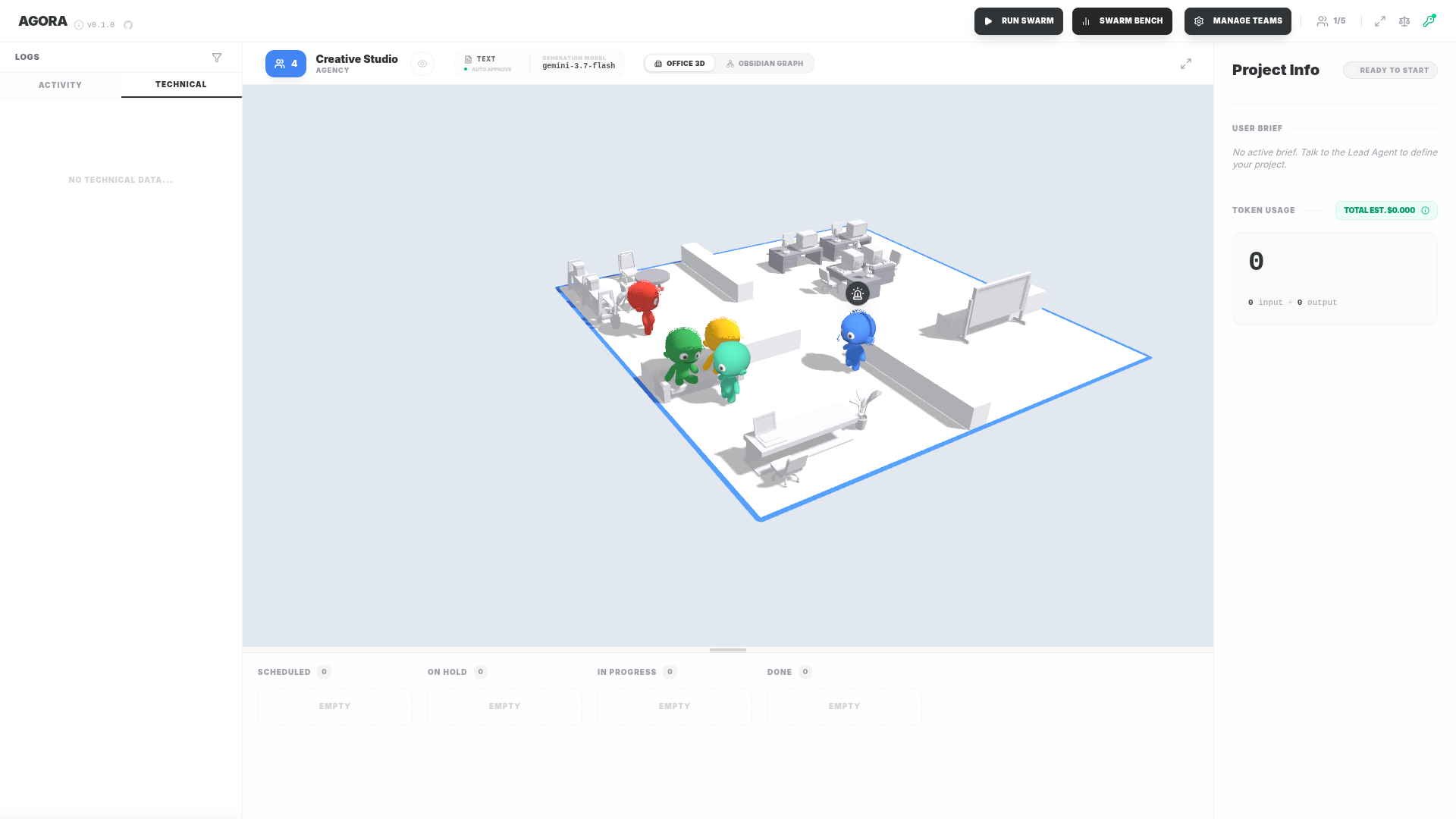
3d workspace
-
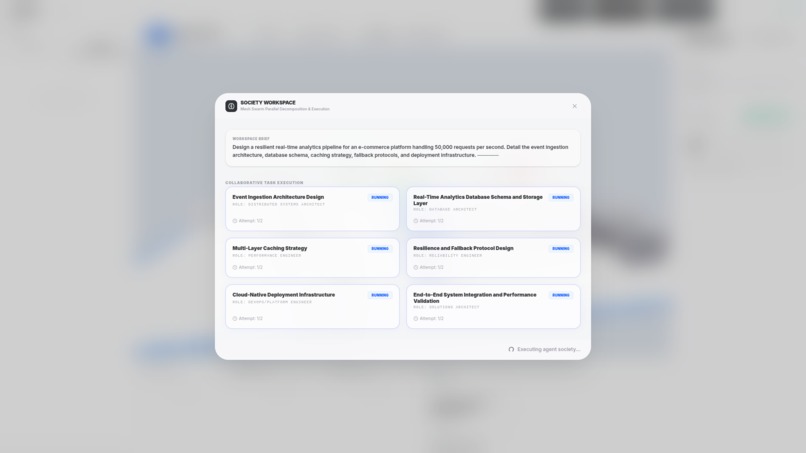
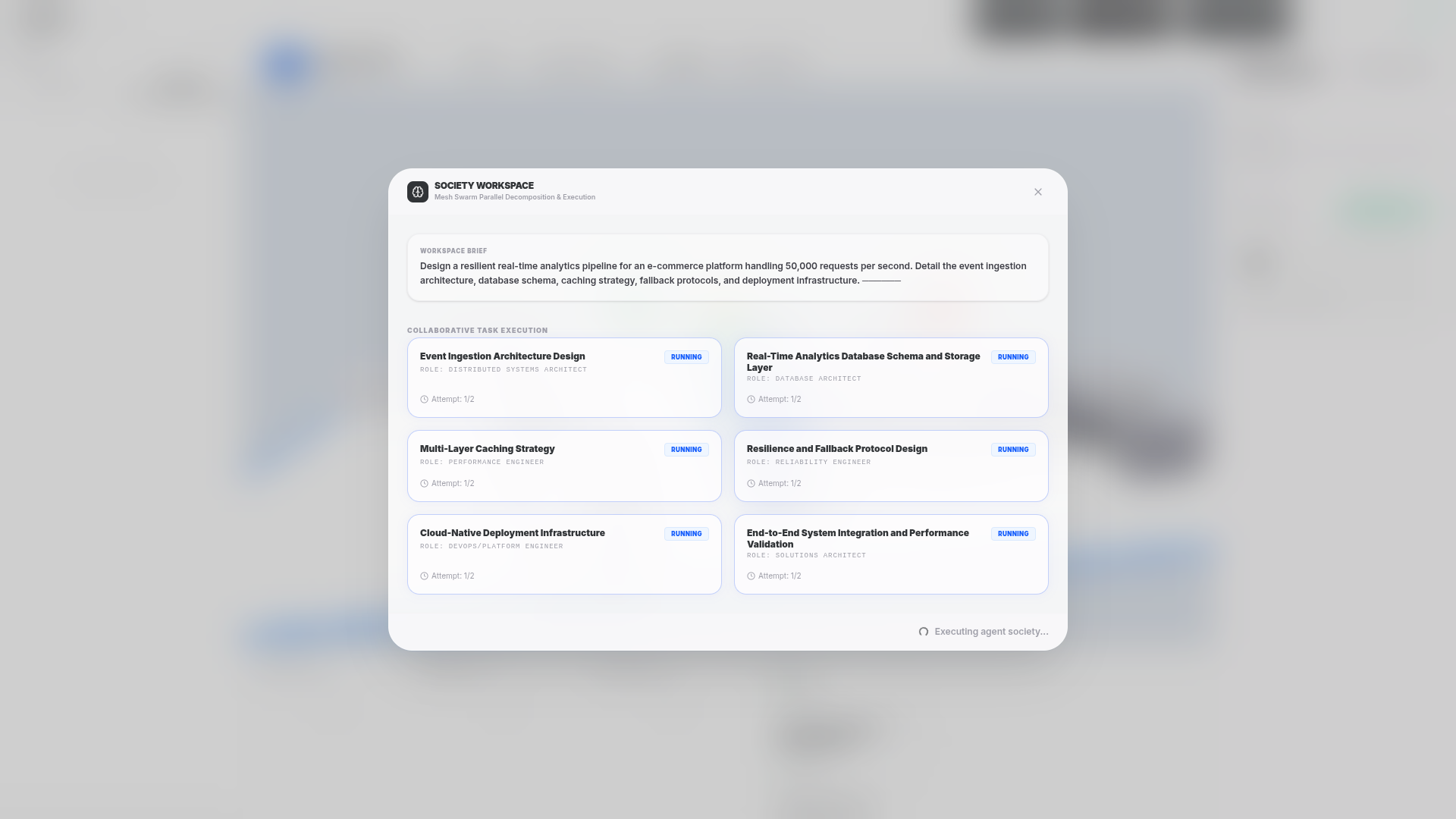
works automatically gets splits and gets assign to agents
-
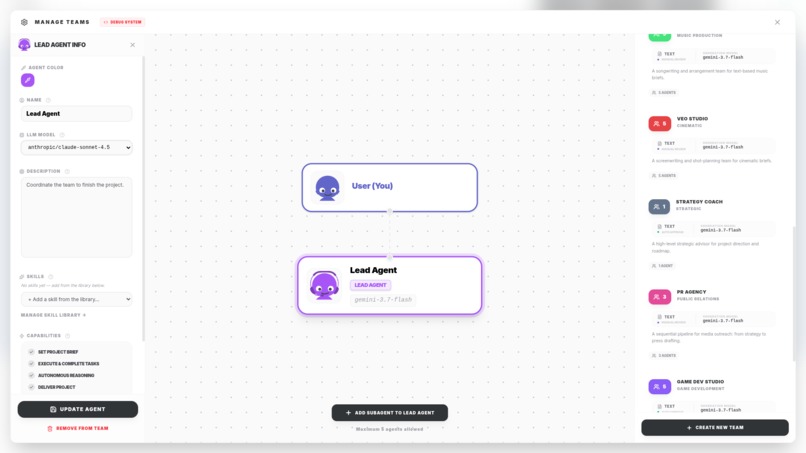
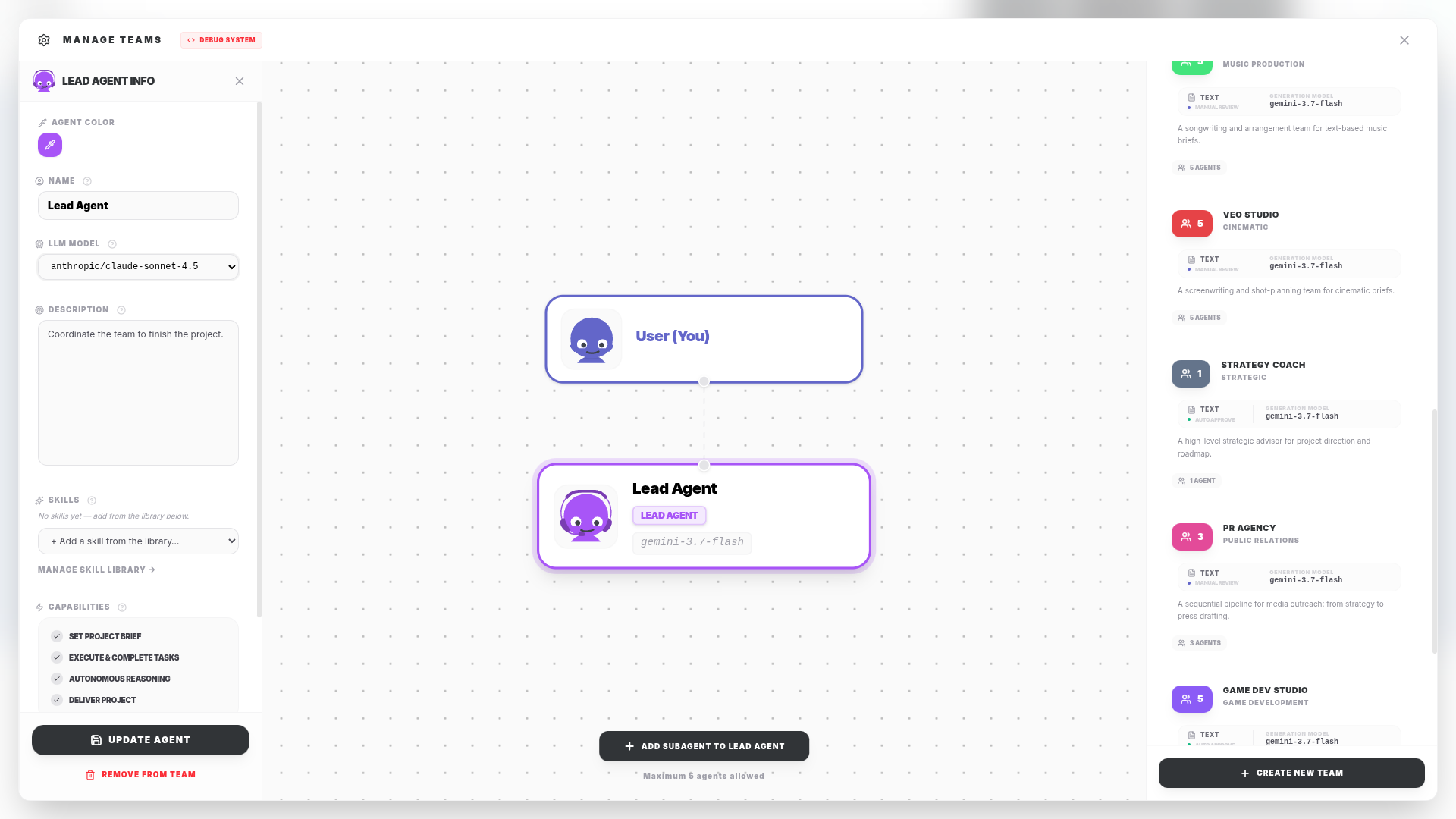
Create custom agents
## Inspiration
Most multi-agent AI frameworks today feel like black boxes. You give them a prompt, and you are left staring at a spinning loader or a wall of raw terminal logs. If two agents disagree on an implementation, whichever agent finishes last silently overwrites the other. If a subtask hangs, you have no easy way to see who is blocked or why.
We built AGORA to fix this. We wanted an interface where you can actually watch your AI workforce think, collaborate, and resolve disagreements in real time, exactly like walking onto a physical office floor.
## What it does
You hand AGORA a project brief in plain English. An autonomous team of AI agents organizes itself to deliver the final product:
- Manager: Breaks the brief down into discrete subtasks, sets dependencies, and assigns roles.
- Workers: Head to their desks in the 3D office and execute tasks in parallel. If a task fails or schema validation breaks, self-healing retries kick in automatically.
- Referee: When workers produce conflicting code or incompatible copy, they are called to the conference table. The referee leads a structured debate to reach an agreed-upon fix rather than letting the last write win.
- Lead: Assembles the verified outputs into one clean, exportable deliverable.
- Live 3D Office: Everything (task assignments, desk work, conference debates, and final reviews) plays out live in a walkable 3D WebGL office.
## How we built it
- 3D Spatial Interface: Built with TypeScript, React, and Three.js / WebGL. We added isometric camera controls, dynamic pathfinding for agent movement, and real-time speech bubbles linked to agent
execution states.
- Orchestration Engine: An event-driven state machine that manages subtask queues, tracks dependency graphs, and runs parallel worker streams without blocking the browser thread.- Dialectic Debate Protocol: When conflicting proposals are detected, the system isolates the diffs and triggers a multi-turn critique-and-defense loop between the competing agents and the referee.
- Tiered Model Routing: To keep latency and token costs sensible, we route by task complexity: high-reasoning models handle project planning and referee arbitration, mid-tier models handle worker execution, and lightweight models handle quick classification.
## Challenges we ran into
- Syncing streaming LLM tokens with 60 FPS 3D animations: Streaming tokens from 4 parallel agents while animating 3D characters across an office grid caused race conditions and frame jitter. We resolved this by decoupling the agent state machine from the Three.js render loop using an event queue.
- Stopping infinite debate loops: In early tests, agents arguing over edge cases would get stuck in circular disagreements. We had to build strict termination rules for the Referee agent so it forces a
synthesis after three debate turns.
- Browser memory management: Keeping WebGL draw calls, animated sprites, and live chat state fast and responsive on low-power laptops.
Accomplishments that we're proud of
- A first-time user can type a single sentence and immediately understand what every agent is doing within five seconds without reading instructions.
- The 3D office is genuinely useful: spatial positioning turns out to be a fast visual debugger for parallel agent workloads.
- Zero local setup required: it runs fully in the browser.
What we learned
- Spatial layouts work surprisingly well for debugging parallel asynchronous systems. Seeing an agent stuck at a desk with an error bubble is much faster to diagnose than digging through 400 lines of terminal logs.
- Multi-agent failures usually happen at the handoffs, not during generation. Putting strict schema boundaries between agent turns prevented most breakdowns.
## What's next for AGORA
- Custom Agent Personas: Letting teams upload their own SOPs and system prompts to configure specialized virtual employees.
- Human-in-the-Loop Mode: Letting human users walk their own 3D avatar into the conference room to vote on agent debates or give mid-task feedback.
- Direct Workspace Integrations: One-click exports to GitHub repositories, Jira tickets, and Slack channels.
Built With
- multi-agent-systems
- node.js
- react
- reactflow
- tailwindcss
- three.js
- typescript
- vercel
- vite
- webgl
- webgpu


Log in or sign up for Devpost to join the conversation.