-
-
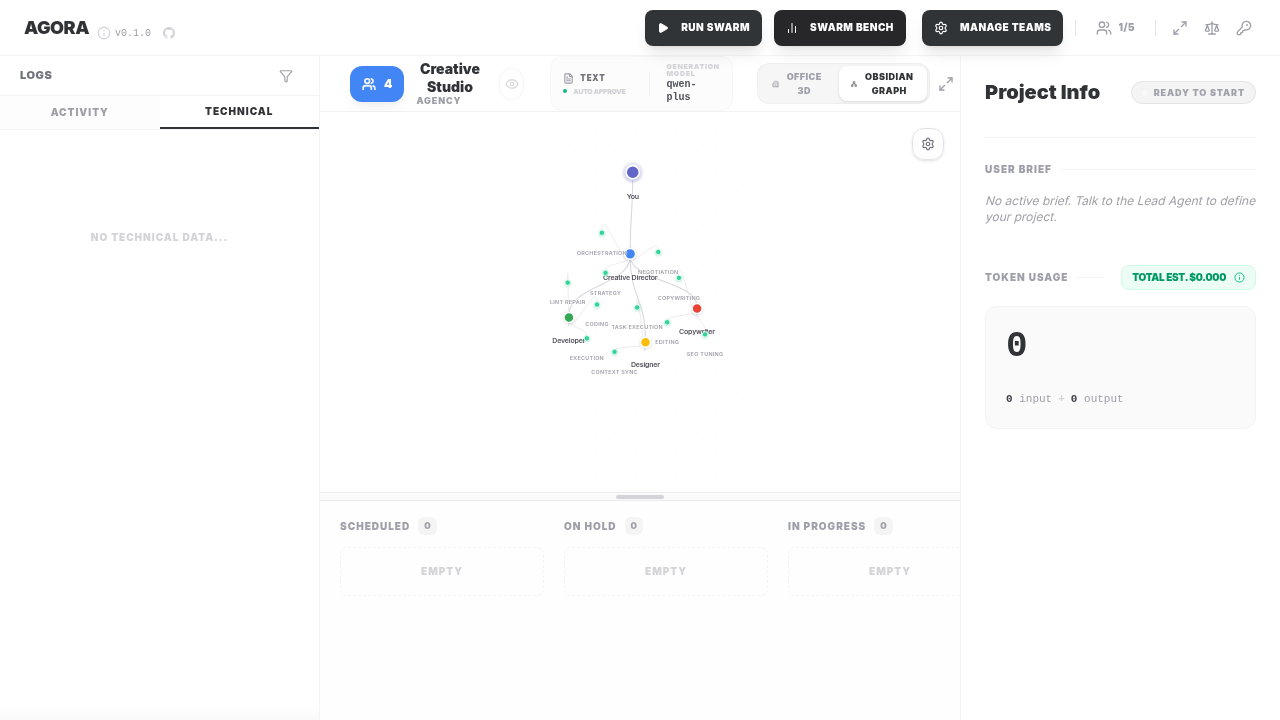
agora-graph-view
-
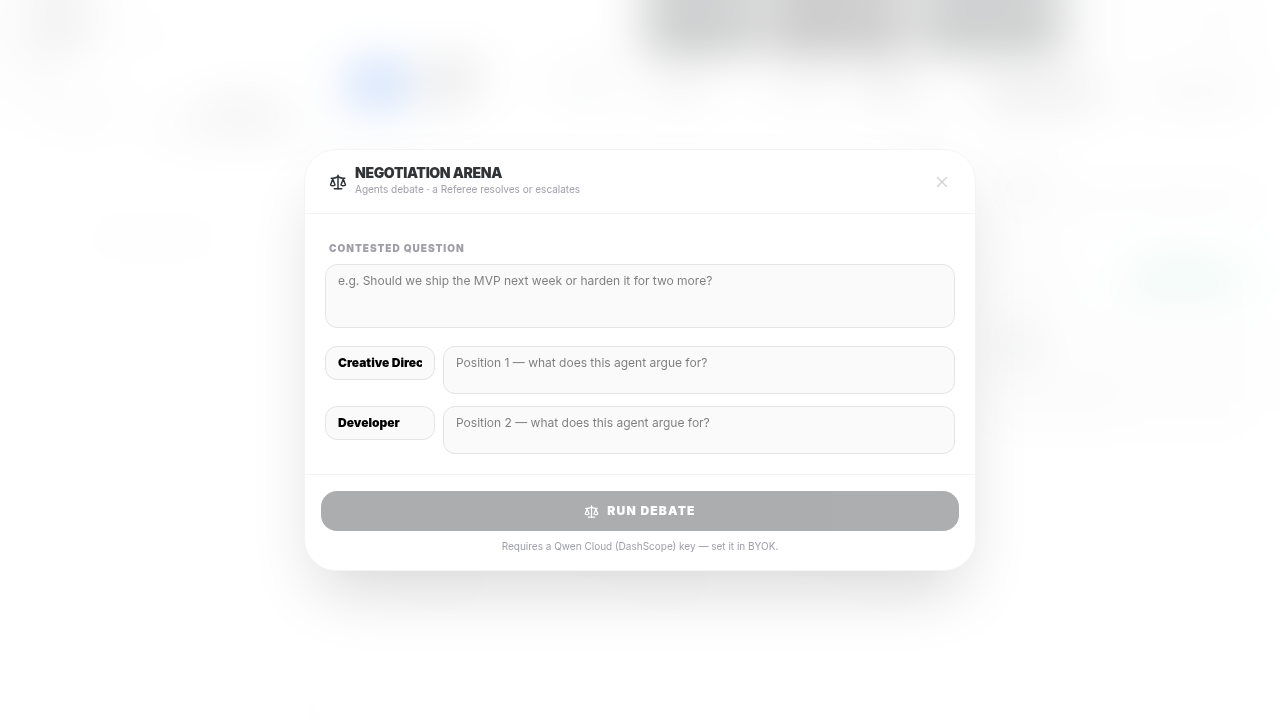
agora-negotiation-arena
-
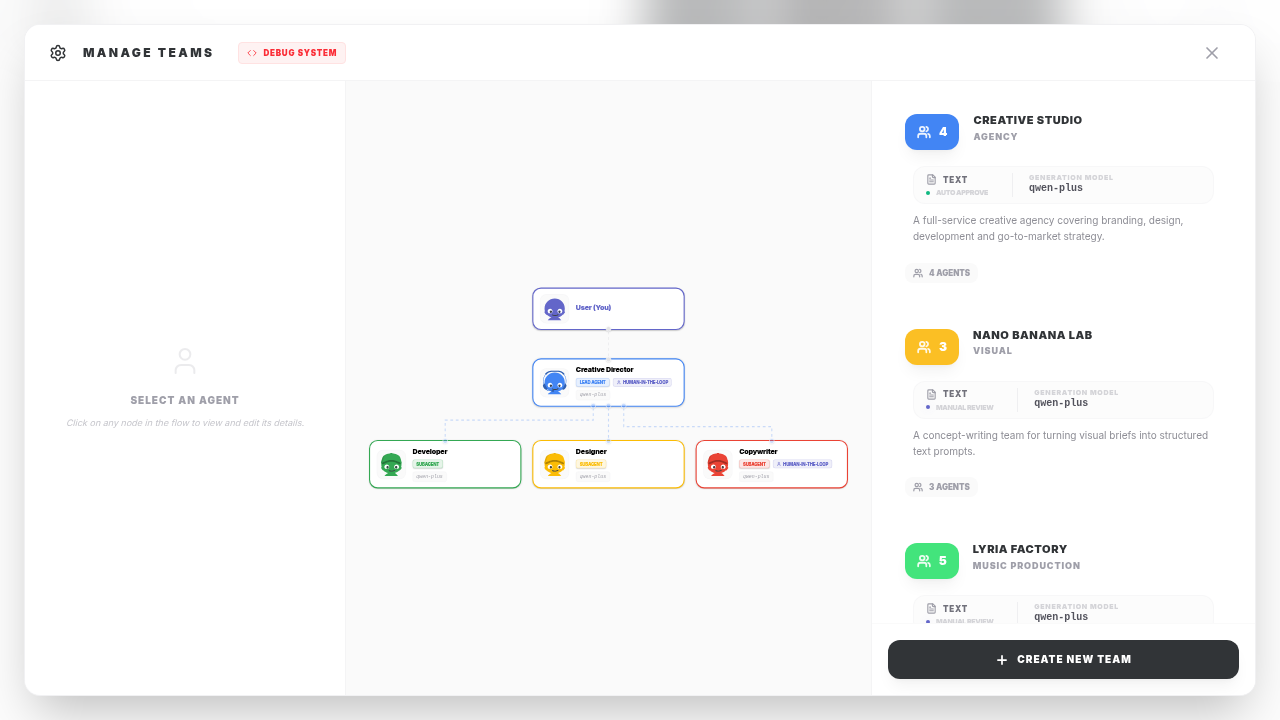
agora-team-editor
-
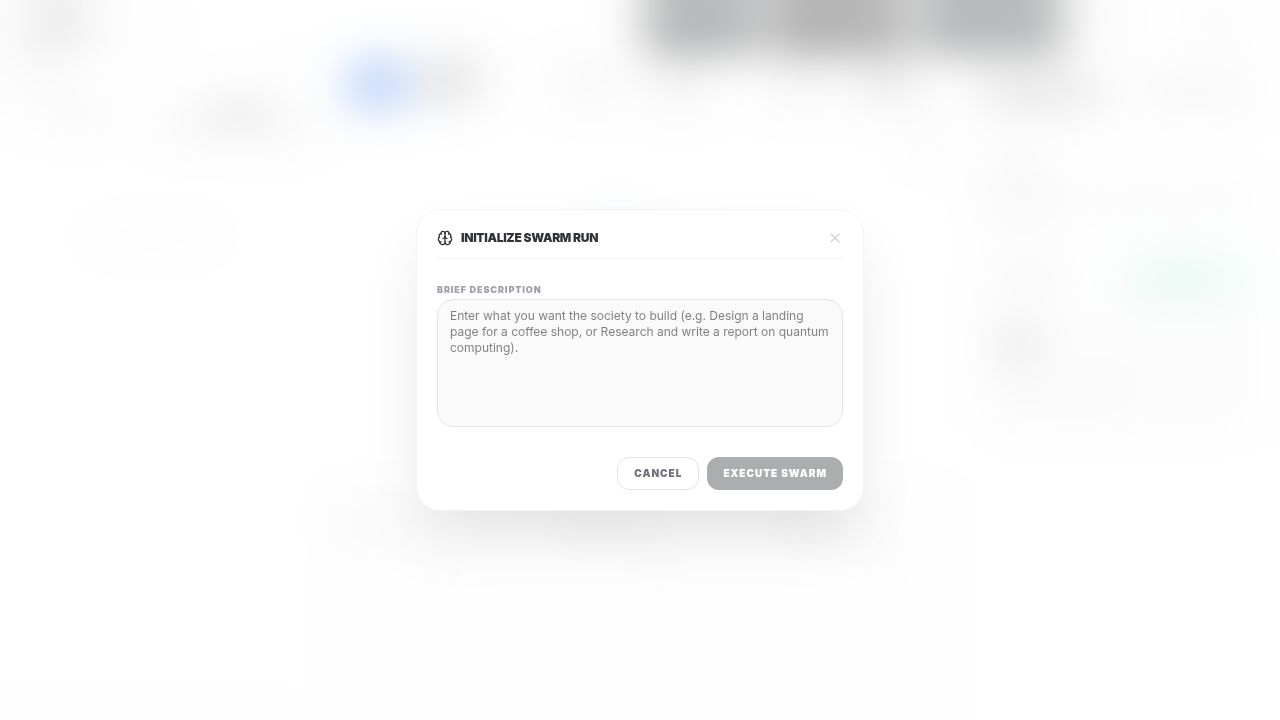
agora-run-swarm
Inspiration
Most AI tools ask one model to do everything. That works for simple prompts, but larger tasks often need planning, research, writing, review, and revision.
I wanted to explore what would happen if AI agents worked more like a small team, with different responsibilities and a visible process. That idea became AGORA.
## What it does
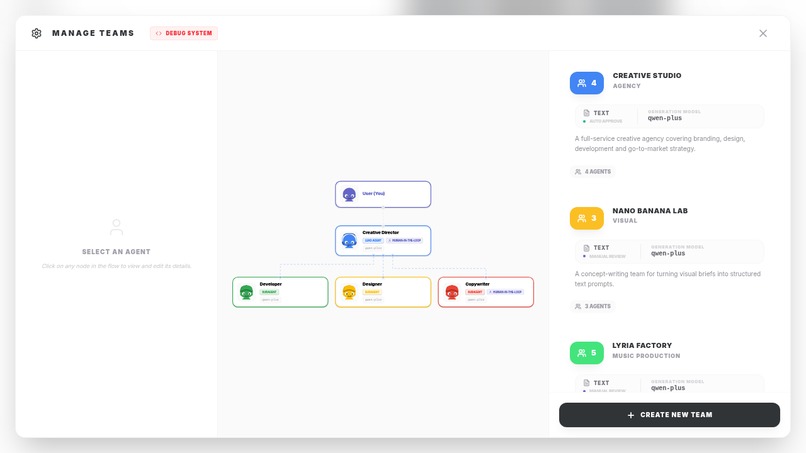
AGORA is a live 3D office where a society of Qwen-powered agents works on a user’s brief.
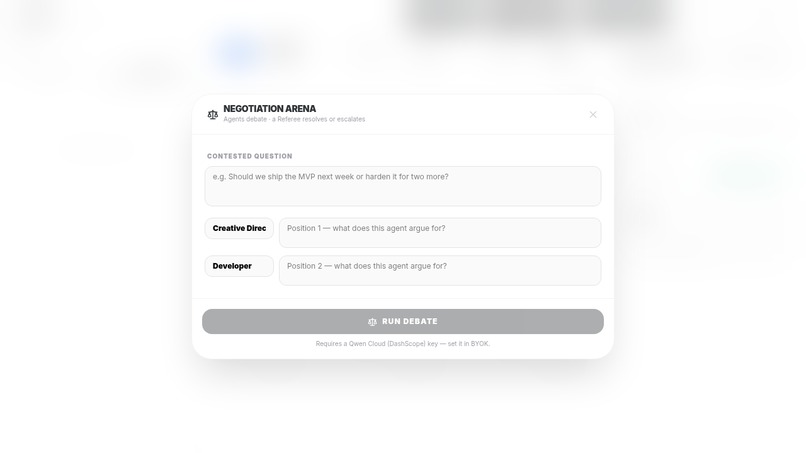
A Manager breaks the brief into tasks. Workers complete those tasks in parallel. If a task fails, the worker can retry and repair its output. When agents disagree, a Referee runs a structured debate. A Lead then combines the accepted results into one final answer.
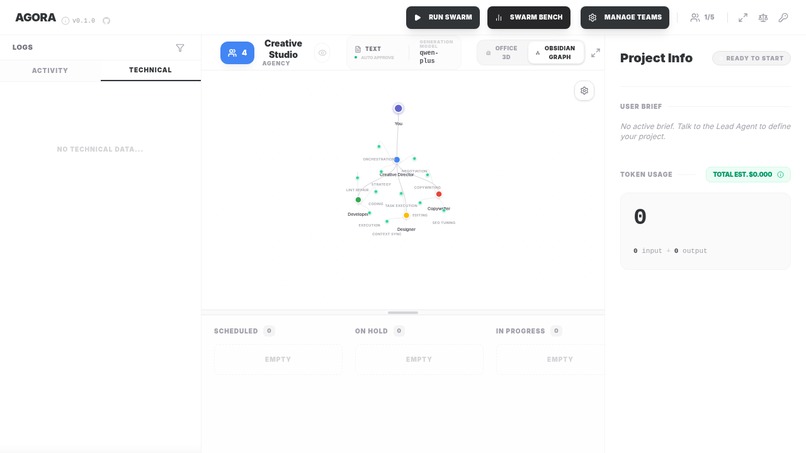
The user can watch this process in the office, inspect task progress, view agent relationships, and review the final output.
## How we built it
AGORA uses React, TypeScript, Vite, Three.js, React Flow, Zustand, Node.js, and WebSockets.
The agent society runs on the server. Qwen models connect through Alibaba Cloud DashScope’s OpenAI-compatible API. Different roles can use different Qwen model tiers, such as Qwen Max for planning and Qwen Plus for worker tasks.
The frontend receives structured events from the backend so actions such as task assignment, execution, healing, negotiation, and completion can appear in real time.
## Challenges we ran into
The hardest part was not making a single model respond. It was coordinating several model calls and keeping the system understandable when something went wrong.
We had to handle malformed model output, failed tasks, retries, parallel execution, agent disagreements, real-time updates, and graceful behavior when the AI provider was unavailable. We also had to make the 3D interface useful instead of treating it as decoration.
## Accomplishments we’re proud of
We built a working agent-society workflow with:
- Role-based task delegation
- Parallel worker execution
- Self-healing retries
- Referee-based negotiation
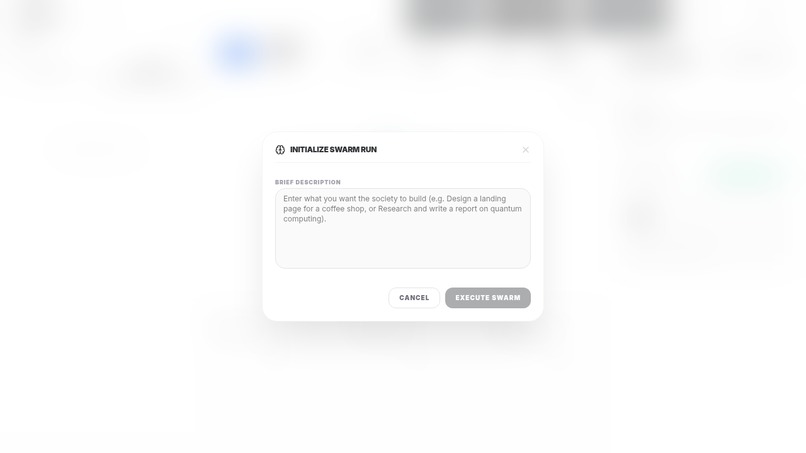
- Per-agent skills and model selection
- A real-time 3D office
- Task, graph, and activity views
- A benchmark comparing the society with a single-agent run
We are especially proud that the system makes the agent process visible. You can see what the agents are doing instead of waiting for one hidden response.
## What we learned
We learned that multi-agent systems need clear boundaries. Adding more agents does not automatically make a system better. Each role needs a specific responsibility, and the communication between roles needs to be structured.
We also learned that failure handling and observability are just as important as the model calls. Users need to know what happened, which task failed, and when human input is needed.
## What’s next for AGORA
The next step is to improve deployment, persistence, and evaluation. We want to support longer-running projects, better quality scoring, stronger human approval points, and more reliable production hosting.
We also plan to replace the current placeholder 3D assets with original assets that are suitable for wider distribution.
Built With
- nim
- node.js
- nvidia
- qwen-cloud-/-alibaba-cloud-dashscope
- qwen-max
- qwen-plus
- qwen-turbo
- react
- react-flow
- three.js
- typescript
- vite
- websockets
- zustand


Log in or sign up for Devpost to join the conversation.