Inspiration
In January 2025, wildfires tore through Los Angeles and 911 got buried. Verdugo Fire Communications normally handles about 444 calls a day. On January 7 it took 2,121, with 321 in a single hour. A normal hour averages about 18 calls, so that's
$$\frac{321}{444 / 24} \approx 17\times$$
the usual load. In west Altadena, residents made at least 14 fire reports before the first evacuation order, and 17 of the 18 Eaton Fire deaths happened there. The callers did their part. There just weren't enough lines to take their calls.
What it does
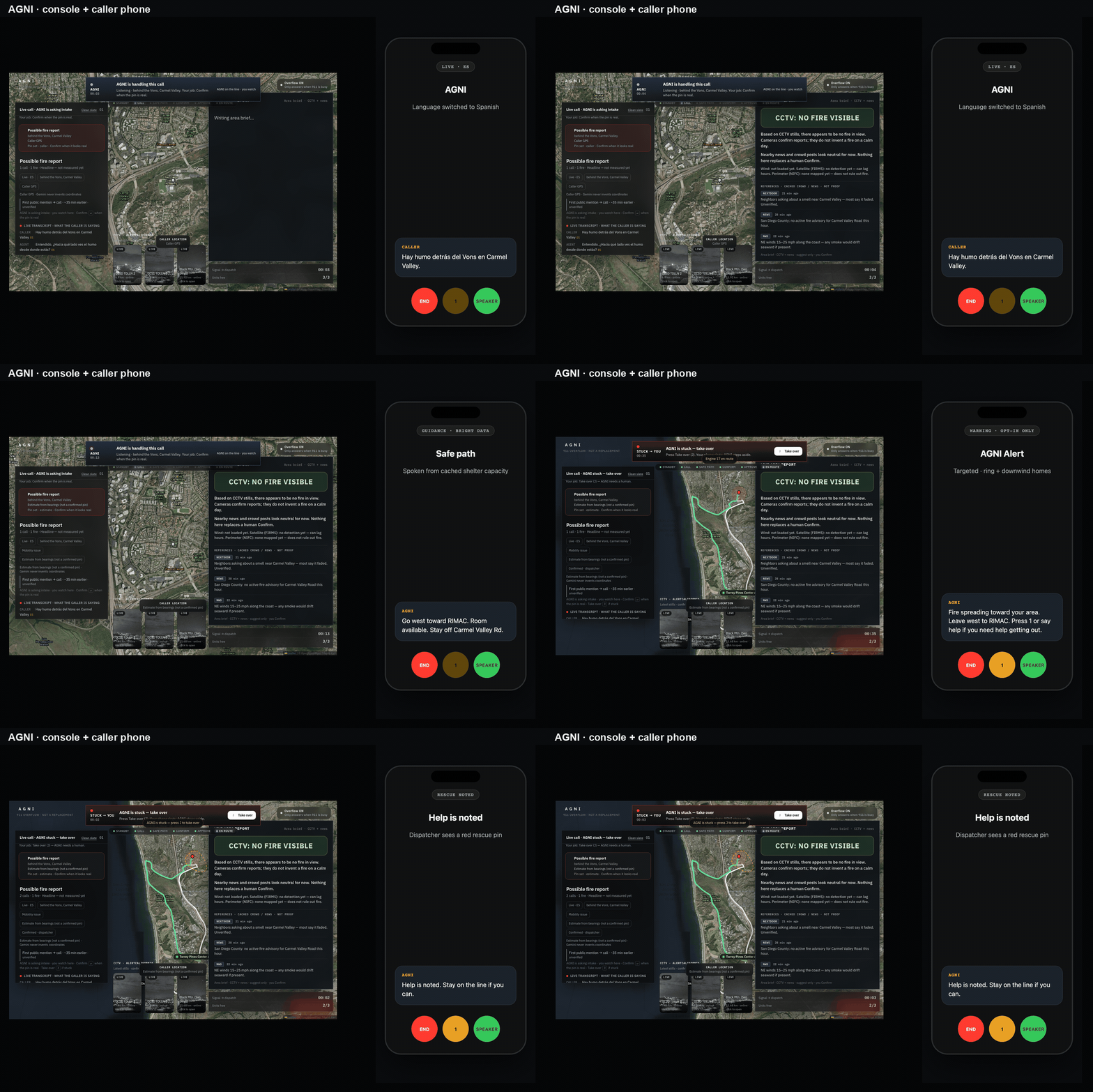
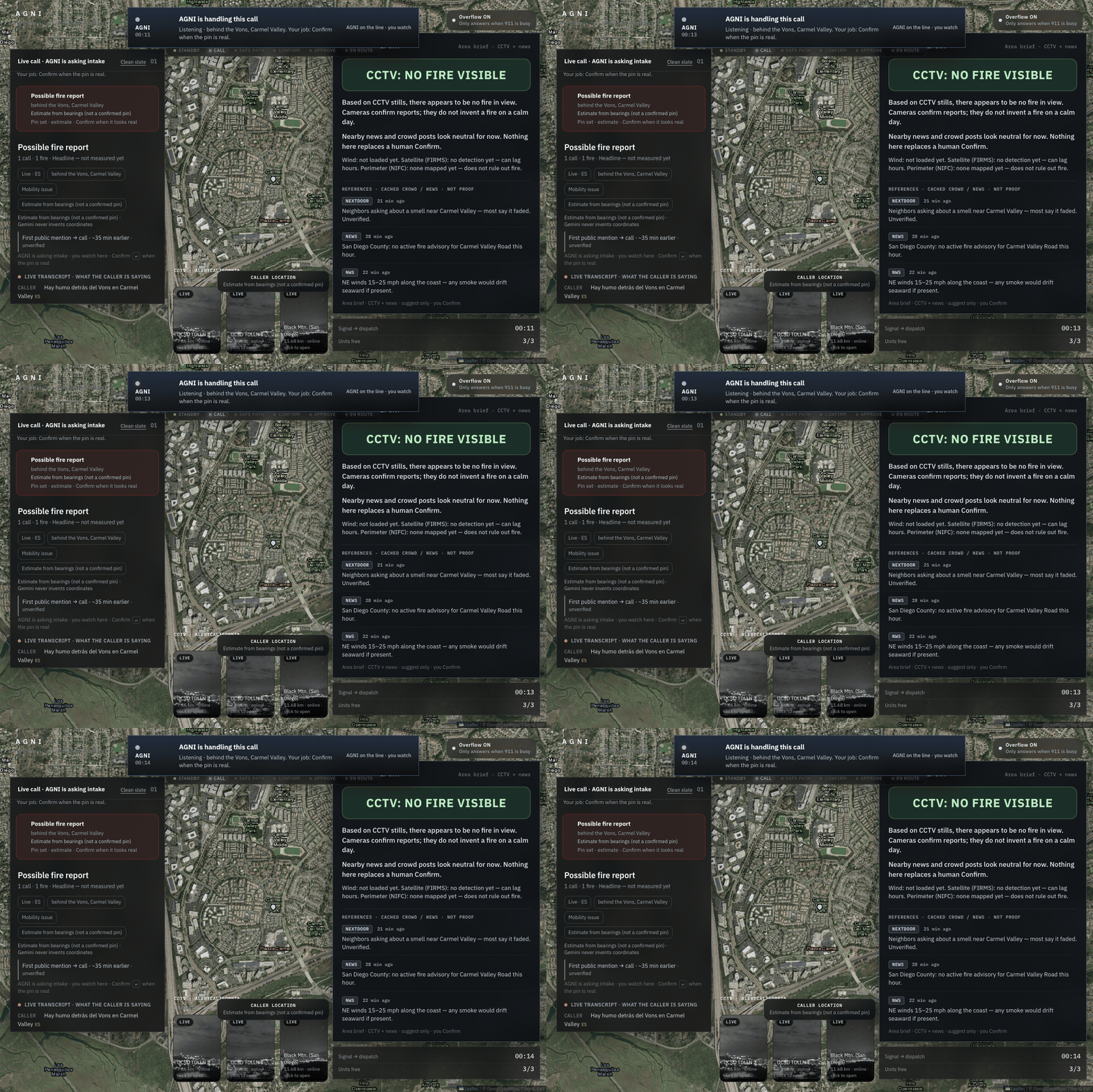
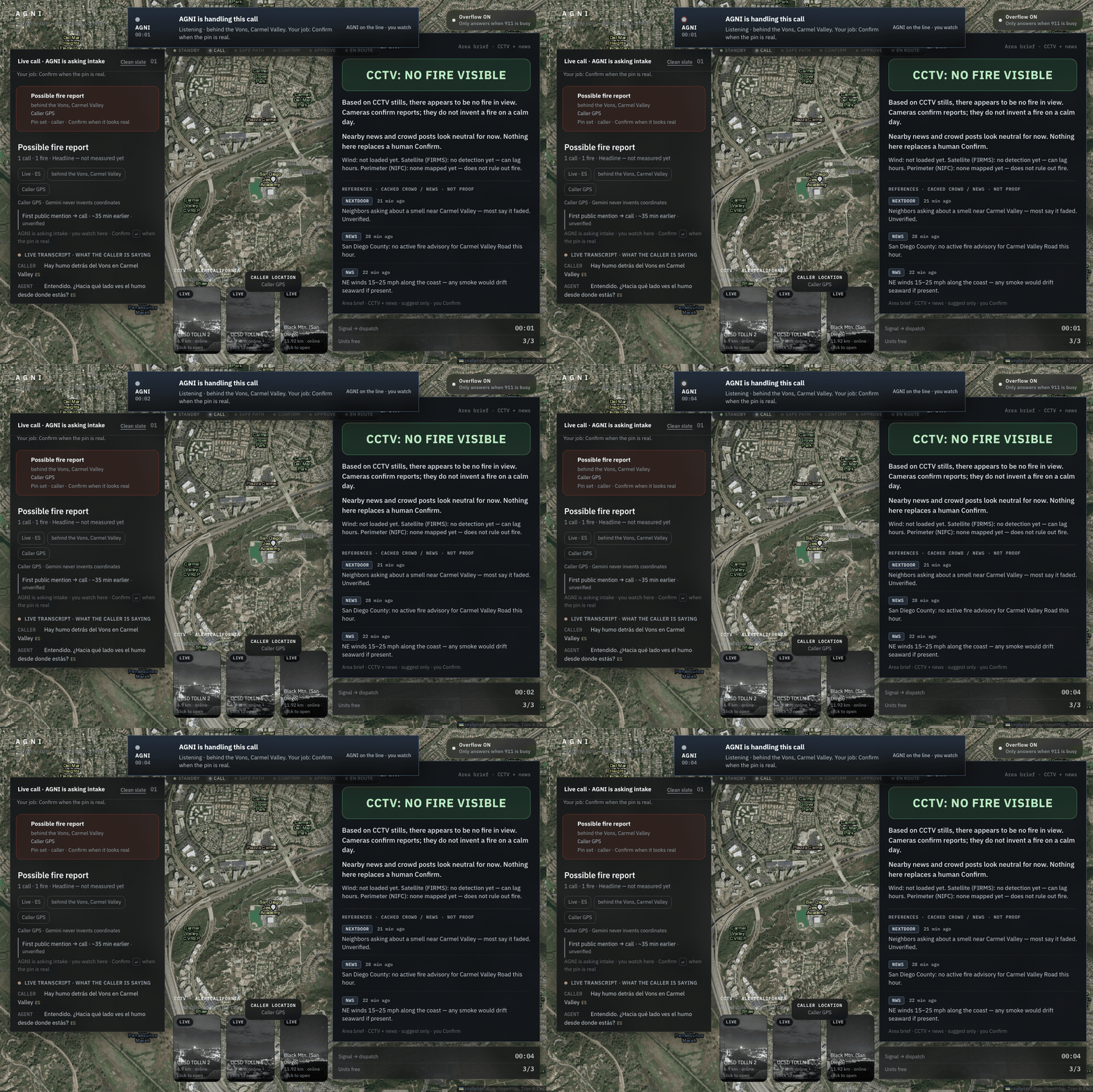
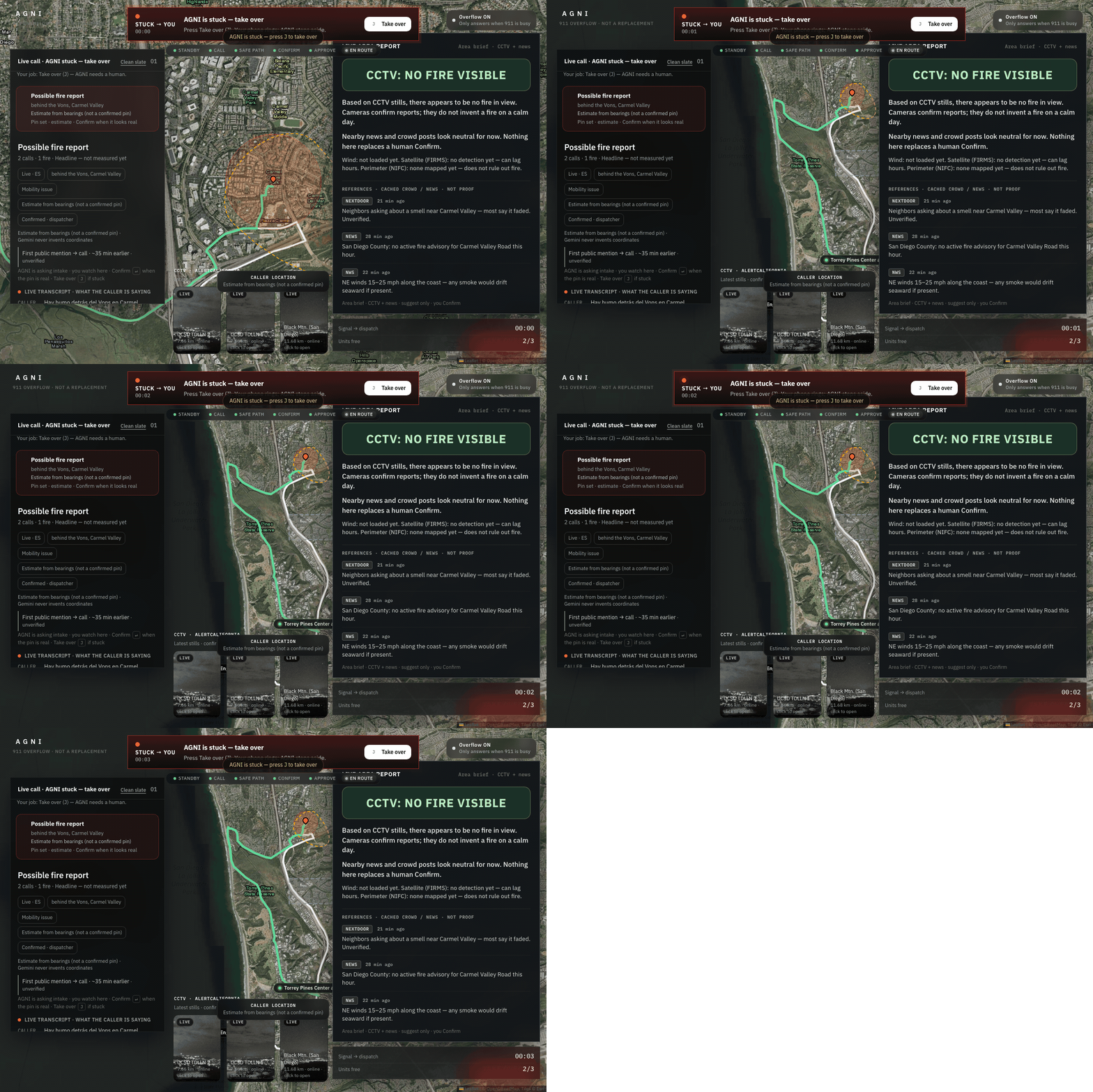
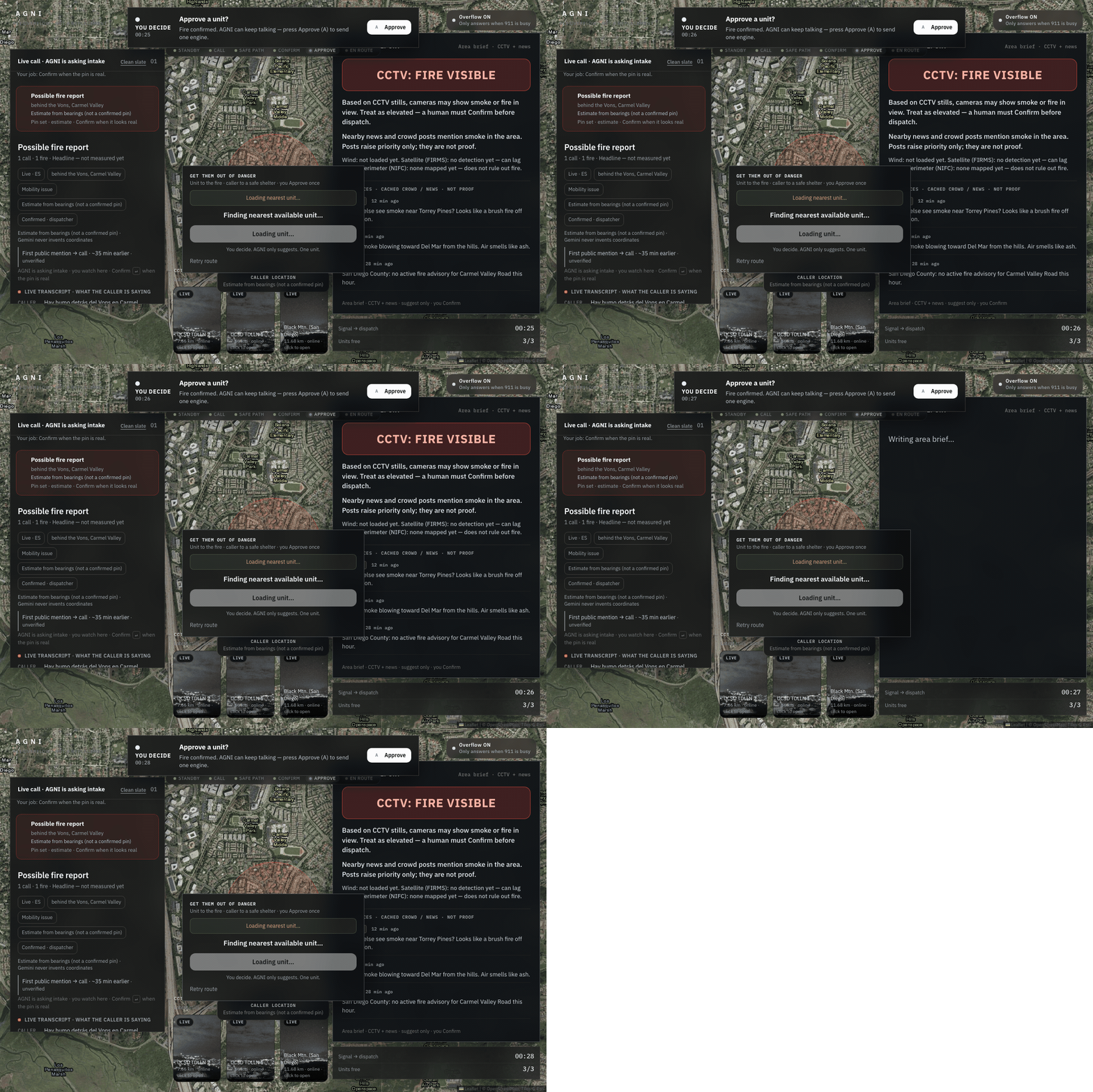
AGNI is a 911 overflow line for wildfires. When every dispatcher is busy, an AI voice agent picks up the extra calls. It asks a few short questions, works out the caller's location from the landmarks they mention, and merges duplicate calls into one fire on the dispatcher's map. It also checks nearby public fire cameras for smoke and pulls in satellite hotspots. When there are more calls than it can take, callers wait on hold instead of hearing a busy signal. If the agent gets stuck, a dispatcher can take over with one key and see an AI brief on screen. The AI suggests. A human decides.
How we built it
- ElevenLabs + Twilio: a voice agent that answers the phone.
- Gemini 2.5 Flash: finds the location from the landmarks a caller names, checks camera stills for smoke, and writes the dispatcher's report with sources.
- Public data: ALERTCalifornia camera stills, NASA FIRMS satellite hotspots, National Weather Service alerts, and NIFC fire perimeters.
- [Bright Data: public posts, road closures, and open shelters.]
- Backend: FastAPI and SQLite. Dashboard: React, Vite, and Leaflet.
- Built with Cursor and a team of Grok Bot agents (Steve Jobs, Elon Musk, Andrej Karpathy) that planned, reviewed code, and wrote the pitch alongside us.
Challenges we ran into
- Being honest about scale. ElevenLabs limits how many calls run at the same time, so we designed AGNI to put the extra callers on hold instead of claiming it can take unlimited calls.
- Fast handoff to a human. An AI that gets stuck during an emergency has to step aside right away, without dropping the call.
- Messy locations. Callers say "near the gas station on Lake," not an address, so we had Gemini turn landmarks into a map pin and show why it chose that spot.
- Duplicate reports. Ten calls about one fire shouldn't look like ten fires, so we merge reports that are close together in place and time.
What we learned
In an emergency, the AI shouldn't make the decisions. Its job is to keep people from hearing a busy signal and to give the human in charge better information sooner. We also learned to put only sourced numbers in front of judges and dispatchers.
What's next
Testing the smoke check on real fire footage, calls in more languages, warning calls to neighbors who opted in, and pilots with regional dispatch centers.
