-
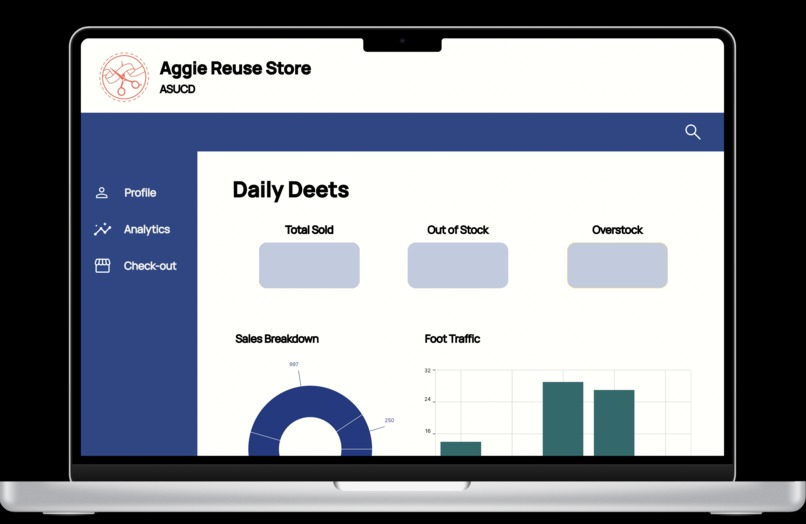
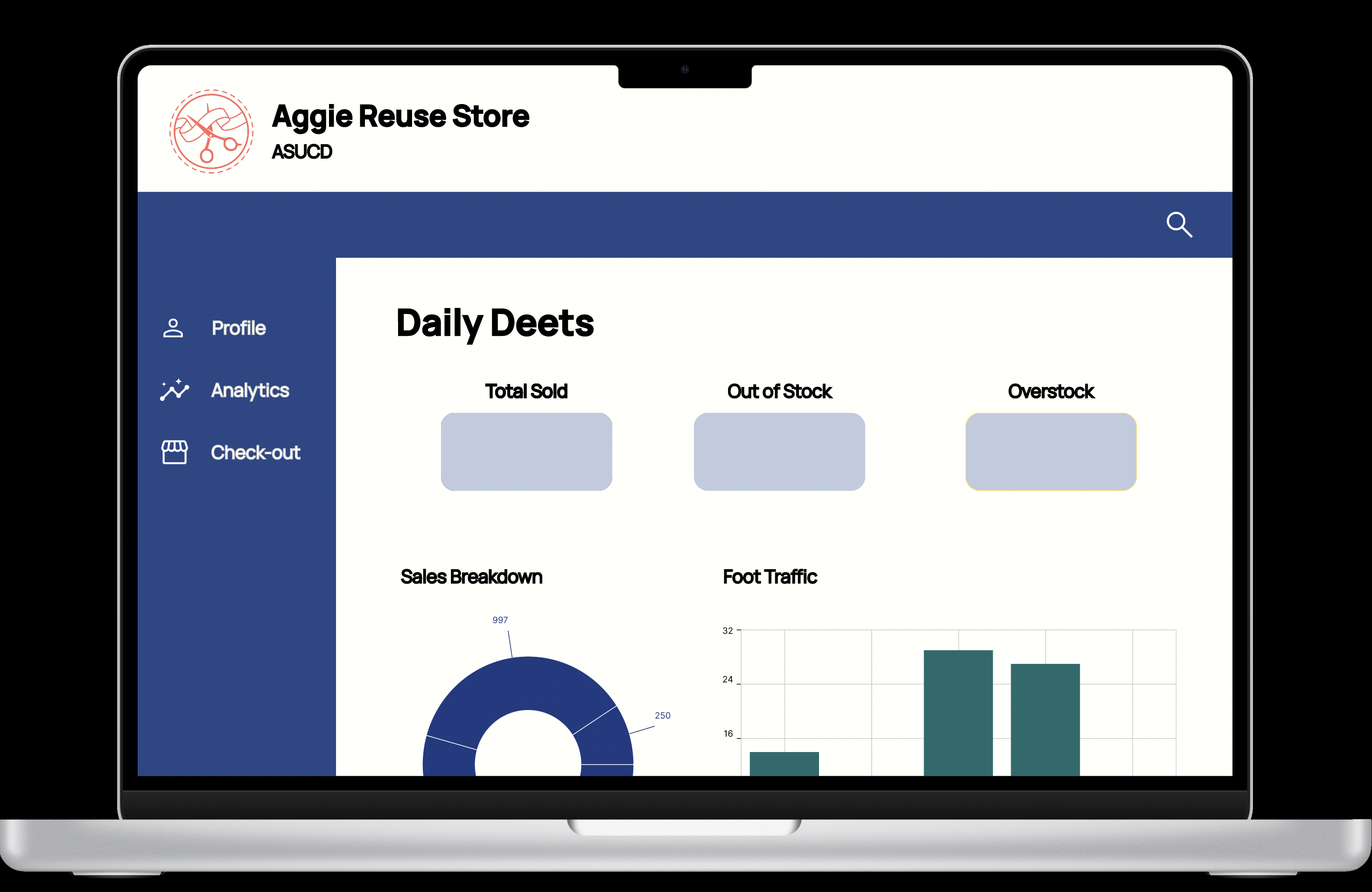
Analytics Page
-
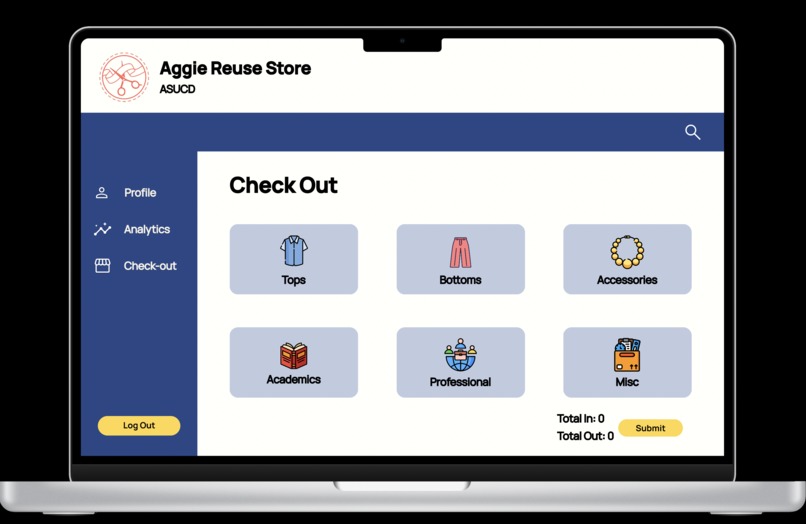
Checkout Page
-

Checking out items
-
Opening page
Inspiration
The Aggie Reuse store diverts over 1000lbs of clothing waste every quarter and its growing constantly. We wanted to create a way for the store to effectively monitor their inventory.
What it does
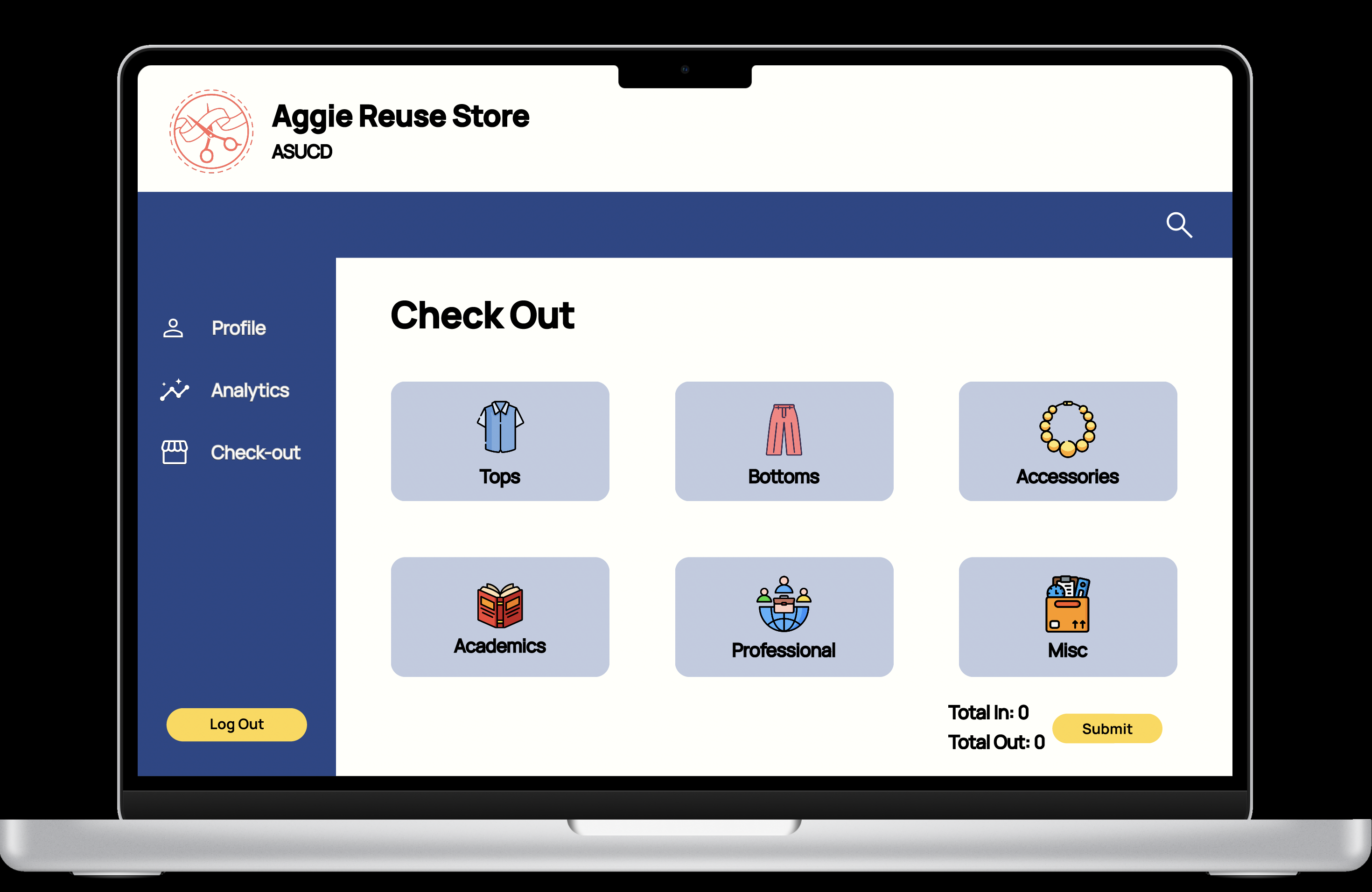
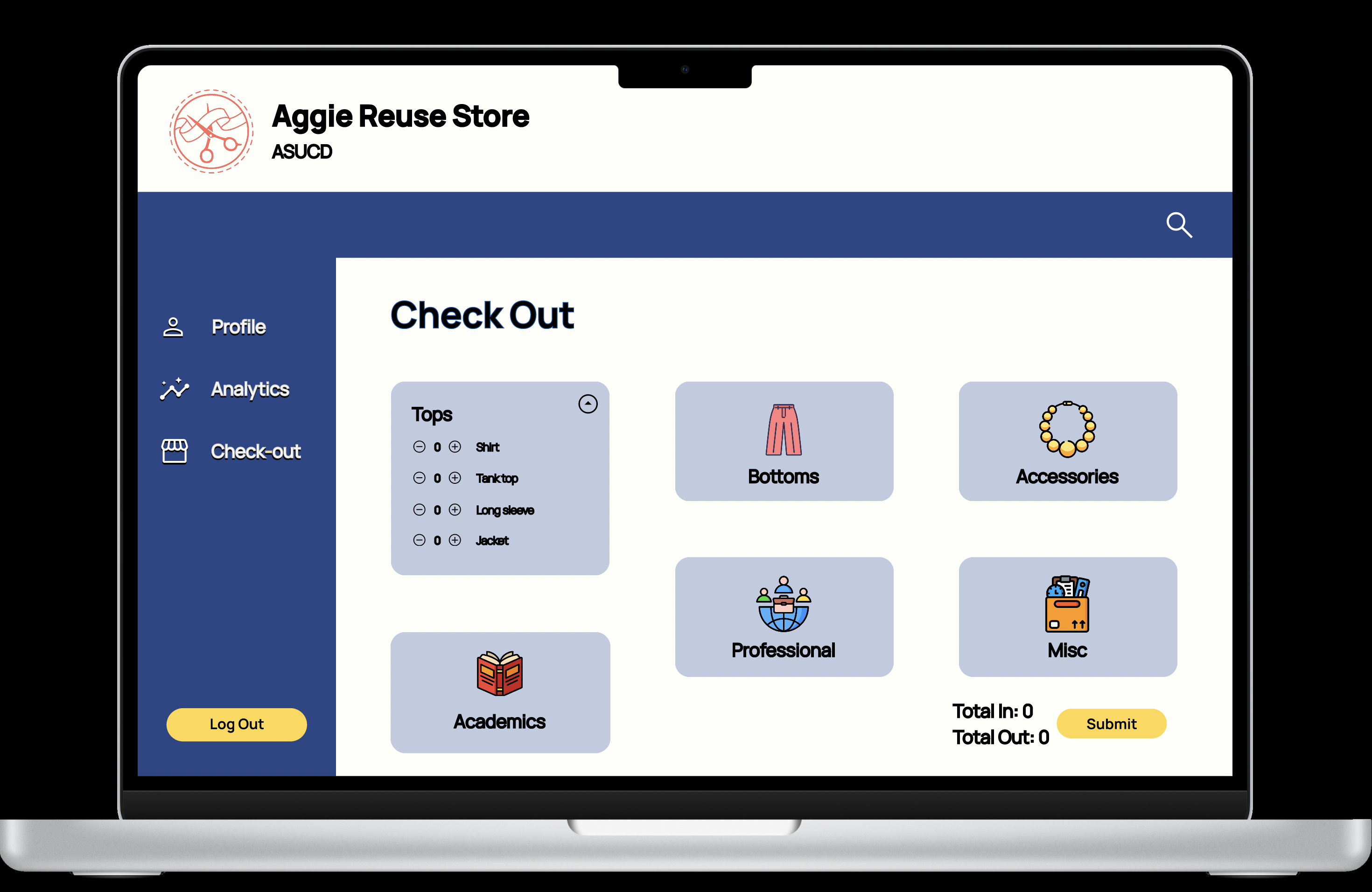
It is a simple UI that connects to a Mongo Database to store logs for the many transactions the store processes every day.
How we built it
For our MVP we built an HTML page (with JS) and connected it to a python backend with flask. The python script managed the interactions with MongoDB Atlas.
Challenges we ran into
We ran into hurdles developing an operable front end since we previously had no experience with javascript or more specifically react.js. We ended up simplifying the process by going with an html/js front end from scratch. Another substantial problem we faced was integrating the front with the back with the biggest problem being SOP when the preflight requests were going through.
Accomplishments that we're proud of
We are proud of finally figuring out how to integrate the front and back end with real-time updates. We are also proud of connecting to MongoDB because it is our first time accessing a cloud-based database of this type. Most importantly, we are grateful for the opportunity to support our local community through the promotion of responsible consumption and production, which is part of the 17 Sustainable Development Goals (SDGs) to address shared socioeconomic challenges.
What we learned
We learned a lot about designing an interface with the purpose of solving the user's needs. While it seems obvious, it's important not to overthink it, and the simplest interfaces can often be the most important.
What's next for Aggie Reuse Inventory
The first order of business is to implement the user-friendly UI we demoed with Figma. Next, a specific requirement by the aggie reuse team, we will finish the analytics page with relevant info to the staff.

Log in or sign up for Devpost to join the conversation.