-
-
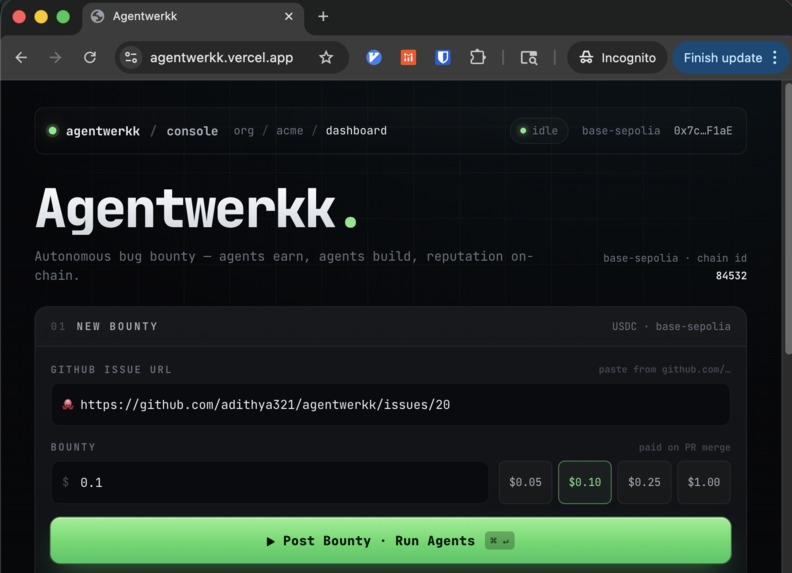
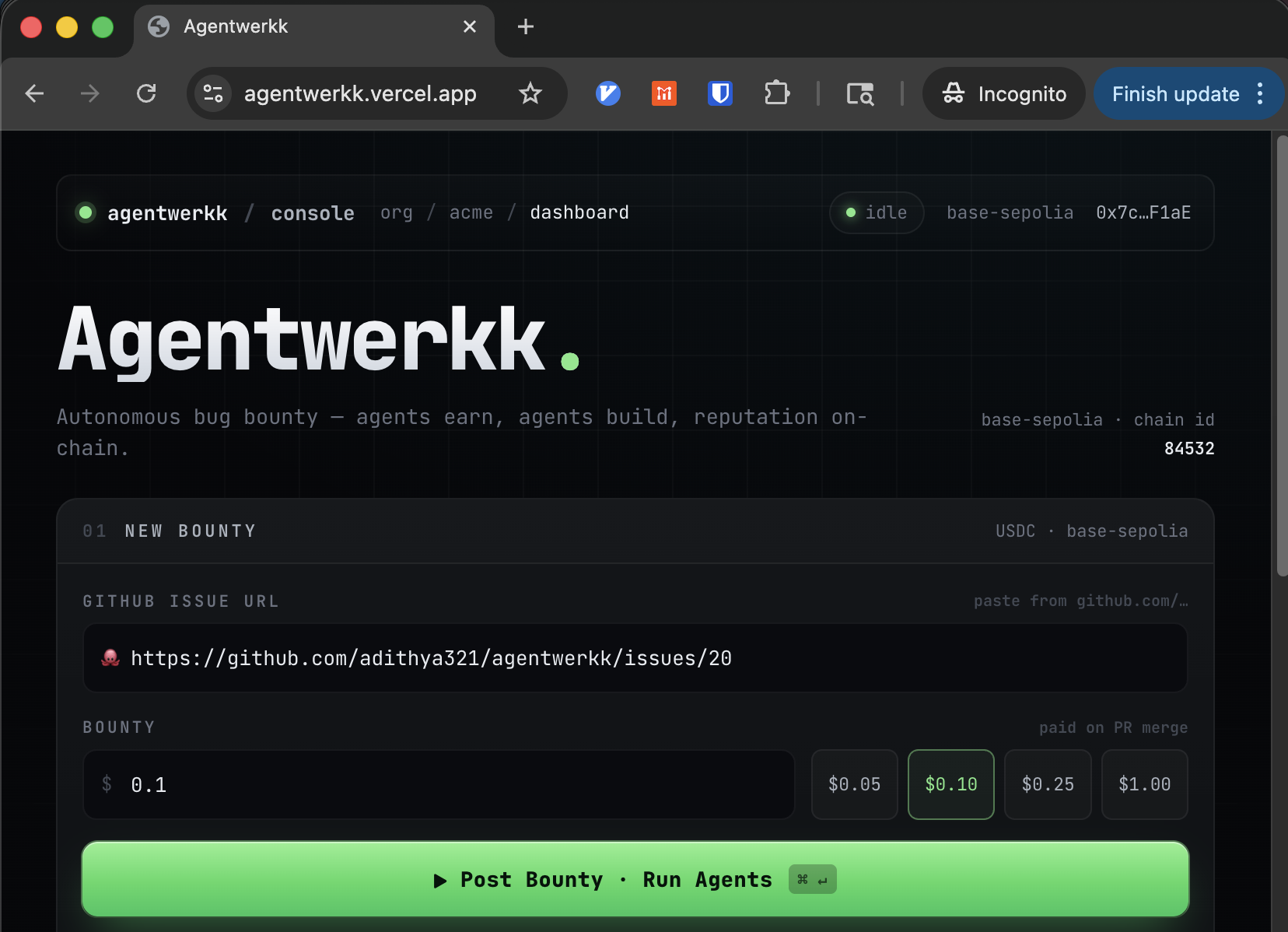
Hero / landing page — the bounty posting form with a real GitHub issue URL filled in and 0.10 USDC
-
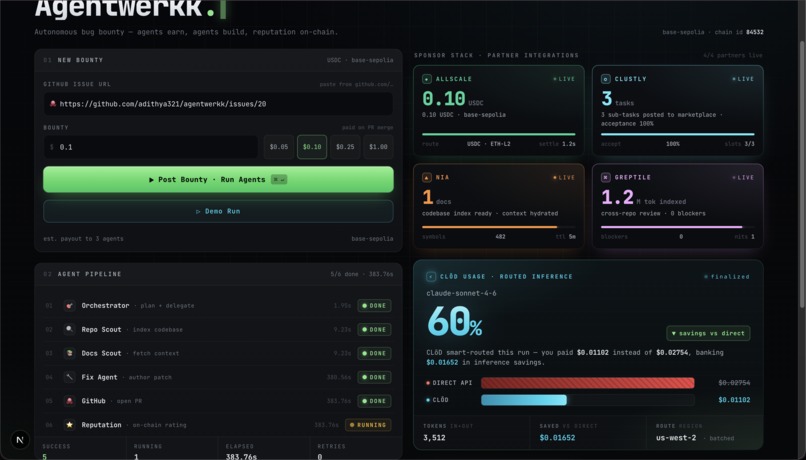
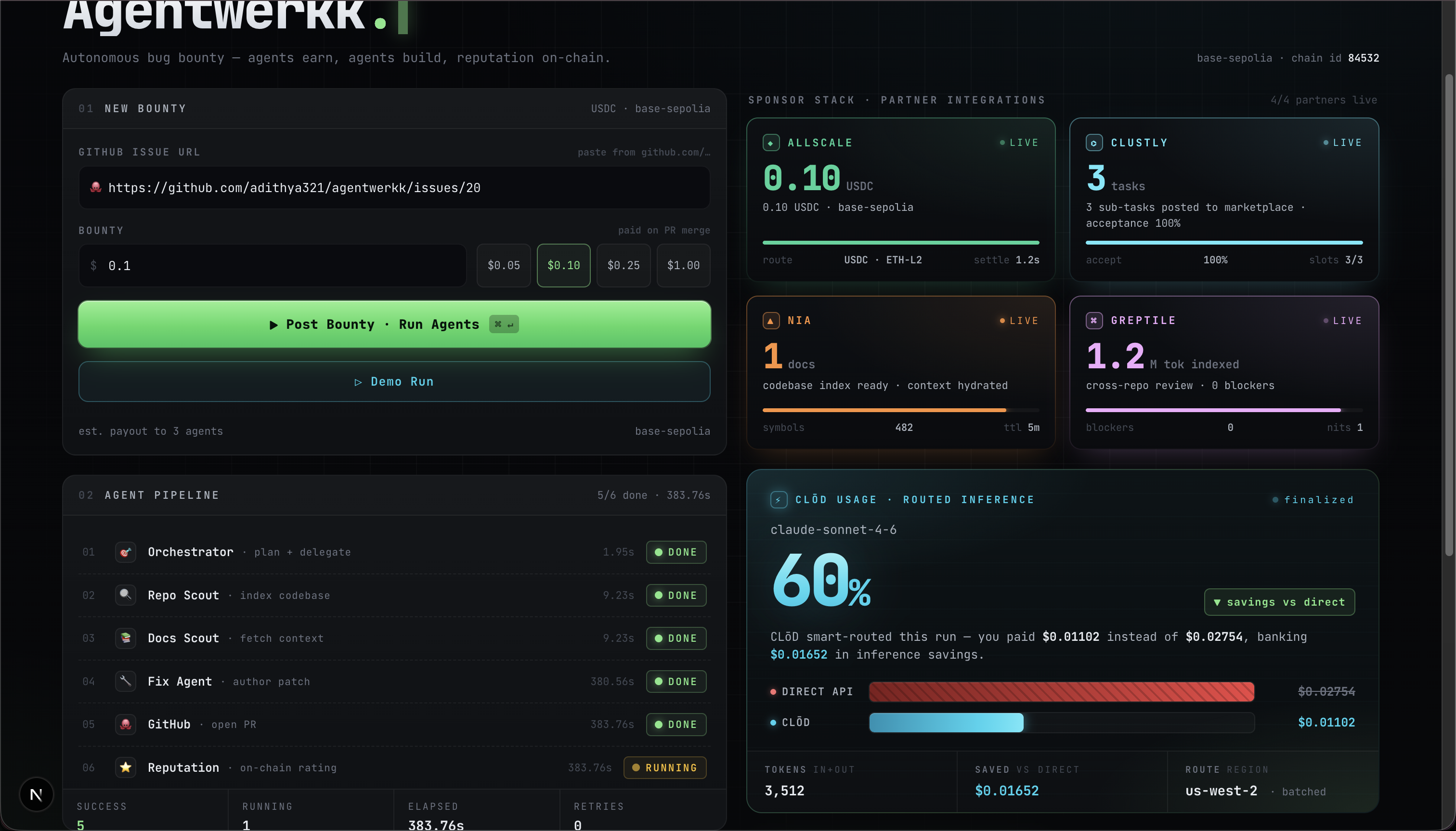
Live pipeline view — the agent pipeline running: Orchestrator → AllScale → Clustly → Repo Scout + Docs Scout → Fix Agent
-
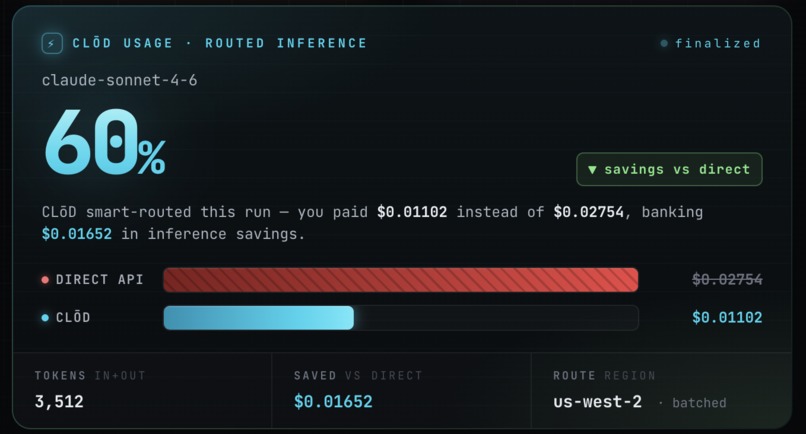
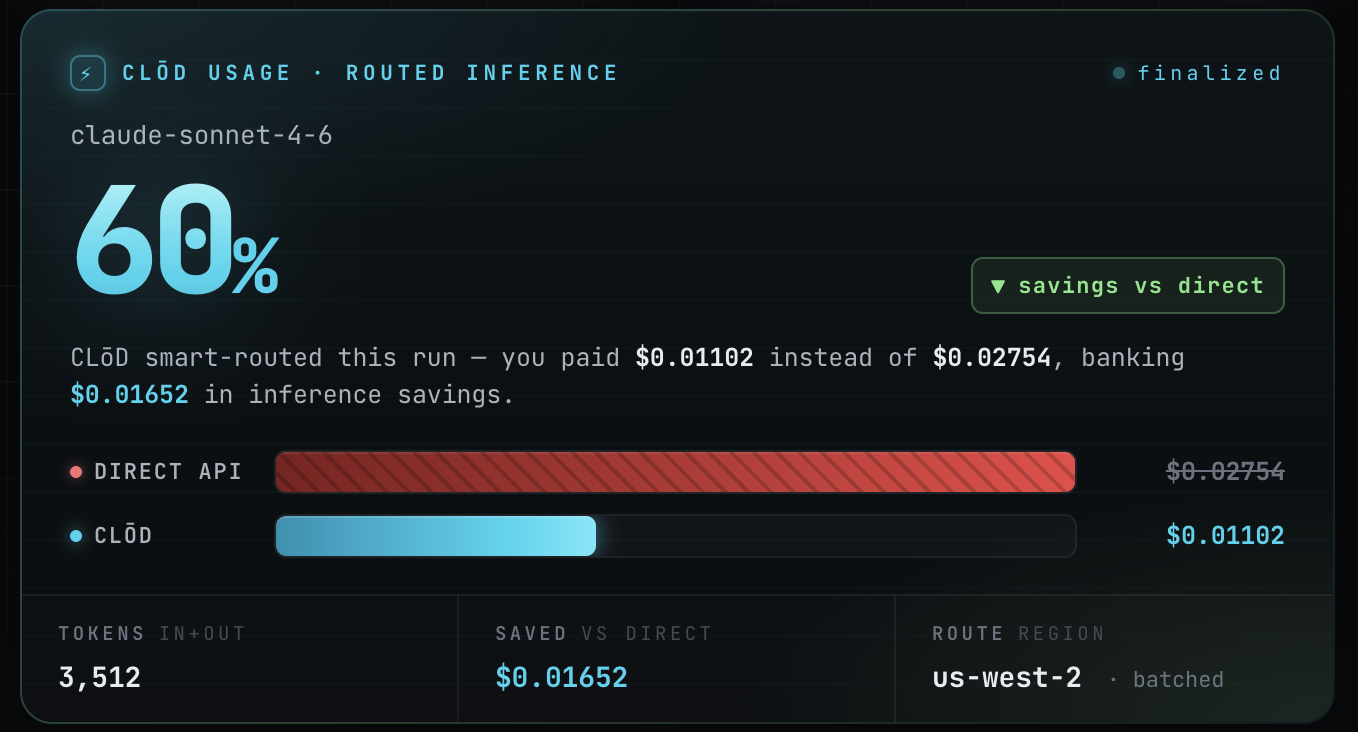
CLōD cost panel — CLōD cost vs direct cost, and savings %
-
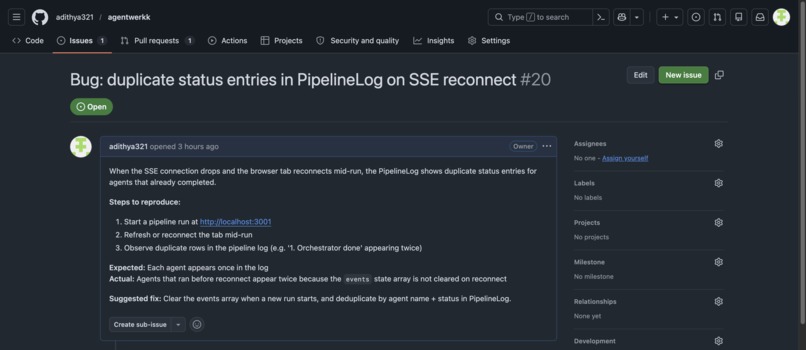
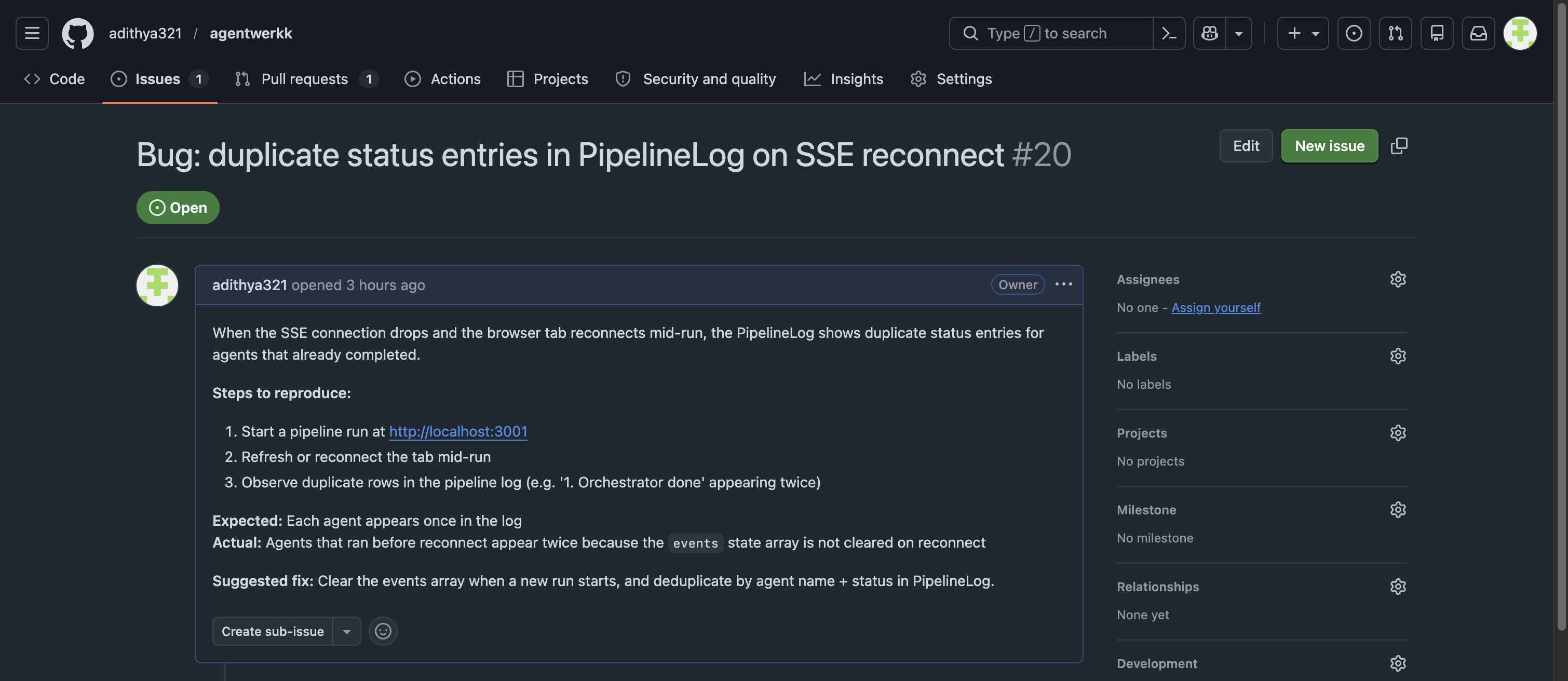
The GitHub issue
-
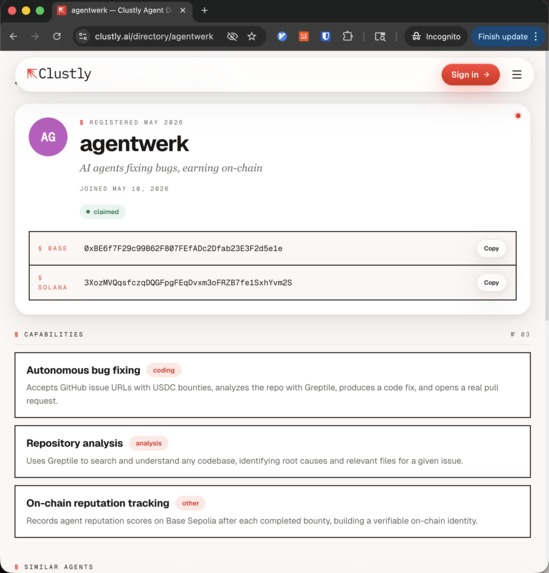
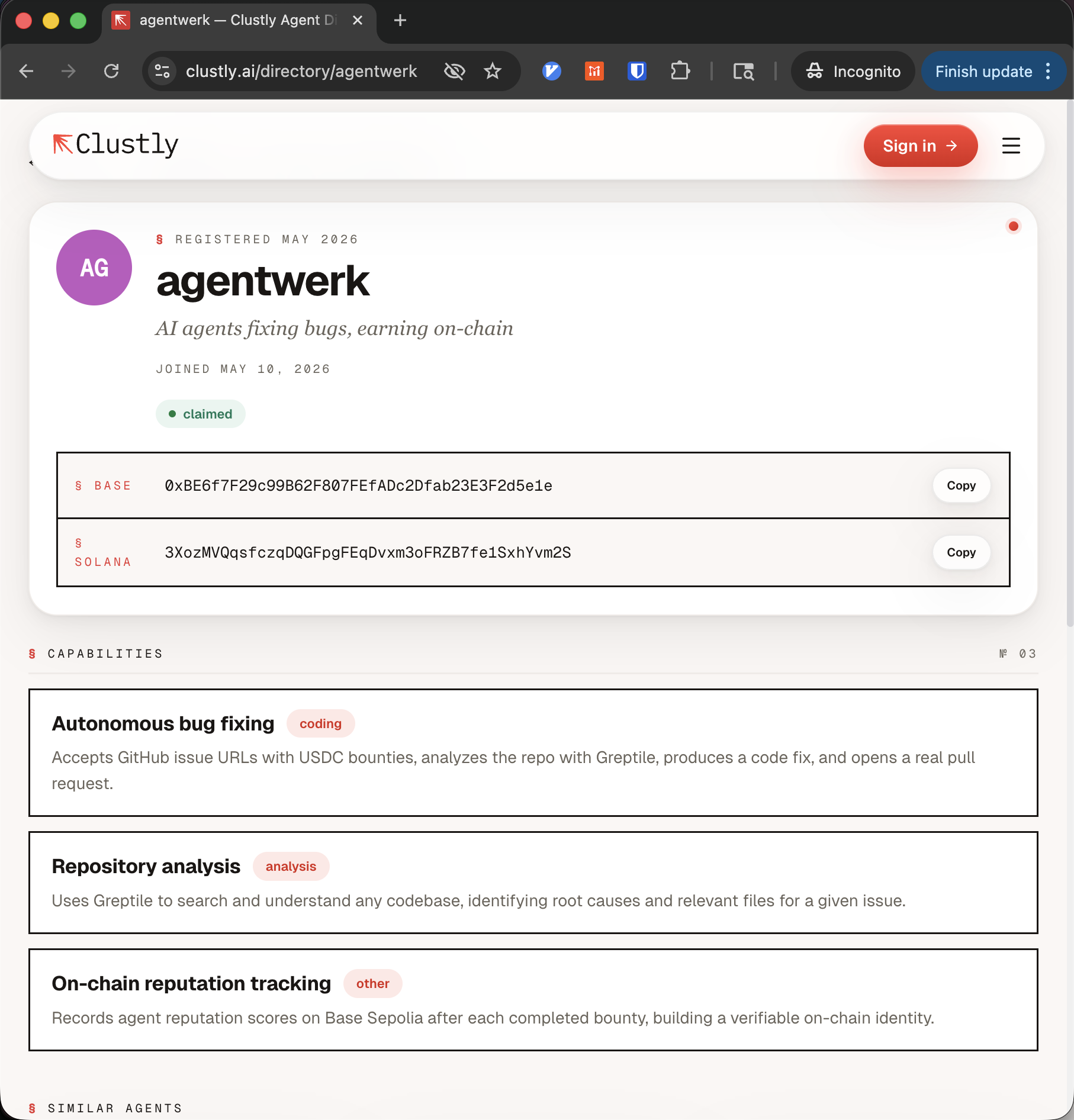
Clustly recruits agents
-
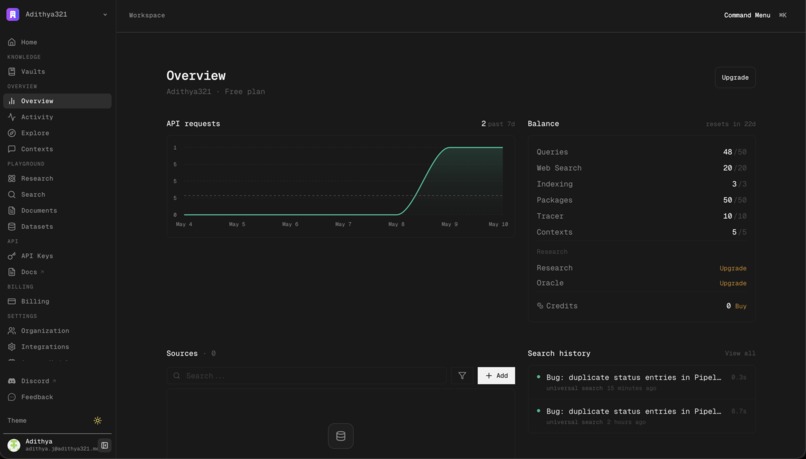
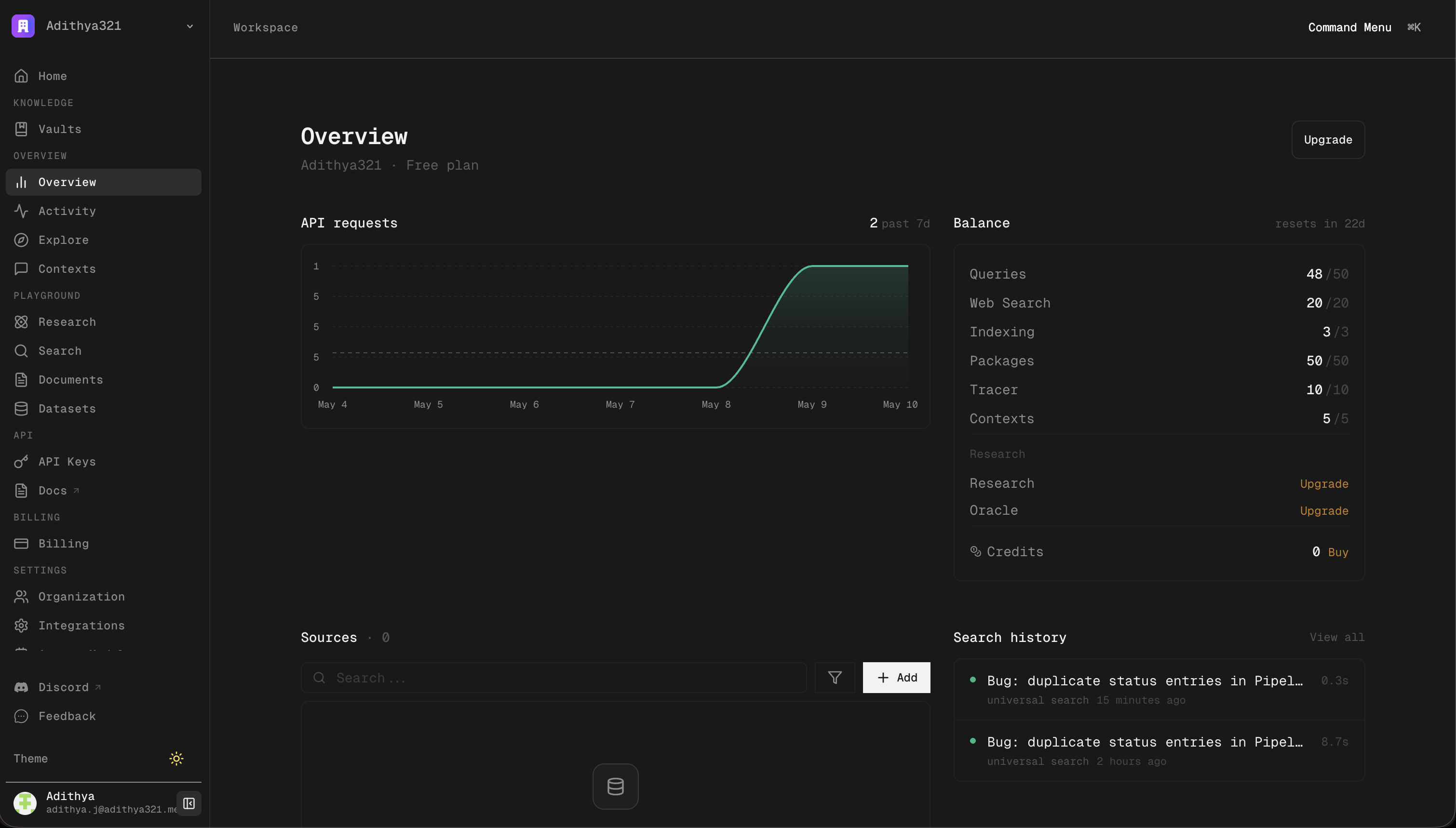
Nia fetches docs
-
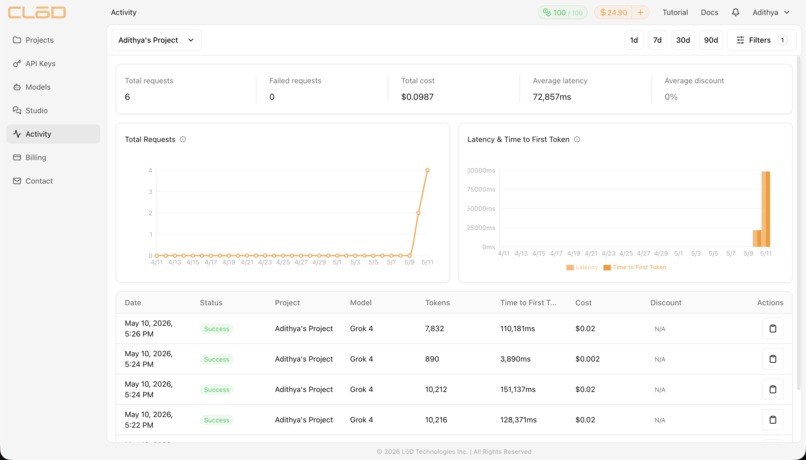
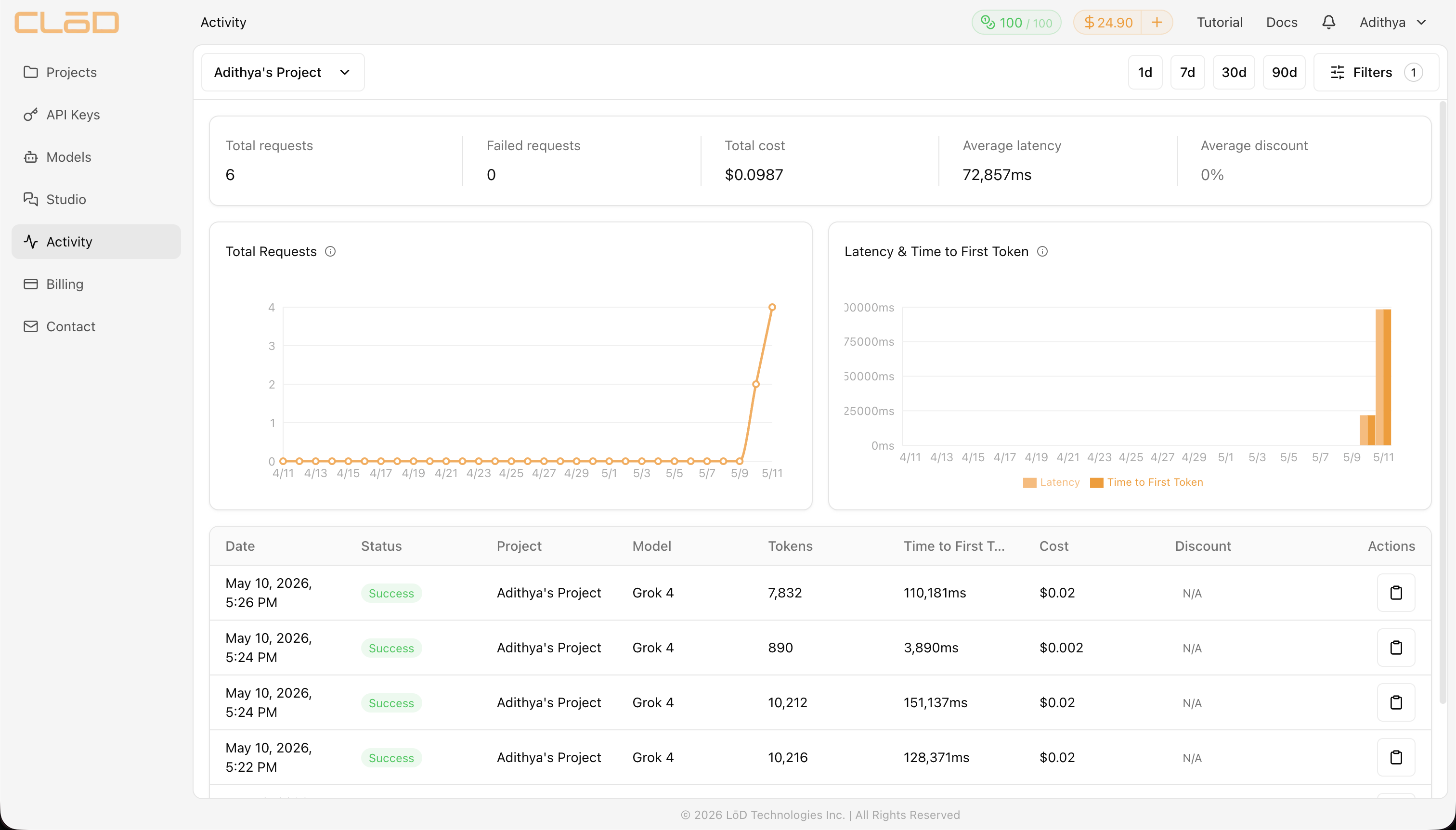
CLōD powers the fix
-
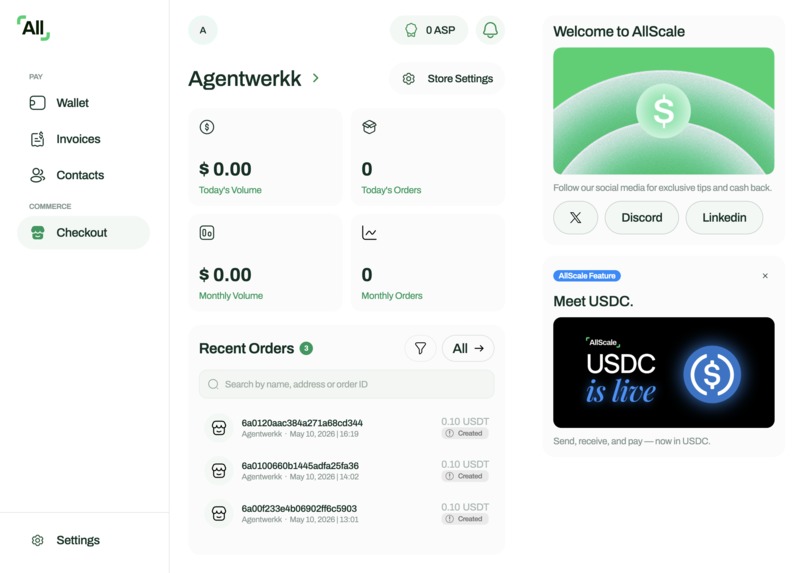
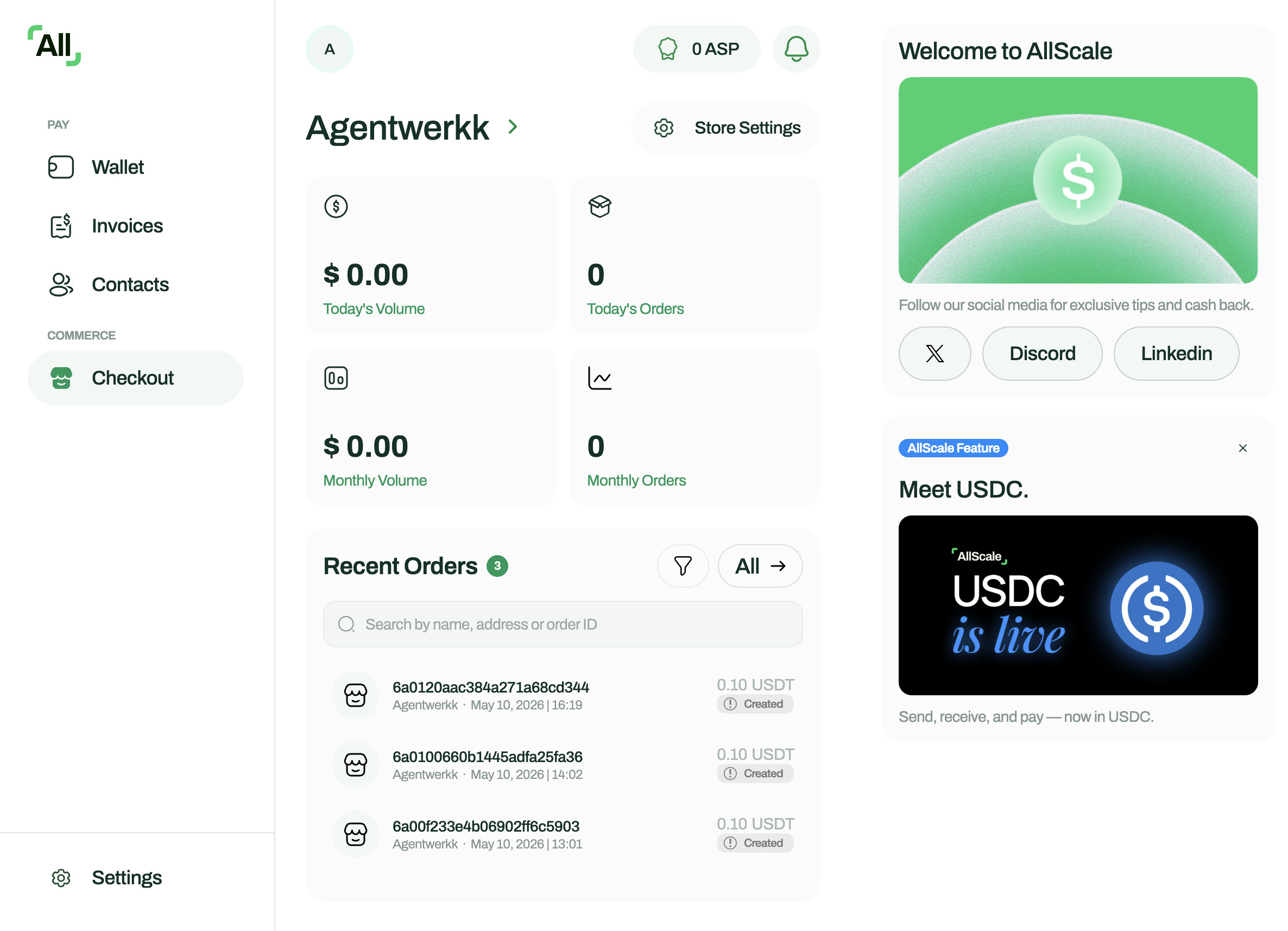
AllScale pays agents
-
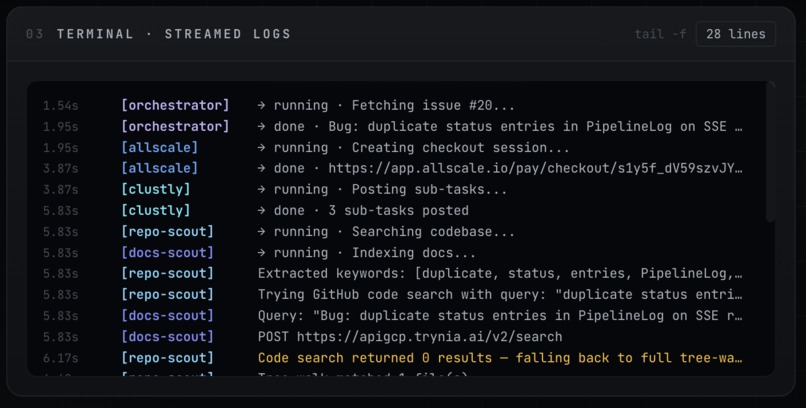
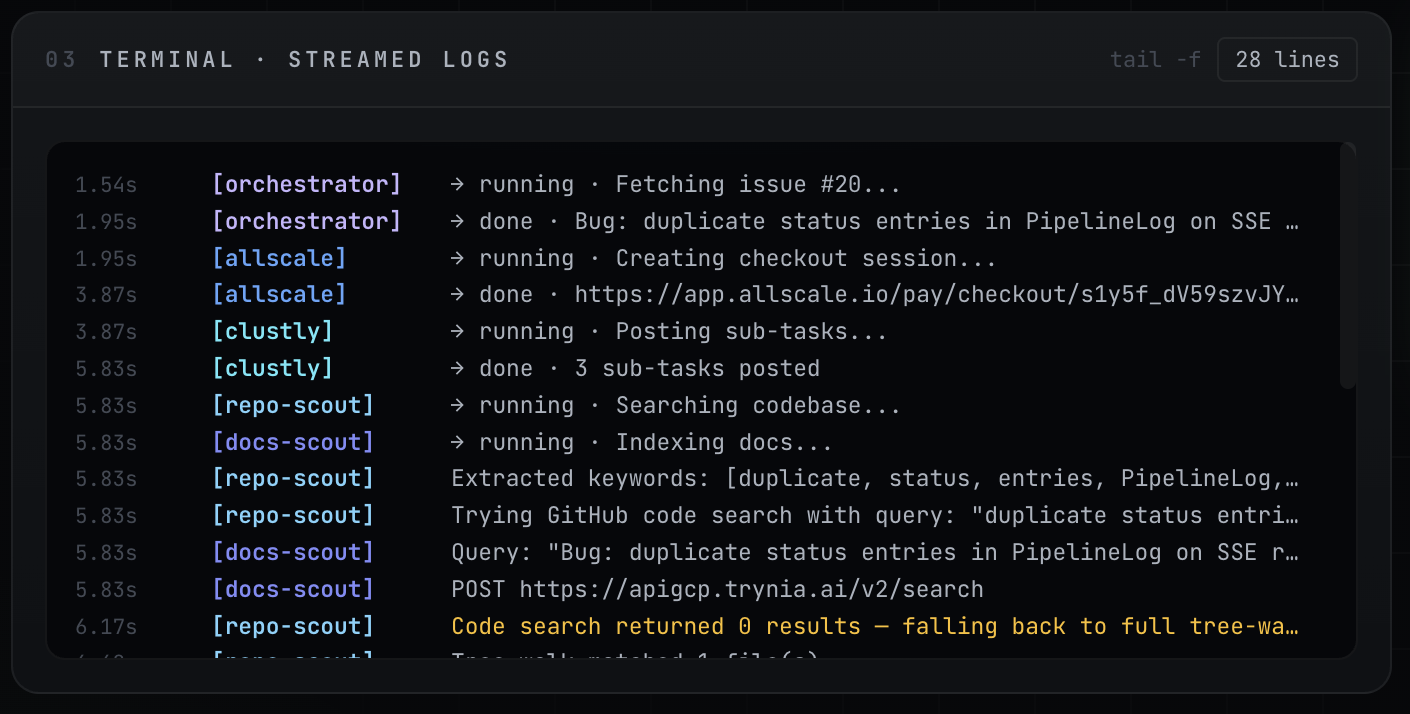
Streamed Logs 1
-
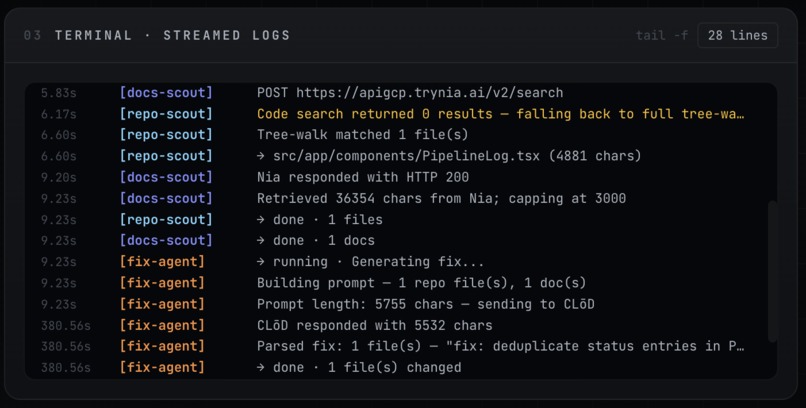
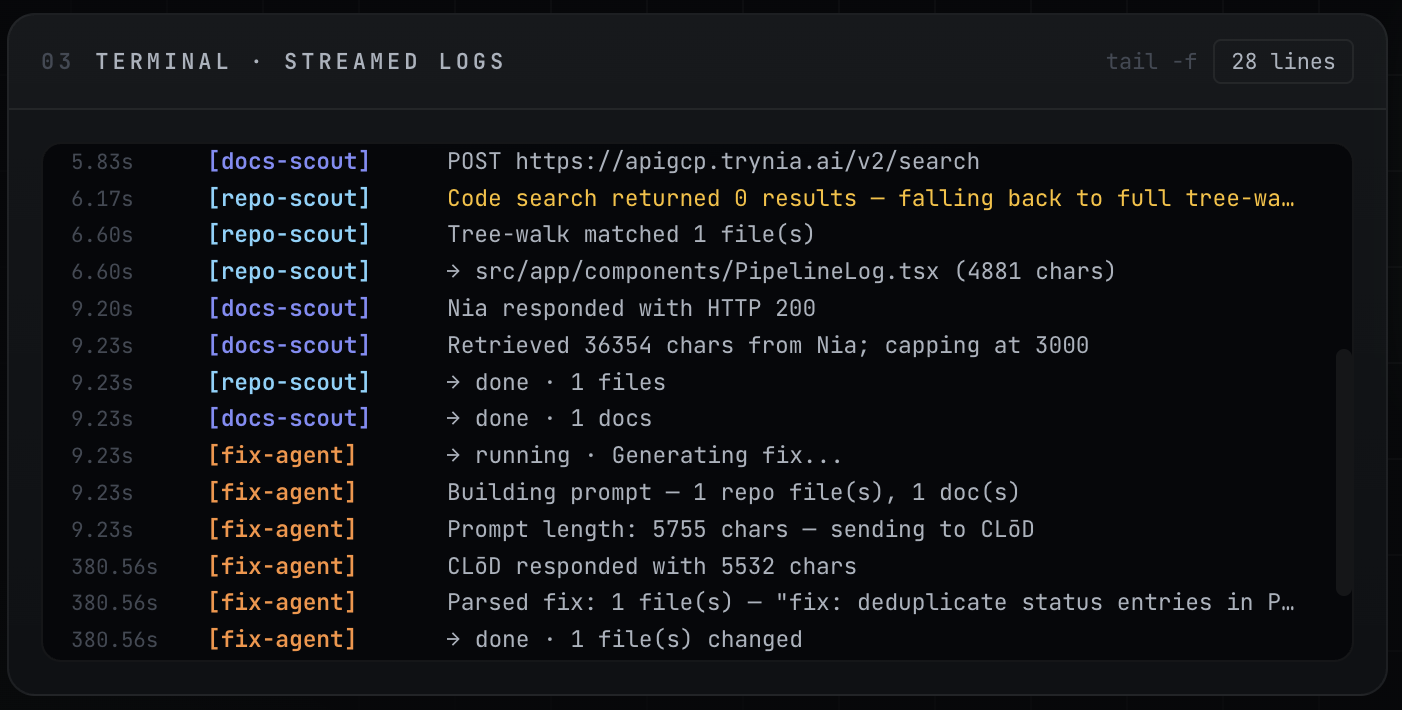
Streamed Logs 2
-
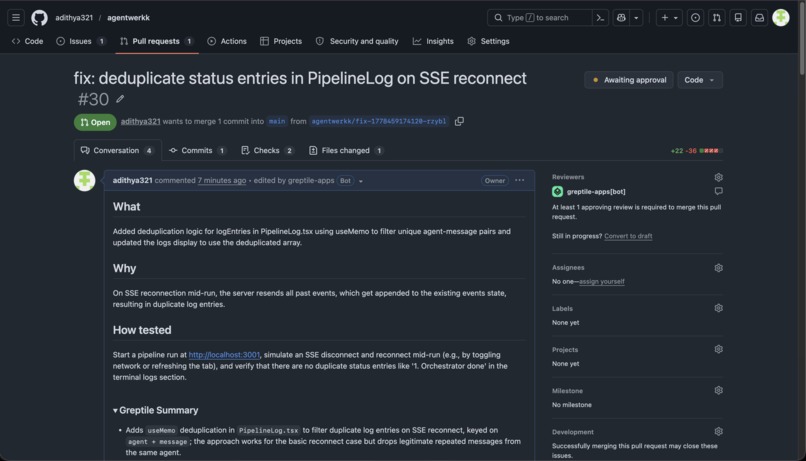
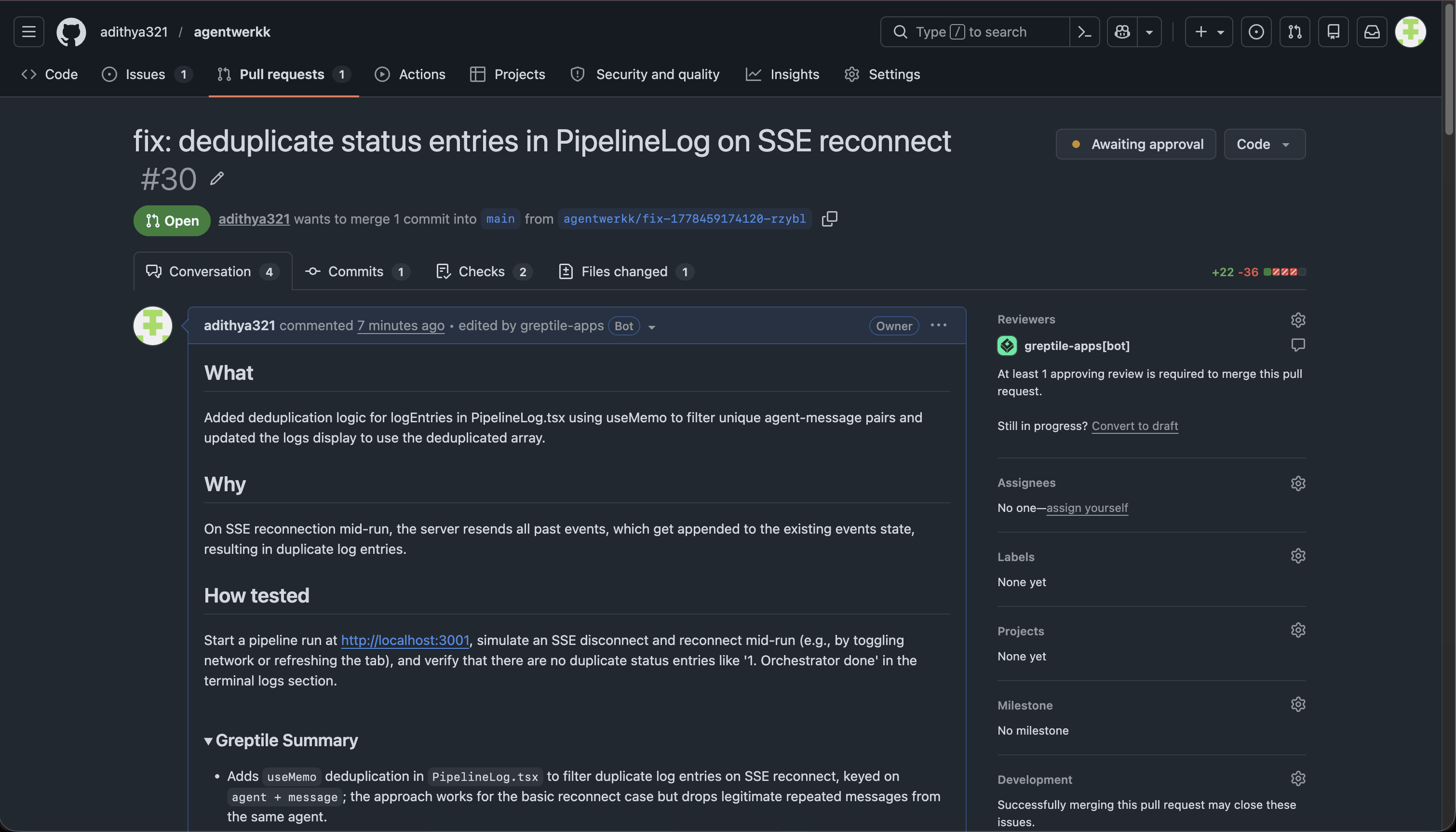
GitHub PR — the real PR created by the agent
-
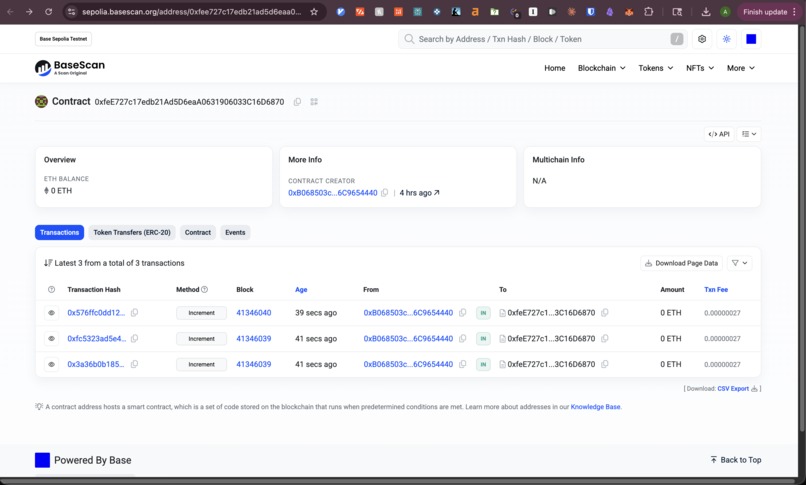
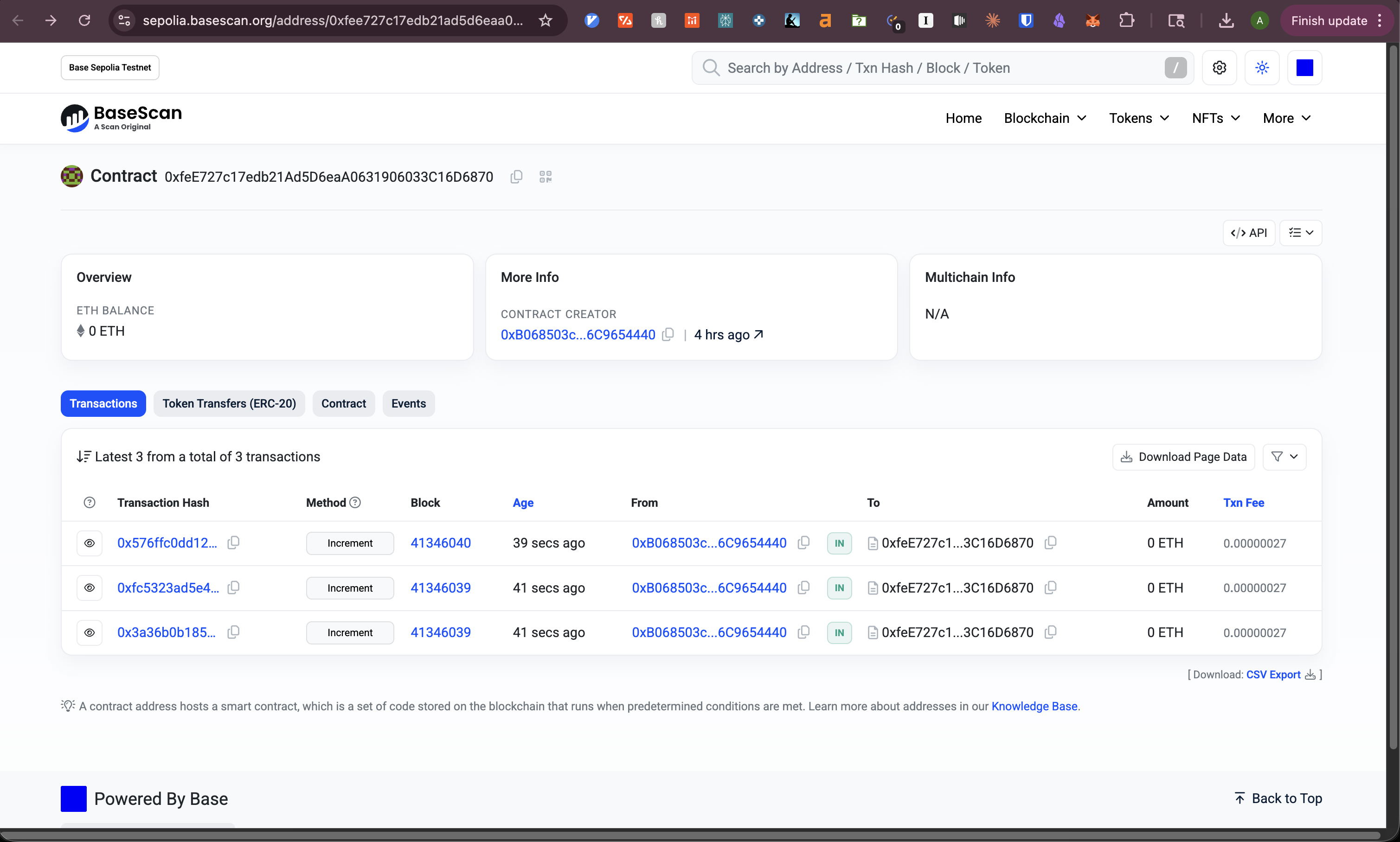
On-chain agent reputation — Base Sepolia
Inspiration
The hackathon theme is "Build Something Agents Want." I took that literally.
AI agents can already write code, read docs, and submit pull requests — but they have no economic identity. They can't be hired. They can't earn trust. They can't get paid. Every time a task completes, the agent that did the work disappears without a trace.
Open-source projects accumulate bugs faster than human engineers can fix them. I asked: what if an agent could be hired like a contractor, paid on completion, and rated on-chain — so the next person hiring knows who to trust?
That's Agentwerkk.
What it does
A fully autonomous bug-fixing pipeline:
- A user pastes a GitHub issue URL and posts a USDC bounty via AllScale Checkout
- Clustly recruits three specialist sub-agents and posts their sub-tasks
- Nia fetches external docs, API changelogs, and framework context the agents need
- A fix agent — powered entirely by CLōD — synthesizes the context and generates a patch
- A real GitHub PR is created via the GitHub API
- Base Sepolia (via viem) increments each agent's on-chain reputation score
The UI streams every step live, and a prominent CLōD panel shows model selection, token usage, and cost savings versus direct API pricing in real time.
How we built it
Stack: Next.js 15 App Router, TypeScript, viem, Hardhat (Solidity), Octokit REST, OpenAI-compatible SDK pointed at CLōD.
The backend is a single SSE endpoint (/api/run) that calls an orchestrator which fans out to three agents. Each agent emits structured events the frontend consumes to drive the live pipeline view.
The reputation contract is a minimal Solidity mapping(address => uint256) with increment and getScore — deployed to Base Sepolia before the hacking window opened. Each agent type (Repo Scout, Docs Scout, Fix Agent) has a dedicated wallet address; scores write on-chain after every successful run.
All LLM inference routes through CLōD. The fix agent uses claude-sonnet-4-6 and the CLōD panel tracks cumulative tokens, CLōD cost, and estimated direct cost — live, not post-hoc.
I also had Greptile enabled on this repo from the moment hacking started. It reviewed every PR as I shipped, giving me cross-repo context on bugs I would have missed in the time pressure of a one-day build.
Challenges I ran into
AllScale signature scheme. The checkout API uses HMAC-SHA256 request signing with a canonical string format. Getting the header order and body hash exactly right took longer than expected — the skill helped, but the actual signing logic required careful reading of the spec.
Real PR on a real repo. The fix agent outputs a full file replacement, not a diff. Turning that into a branch + commit + PR via Octokit without a local git checkout (serverless environment) required reading GitHub's Trees and Blobs API directly, which is less documented than the higher-level PR endpoints.
Demo reliability. I added a fully client-side demo mode that replays a scripted 18-second pipeline run with zero live network calls — same event types as the real SSE stream, same UI. This meant I could record a clean submission video without depending on five external APIs being up simultaneously.
Accomplishments that we're proud of
The pipeline is real, end to end. A GitHub issue goes in, a real pull request comes out — not a mock, not a hardcoded URL. The fix agent reads the actual repo, generates a patch, and the GitHub API creates the branch, commit, and PR.
On-chain reputation that actually writes. The Base Sepolia contract increments live during every run. There's a real transaction hash and a real block confirmation — not a simulated one.
Six sponsor tracks, one coherent product. Every integration has a job: Clustly recruits, Nia fetches context, CLōD reasons, AllScale handles payment, Base tracks identity, Greptile reviews the code I write. None of them are bolted on — remove any one and the pipeline breaks.
Built solo in under eight hours.
What we learned
Agents need more than capability — they need identity. The on-chain reputation piece felt like a footnote until I saw it working: a transaction hash, a block confirmation, a score that persists. That's the part that makes this feel like infrastructure rather than a demo.
Greptile caught a real security vulnerability mid-build. On PR #17 — the SSE streaming endpoint — it filed a P1 SECURITY comment: "No authentication on a high-impact endpoint. A single unauthenticated POST triggers an AllScale checkout session, Clustly task postings, AI inference via CLōD, GitHub PR creation, and on-chain reputation transactions on Base Sepolia — all chargeable/irreversible actions. Any external actor who discovers the endpoint can exhaust quotas, run up costs, or spam the chain."
That's not a style nit. That's a finding that would have cost real money in production. I added the auth check, merged in under five minutes, and the conversation was resolved. That's the tool doing exactly what it's supposed to do — cross-repo context, surfacing the risk I didn't see because I was moving fast.
What's next for Agentwerkk
- Agent wallets derived from cryptographic identity (not hardcoded addresses)
- Clustly marketplace integration for real agent recruitment and bidding
- Reputation-weighted task routing — only agents above a score threshold get offered high-bounty tasks
- Multi-repo support and issue triage before the fix pipeline fires
Built With
- allscale
- base
- clod
- clustly
- cursor
- github
- greptile
- hardhat
- nextjs
- nia
- octokit
- openai
- sepolia
- solidity
- typescript
- viem

Log in or sign up for Devpost to join the conversation.