-
-
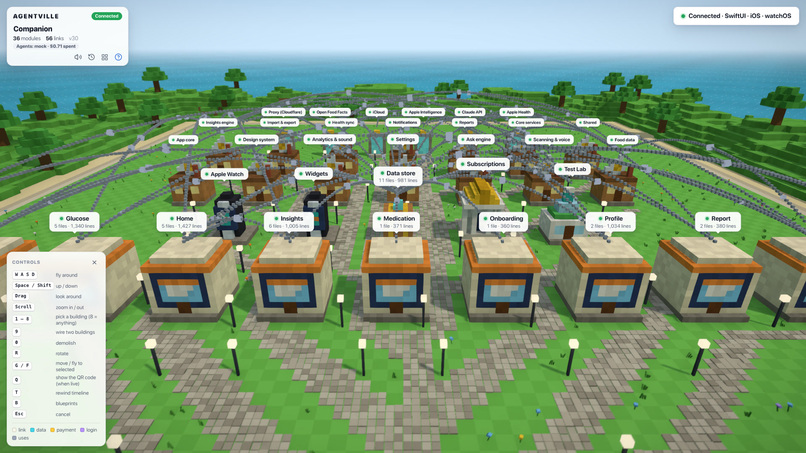
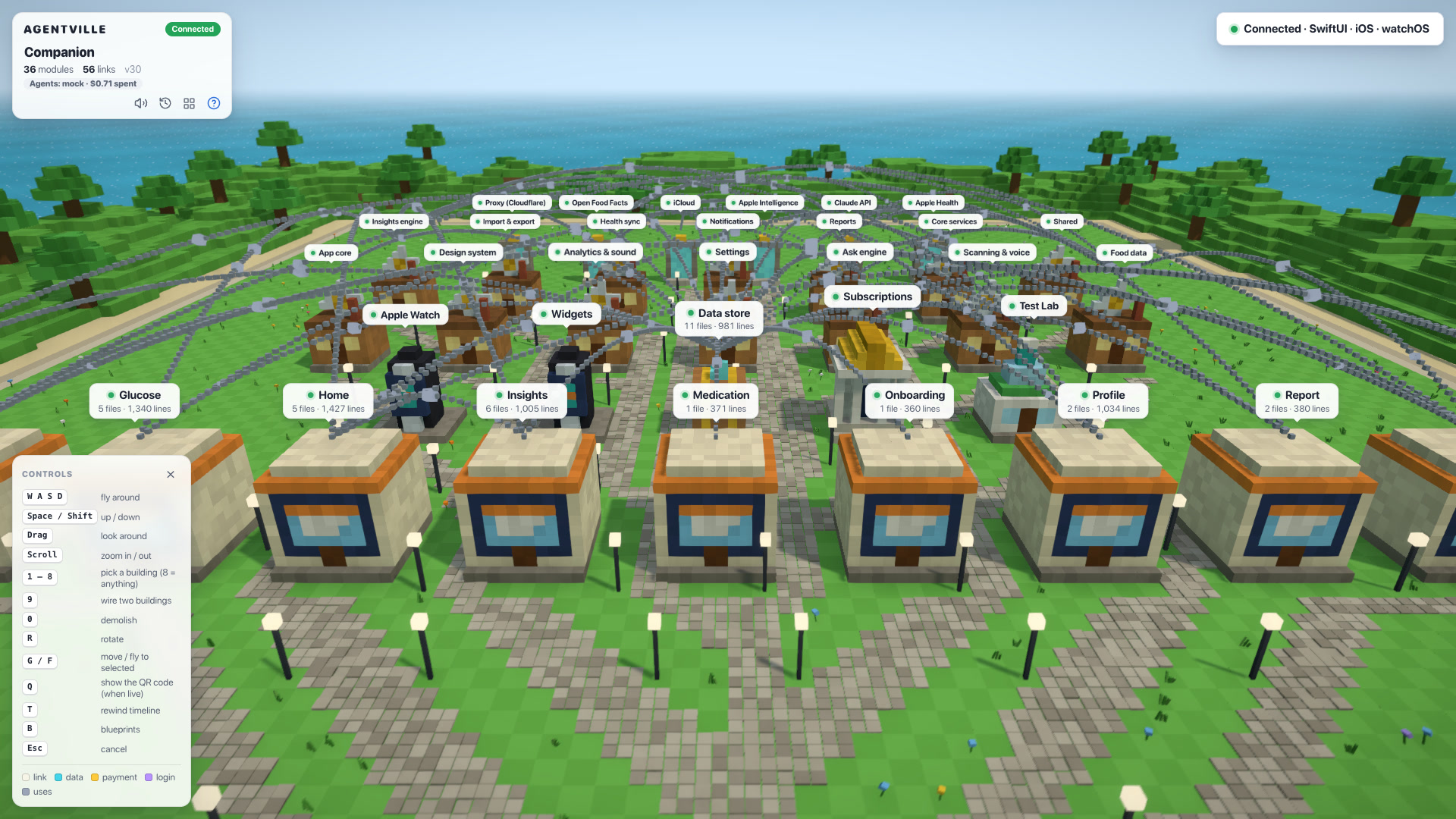
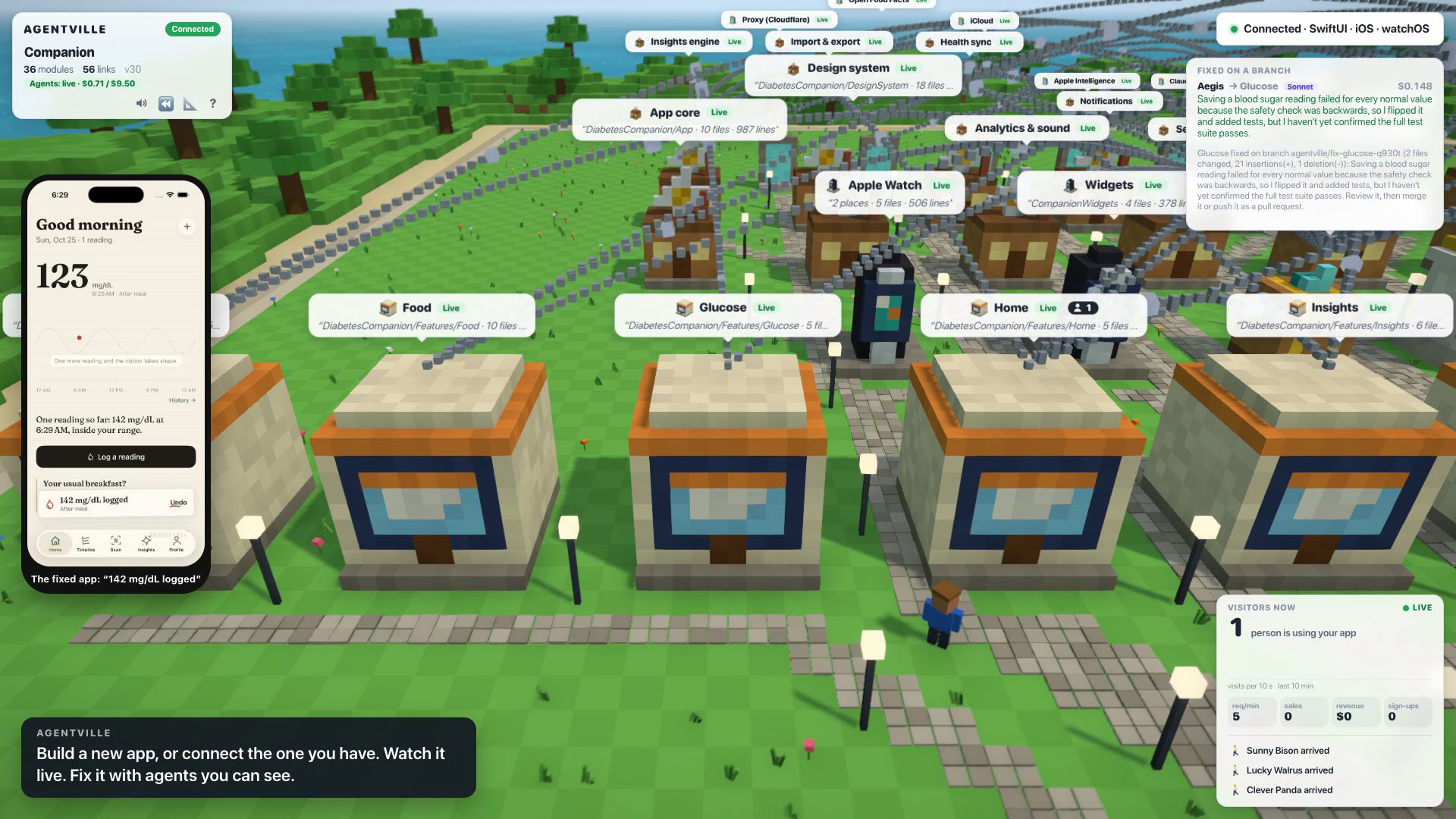
Your Companion app as a town (screens row up close)
-
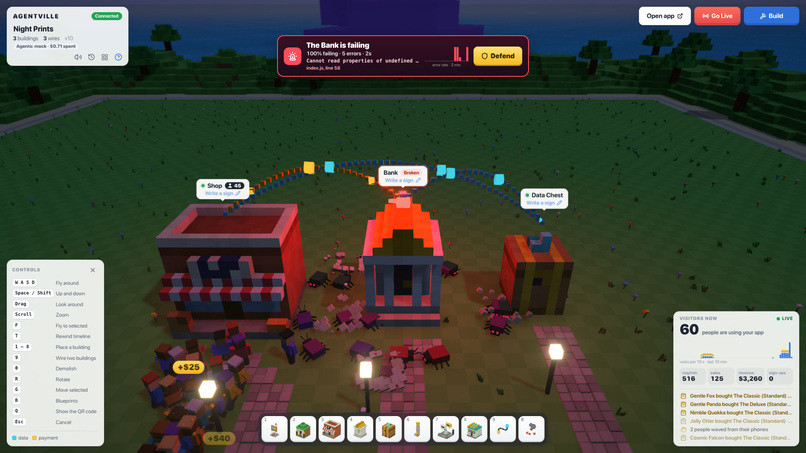
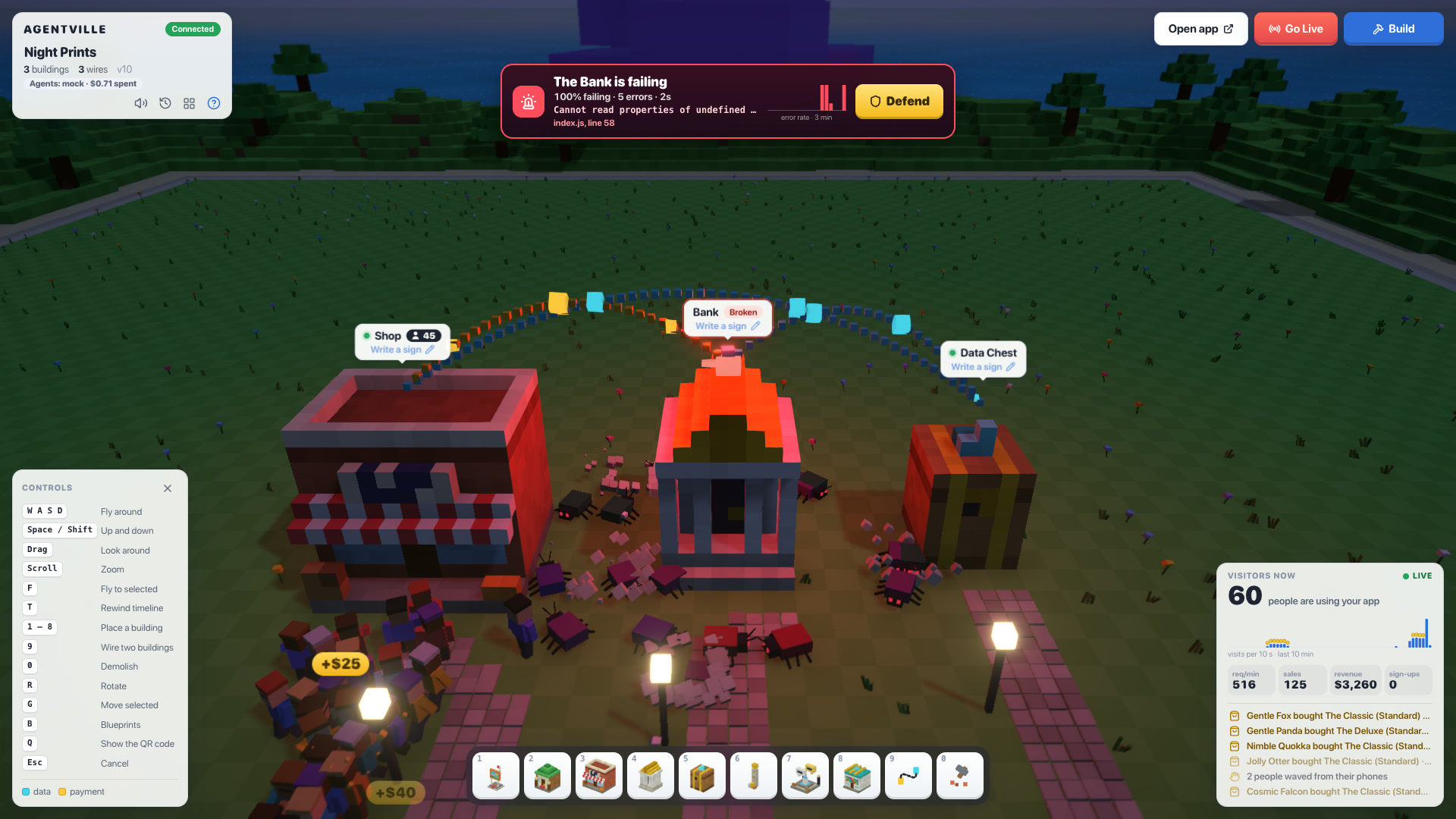
Night falls: "The Bank is failing" with Defend, bugs swarming │
-
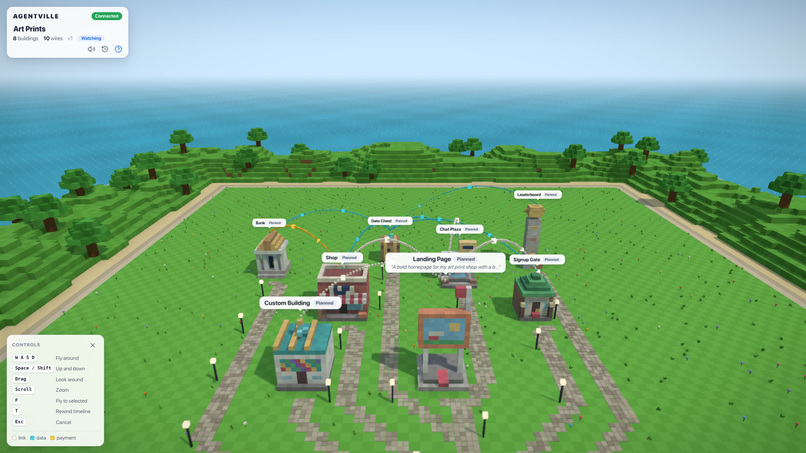
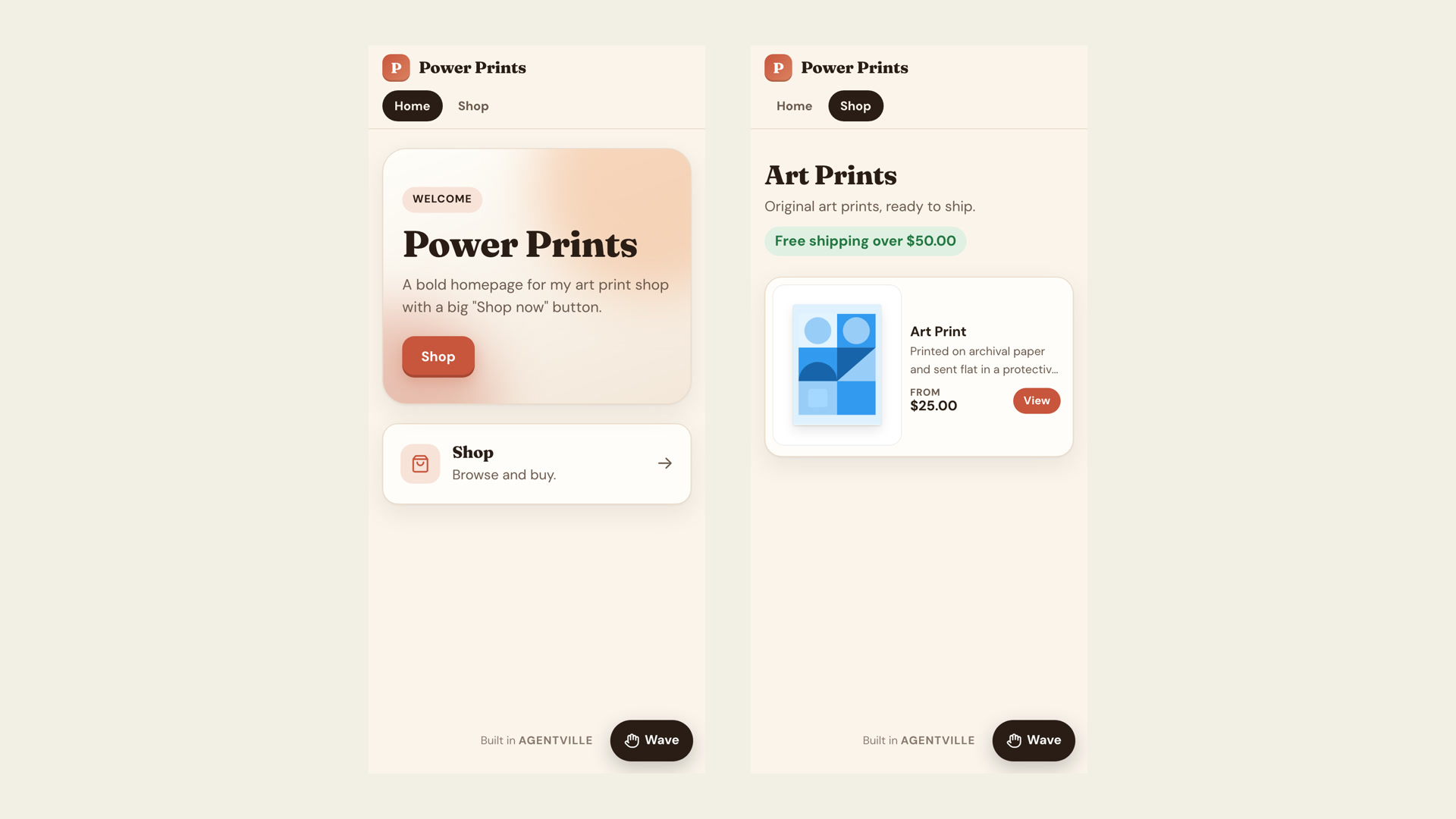
Generated App
-
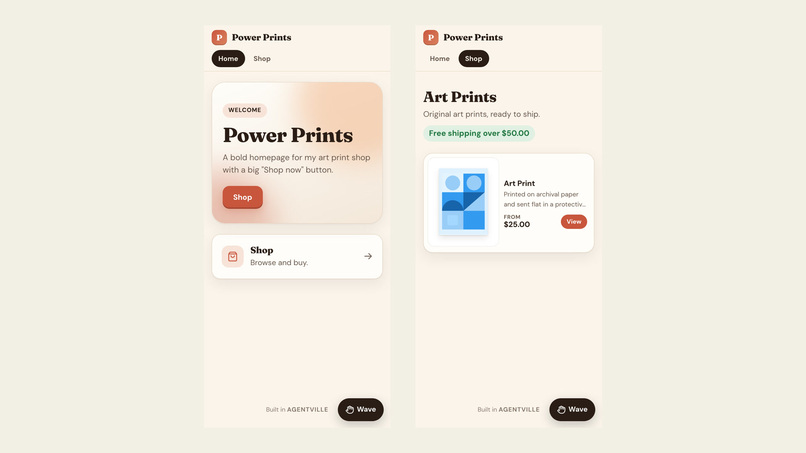
Simulator
-
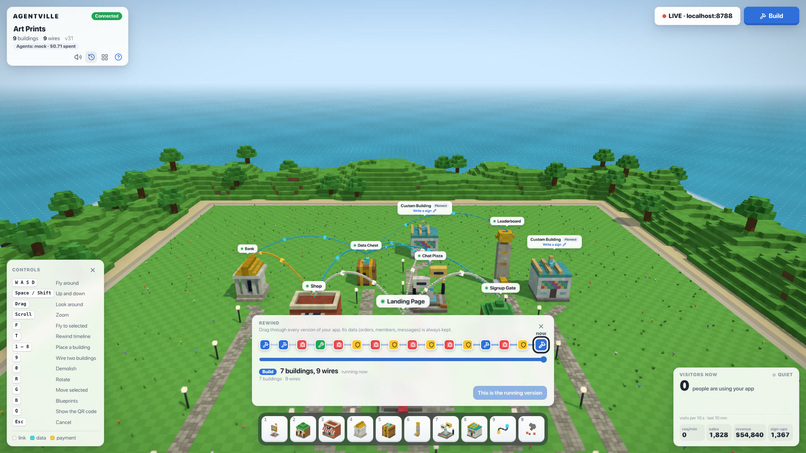
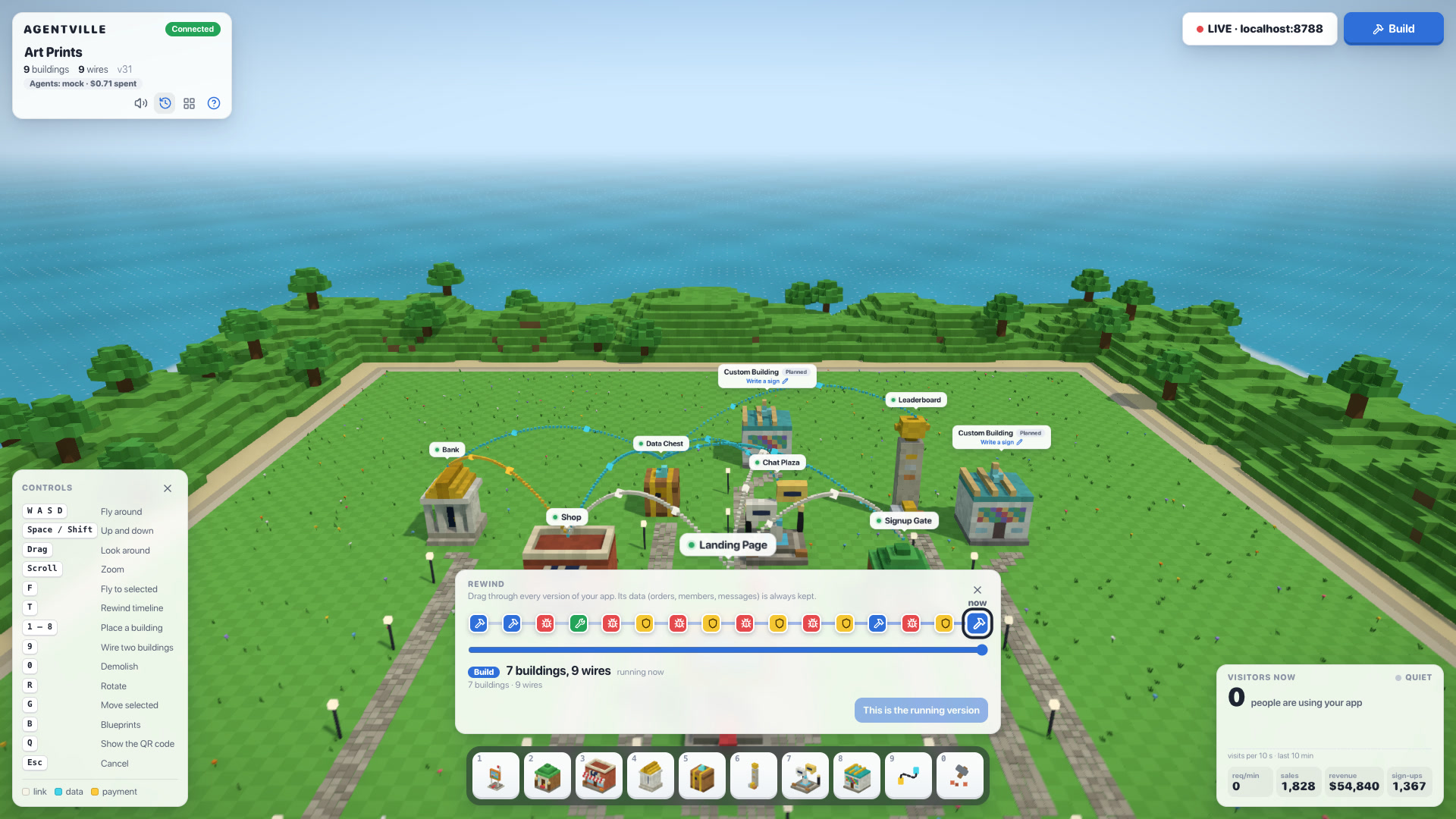
Rewind: every version of the app
-
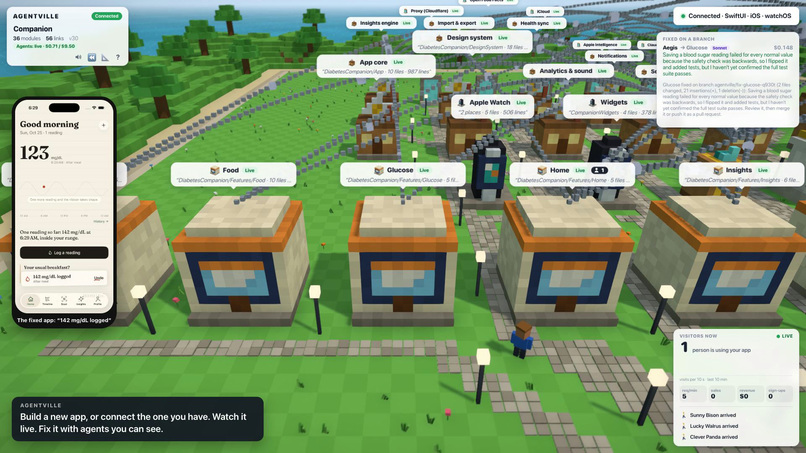
Fixed on a branch, with the phone showing "142 mg/dL logged"
-
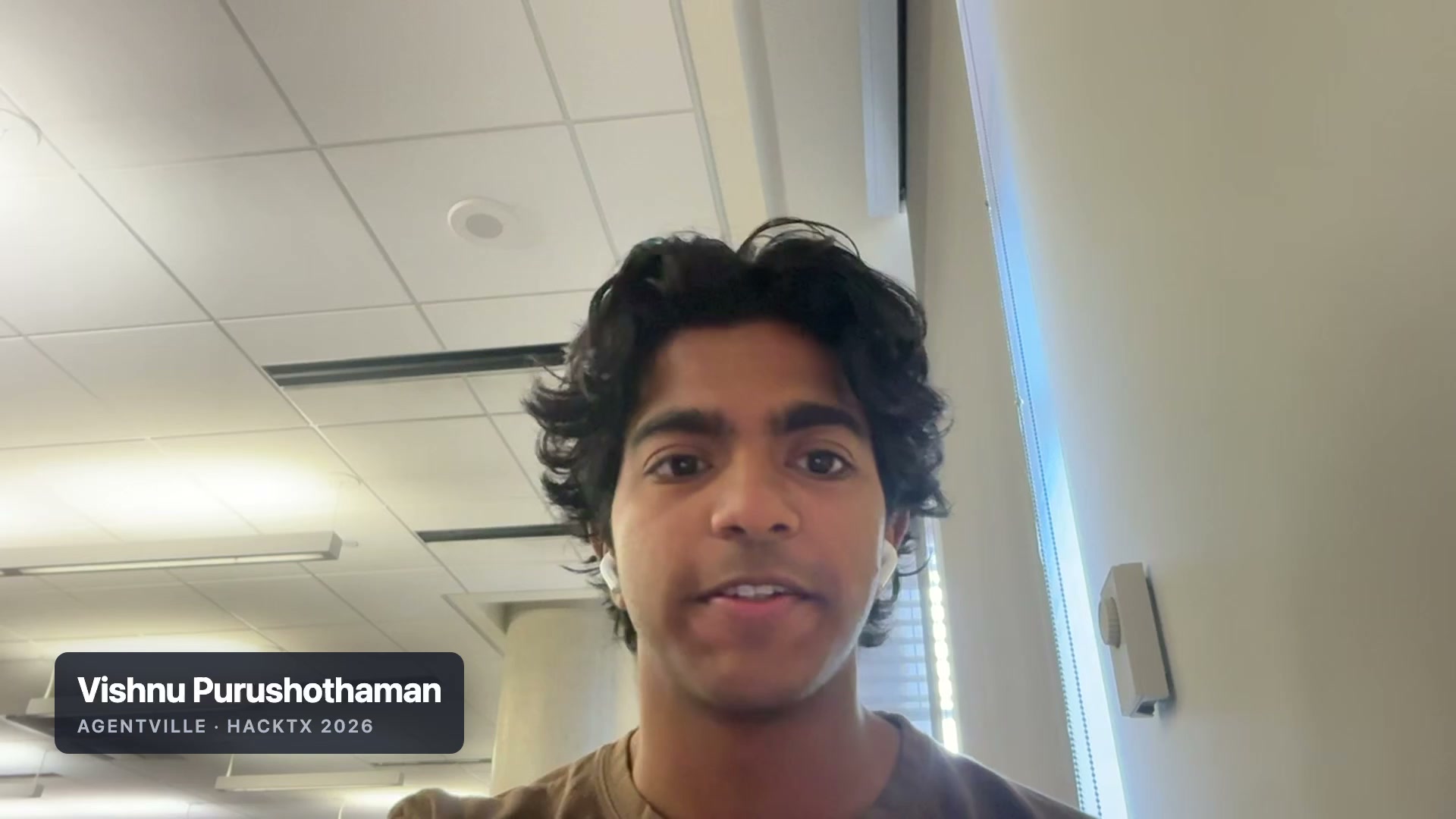
Me!
-
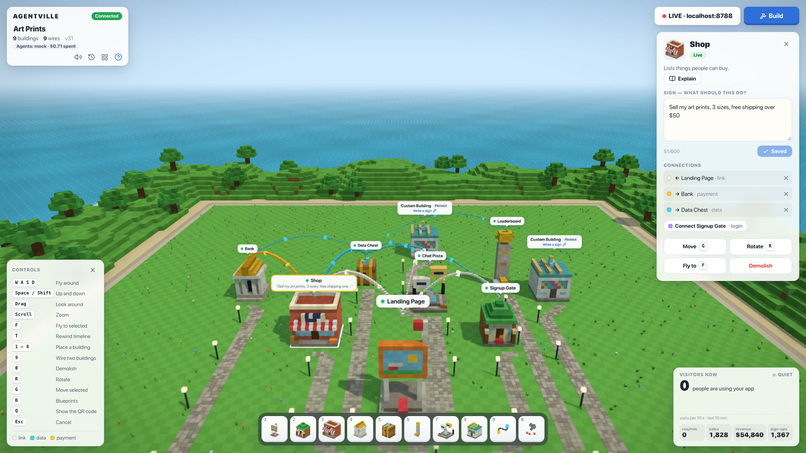
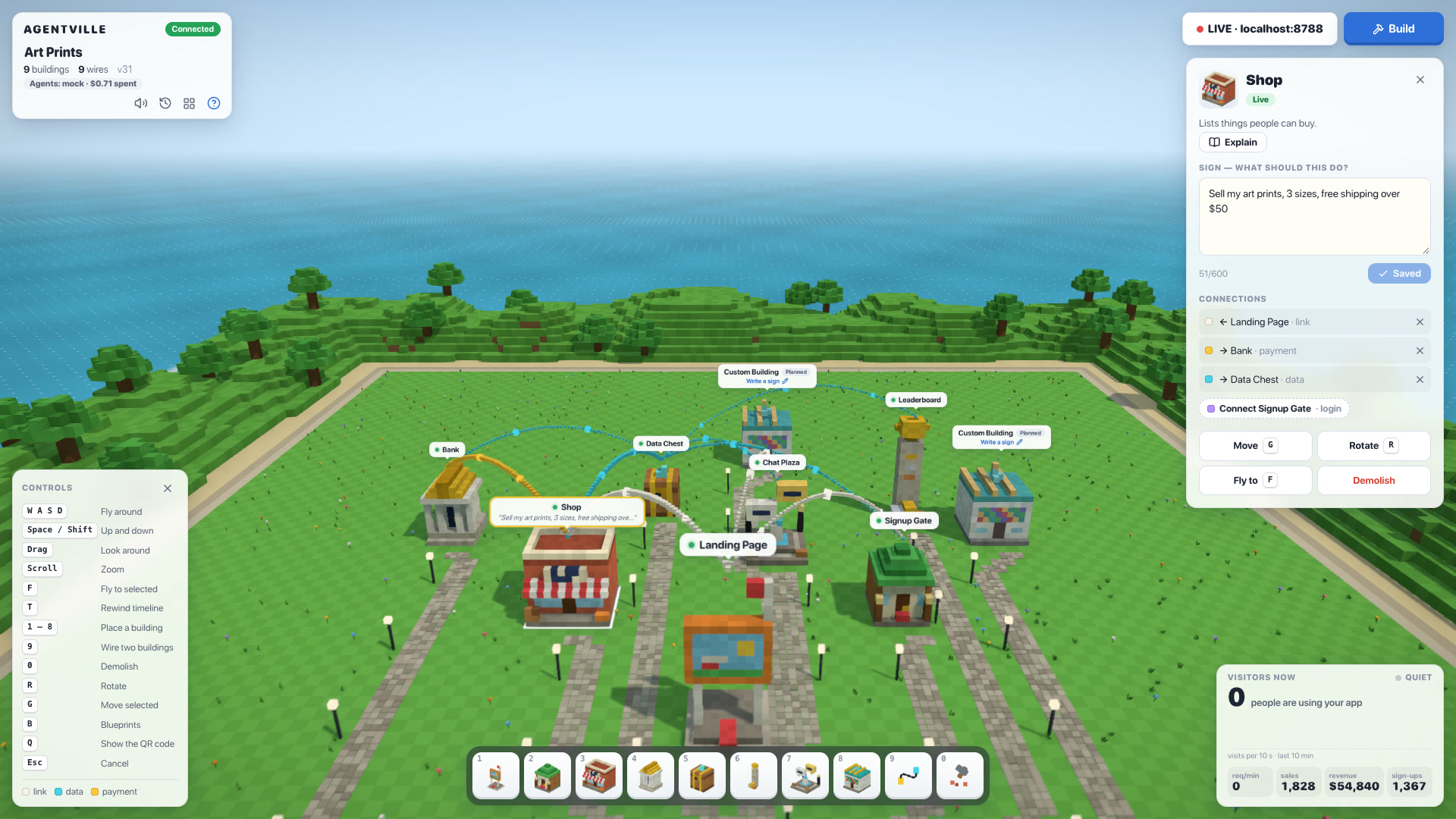
A building's sign and its connections (the inspector)
Inspiration
I wanted a way to get comfortable with code more easily. Our generation grew up with games like Minecraft and Roblox where we got to build towns, shops and games, but when those same people want a real website, they hit a wall of code, understandably. AI agents can now write real software, but they hide in chat boxes where you can't see what they're doing, and may be confusing for those new to it. So I combined the two: a world where building is programming, and you can watch it happen.
What it does
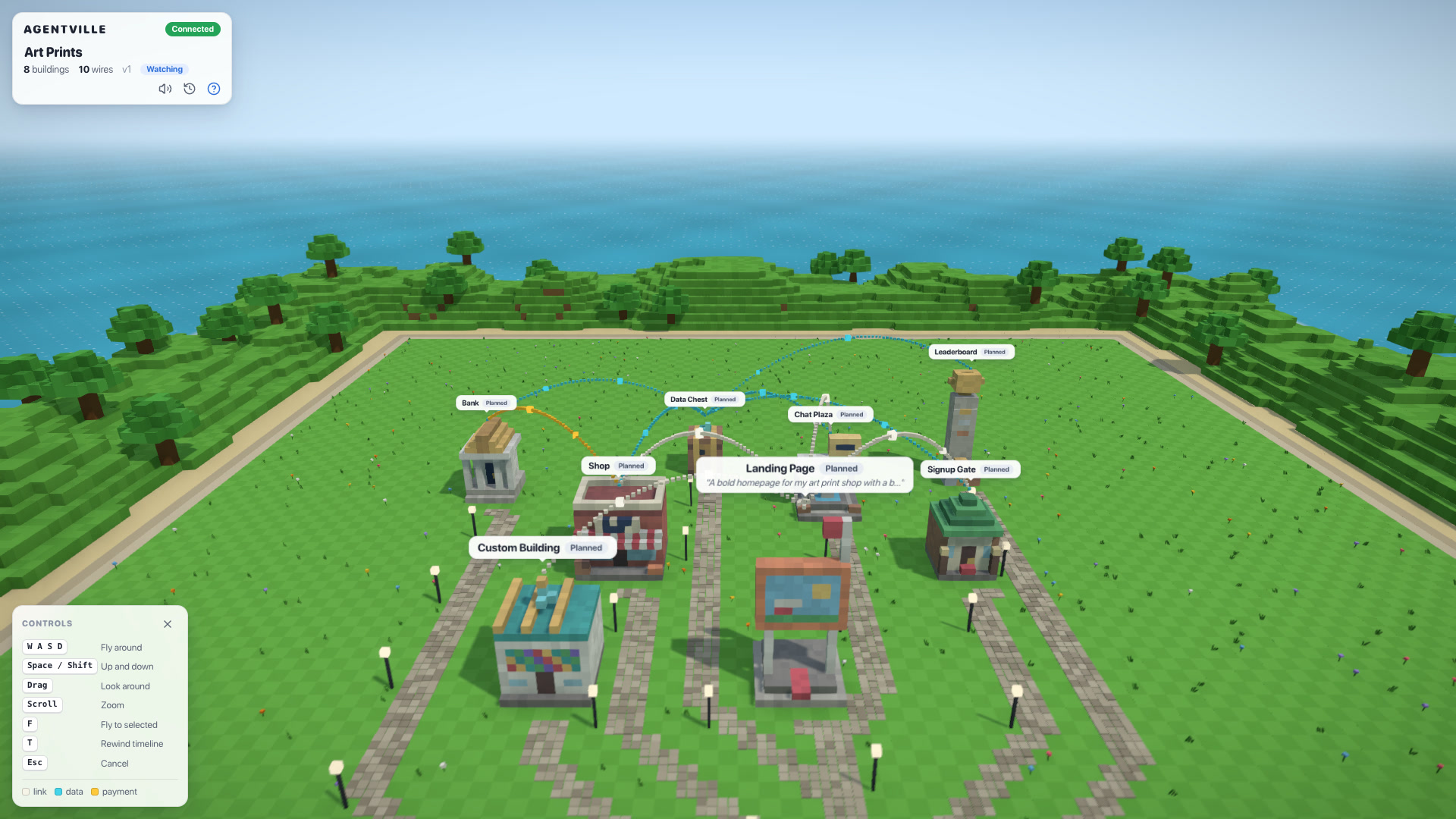
AGENTVILLE is a blocky 3D world where building a town builds a real, live web app. You place buildings like a Shop, Bank, Data Chest, Signup Gate, Leaderboard, Chat Plaza or a Custom Building, wire them together, and write what you want on a sign in plain English, like "sell my art prints, 3 sizes, free shipping over $50". You can also describe the whole app in one sentence and get a planned town.
Press Build and Claude agents run out to write the real code. Each agent is a character driven by its real tool calls: it walks into a building to read a file, scaffolding rises while it edits, and it holds up a magnifier to run tests. Press Go Live and a giant QR code appears. Anyone who scans it uses the real app on their phone, with payments through Capital One Nessie, and each visitor appears in the world walking to the page they're on.
When something breaks for real, night falls over that building and bugs swarm it. Press Defend and an agent gets the real error and stack trace, fixes the code, proves it with tests and redeploys with no downtime, and then the sun comes back. Rewind, Explain, Blast Radius and Data Chests let people who don't read code see and undo everything. Underneath, every world is a normal Node.js app in its own git repo.
How we built it
A TypeScript monorepo with a React Three Fiber voxel client, a Fastify and WebSocket server, and a shared protocol validated with zod. All the art is made in code, and the crowd uses instancing and flow-field pathfinding to stay near 60 fps with hundreds of visitors. The builders use the Claude Agent SDK, with Haiku for cheap triage and Sonnet for real coding. Each agent is sandboxed to its own building's folder and can only run the tests, and the server re-runs the tests itself before shipping anything. Tiger Data (TimescaleDB) stores the world state, each app's data, and every visitor event and error as hypertables, which feed the live traffic and error-rate charts. Vultr hosts it at agentville.tech.
Challenges we ran into
Keeping the animations honest meant every movement had to come from a real tool call, which meant properly sandboxing the agents. Swapping app versions while people were paying needed blue/green deploys that never drop a payment. A 300-visitor load test found a real 10-second stall from the chat polling the database, which a short shared read cache fixed. I also had only $10 of API credit for the whole hackathon, so I built a mock mode that replays real recorded agent runs.
Accomplishments that we're proud of
Everything is real: code written by agents, real tests, a live app anyone can open from the QR code, real Nessie payments, real visitors and real bugs fixed by agents. The load test handled 500 visitors and 19,819 requests with 0 errors and a 3 ms median, while the world drew all of them on screen. Someone with no coding experience can go from an empty field to a live shop that strangers buy from, and watch them do it.
What we learned
Agents are far more reliable when they start from working, tested templates and the platform checks their work instead of trusting them. Load testing early finds real problems before the stage does. And making AI's work visible changes how people feel about it: watching an agent walk into a building to read a file makes "what is it doing?" obvious.
What's next for AGENTVILLE
Generating standard Next.js apps, connecting existing production apps, opening pull requests on GitHub, editing a building by conversation, real Stripe payments and custom domains, and multiplayer building with accounts.
Built With
- anthropic
- caddy
- capital-one-nessie
- claude
- claude-agent-sdk
- fastify
- git
- node.js
- playwright
- postgresql
- react
- react-three-fiber
- swiftui
- tech-domains
- three.js
- tiger-data
- timescaledb
- typescript
- ubuntu
- vite
- vitest
- vultr
- websockets
- zod
- zustand



Log in or sign up for Devpost to join the conversation.