Inspiration
AI agents are becoming increasingly autonomous. They can make decisions, use tools, access data, interact with services, and act on behalf of users. But as their autonomy increases, one major question becomes unavoidable:
How can I trust an AI agent to act on my behalf?
Traditional permission systems can control access, but they do not fully address whether an AI agent is acting within its delegated authority, why an action was taken, how risky it is, or who is accountable afterward.
This inspired me to build AgentTrust — a decentralized trust and delegation layer for autonomous AI agents focused on permission, risk evaluation, transparency, and accountability.
What it does
AgentTrust provides a trust layer around autonomous AI actions.
The system is designed around three core components:
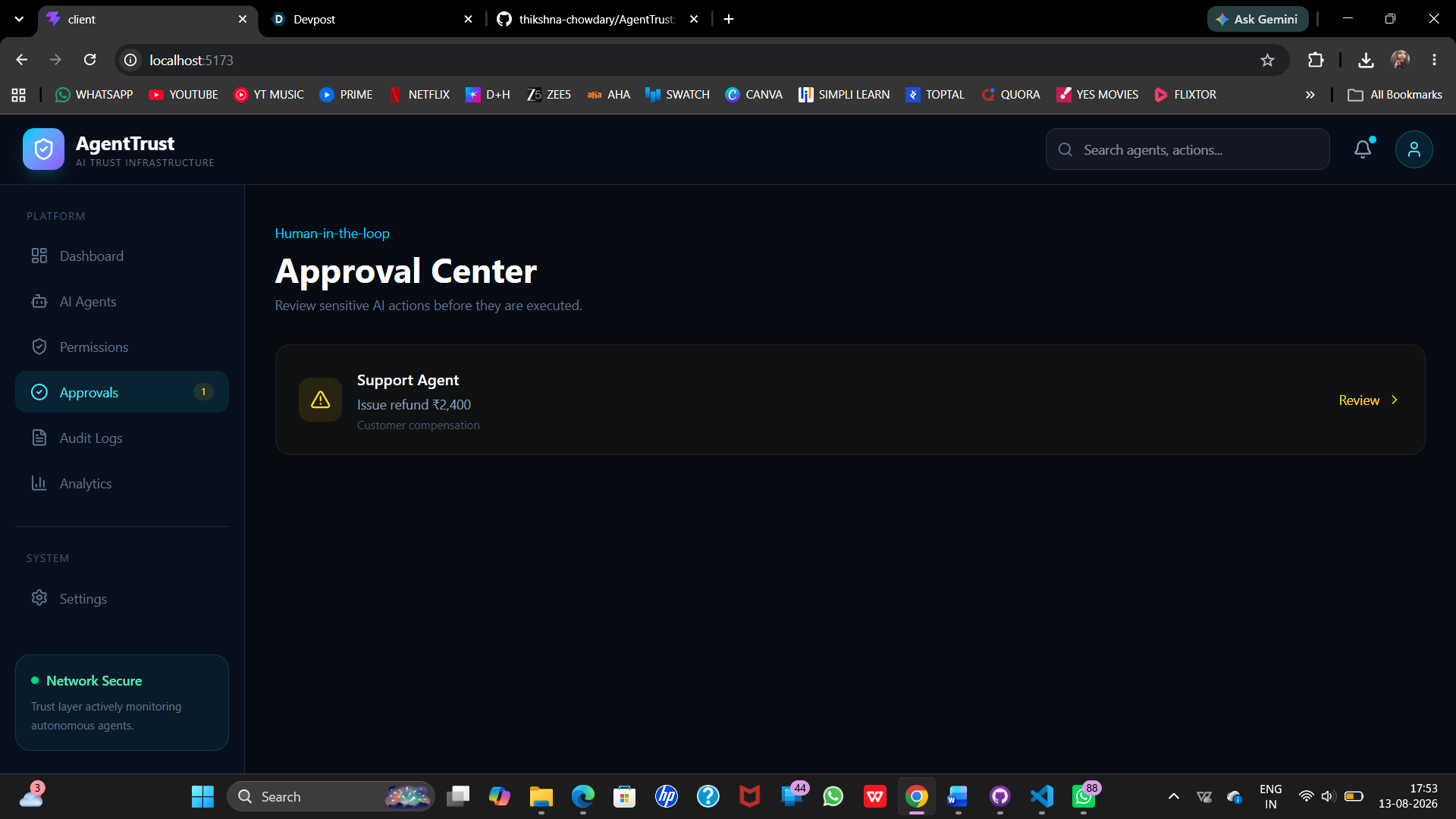
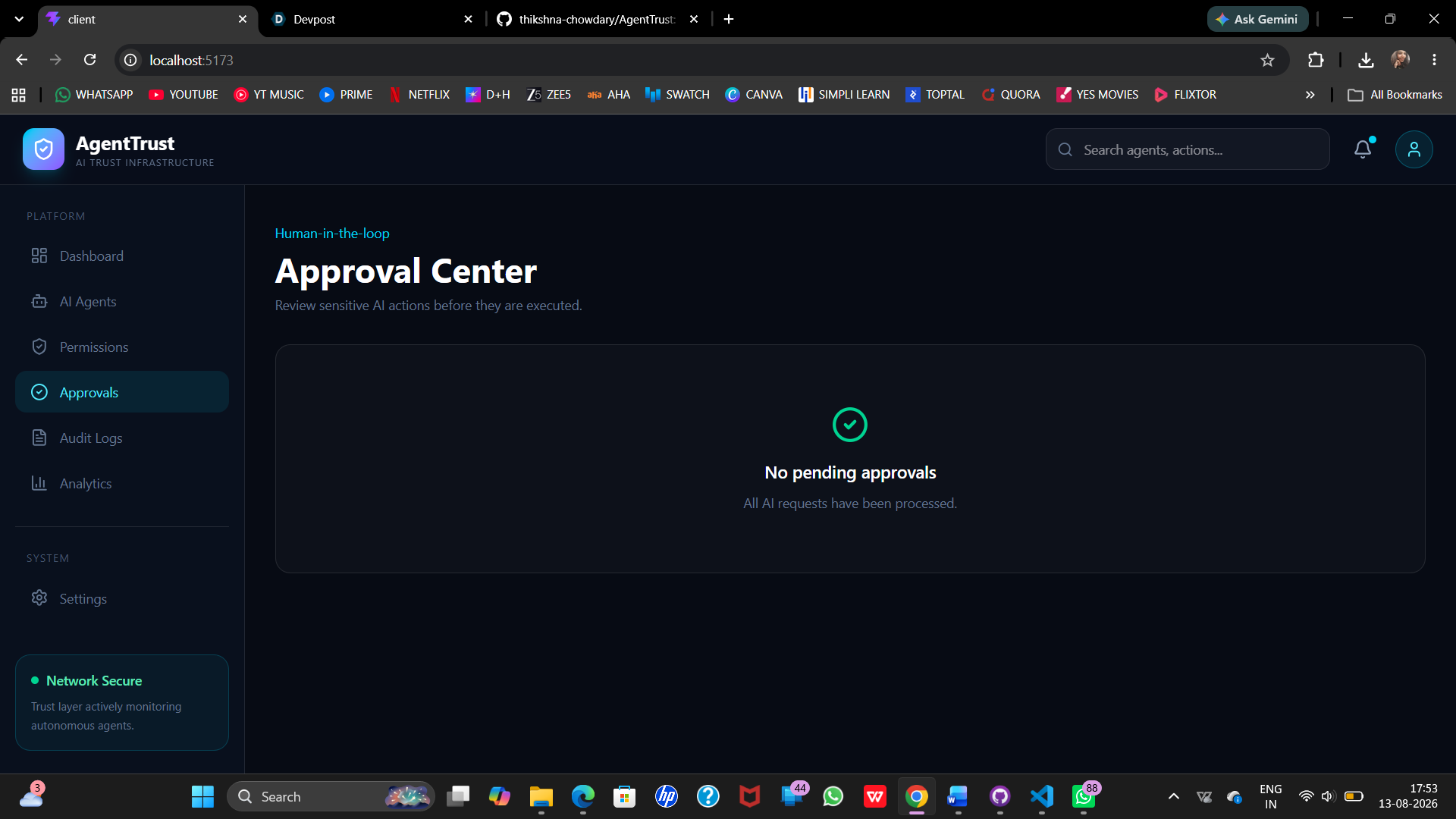
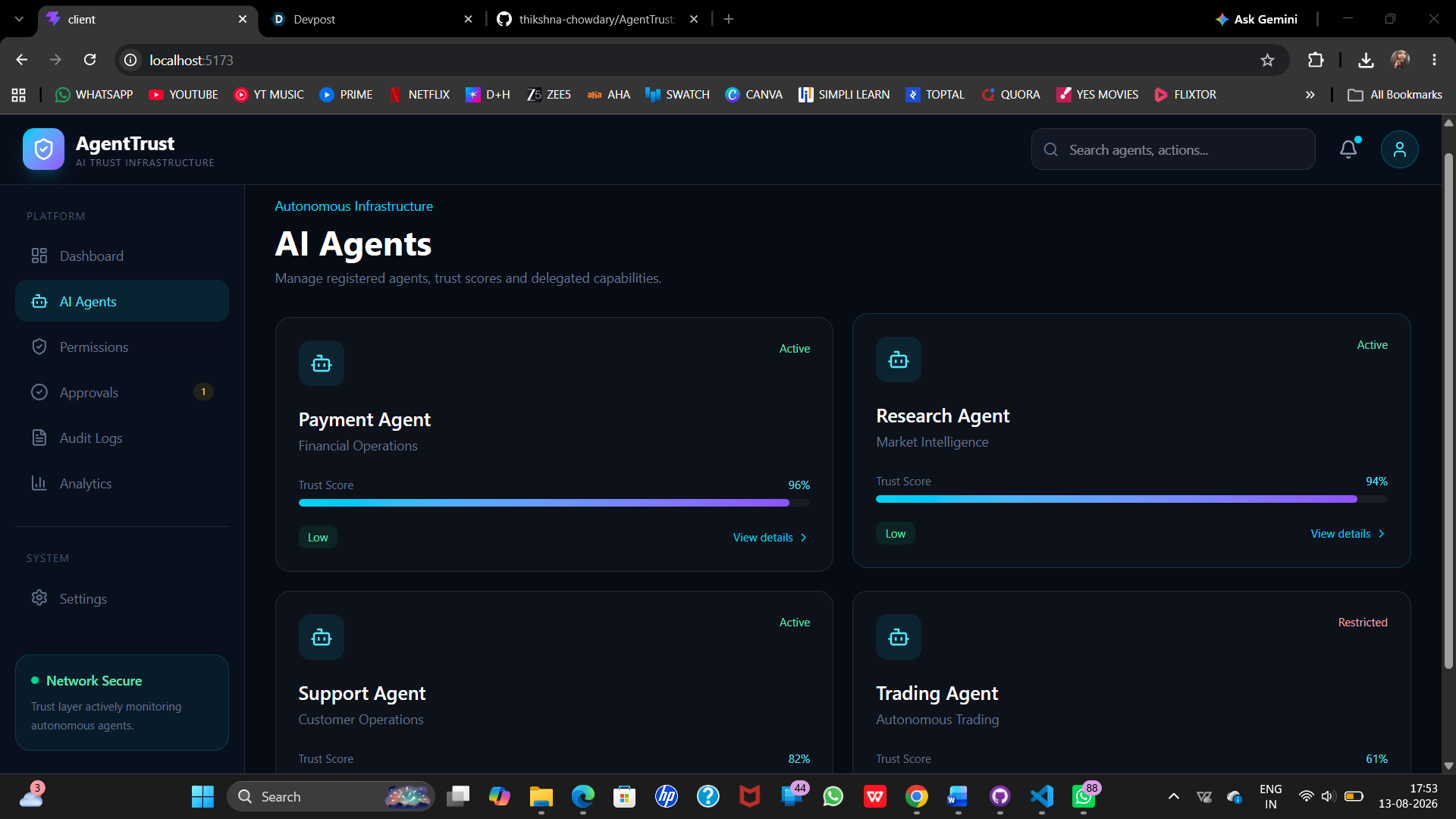
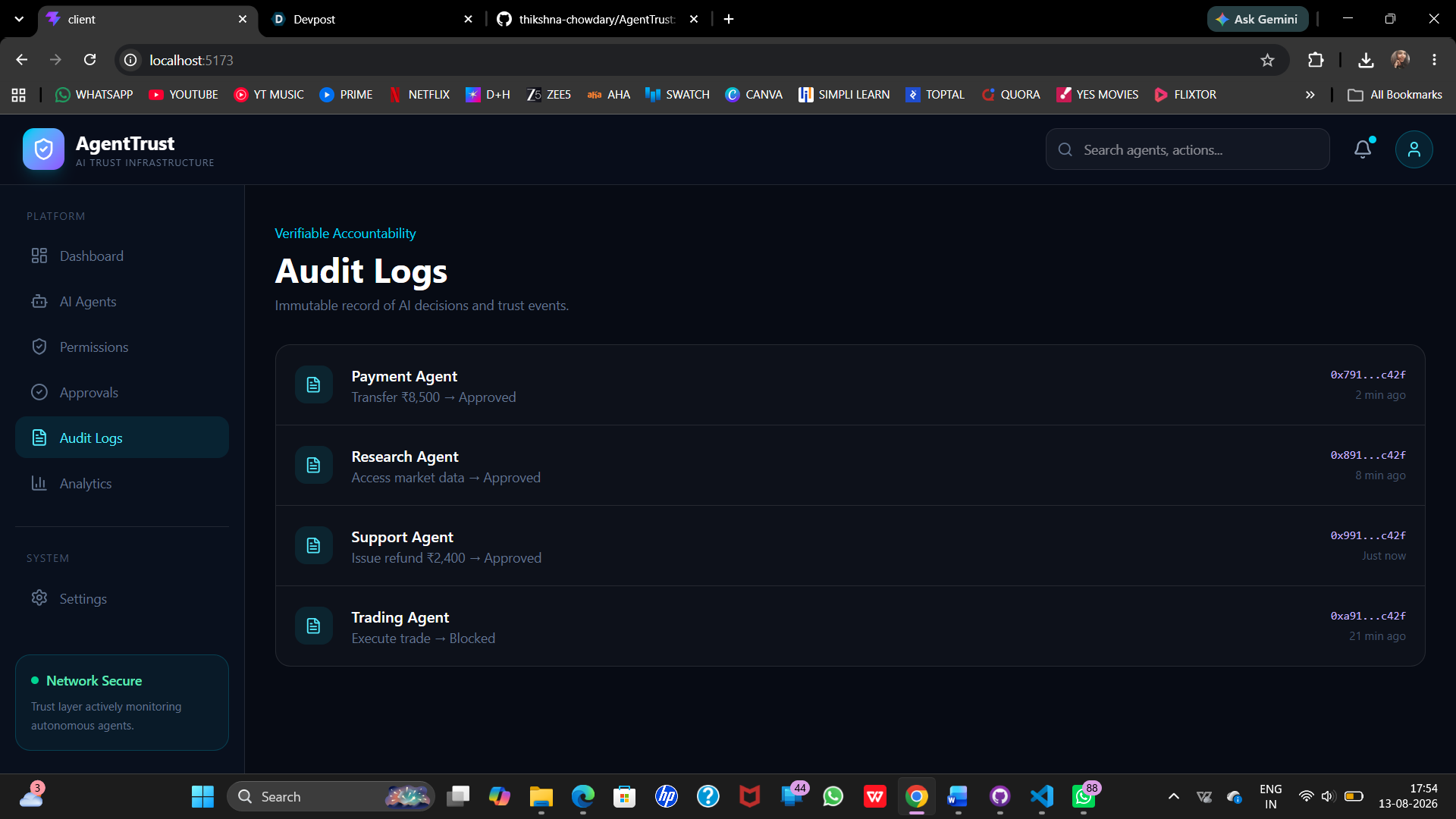
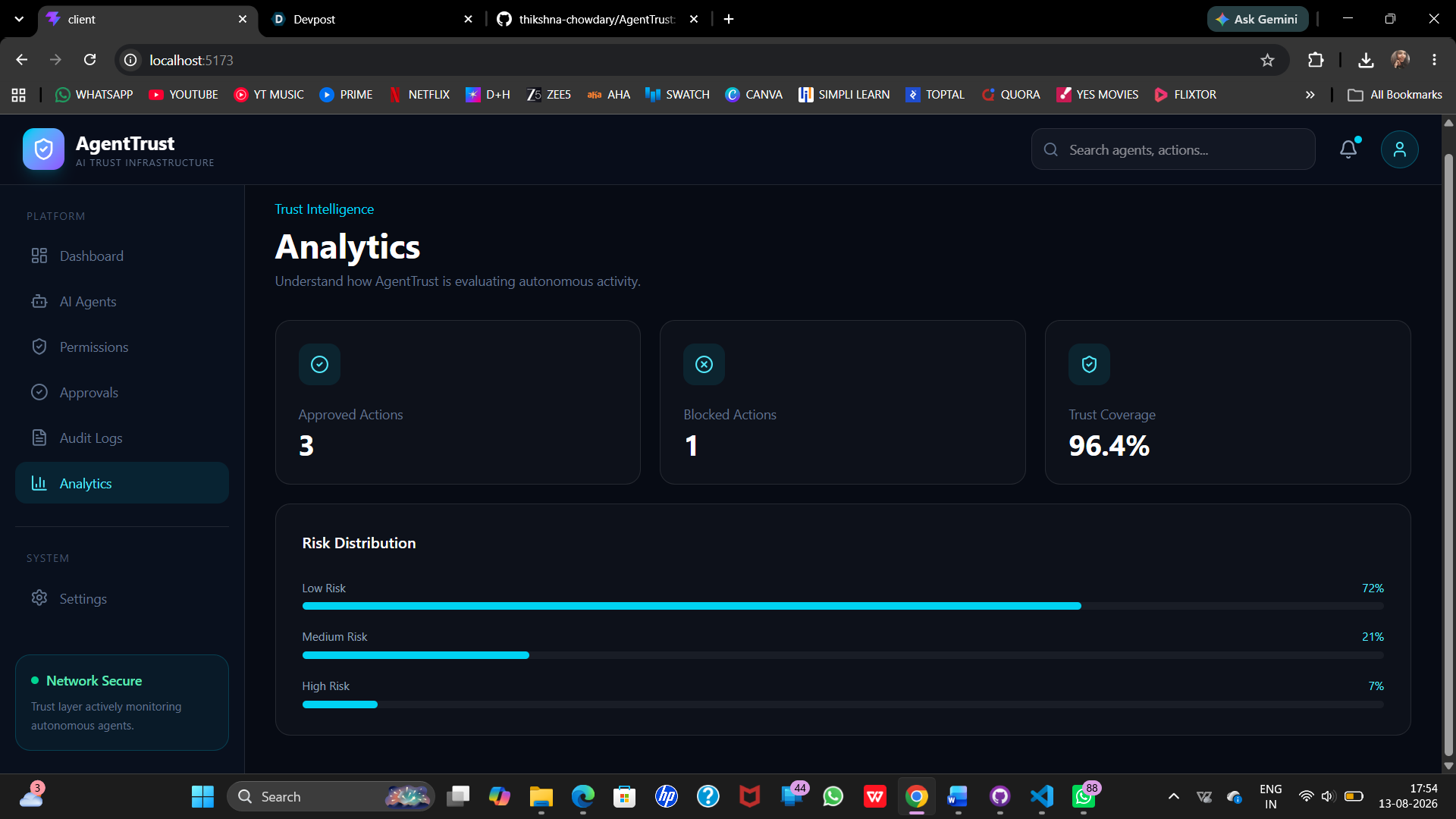
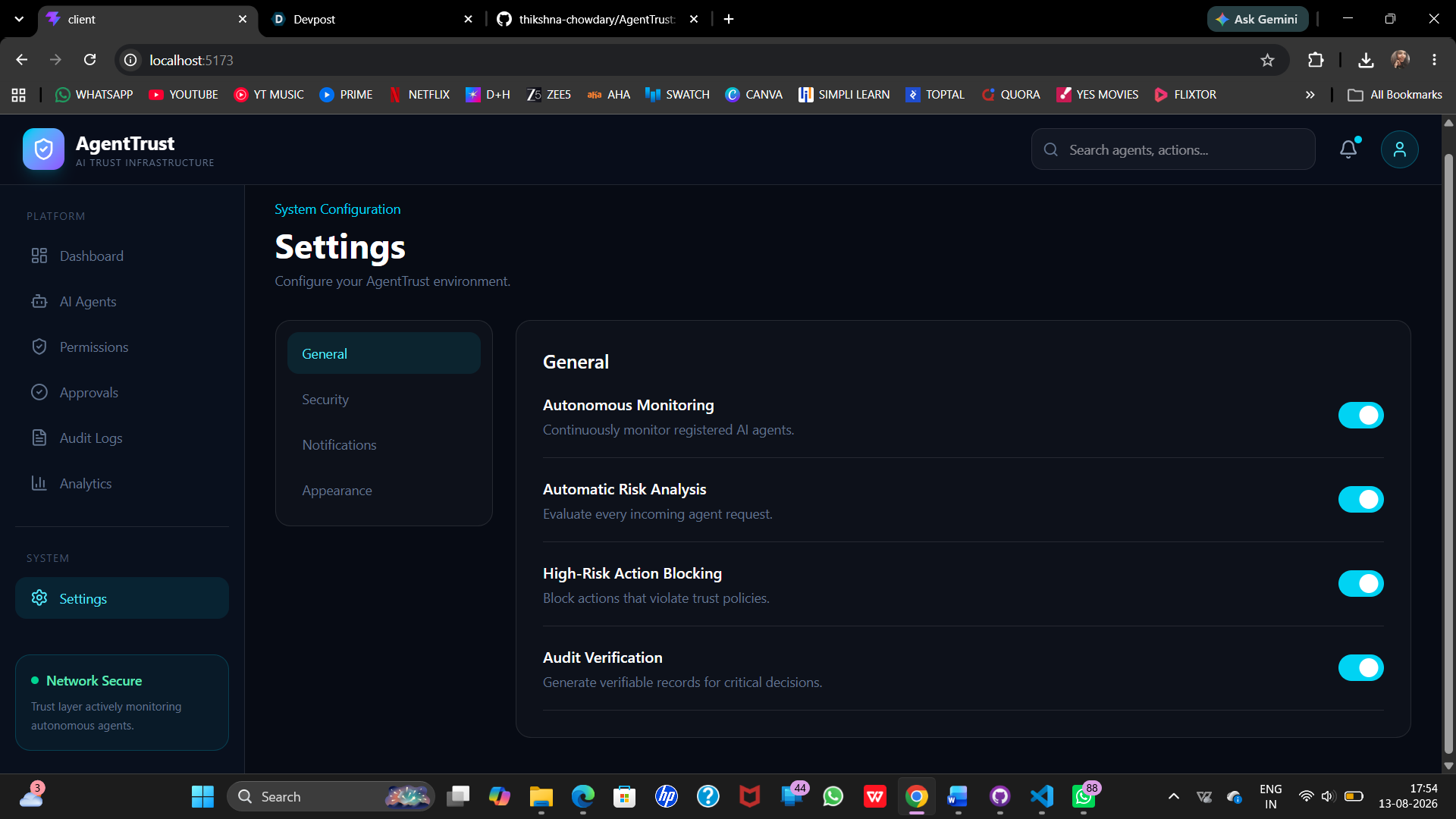
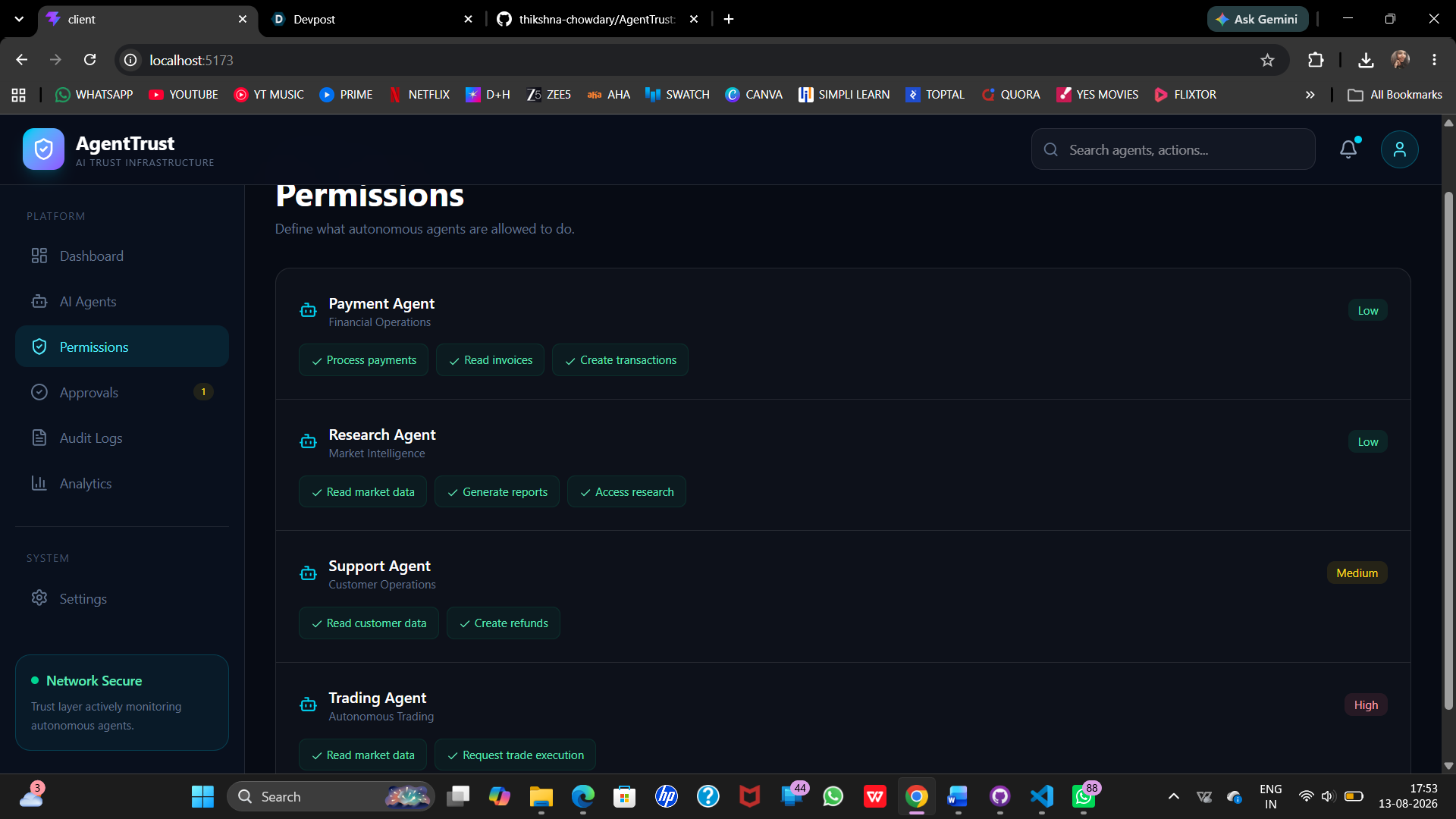
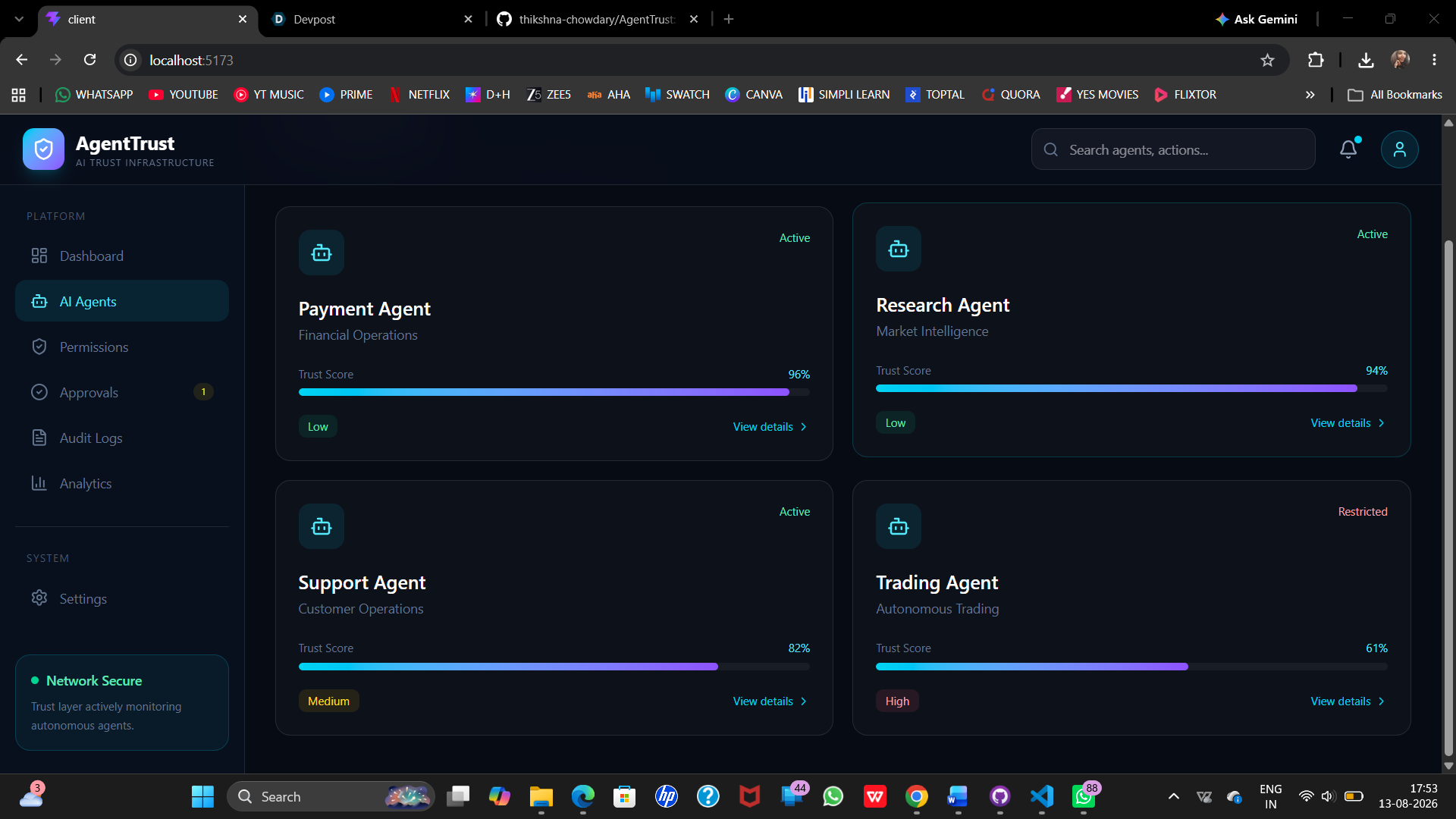
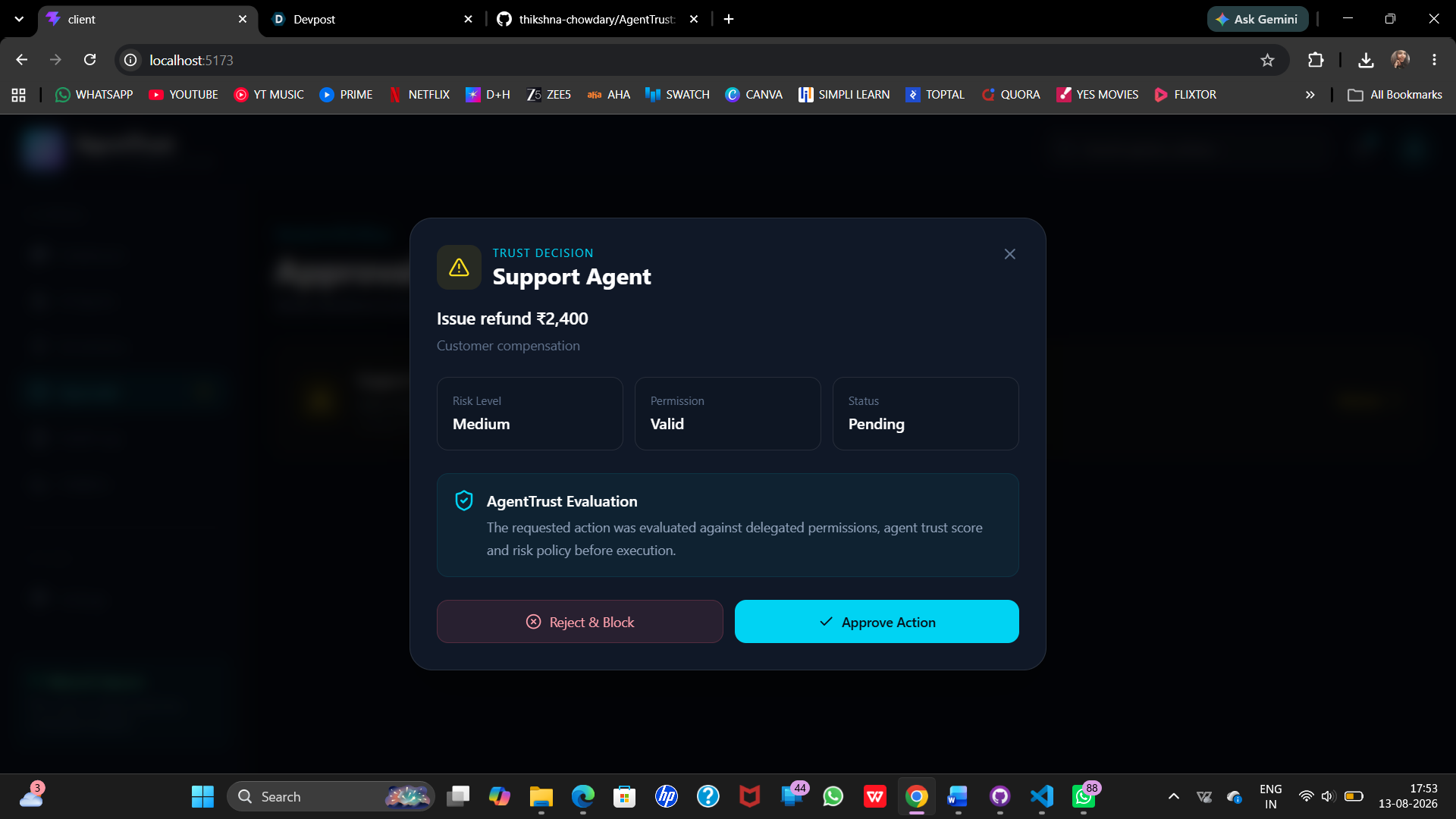
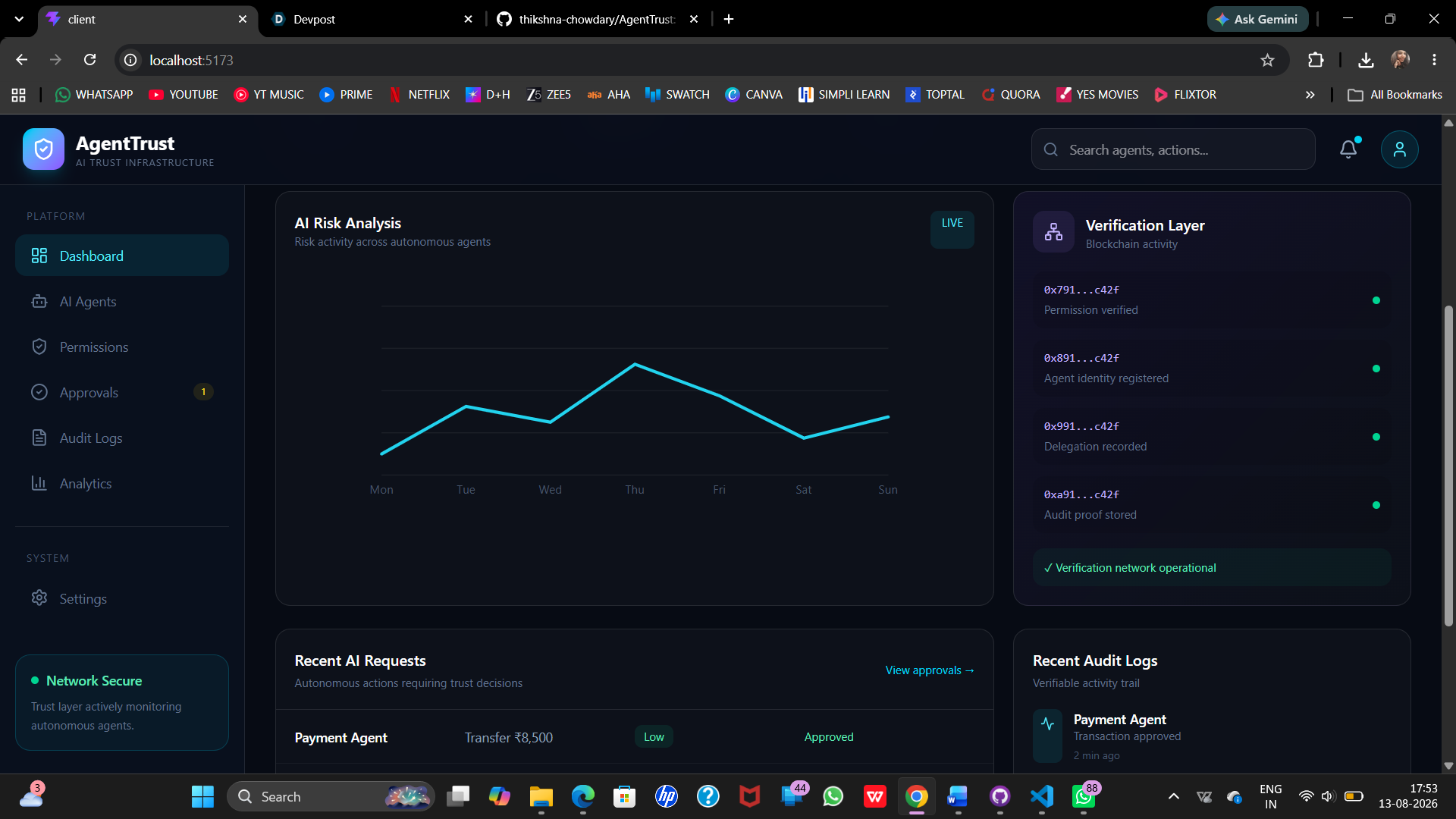
Permission Layer — Defines what an AI agent is allowed to do and establishes boundaries for delegated actions. AgentTrust Engine — Evaluates agent requests, checks them against permissions, analyzes risk, and determines whether an action should be allowed, restricted, or flagged. Trust Command Center — Provides a visual dashboard for monitoring AI requests, risk analysis, blockchain activity, and audit events.
The goal is not to prevent AI agents from being autonomous, but to make their autonomy controlled, explainable, and accountable.
How I built it
I built the prototype using React and Vite, with a modern frontend stack designed for an interactive trust-monitoring experience.
Technology Stack React + Vite — Application development Tailwind CSS — UI styling Framer Motion — Animations and interactions Lucide React — Interface icons Recharts — Risk and activity visualizations Web3 concepts — Decentralized permissions, verification, and auditability
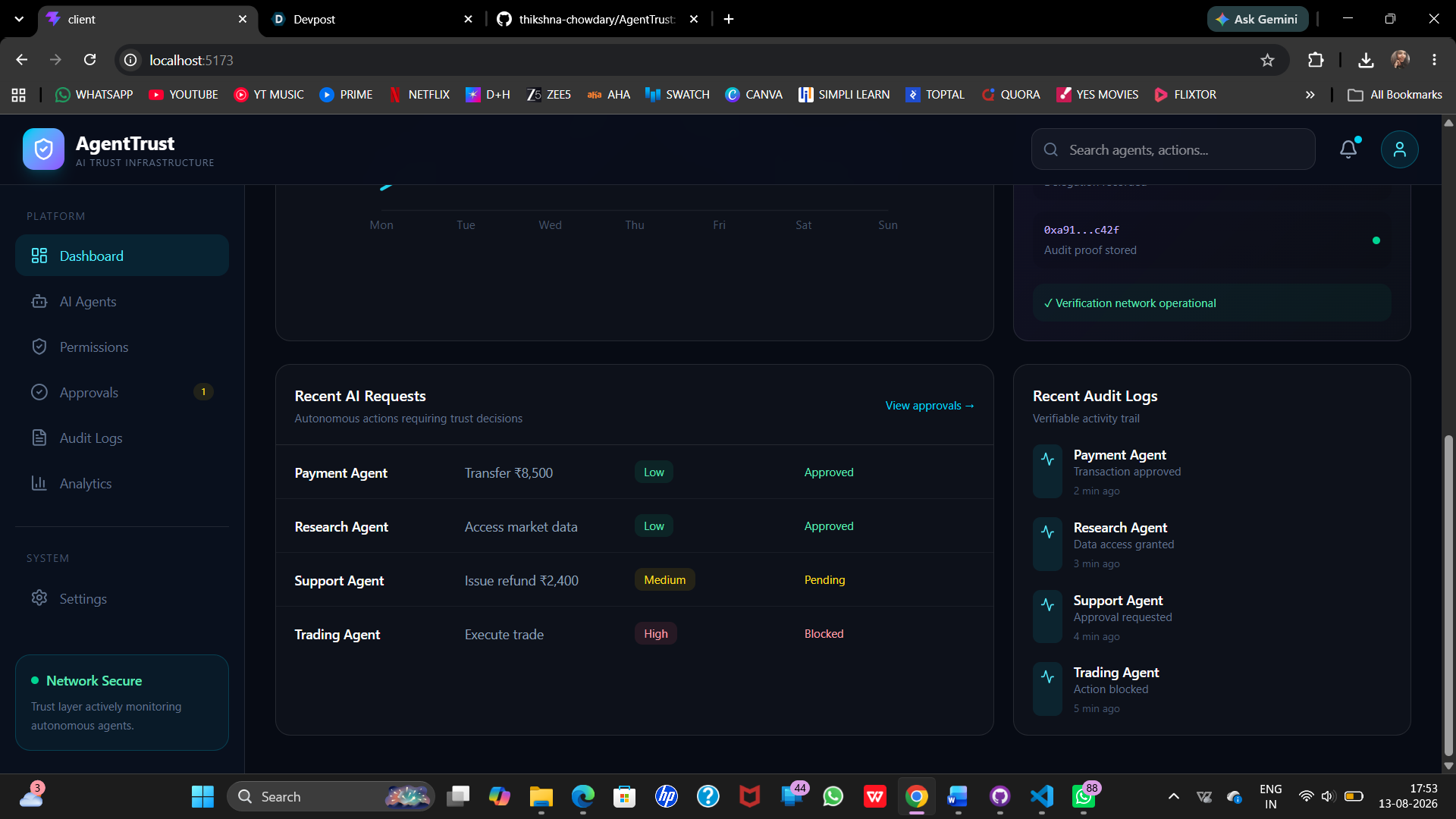
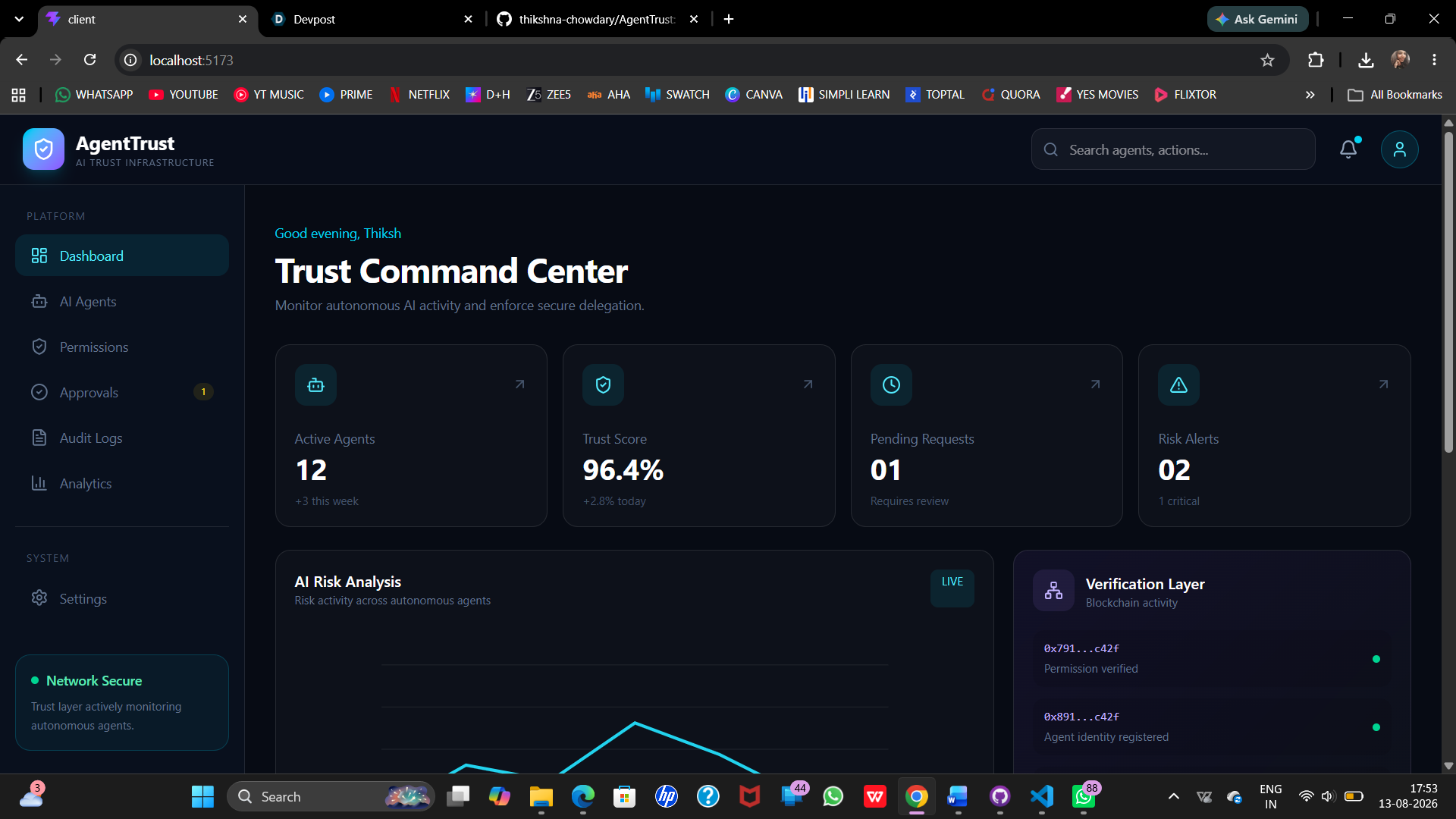
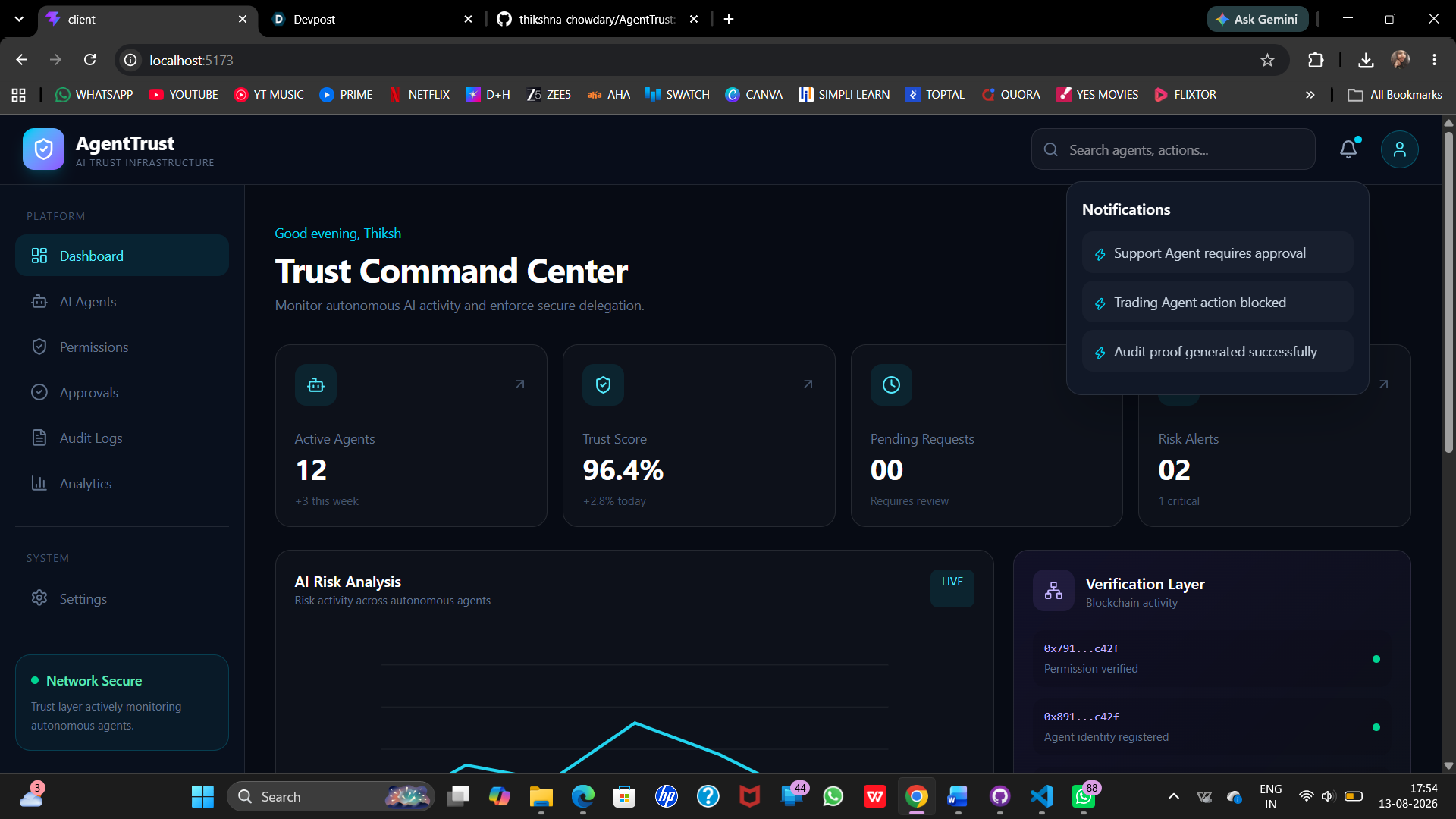
The main interface is the Trust Command Center, which brings together AI request monitoring, risk indicators, blockchain activity, and audit logs into a single interface.
I structured the project so the current prototype can be extended into deeper AI + Web3 infrastructure with real smart contracts, agent identities, and on-chain verification.
Challenges I ran into
The biggest challenge was balancing AI autonomy with security and control.
AI agents need flexibility to make decisions and complete tasks, but trust systems require clear boundaries. Designing a model where agents can remain autonomous while still operating within defined permissions was a major challenge.
Another challenge was making complex trust information understandable through a simple interface.
I wanted a user to be able to quickly answer:
What is the agent doing? Is it allowed? How risky is the action? What happened before?
This led to the design of the Trust Command Center, where important trust signals are surfaced through visual risk analysis, request monitoring, blockchain activity, and audit logs.
Accomplishments that I am proud of
I am particularly proud of turning an abstract problem around AI trust and delegation into a tangible working prototype.
My biggest accomplishments include:
Building a functional Trust Command Center Creating a clear architecture connecting AI agents, permissions, trust evaluation, and Web3 Designing a risk-monitoring experience for autonomous AI requests Integrating blockchain activity and audit concepts into the trust model Taking the project from research and concept to implementation as a solo developer Creating a modular foundation that can be extended into a real decentralized trust infrastructure
Most importantly, AgentTrust allowed me to move beyond building another AI application and explore the infrastructure needed to make autonomous AI safer and more accountable.
What I learned
Building AgentTrust taught me that the future of autonomous AI is not only about making agents more intelligent.
It is also about making their actions trustworthy, observable, and governable.
I learned how AI-agent systems can be combined with Web3 concepts to approach problems such as:
Delegated authorization Trust evaluation Risk-aware decision making Transparent auditing Accountability Verifiable agent actions
I also learned that good security infrastructure needs a strong user experience. Trust information is only useful if users can understand what is happening and why a decision was made.
What's next for AgentTrust
The current prototype establishes the foundation for AgentTrust. My next goal is to turn the prototype into a more complete decentralized trust infrastructure.
Planned improvements include:
Smart-contract based permission management On-chain verification of critical agent actions Dynamic trust scores based on agent behavior Cryptographic identities for AI agents Multi-agent trust and delegation Automated policy enforcement Real-time anomaly and fraud detection Explainable AI risk decisions Integration with real autonomous AI agent frameworks
My long-term vision for AgentTrust is to become a trust and accountability layer for the emerging agentic internet.
AI should be autonomous — but autonomy should come with accountability.
Built With
- agents
- ai
- artificial
- blockchain
- css
- cybersecurity
- decentralized
- framer
- intelligence
- javascript
- lucide
- management
- motion
- react
- recharts
- risk
- systems
- tailwind
- vite
- web3

