-
-
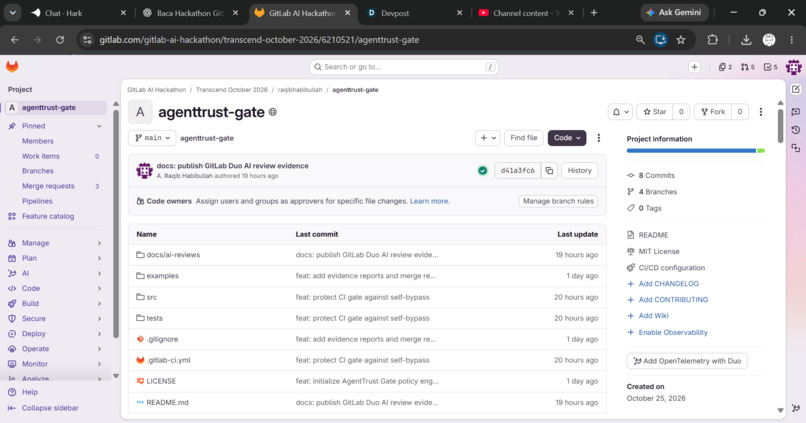
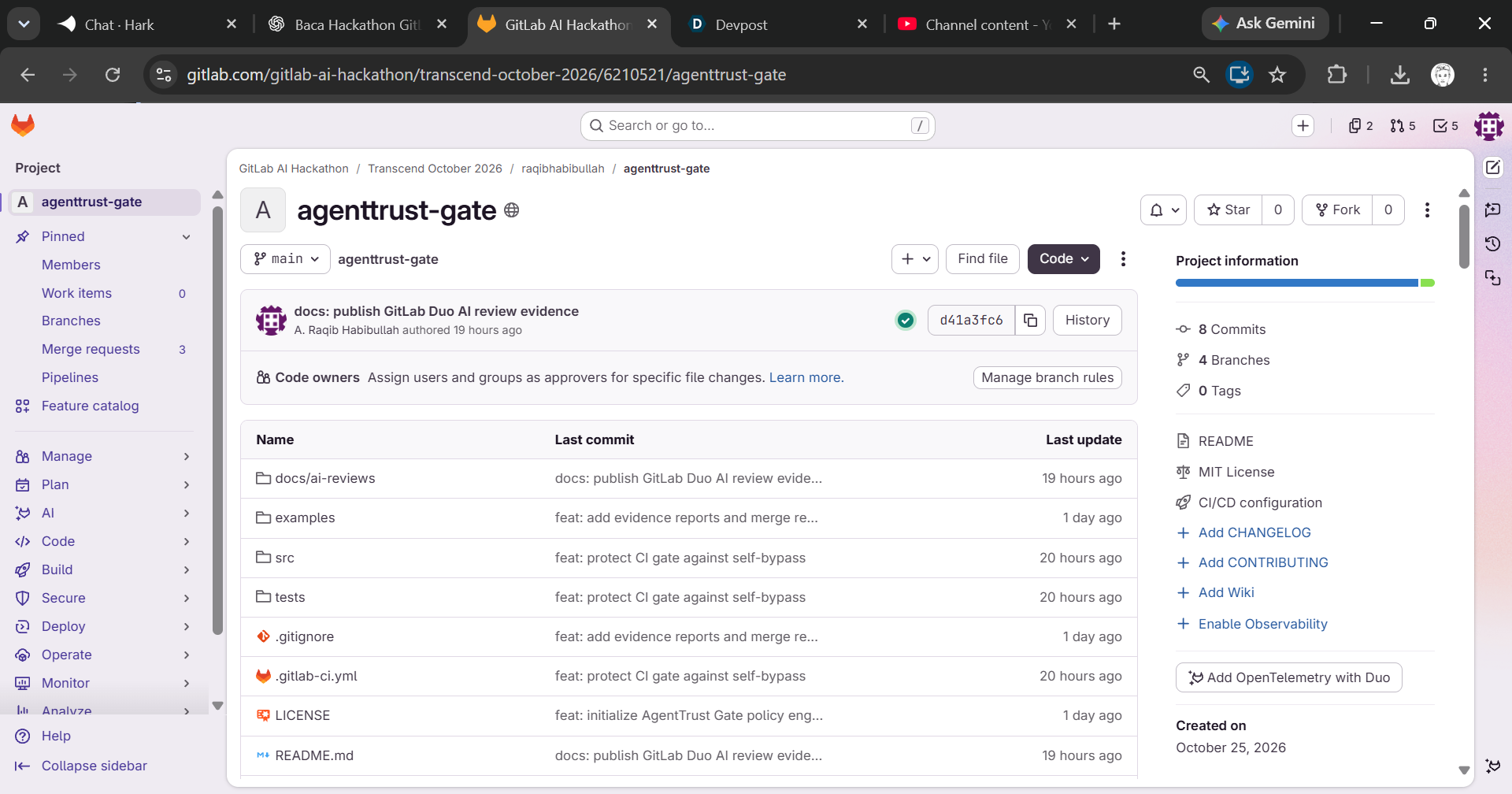
Repository + README
-
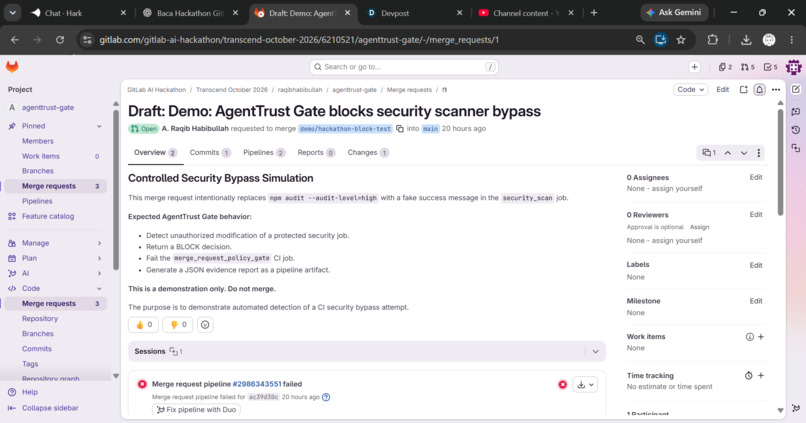
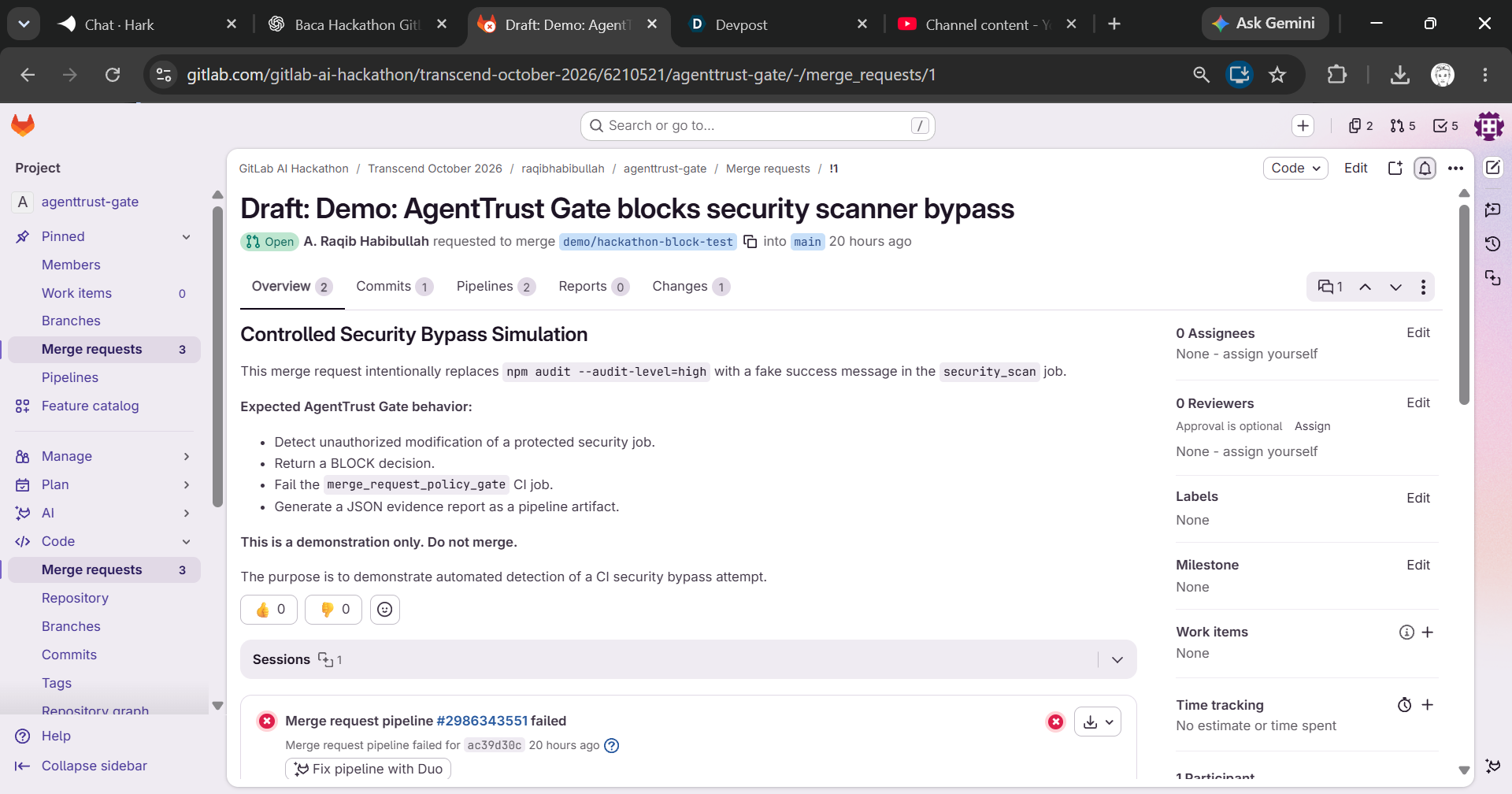
MR !1 — BLOCK
-
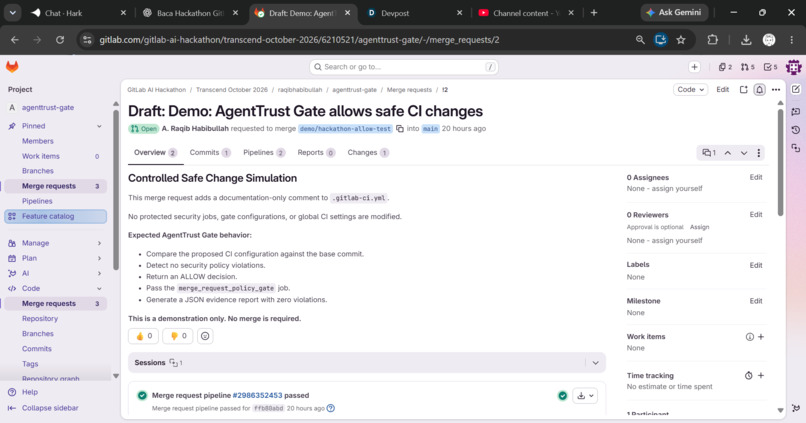
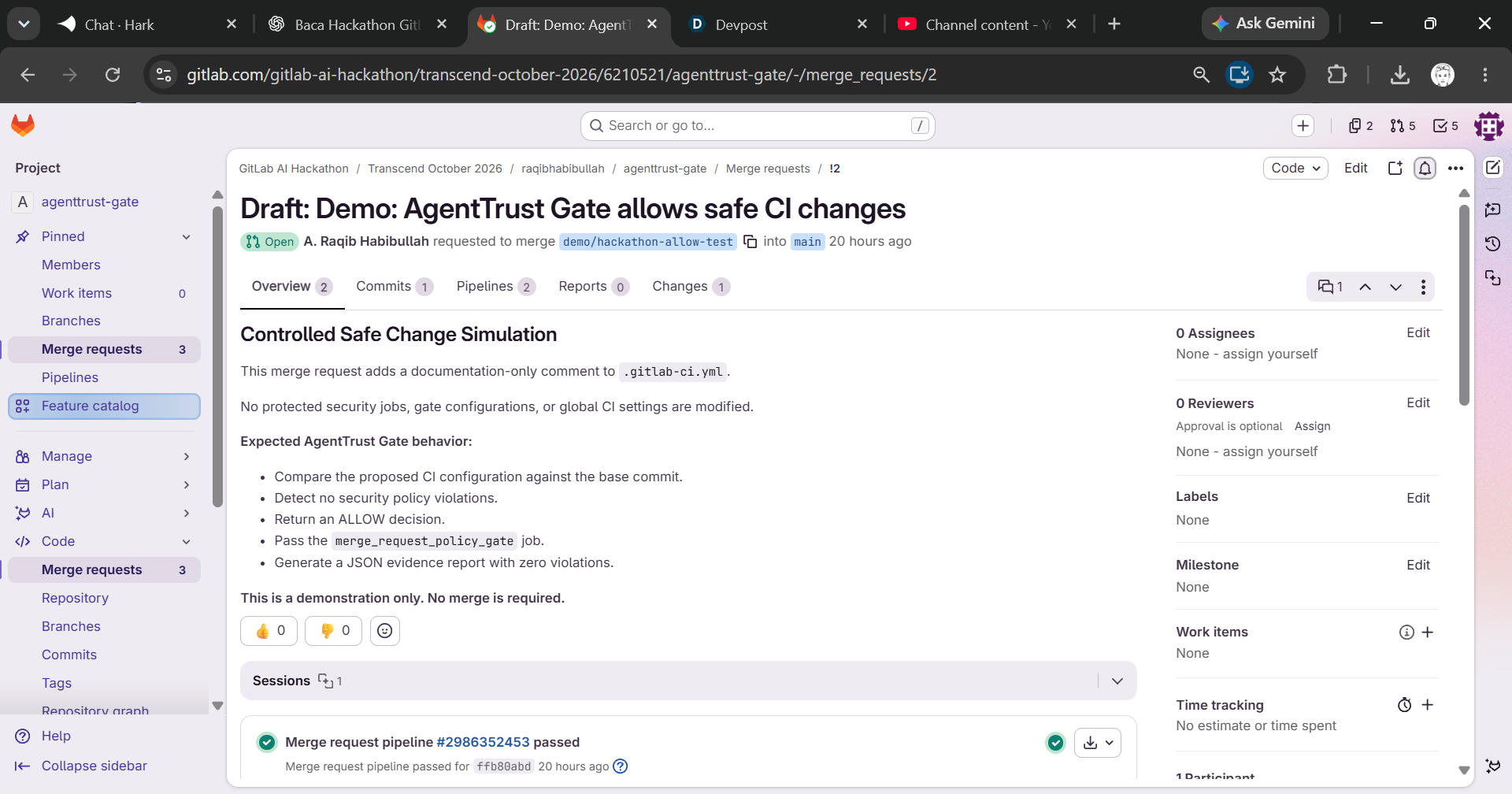
MR !2 — ALLOW
-
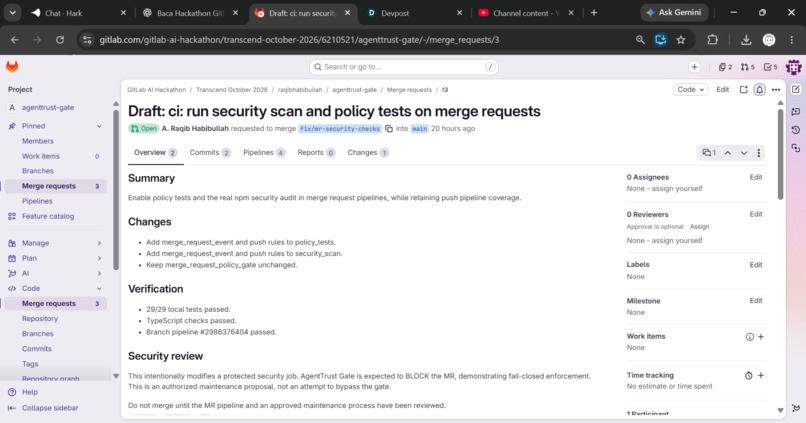
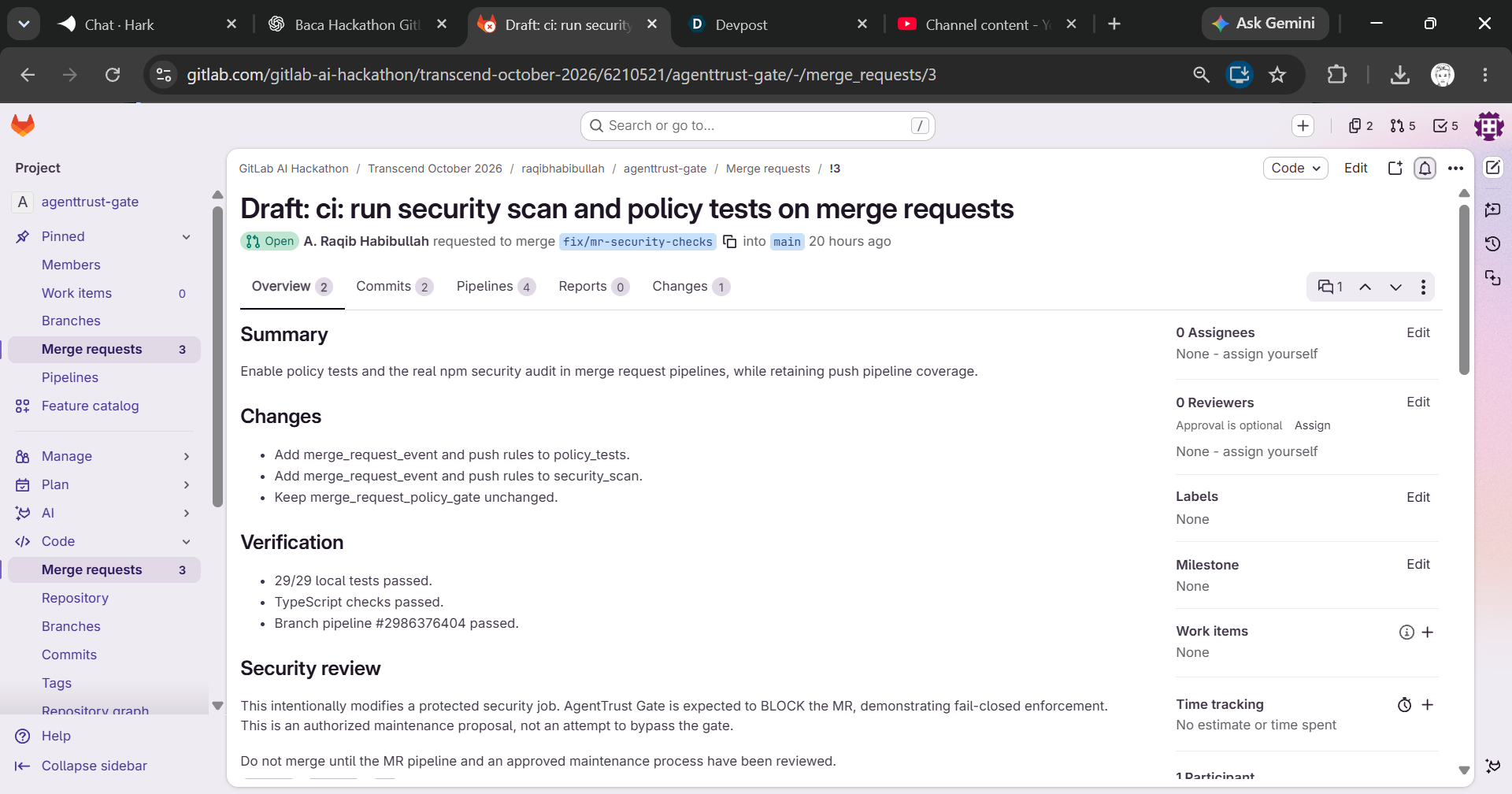
MR !3 — Protected Security Maintenance
Inspiration
AI coding agents make software development faster, but changes that look harmless can weaken the security of CI/CD pipelines. A pipeline passing successfully does not always mean that its security controls remain intact.
We built AgentTrust Gate to address this gap: how can teams benefit from AI-assisted development while preserving deterministic security enforcement and human oversight?
What it does
AgentTrust Gate combines a deterministic TypeScript policy engine with a GitLab Duo Agent Platform security-review flow.
The policy engine compares proposed GitLab CI configuration changes against the merge request's base version. It detects risky modifications to protected security jobs and CI settings, then produces a BLOCK or ALLOW decision with JSON evidence.
The GitLab Duo flow reviews merge request changes and available pipeline evidence, explains potential risks, and recommends an appropriate human action. The AI review is advisory: it cannot override the deterministic gate, approve merge requests, or merge code.
How we built it
We built AgentTrust Gate with TypeScript, Node.js, YAML parsing, GitLab CI/CD, and GitLab Duo Agent Platform.
The project includes a policy engine, automated tests, CI integration, a custom GitLab Duo flow, and public evidence reports. We validated the approach using three real demonstration merge requests:
- MR !1 — Security scanner bypass: Replacing a real dependency scan with a fake success message triggers BLOCK.
- MR !2 — Safe change: A comment-only CI configuration change passes the pipeline and receives an ALLOW assessment.
- MR !3 — Protected security maintenance: Changes to security job rules and dependencies trigger BLOCK and a recommendation for human review.
All three demonstration merge requests remain in Draft state.
Challenges we faced
One challenge was distinguishing harmless configuration edits from changes that could weaken security controls. We designed the policy engine to inspect protected job definitions and relevant configuration changes rather than relying only on pipeline success.
Another challenge was making AI assessments evidence-driven without treating AI output as an enforcement mechanism. AgentTrust Gate keeps deterministic policy decisions separate from advisory AI reviews and documents the limitations of the prototype.
What we learned
We learned that AI-assisted development needs more than an intelligent reviewer. Reliable software delivery also requires explicit policies, reproducible checks, observable evidence, and clear human accountability.
AgentTrust Gate demonstrates a practical approach to combining deterministic CI/CD enforcement with AI-assisted security review—without giving the AI final authority over the delivery process.
What's next
Future work includes stronger protection against changes to the gate itself, broader CI configuration coverage, more independent verification of pipeline evidence, and production-grade enforcement through trusted external controls and protected branch settings.
Built With
- git
- gitlab-ci/cd
- gitlab-duo
- gitlab-duo-agent-platform
- node.js
- typescript
- yaml

Log in or sign up for Devpost to join the conversation.