-
-
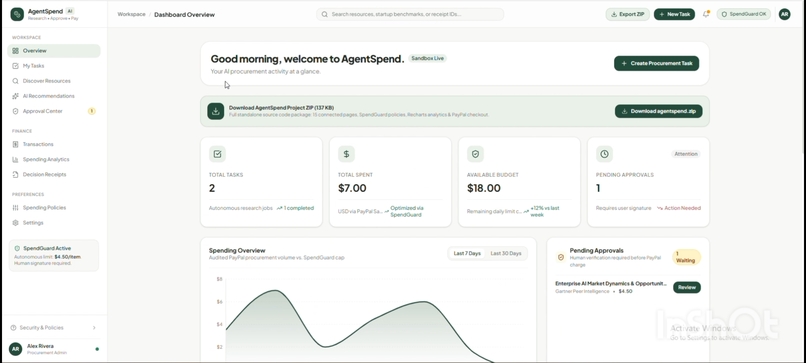
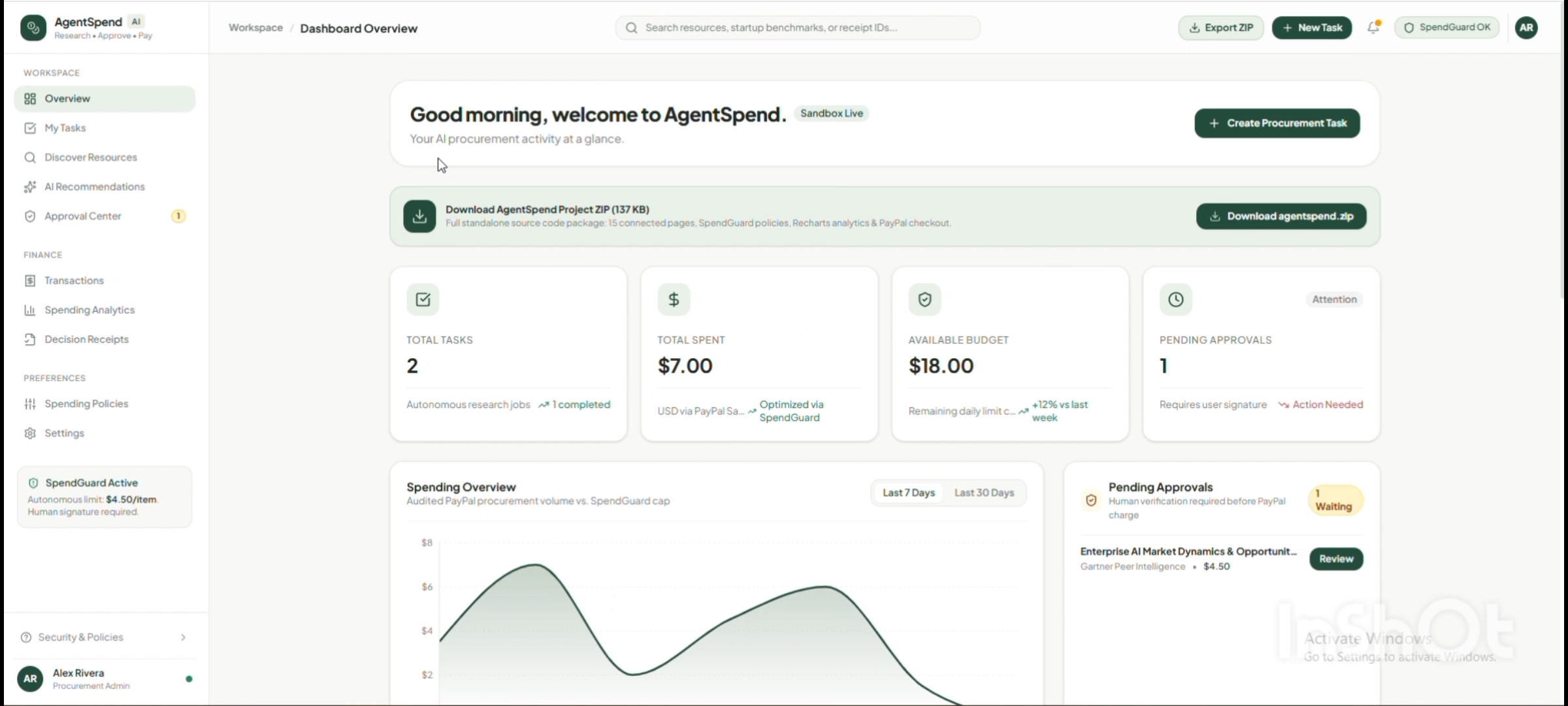
Dashboard spending chart, a $4.50 approval waiting, and recent tasks: one completed at $7.00 of $10.00.
-
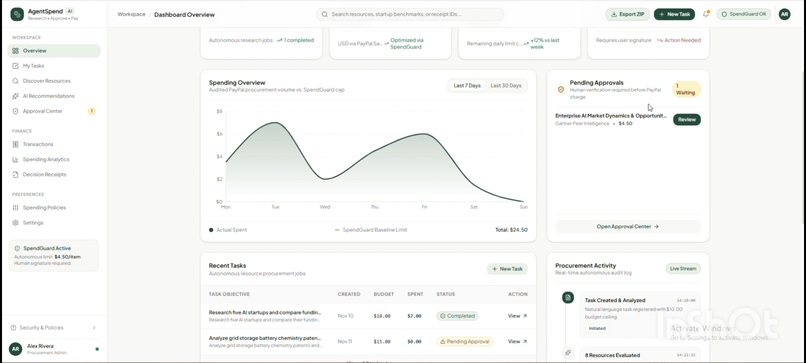
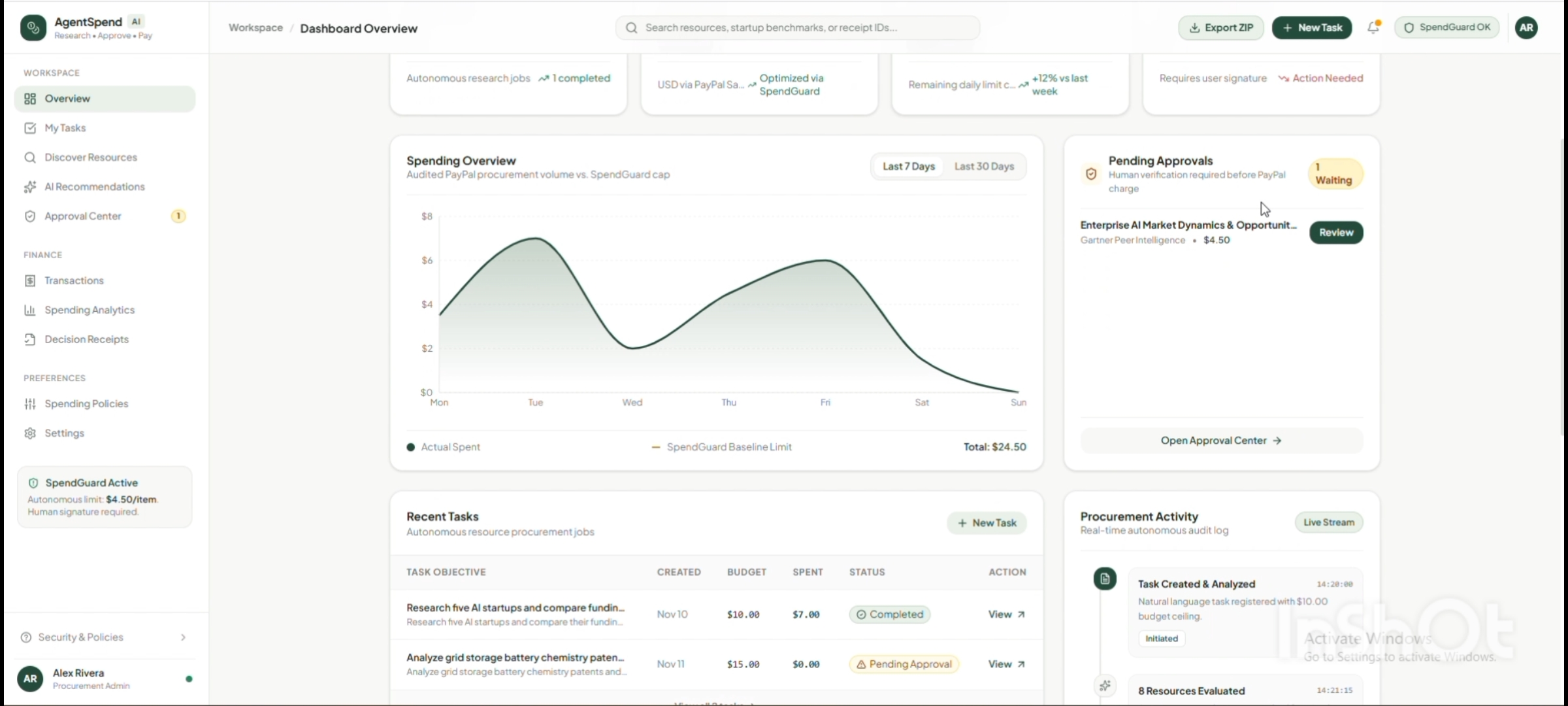
Dashboard overview (scrolled): spending chart, a $4.50 approval waiting, and recent tasks with completed and pending statuses.
-
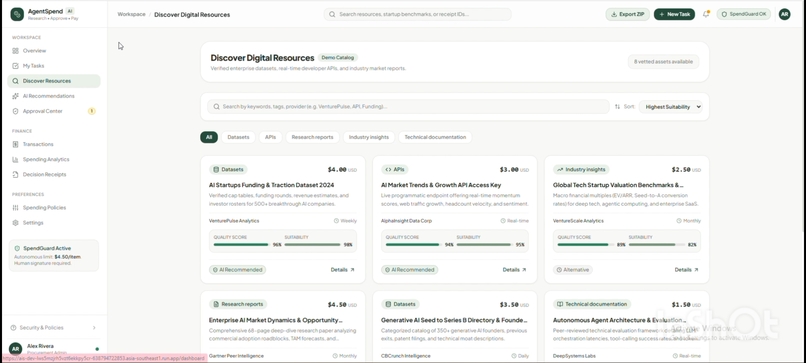
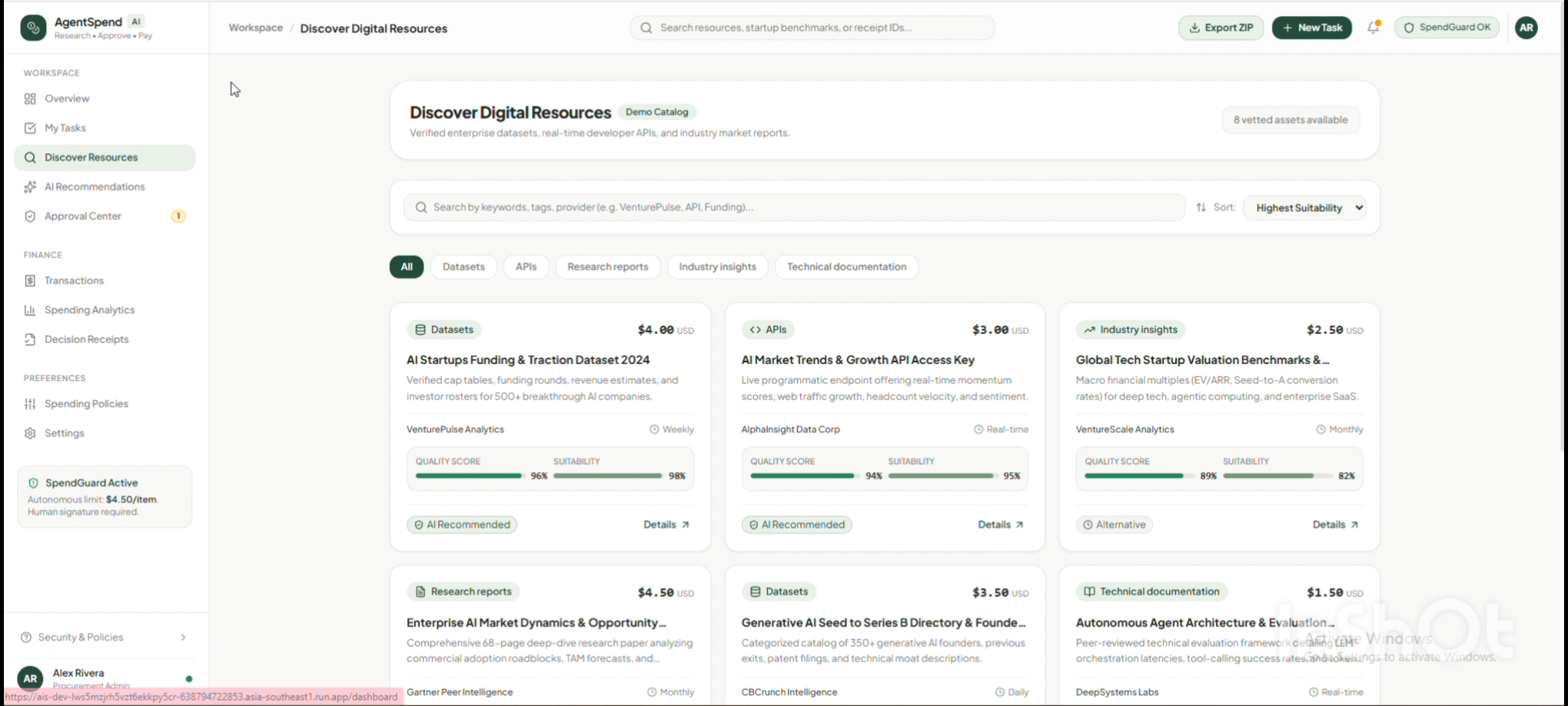
Discover Resources:demo catalog with category filters, sorting by suitability, and resource cards tagged AI Recommended or Alternative.
-
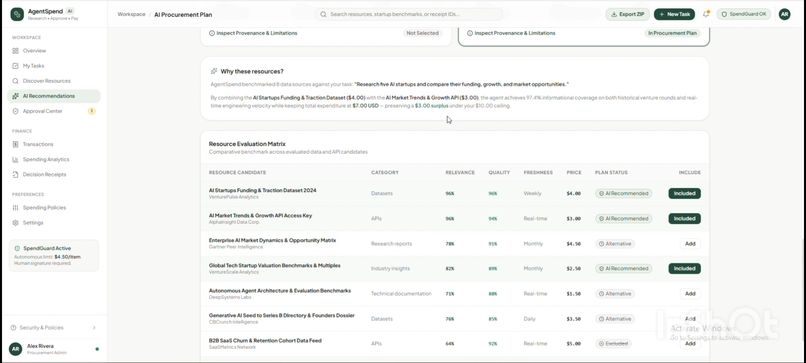
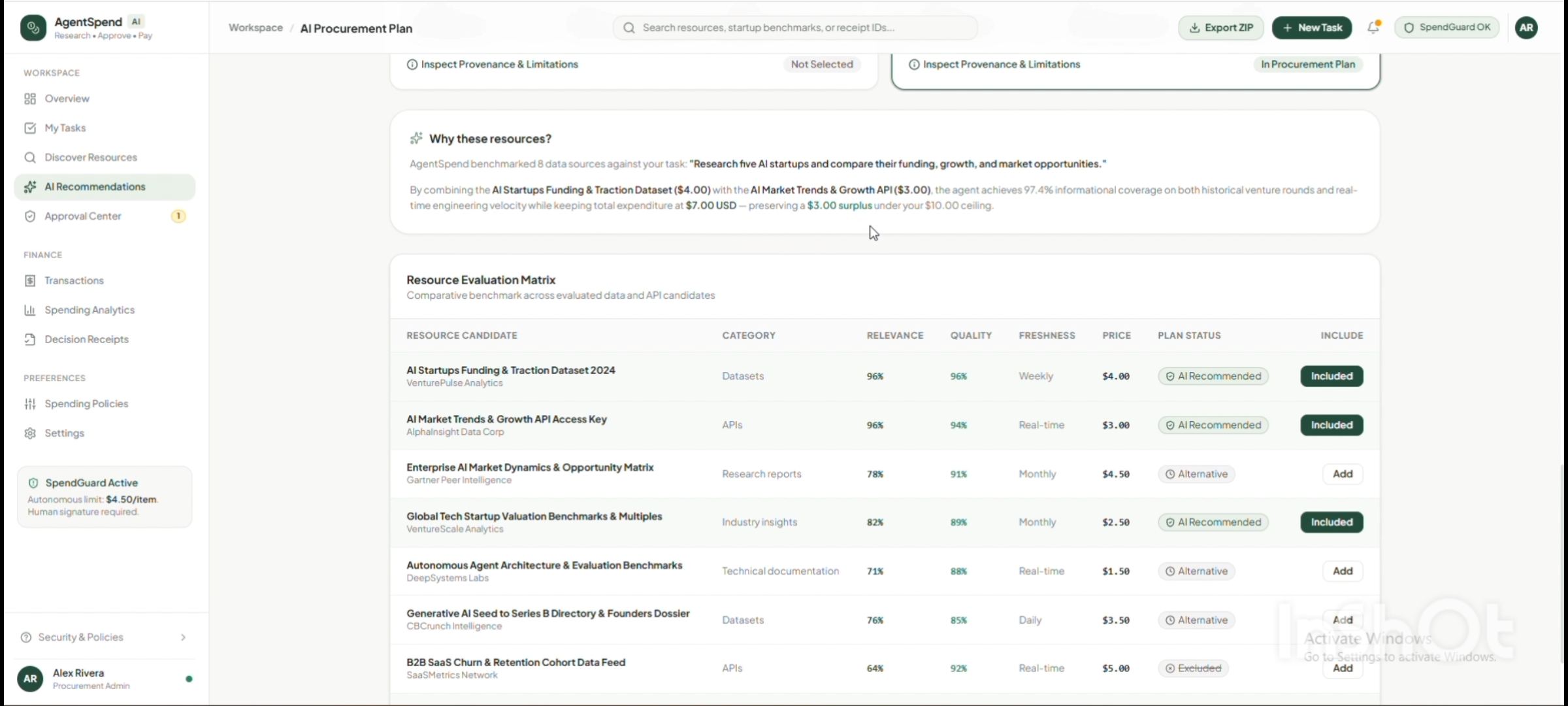
AI procurement plan: rationale for the dataset and API, and a matrix scoring candidates on relevance, quality, and price.
-
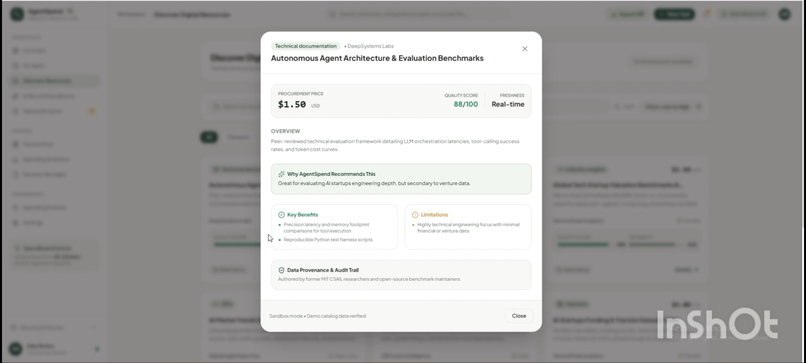
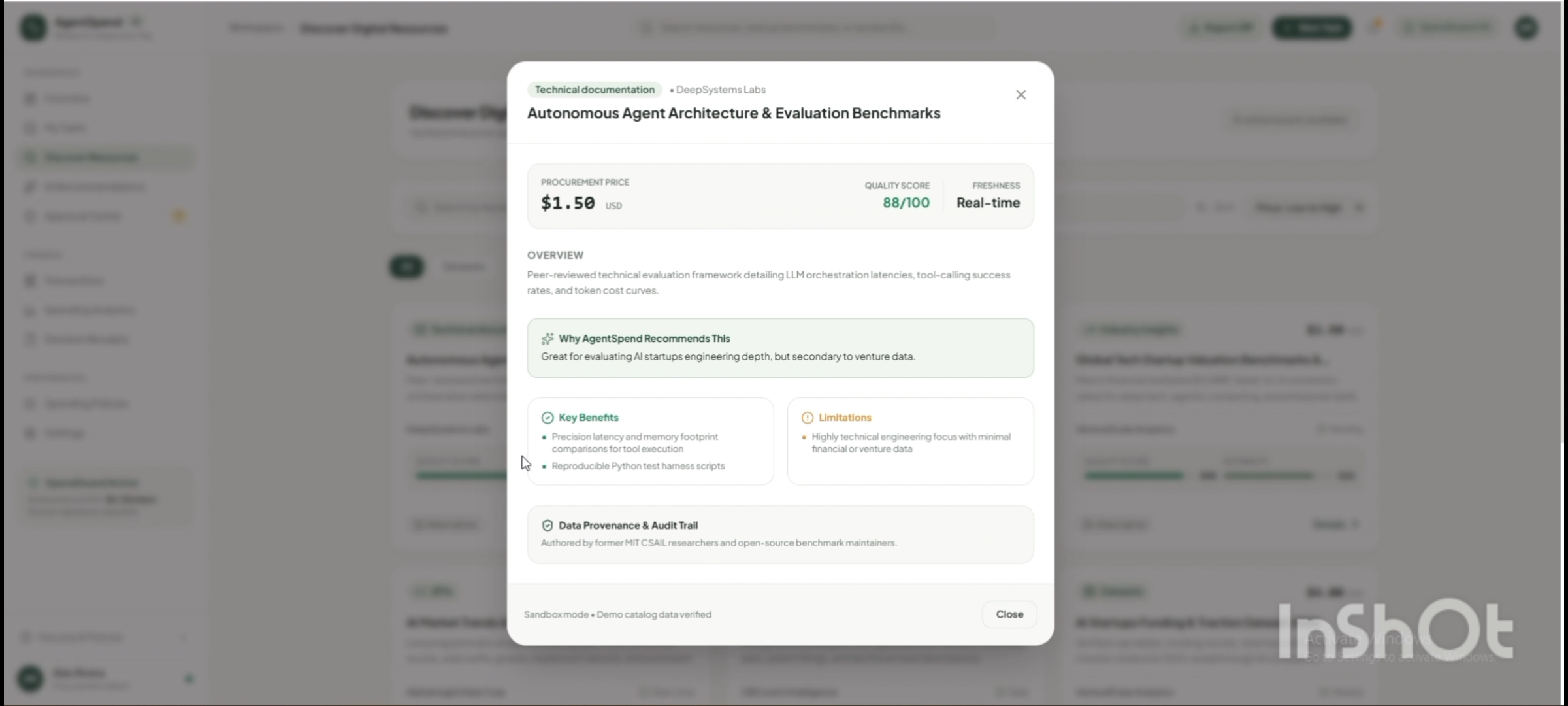
Resource detail for a $1.50 technical document: 88/100 quality, benefits, limitations, and a simulated-data footer.
-
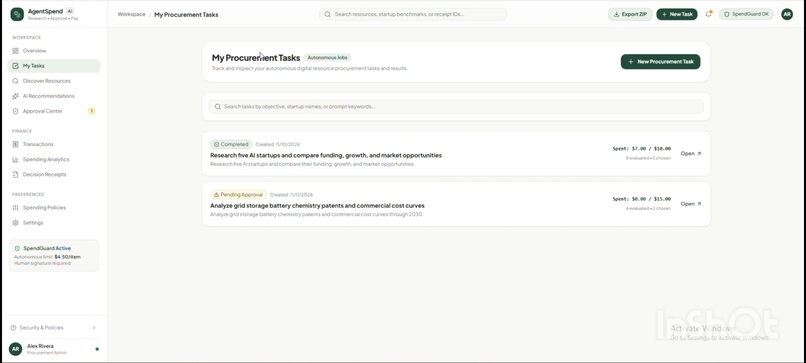
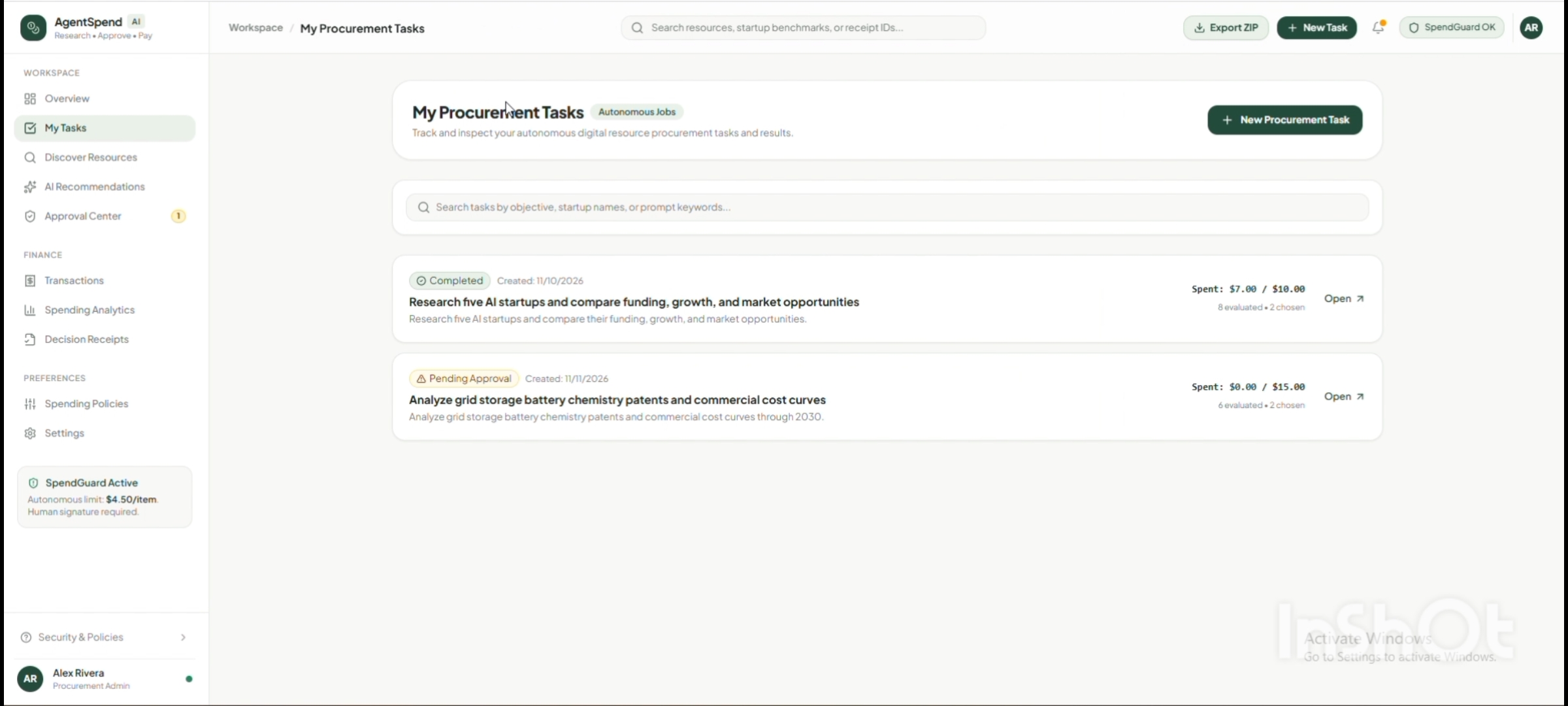
My Procurement Tasks: a completed startup research task and a pending grid-battery patent analysis, each with its spend against budget.
-
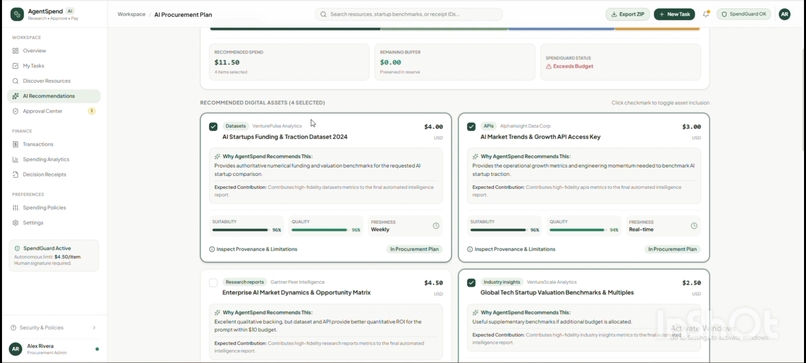
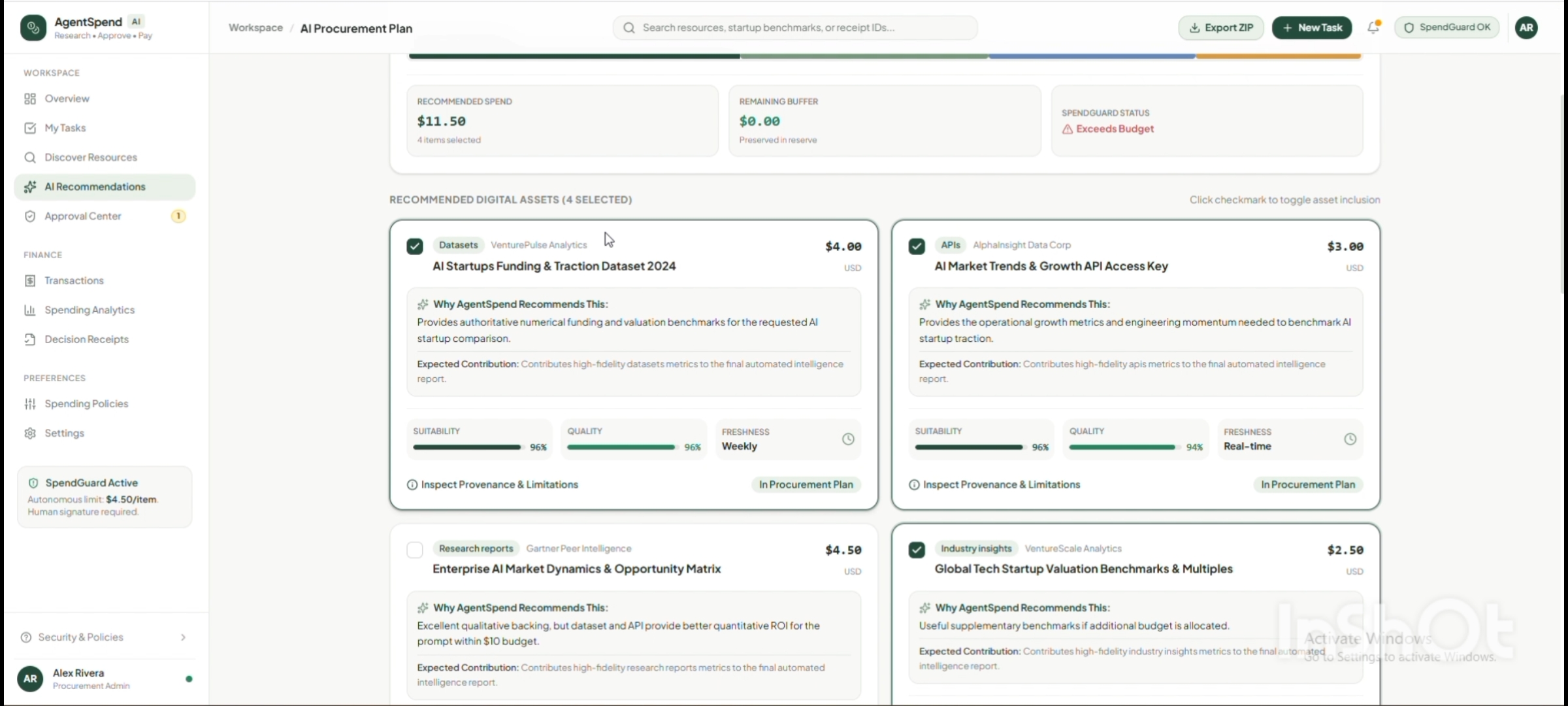
AI procurement plan: the selected assets with their suitability, quality, and freshness scores.
-
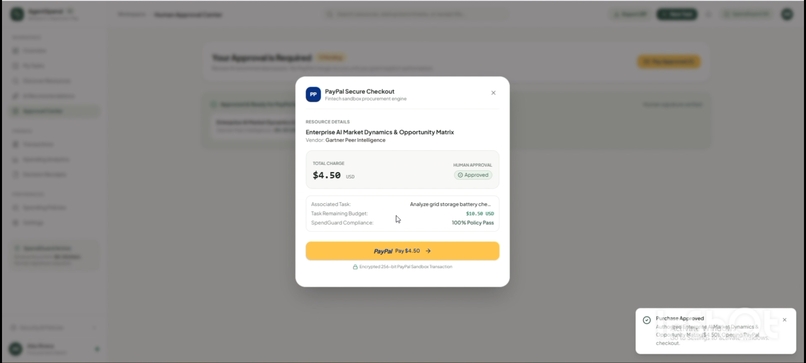
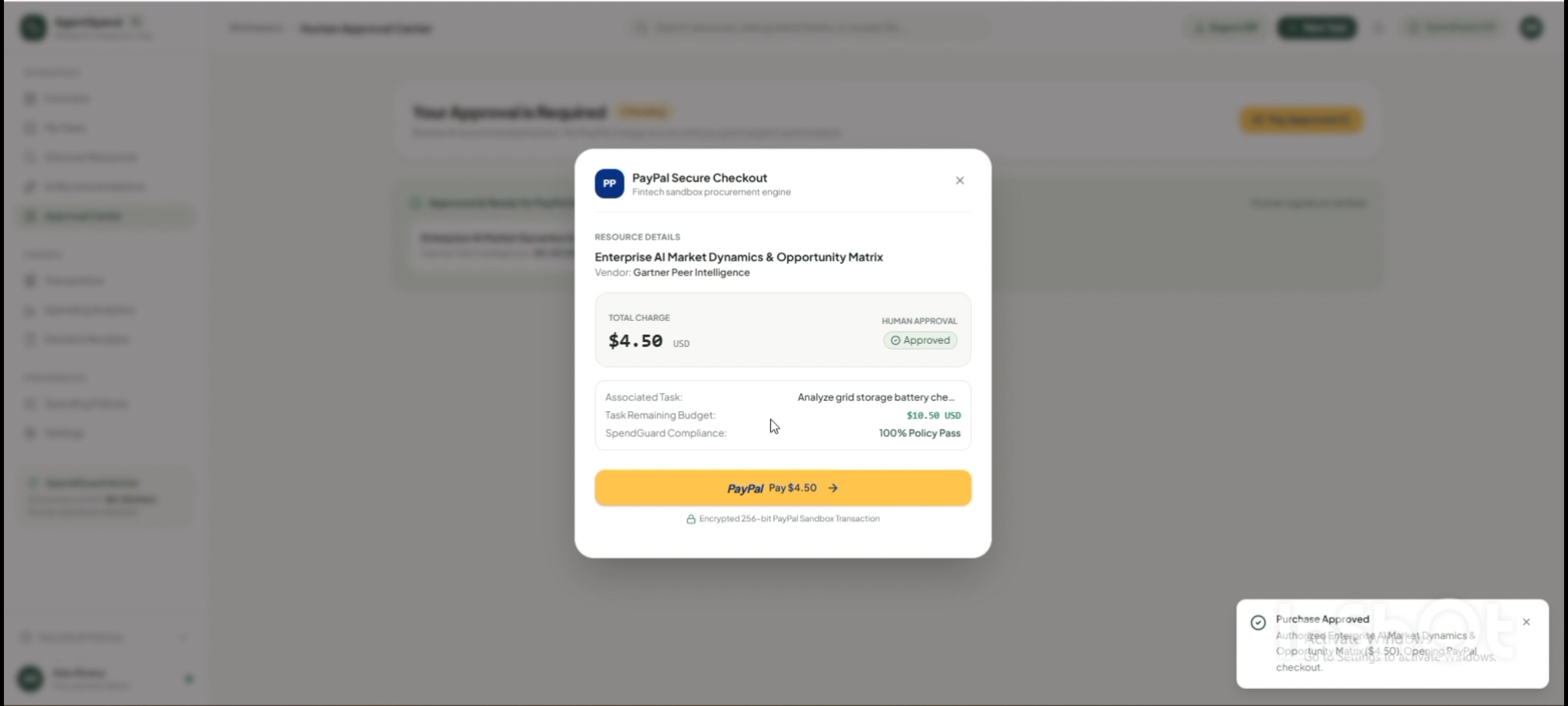
PayPal checkout for a $4.50 resource after human approval, showing the task and remaining budget.
-
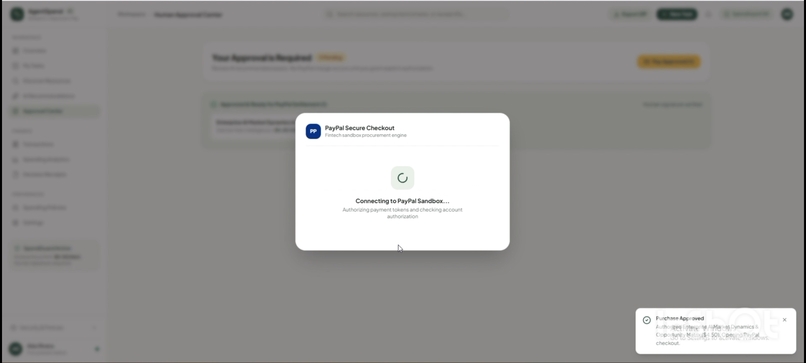
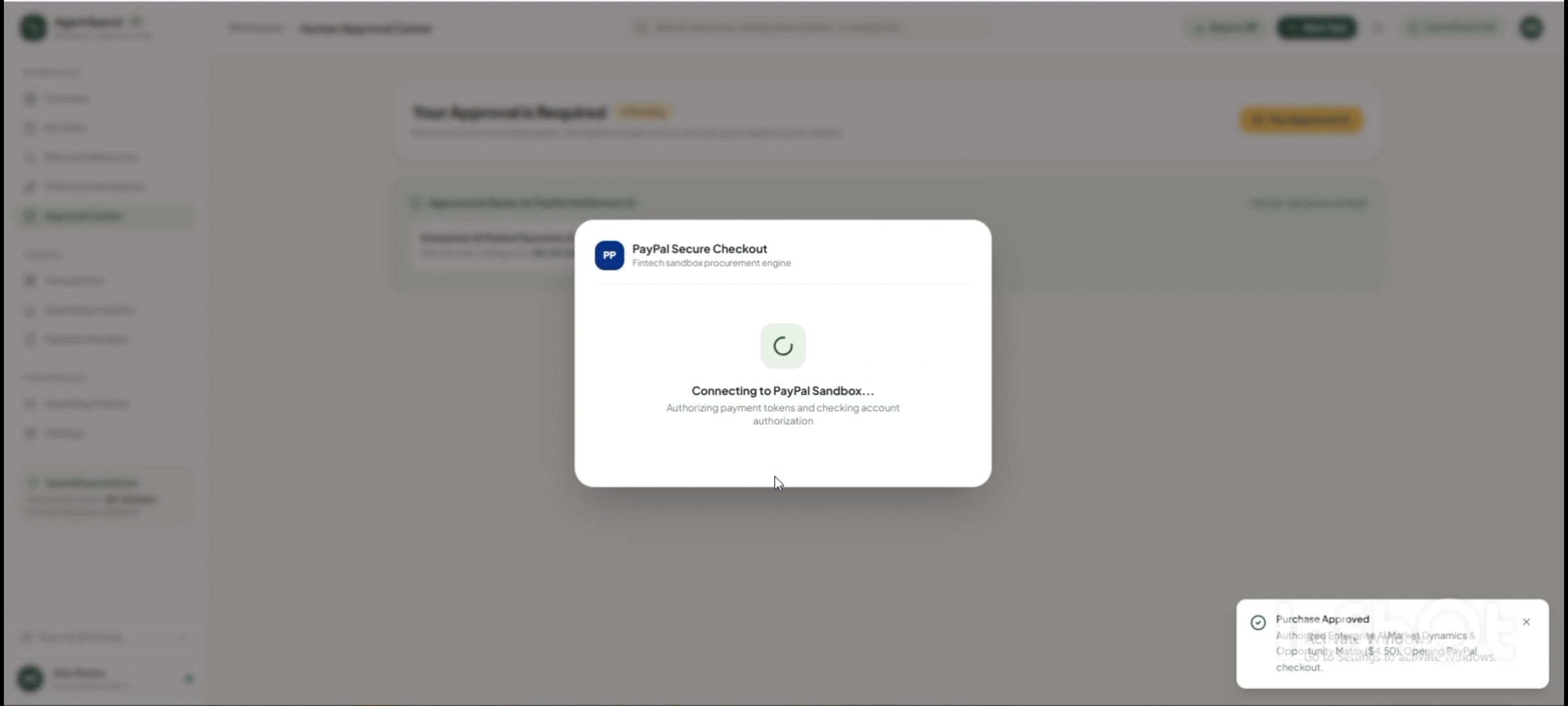
Connecting to PayPal Sandbox after approval, shown as a loading state in the demo build.
-
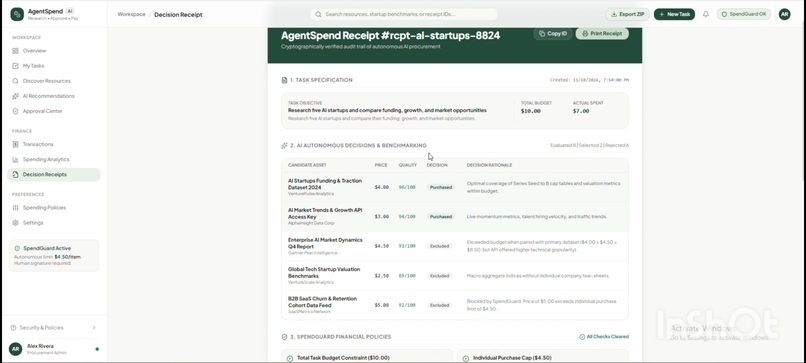
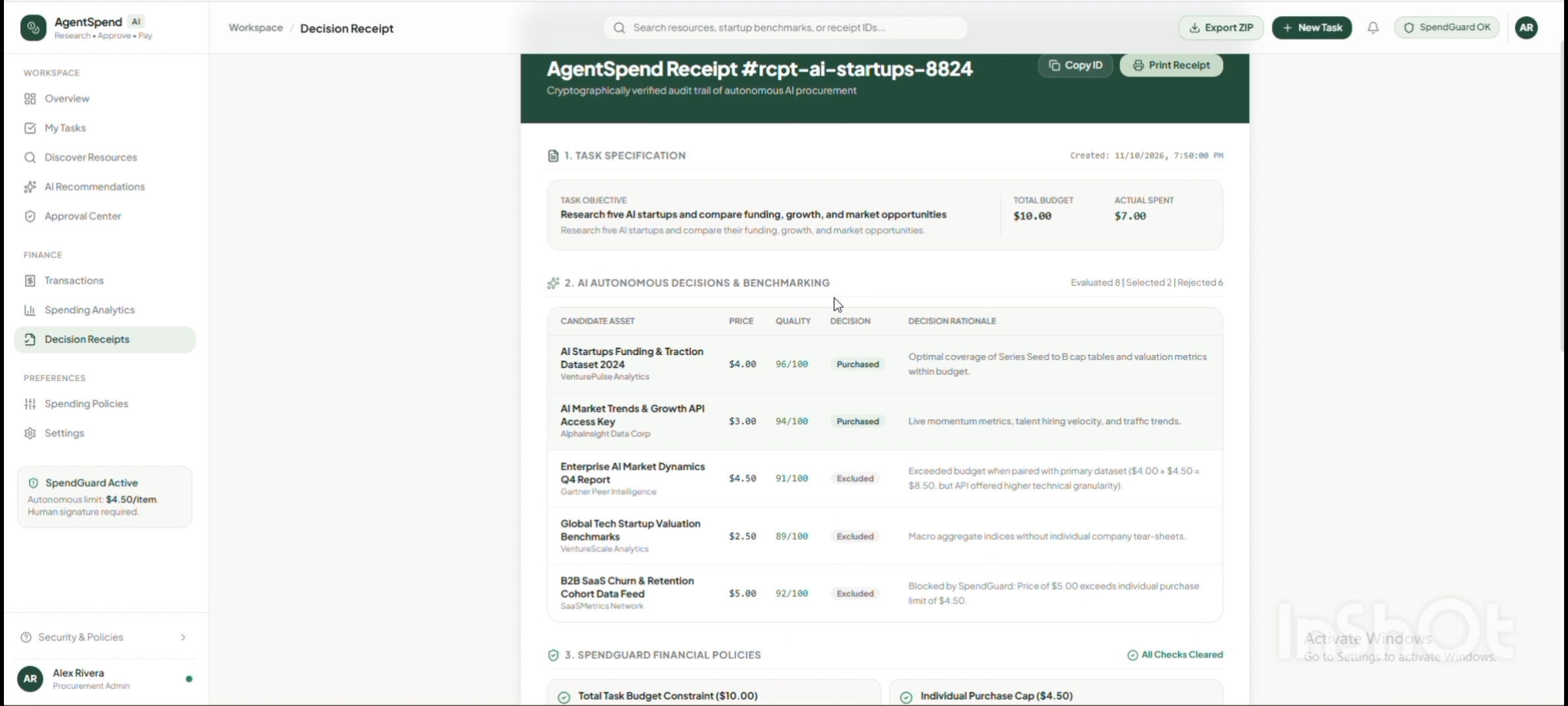
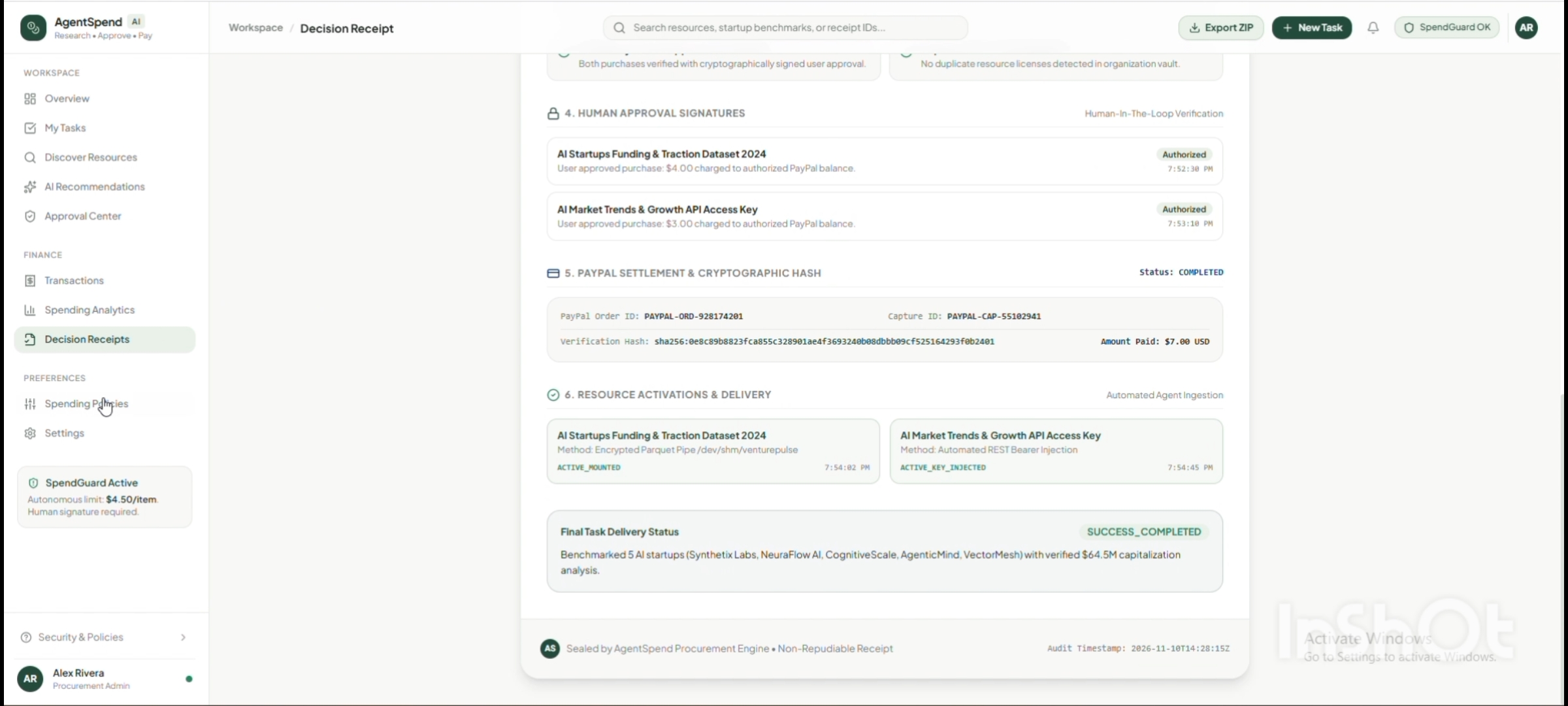
Decision receipt: $10.00 budget, $7.00 spent, two resources purchased and four excluded, with reasons.
-
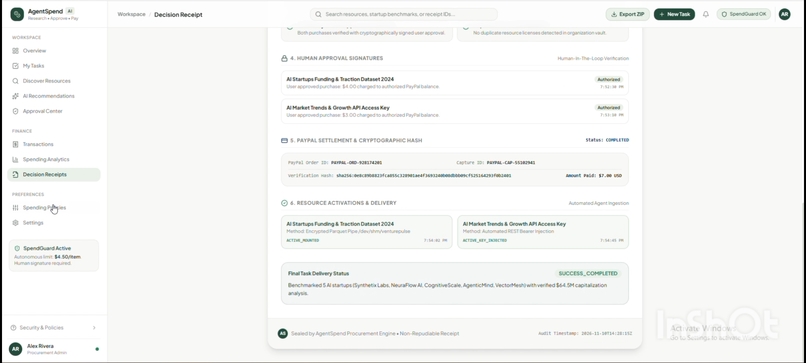
Receipt details: human approvals, PayPal order and capture IDs, SHA-256 integrity hash, and resource activations.
-
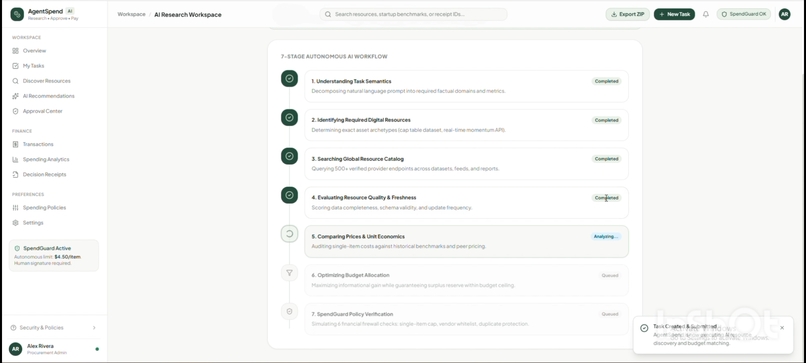
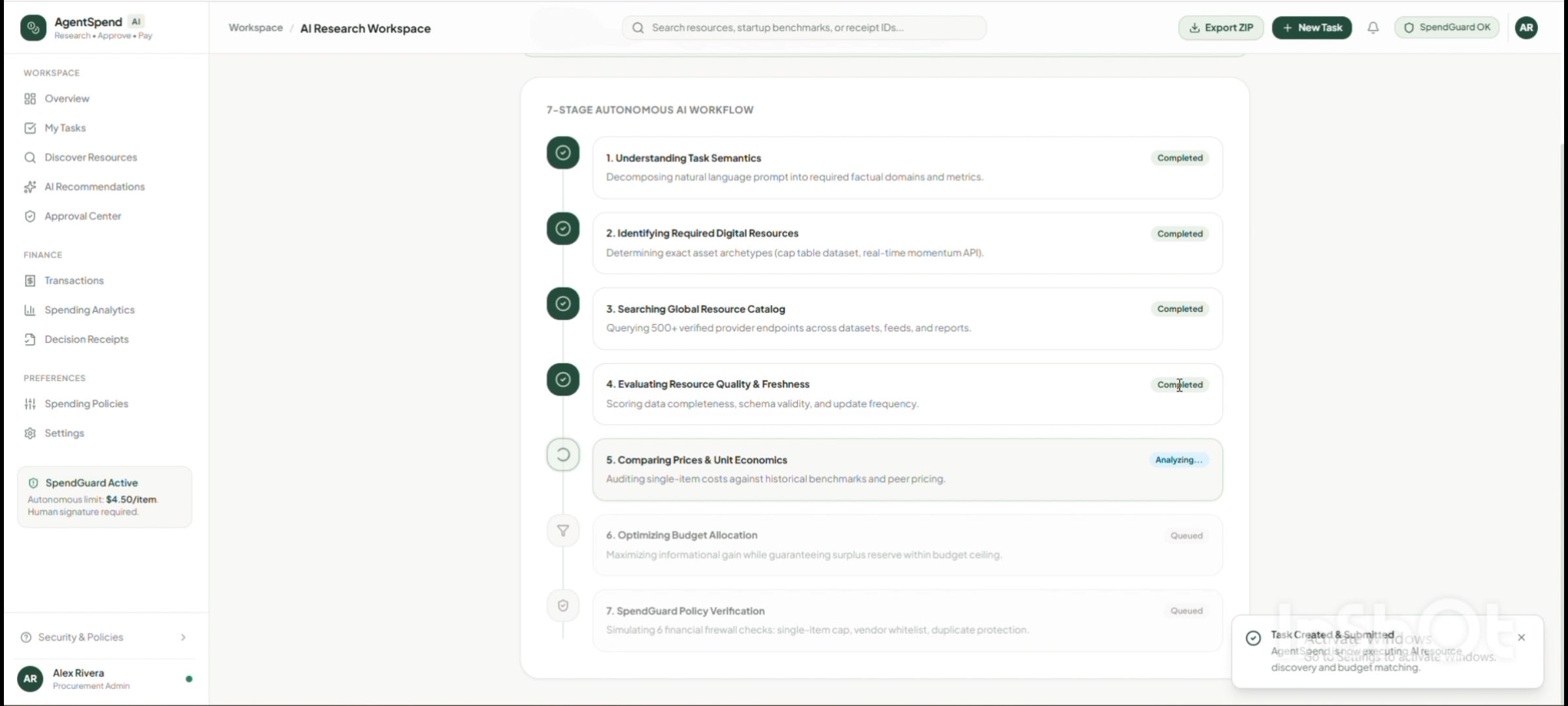
AI research workspace: seven-stage workflow with four stages completed and price comparison in progress.
-
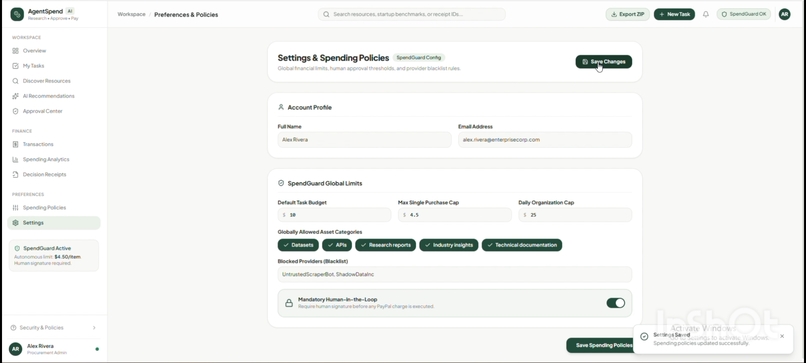
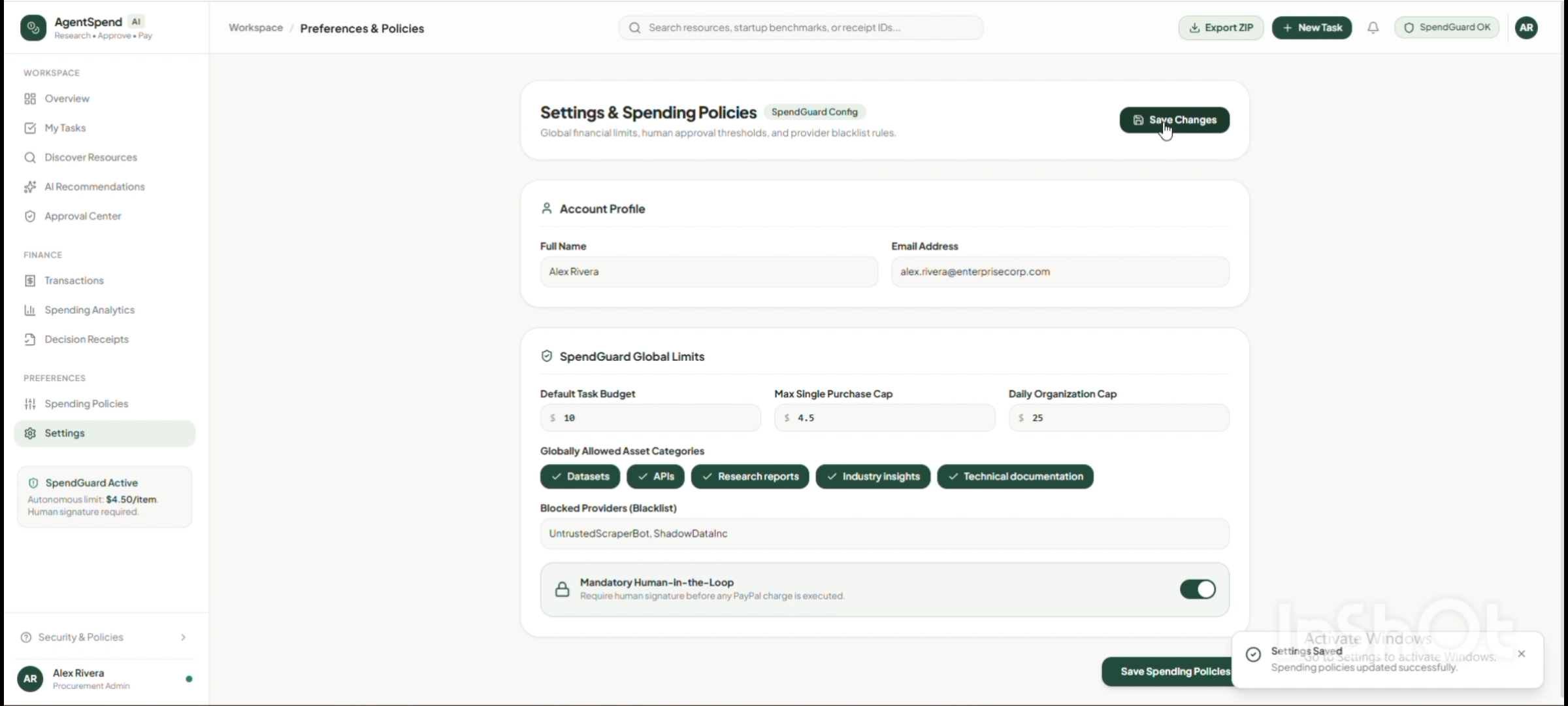
Spending policies: $10 task budget, $4.50 single-purchase cap, $25 daily cap, and mandatory human approval.
-
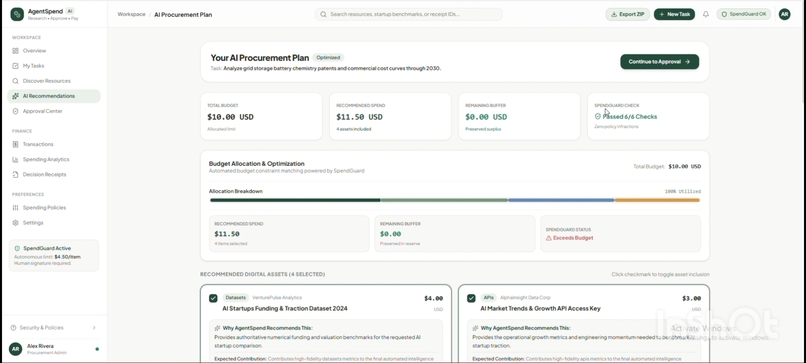
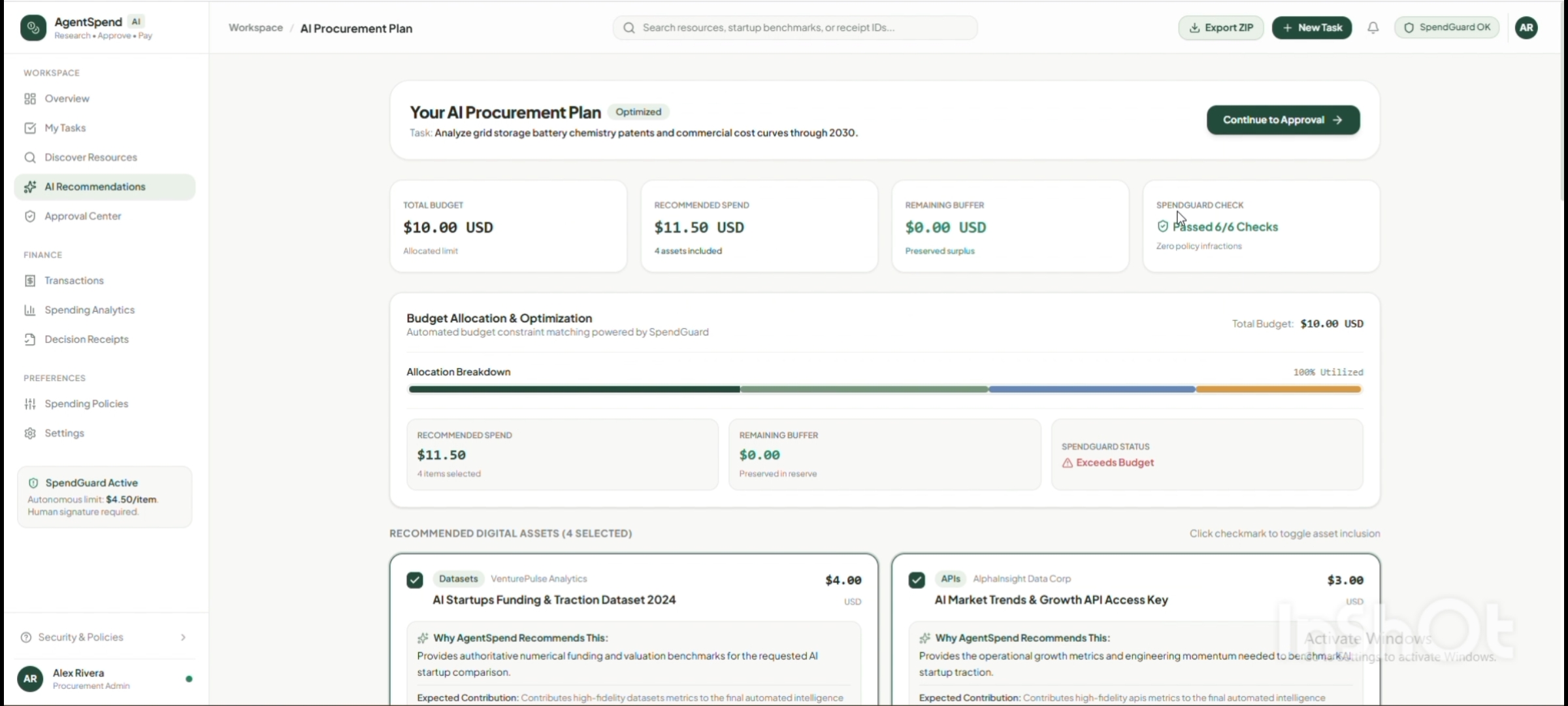
AI procurement plan summary for a grid-battery task: $10.00 budget, $11.50 recommended spend, and SpendGuard checks.
Inspiration
AI agents can research well, but they stop when they need data they can't buy safely. Giving an agent a payment method without limits is risky, and making a human buy everything defeats the point. We wanted an agent that can buy what it needs, but only within a budget and only after a person approves each payment.
What it does
AgentSpeed takes a research task and a budget, such as "Research five AI startups, spend up to $10, ask me before every purchase." It recommends resources, explains each choice, and excludes anything that breaks the rules. The user approves each purchase, then pays through PayPal Sandbox. The backend verifies the captured payment before unlocking the resource. The report is then written only from unlocked data, and a decision receipt records the approvals, policy checks, and payments.
All catalog data is simulated. Only the PayPal payments are real Sandbox transactions.
How we built it
- Frontend: React, TypeScript, Vite, Tailwind CSS
- Backend: FastAPI with SQLite
- Payments: PayPal Orders API v2, Sandbox only
- AI: Gemini writes report wording. Selection, budgets, and payments are deterministic code.
SpendGuard is a separate rules engine. It checks the task budget, single-purchase limit, daily cap, allowed categories, blocked providers, and approval requirement. It runs when the agent recommends, when the user approves, and before payment. The AI cannot override it.
Resource ranking uses a simple score: suitability per dollar, where suitability is the resource's quality multiplied by how well its topics match the task.
Challenges
- Trusting payments:the frontend never decides whether a payment succeeded. The backend checks PayPal's own order record for status, amount, currency, and purchase ID, and it ignores duplicate captures.
- Keeping AI out of money decisions:** we moved all budget and approval logic into code, and used Gemini only for explanations.
- Handling failures: retryable errors, such as an unfinished PayPal window, leave the purchase open. Declined cards and mismatched amounts are marked failed and never unlocked.
What we learned
Agent autonomy and financial control are not opposites. A small set of deterministic rules, combined with one clear approval step, lets an agent do real work without spending money the user didn't approve.
What's next
Real resource marketplaces, organization-level spending policies, role-based approvals, and signed receipts.