-
-
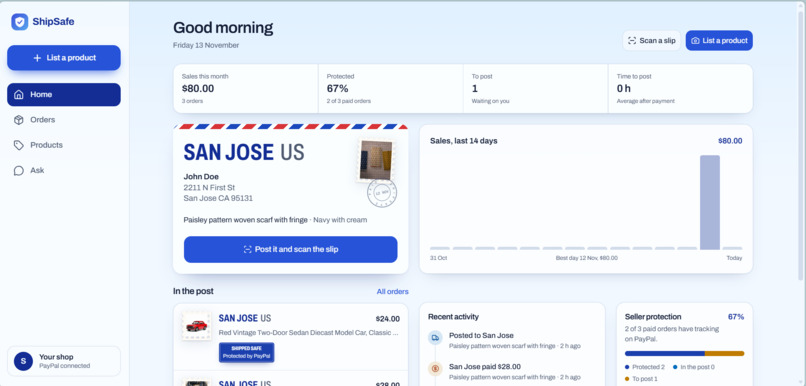
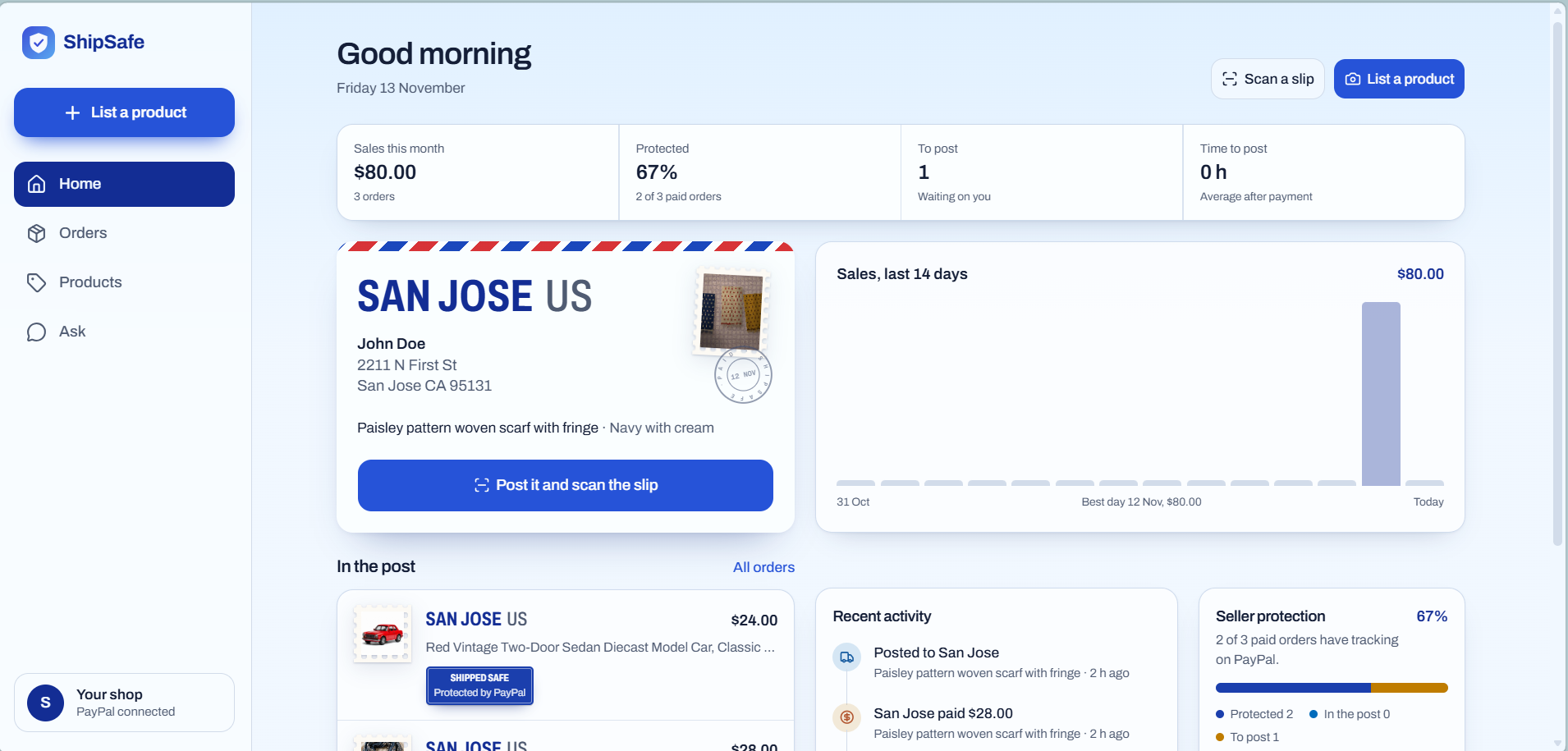
Dashboard with AG-Grid
-
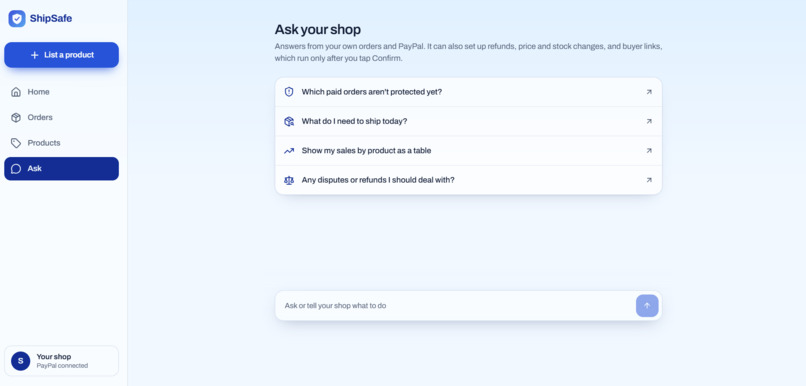
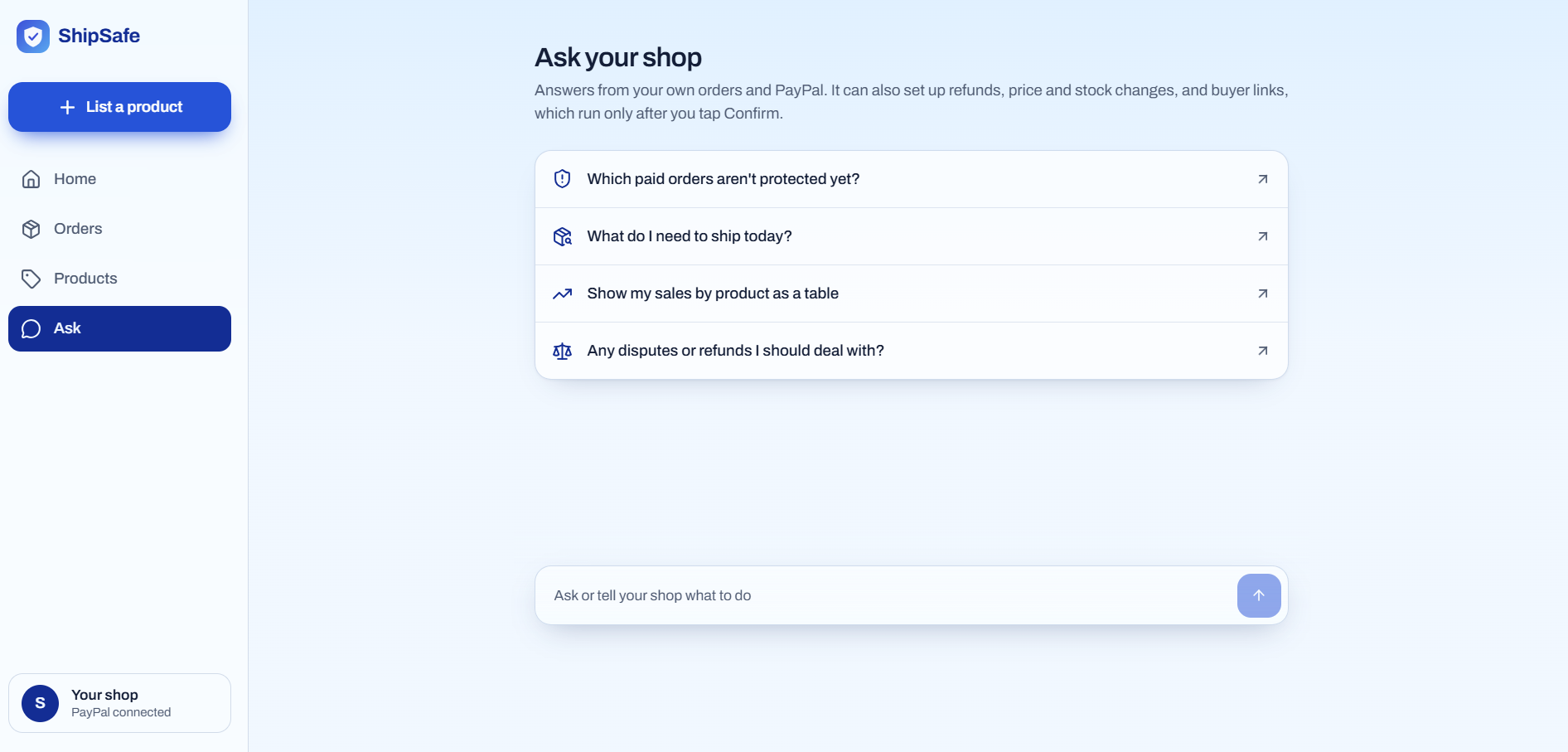
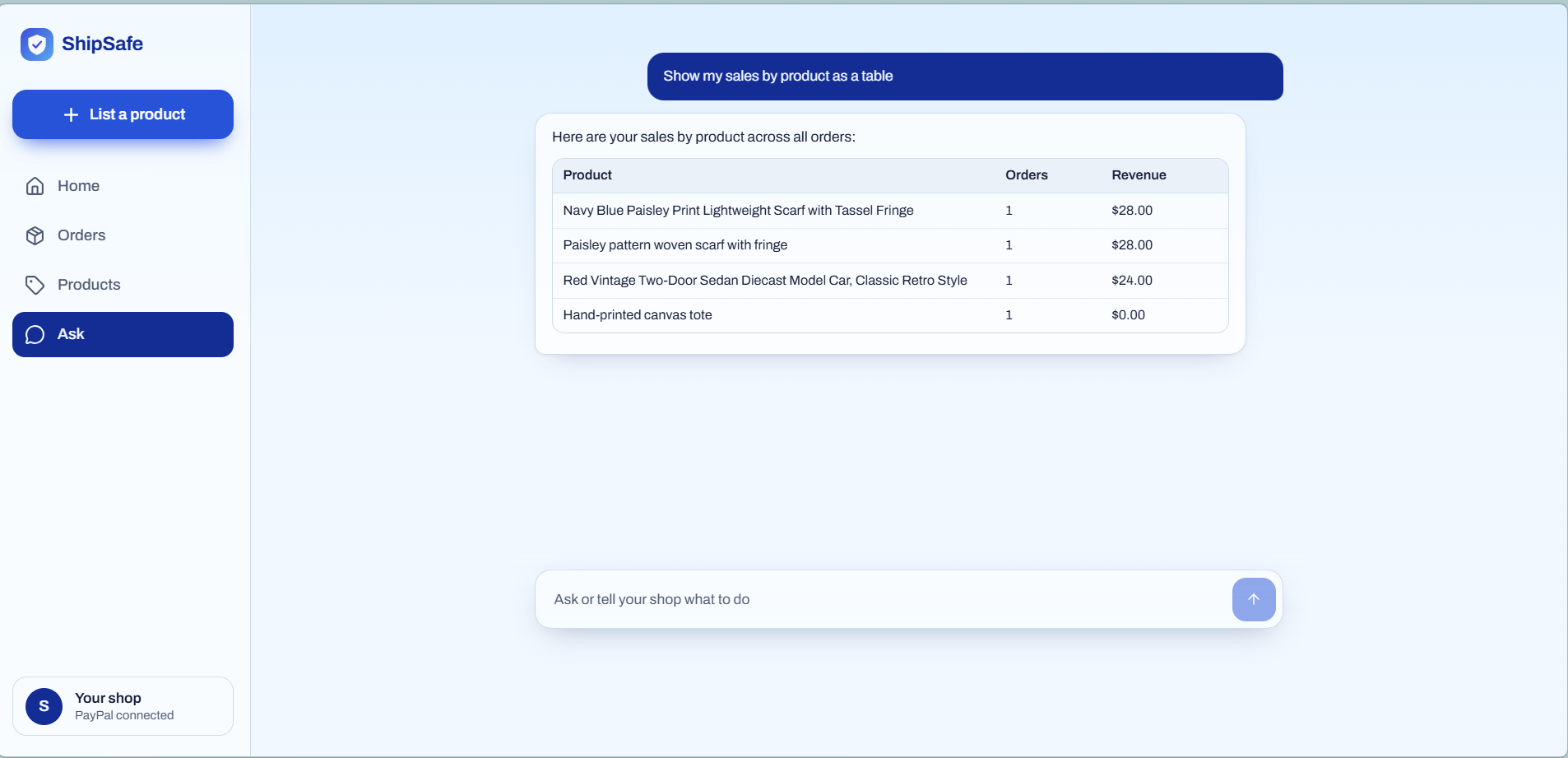
Natural Language support for the business owners to do the basic and most needful operations
-
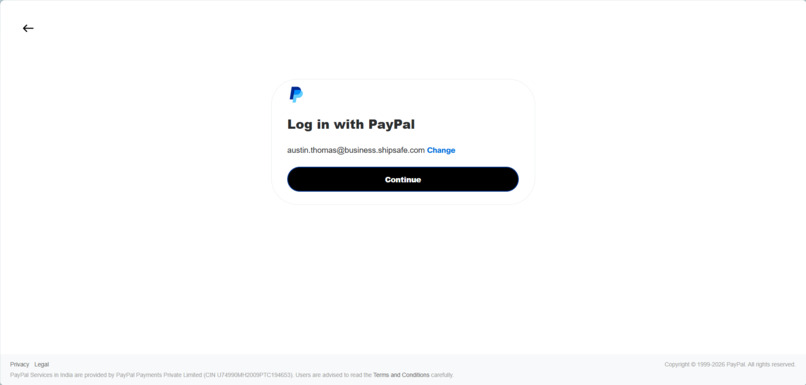
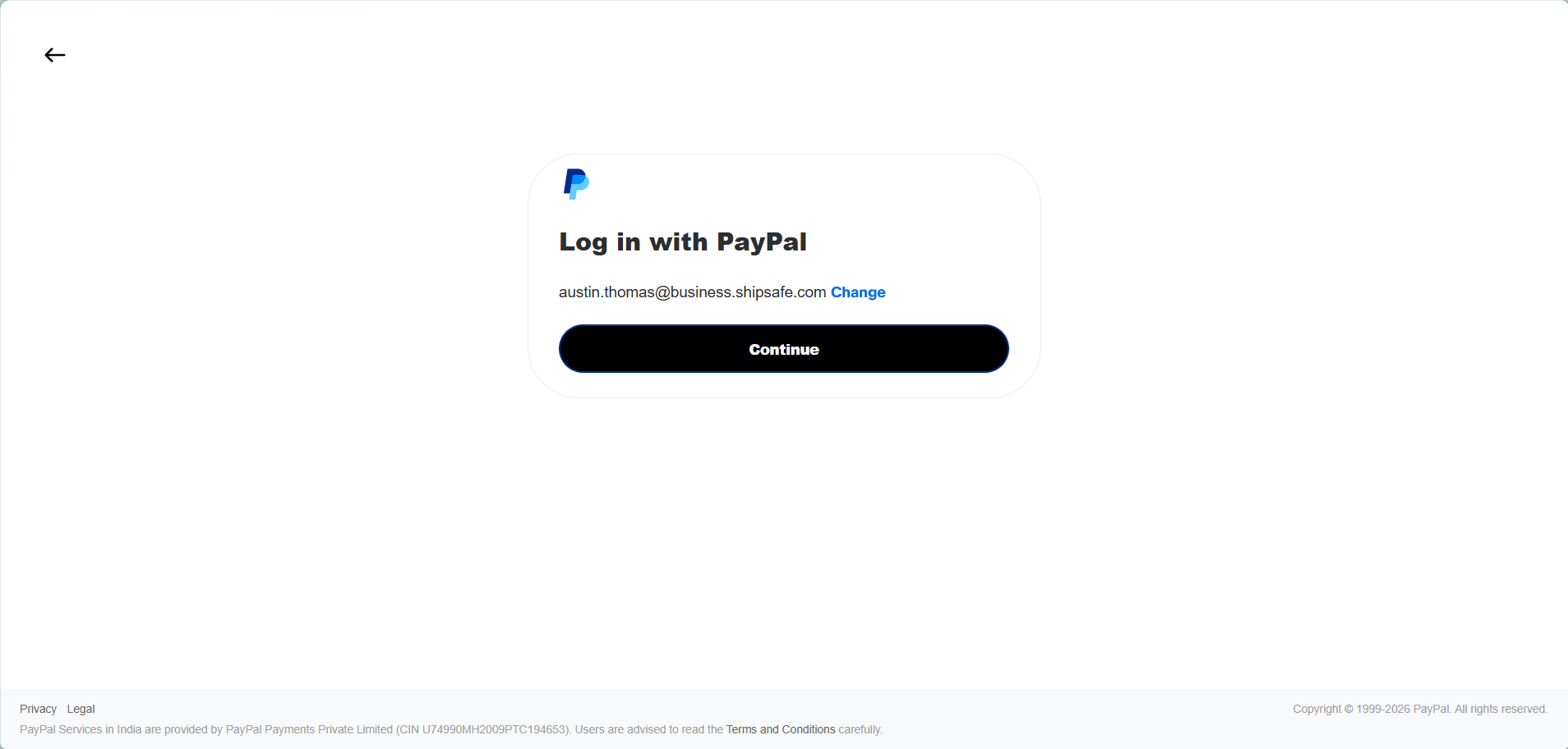
Login with paypal sandbox account
-
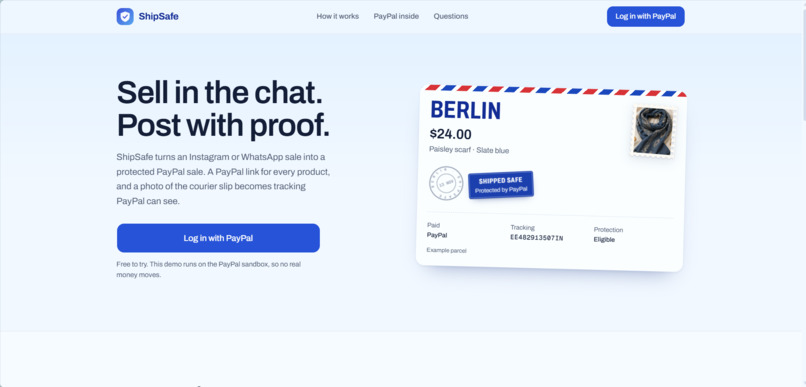
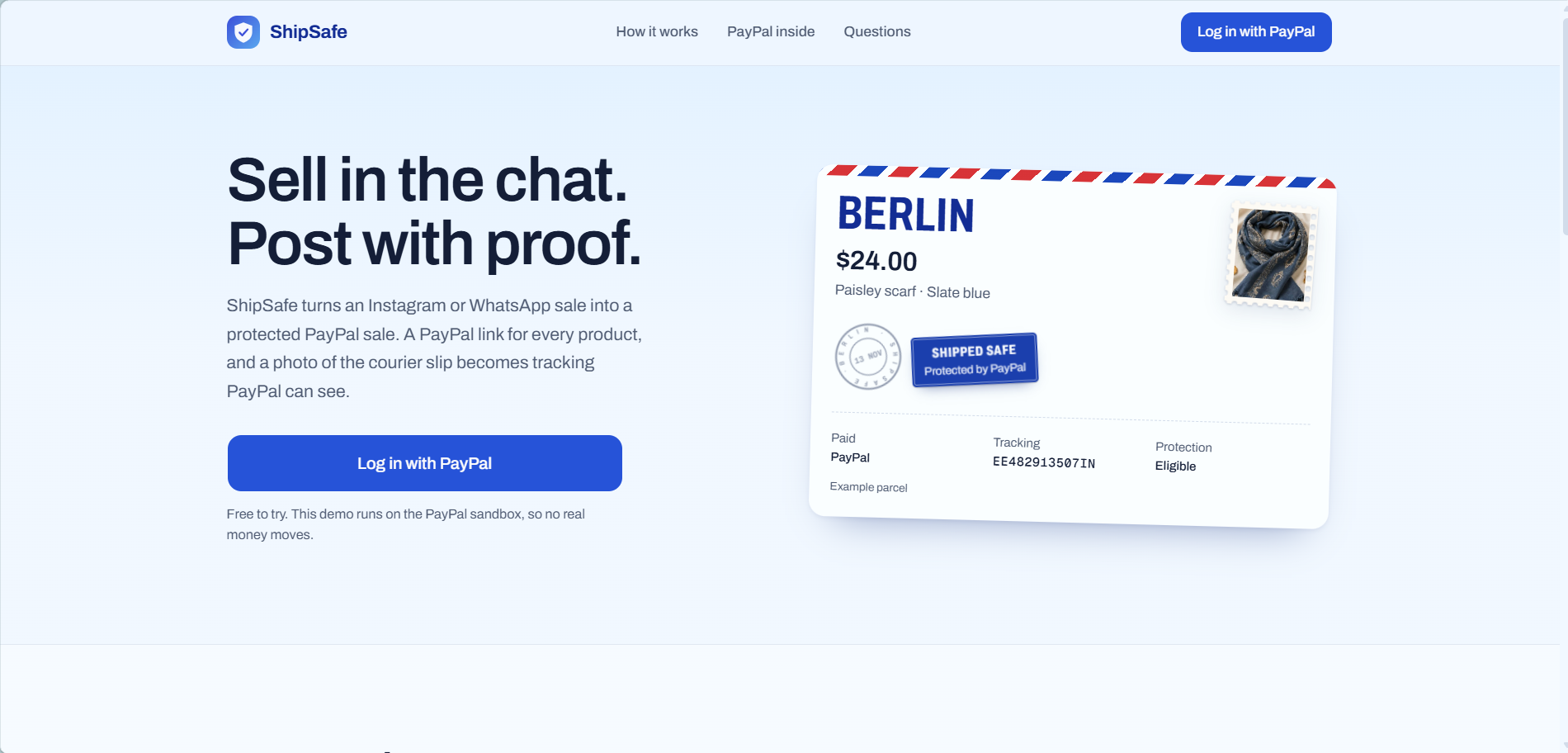
Login Landing Page
-
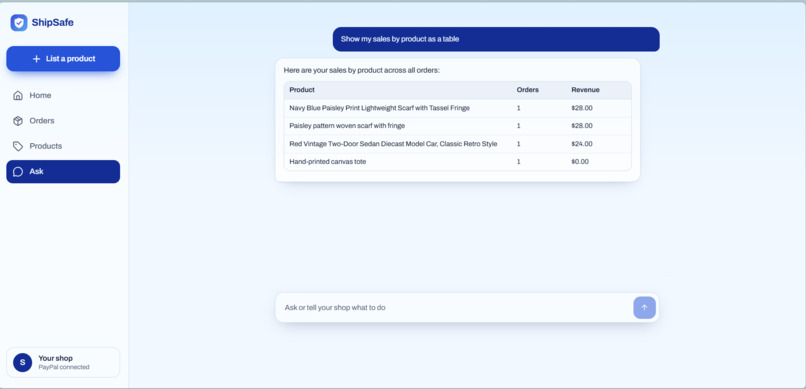
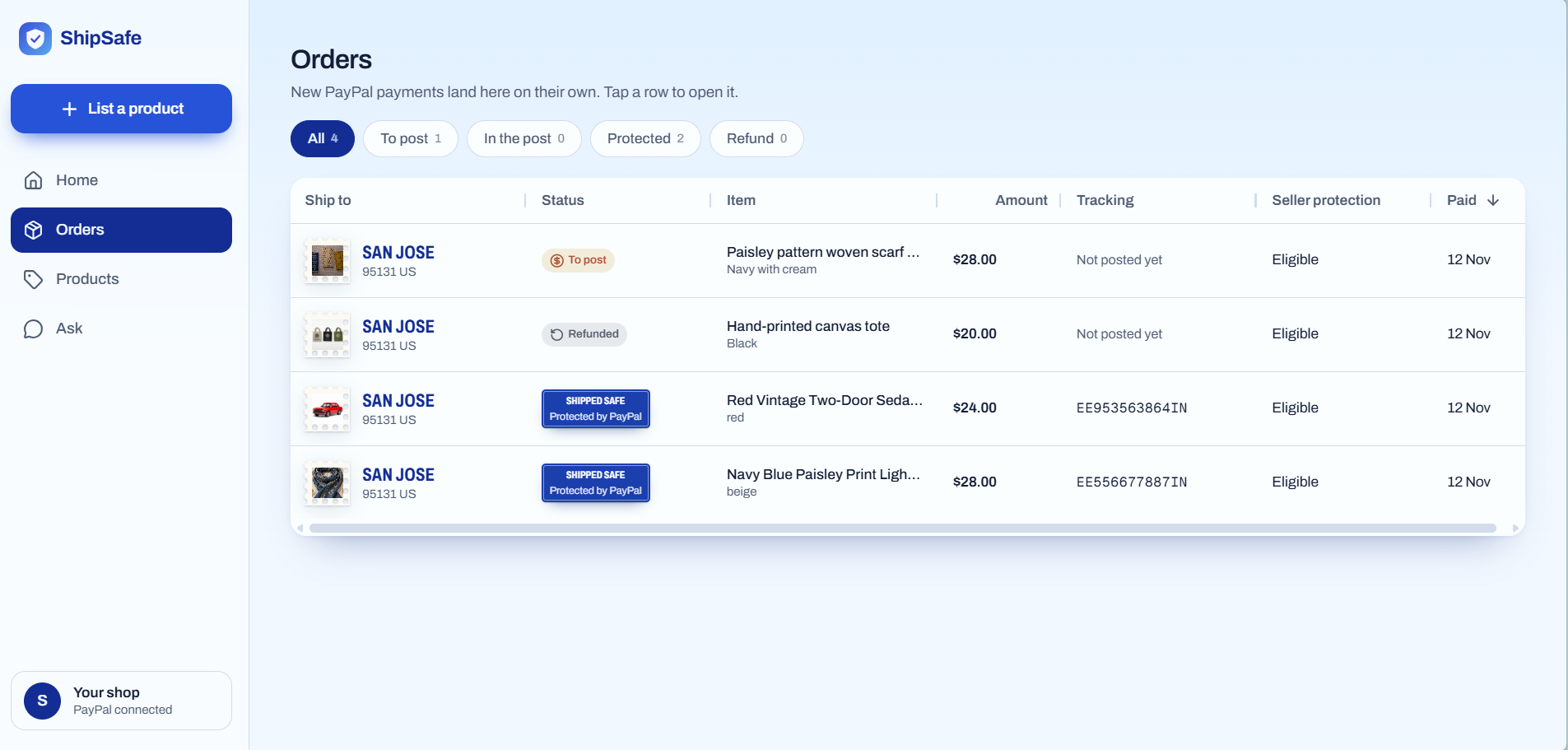
Table displays for lists of transactions
-
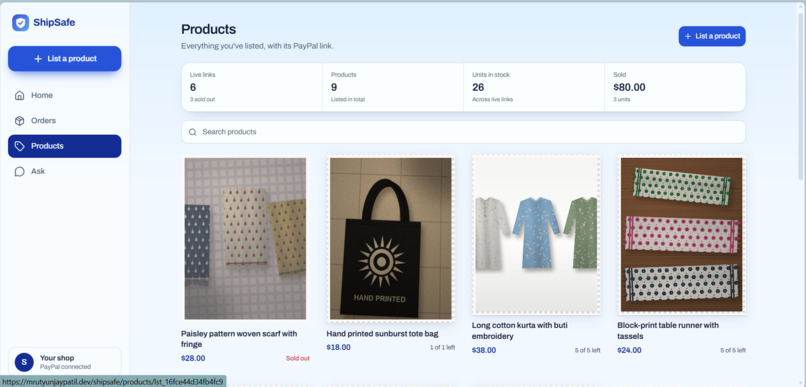
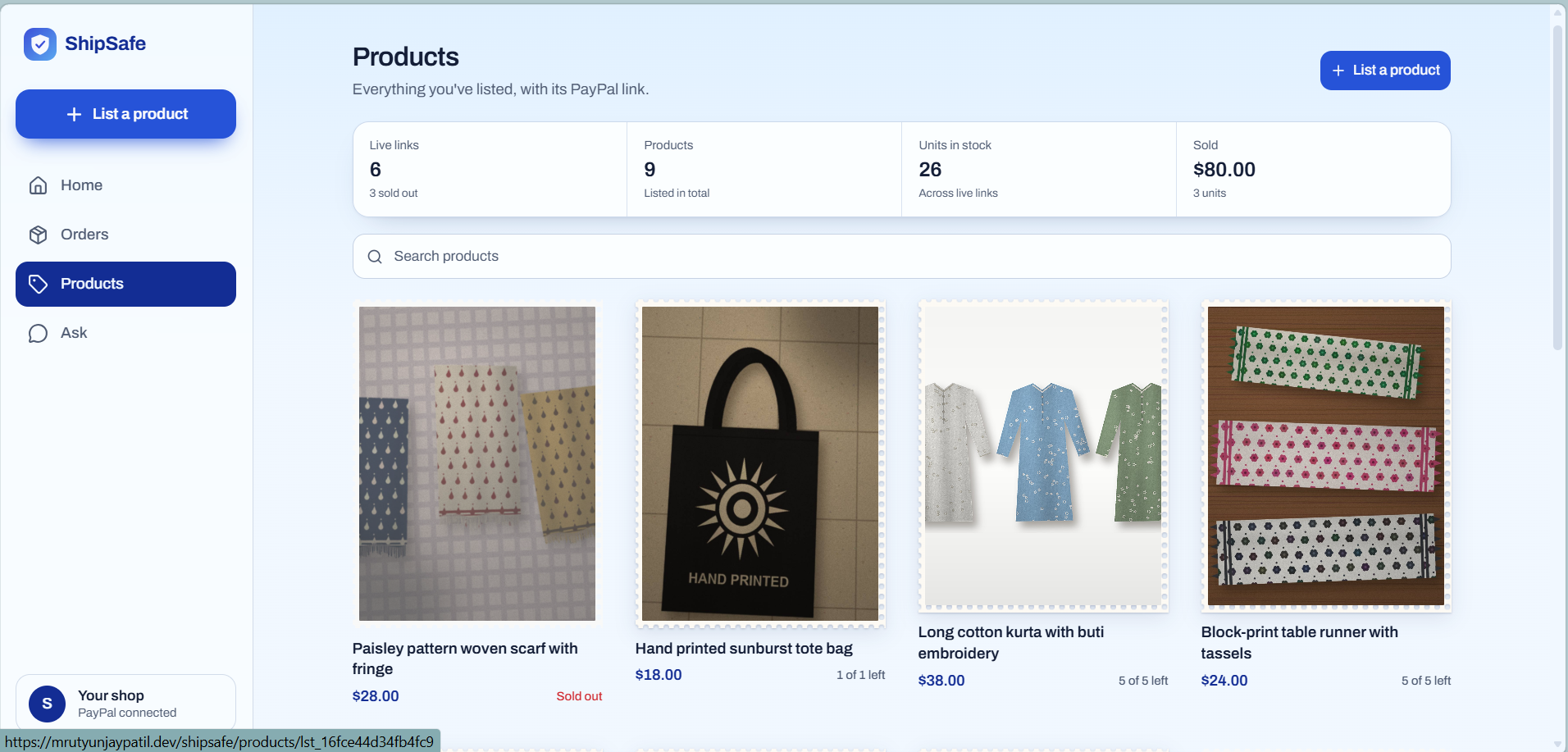
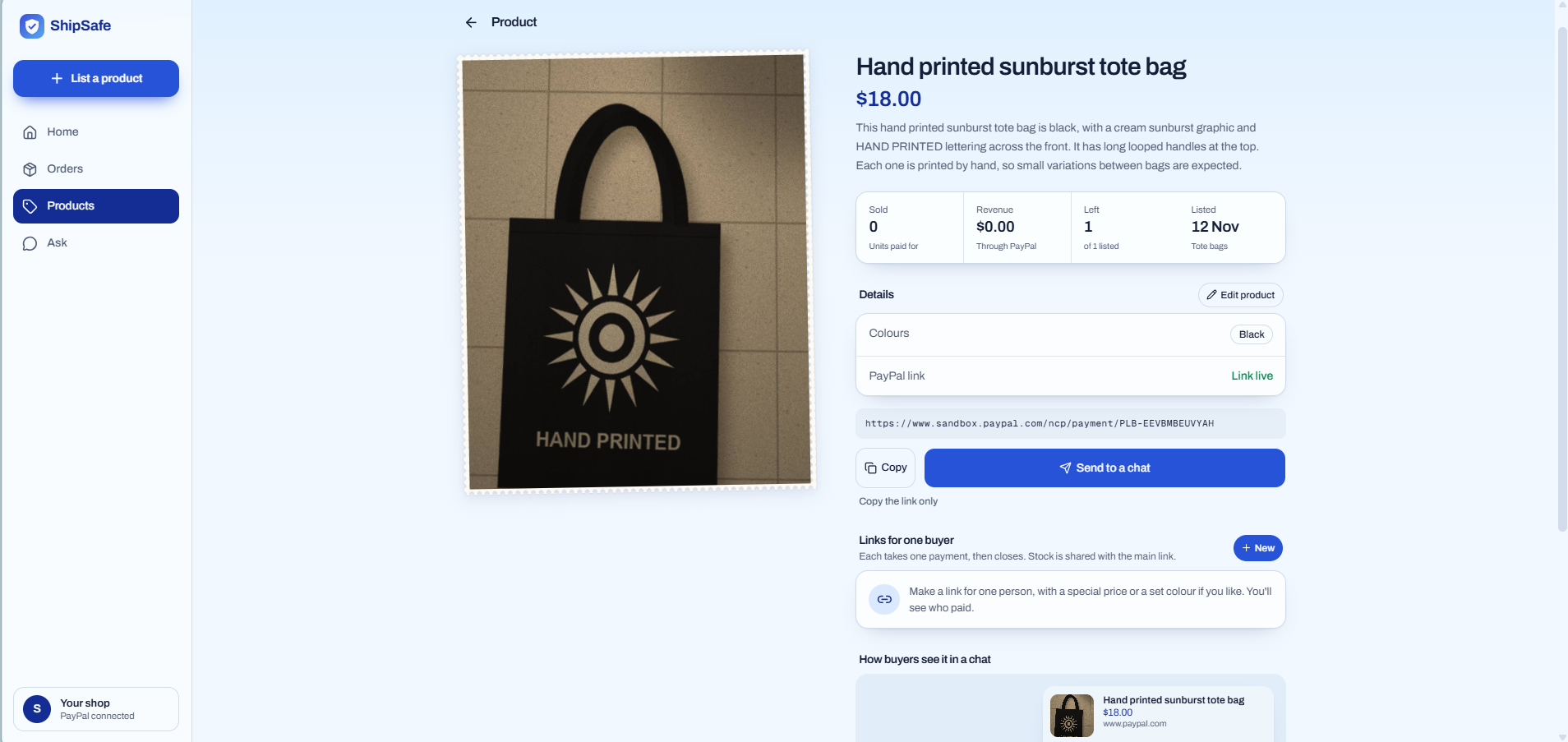
Easy to use catalog and inventory management and reuse of previous listings
-
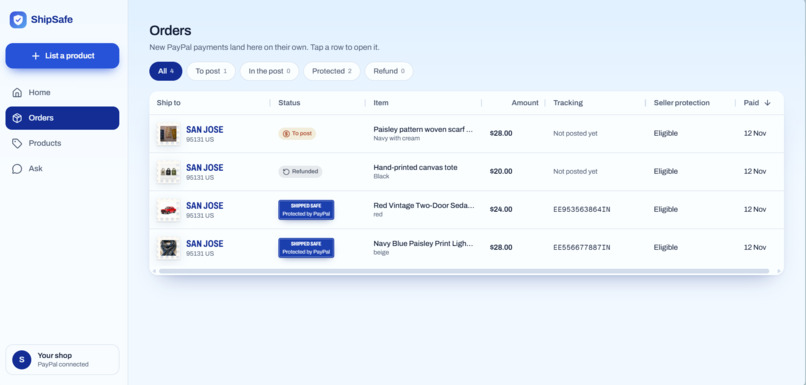
Orders page to find out the current status
-
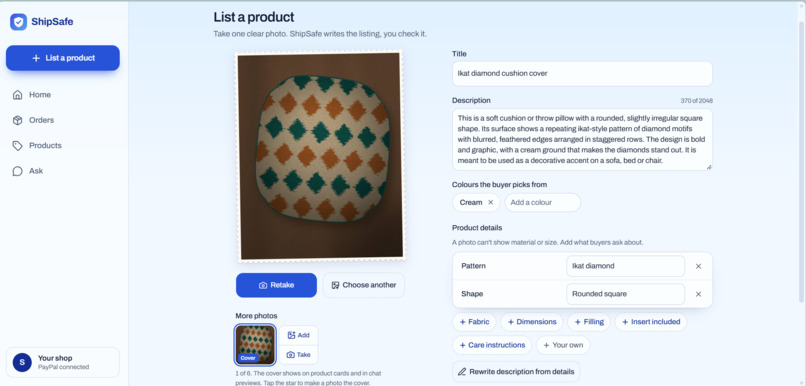
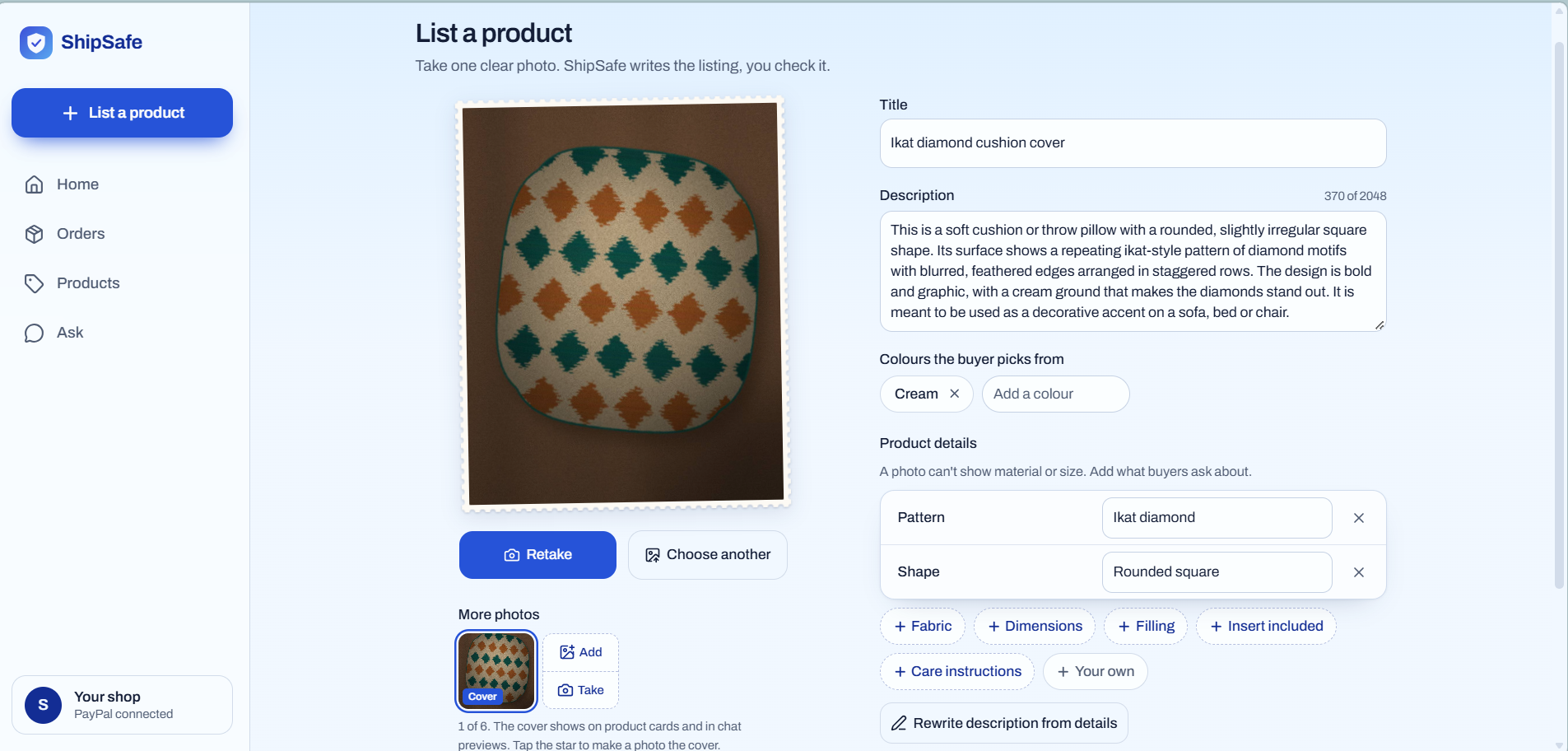
For a new listing, just one photo upload works either from gallery or capture in real time
-
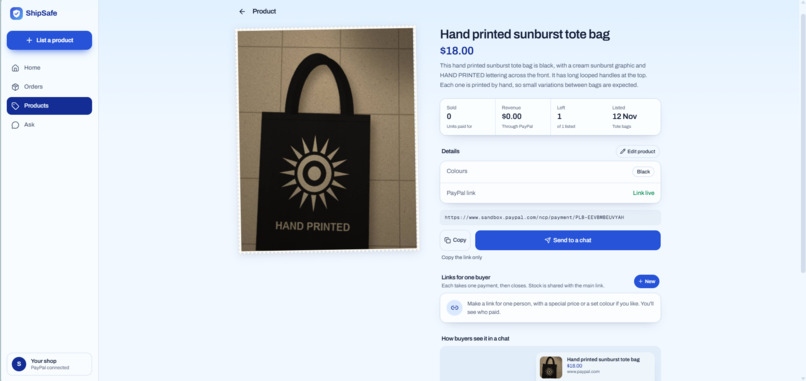
Easy way to create link and preview on how it would look like in chat
-
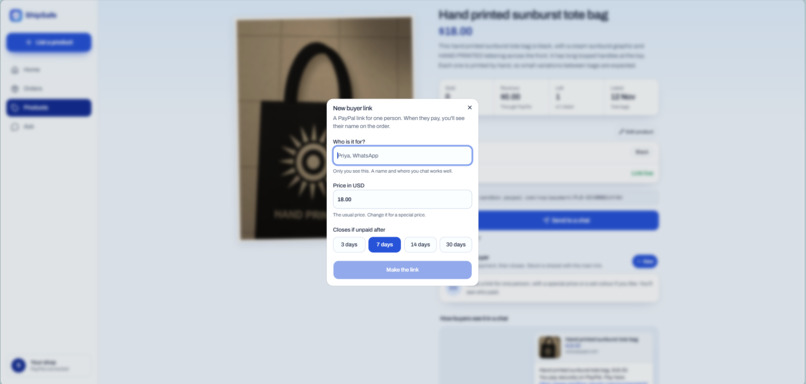
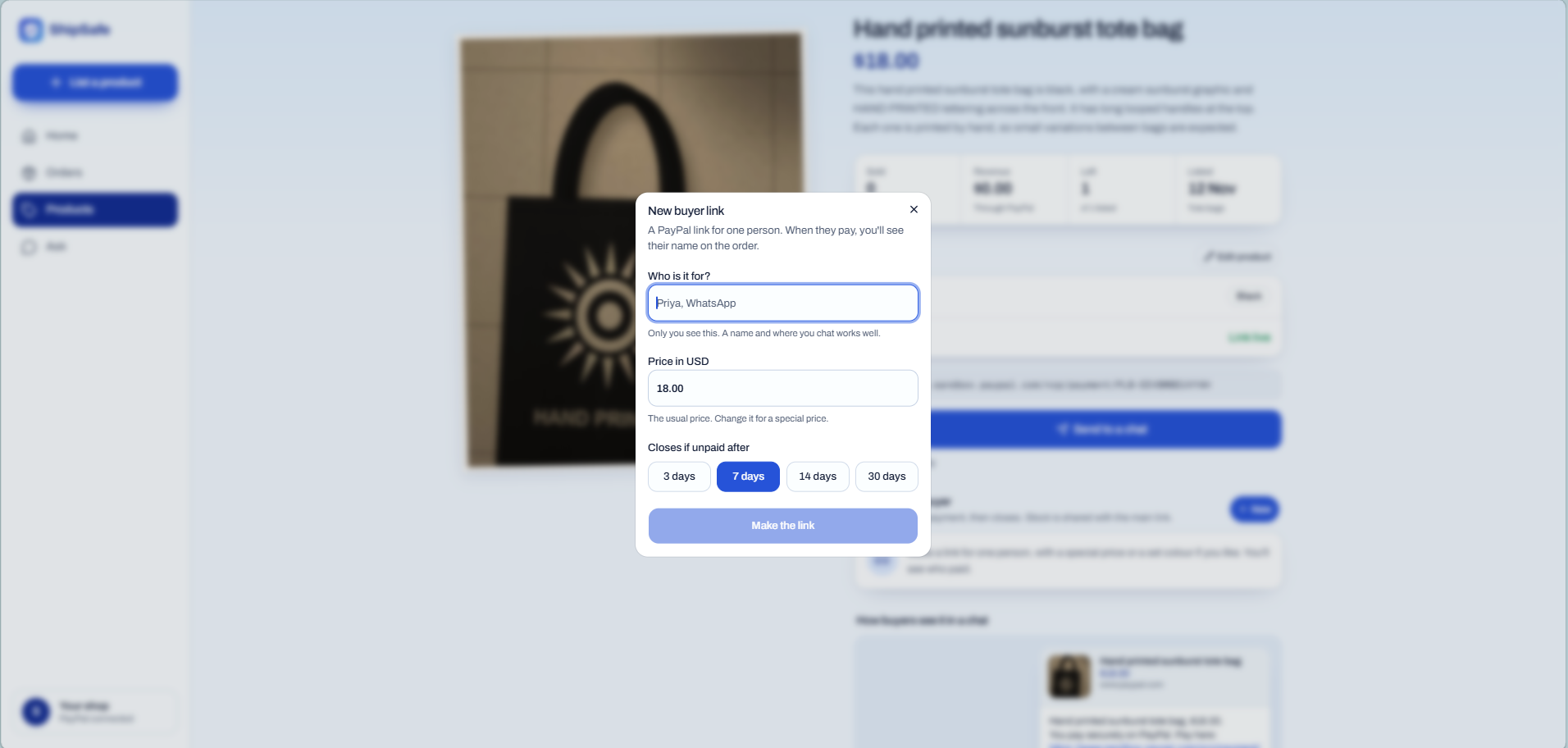
Special links for the same product with customizable price for special customers
-
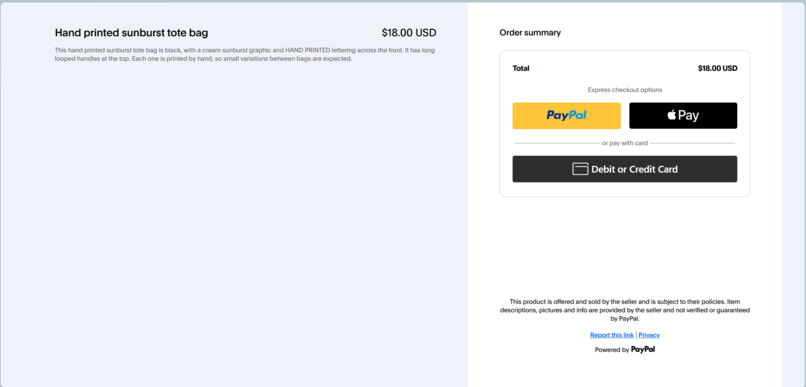
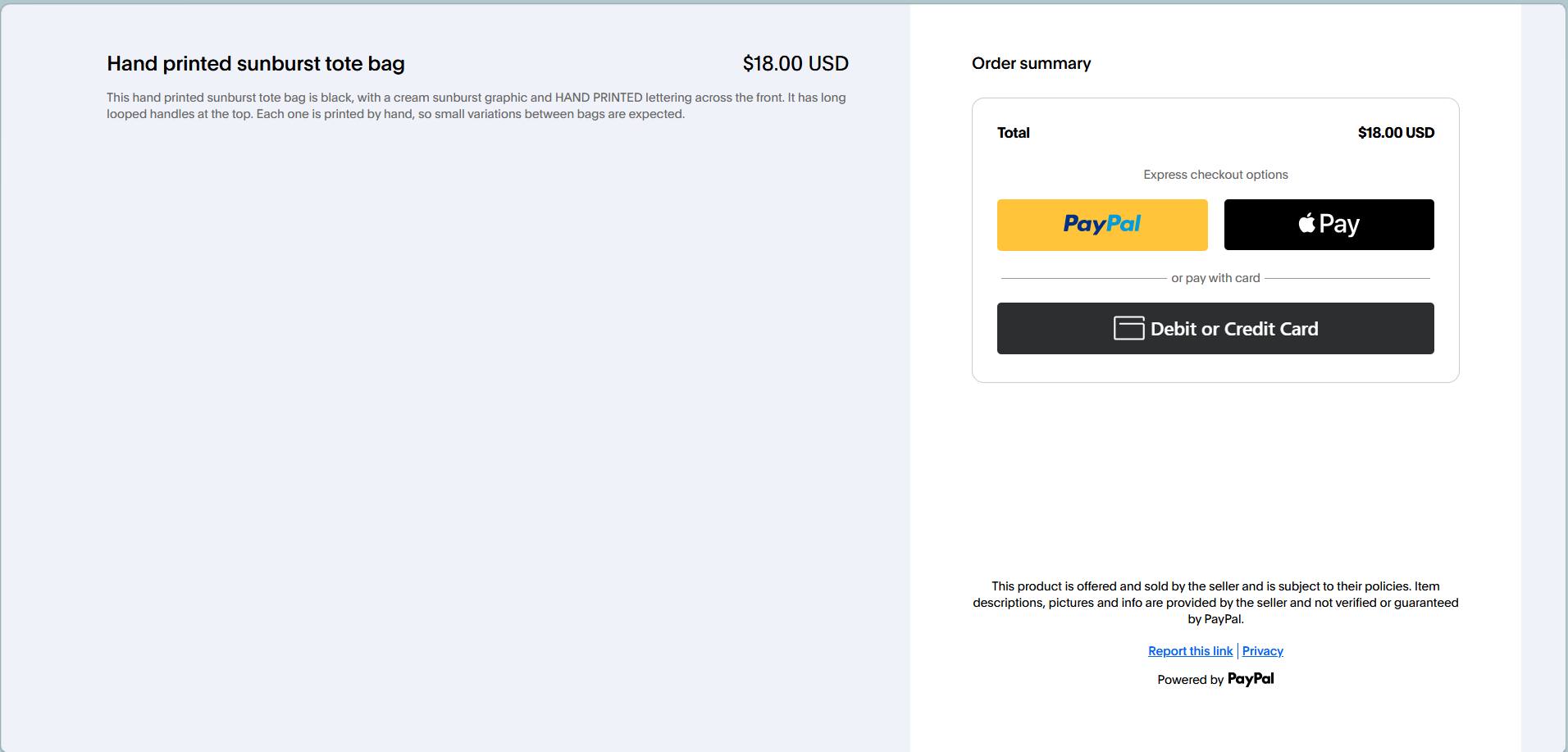
Buyers perspective : Page to redirect for payment (images not allowed on paypal sandbox to preview product)
-
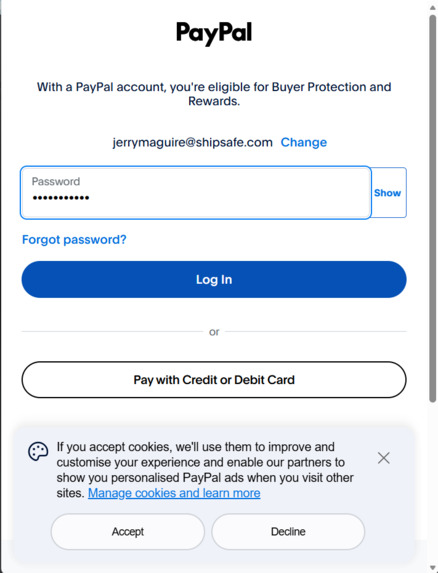
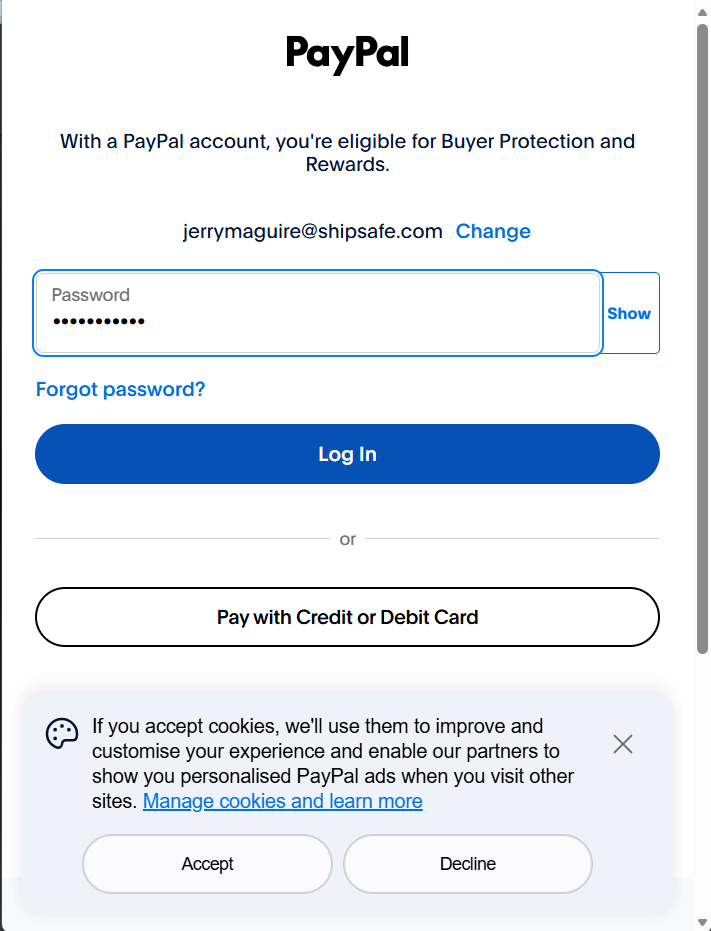
Buyers perspective : Login to paypal
-
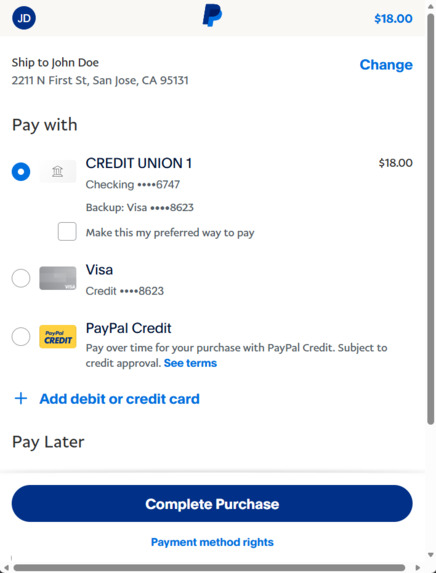
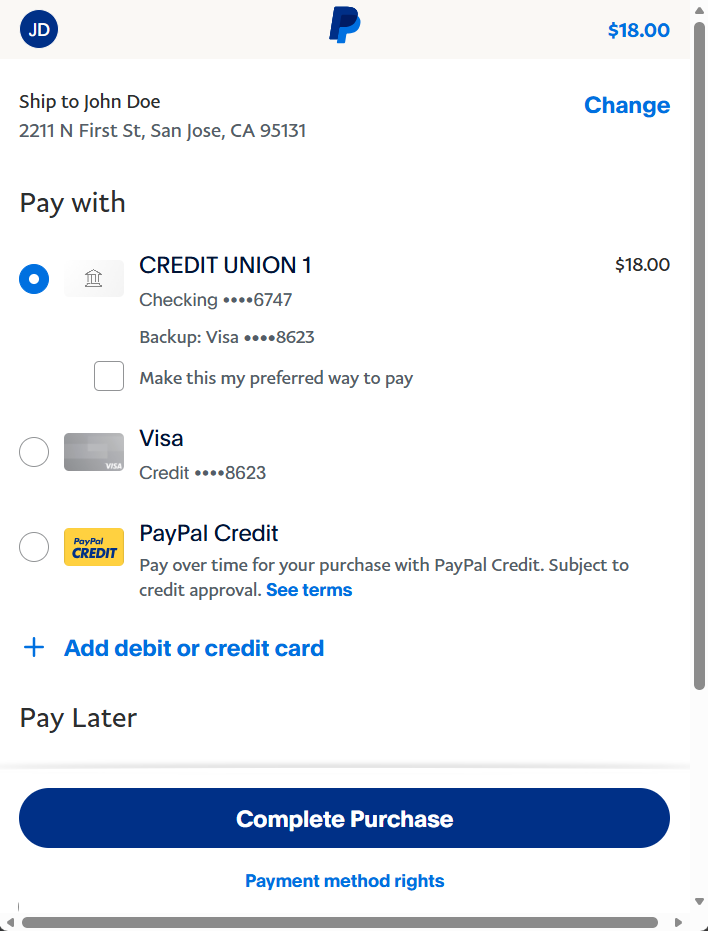
Buyers perspective : Select payment source
-
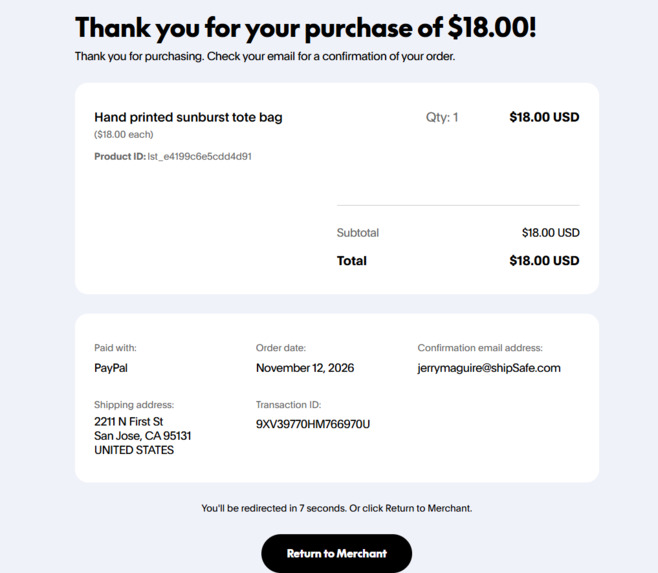
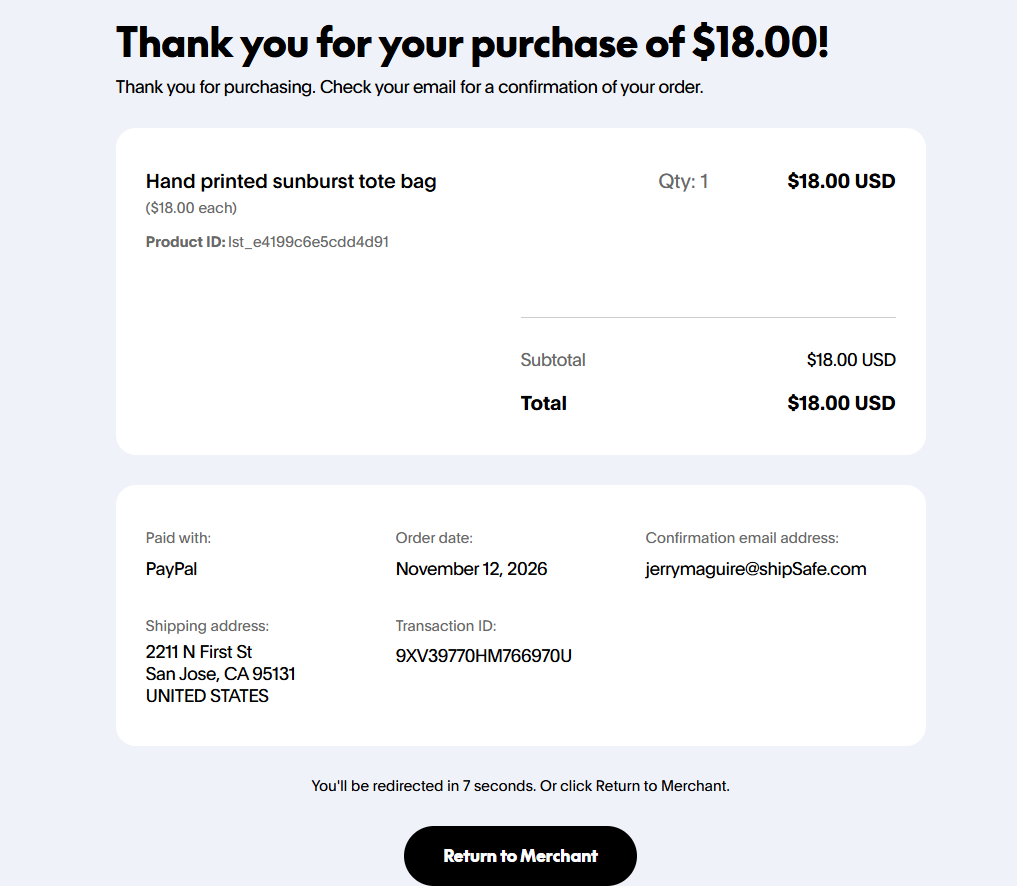
Buyers perspective : Success page and later redirect
Inspiration
Most of the small sellers we know of don't have a website. They have an Instagram page, a WhatsApp number and a phone full of product photos. Someone makes block-print scarves at home, posts a few photos, and the buyer says "how do I pay?" in the DMs.
The big e-commerce platforms are built for people with a catalogue, a GST or tax setup, a bank account that fits their forms, and a free week to get approved. Plenty of sellers have none of that, so they stay in the chat. The chat works fine until something goes wrong. A buyer says the parcel never came, and the seller has no tracking on the payment, because adding it meant typing a long number into the right order on a tiny screen, standing in a queue at the post office.
That small gap is what ShipSafe goes after. Not a store, not a marketplace. The seller stays in their chat, and we remove the two jobs they skip: making a proper payment link, and attaching proof of shipping to it. Both now start with a photo.
What the research showed. Before building, we checked whether this was a real gap or just our guess.
- The people selling this way are many, and growing. Statista estimates worldwide social commerce at about $585.9 billion in 2026, heading toward $928.65 billion by 2030. Bain and Flipkart's How India Shops Online 2026 found that online shoppers in India roughly doubled to 290-300 million while sellers tripled, with growth increasingly led by Tier 2+ towns.
- Getting paid is no longer the hard part. Keeping the money is. PayPal's Seller Protection for Item Not Received claims asks for proof of delivery, "an online and verifiable tracking number", with a delivery status and an address that matches the transaction. PayPal's own Add Tracking docs say that sending the tracking number is the fastest way to reach funds held on a tangible-goods sale.
- The tools that fix this assume you have a store. Shopify and WooCommerce sync tracking to PayPal automatically. A seller working from DMs has no such platform, so for them it's manual or it doesn't happen.
- The existing "chat to payment link" projects stop at the payment. Most of what we found, including other entries in this hackathon, helps a seller get paid. Few handle what comes after, which is where an Item Not Received dispute is decided.
So the gap is specific: sellers with no store platform, taking PayPal, with no tracking on the order. ShipSafe closes it with two photos.
What it does
ShipSafe turns a chat sale into a protected PayPal sale, from a phone, in four steps.
- Photo to listing. The seller photographs the product. Claude drafts the title, description, colours, category, price and details. The seller checks it, adds up to six photos, and taps "Make the PayPal link".
- Link to chat. ShipSafe creates a PayPal payment link with colour options. "Copy" and "Send" give a ready-made message to paste into WhatsApp or Instagram.
- Buyer pays on PayPal. A signed PayPal webhook brings the order into ShipSafe with the buyer's colour choice and shipping address. The seller never handles card details.
- Slip to tracking. The seller photographs the courier slip. Claude reads the carrier and tracking number, then plain code checks it before anything reaches PayPal:
- the UPU S10 check digit,
- that the city, postcode and country match PayPal's shipping address,
- that the number isn't already on another order.
ShipSafe then adds the tracking to the PayPal order and asks PayPal to email the buyer. The order shows a "Shipped safe" stamp, with PayPal's own seller protection status beside it.
Around that loop:
- Links for one buyer. A personal link with a special price or a fixed colour, which closes after one payment. Handy for the "can you do it for less?" messages.
- Live link editing. Change price, colours, stock, details or photos and the PayPal link updates in place. When the last unit sells, every link for that product closes.
- Oversell protection. If two buyers pay for the last unit, the extra order is flagged for a one-tap refund.
- Ask your shop. Claude answers questions like "which paid orders aren't protected yet?" using read-only tools over the shop's orders and PayPal's order and dispute data.
- Order board and dashboard. An AG Grid order board for laptops, and a phone dashboard with sales, a protection meter and a setup checklist.
Who it helps. ShipSafe is for people who sell from a phone and a chat thread: home makers, thrift and resale sellers, small boutiques, anyone starting with a few items a week.
- No store to build. Large platforms usually mean a seller account, verification paperwork, a catalogue upload, category rules and often fees or commission. ShipSafe needs a PayPal account and a photo. The catalogue is whatever the seller already shoots for their feed.
- It fits the habit they already have. Their customers are in the DMs. ShipSafe doesn't ask buyers to go somewhere new. It gives the seller a link that works in the chat they're already in.
- Writing listings stops being the barrier. Many small sellers know their product well but find title, description and category fields slow, especially in a second language. A photo becomes a draft they only need to check.
- They look like a real business. A hosted PayPal checkout, a shipping email and a tracking number the buyer can follow make a first-time buyer more willing to pay a stranger on Instagram.
- Protection without paperwork. Tracking on the PayPal order is what Seller Protection leans on, and ShipSafe makes sure it's there without the seller typing it.
- Works on a cheap phone. It's a lightweight installable web app with big tap targets, built to be used one-handed at a courier counter.
- A first step toward cross-border selling. PayPal handles the payment, so a seller in a small town can take an order from another country without opening a merchant account.
How we built it
Before writing the app, we proved every PayPal step against the sandbox with small probe scripts: 17 checks, recorded with redacted evidence in the repo. The one that mattered most was whether a Payment Links sale gives us an Orders v2 order ID we can attach tracking to. It does, through the capture's supplementary_data.related_ids.order_id. The whole design came from that.
The app is a mobile-first PWA built with Vite, React and TypeScript, with Tailwind, shadcn/ui and AG Grid. A single Cloudflare Worker runs Hono, with D1 for data and R2 for photos. Claude Haiku 5.5 does the vision and text work through Anthropic's SDK, and every response is structured JSON validated with zod. Claude reads, and code decides. Check digits, address matching and duplicate detection are ordinary functions, so the model can't talk its way past them.
PayPal, in the sandbox
- Payment Links and Buttons API: create links with colour variants, update them with PUT, delete them when stock runs out or a buyer link is used.
- Webhooks:
CHECKOUT.PAYMENT-RESOURCE.PAYMENT-COMPLETEDcreates orders andPAYMENT.CAPTURE.REFUNDEDmarks refunds. Signatures are verified and repeat deliveries ignored. - Orders v2: the buyer's colour choice and shipping address.
/trackadds tracking withnotify_payer, and a tracker PATCH cancels it. - Payments v2: capture details including seller protection status, and refunds.
- Disputes API: read-only, for Ask your shop.
- Log in with PayPal: seller sign-in with OpenID Connect.
AI: Claude Haiku 5.5 (claude-haiku-5-5) via the Anthropic SDK
- Product photo to listing draft, as strict JSON.
- Courier slip to carrier and tracking number, as strict JSON. The slip is treated as untrusted text.
- Description rewrite from the seller's own details, adding no claims the seller didn't give.
- Ask your shop: tool use over read-only functions (
list_orders,get_order,list_disputes).
Sponsor tool: AG Grid powers the desktop order board.
Challenges we ran into
- Payment links are never single-use.
reusable: "SINGLE"returnsSINGLE_REUSABLE_NOT_SUPPORTED, and links have no stock limit. So ShipSafe tracks stock itself and deletes links through the API at the right moment: a buyer link after its one payment, every link when the product sells out. Anyone who pays in the gap is flagged for a refund. - Descriptions got cut off. An early version stored 140 characters, sliced mid-word, and the product details never reached PayPal's page. Now descriptions use PayPal's full 2,048 characters, are cut only at a sentence end, and list details one per line.
- No photos on PayPal's checkout. The payment links schema has no image field, so photos live in ShipSafe and travel with the chat message instead.
- Courier slips are untrusted input. One of our test slips had a prompt injection printed on it. Claude reads the slip into a fixed schema, and code decides whether the tracking is valid.
- Sandbox Log in with PayPal returns no verification field, so the app says "PayPal connected" and never "verified". We would rather under-claim.
Accomplishments that we're proud of
- The full loop runs end to end on the live sandbox: sign in, photo, AI listing, link, buyer pays, webhook, slip scan, tracking on PayPal, protected.
- We tested a buyer link with a real sandbox payment. A $20 special-price, Black-only link was paid, the order recorded the buyer's name, and PayPal returned 404 for the link afterwards.
- The seller never types a tracking number.
- It feels like a finished product, not a demo: sign-in, dashboard, selling, editing with unsaved-change guards, buyer links, orders, ask, and account.
What we learned
- PayPal's Orders v2 tracking is the bridge between a chat sale and Seller Protection, and Payment Links sales reach it cleanly. We didn't know that going in.
- AI earns its place at the messy edges, like reading a crumpled slip or a dim product photo. Anything that can cost someone money should be plain code you can read and test.
- Building for non-technical people means taking things away. Most of our time went into removing steps.
What's next for ShipSafe
- More shipping services from the slip photo. Today the slip scan understands India Post. Next we want it to recognise other couriers and postal services from the photo alone, work out the carrier and the right tracking format for each, and run the same checks before anything goes to PayPal. The seller still just takes one photo.
- Where sellers already chat. Integrations with WhatsApp, Telegram and Facebook Marketplace, so a payment link and its message can go straight into the conversation, and a paid order can come back to the same thread, without copy and paste.
- A public product page with photos and a Pay with PayPal button, to share instead of a bare link.
- Courier pickup booking.
- Disputes in the app: when a buyer opens one, ShipSafe assembles the tracking evidence.
- Moving from the sandbox to live PayPal accounts, and testing with a handful of real chat sellers.
Built With
- ag-grid
- anthropic
- claude
- cloudflare-d1
- cloudflare-r2
- cloudflare-workers
- hono
- log-in-with-paypal
- paypal-disputes
- paypal-orders-v2
- paypal-payment-links
- paypal-payments-v2
- paypal-webhooks
- pwa
- react
- shadcn-ui
- tailwindcss
- tanstack-query
- typescript
- vite
- zod
