-
-
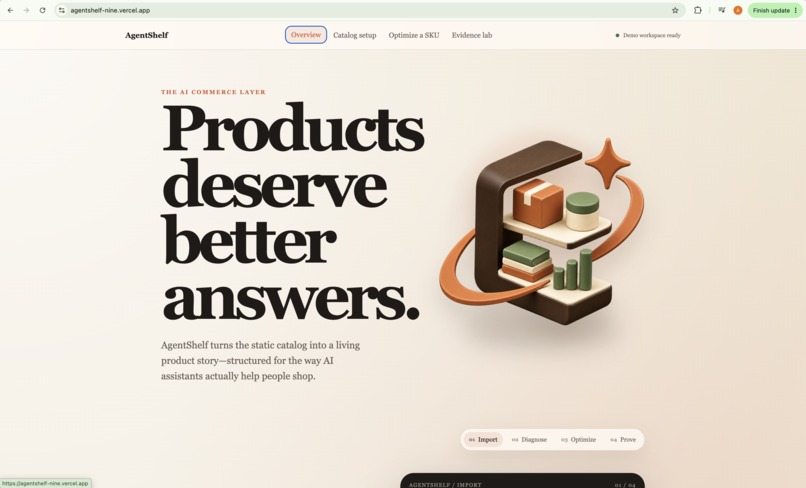
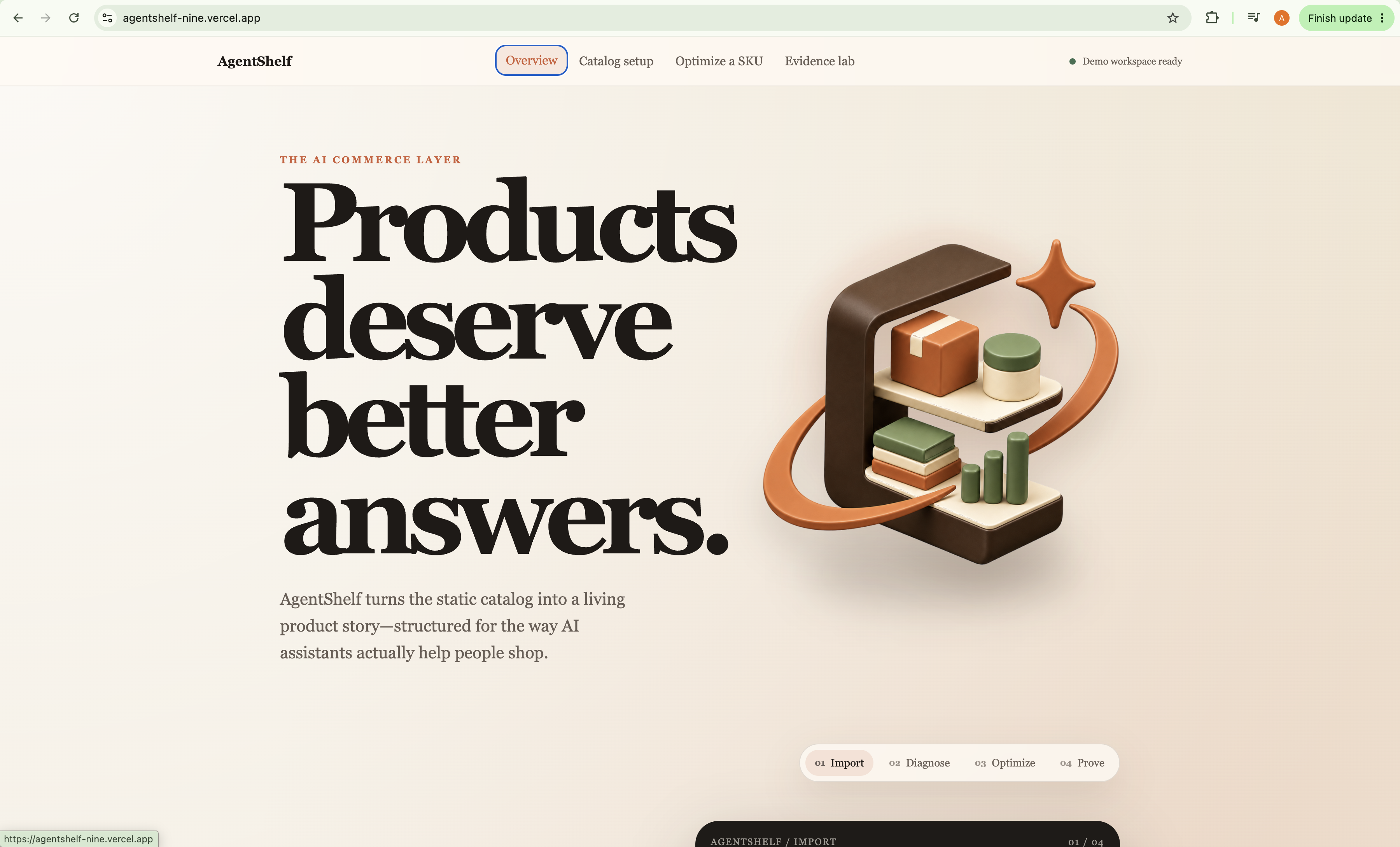
Main Page
-
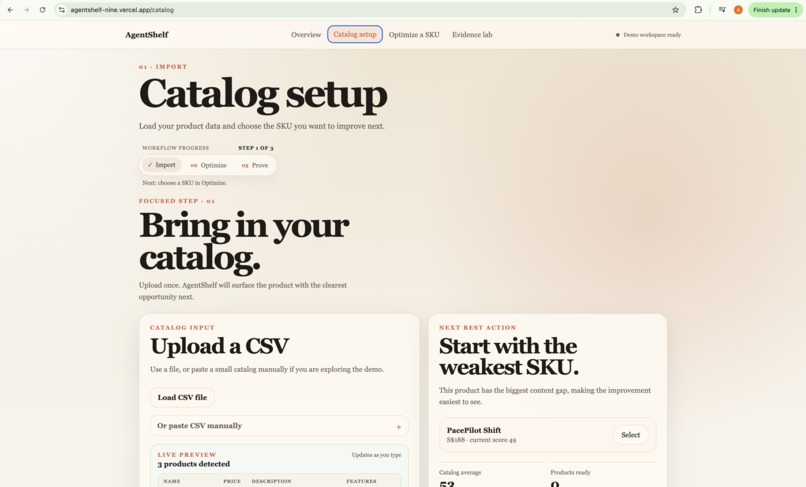
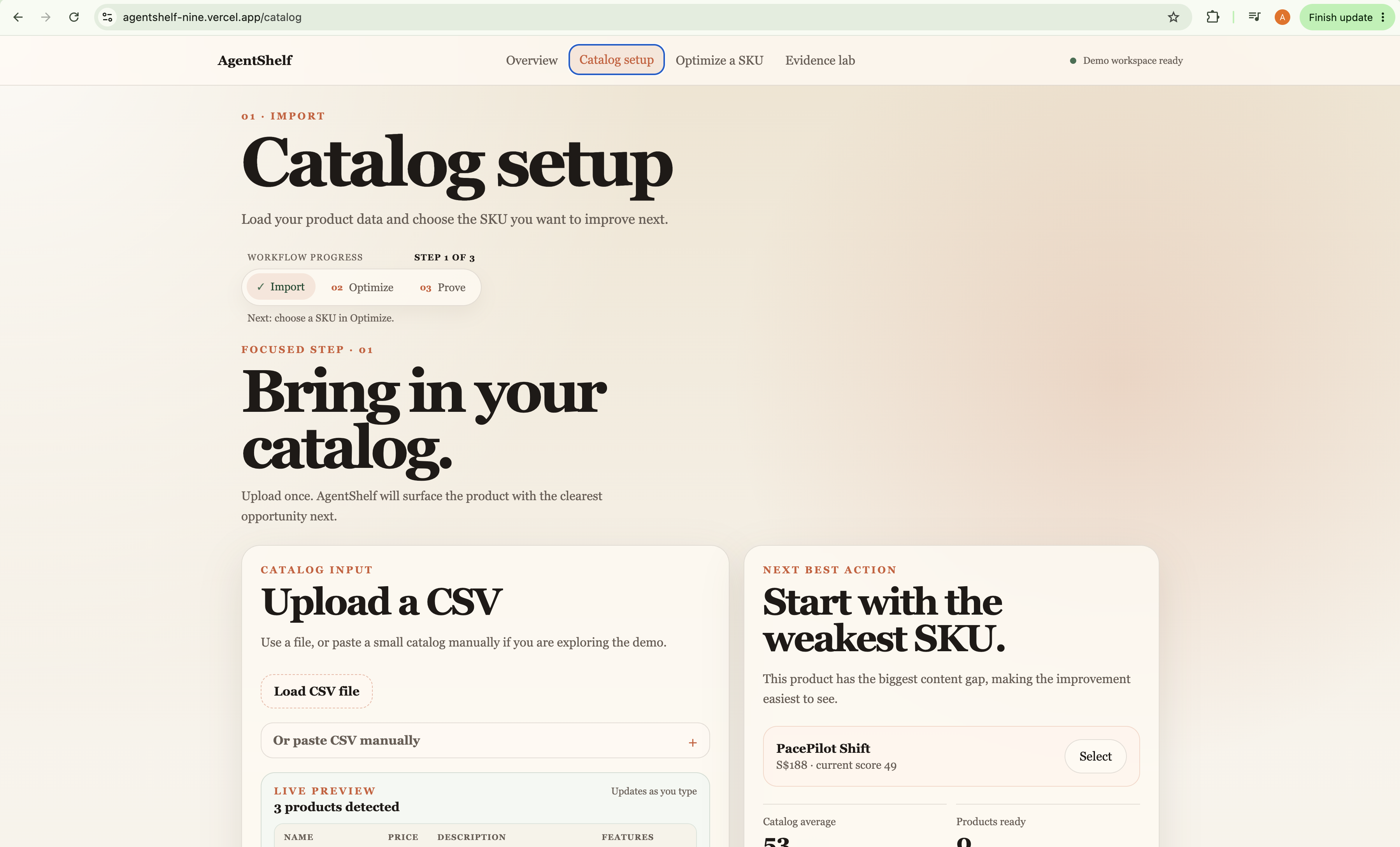
Catalog Setup Page
-
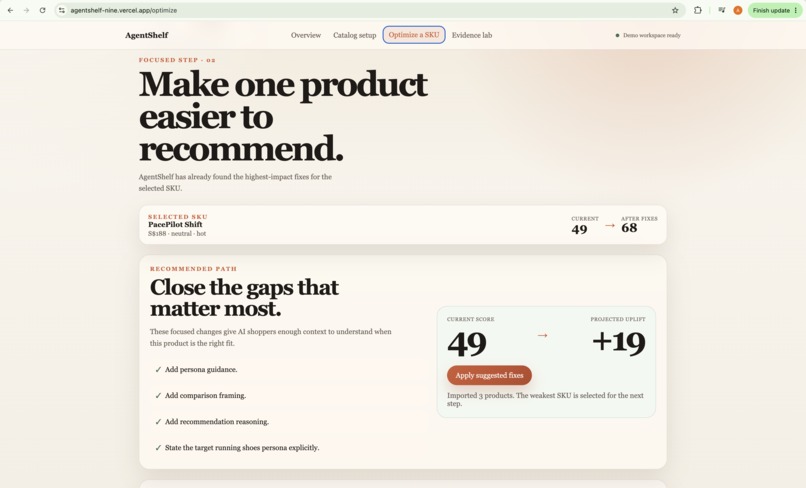
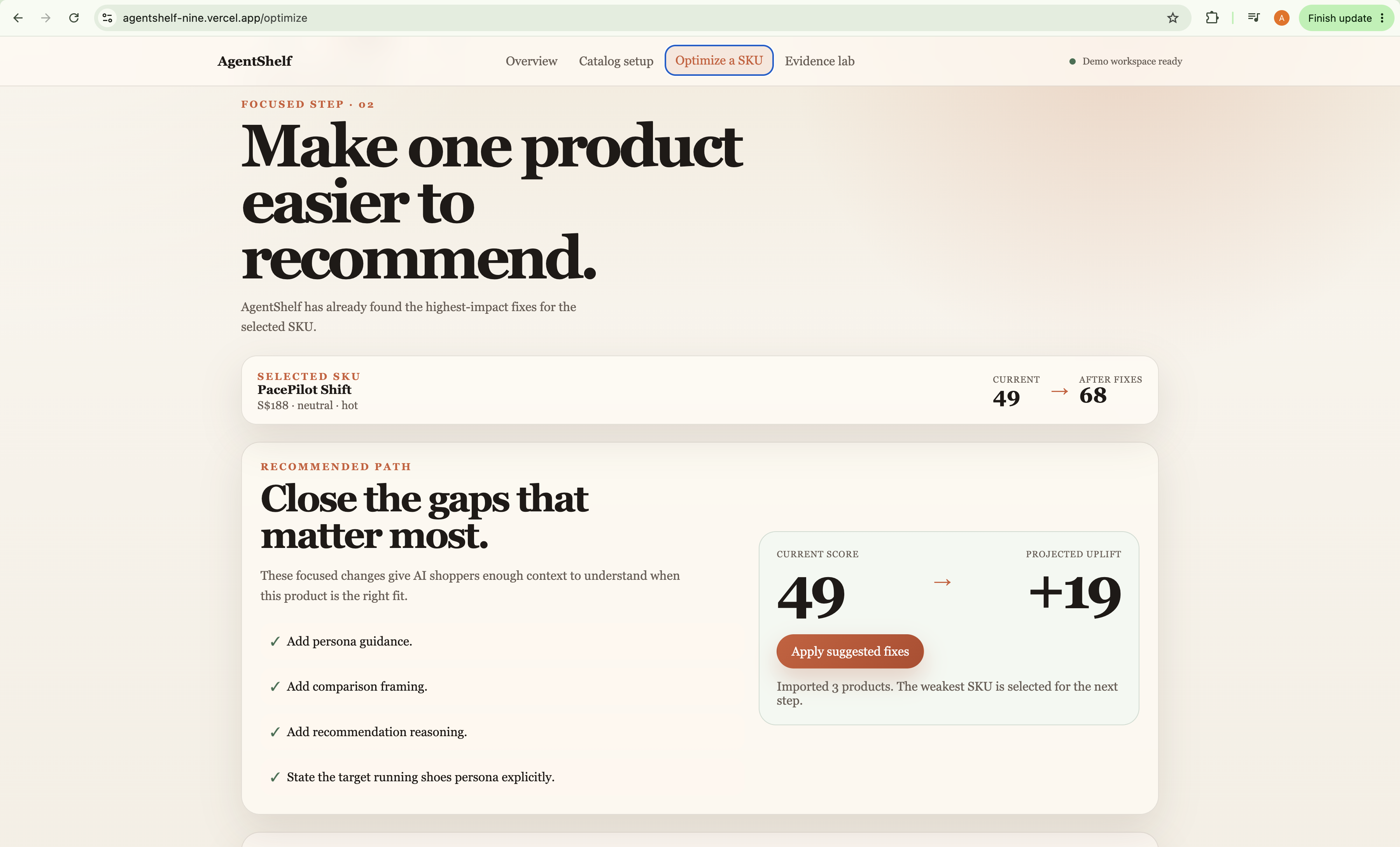
Optimize SKU Page
-
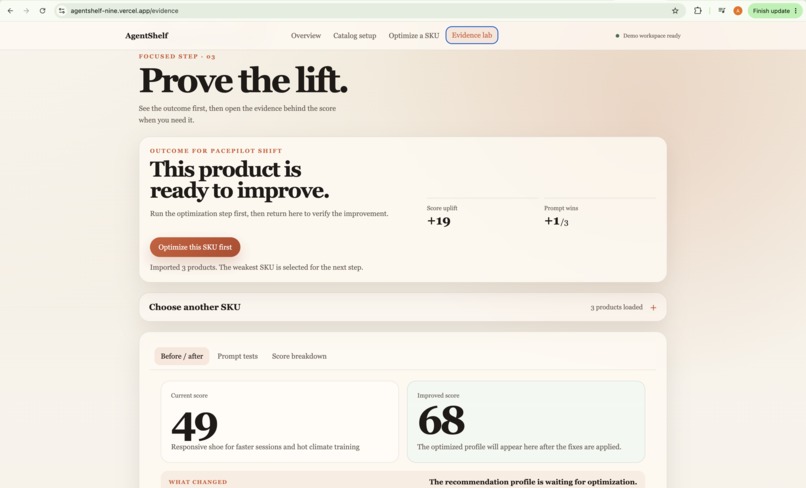
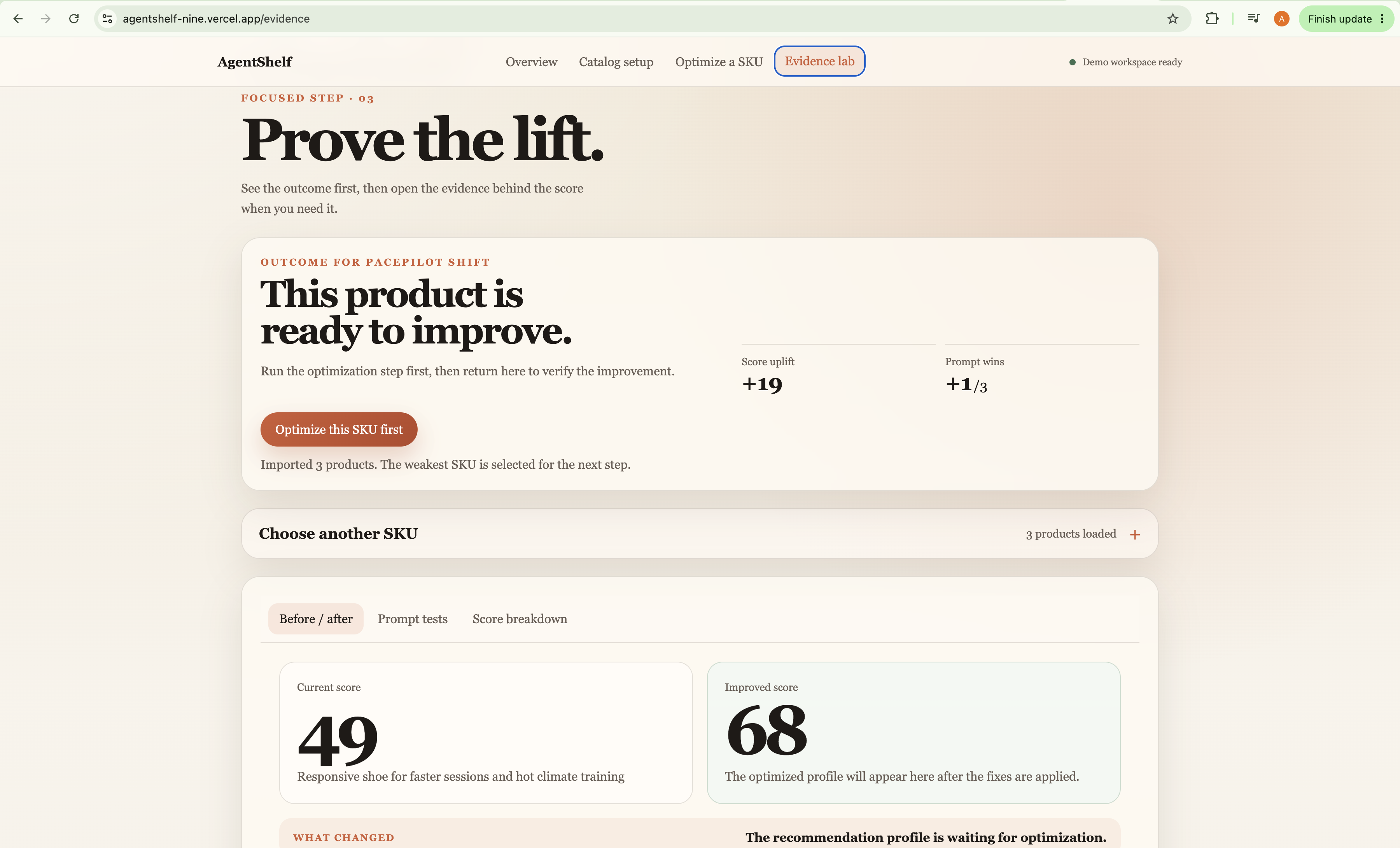
Evidence Lab
About the project
Inspiration
We were inspired by a major shift happening in commerce right now: consumers are moving from keyword search to intent-based conversations with AI assistants.
Instead of typing:
"running shoes size 10"
people increasingly ask:
"I'm training for a half marathon in Singapore's humid weather and need lightweight shoes under S$200."
That changes everything.
Traditional ecommerce content was built for websites, ads, and search engines. But AI shopping assistants need product content that is structured, contextual, and easy to reason over. Most brands are not ready for that shift.
That insight led us to build AgentShelf.
What it is
AgentShelf helps brands make their products recommendable in AI shopping conversations.
It transforms ordinary catalog content into AI-ready product intelligence by helping brands:
- detect missing recommendation signals
- generate richer product context
- score recommendation readiness
- simulate natural-language shopping prompts
- prove before-and-after improvement
Instead of acting like a generic AI copywriter, AgentShelf is designed to answer a much more valuable question:
Will an AI assistant actually recommend this product, and if not, why?
What it does
In our demo, AgentShelf focuses on one sharp workflow:
- A brand uploads or pastes a simple product catalog
- AgentShelf identifies the weakest SKU
- It shows why the product is hard for AI to recommend
- It suggests and applies improvements
- It shows the uplift through a better readiness score and stronger prompt simulation performance
This creates a measurable feedback loop:
- diagnose
- optimize
- simulate
- prove improvement
That loop is what makes the product compelling.
How we built it
We built AgentShelf as a lightweight but convincing MVP using:
- Next.js
- TypeScript
- a structured scoring engine
- a prompt simulation layer
- an optional OpenAI-powered optimization flow with a fallback mode for reliable demos
We intentionally designed the product around one hero experience: turning a weak product listing into an AI-ready recommendation asset.
The product includes:
- a guided workflow that prioritizes the weakest product first
- before/after product comparison
- explainable scoring dimensions
- recommendation prompt simulation
- exportable AI-ready product output
We also treated storytelling as part of the product. The README, demo structure, and video plan were all designed to make the value obvious within the first minute.
Challenges we ran into
One of our biggest challenges was resisting the obvious but weaker solution: building a generic AI description generator.
That would have been easy to demo, but hard to differentiate.
The harder and more interesting challenge was building something that helps brands understand:
- what AI agents need in order to recommend a product
- what content is missing today
- how to improve it in a measurable way
Another challenge was balancing ambition with hackathon discipline.
A production-grade system would need:
- deeper category-specific schemas
- stronger claim grounding
- live merchant integrations
- larger-scale evaluation across more prompts and products
To make the project sharp and believable, we narrowed the scope aggressively to one category and one core workflow. That decision made the product much stronger.
We also spent a lot of time making the score feel explainable rather than magical. If a product gets a score, users need to understand what changed and why.
What we learned
We learned that the future of commerce is not just about generating better content. It is about making products legible to AI systems.
A product can be beautifully marketed for humans and still be nearly invisible to an AI shopping assistant.
We also learned that the strongest hackathon products are not the broadest. They are the ones with:
- one clear problem
- one sharp insight
- one memorable demo moment
- one obvious reason to exist
That shaped our final product direction and made AgentShelf much stronger.
Why it matters
As AI becomes a new discovery and decision-making layer, brands need to optimize for more than search rankings and product pages.
They need to optimize for recommendation.
SEO made brands discoverable on webpages. AgentShelf makes them recommendable in AI answers.
What's next
Our next steps are to:
- deepen the live OpenAI optimization flow
- ground generated claims to source data
- expand to more categories like skincare and supplements
- support ecommerce-ready exports and integrations
- evaluate recommendation readiness at catalog scale
We believe the long-term opportunity is significant: helping brands compete in a commerce ecosystem where AI assistants increasingly shape what gets seen, considered, and chosen.
Built With
- csv
- ecommerce
- json
- next.js
- openai
- react
- recommendation
- scoring
- typescript

Log in or sign up for Devpost to join the conversation.