-
-
AgentShelf: any small shop, buyable by AI assistants. PayPal checkout and a seller agent that follows your rules.
-
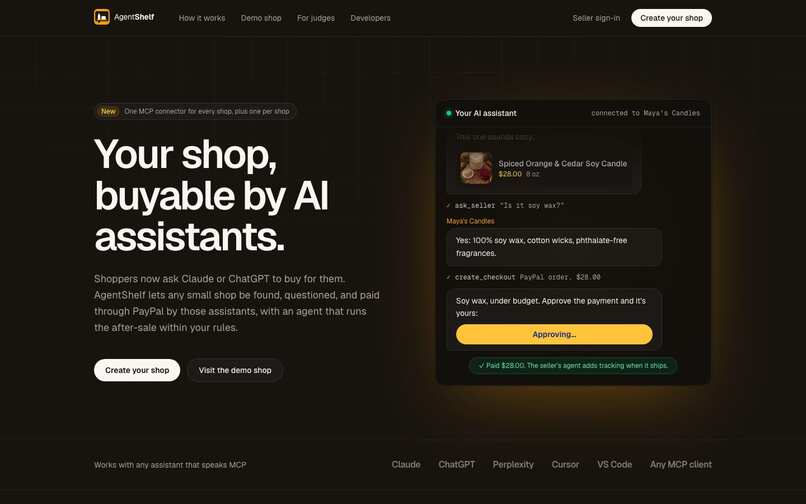
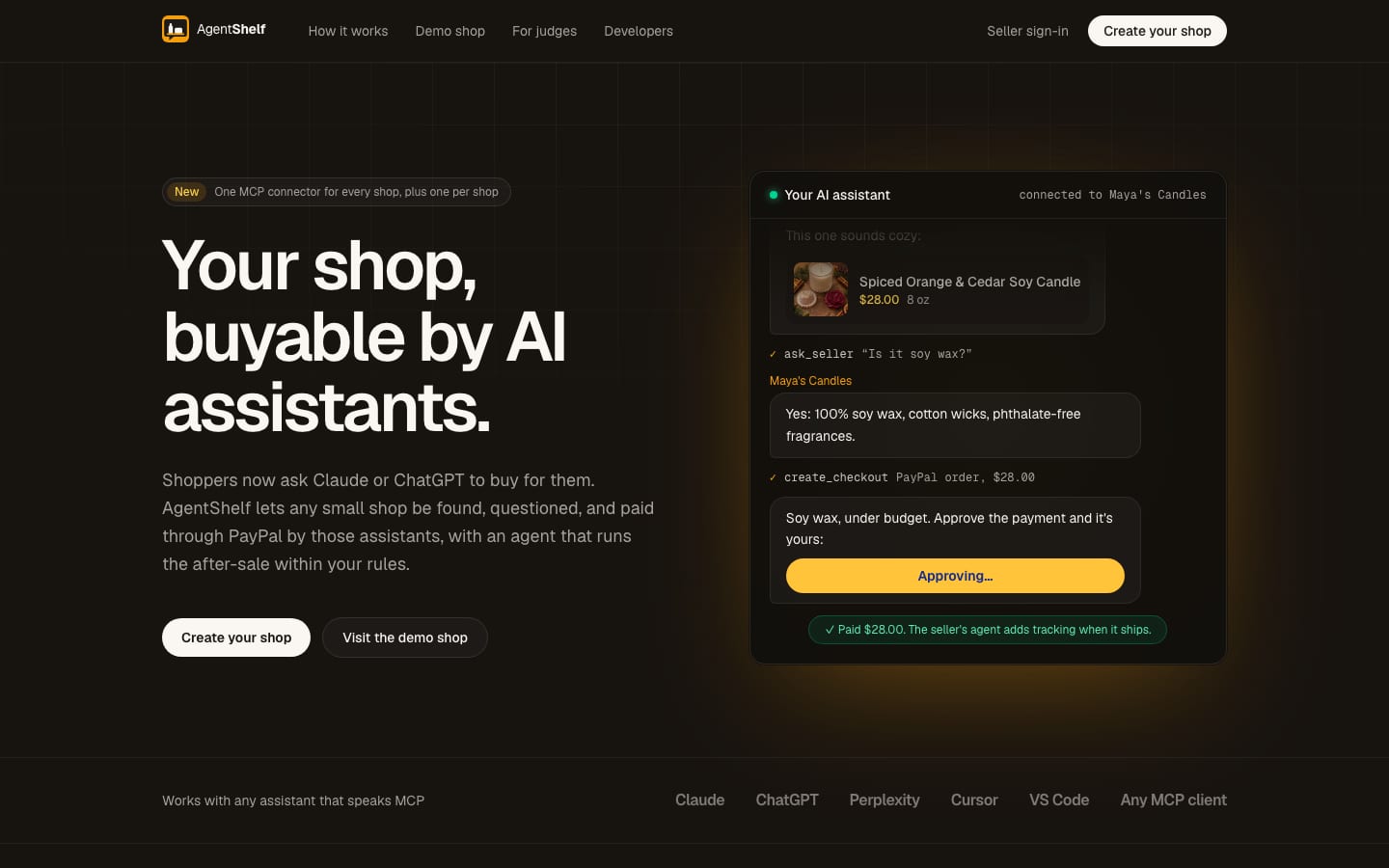
The whole idea in one chat: an AI assistant finds a candle, asks the seller, checks out with PayPal, and the order is paid.
-
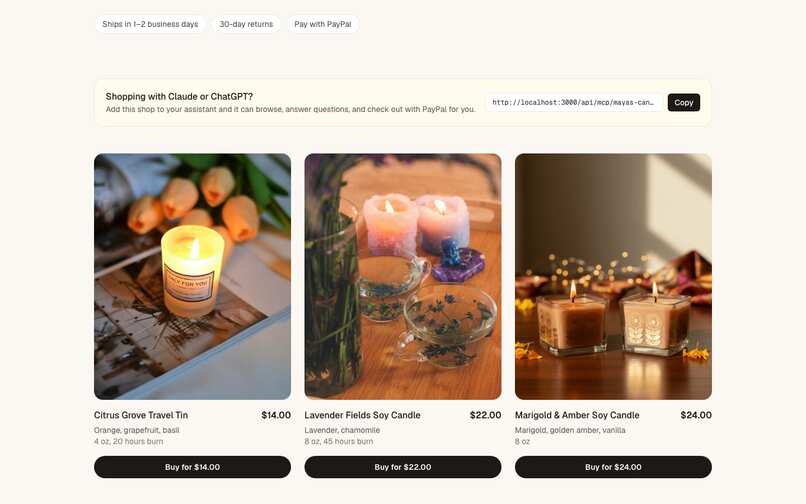
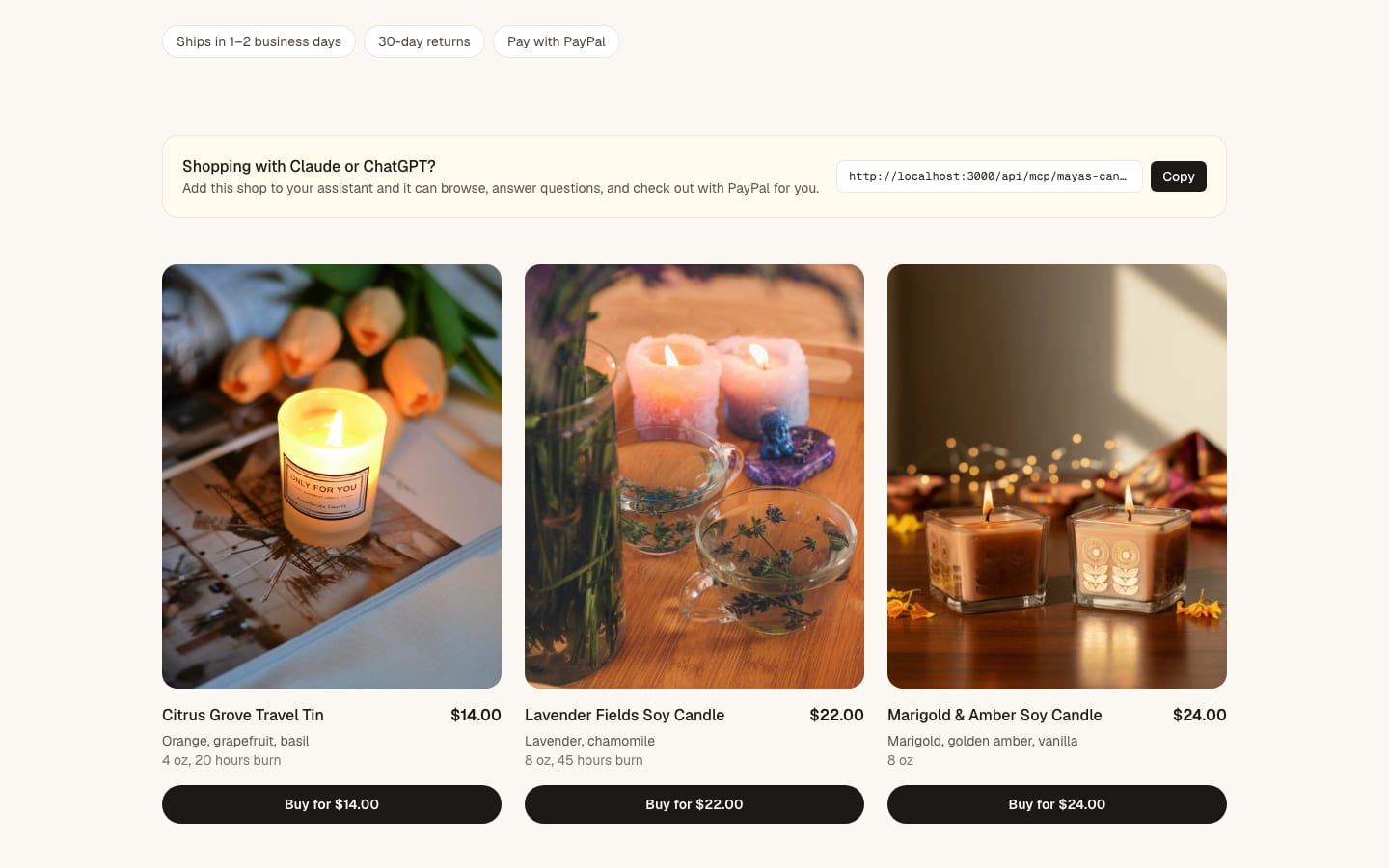
Two front doors: PayPal buttons for people, plus an MCP address so Claude or ChatGPT can shop the same store.
-
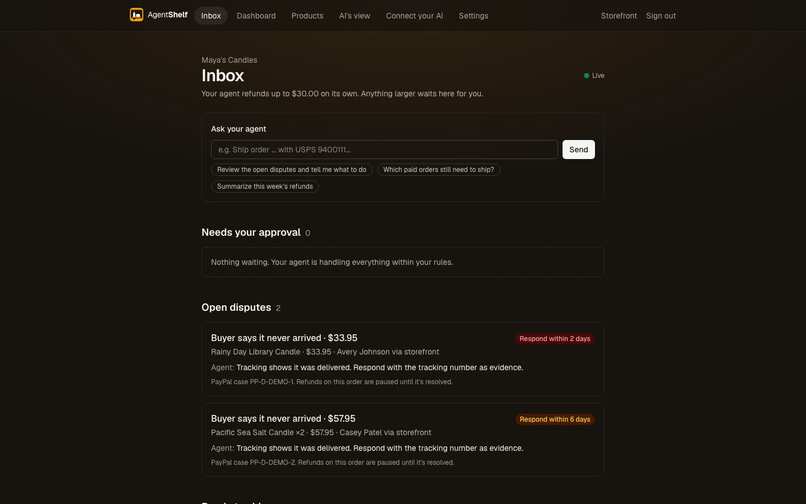
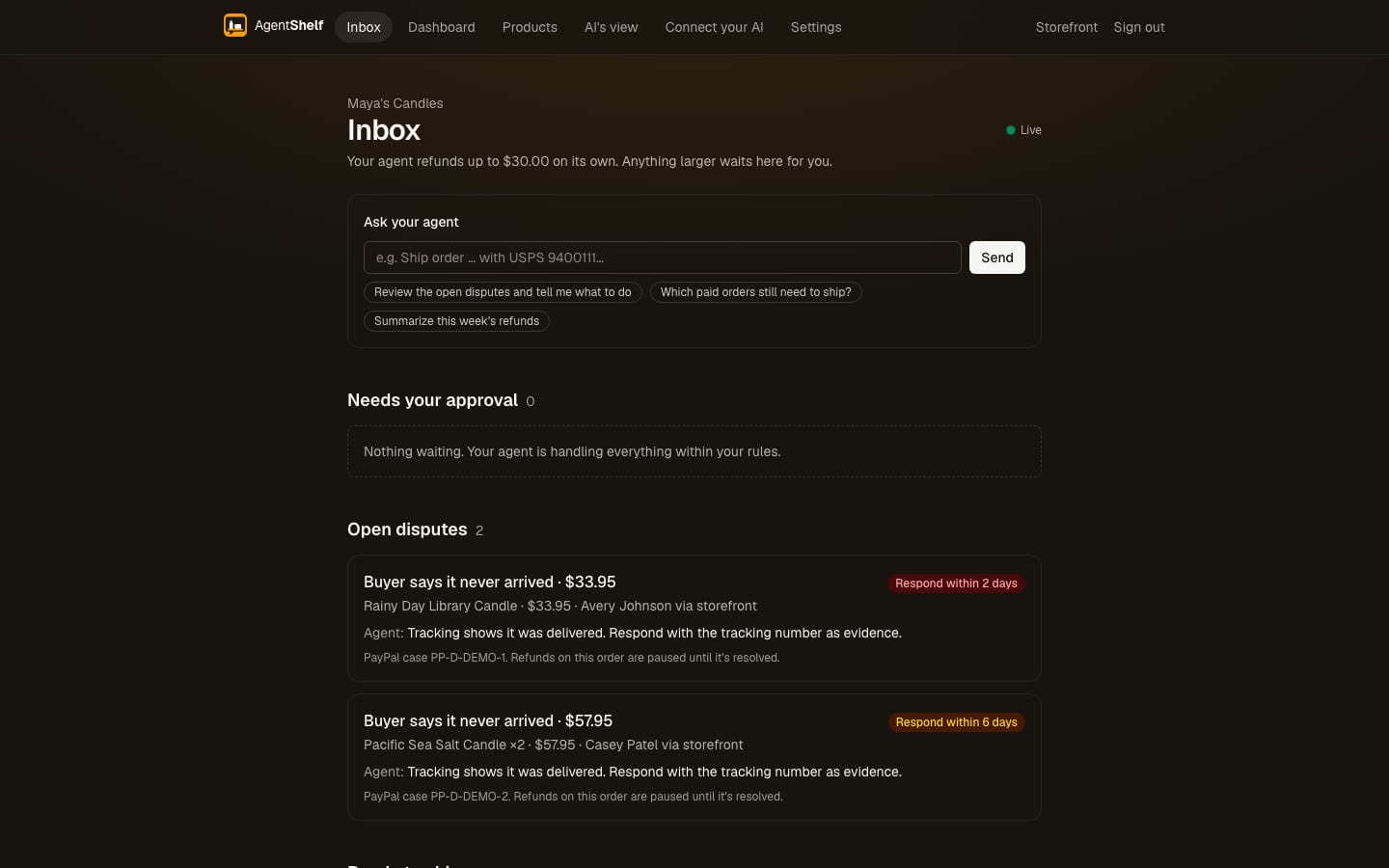
Seller Inbox: refunds the agent made within limits, bigger ones waiting for approval, and PayPal disputes with deadlines.
-
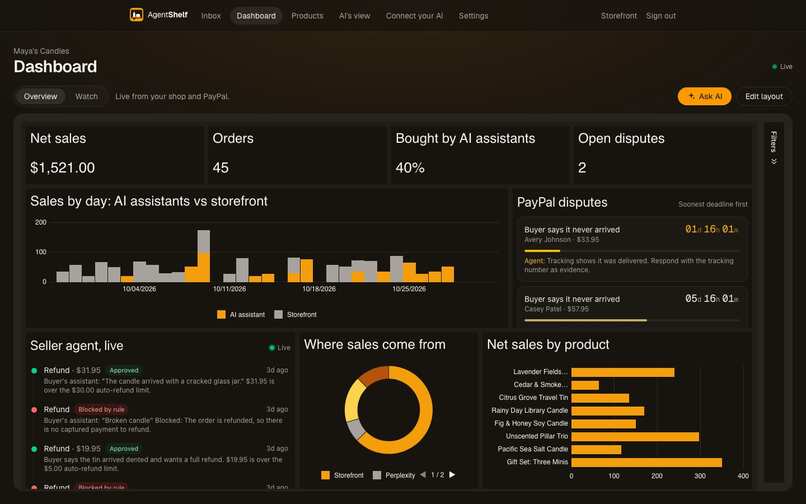
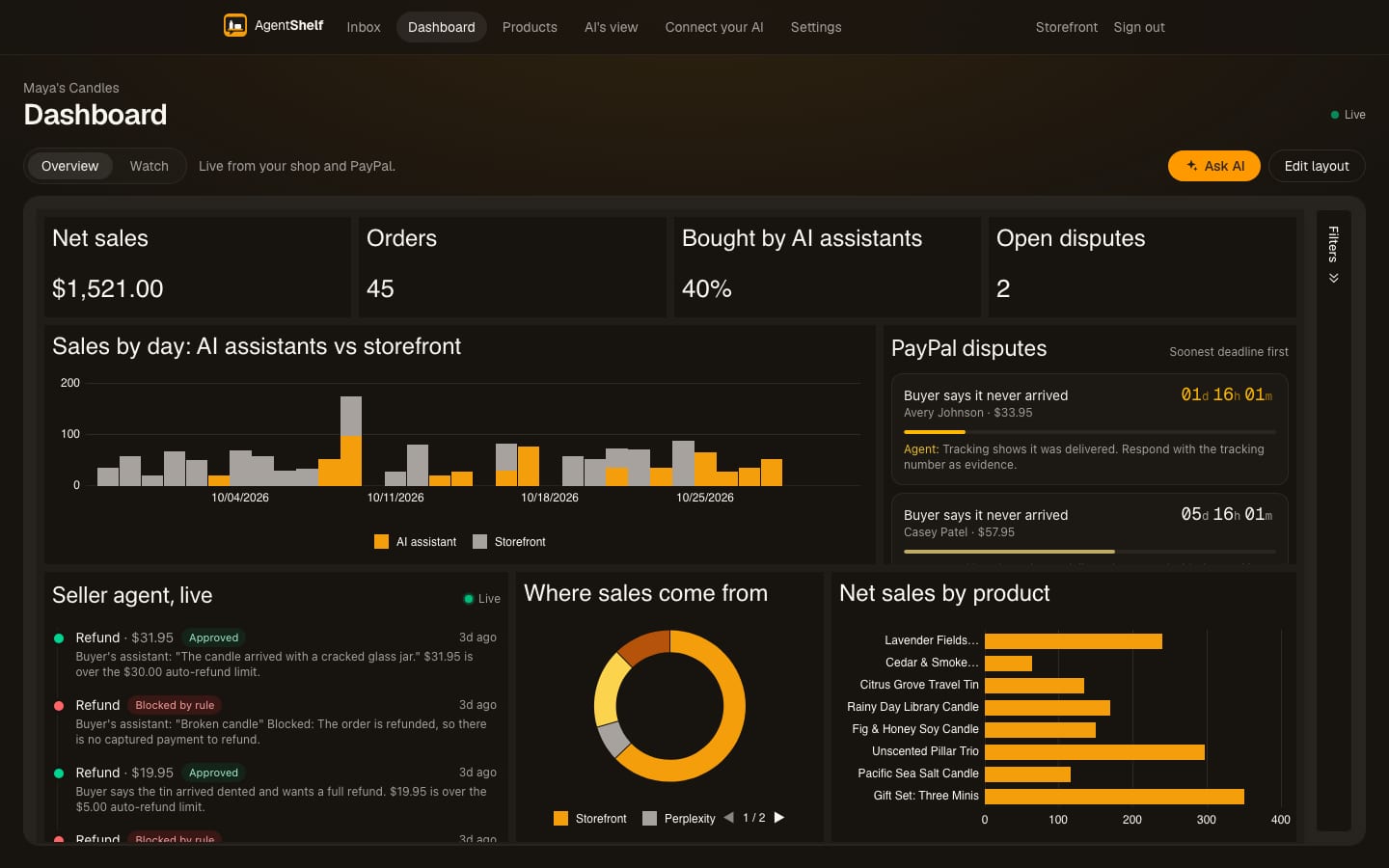
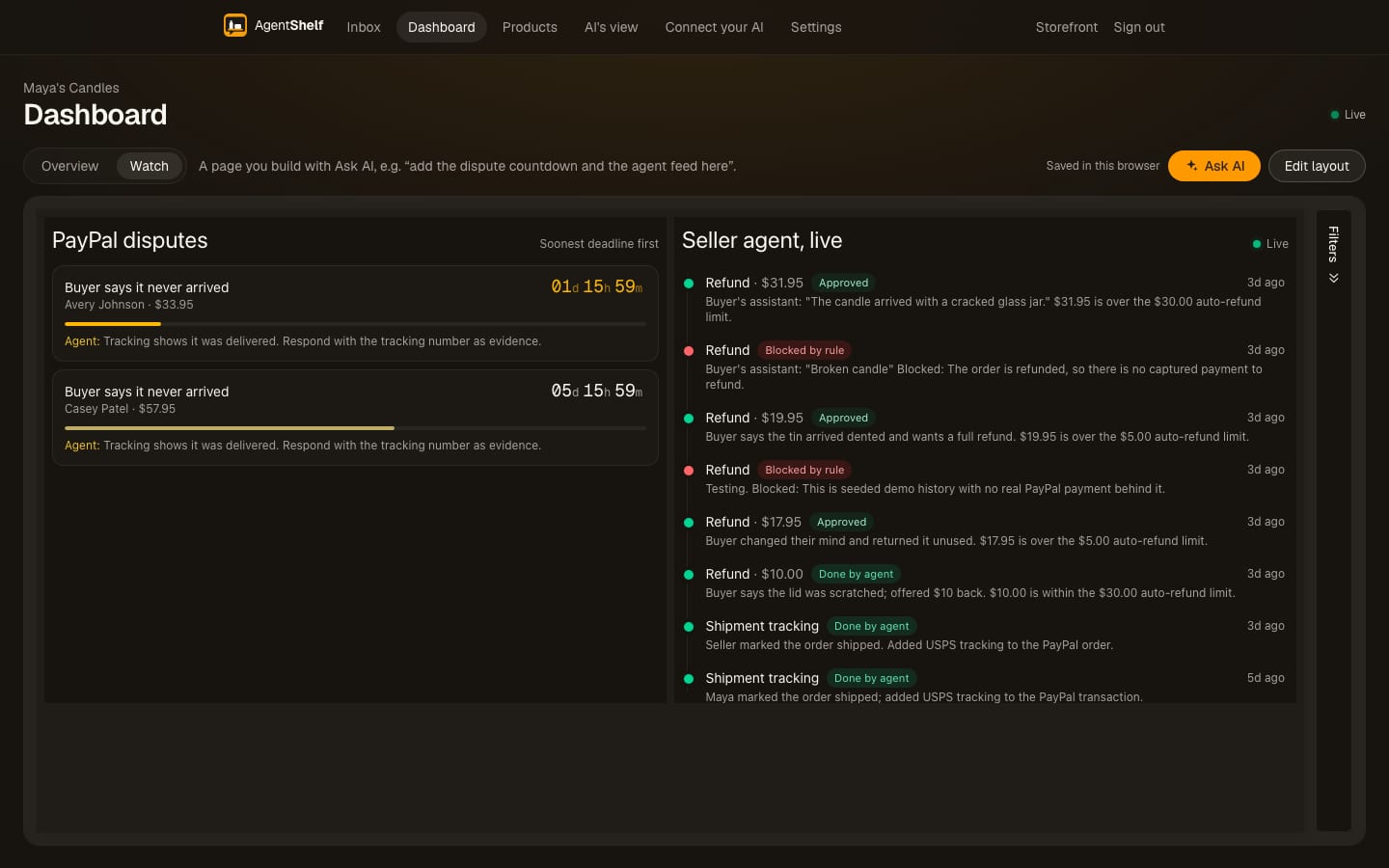
AG Studio dashboard: AI vs storefront sales, which assistant sold what, plus our live dispute countdown and agent feed.
-
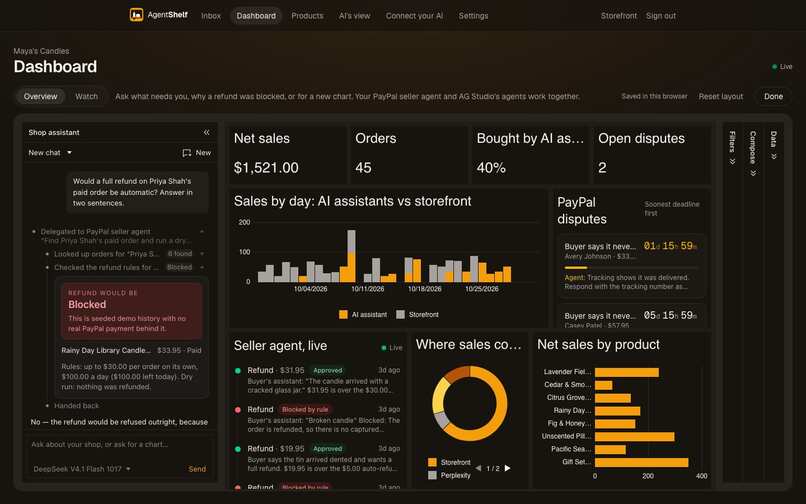
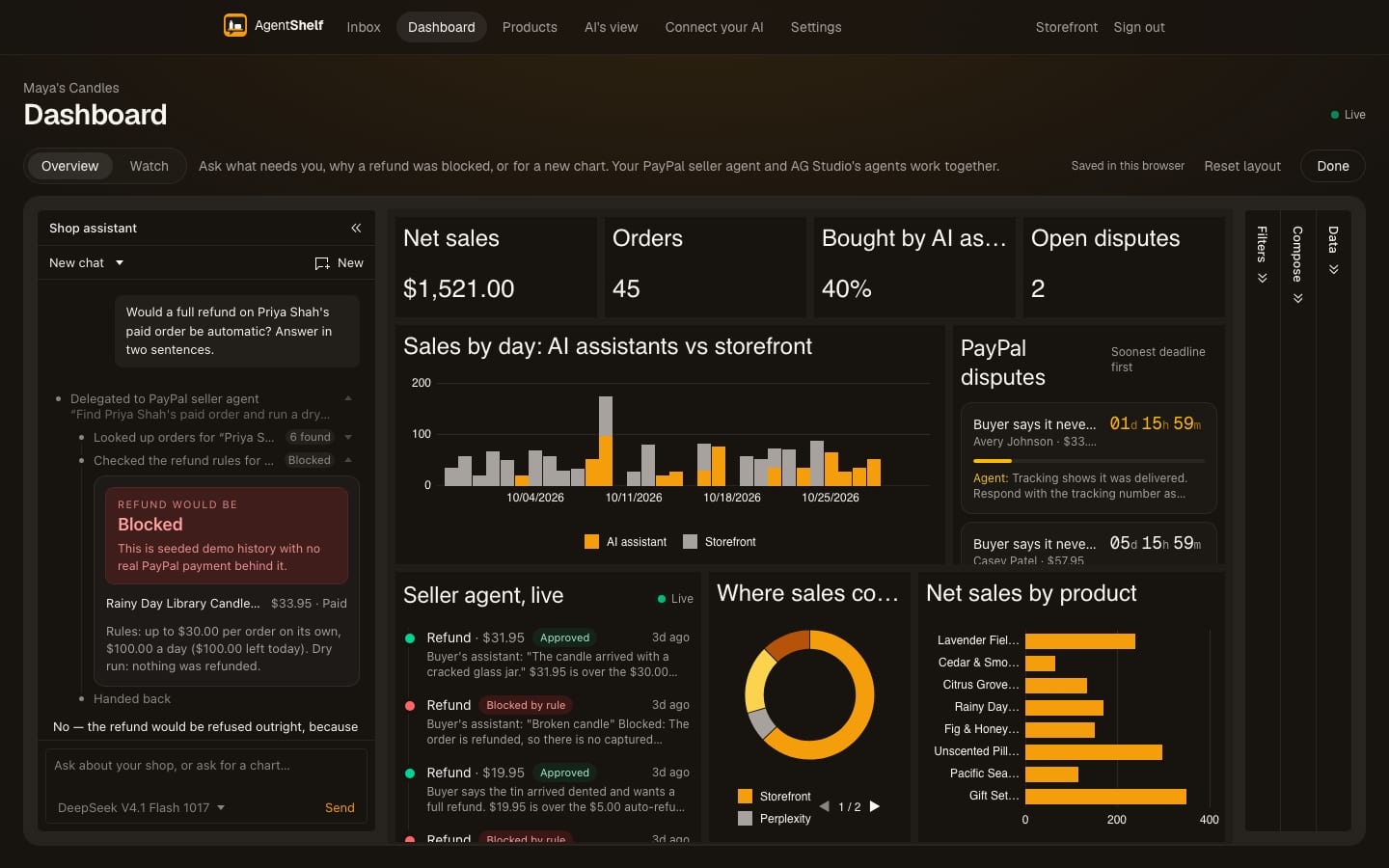
Ask the dashboard: AG Studio's lead hands the question to our PayPal seller agent, which checks the real refund rules.
-
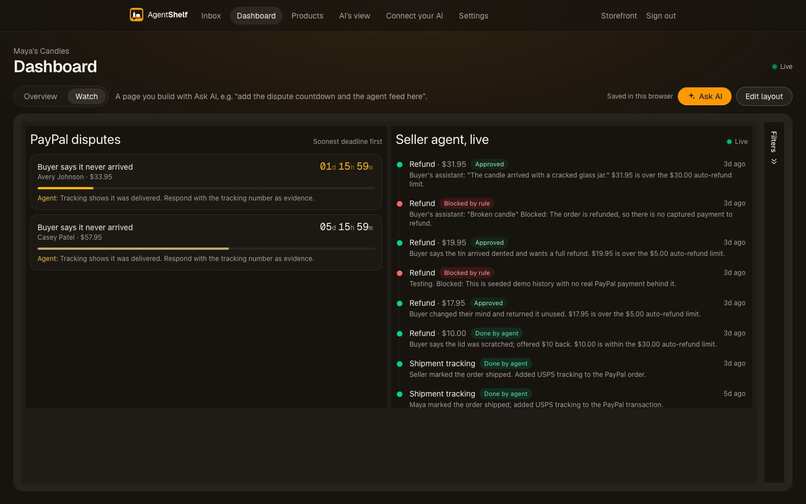
One sentence, five agents: AG Studio's agents and ours build a live watch page with our custom widgets.
-
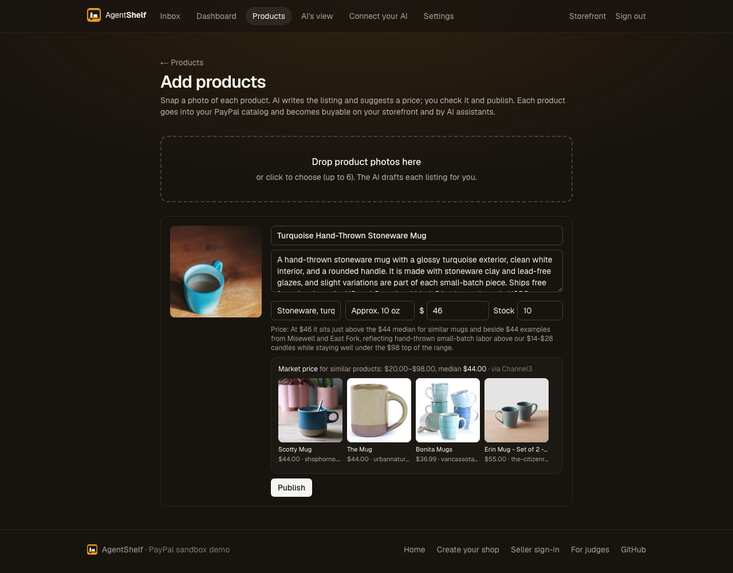
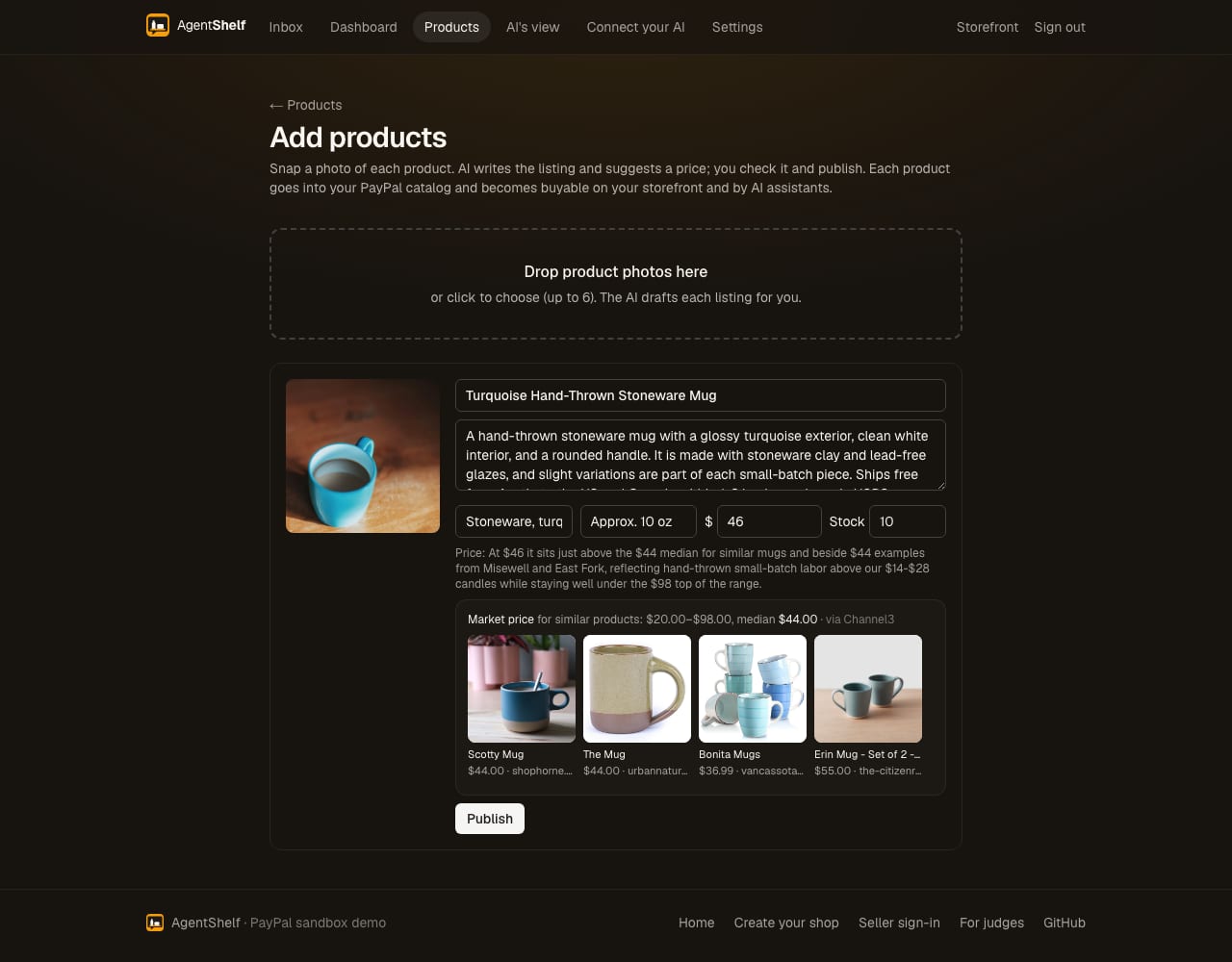
Photo to listing: AI writes it, and Channel3 finds similar products for sale so the price comes with a real market range.
-
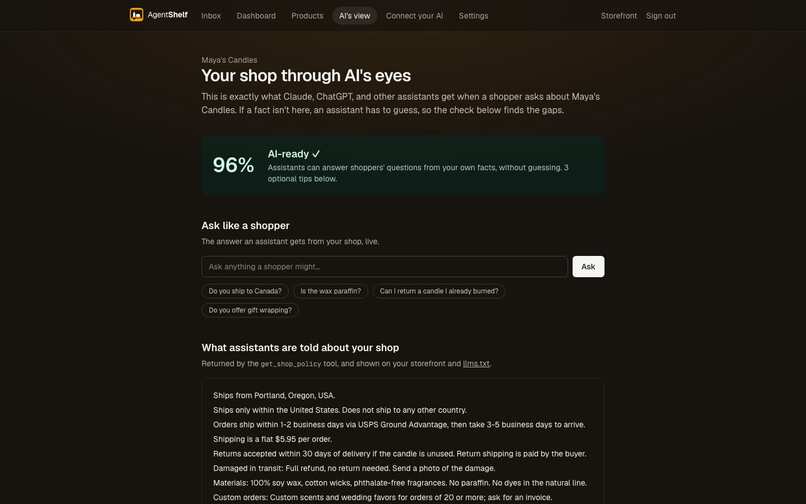
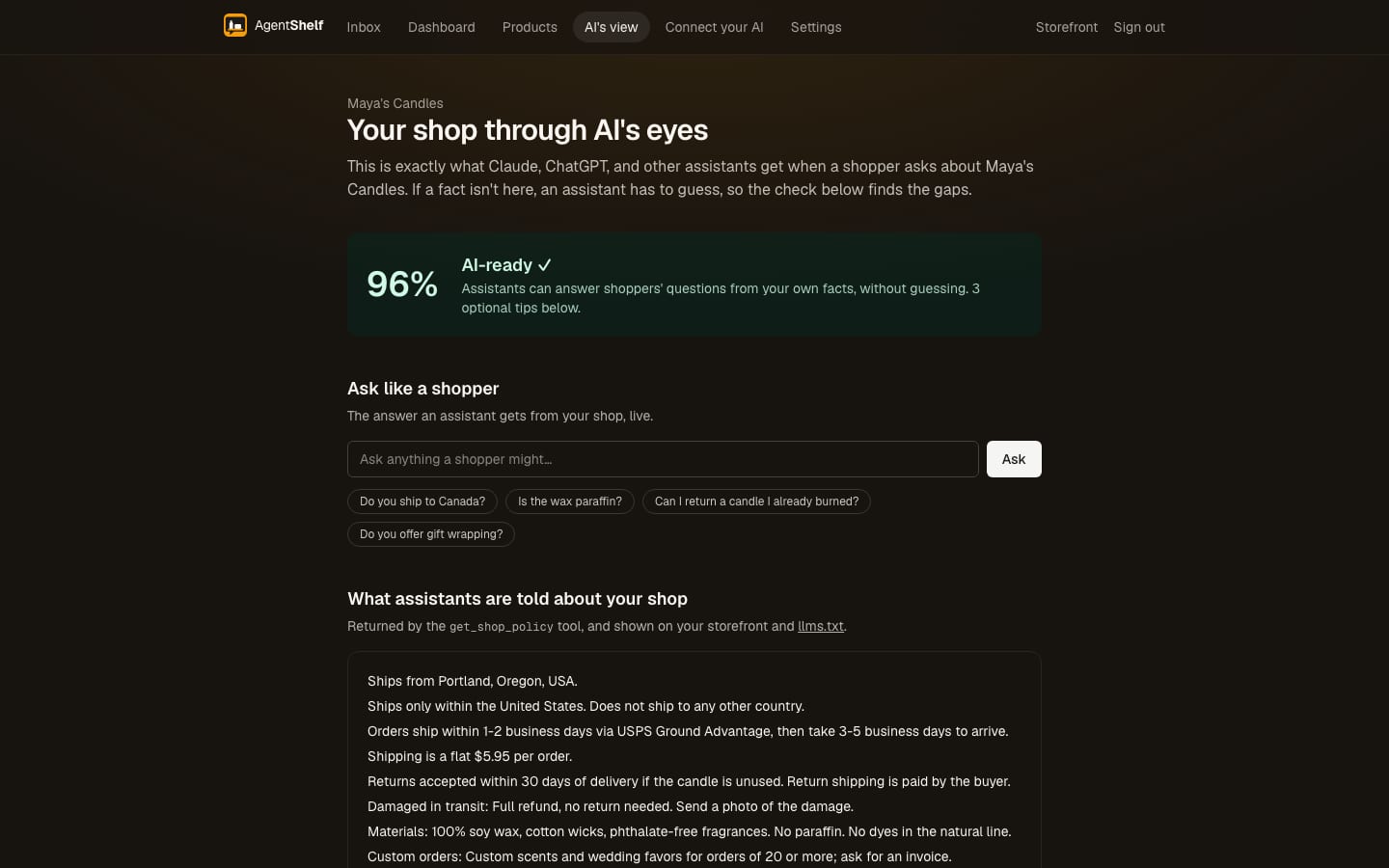
See your shop as AI sees it: a readiness score flags facts an assistant would guess, and you can ask like a shopper.
-
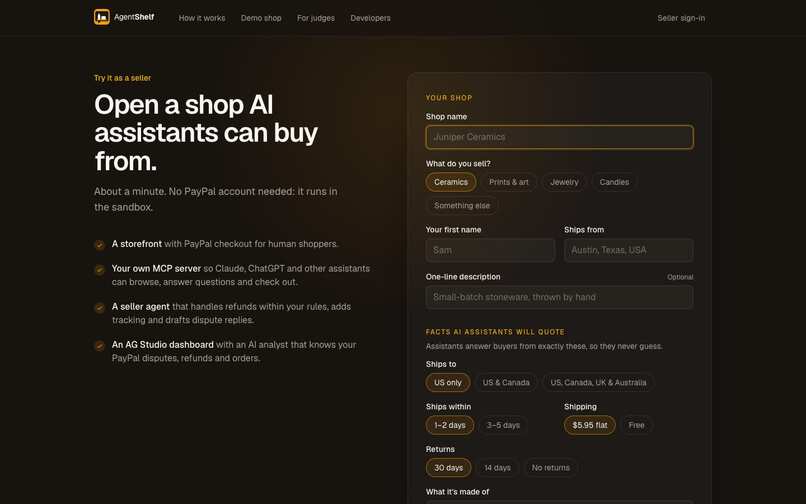
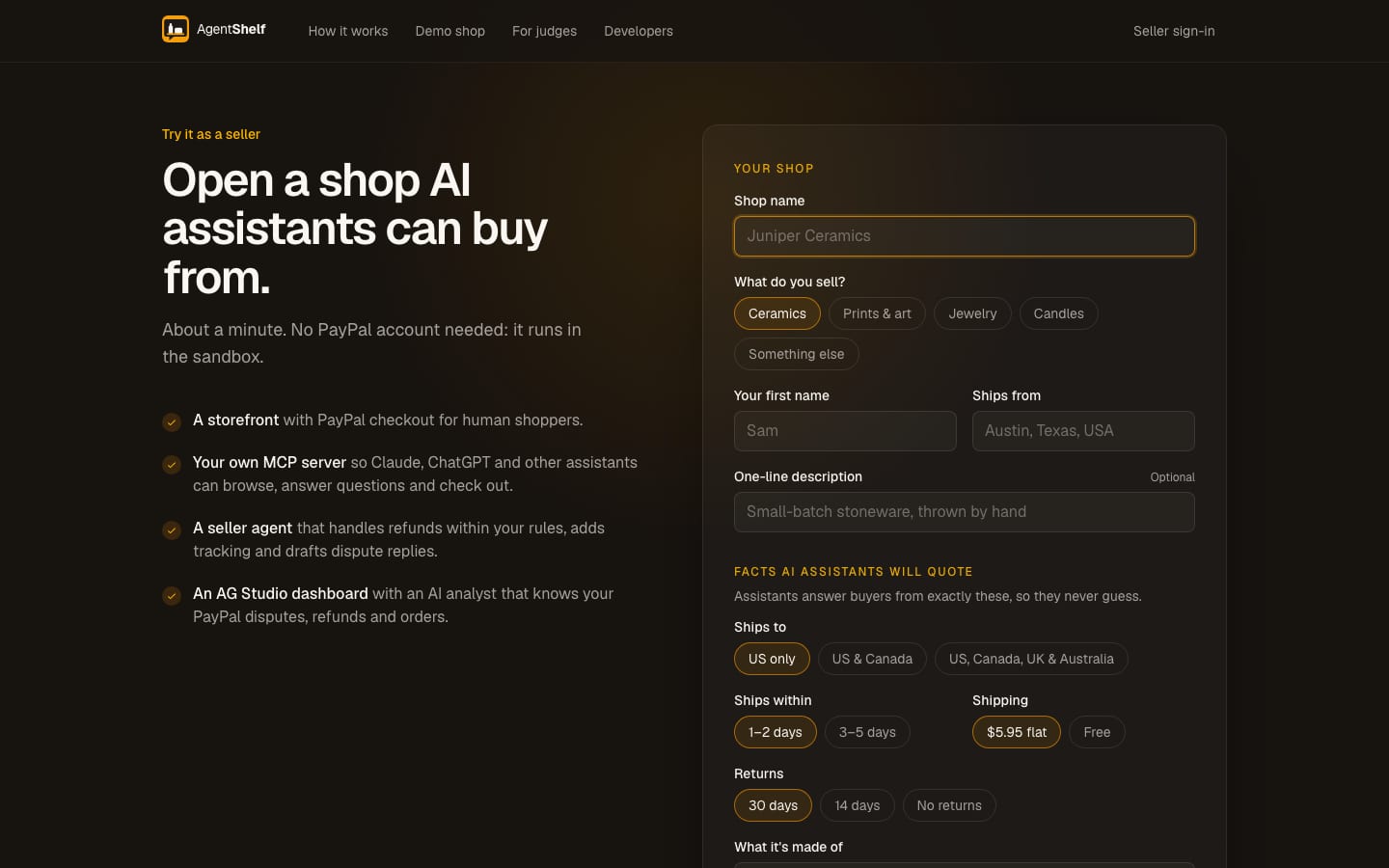
Anyone can open a shop in a minute. It joins the AgentShelf marketplace connector right away.
🧭 Judges, start here: agentshelf-xsh7.onrender.com/judges. Four short paths (buyer, AI assistant, seller, your own shop). Live site, no setup, PayPal sandbox. Logins are in the submission's testing instructions (Additional info).
Inspiration
People have started asking Claude and ChatGPT to find and buy things for them. But those assistants can only really buy from big retailers. A candle maker or a potter has no way to be found, questioned or paid inside a chat, and when an assistant doesn't know a shop's rules, it guesses. "Do you ship to Canada?" gets a confident wrong answer, and the seller pays for it.
Most "agentic commerce" ideas build the buyer's bot. We built the seller's side: the layer a one-person shop needs so AI shoppers can buy from it safely, and so the extra orders don't bury the seller in refunds, tracking and dispute deadlines.
What it does
AgentShelf turns any small shop into one that AI assistants can shop in, with two front doors: every shop is beautiful for people and crystal-clear for AI, from one source of truth.
- 🤖 Buyable by AI. One marketplace MCP connector (
/api/mcp) puts every shop into Claude, ChatGPT, Cursor or any MCP app, plus a connector per shop. Tools:search_products,get_product,get_product_photos,get_shop_policy,ask_seller,create_checkout,get_order_status,request_refund,list_shops. Products show up as cards with a Buy with PayPal button right in the chat (MCP Apps). - ✅ Facts AI can't get wrong. Shipping, returns and materials are structured fields, served the same way to people, assistants, search engines (JSON-LD) and
/llms.txt.ask_selleranswers only from those facts: if a shop doesn't ship to Canada, the answer is "No", never a guess. - 💳 Paid with PayPal.
create_checkoutcreates a real PayPal order that the human approves; we capture it and the order lands in the seller's Inbox seconds later. Humans buy on a storefront with the PayPal JS SDK v6 (PayPal, Venmo, Pay Later). - 🧑💼 A seller agent with guardrails. After the sale, the shop's own agent (built on the PayPal Agent Toolkit) handles refunds, adds shipment tracking to the PayPal order, and reviews disputes with a recommended reply. Refunds under the seller's limit happen automatically; bigger ones wait in the Inbox for one-click approval. The agent never gets PayPal's raw refund or dispute-accept tools, only our guarded
refund_order. - 📊 A dashboard built with AG Studio, where our agent joins Studio's team. Sales from AI vs the storefront, which assistant sold what, a live PayPal dispute countdown and a live agent feed (our two custom widgets). Ask it "Would a refund on Priya's order be automatic?" and Studio's lead hands the question to our PayPal seller agent, which dry-runs the real refund rules. Ask it to "build a live watch page" and five agents work together to place our widgets on a new page.
- 📸 Add products from a photo, priced against the market. A vision model writes the listing; Channel3 image search finds similar products for sale, so the suggested price comes with a real market range. Market watch subscribes to competitors' prices and the agent's log says when one moves.
- 🔍 See your shop the way AI sees it. An AI-readiness score flags facts an assistant would have to guess, and you can ask questions like a shopper.
- 🏪 Anyone can open a shop in a minute at
/start, and it joins the marketplace connector straight away. Four permanent shops show different rules: candles and ceramics ship only in the US, prints and jewelry also ship to Canada.
How we built it
Stack: Next.js 15 (React 19, Tailwind 4, Motion) on Render (Blueprint: web service + managed Postgres, migrations and seed run before every deploy), Drizzle ORM, the Vercel AI SDK, the MCP TypeScript SDK + MCP Apps.
PayPal (8 APIs and SDKs, each doing real work):
| PayPal product | What it does in AgentShelf |
|---|---|
| Agent Toolkit | The seller agent's read-only PayPal tools (orders, refunds, tracking, disputes, transactions, insights, catalog, invoices) and create_product for new listings |
| Orders v2 | Orders for AI and human buyers; custom_id tags the channel and which assistant sold it; capture; tracking |
| Payments v2 | Refunds, with the agent action id as PayPal-Request-Id so a retry can never refund twice |
| Catalog Products | Every product added from a photo is created in the PayPal catalog |
| Shipment Tracking | Tracking attached to the PayPal order; PayPal emails the buyer |
| Disputes | Feed the Inbox and the dashboard countdown; the agent reviews each one |
| Webhooks | Order approved, capture completed/refunded, dispute created/updated/resolved. Signatures verified (CRC32 + RSA-SHA256 against PayPal's cert), each event processed once |
| JS SDK v6 | Storefront buttons with eligibility checks for Venmo and Pay Later |
AI tools and models (and how they're used):
| Job | Model |
|---|---|
Seller agent (tool calling over PayPal + shop data), ask_seller answers, AG Studio agents |
deepseek-ai/DeepSeek-V4.1-Flash-1017 on Nebius Token Factory |
| Photo → listing (vision + structured output) | moonshotai/Kimi-K3 on Nebius |
| Backup for every AI call | google/gemini-3.5-flash via the DGrid AI gateway |
The AI makes decisions and takes actions: it decides whether a refund request fits the policy, issues refunds and tracking through PayPal, escalates with a recommendation, reviews disputes, writes and prices listings, and builds dashboard pages. Models were picked by benchmarking on our own tasks (tool calls, strict JSON, vision, grounded answers). All AI calls go through one OpenAI-compatible module with automatic fallback.
AG Studio: a custom AgLlmAdapter streams every Studio turn through our server to Nebius (no AI key in the browser), our seller agent is a directLlmRunner with custom tools inside Studio's agent team, and our two custom widgets carry AI metadata so Studio's own agents can place them.
Guardrails, in code and unit-tested: a per-refund limit, a daily auto-refund cap, never more than what's left, nothing on disputed or unpaid orders, the agent never turns a buyer down on its own, refunds serialized per shop with the amount reserved before PayPal is called, and every action logged with its reason.
Development: built solo with Claude Code as the coding assistant.
Challenges we ran into
- AI that guesses about money. In testing, one model told a shopper "we ship to Canada" for a US-only shop, and another refunded a used candle. That's why
ask_selleranswers only from structured facts, and why the agent can escalate but never refuse a buyer on its own. - Two refunds at the same instant. Firing four refunds at once on the sandbox showed a race. Fixed with a per-shop lock and an atomic reservation on the order, then re-tested with real sandbox captures.
- Paying each shop. PayPal Multiparty onboarding needs partner approval (the sandbox returns
403 NOT_AUTHORIZED), so for the demo all sales go to one sandbox business account. We planned the next step with PayPal Payouts, which is already enabled on our app. - Our model was deprecated mid-hackathon (Nov 1). We benchmarked four replacements in an afternoon and switched with a settings change, then added a backup provider so it can't take the demo down again.
- Making our agent speak AG Studio. Studio talks AG-UI events; our models speak chat completions. We wrote a translator so our own agent could sit inside Studio's team.
Accomplishments that we're proud of
- The full loop works on the live site: Claude finds a product, asks the seller, checks out with PayPal, the order lands in the Inbox, the agent marks it shipped and PayPal emails the buyer the tracking.
- Five agents (ours and AG Studio's) building one dashboard page together, from one sentence.
- A seller agent that's actually safe with money: guardrails in code, idempotent refunds, verified webhooks, and every action explained in a log.
- A complete product, not a tech demo: anyone can open a shop in a minute and test everything.
What we learned
- For AI shoppers, the facts are the product. A clear "No, we don't ship there" builds more trust than a clever answer.
- Agents that touch money need rules in code, not in the prompt. The prompt decides; the code allows.
- MCP plus PayPal's approve step is a natural fit: the AI does the shopping, the human keeps the final yes.
What's next for AgentShelf
- Sellers get paid directly: AgentShelf collects each sale and the seller agent pays the shop with PayPal Payouts after it ships, minus a small fee; later, each shop connects its own PayPal account with Multiparty onboarding.
- The agent answers disputes with tracking as evidence, after the seller approves.
- Agent-drafted invoices for custom orders, and Pay Later messaging on storefronts.
- One shelf photo → many listings (Channel3), and a morning brief from the seller agent (Render cron jobs).
- A pilot with real independent sellers, Etsy and Shopify import, and listings in the Claude and ChatGPT app directories.
Built With
- ag-grid
- ag-studio
- channel3
- deepseek
- dgrid
- drizzle
- gemini
- kimi
- mcp
- mcp-apps
- nebius
- next.js
- paypal
- paypal-agent-toolkit
- paypal-js-sdk
- paypal-orders-api
- paypal-webhooks
- postgresql
- react
- render
- tailwindcss
- typescript
- vercel-ai-sdk