-
-
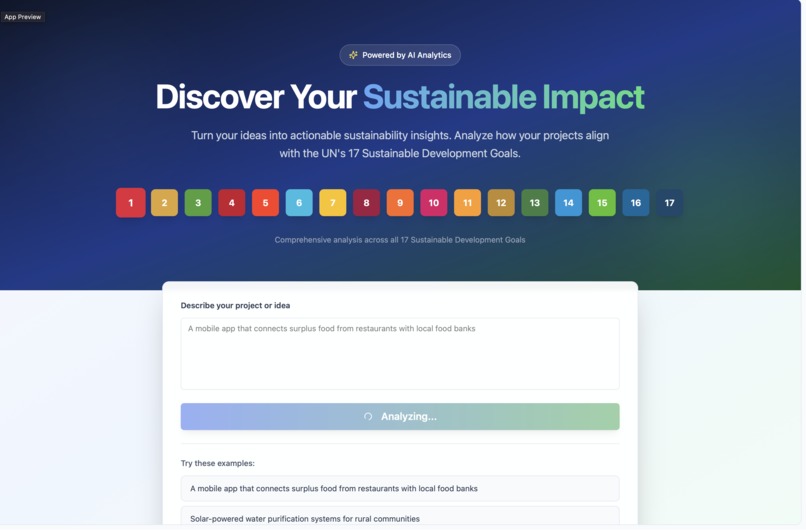
Home page
-
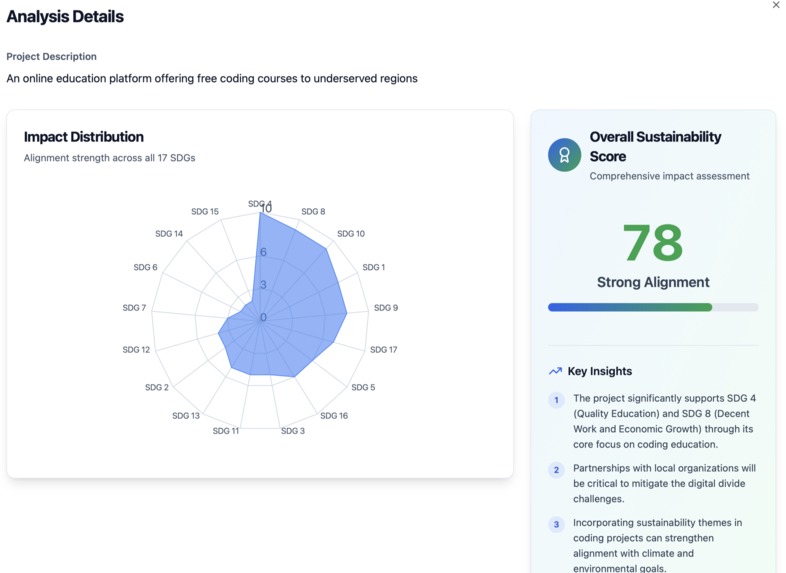
Dashboard
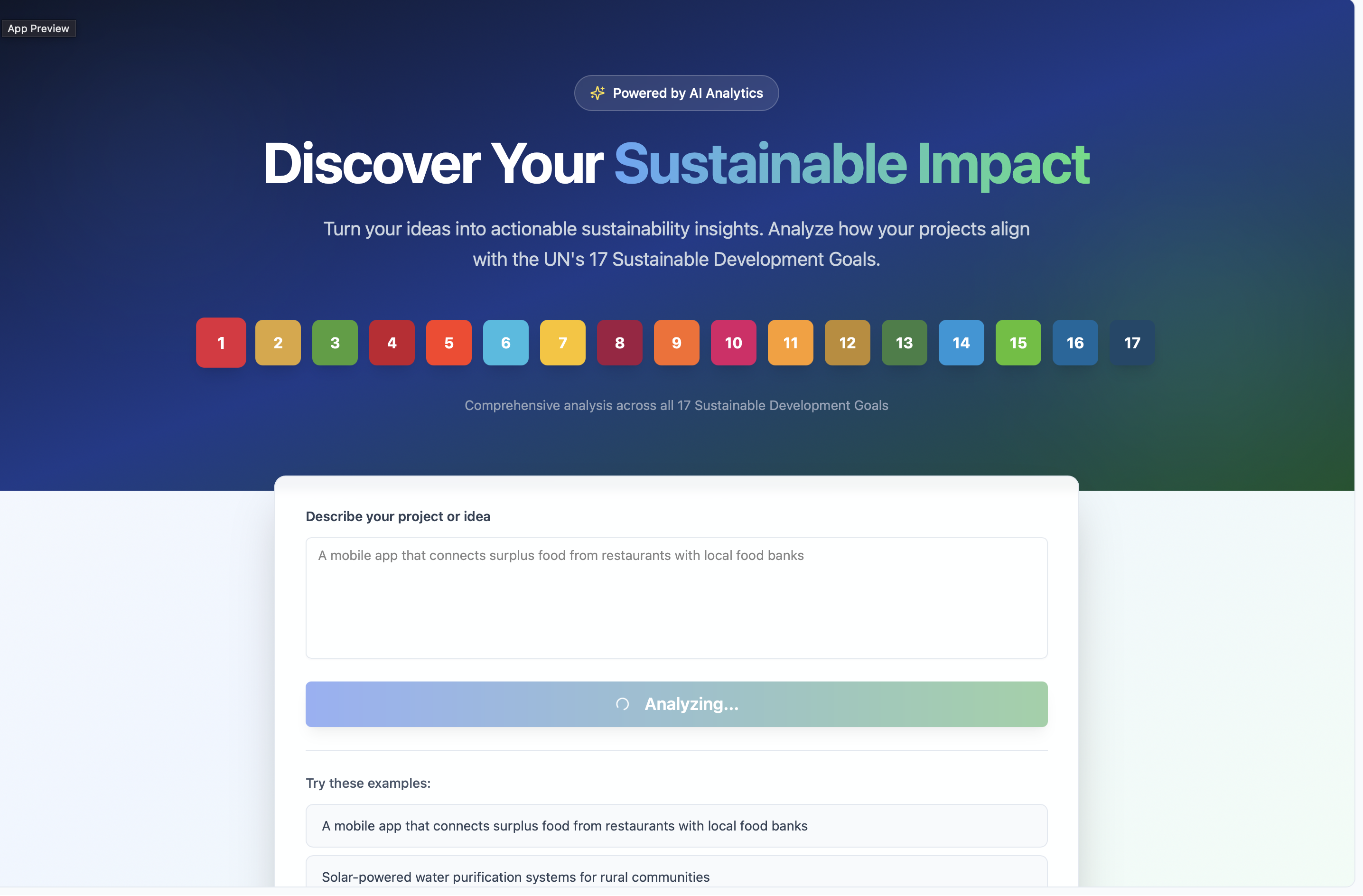
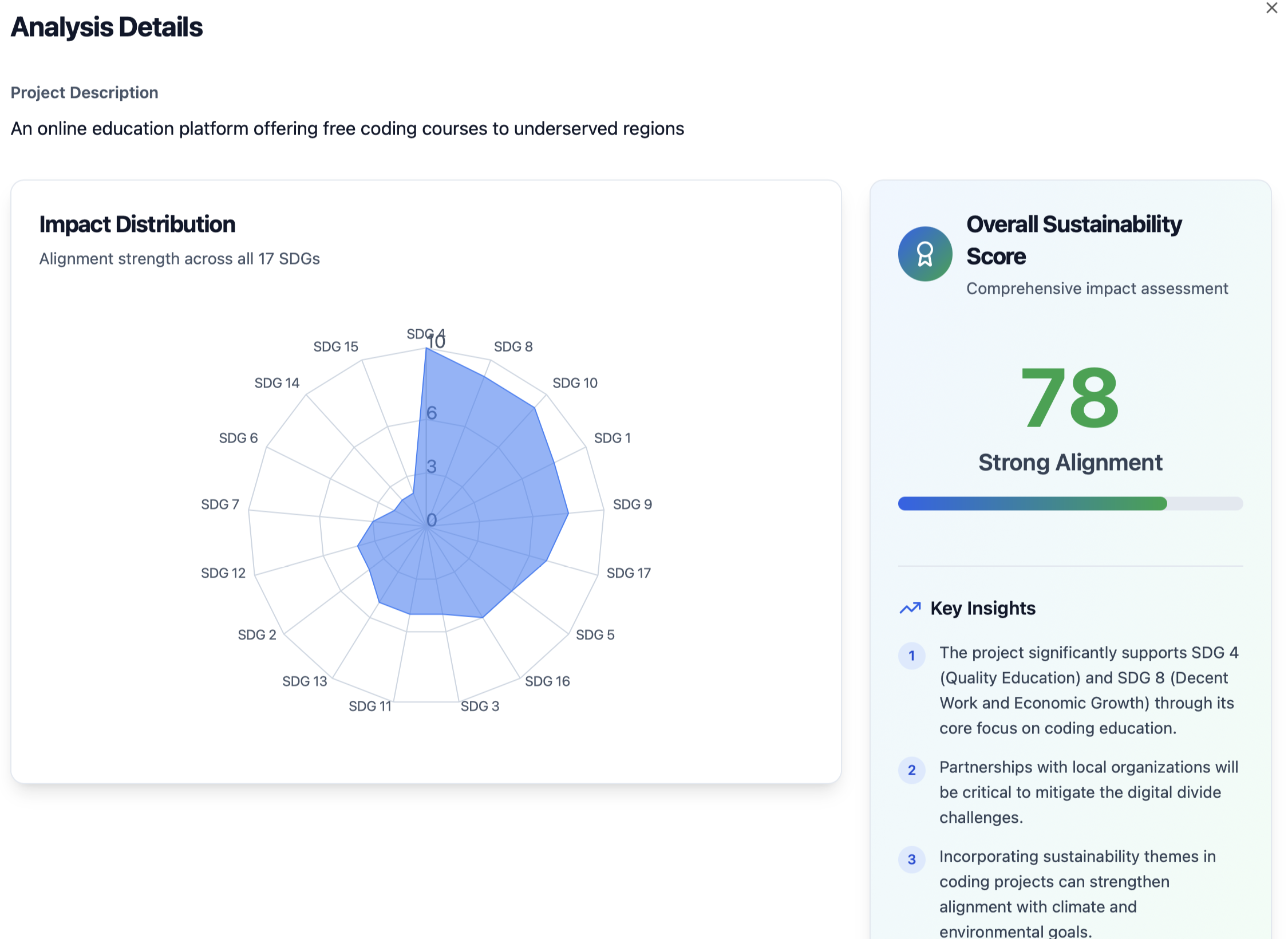
💡 Inspiration Sustainability data is fragmented and difficult to act on. Organizations and individuals working towards / interested in the UN Sustainable Development Goals (SDGs) often lack insight into how their ideas, businesses, or projects align with specific SDG targets. We wanted to make this connection fast, intuitive, and accessible — turning complex sustainability data into actionable intelligence. Combining many different data sources into one easily readable Dashboard.
⚙️ What it does Agents of Change – SDG Impact Monitor allows users to describe a project or idea in plain language. The platform’s AI agents then: Analyze the description to identify the most relevant SDGs. Retrieve real-world evidence from reports, datasets, and news sources. Visualize impact pathways — helping users strengthen their sustainability value proposition.
🧠 How we built it We combined multiple local and API based LLMs (Qwen 3 4B and OpenAI GPT models) in a modular agent architecture. A Knowledge Base Agent handles document embeddings and retrieval using Qdrant and nomic-embed for vector search. A Critical Thinking Agent synthesizes findings and maps relationships between SDGs, it then returns a json which is embedded into the frontend. The front end (Next.js + Tailwind) enables users to upload project data and view AI-generated impact dashboards. All components are containerized in Docker for fast local deployment.
🧩 Challenges we ran into Balancing LLM quality vs. latency across open-source and API-based models. Structuring multi-agent communication so insights remained coherent and traceable. Combining our many components together.
🏆 Accomplishments that we're proud of Built a fully functioning retrieval-augmented reasoning system in under 24 hours. Designed a transparent architecture that works locally without cloud dependency. Created a foundation for scalable AI-powered sustainability assessments that can be expanded to real organizations and NGOs.
📚 What we learned How to align open-source models with proprietary APIs effectively. The importance of clean data pipelines and prompt modularity in multi-agent systems. That “Responsible AI” is as much about traceability and accessibility as it is about model performance.

Log in or sign up for Devpost to join the conversation.