-
-
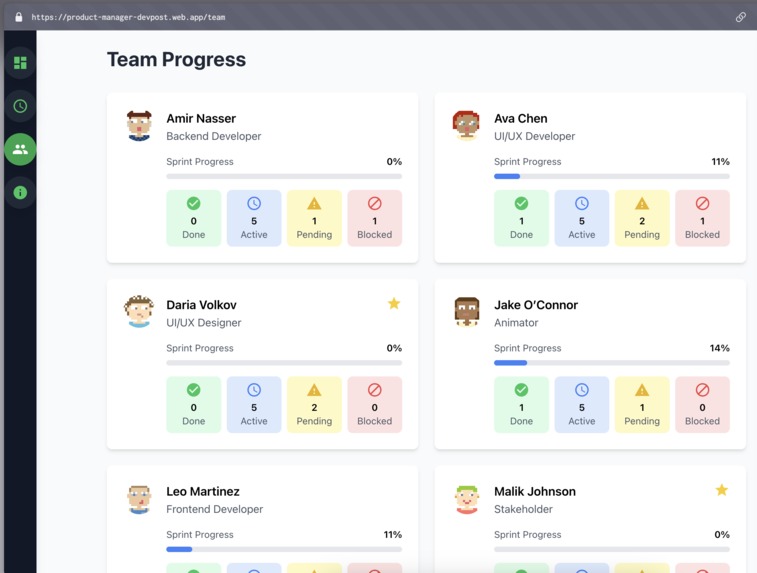
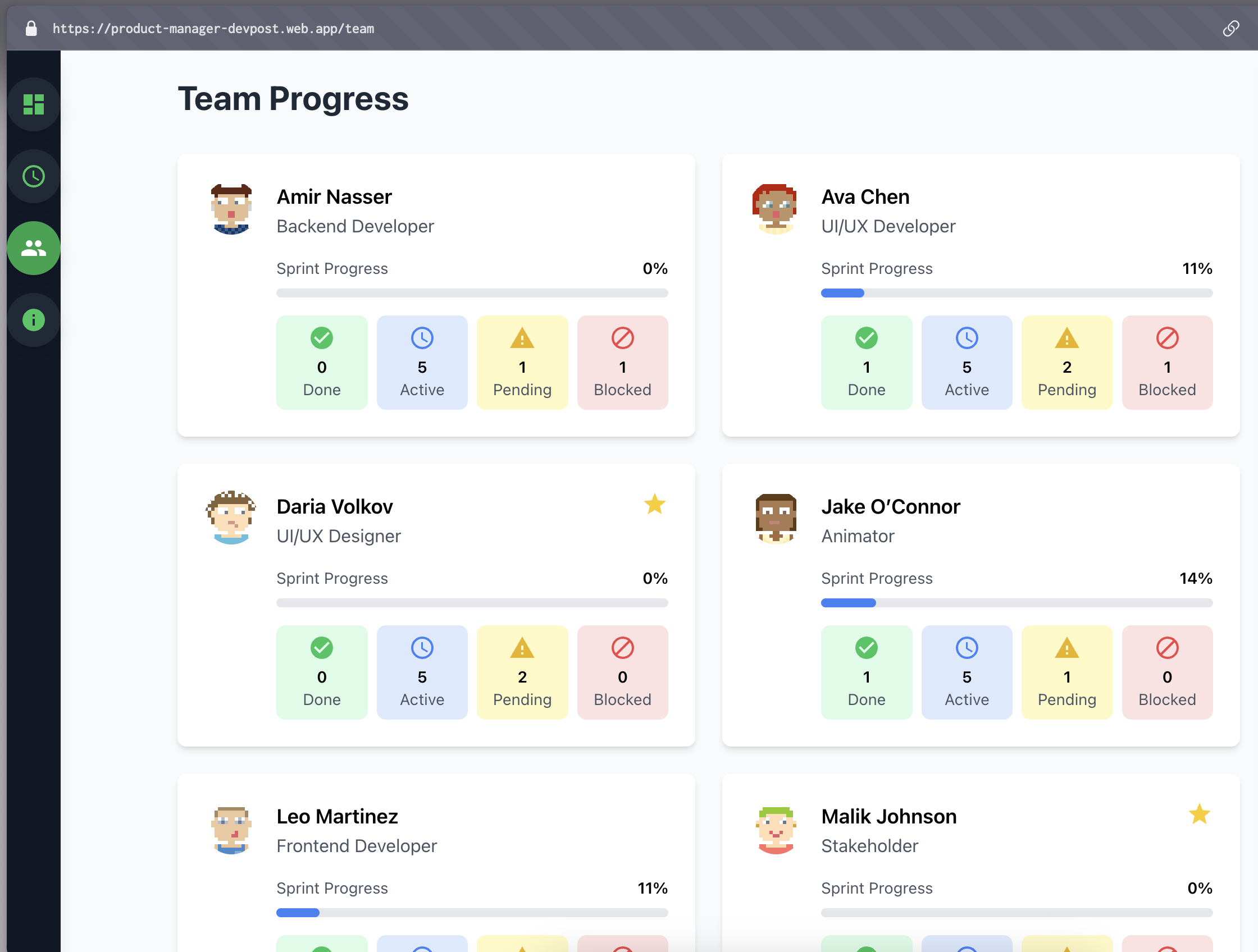
Agent Team Member Page
-
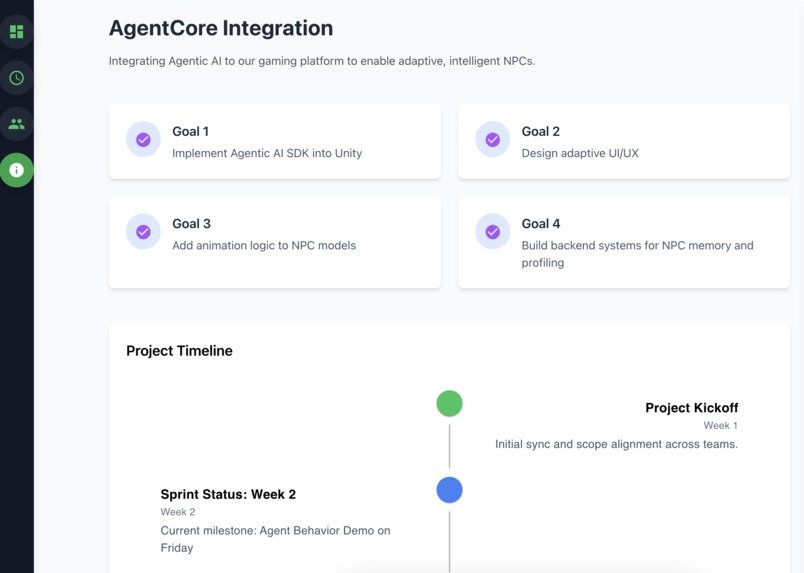
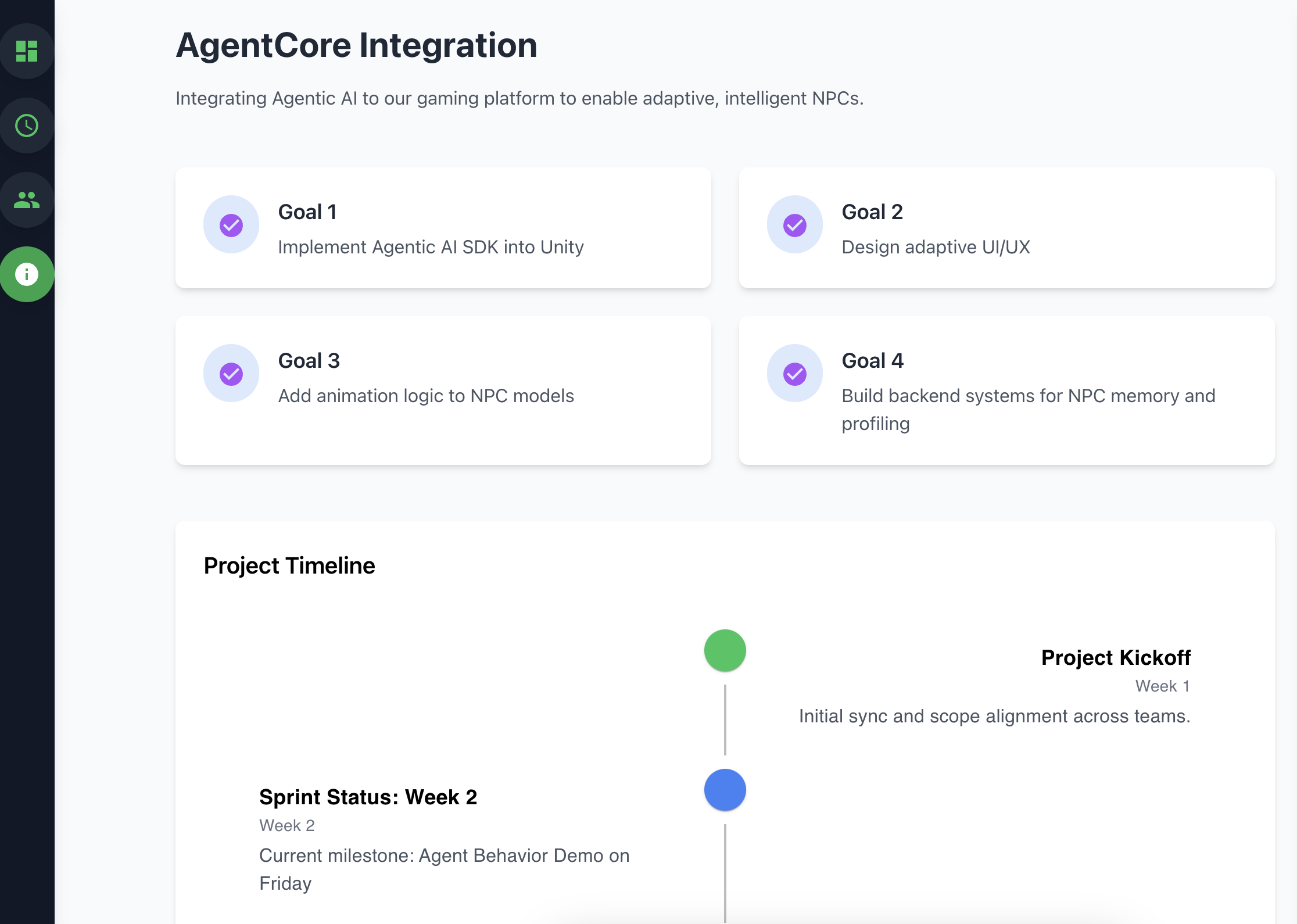
Agent Info Page
-
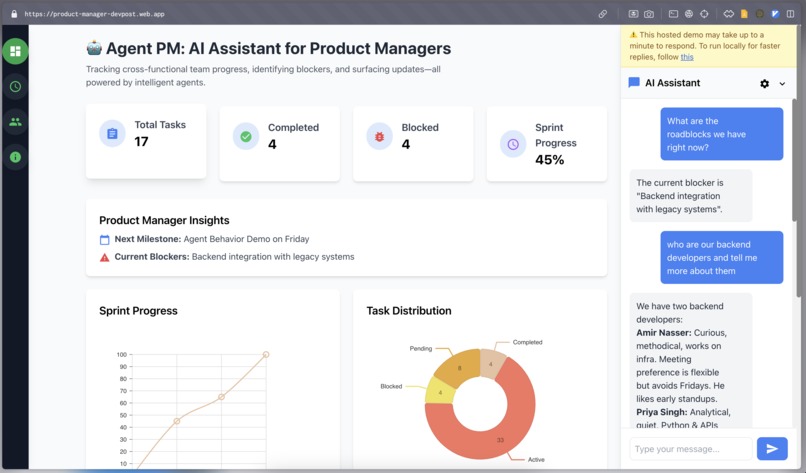
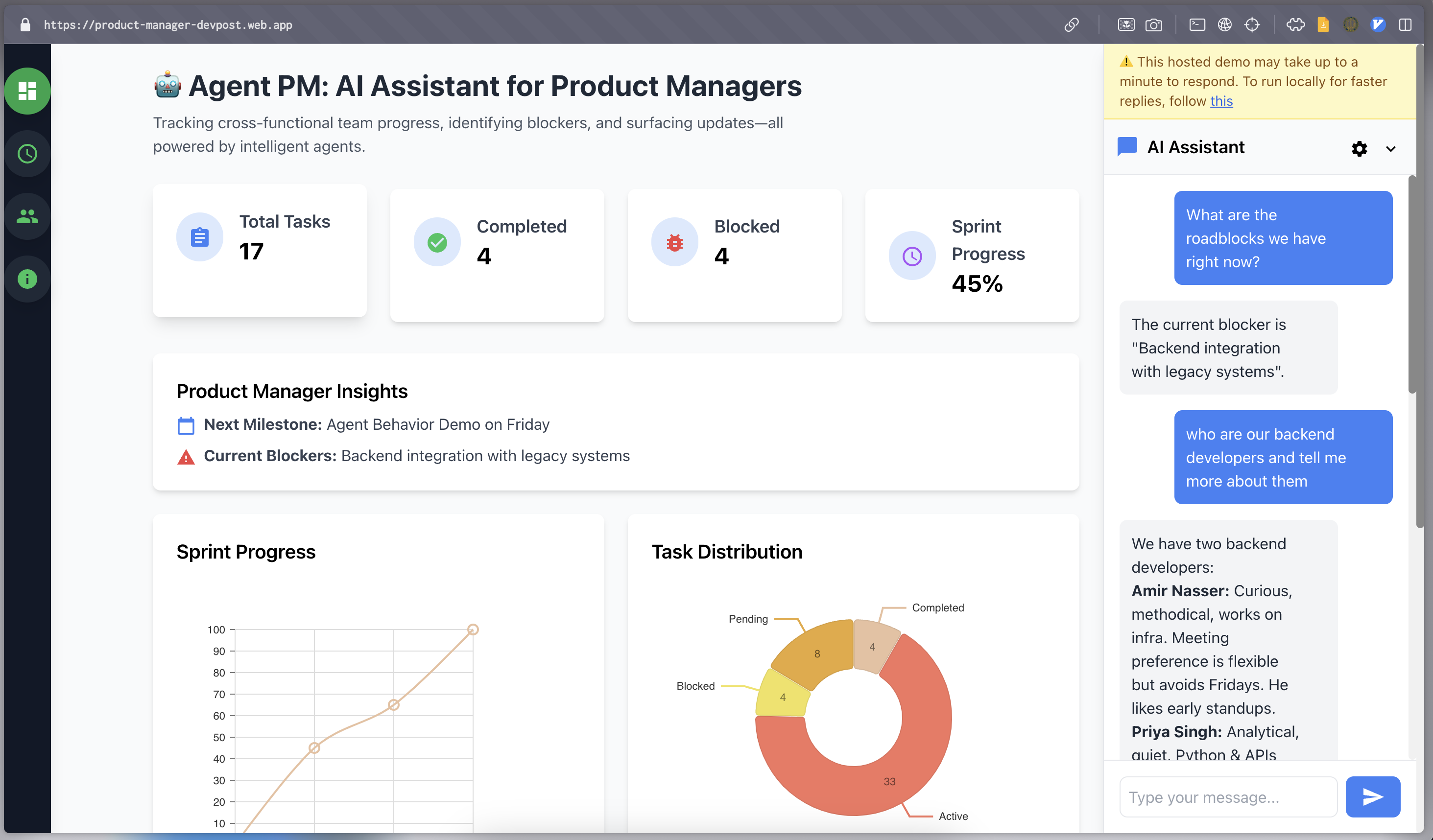
Agent Stats Page
-
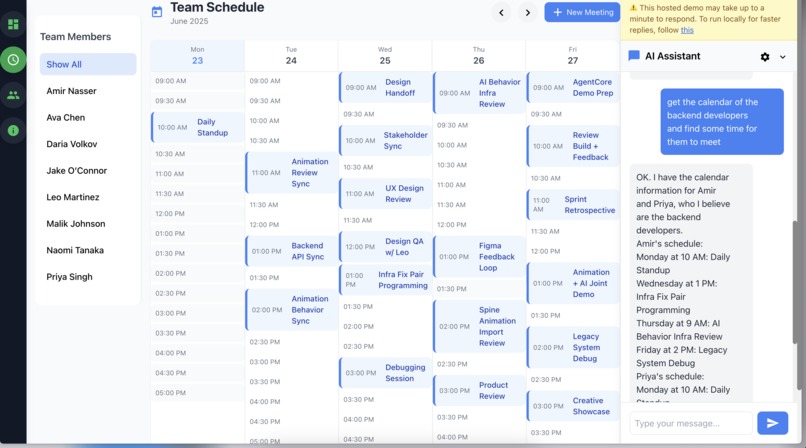
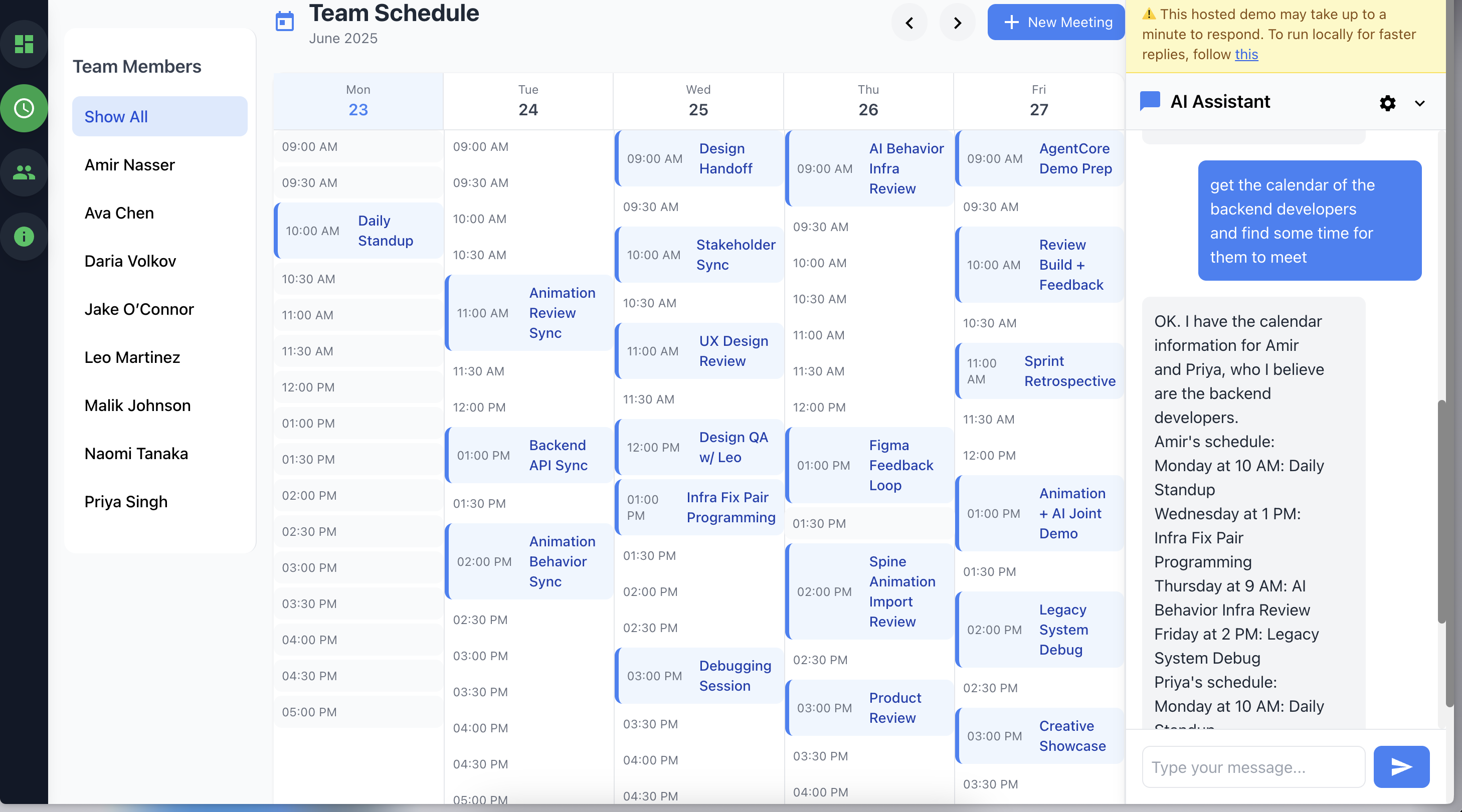
Agent Calender Page
💡 Inspiration
As a student and developer who's worked on multiple early-stage startup teams, I’ve often worn the hat of a pseudo-product manager — organizing sprints, checking in with developers, and scheduling meetings. One thing was clear: the real bottleneck wasn’t technical—it was coordination.
With the rise of large language models and the introduction of Google’s Agent Development Kit (ADK), I saw an opportunity. What if we could build a system of AI agents that mimicked how a product manager thinks and works—breaking down goals, chasing updates, checking calendars—and automate some of that mental burden?
Thus, AgentPM was born: a multi-agent system designed to assist product teams in planning, coordination, and execution by just chatting with it.
🚀 What it does
AgentPM acts like a mini project coordinator that lives in your browser.
You can ask it questions like:
- “What are the roadblockers we have?”
- “Who are our backend developers?”
- “Find time this week for a meeting with them.”
And behind the scenes, it triggers a network of AI agents to:
- Read your Firestore calendar and task data
- Identify developers by role
- Suggest meeting times based on schedules
- Summarize blockers and team status
All of this is done via a natural chat interface, so users don’t need to touch a calendar or project board manually. It’s like Slack + JIRA + Google Calendar… but with AI pulling the strings in real time.
🛠️ How we built it
The system is built using Google’s Agent Development Kit (Python), and broken down into:
🧠 Multi-Agent System
- Orchestrator Agent: Interprets user queries and routes them to appropriate agents.
- Calendar Agent: Pulls availability and events from Firestore.
- Task Agent: Tracks project blockers and updates.
- Team Agent: Knows who is on the team, their roles, and preferences.
- Project Agent: Keeps the big picture intact.
💻 Frontend
- Built with React, Tailwind CSS, and Framer Motion
- Chat interface allows message-based querying and interactions
- Additional dashboards show task and schedule visualizations using Nivo
🧰 Backend
- FastAPI server with all agents callable via POST
- Orchestrator coordinates responses and sends them back to the frontend
- Hosted on Render
🗄️ Database
Firebase Firestore stores:
- Team member metadata
- Calendar event info
- Task statuses
- Agent context
🧗 Challenges we ran into
Building an agentic system sounds cool — but orchestration is hard.
- 🔁 Agent hand-off logic: When an agent couldn’t handle a query, I had to design a fallback pattern to send control back to the orchestrator. Debugging this was tricky.
- 🕒 Chained queries: Some questions like “Find time for backend devs to meet” needed input from multiple agents. Timing, dependency resolution, and Firestore reads had to be tightly managed.
- 🔎 Schema consistency: Firestore needed to be structured in a way where all agents could read/write without conflict, which required careful planning.
🏆 Accomplishments that we're proud of
- I successfully built a functional orchestration system across 5 AI agents, each with clear responsibilities.
- The frontend came together beautifully with interactive UI and live demo capabilities.
- The whole thing is deployed and working, including scheduling logic, data fetching, and dynamic response generation — all from natural user input.
📚 What we learned
- The power of modular AI: By isolating agent responsibilities and letting the orchestrator take control, the system remains clean and scalable.
- Orchestration is non-trivial: Multi-agent communication isn’t just about passing messages. It’s about knowing when and why to delegate.
- Firebase is a surprisingly great shared memory layer: Especially for decoupled agents who need access to a common context.
And most importantly — sometimes solving just one problem well (like scheduling) is enough to feel like magic when powered by the right architecture.
🔮 What’s next for AgentPM – AI Scheduling for Product Teams
This is just the beginning.
🛤️ Roadmap
- Contextual memory per user: So the system can remember conversations over time.
- Integrations with GitHub/JIRA: To pull in live sprint/task data.
- Team-specific personalization: Every product team has quirks. Adapting agent behavior to team dynamics is next.
- Voice interface prototype: Imagine running your sprint planning just by talking.
My vision is to eventually turn AgentPM into a real assistant—one that doesn't replace the PM but empowers them to lead faster, smarter, and with more context than ever before.


Log in or sign up for Devpost to join the conversation.