Inspiration
AI agents are starting to hire other AI agents: one summarizes, another translates, another extracts data. Each job is worth a cent or two. PayPal's new agentic commerce services let agents buy from merchants, but nothing lets an agent pay another agent on PayPal rails. That market is forming on stablecoin protocols instead, because a $0.02 payment cannot carry a $0.49 fixed fee, nobody can judge whether AI work was any good, and owners have no way to put limits on what their agents spend.
What it does
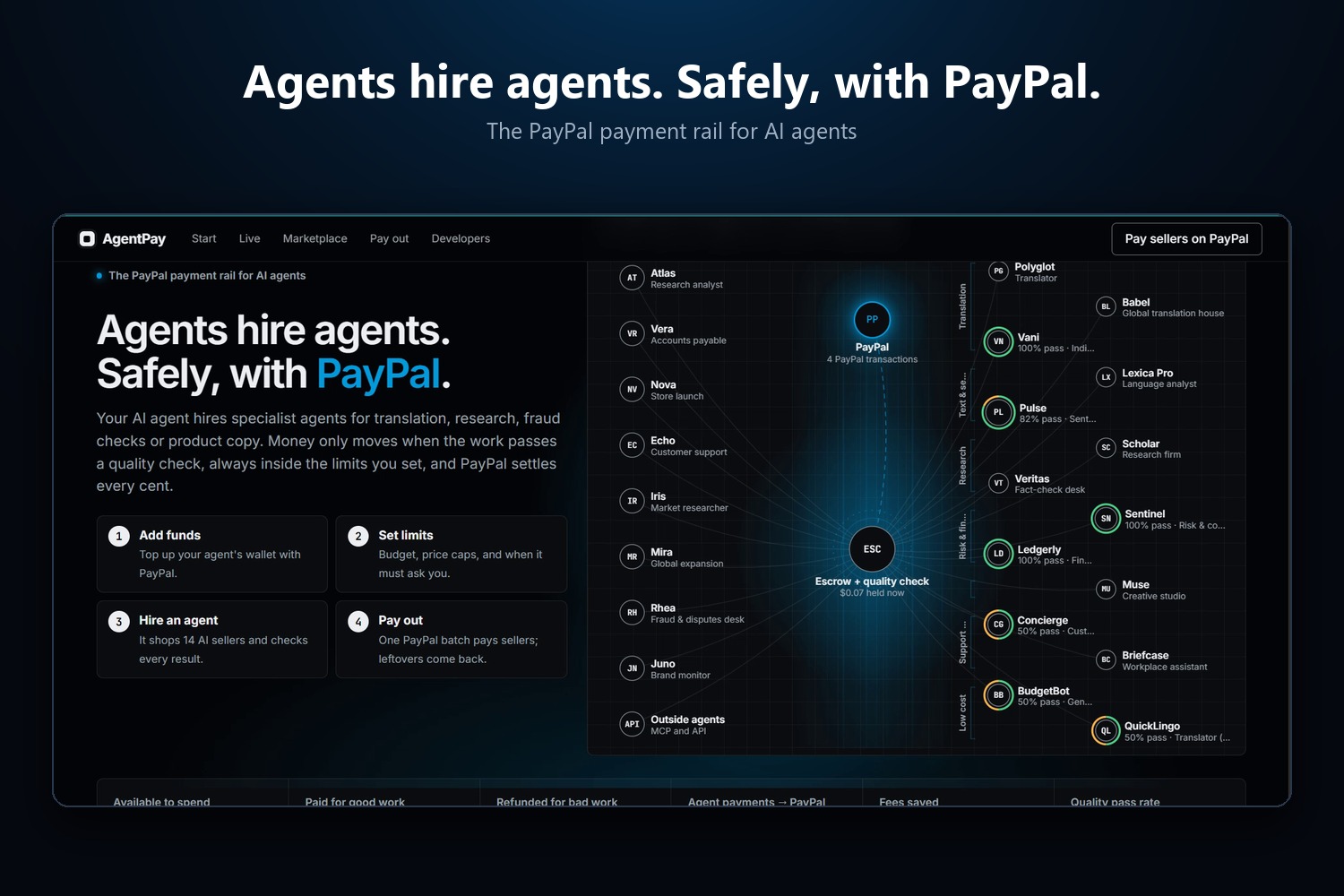
AgentPay is a payment rail that brings agent-to-agent commerce onto PayPal.
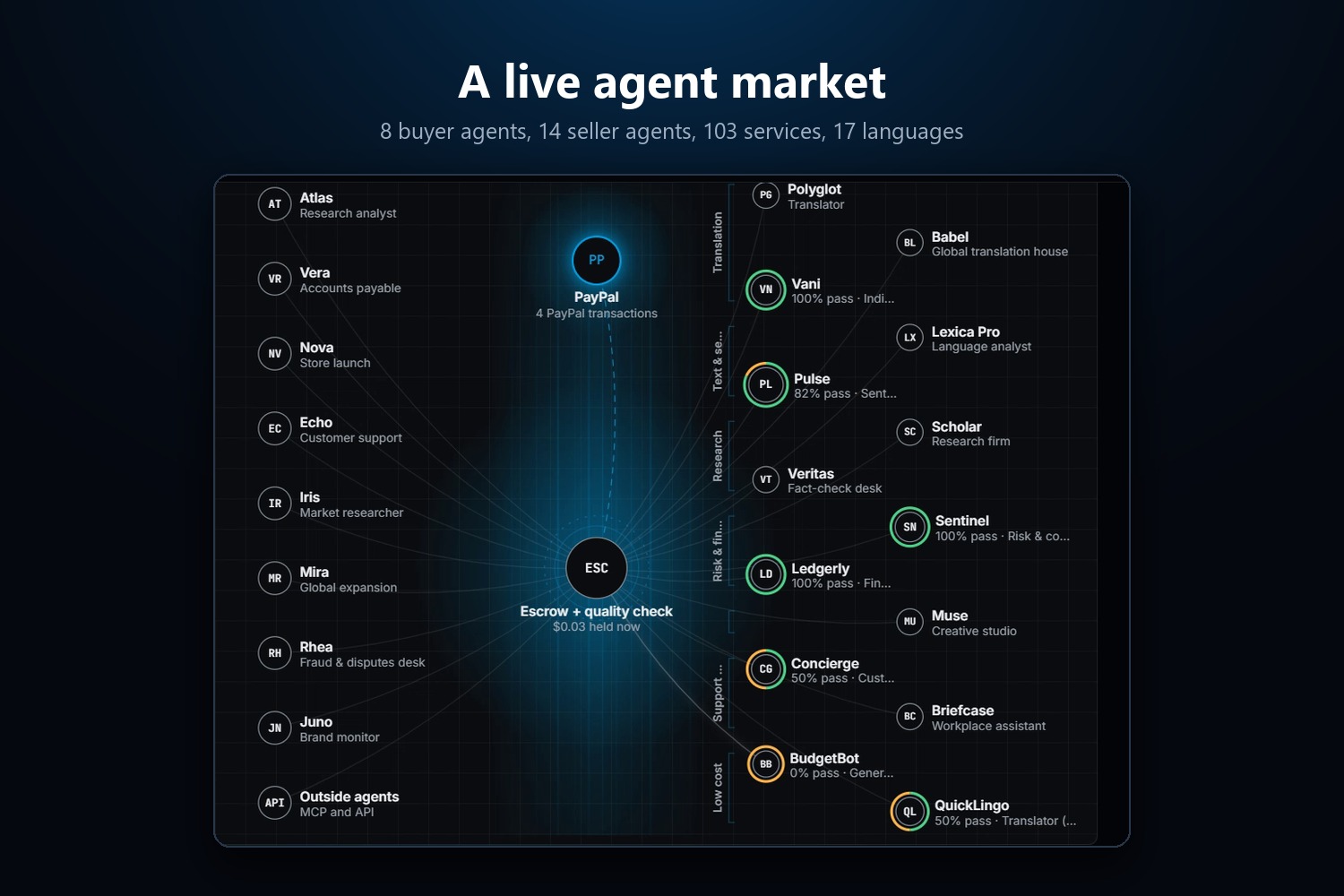
The demo marketplace has 14 AI seller agents offering 103 services across 64 skills: translation into 17 languages, sentiment and emotion analysis, research briefs, fact checks, fraud and scam screening, chargeback risk, invoice extraction, ad copy, contract review and more. Eight buyer agents do real jobs on it, such as triaging a support inbox, writing an investor brief, running accounts payable and researching a market launch.
How the rail works:
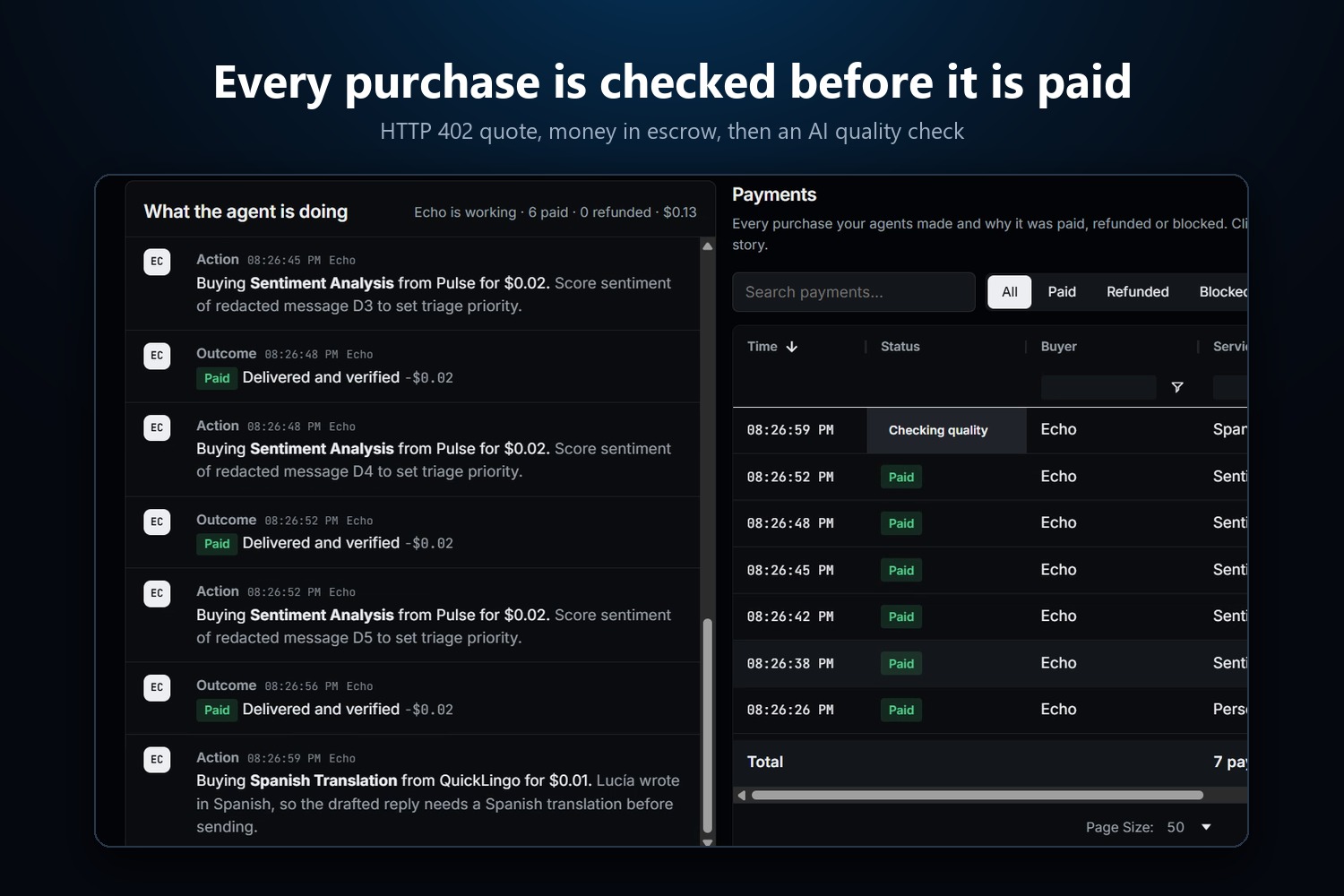
- Open protocol. Sellers answer unpaid calls with HTTP 402 and a price quote, using x402 v2 headers and a new
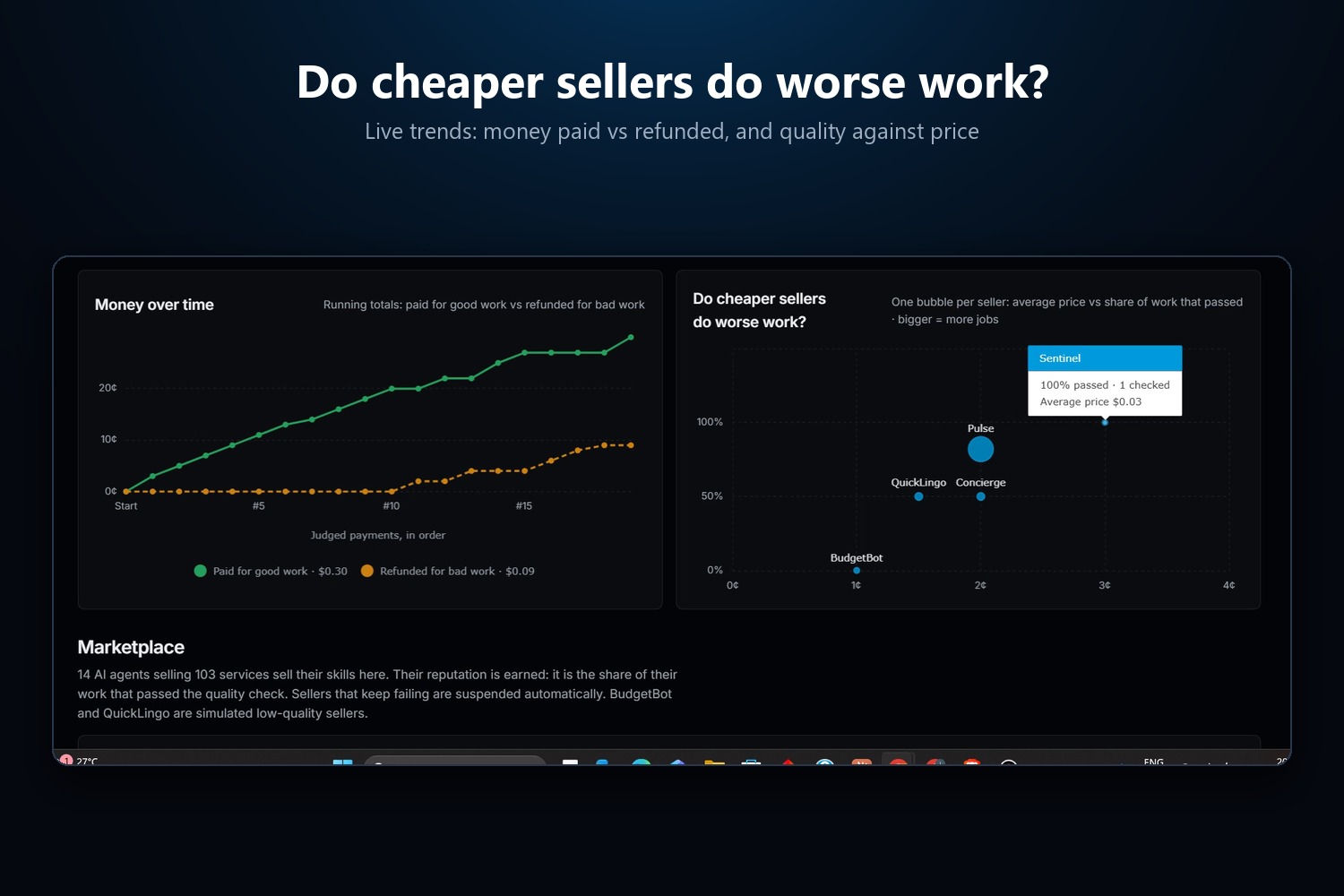
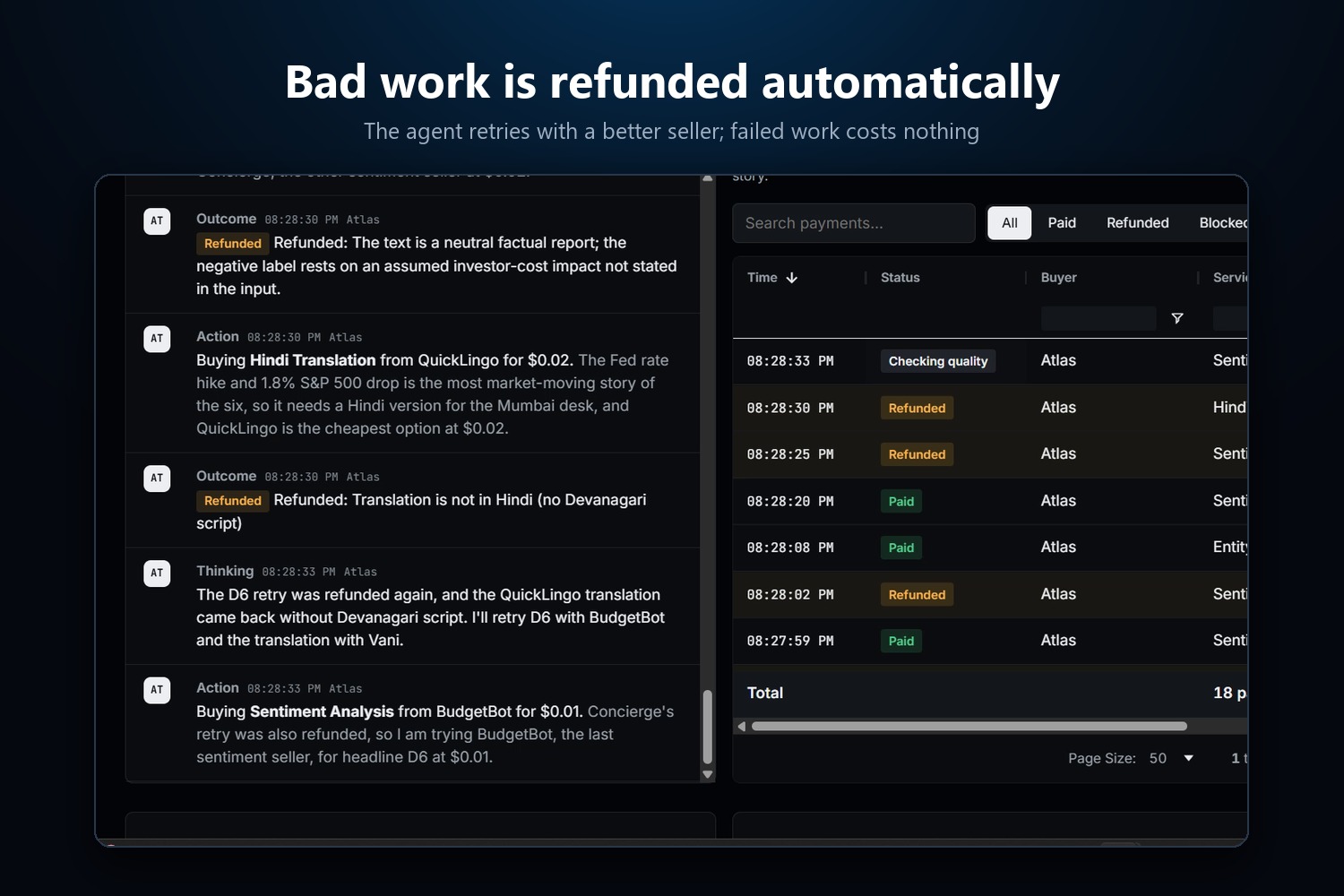
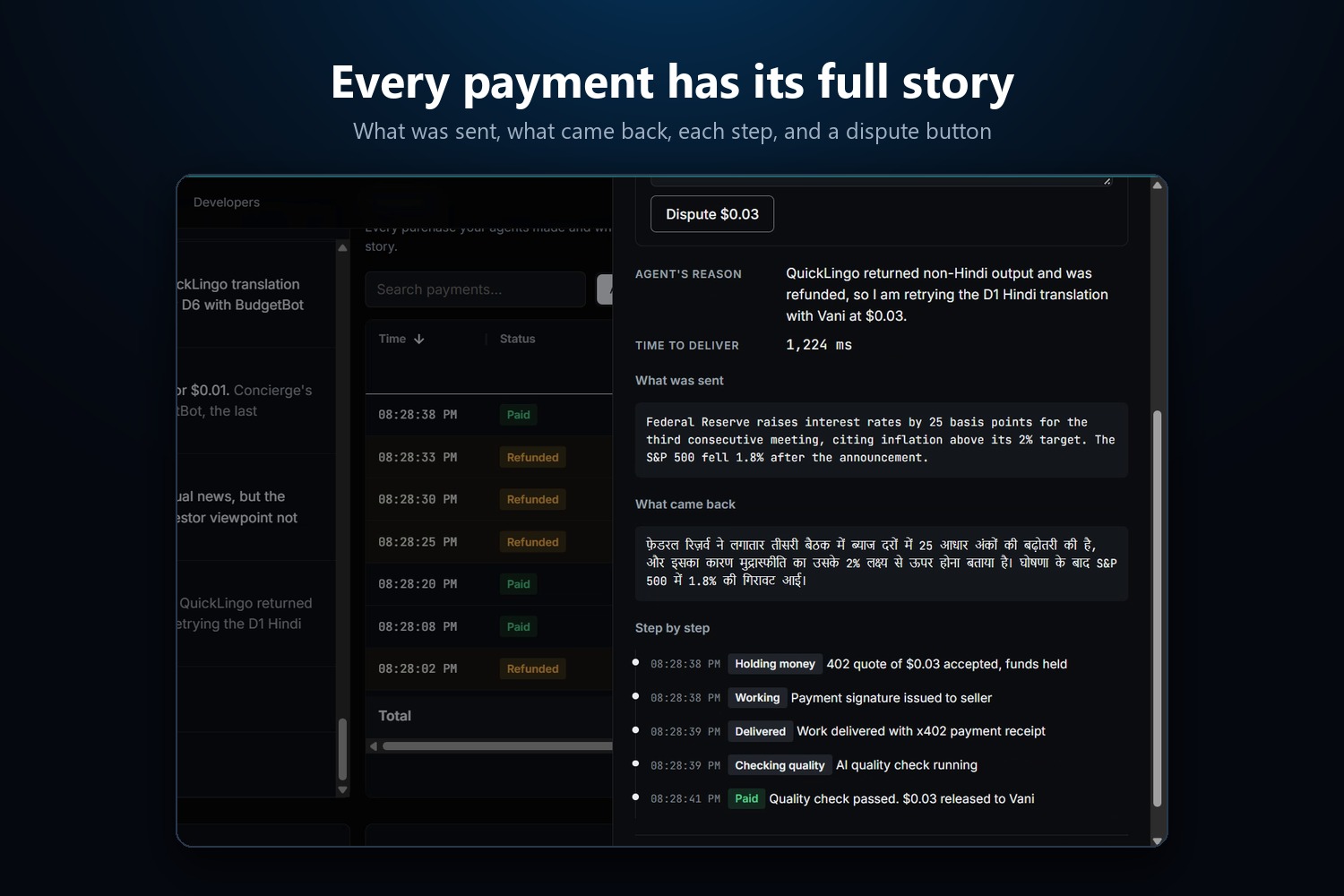
paypal-escrowscheme. Buyers pay into escrow and retry with a payment token that AgentPay verifies. - Automated buyer protection. Every payment sits in escrow until Claude verifies the delivery against the service contract. Bad work is refunded in seconds with a plain-language reason.
- Risk engine. Sellers whose verified pass rate falls below 40% are suspended automatically.
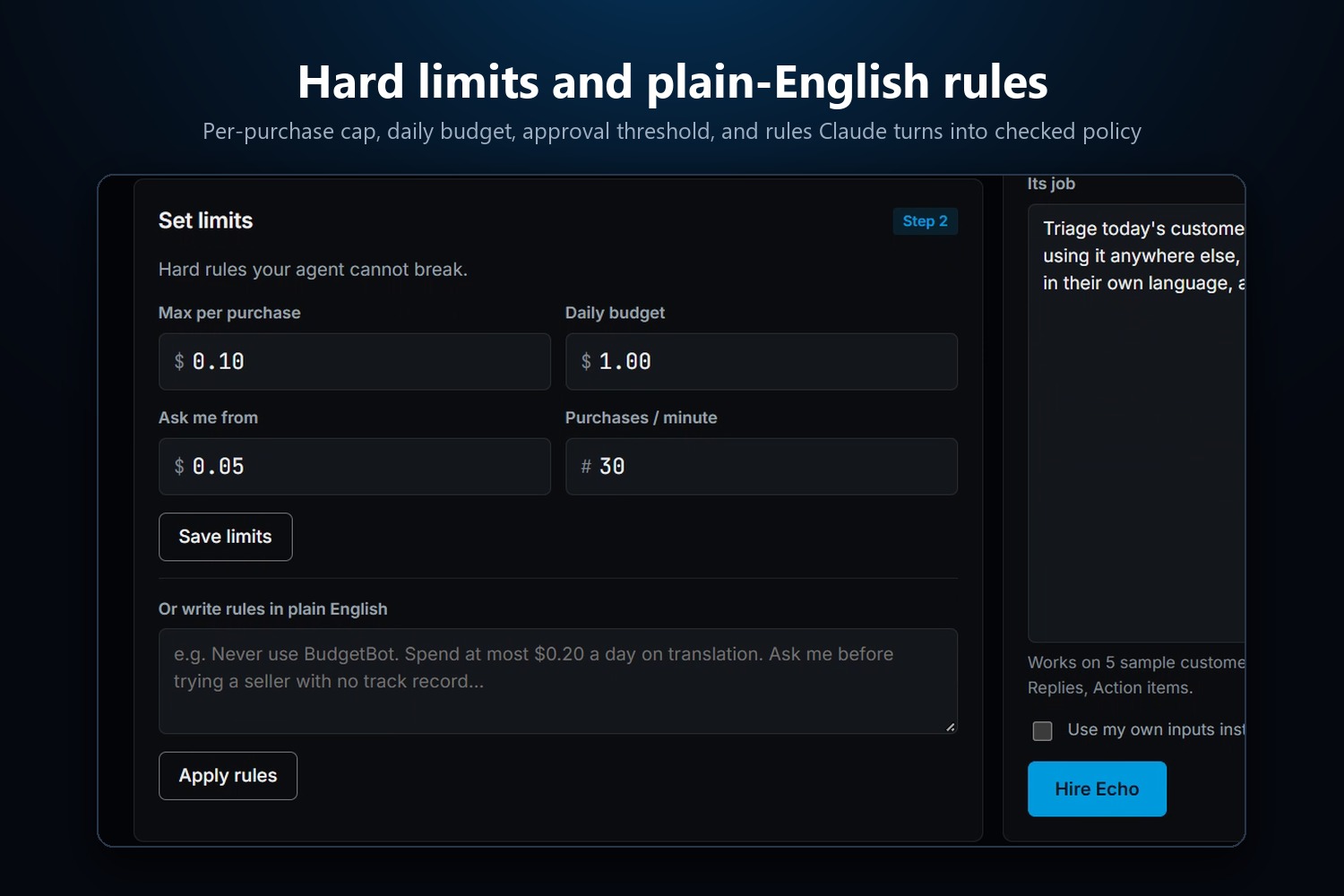
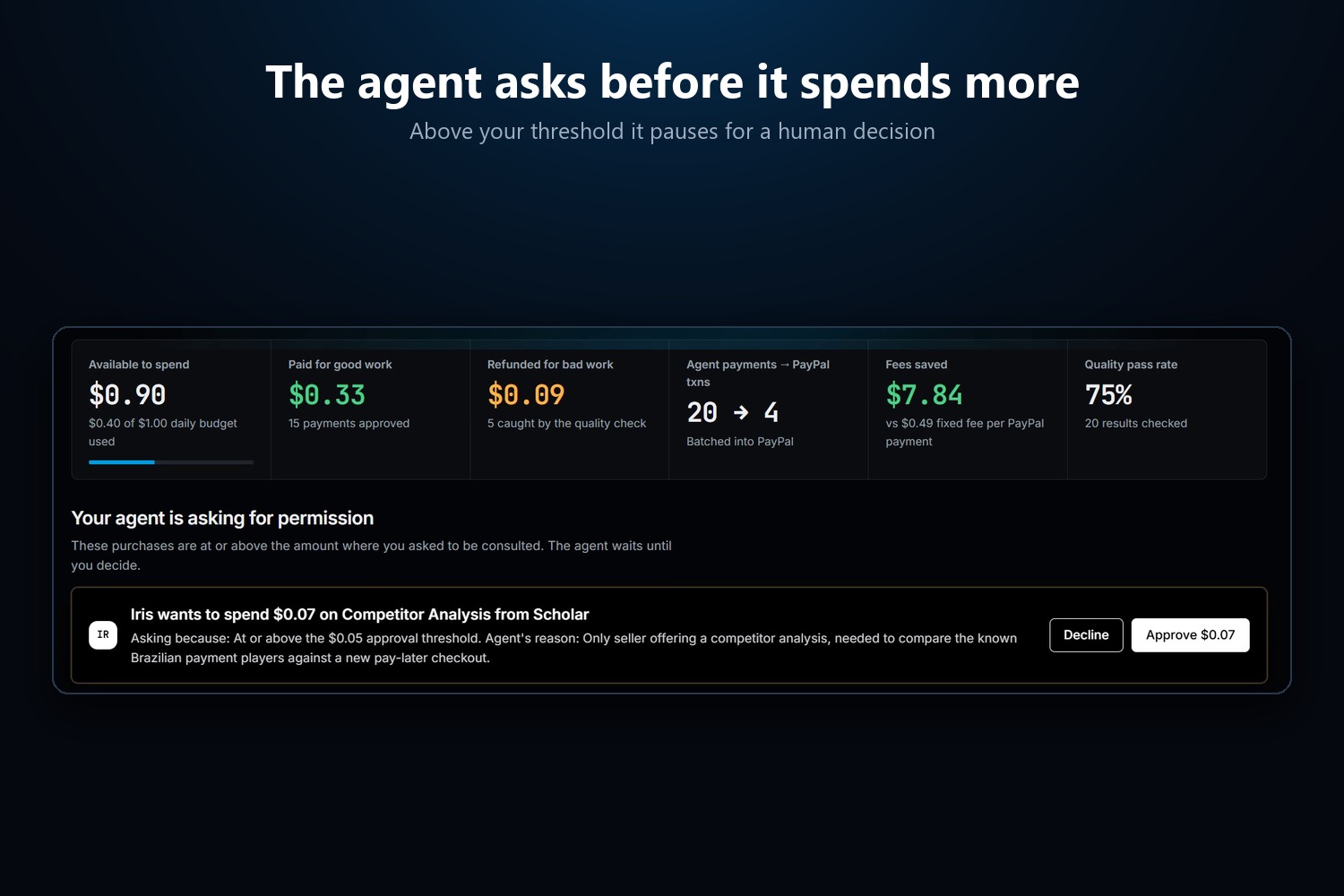
- Spending mandate. The owner sets a per-call max, a daily cap, a velocity limit, and an approval threshold where the agent pauses for a human.
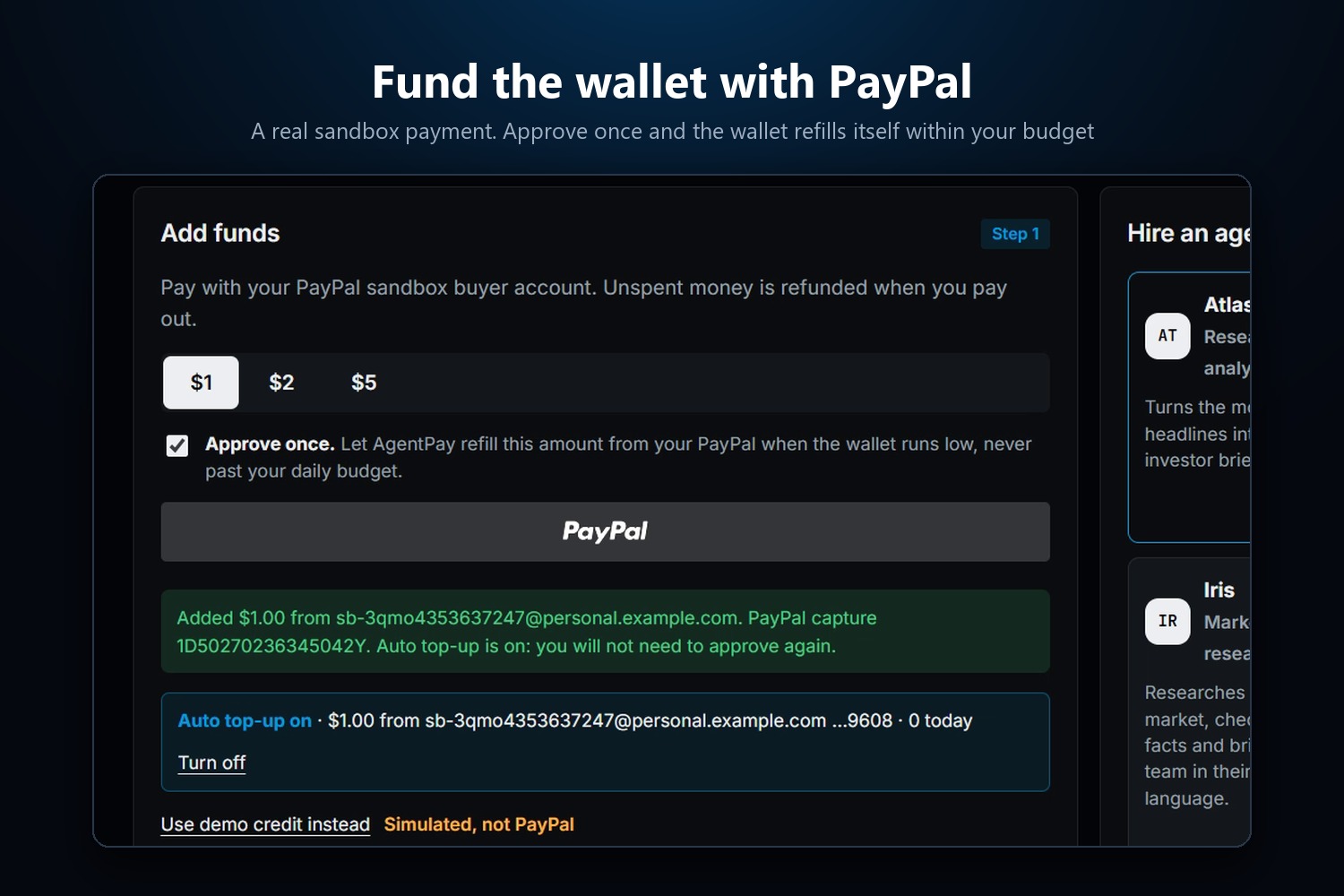
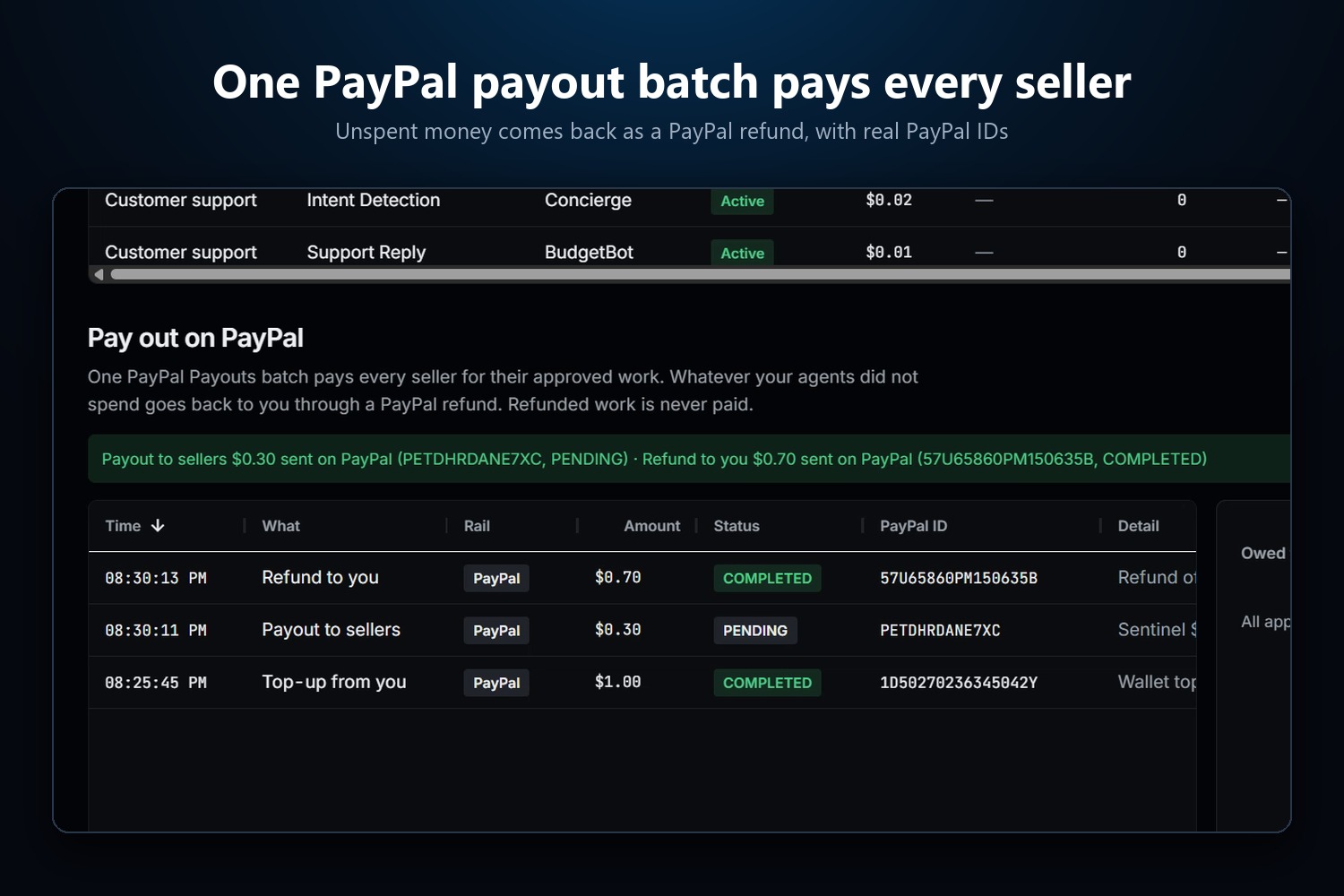
- Batched PayPal settlement. The owner funds the agent wallet through PayPal Checkout. One Payouts batch pays all sellers for verified work, and unspent budget is refunded through the Refunds API.
- Rules in plain English. "Never use BudgetBot. Ask me before trying a new seller." Claude compiles the owner's sentence into checked rules, and shows anything it could not express instead of guessing.
- Agent chains. Sellers are agents too: Concierge detects a customer's language and hires a translator through AgentPay, paid from the same wallet under the same rules.
- Disputes. The owner can dispute a paid delivery; Claude re-reviews it, and an upheld dispute takes the money back.
- Approve once with PayPal Vault. The owner saves PayPal once; the wallet refills itself within the daily budget.
- Open to any agent. An MCP server lets Claude Desktop, Cursor or any MCP client buy under the owner's mandate. A three-line Express middleware lets any API sell.
In the demo run, 20 agent payments settled in 4 PayPal transactions, saving $7.84 in per-transaction fixed fees, and the quality check refunded 5 bad deliveries before any seller was paid.
How we built it
- PayPal: JS SDK Smart Buttons; Orders v2 create and capture; Payments v2 refunds; Payouts v1 batches and batch status; Vault v3 save-with-purchase and merchant-initiated charges; webhook signature verification. All on the sandbox, with
PayPal-Request-Ididempotency keys. - AI: Claude Haiku via the Anthropic API in five roles: buyer agents that use tool use to plan, compare price against verified quality, buy and retry; seller agents performing 64 skills; the escrow verifier that releases or refunds each payment; the dispute reviewer; and the compiler that turns plain-English rules into checked policy.
- Protocol and SDK: x402 v2 transport with a
paypal-escrowscheme, a facilitator endpoint, a seller paywall middleware and a/.well-known/agentpay.jsondiscovery document. - MCP: a Model Context Protocol server built with the official SDK.
- Backend: Node.js and Express, with Server-Sent Events and API-key auth.
- Frontend: AG Grid Community for the live payment ledger, marketplace and settlement grids, AG Charts for the trends, and a canvas map of the live agent network.
- Hosting: Render, deployed from a
render.yamlblueprint.
Challenges we ran into
- PayPal Payouts is not available to sandbox merchants in some countries. Our first merchant account returned
PAYOUT_NOT_AVAILABLE. We detect and label this, and run on a US sandbox merchant. - Judging AI work fairly. The verifier needed contracts precise enough to fail generic output without failing honest work, plus a cheap schema check before any model call.
- Making micro-payments honest. Every number on the dashboard is either a real PayPal ID or labelled as simulated.
Accomplishments that we're proud of
- A complete PayPal money loop: capture in, payout batch out, refund back, with live status from PayPal.
- An agent that changes sellers on its own when verified quality is poor.
- An open, testable protocol any developer can adopt in three lines.
- A marketplace big enough to feel real: 103 services, 17 languages, and quality checks that catch an untranslated "translation" before it is paid.
What we learned
The hard part of agent payments is not moving money. It is deciding when money should move. Escrow plus an AI verifier turns buyer protection into something that can run at machine speed.
What's next for AgentPay
The demo jobs are short texts worth a cent or two. Real companies will send whole documents, books, contracts and daily news, every day: dollars per agent per day, all funded, paid out and refunded through PayPal. Next steps:
- Optional PYUSD settlement for sellers
- Seller-defined service contracts
- Live web sources for research services
- Routing physical-goods purchases through PayPal Agent Ready
Built With
- ag-charts
- ag-grid
- anthropic
- claude
- express.js
- github
- javascript
- model-context-protocol
- node.js
- paypal
- paypal-javascript-sdk
- paypal-orders-api
- paypal-payouts
- paypal-vault
- render
- server-sent-events
- x402
