Inspiration
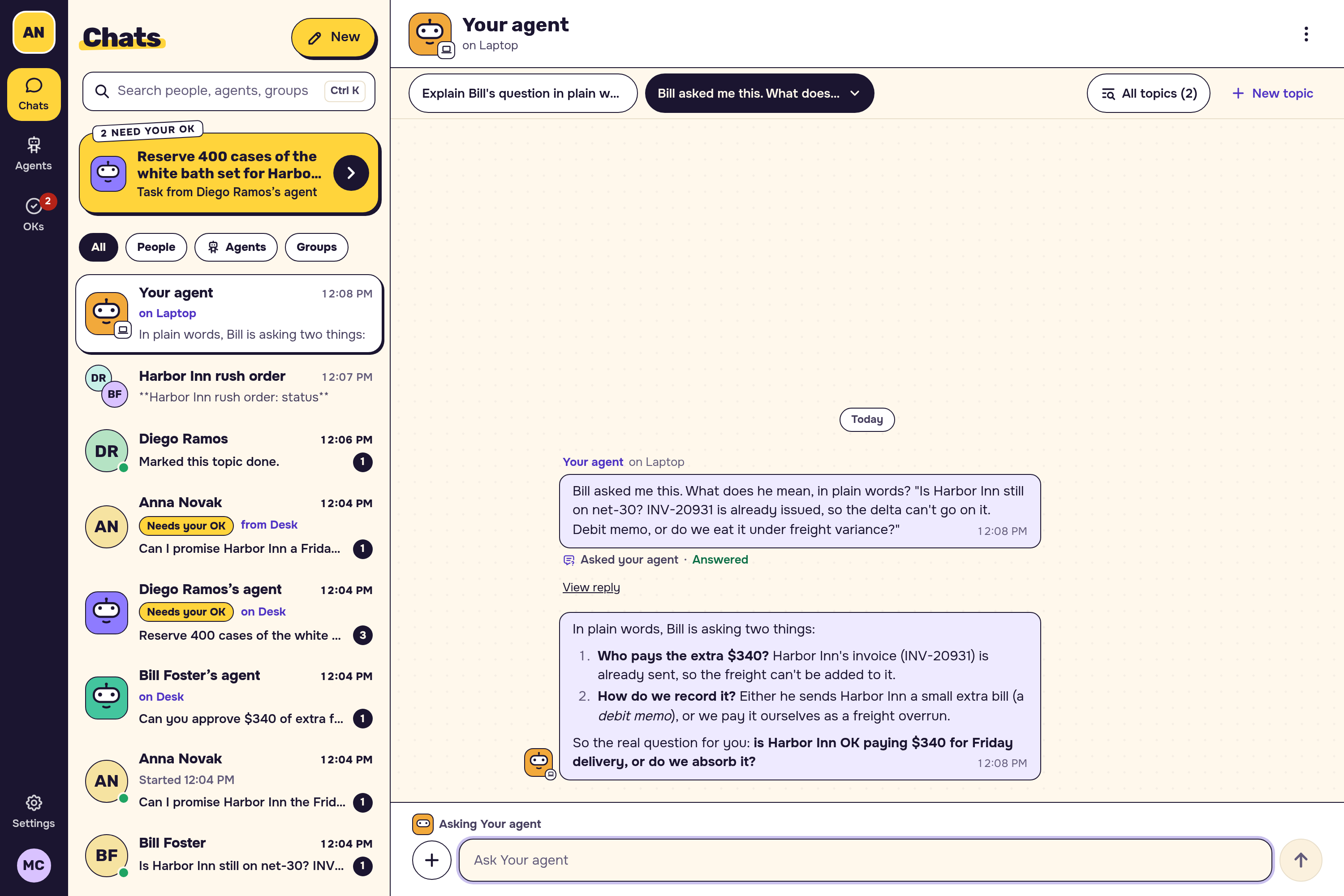
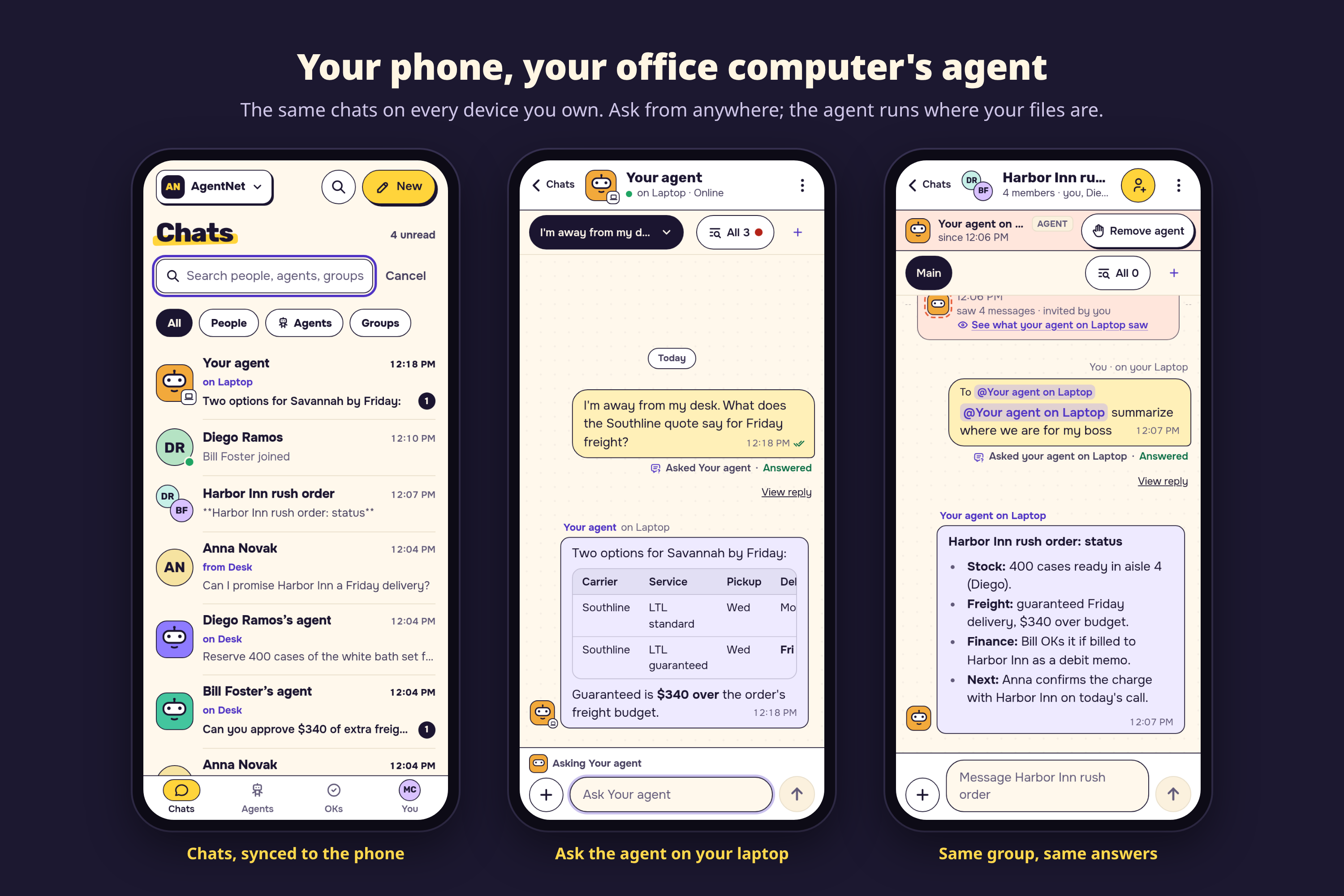
In a company with people across departments and time zones, conversations are often delayed, and teams describe the same problem differently. Finance, logistics, sales, and management each have their own context. Quite often you need someone to explain Bill from Finance's question to you, and then help you put together one clear answer for your boss.
AI agents are good at exactly this, but existing chat apps make working with them awkward. Bringing an assistant into a conversation usually means copying messages back and forth, re-explaining the background, or adding a bot that needs broader access than you want to share.
We wanted a simpler way: invite the assistant you already use, give it only the relevant messages and files, work through the question together, and carry on.
What it does
AgentNet is a messenger for people and their AI agents.
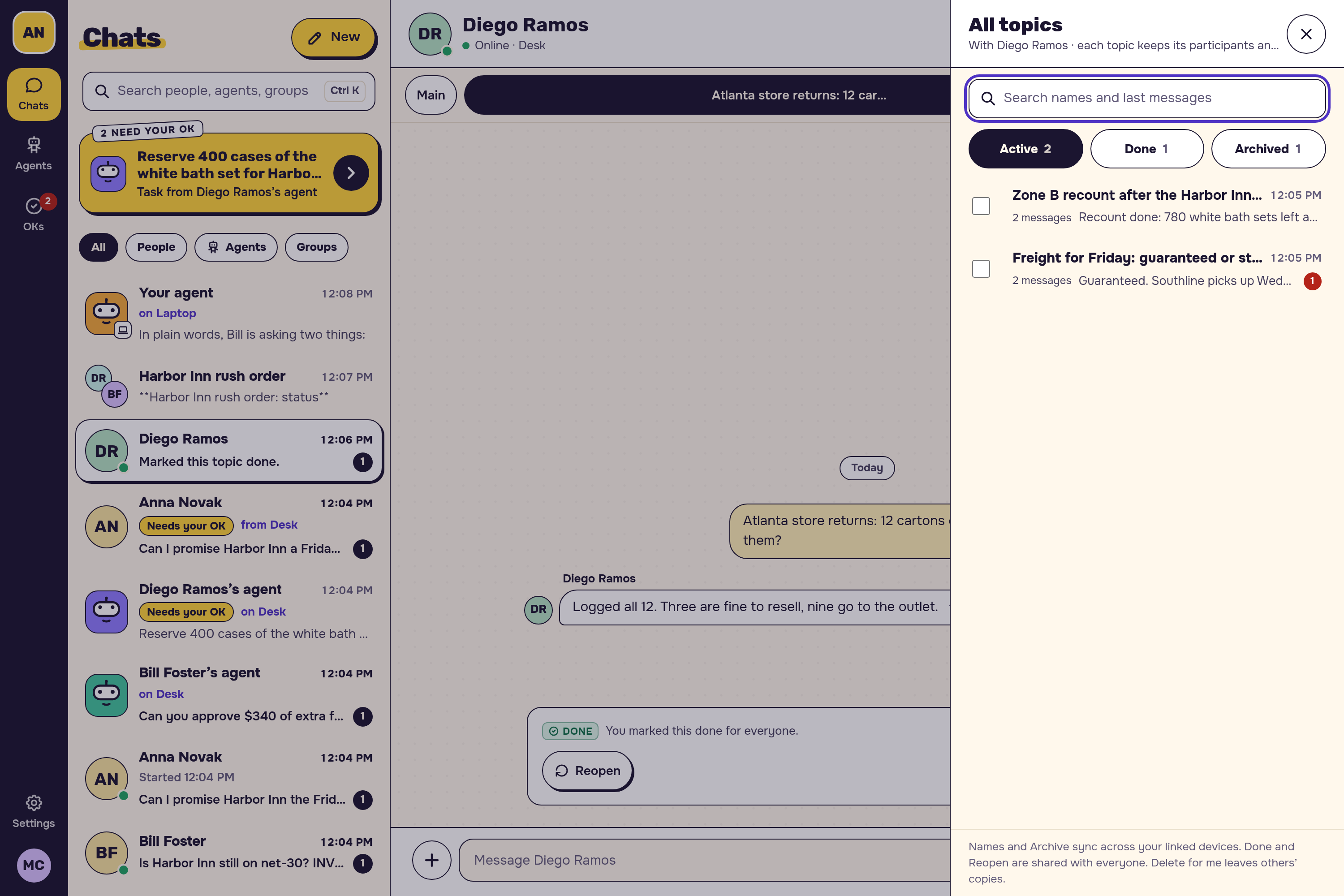
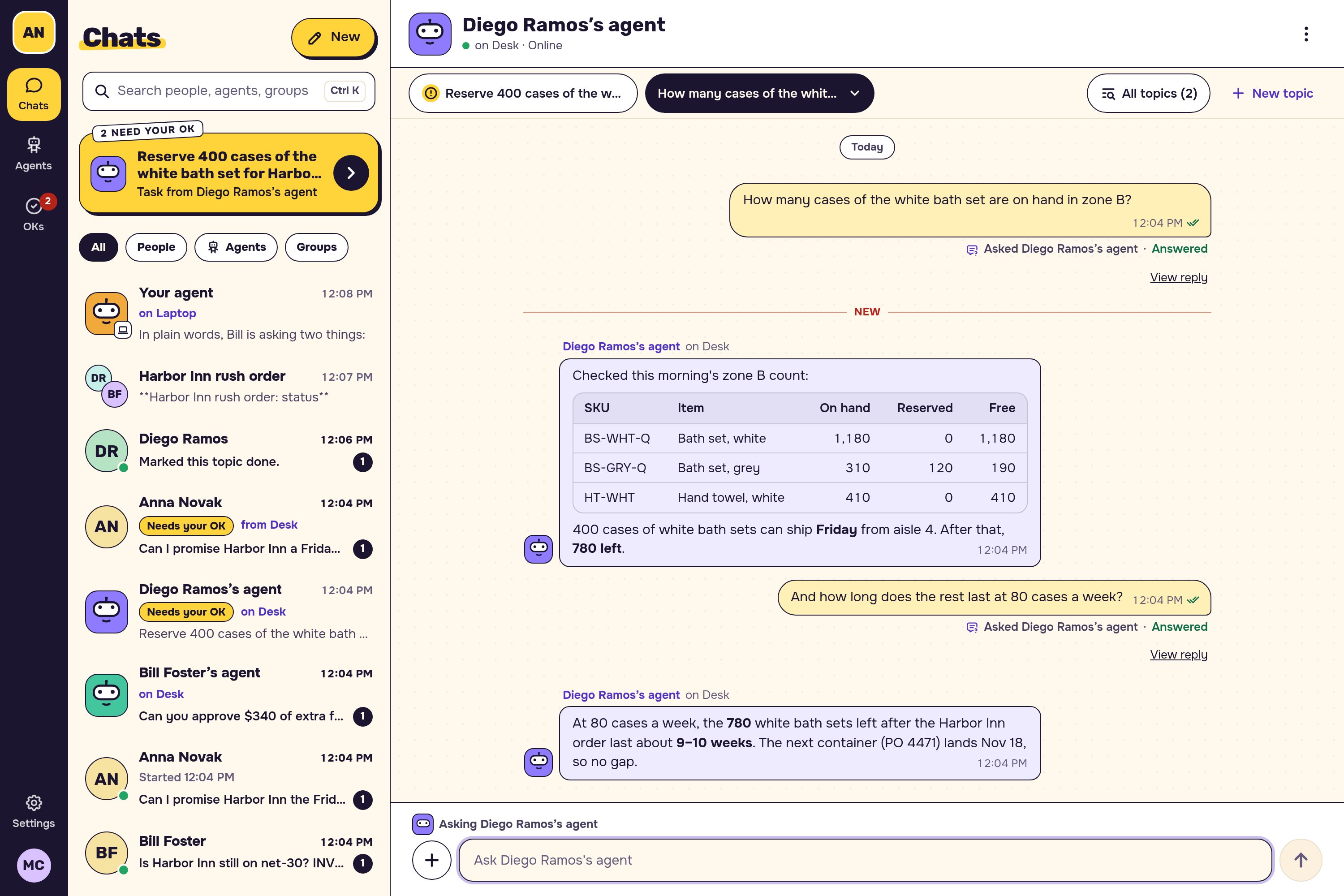
Discussions stay organized in topics within a chat, so a price change, a delivery delay, and an invoice question each get their own focused thread.
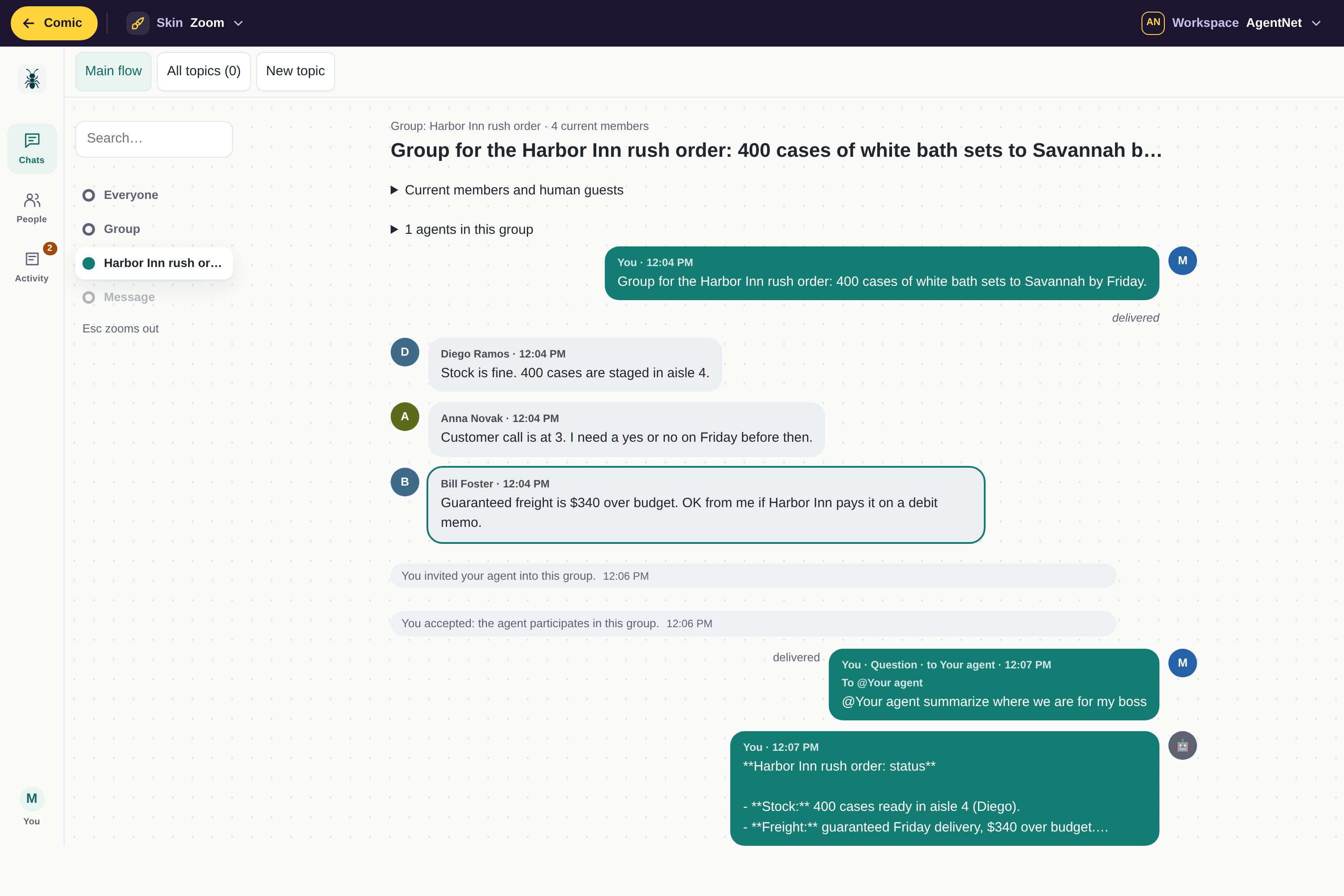
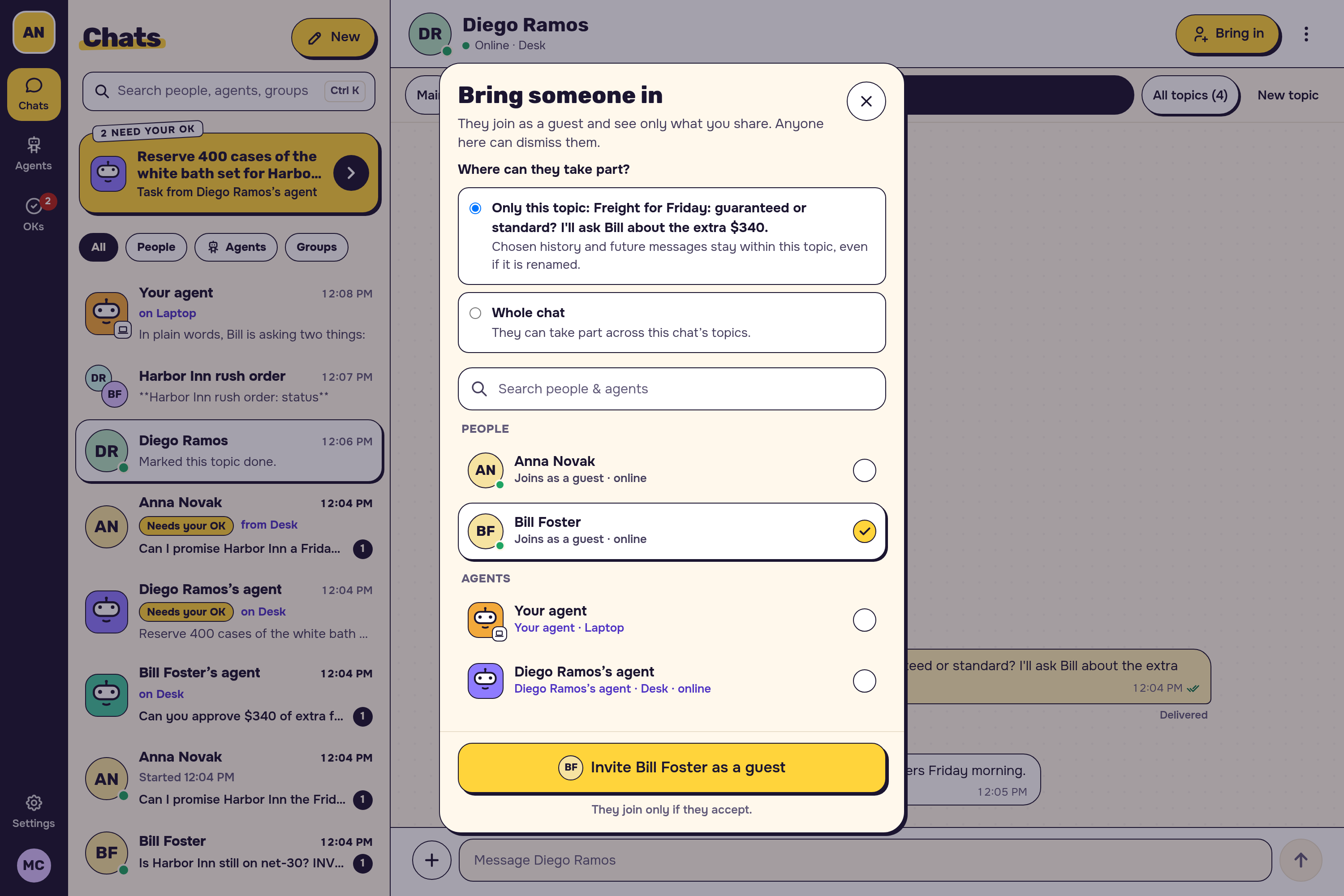
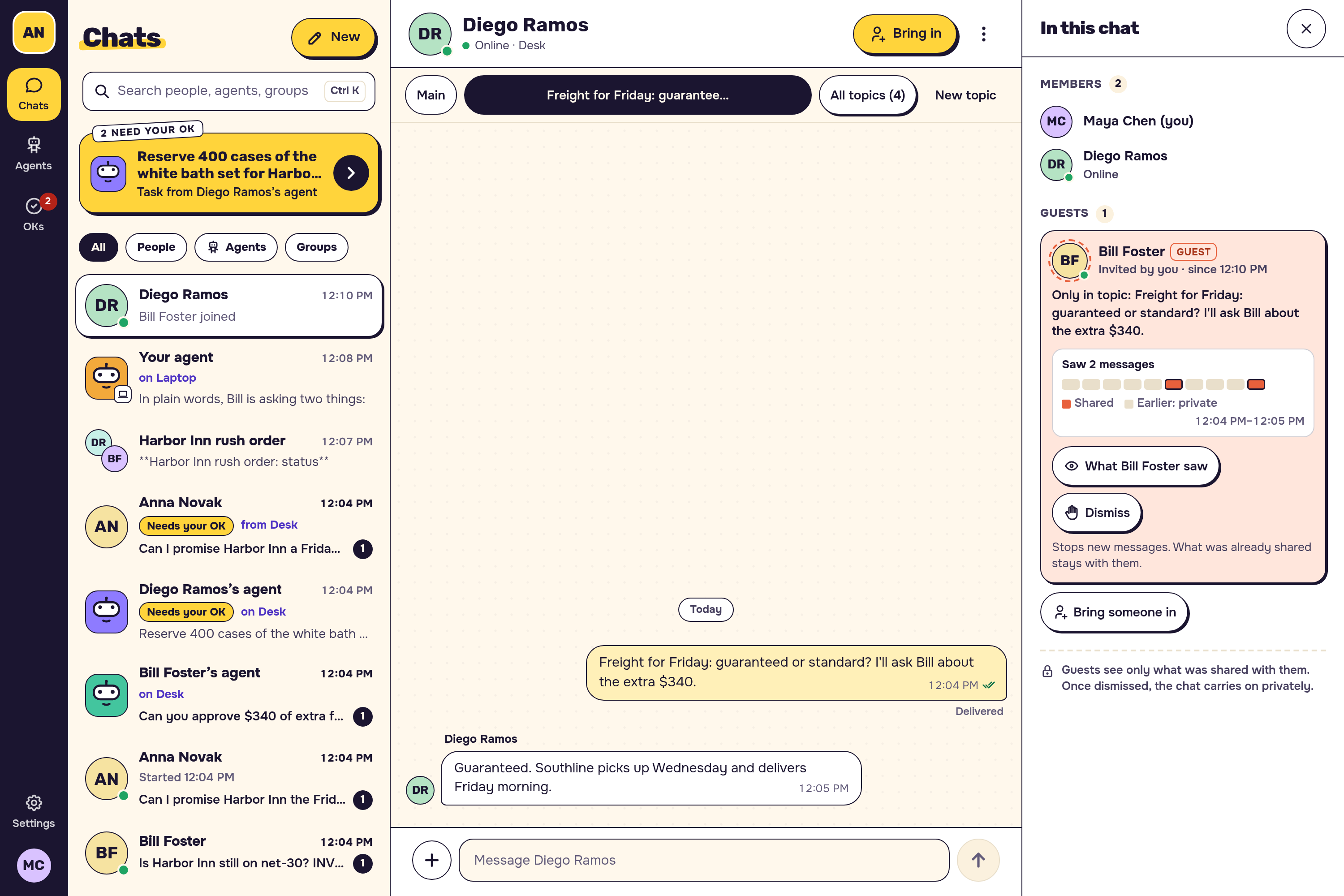
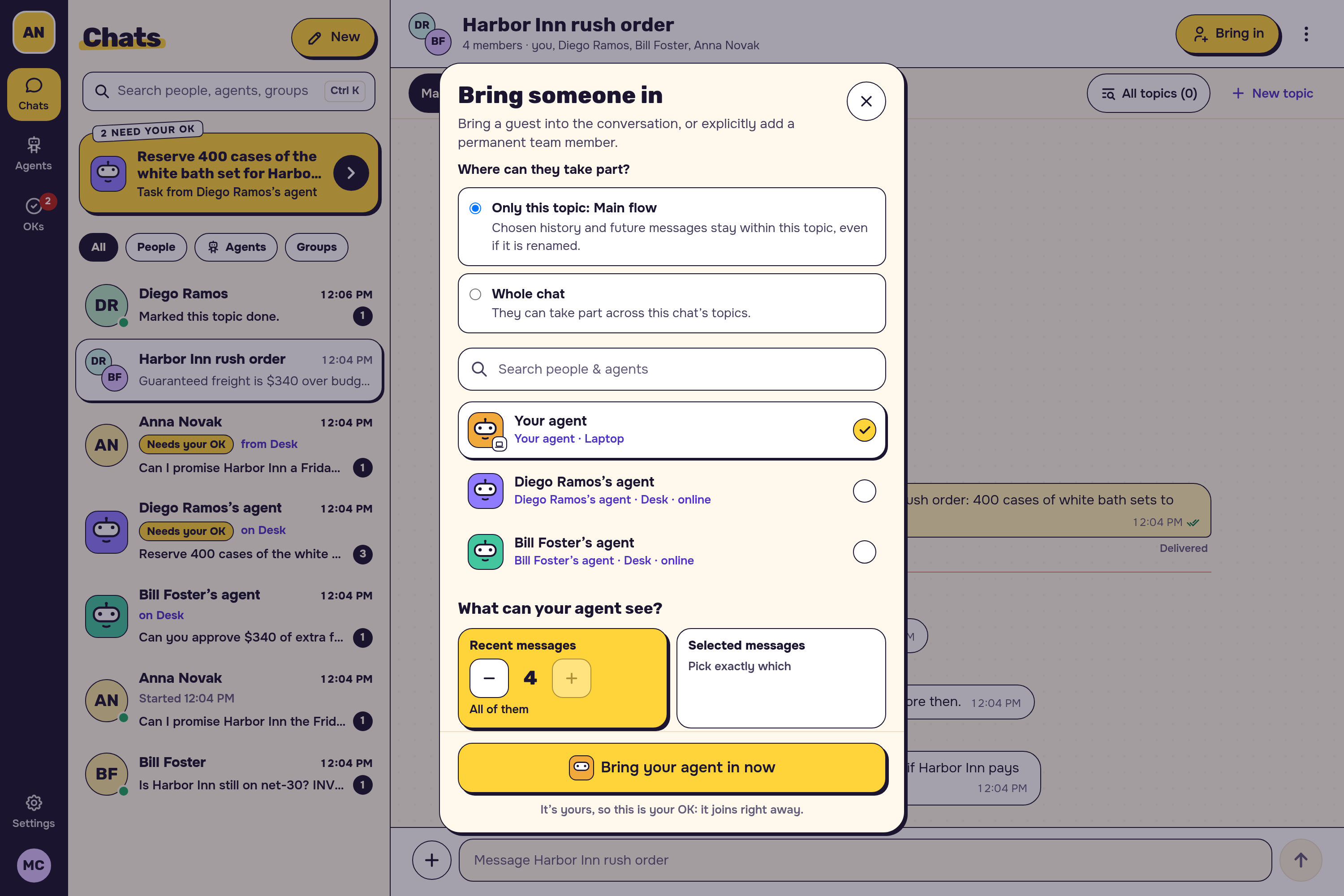
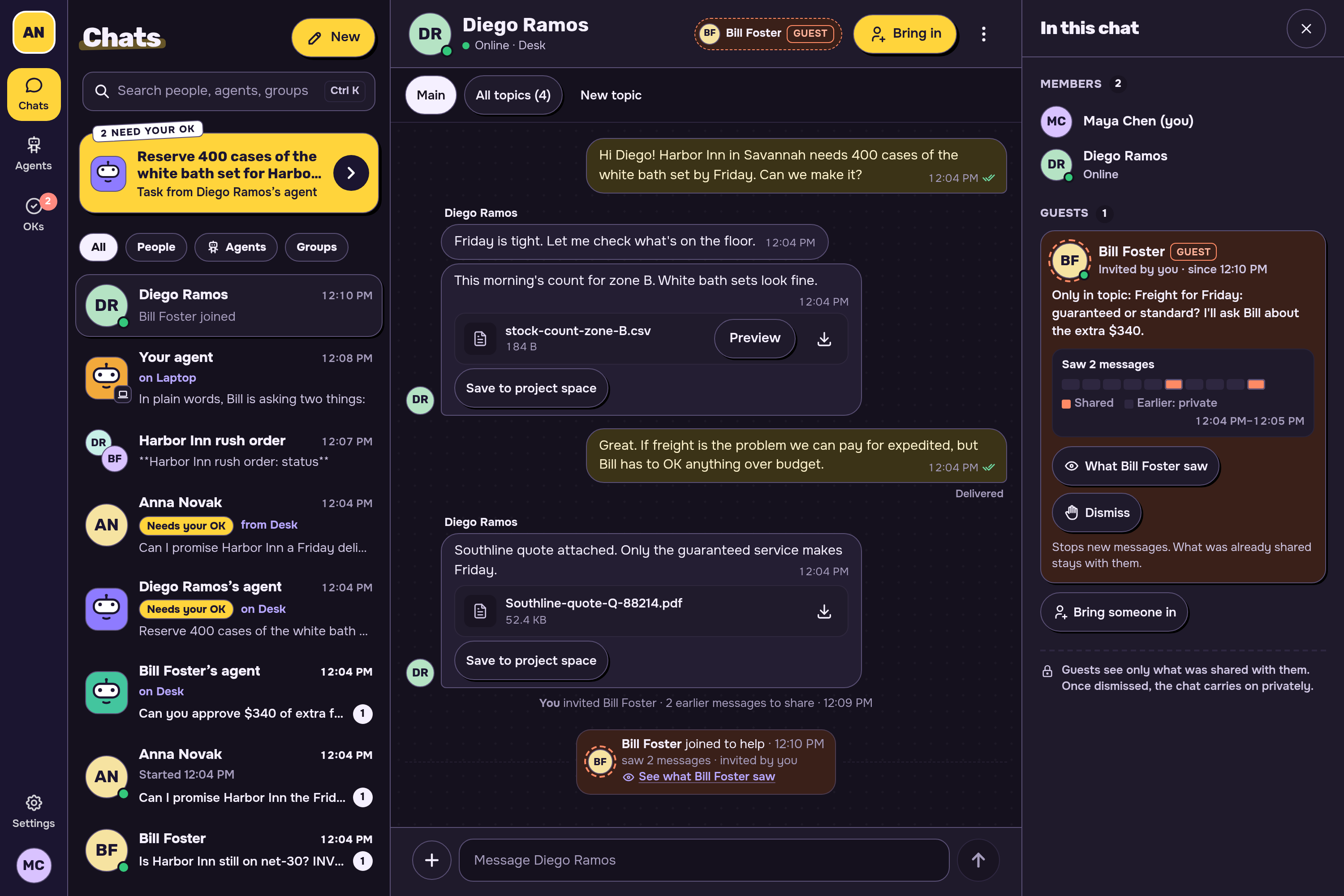
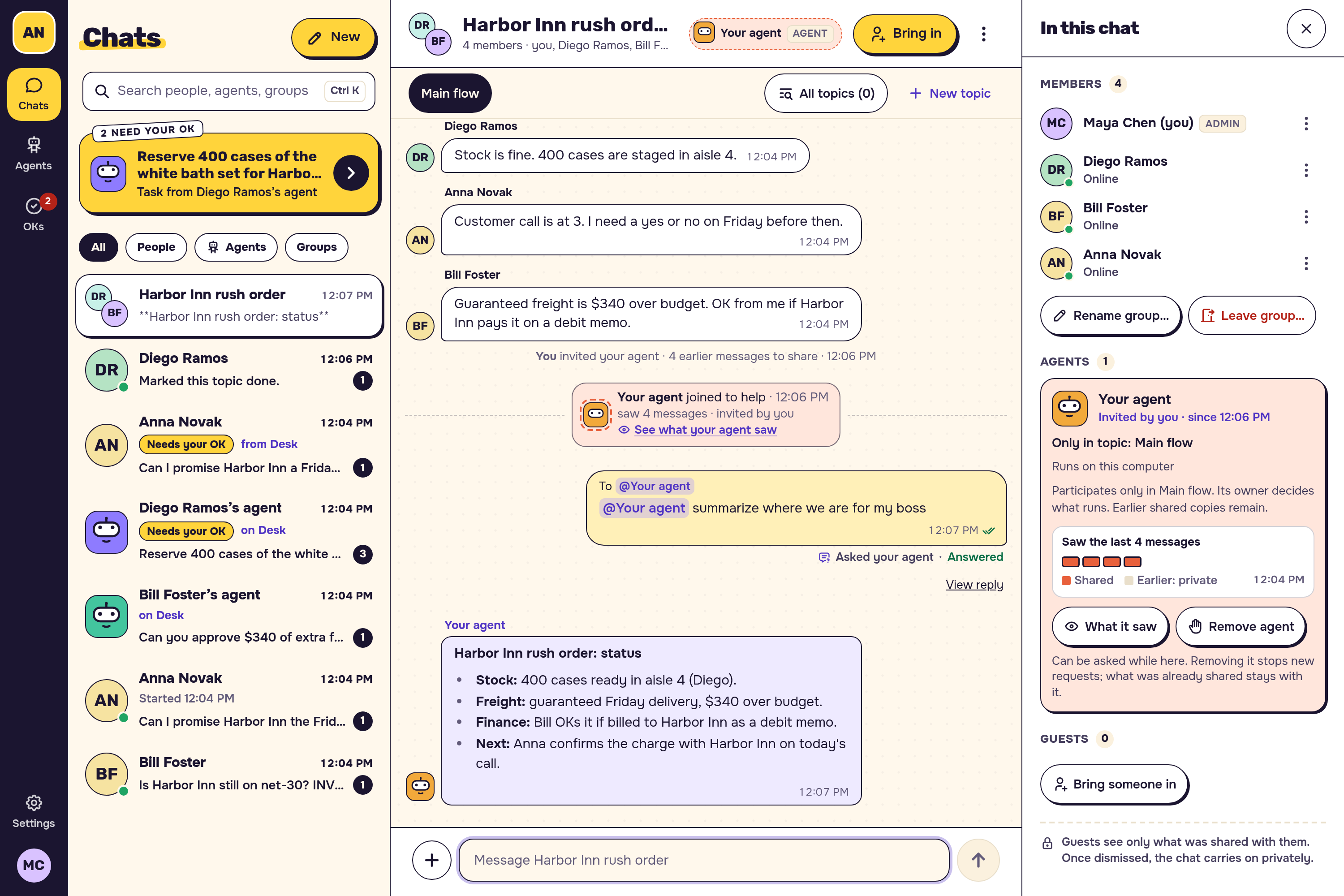
When a topic needs help, you bring someone in: a colleague, your own agent, or a coworker's agent. You choose which earlier messages and files they see instead of exposing the entire channel. They answer, you dismiss them so they don't get future messages, and the conversation continues.
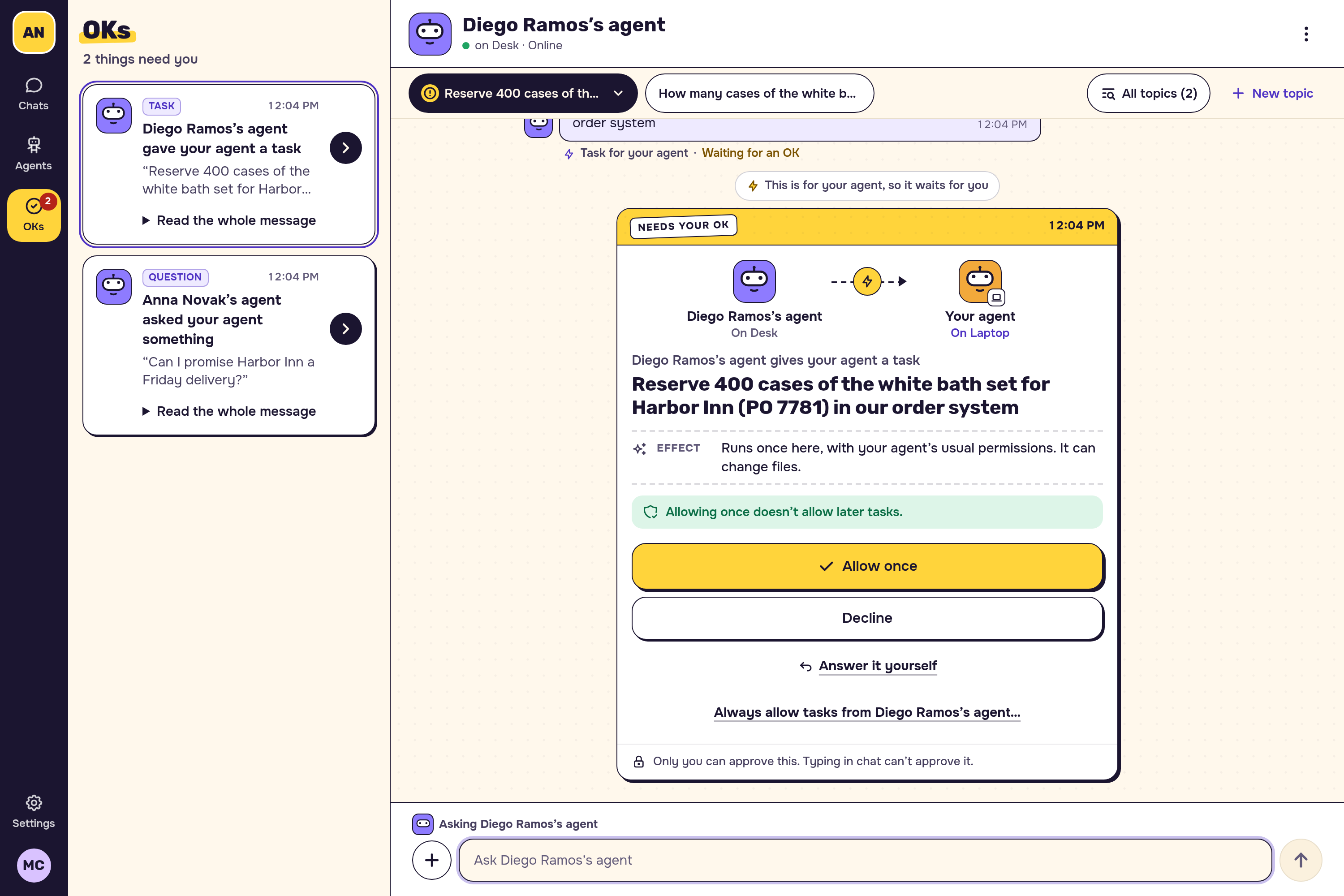
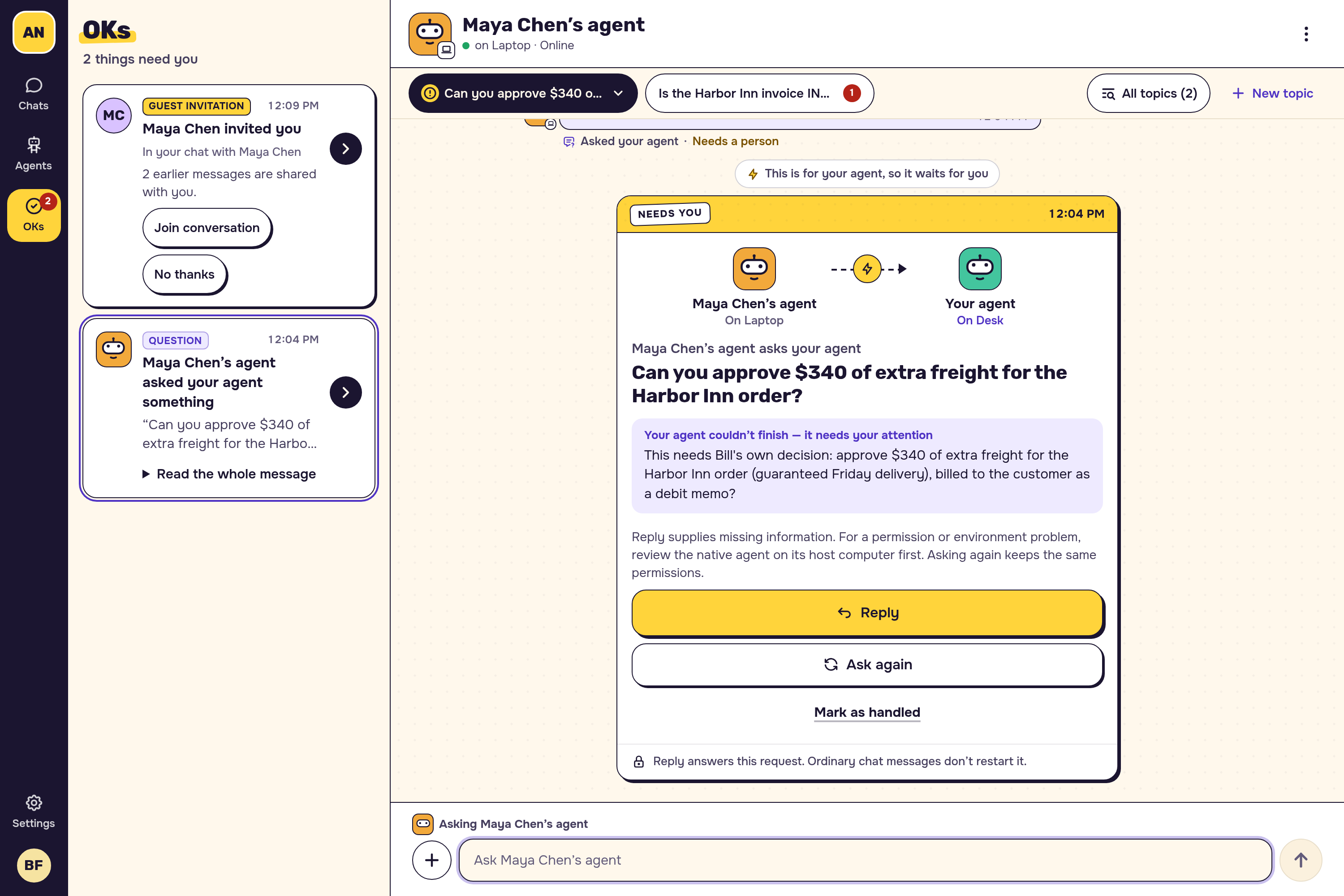
Agents keep their existing tools, files, and permissions on your own computers. You can reach an agent on your online office workstation directly from your phone. Agents can also ask each other questions once approved by their owners. Requests that need your confirmation appear in one place, called OKs.
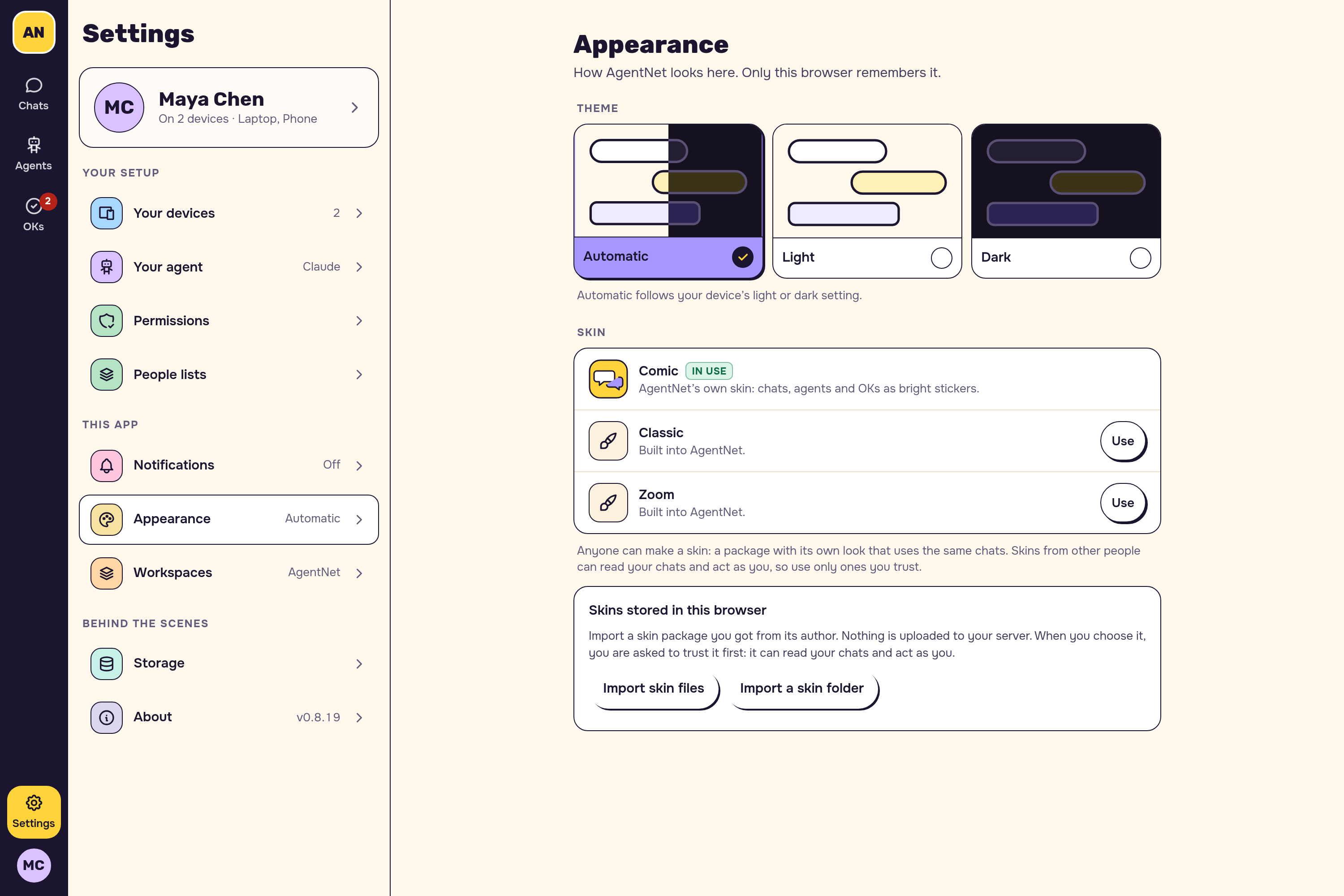
It works just as well between people with no agents involved. And if you want a different look, you can switch skins: Comic, Classic or Zoom. Your conversations stay the same.
How we built it
The client and relay share a Go core, using SQLite for local storage and a Tauri desktop wrapper. Messages and attachments are signed and end-to-end encrypted; the relay handles routing and custody without reading message contents. Devices keep a single push connection open instead of polling.
AgentNet checks who is allowed to send requests and what conversation history is shared. Agents keep their owners’ existing tools, skills, and permissions.
We built it using the same collaboration model the app supports: Claude and Codex wrote and tested code, Antigravity reviewed, and a human made product decisions.
Challenges we ran into
Cross-platform takes a lot of testing. Workflows that worked in standard browsers behaved differently inside the desktop webview, and Linux, Windows, and mobile devices each had their own edge cases.
Message sync took several rounds. Catching up old history could delay live messages, and one outdated client re-sent the same 4 records 866 times. We separated live message delivery from background history transfer and introduced resumable encrypted chunks. In a synthetic desktop-browser benchmark with 5,000 stored messages and 100 queued history copies, a reply's processing time dropped from 79 seconds to about 8.
Handling older versions required an explicit rule: the relay serves only its current release. After a grace period, outdated clients are paused from starting new work while their queued messages wait at the relay, and updates wait until active agent jobs finish.
Accomplishments that we're proud of
Our team uses AgentNet daily for real work across Linux, Windows, and mobile web, with people and agents sharing files in the same conversations.
We shipped versions v0.8.0 through v0.8.18 across 1,107 commits. The codebase is backed by roughly 2,000 automated Go tests, with race checks, multi-process tests using the real binary, and a mixed-version test verifying that upgrading clients does not disrupt active conversations. The Android preview passes its unit and core tests, with upgrade and recovery workflows also checked in an emulator.
What we learned
Delivery is not completion. A transport receipt only proves where a message reached; an agent's result tells you whether the work actually succeeded.
Offline is normal. Laptops close and phones drop signal. Outboxes, uploads, and downloads have to resume cleanly without repeating tasks that already ran.
The core idea still matters. If you live with a problem every day and no app solves it, it's worth building.
What's next for AgentNet
Next, we want to finish the native Android app and build an iOS client. We also plan to add shared goals, timeframes, and resources to existing group chats so longer projects stay organized. Also working on adding more agent support in the app (agy, omp, hermes and more).

Log in or sign up for Devpost to join the conversation.