-
-
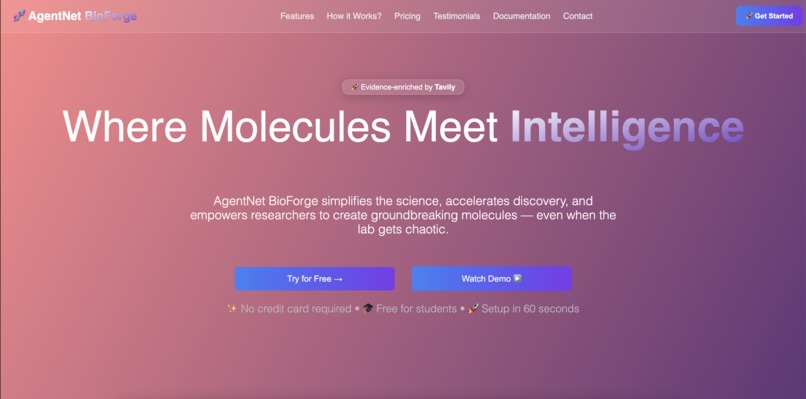
Landing Page
-
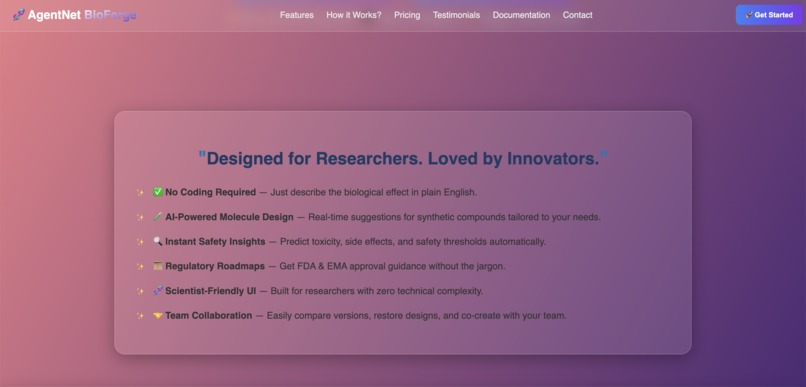
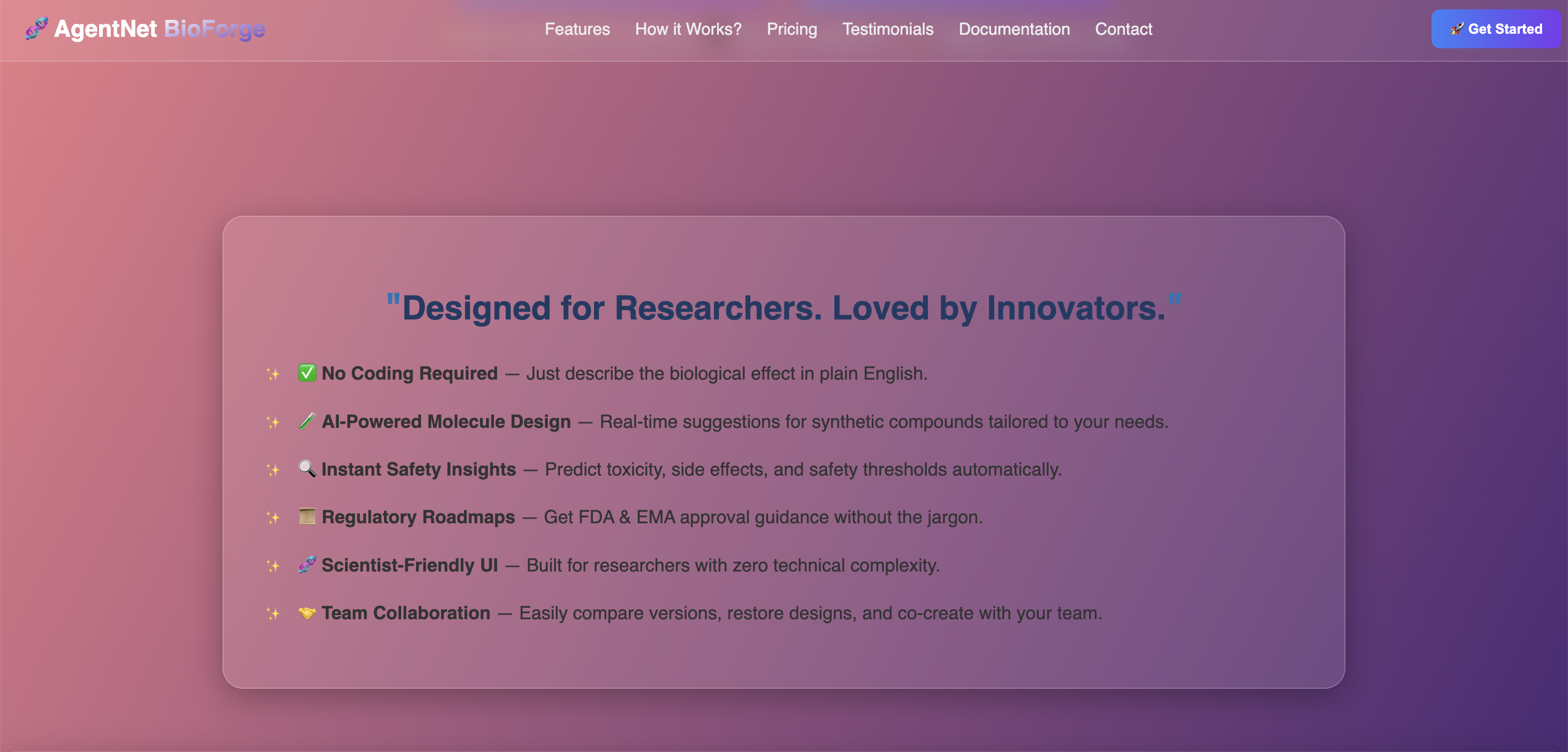
Features
-
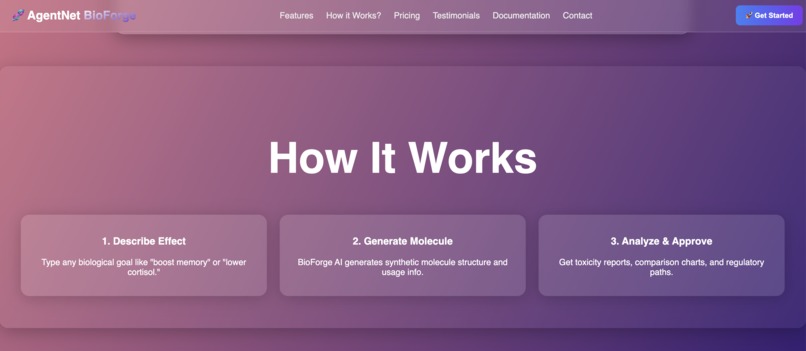
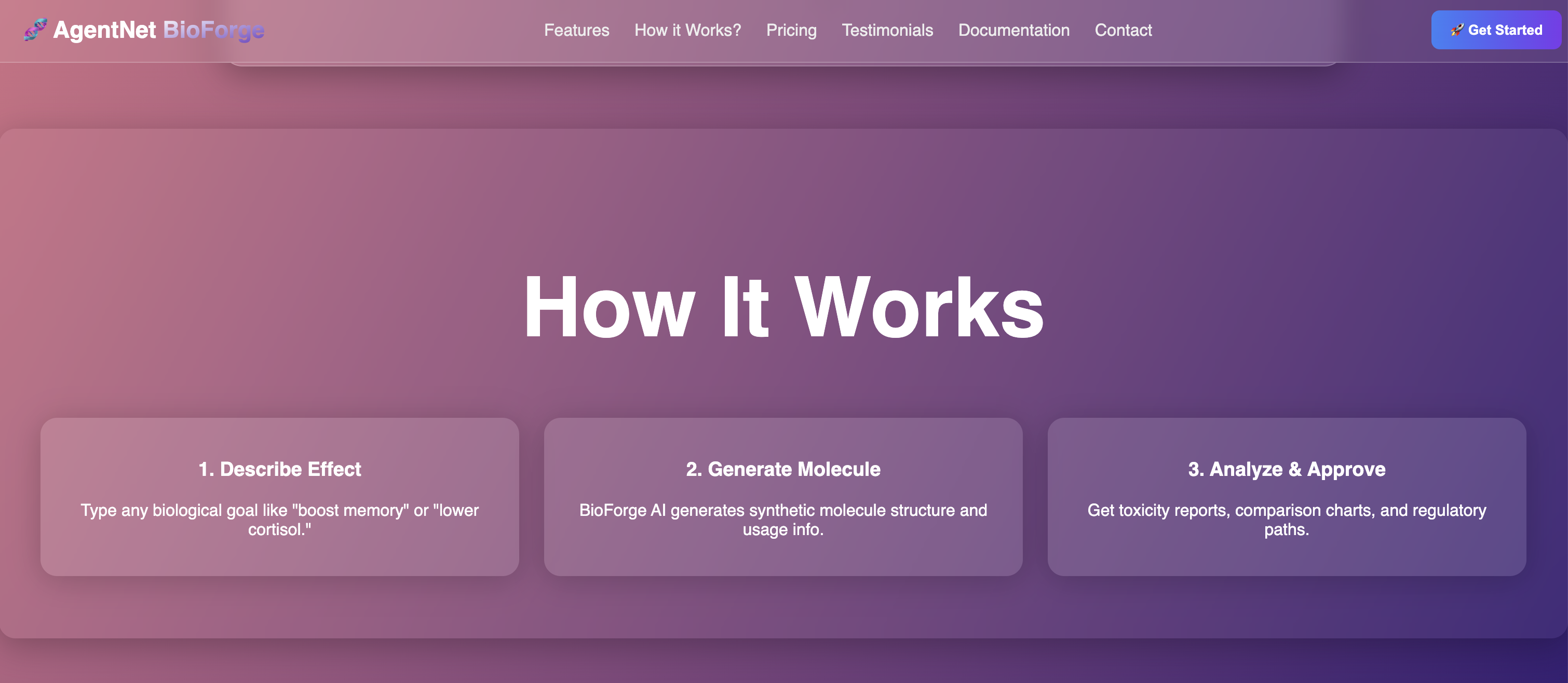
How it works
-
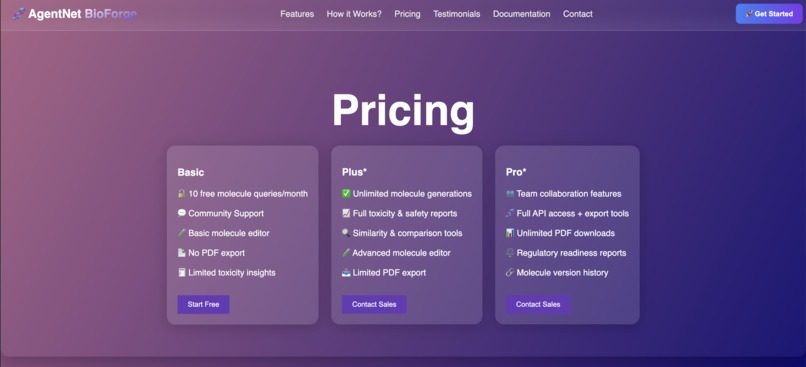
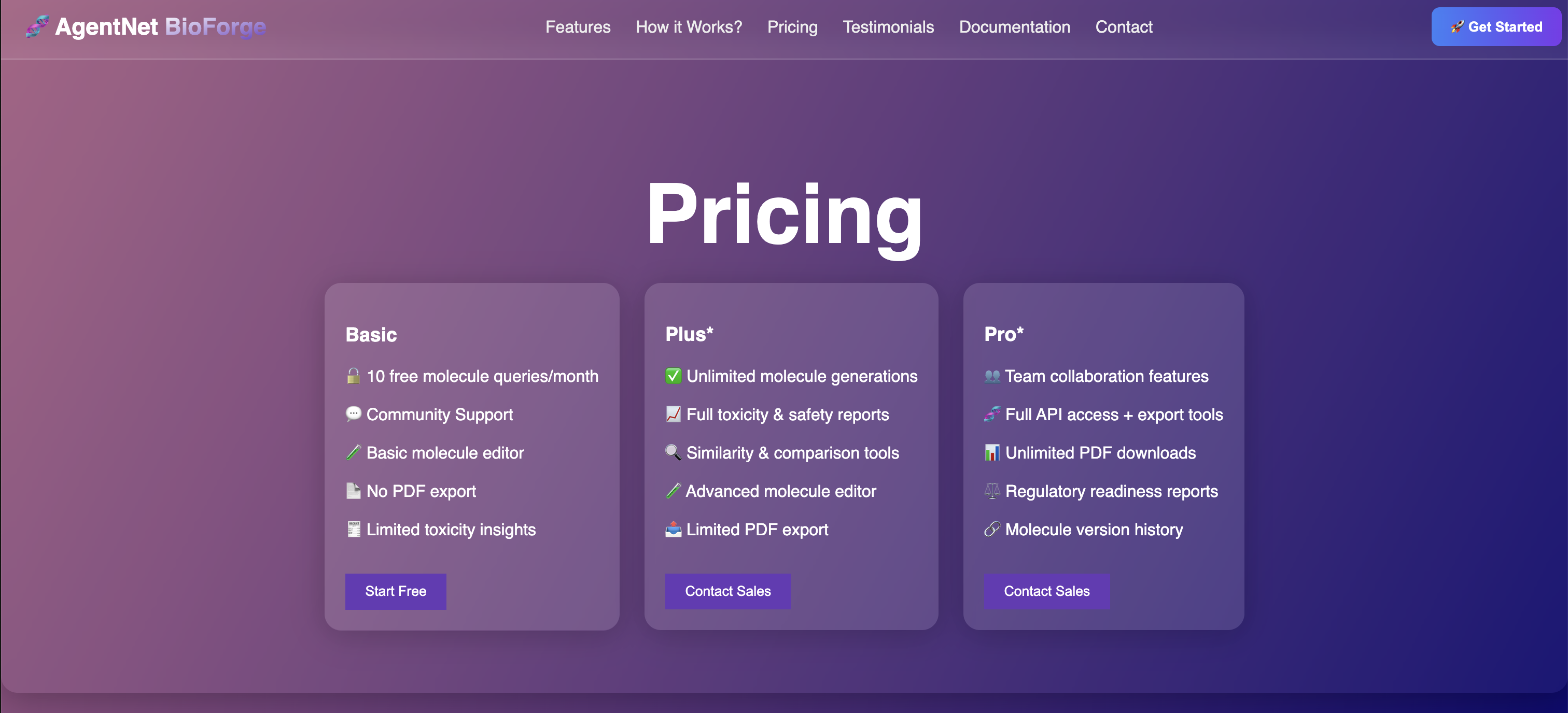
Pricing
-
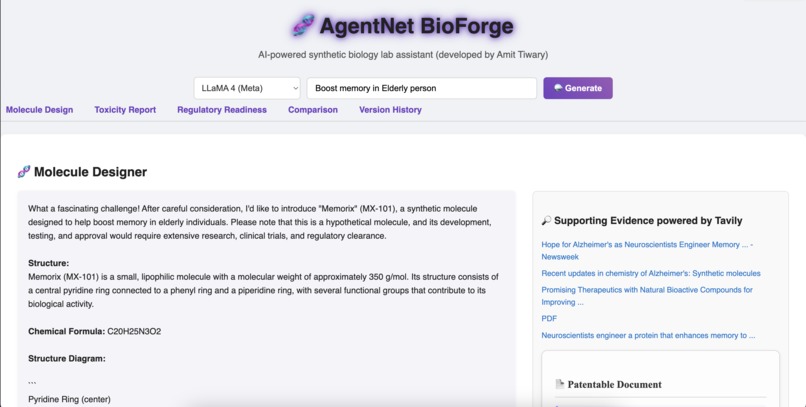
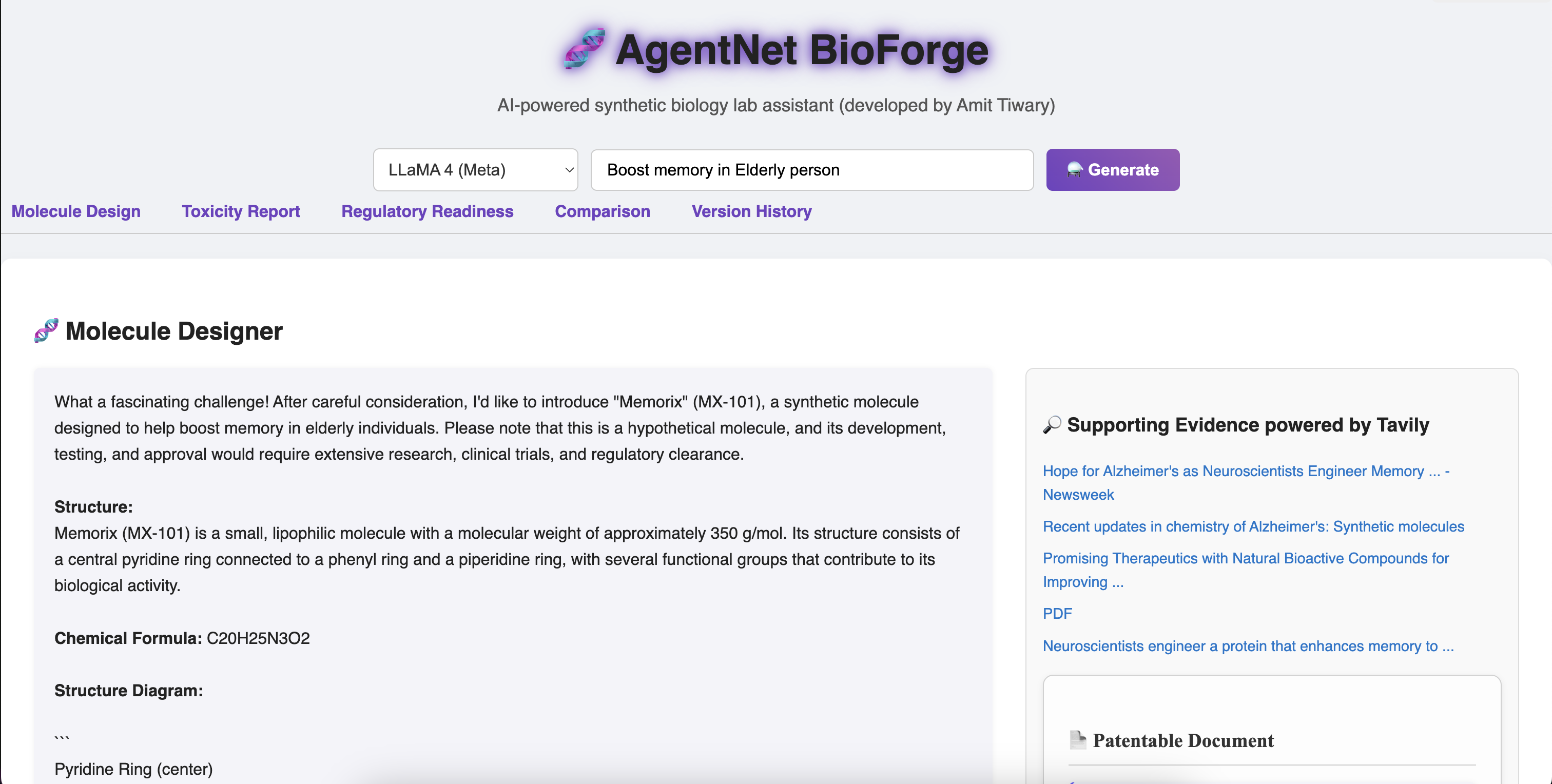
Molecule Designer Tab
-
-
-
-
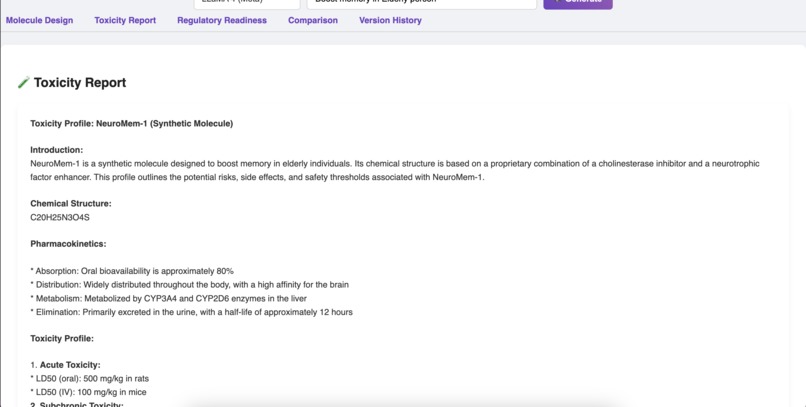
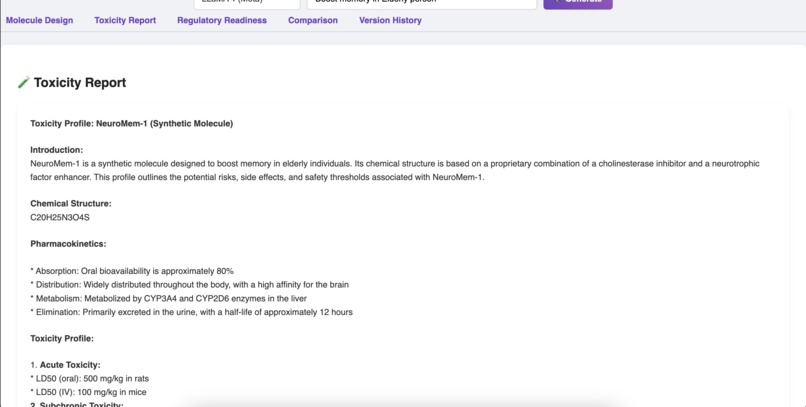
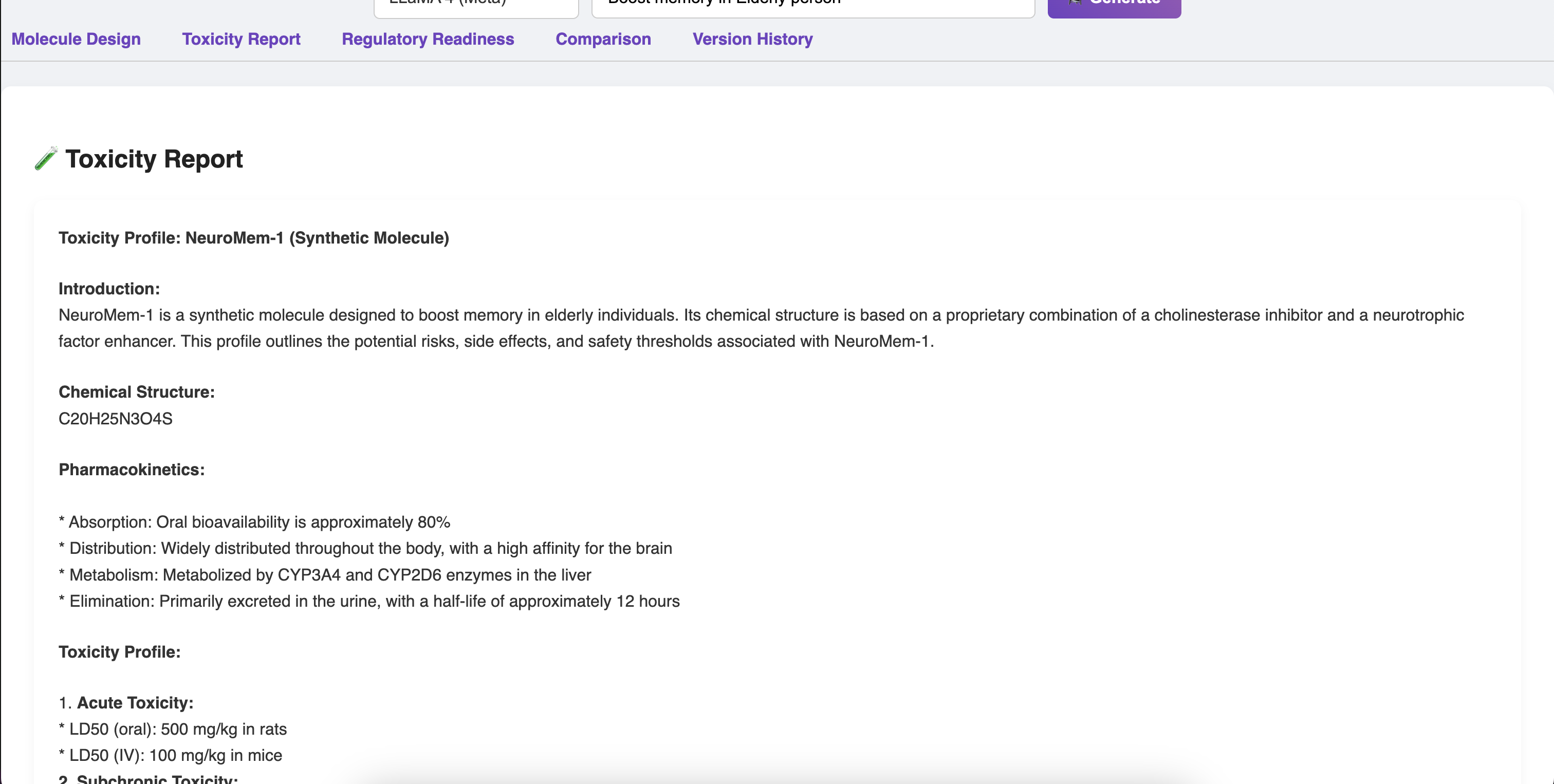
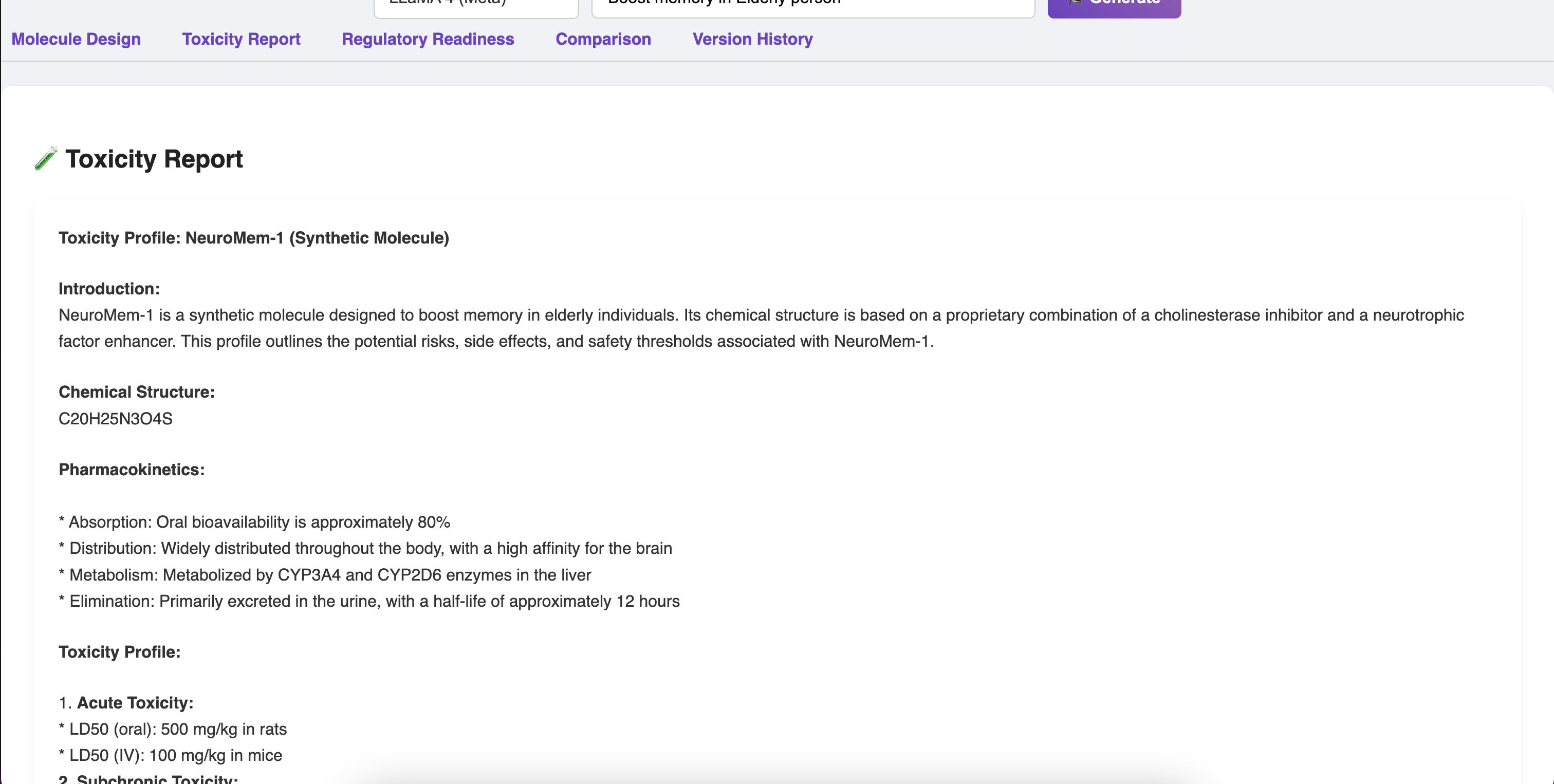
Toxicity Report Tab
-
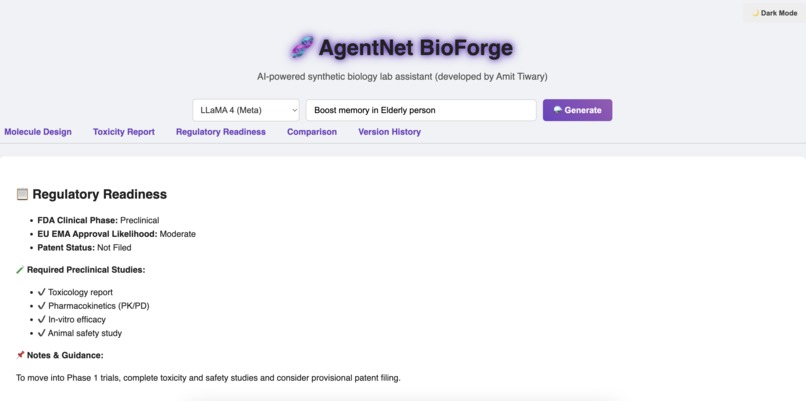
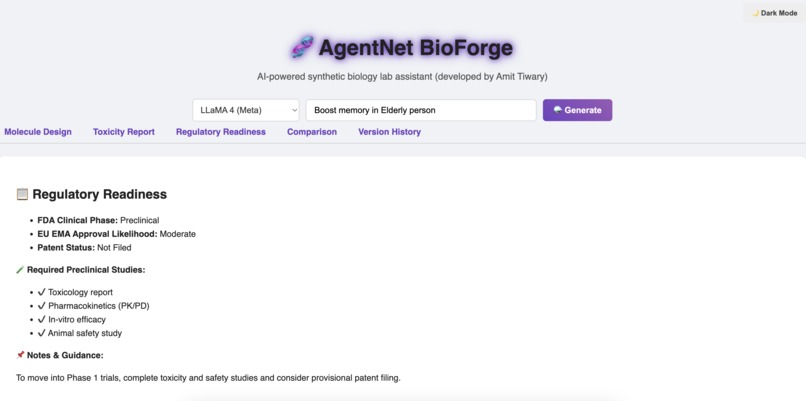
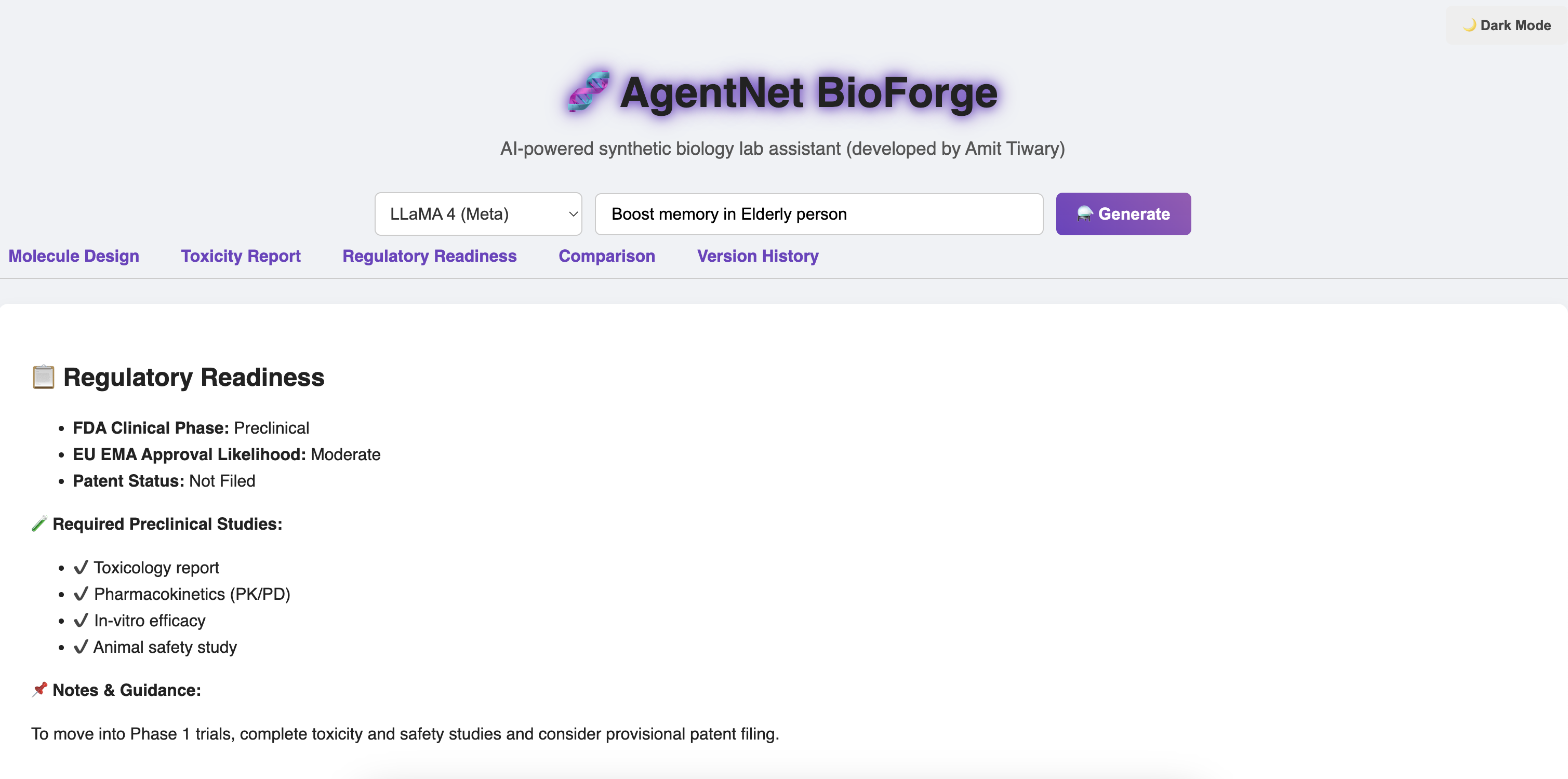
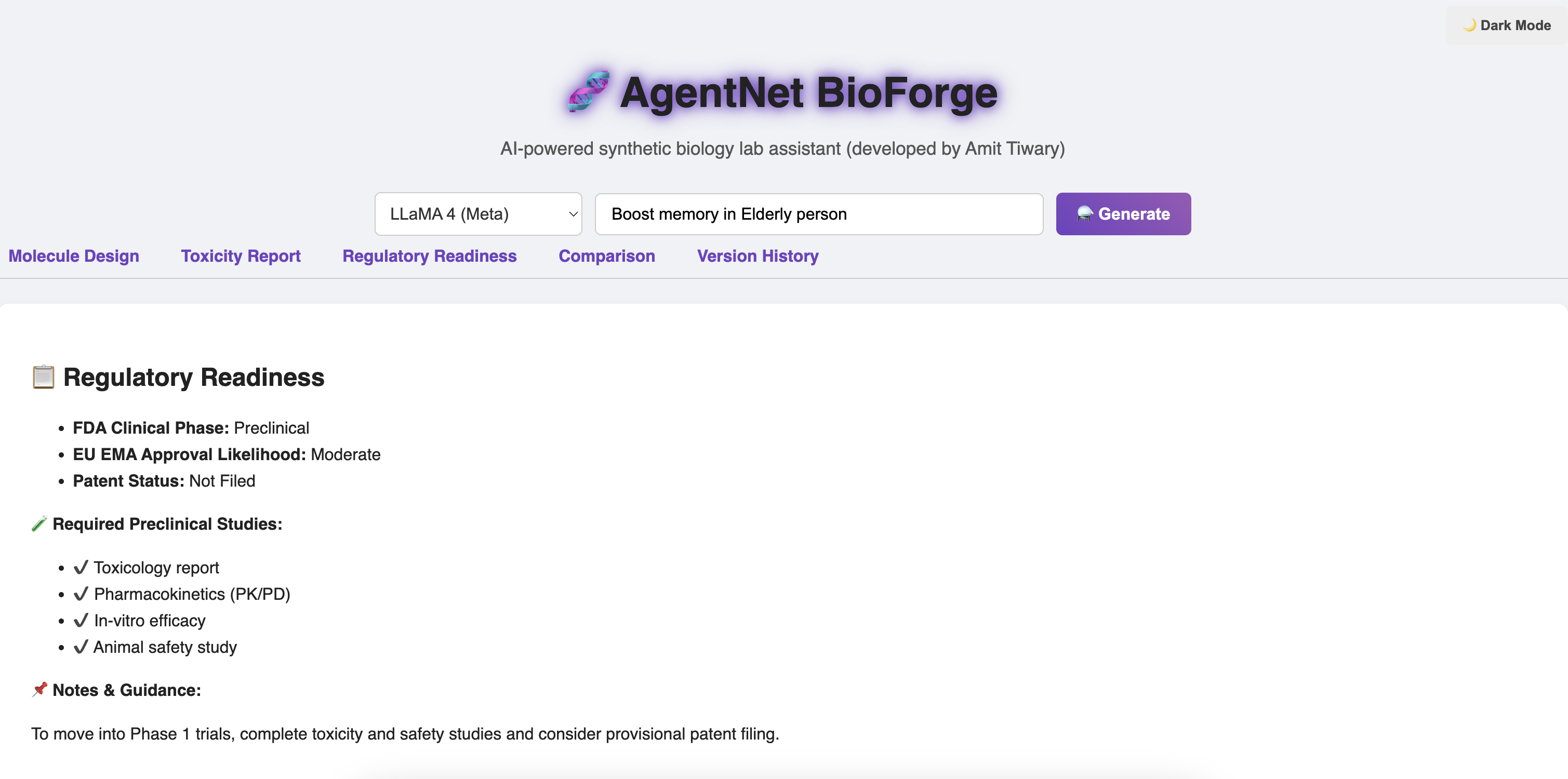
Regulatory Readiness Tab
-
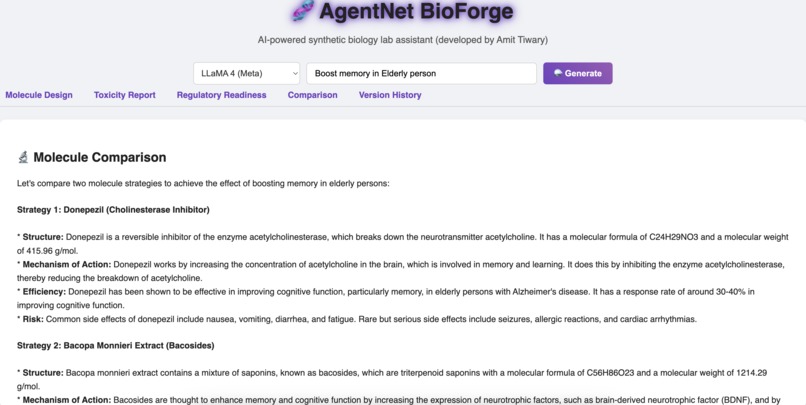
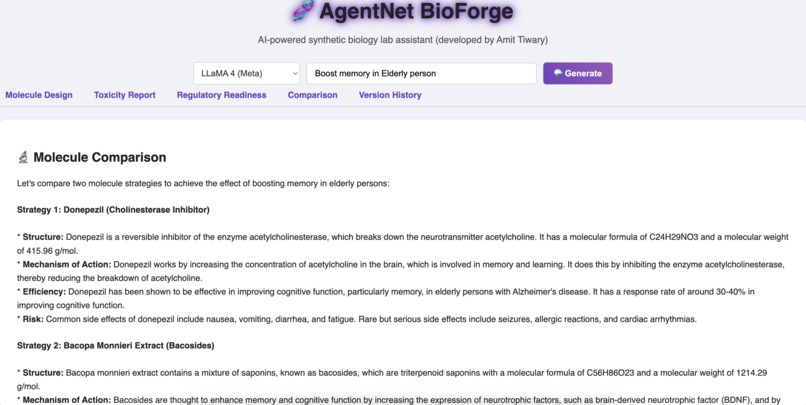
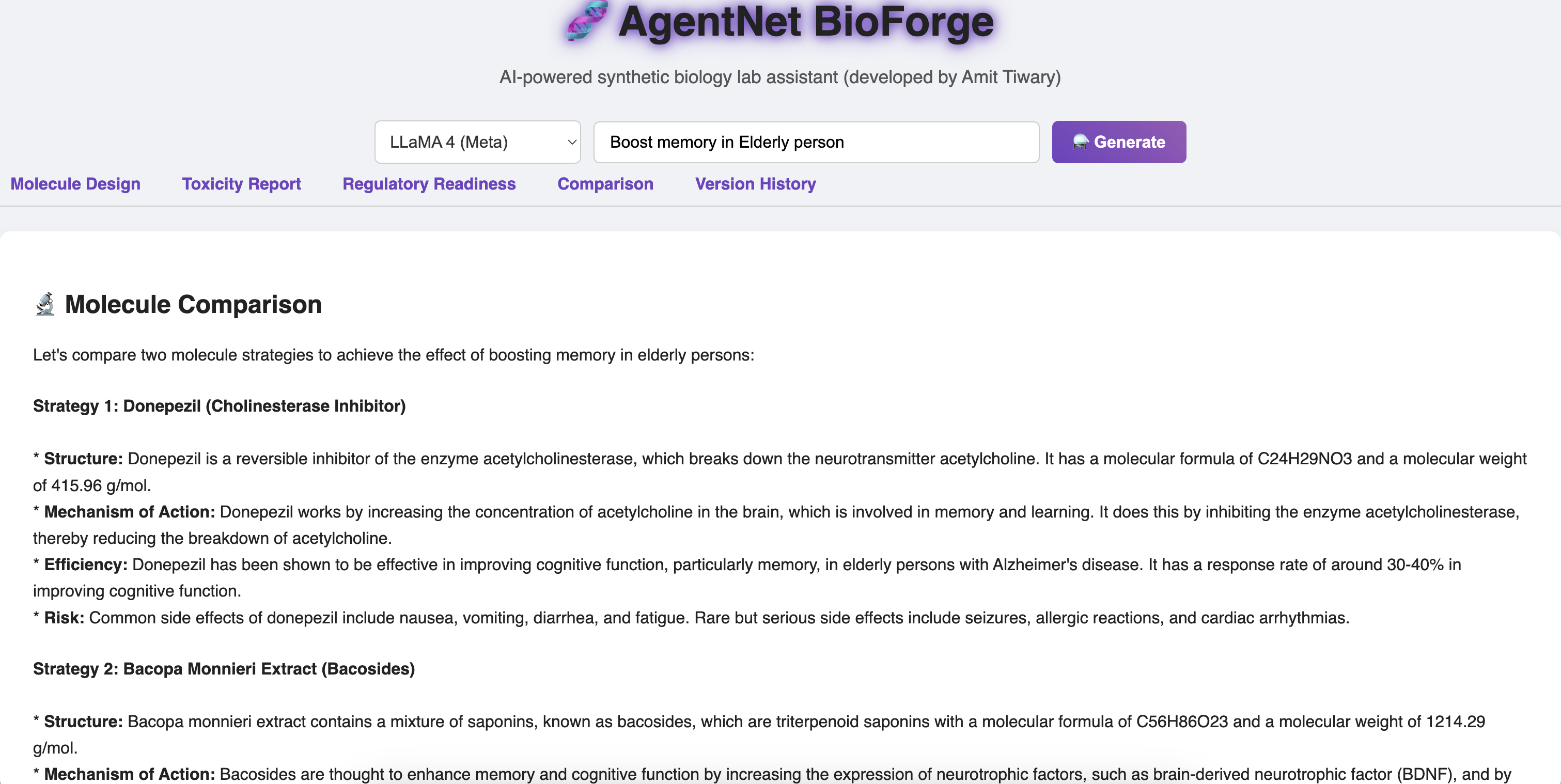
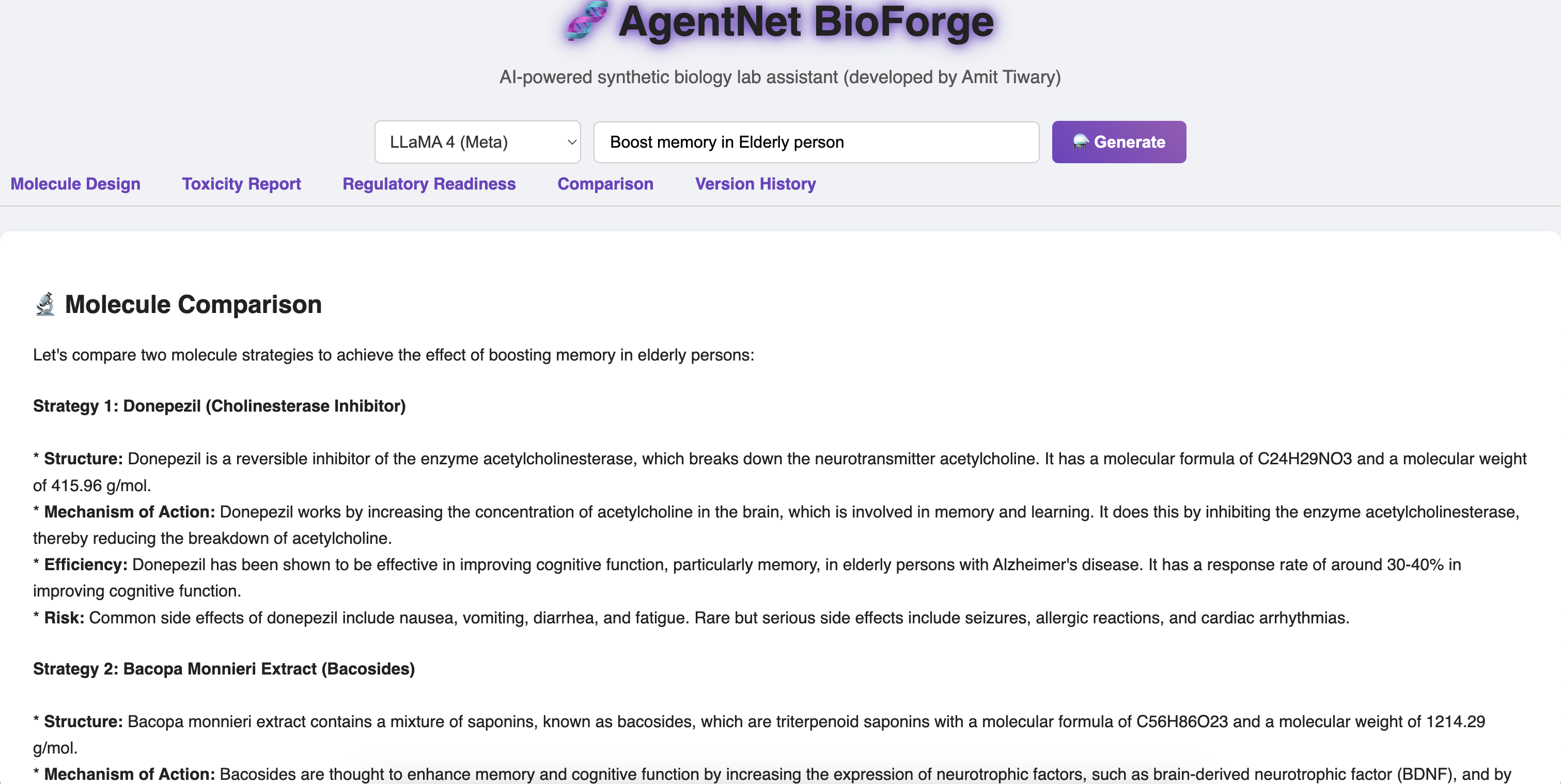
Molecule Comparison Tab
Inspiration
We envisioned a future where synthetic biology is no longer confined to well-funded labs and PhDs, but accessible to anyone with an idea. Inspired by the power of generative AI, we set out to build a platform that transforms a simple biological goal—like “boost memory” or “reduce anxiety”—into a molecule blueprint, complete with scientific rationale, research evidence, and even a patent-ready draft. AgentNet BioForge is our step toward democratizing molecular innovation.
What it does
AgentNet BioForge is an AI-powered platform that enables users to design synthetic molecules by simply entering a biological effect. It:
- Generates structured molecule descriptions using LLMs
- Retrieves real biomedical research papers supporting the design
- Outputs formal, patent-style documentation ready for submission
- Offers modules for toxicity profiling, regulatory roadmap, version history, and molecule comparison
The platform bridges AI, biomedical science, and intellectual property—all through a clean, intuitive interface.
How we built it
Open Source Frontend: React + CSS with multi-tab navigation, markdown rendering, and local history caching Open Source Backend: Flask APIs deployed on Vercel’s serverless environment LLM Integration: Together.ai with multiple LLM for molecule generation, patenting, toxicity, and regulatory logic Evidence Search: Tavily API to pull supporting biomedical references Version Control: LocalStorage for snapshotting molecule iterations Prompt Engineering: Custom templates to simulate expert chemists, patent lawyers, and clinical reviewers
Challenges we ran into
Structured Output: Getting LLMs to consistently return scientific data in a readable, structured format CORS & Deployment: Navigating CORS policies with third-party APIs on a serverless backend Prompt Tuning: Iteratively refining prompts to produce usable, reproducible molecule designs Search Depth: Ensuring Tavily queries returned truly relevant biomedical evidence UI Balance: Designing for both technical researchers and curious first-time users
Accomplishments that we're proud of
Successfully built a fully working AI toolchain from prompt to patent Generated accurate, structured molecule descriptions that mimic expert output Integrated biomedical search for real-time research validation Delivered a clean, intuitive UI that simplifies complex biotech workflows Created a scalable architecture that can be extended to future modules like molecule drawing and forecasting
What we learned
Prompt engineering is as critical as model selection when working with LLMs Simplifying user experience for scientific tools requires balancing depth and clarity Open APIs like Tavily can drastically improve the reliability and credibility of generative outputs Serverless backends work well for modular, rapid-prototype architectures—but require careful CORS planning
What's next for AgentNet BioForge
User Accounts & Cloud Memory: Sync molecule designs across devices with persistent histories Molecule Drawing Tool: Let users visually design and edit molecular structures via SVG Impact Forecasting: Predict molecule performance over time with charts and simulations AI Personas: Allow users to generate insights through domain-specific agents (e.g., Chemist, Lawyer) Collaborative Tools: Team feedback, comments, and PDF sharing for research groups PubMed Integration: Expand evidence mining beyond generic search to domain-specific biomedical data Multi-language Support: Make BioForge accessible to a global audience
Built With
- css
- flask-(python)
- framer
- github
- javascript
- llma
- localstorage
- markdown
- mistral)
- opensource
- python
- react.js
- tailwind-css
- tavily
- tavily-search-api
- together.ai
- together.ai-(llama
- vercel-(frontend-&-serverless-backend)


Log in or sign up for Devpost to join the conversation.