-
-
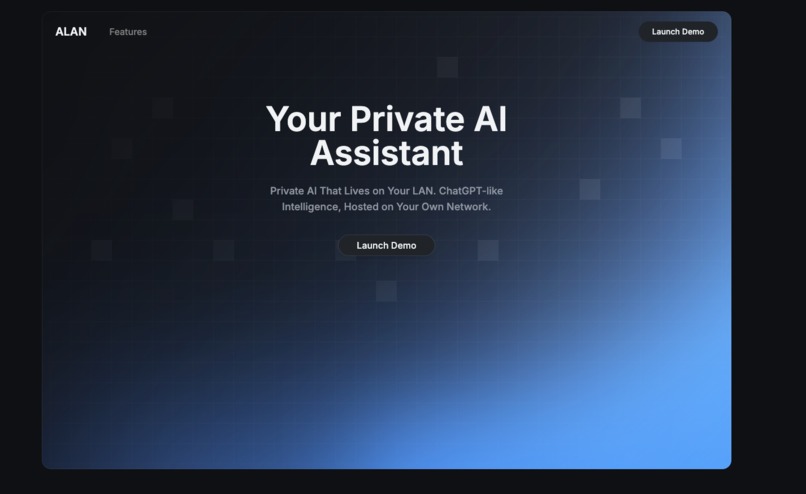
Our idea page
-
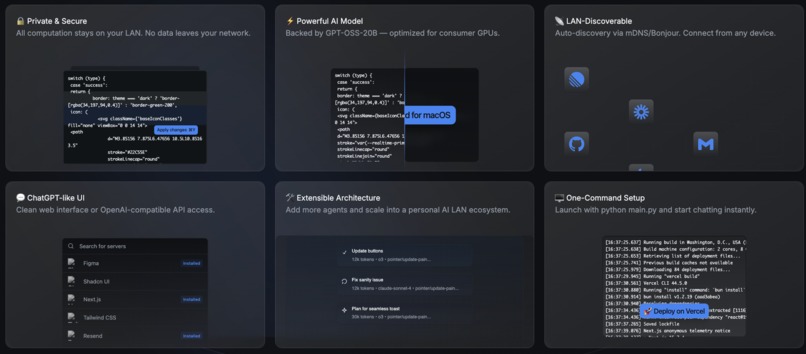
Features
-
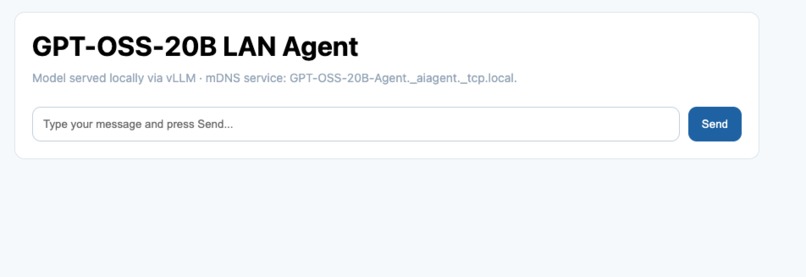
Model access

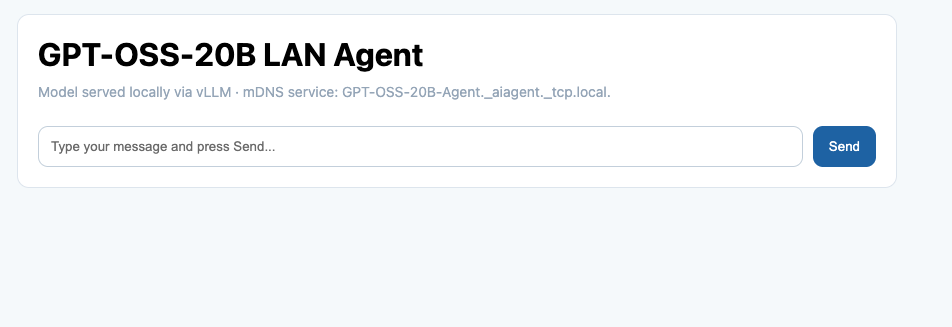
TL;DR Our goal: make AI and its agents instantly accessible to anyone on a network — no installation, no setup hassle, fully private and local-first.
Inspiration
AI is powerful but often locked behind cloud services or expensive setups. We asked: what if anyone on a network — home, office, or lab — could access a full AI assistant safely and privately? That’s why we built ALAN — AI and agents accessible to everyone on the same LAN.
What it does
ALAN is a local AI assistant that runs entirely on your LAN.
- Works like ChatGPT but offline, running on LAN
- Answers questions, analyzes data, and executes tasks.
- Accessible from any device on the network — laptop, tablet, or Raspberry Pi.
- Guarantees speed, privacy, and full control without relying on the cloud.
How we built it
- Used open-source models like GPT-OSS 20B and optimized them for local deployment.
- Containerized with Docker for plug-and-play setup.
- Built a web-based chat interface with API endpoints for integrations.
Challenges we ran into
- Running a 20B parameter model locally without crashing servers.
- Making ALAN network-friendly so any device on the LAN could connect.
- Designing a smooth chat UI while keeping everything offline.
Accomplishments that we're proud of
- AI working fully offline and accessible over the network.
- Deployment simplified to one command.
- Proved private, secure AI can be multi-user and user-friendly.
What we learned
- Local-first AI is viable, scalable, and fast.
- Accessibility matters — AI should not be cloud-locked.
- Privacy-first, network-accessible AI resonates with teams, homes, and labs.
What's next for ALAN
- Support larger models (up to 120B).
- Explore edge deployments for portable, multi-user ALAN nodes.
- Add connectors for IoT, databases, and enterprise tools.
- Enable team features: shared workspaces, role-based access.
- Explore adding AI agents to make them accessible across networks

Log in or sign up for Devpost to join the conversation.