-
-
problem understanding
-
solution representation
-
architecture
-
impact
-
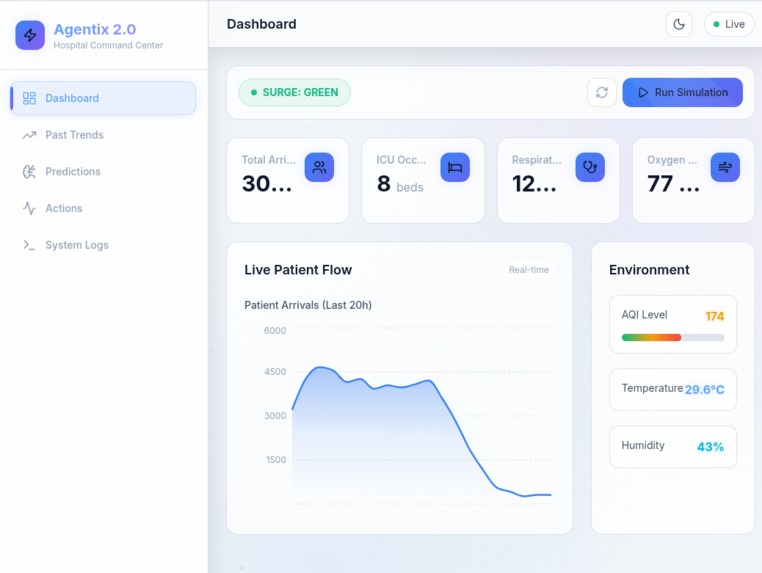
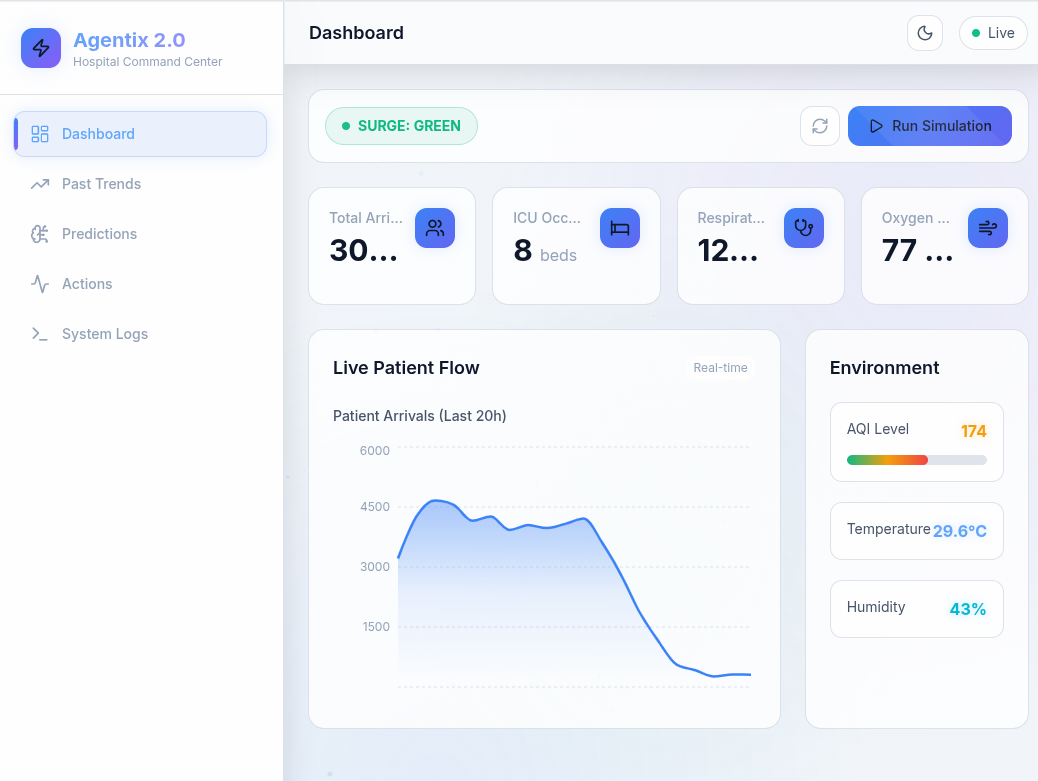
real time dashboard
-
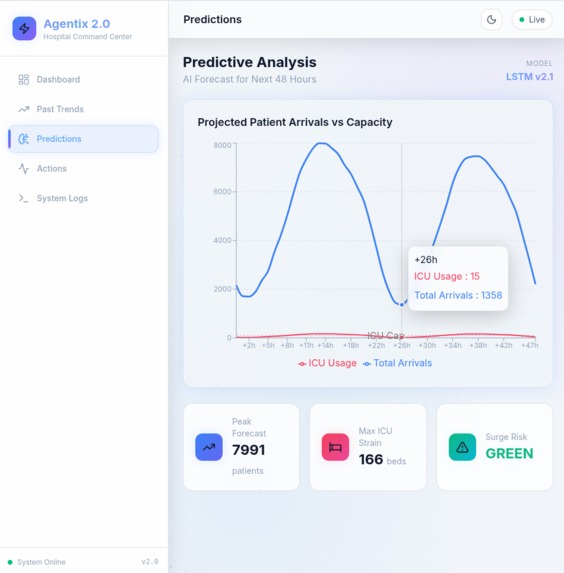
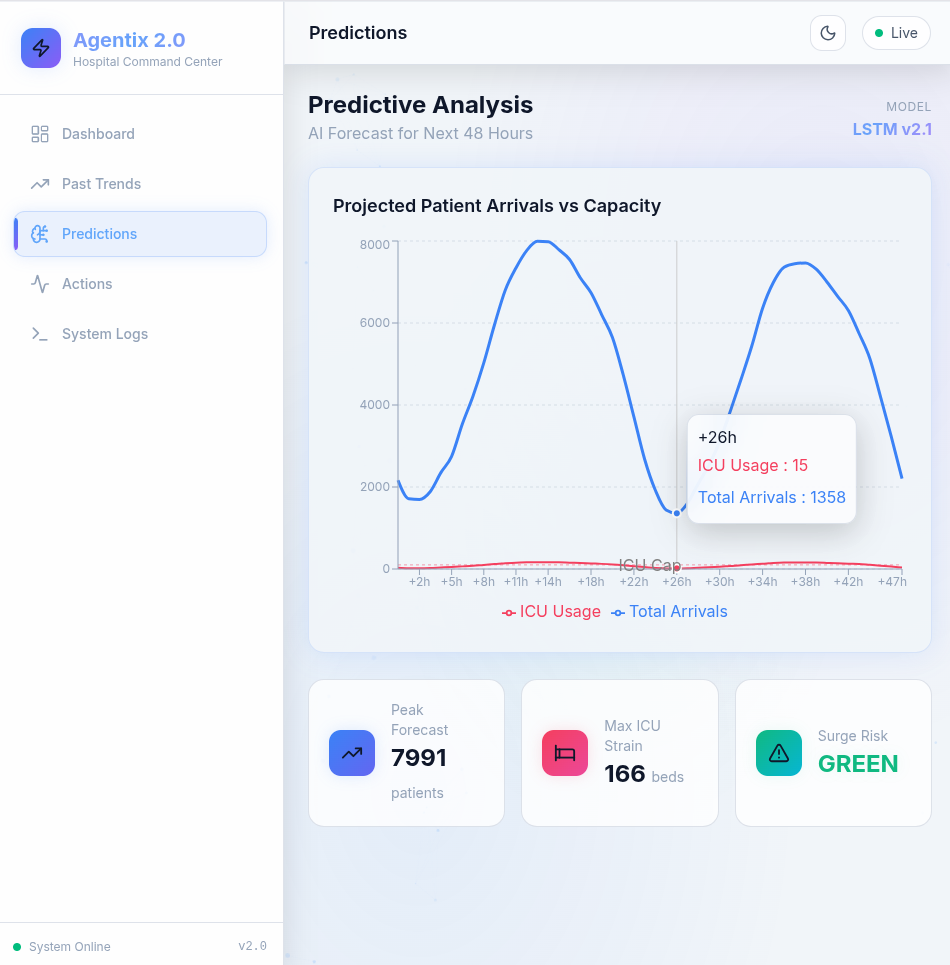
future trend prediction in hourly partents
-
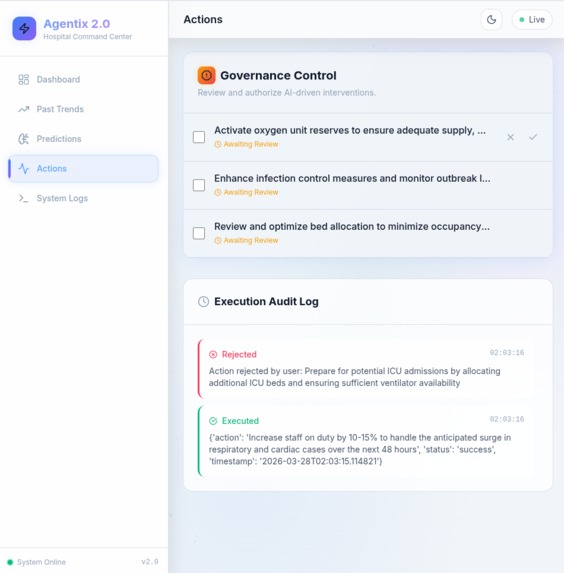
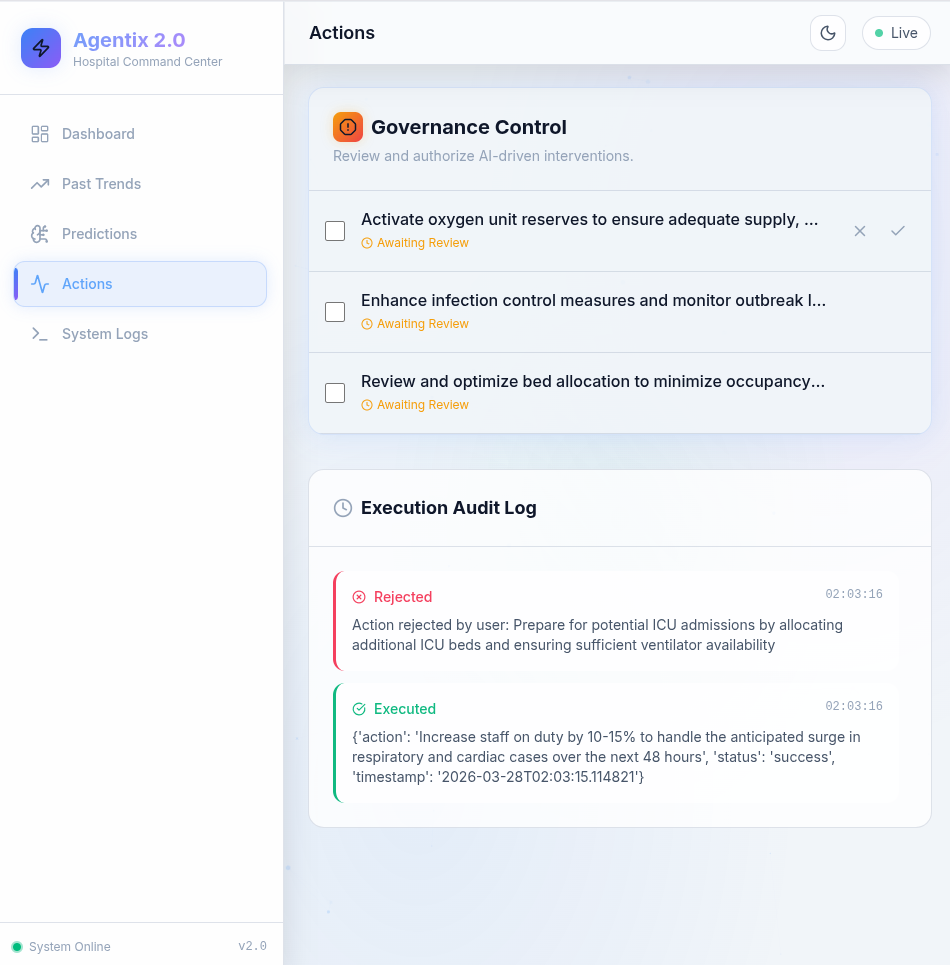
action governance using human in the loop for critical decision to automate
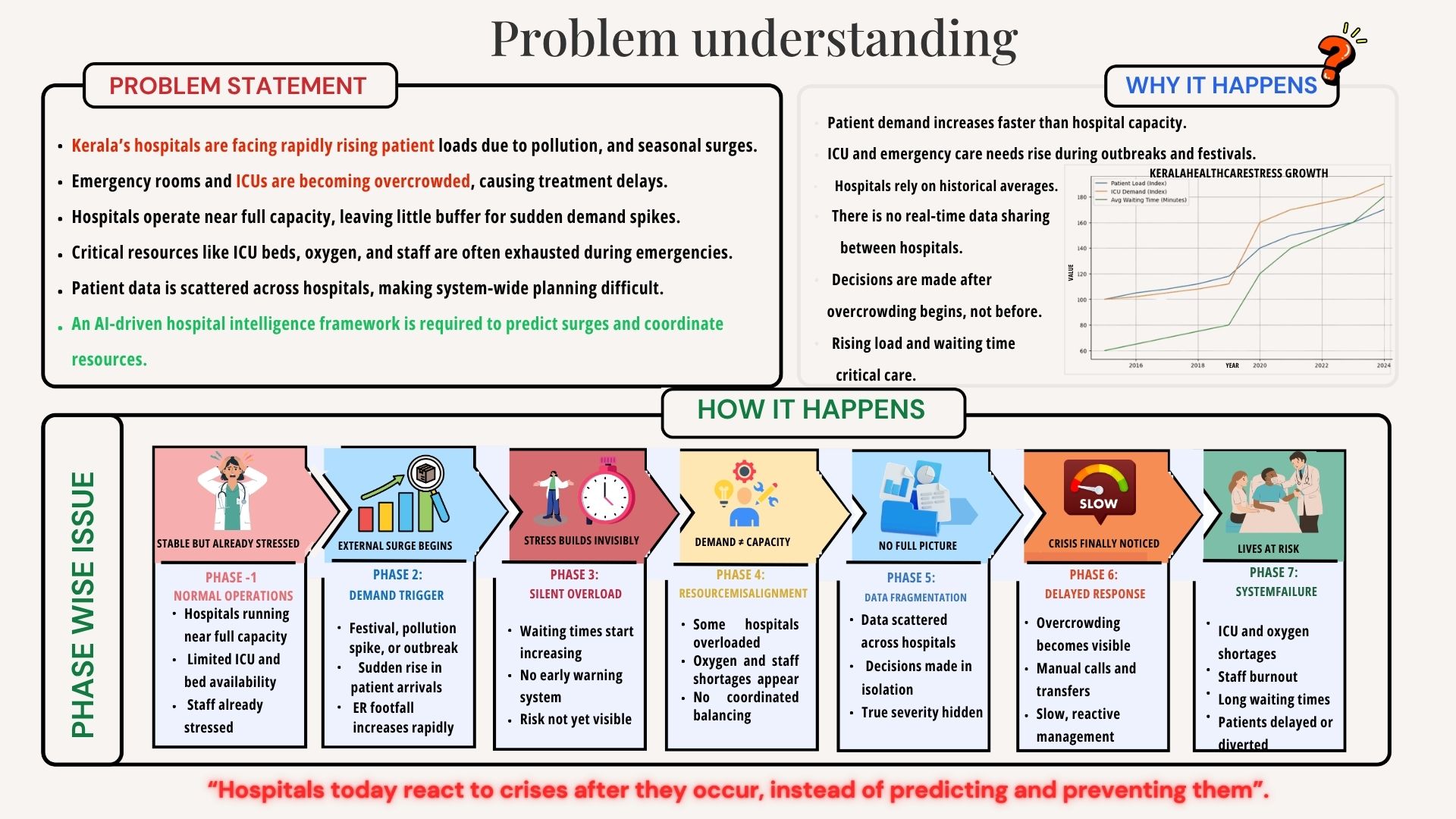
Inspiration
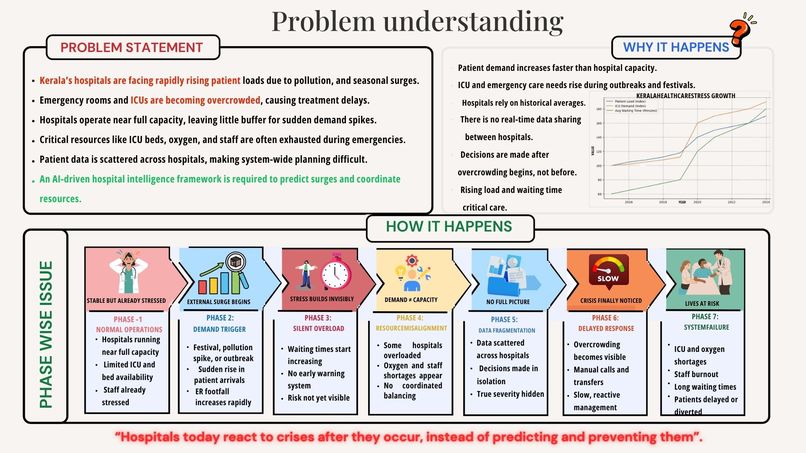
Hospitals today operate under constant pressure, especially in urban regions where patient demand is rapidly increasing due to pollution, seasonal surges, and outbreaks.
As highlighted in our analysis, hospitals often run near full capacity, with ICU beds, oxygen, and staff already stretched. The major issue is that decisions are reactive instead of predictive — systems respond only after overcrowding becomes visible.
This inspired us to build Agentix, a system that shifts healthcare from reactive crisis management → proactive intelligent coordination.
What it does
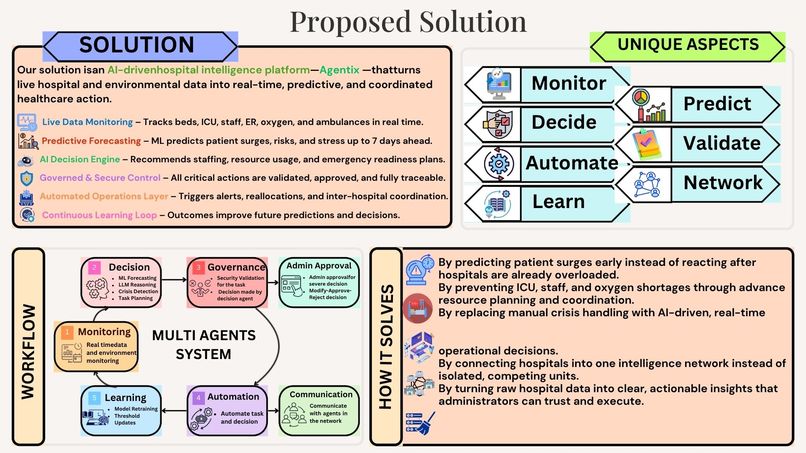
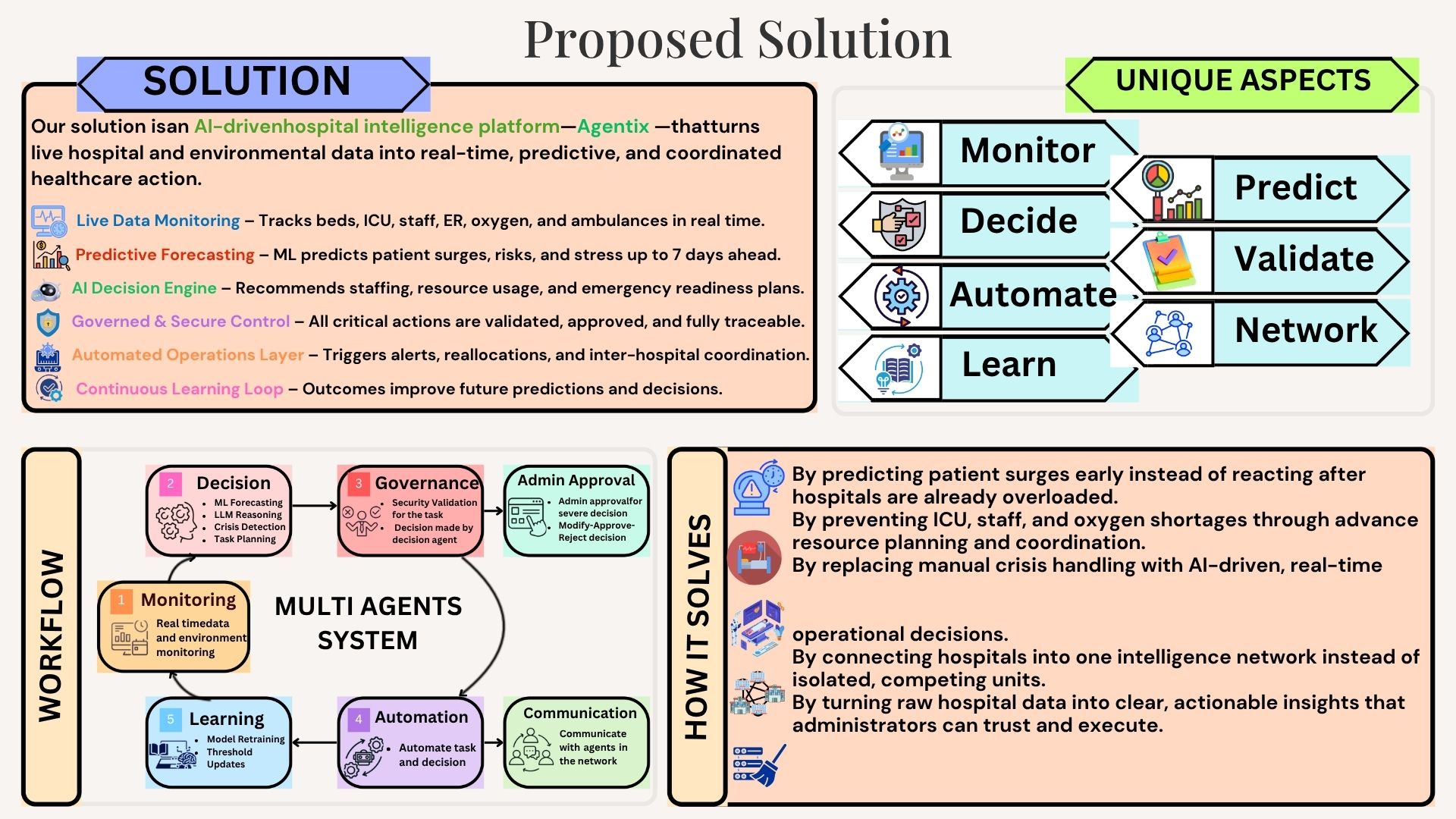
Agentix is an AI-driven hospital intelligence platform that transforms real-time hospital and environmental data into predictive, automated, and coordinated healthcare actions.
It:
📡 Monitors ICU beds, staff, ER load, oxygen, and ambulances in real time
📈 Predicts patient surges up to 7 days in advance
🧠 Uses AI agents for decision-making and planning
🔔 Automates alerts, resource allocation, and hospital coordination
🌐 Connects hospitals into a unified intelligence network instead of isolated systems
How we built it
We designed Agentix as a multi-agent AI system with a continuous intelligence loop:
Workflow (from page 2 diagram):
Monitor → Real-time hospital & environmental data
Predict → ML models forecast demand surges
Decide → AI agents generate actionable decisions
Validate → Governance layer ensures safety & approval
Automate → Executes alerts, reallocations, coordination
Learn → System improves using feedback loops
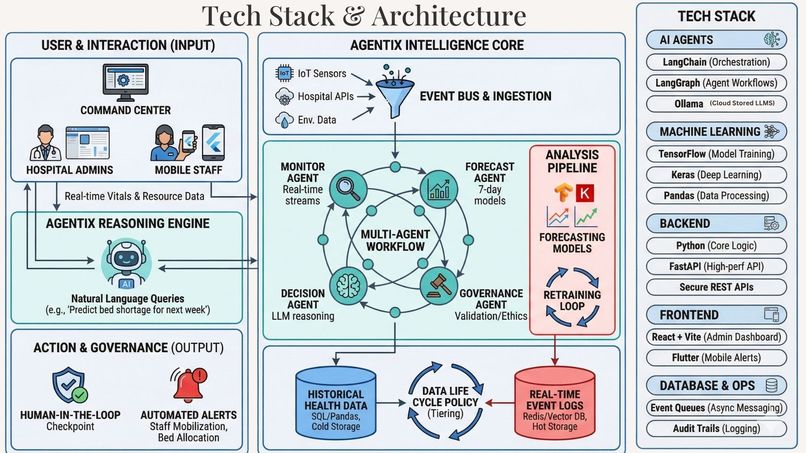
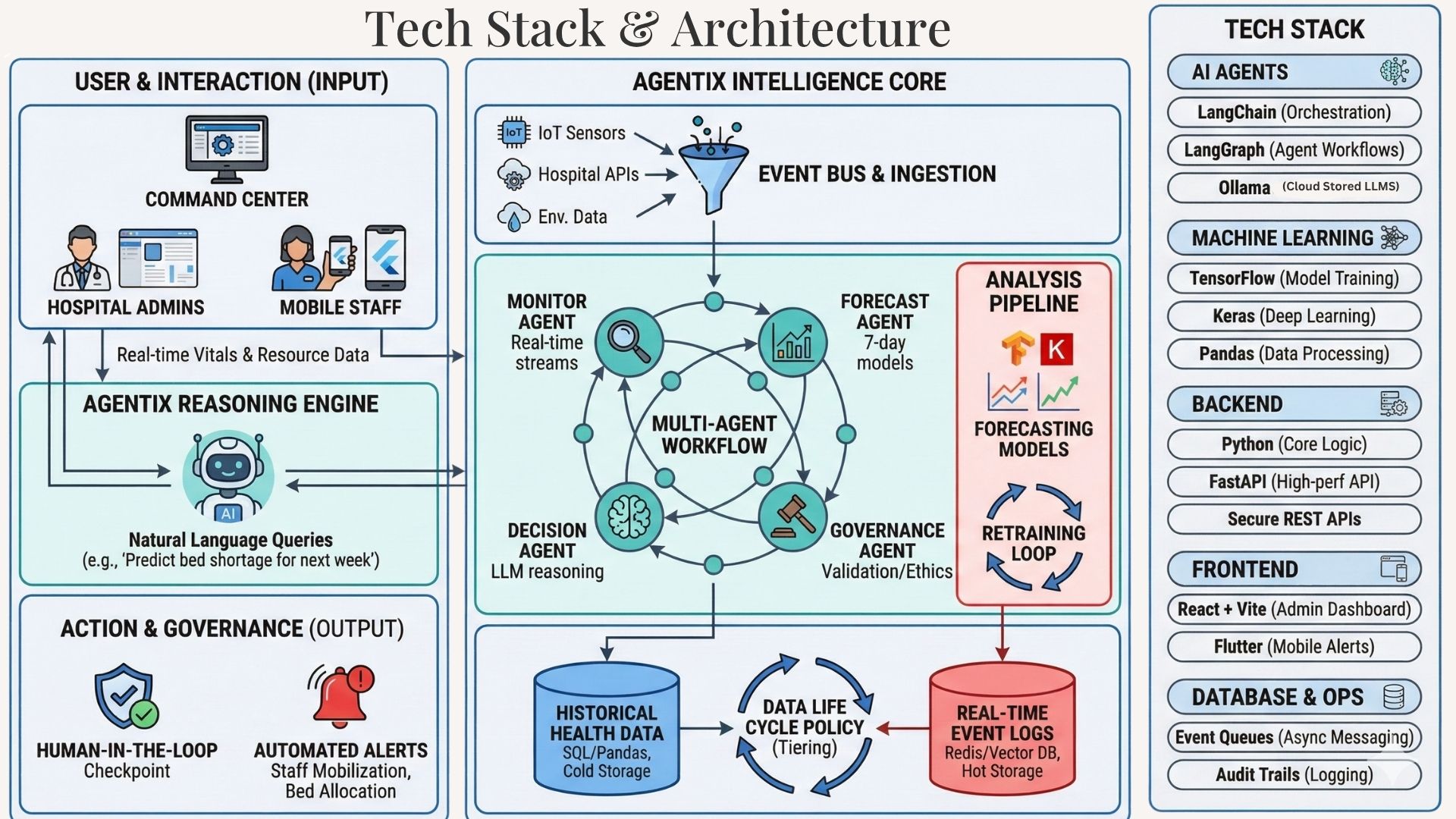
Core Architecture (page 4):
Event Bus for real-time data ingestion (IoT + APIs) Multi-agent system (Monitor, Forecast, Decision, Governance agents) LLM reasoning engine for intelligent queries Analysis pipeline with forecasting & retraining loop Real-time logs + historical data storage
Challenges we ran into
⚡ Handling real-time distributed hospital data across multiple systems
🔄 Designing coordination between multiple AI agents
📊 Predicting unpredictable surges (festivals, outbreaks, pollution spikes)
🔐 Ensuring secure and governed decision-making
🌐 Building a system that works for both small clinics and large networks
What we learned
Real-world healthcare problems are system design problems, not just ML problems
Importance of data integration across institutions
How to design multi-agent AI workflows with governance
Balancing automation with human-in-the-loop control
How it solves the problem
Unlike existing systems:
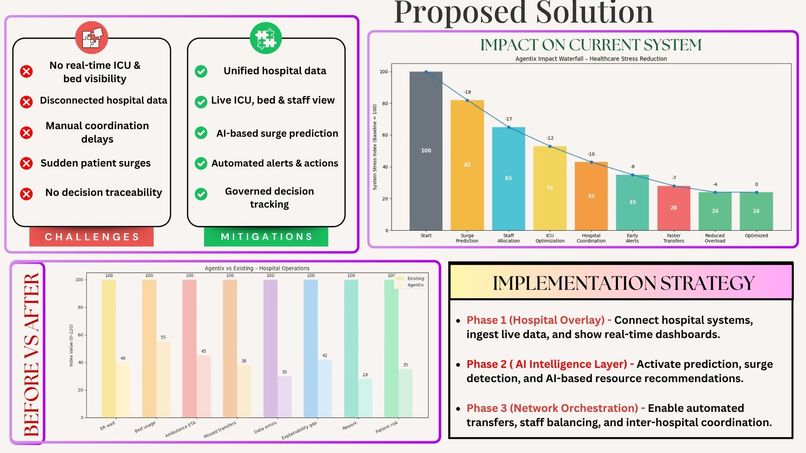
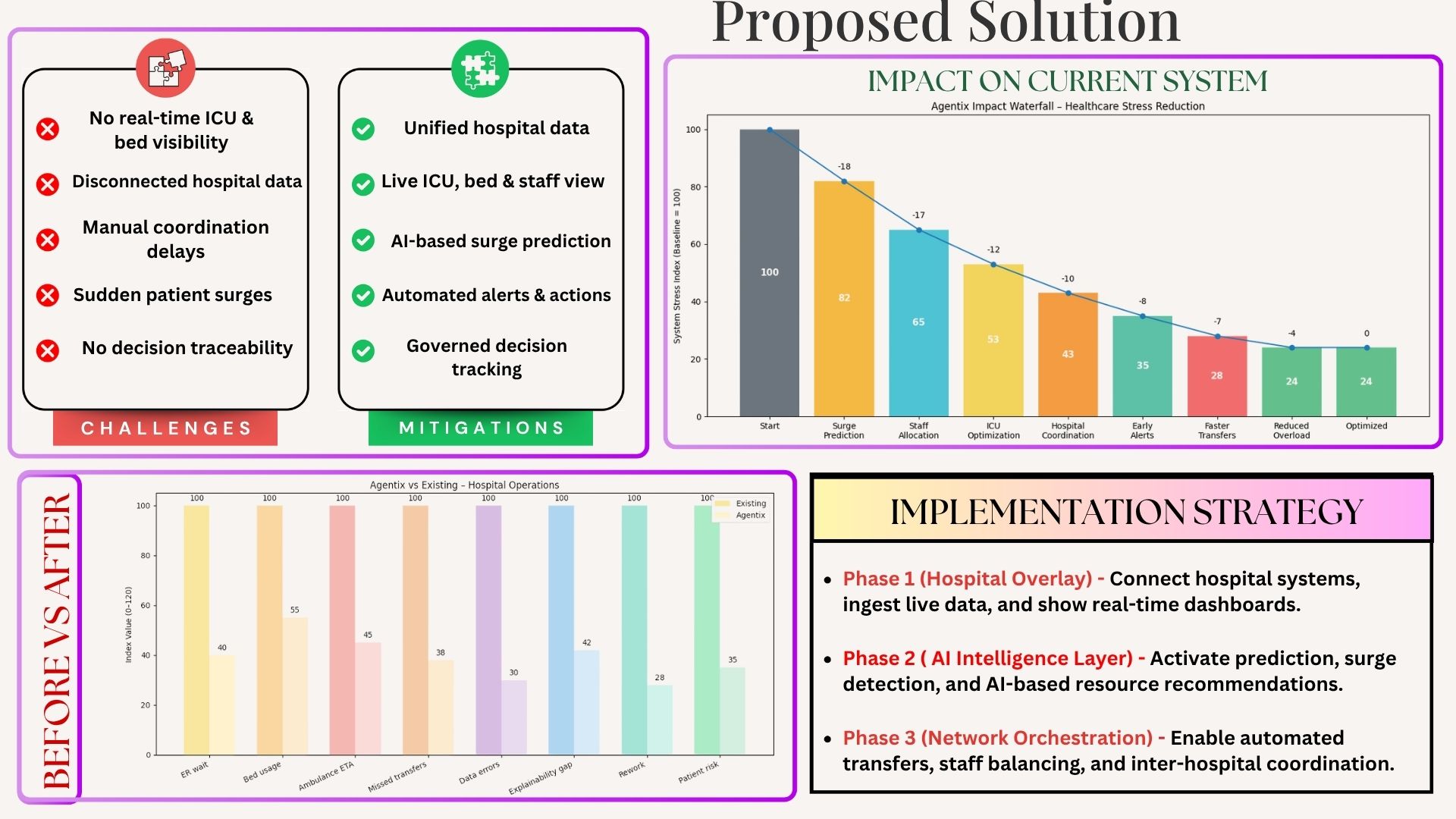
❌ No real-time visibility → ✅ Live ICU, bed & staff tracking
❌ Reactive response → ✅ AI-based surge prediction
❌ Manual coordination → ✅ Automated alerts & actions
❌ Isolated hospitals → ✅ Unified network-level intelligence
❌ No traceability → ✅ Governed and monitored decisions
Agentix ensures:
Early detection of overload before crisis . Prevention of ICU and resource shortages . Faster response times (minutes instead of hours/days) . Better coordination across hospitals.
Impact
From the before vs after system (page 5):
⏱️ Response time → Reduced from hours/days → minutes
📊 System awareness → From isolated dashboards → unified city-level view
🤖 Coordination → From manual calls → AI automation
🔍 Decision tracking → From ad-hoc → fully governed & traceable
What's next for Agentix
📱 Integration with WhatsApp/SMS for accessibility
🌍 Deployment across multiple regions
🧬 Integration with government health data systems
📊 Advanced outbreak prediction & analytics
Built With
- ai-agents-&-orchestration:-langchain
- epa-environmental-dataset-gateway
- event-queues-data-sources:-iot-sensors
- fastapi
- flutter-(mobile-alerts)-database-&-ops:-redis
- hospital-apis
- keras
- langgraph
- ollama-machine-learning:-tensorflow
- pandas-backend:-python
- rest-apis-frontend:-react-+-vite
- sql
- vector-db


Log in or sign up for Devpost to join the conversation.