Inspiration
Building modern web applications requires a tight loop between product management, architecture design, and coding. Often, solo developers or hackathon teams struggle to wear all these hats at once. We were inspired by the idea of "Agentic Workflows"—what if you could have an entire virtual software development team working for you in a single IDE? We wanted to build an environment where an idea is seamlessly handed off from a Product Manager, to an Architect, and finally to a Developer, all happening right before your eyes.
What it does
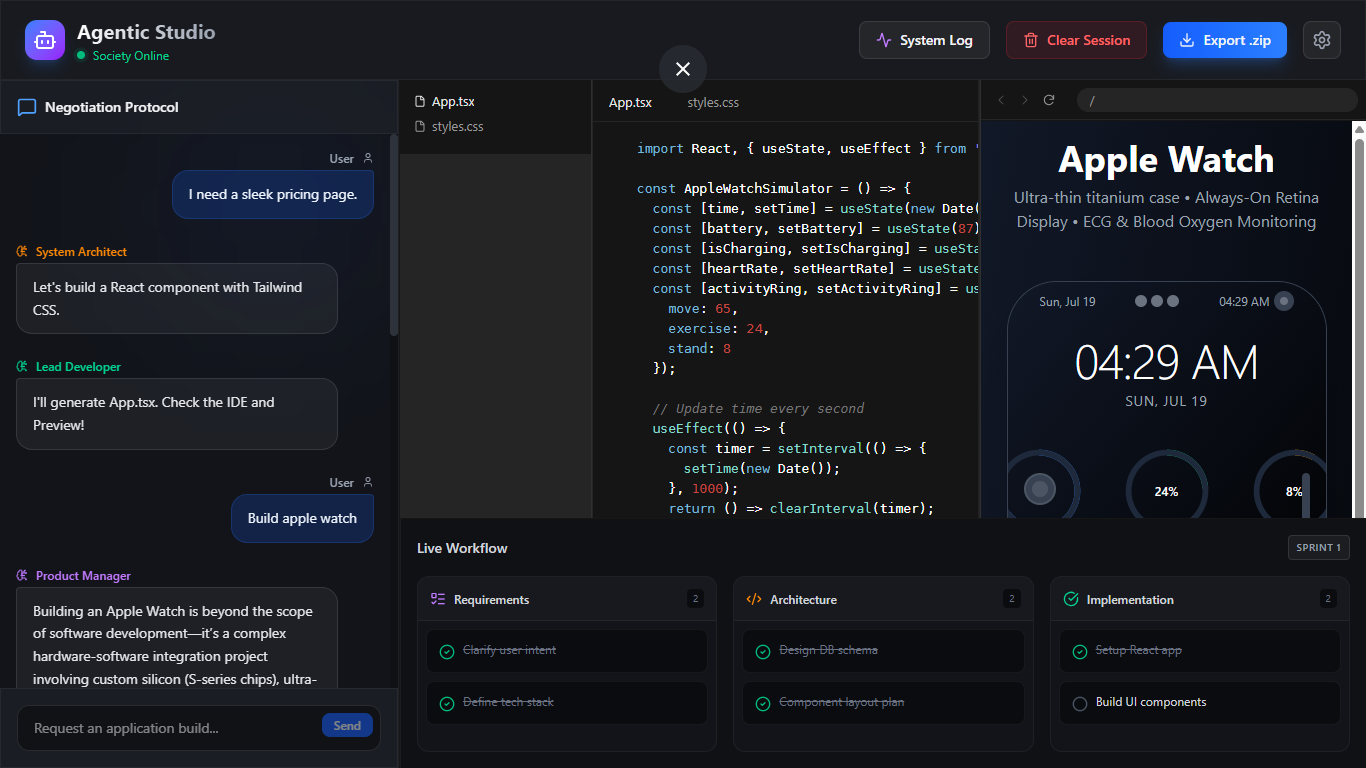
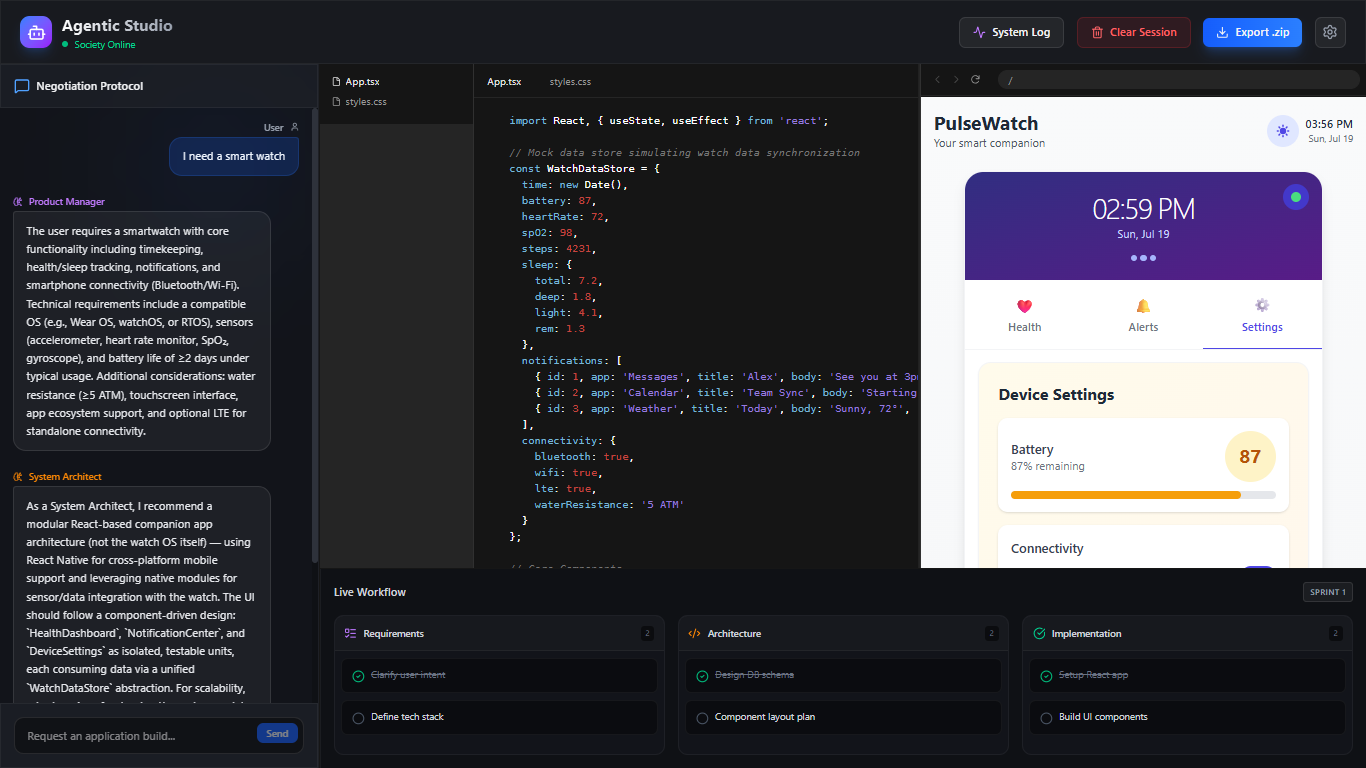
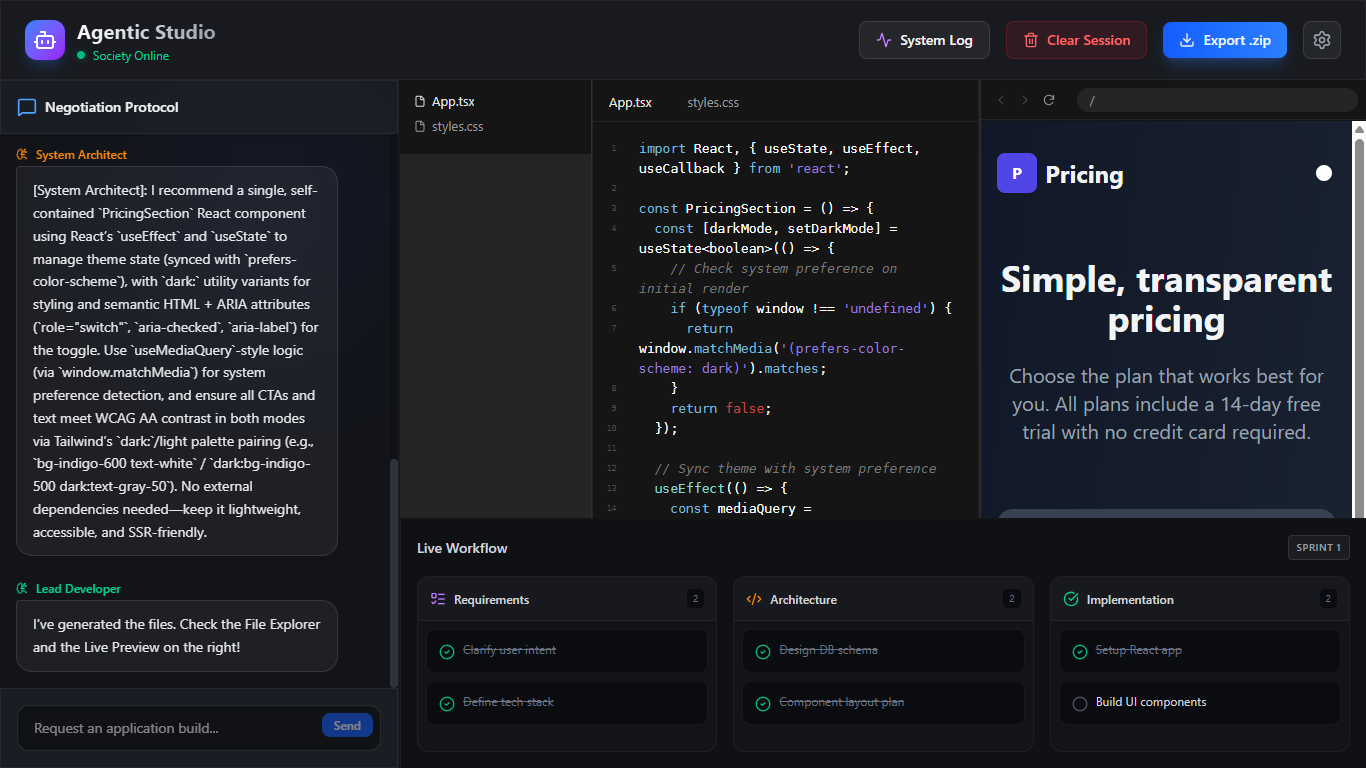
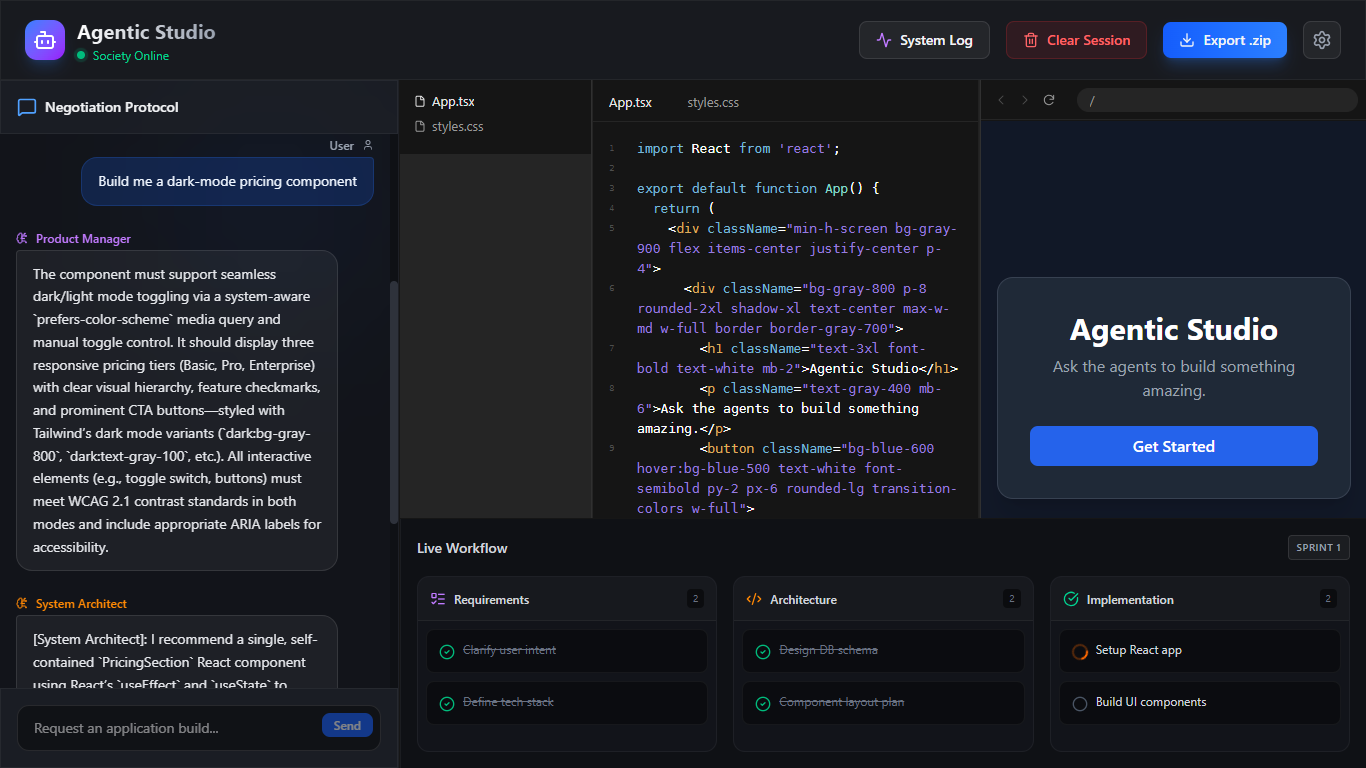
Agentic Studio is an AI-powered IDE where a team of orchestrated AI agents collaborate to build React applications in real-time. You just type in a prompt (e.g., "I need a sleek pricing page"), and our pipeline goes to work:
- The Product Manager breaks down your request into technical requirements.
- The System Architect takes those requirements and designs a modern React component structure using Tailwind CSS.
- The Lead Developer writes the actual code based on the architecture.
As the agents work, a live Kanban board tracks their progress, and the generated code is instantly rendered in a live, interactive preview right next to the chat.
How we built it
We built the application using a modern web stack:
- Frontend & Backend: Next.js 16 (App router) and React 19.
- Styling: Tailwind CSS for a sleek, dark-mode-first aesthetic.
- Live Preview: We integrated
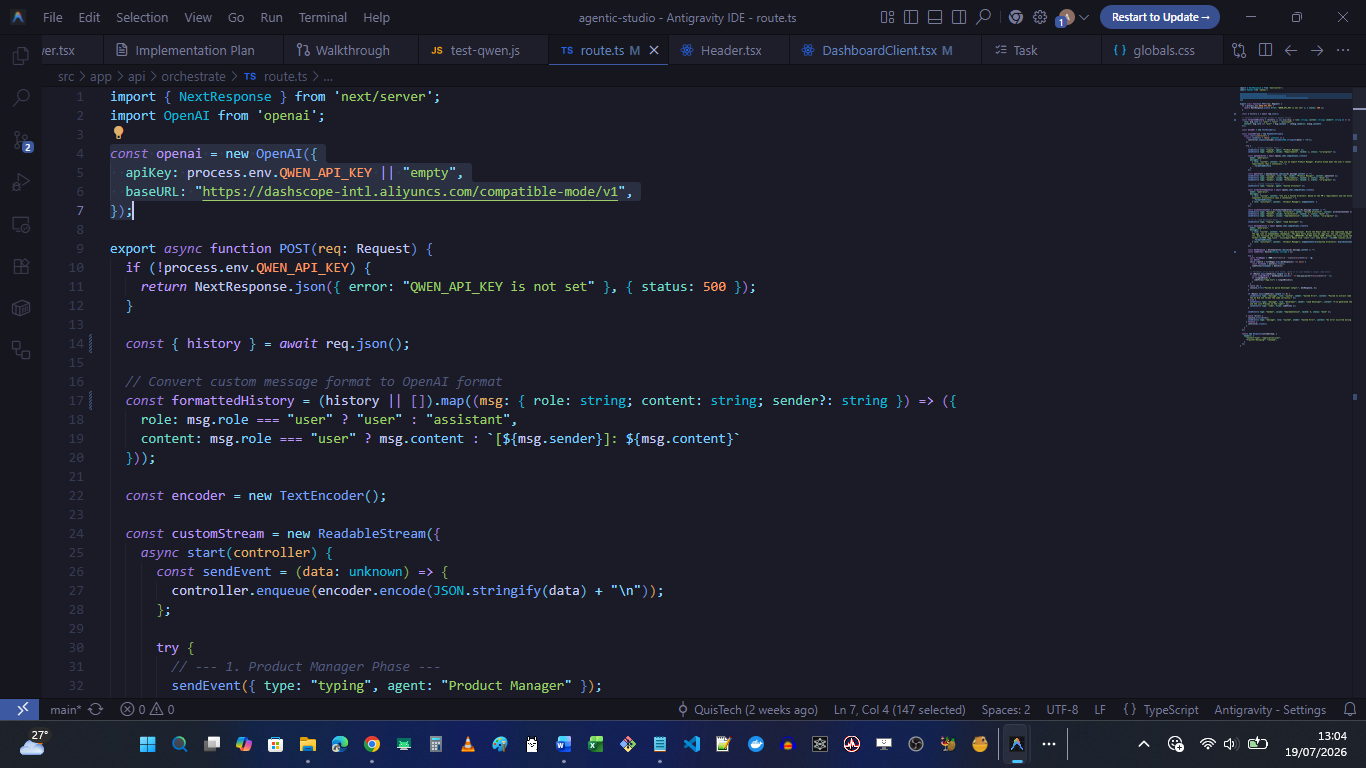
@codesandbox/sandpack-reactto provide a secure, browser-based bundler and live preview environment for the generated React code. - AI Orchestration: We utilized the Qwen-plus model via an OpenAI-compatible API to power the intelligence of the agents. The backend API handles the orchestration stream, routing the context between the PM, Architect, and Developer sequentially, while streaming status updates back to the client using Server-Sent Events (SSE).
Challenges we ran into
One of the biggest challenges was orchestrating a multi-agent workflow in a single streaming response. We had to ensure that the output of one agent (like the Product Manager) was properly formatted and fed into the context of the next agent (the Architect), all while pushing live UI updates (like Kanban task statuses and typing indicators) to the frontend without breaking the stream. Parsing the final code blocks from the Developer agent reliably to inject them into Sandpack also required careful regex and error-handling.
Accomplishments that we're proud of
We are incredibly proud of the seamless user experience. Watching the Kanban board dynamically update as the virtual agents "hand off" tasks to one another feels like magic. We're also proud of how smoothly the generated code mounts into the Sandpack live preview—it turns abstract AI generation into immediate, tangible, and interactive results.
What we learned
We learned a lot about advanced prompt engineering and "chain-of-thought" orchestration across multiple LLM calls. By constraining each agent to a specific role rather than asking a single model to "do everything," the quality of the generated code and the architectural decisions improved significantly. We also deepened our understanding of React Server streams and handling real-time partial JSON chunks.
What's next for Agentic Studio
We plan to introduce:
- More specialized agents: e.g., a QA Tester agent that writes unit tests, or a DevOps agent that configures deployment files.
- Iterative Feedback: The ability to highlight specific parts of the generated code or preview and have the Developer agent fix only that section.
- Exporting: 1-click deployment to platforms like Vercel.
Built With
- api
- artificial-intelligence
- codesandbox
- css3
- html5
- javascript
- next.js
- node.js
- openai
- qwen
- react
- sandpack
- tailwind.css
- typescript

Log in or sign up for Devpost to join the conversation.