Inspiration
Complex stories often begin with a question, but turning that question into something trustworthy and cinematic requires much more than generation. A creator has to research the world, evaluate evidence, find the human story, translate it into visual language, and finally produce the media.
Agentic Story Studio was created to bring those stages together into one coordinated agentic production workflow.
What It Does
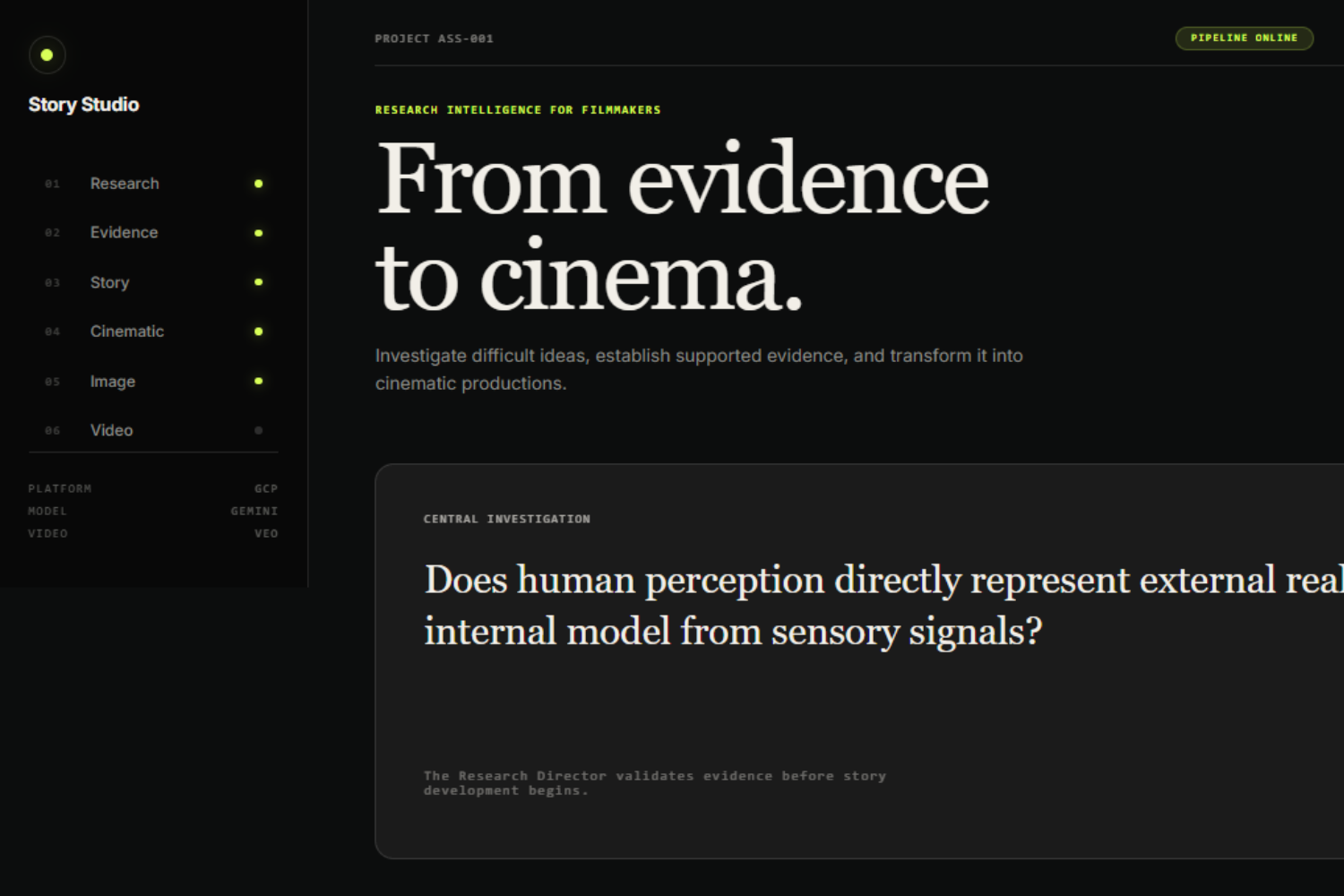
Agentic Story Studio transforms a complex question or investigation into an evidence-grounded visual story.
Instead of relying on one model to perform the entire creative process, the studio uses specialized AI agents with different production responsibilities.
Research Director: Searches the live web for relevant sources and evidence using the Parallel Search API.
Evidence Editor: Uses Gemini to evaluate the research and organize claims and supporting evidence.
Story Director: Transforms that evidence into a narrative brief with a central idea, human question, and dramatic structure.
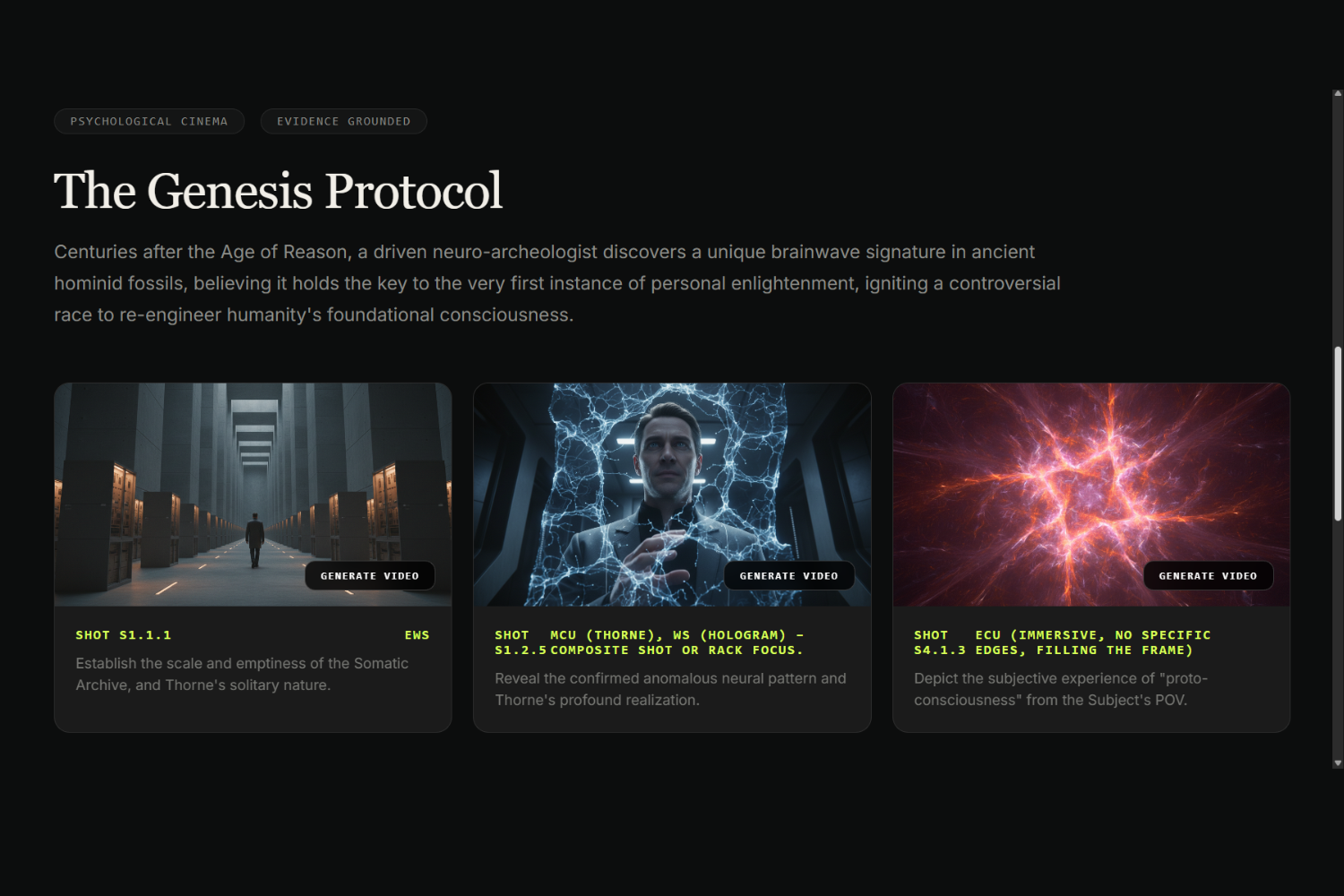
Cinematic Director: Translates the narrative into scenes, shots, framing, camera direction, lighting, and production design.
Image Generation Director: Converts those cinematic plans into storyboard imagery.
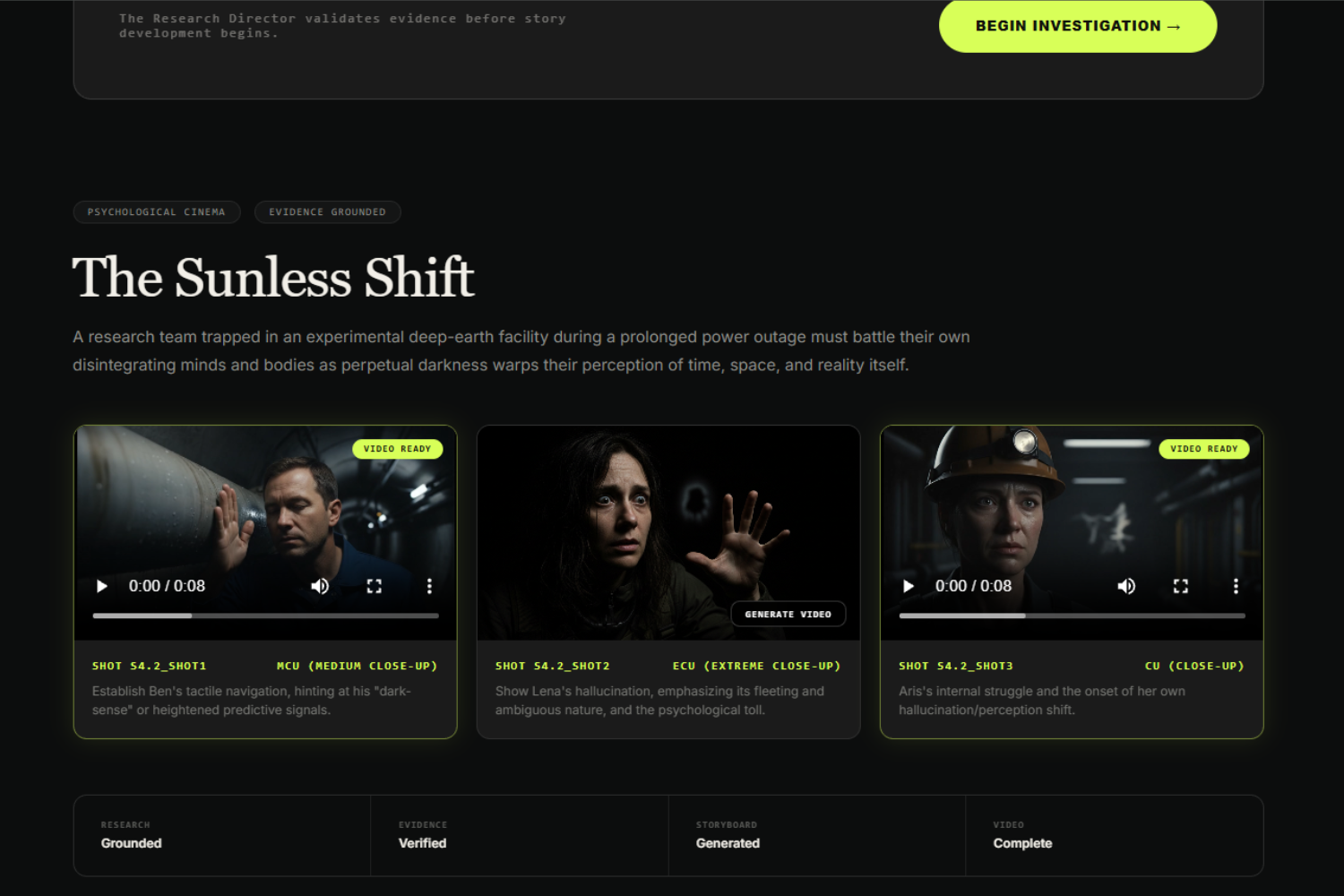
Video Generation Director: Uses Veo to transform selected visual plans into cinematic motion.
The result is a pipeline where research informs evidence, evidence informs story, story informs cinematic direction, and cinematic direction informs generated media.
How We Built It
Agentic Story Studio is a Python and FastAPI application built around Google Agent Development Kit and Google's generative AI capabilities.
Gemini powers the specialized reasoning and creative agents responsible for evidence analysis, story development, and cinematic direction.
The Parallel Search API is actively used at runtime by the Research Director to retrieve live web research before creative development begins.
Google Cloud and Vertex AI provide the model and application infrastructure. Gemini image generation creates storyboard assets, while Veo generates cinematic video from the production's visual direction.
The application is packaged with Docker and deployed publicly using Google Cloud Run.
Challenges
One of the biggest challenges was connecting research, structured evidence, narrative development, image generation, and video generation into a single workflow while preserving useful state between stages.
Generative media also introduced real production constraints such as model availability, quota limits, asynchronous video operations, asset persistence, and maintaining a responsive web experience.
These challenges shaped the studio into a structured workflow where each agent produces information that the next production stage can use.
Accomplishments
The project demonstrates an end-to-end agentic production workflow running as a public web application.
A creator can move from a question to live research, structured evidence, narrative development, cinematic shot planning, generated storyboard assets, and generated video within one coordinated system.
Rather than treating AI filmmaking as a single prompt-to-video interaction, Agentic Story Studio explores what happens when AI participates as a team of specialized production agents while the human creator remains at the center of the process.
What's Next
The next stage is to expand the human-in-the-loop production controls, strengthen visual continuity across longer stories, and introduce an Audience Director that can evaluate how different audiences may interpret a story before publication.
The long-term vision is a creative environment where research, reasoning, filmmaking, and audience understanding can work together without sacrificing the creator's control.
Built With
- fastapi
- gemini
- google-cloud
- imagen
- parallel
- python
- veo
- vertex-ai

Log in or sign up for Devpost to join the conversation.