-
-
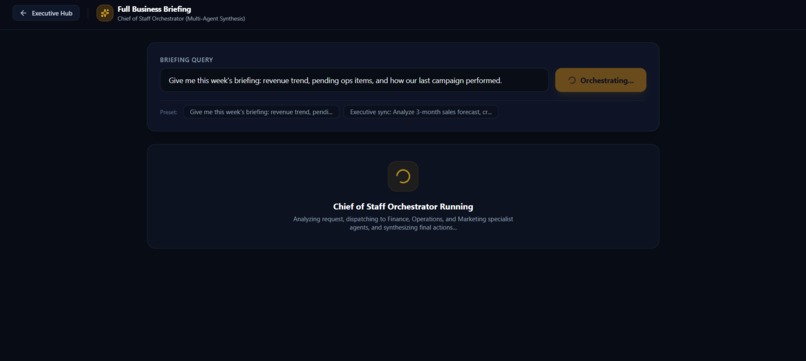
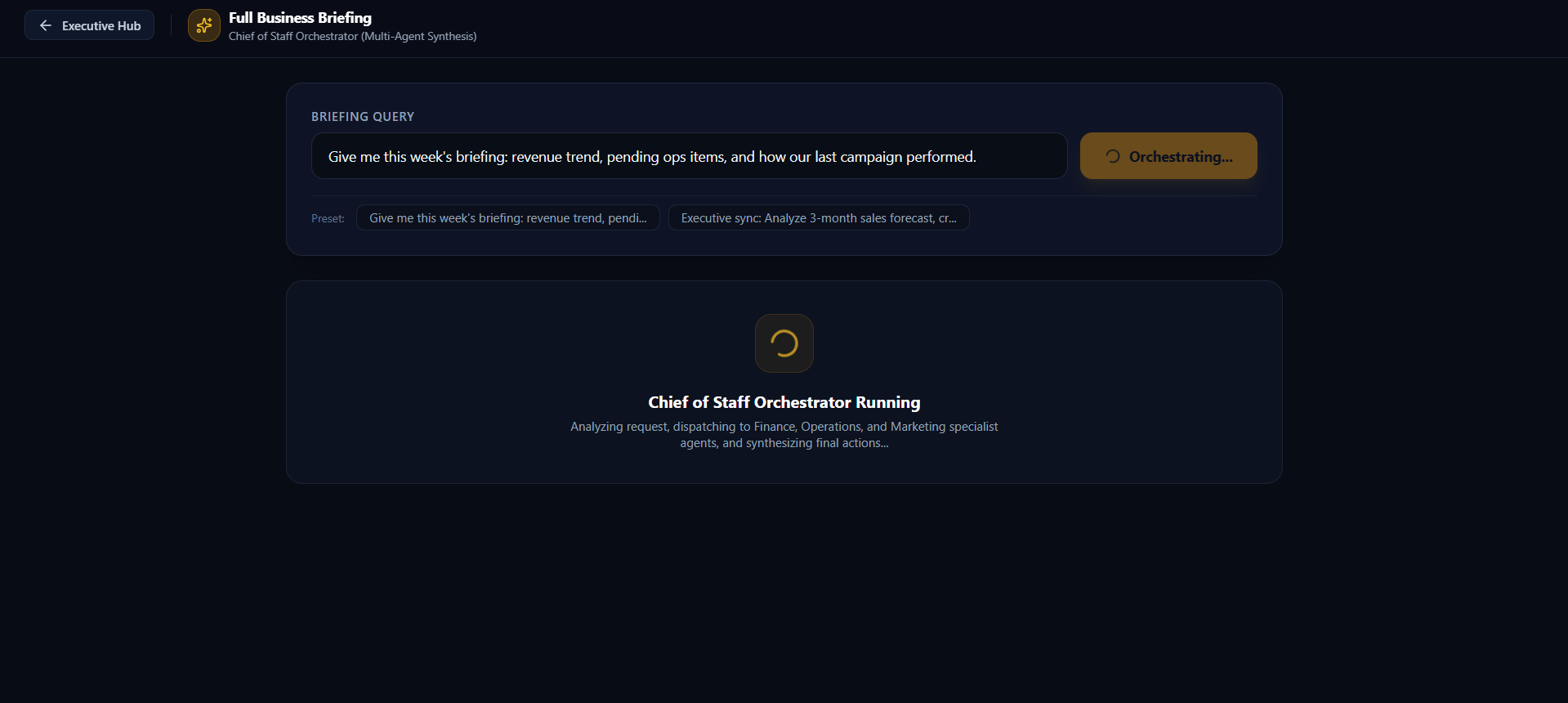
briefing the whole day work in a report
-
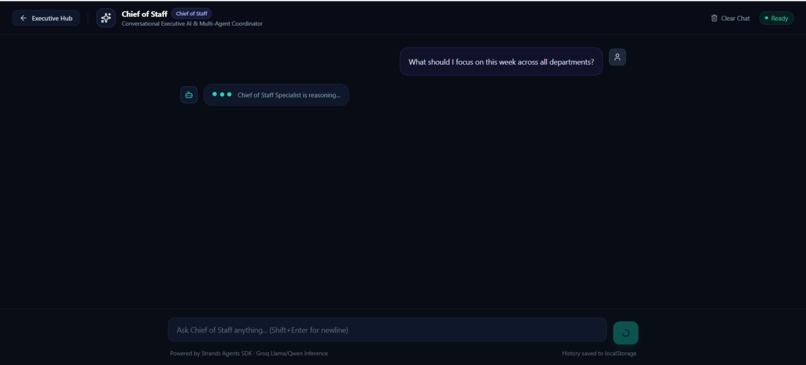
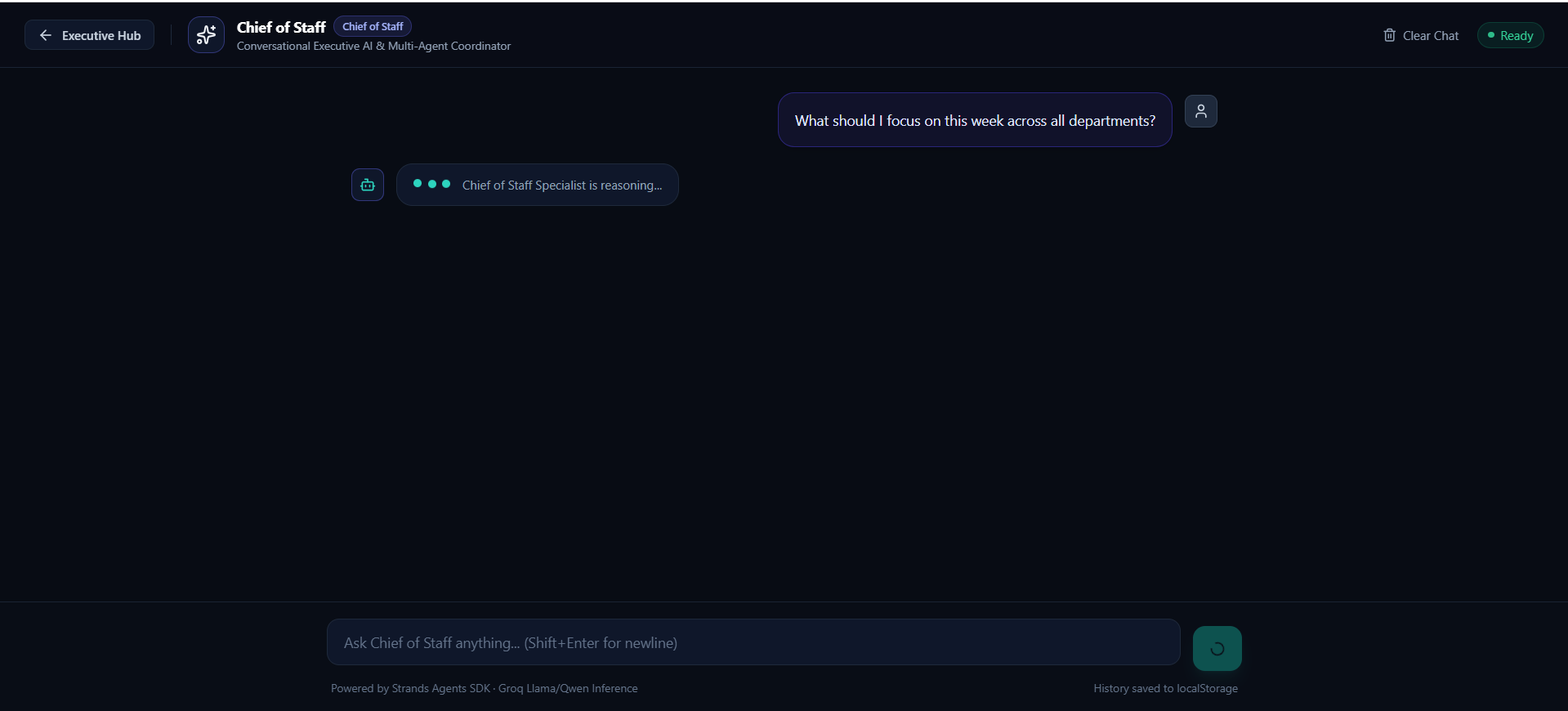
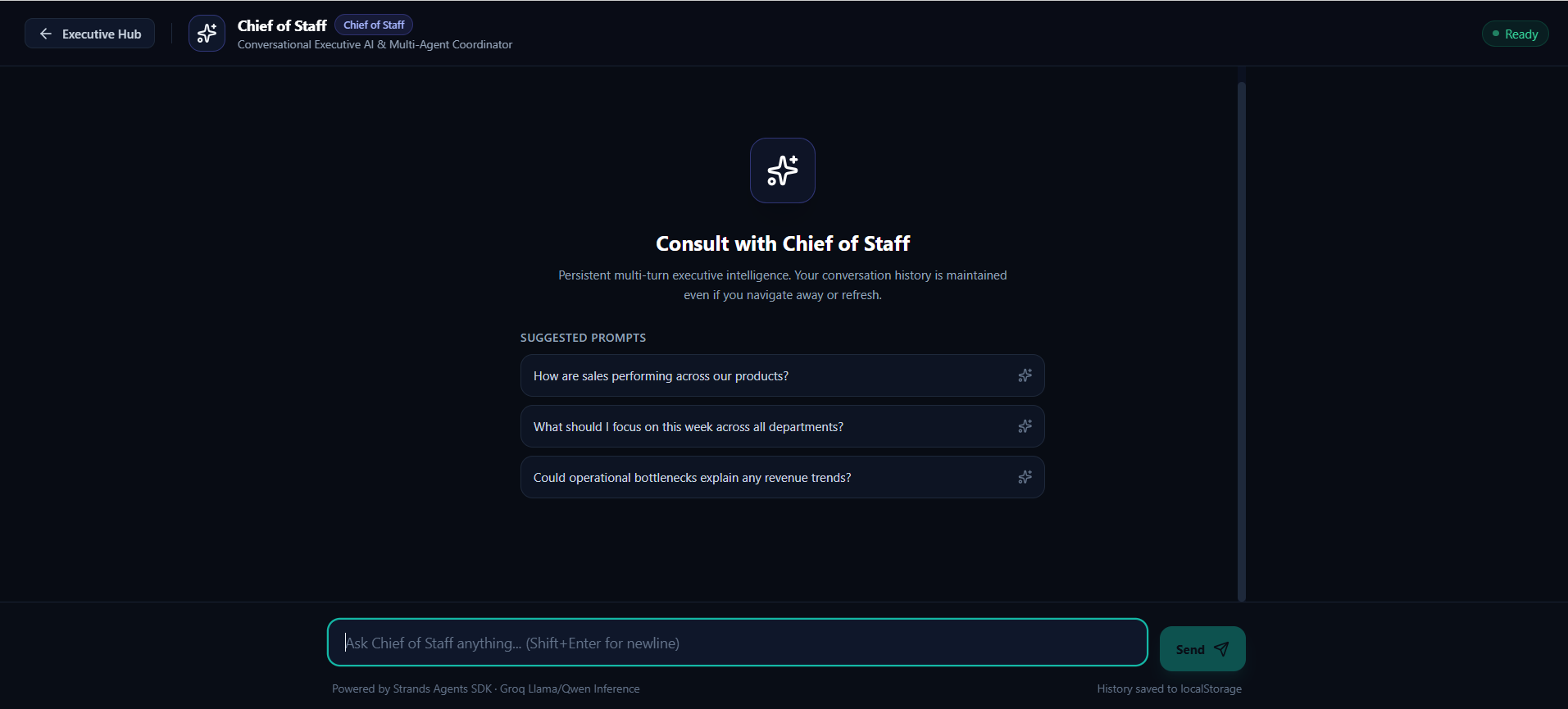
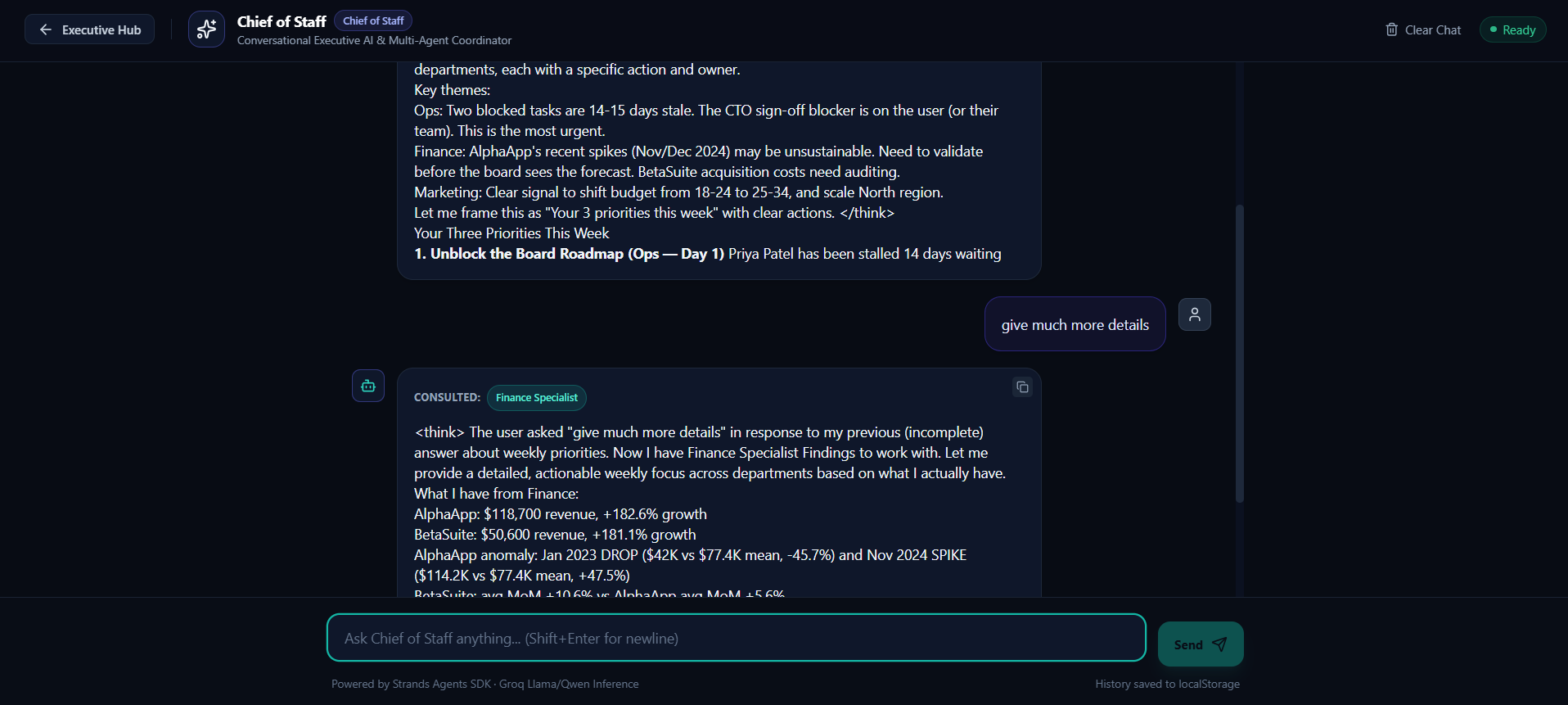
chief of staff interactive chats
-
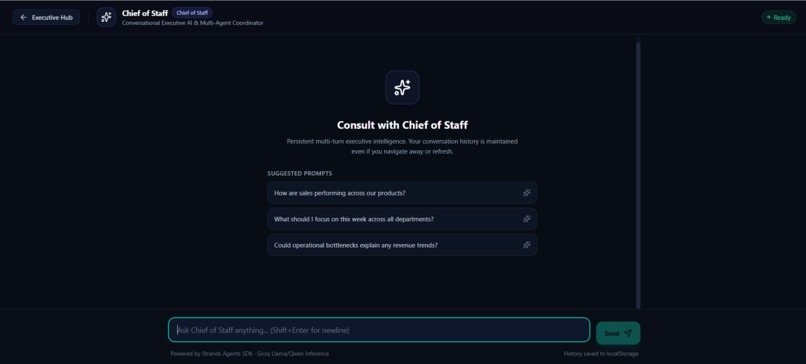
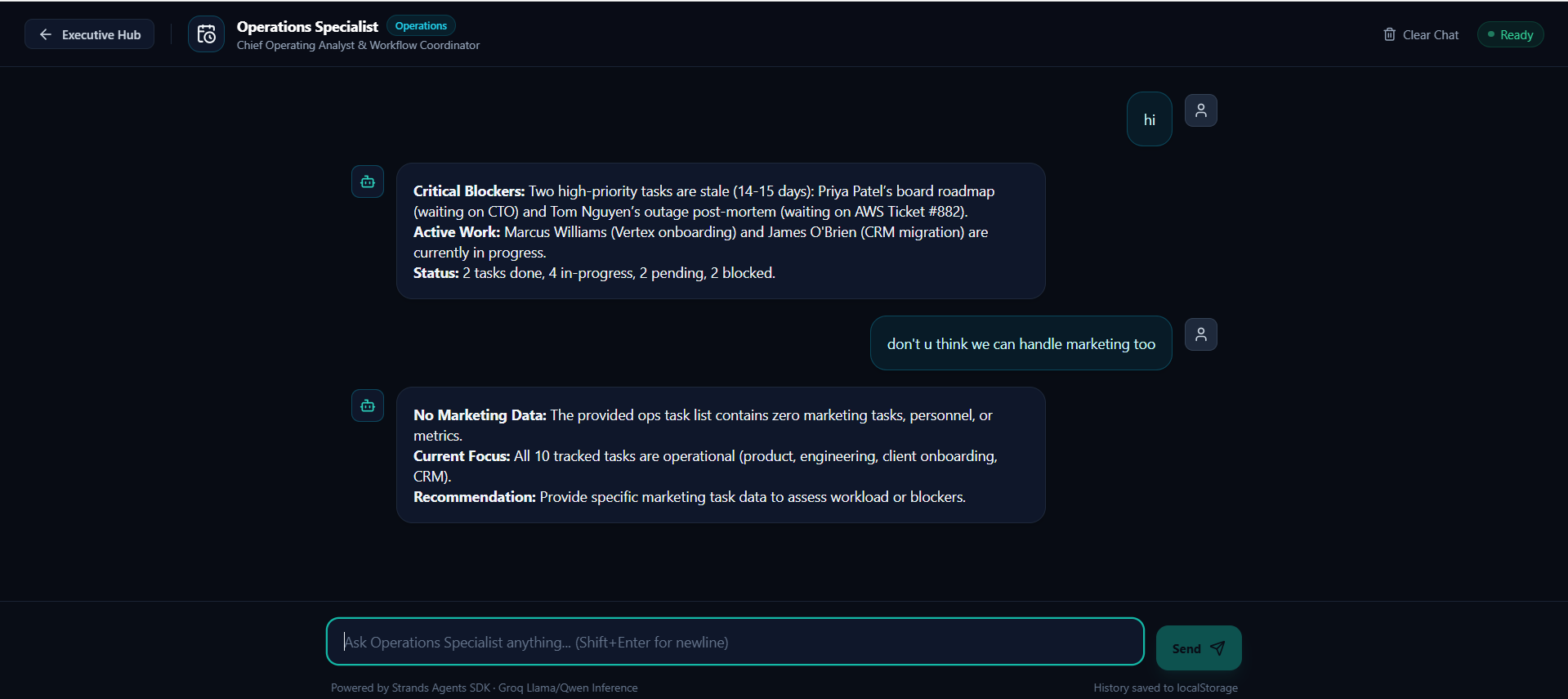
operations agent
-
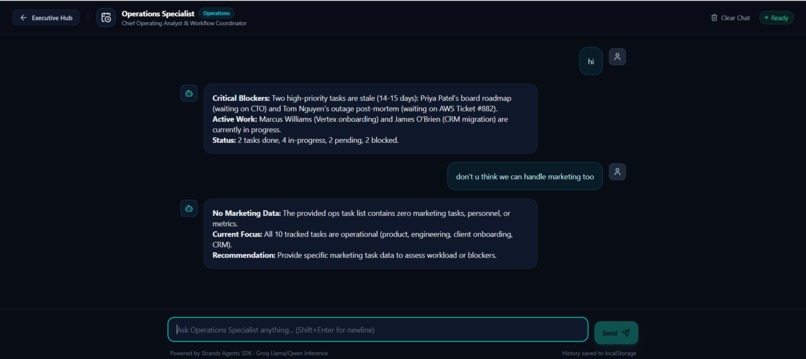
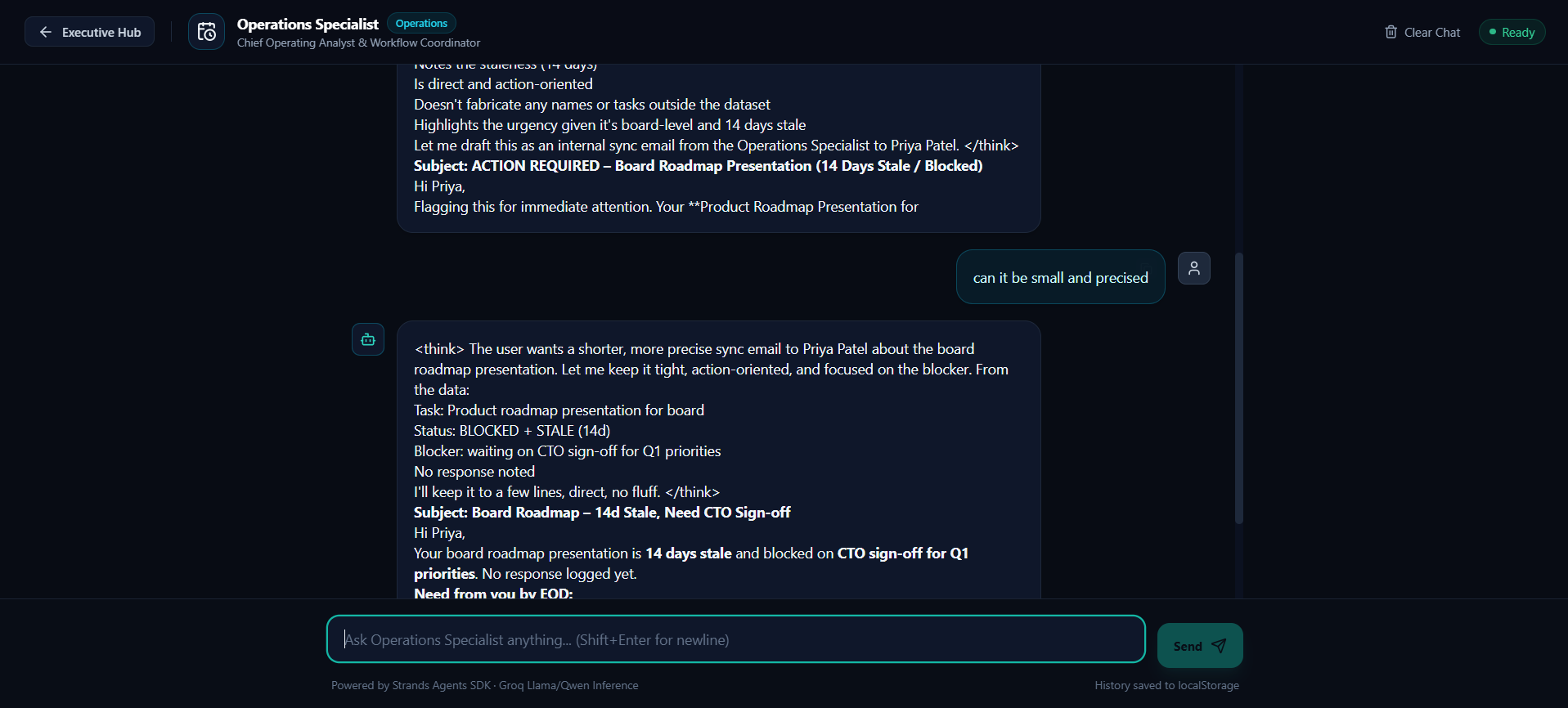
arguing with the operational specialist chats
-
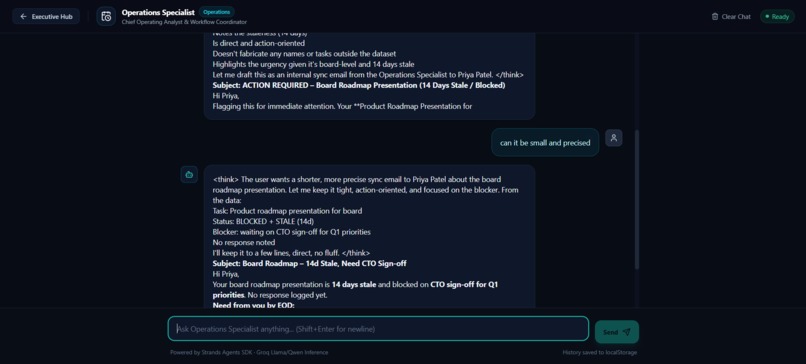
operations specialist chats
-
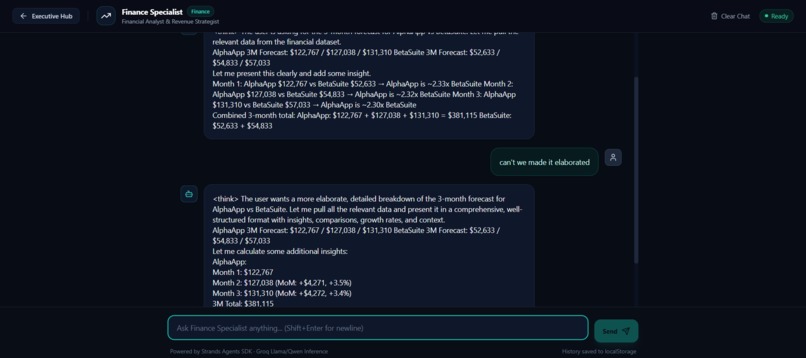
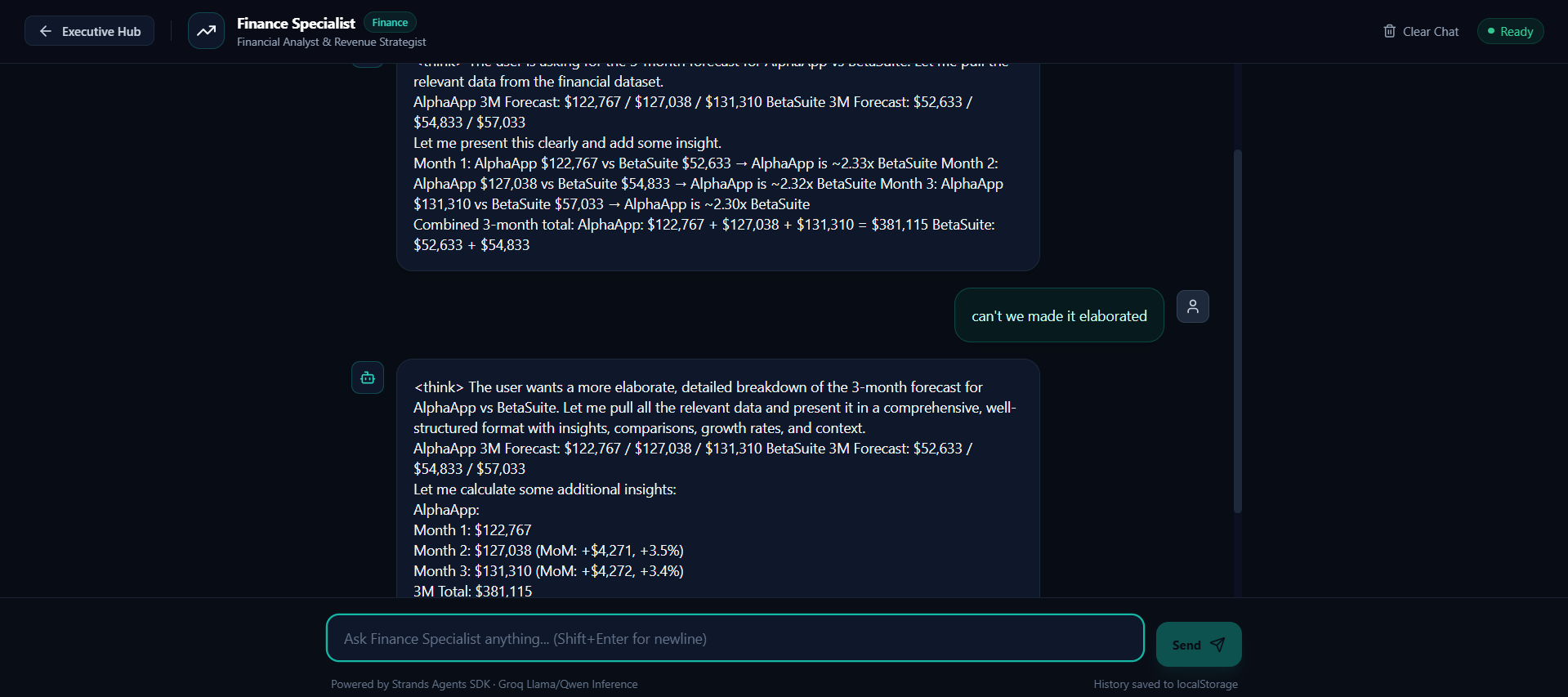
finance specialist chats
-
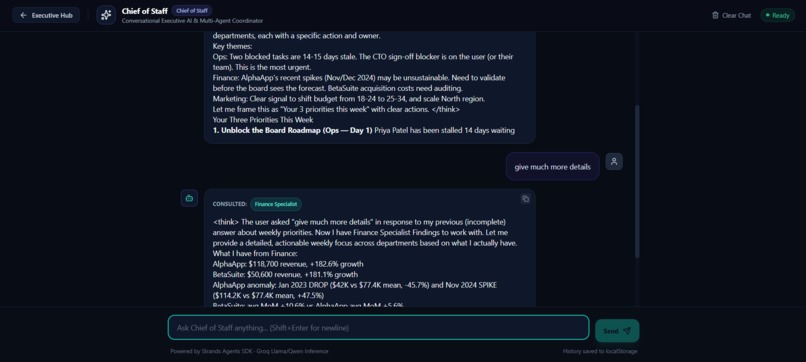
chief of staff chats
-
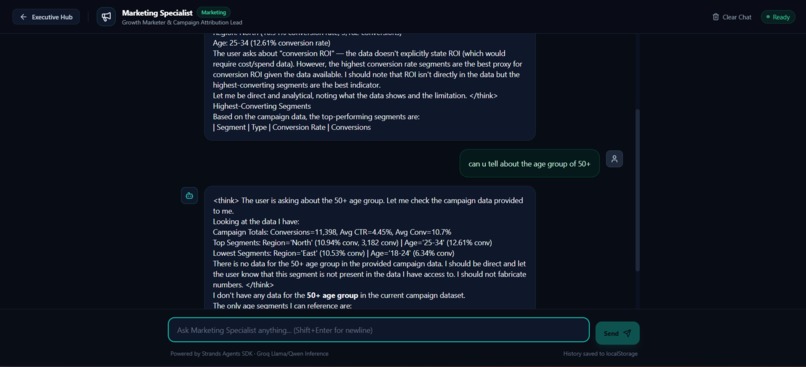
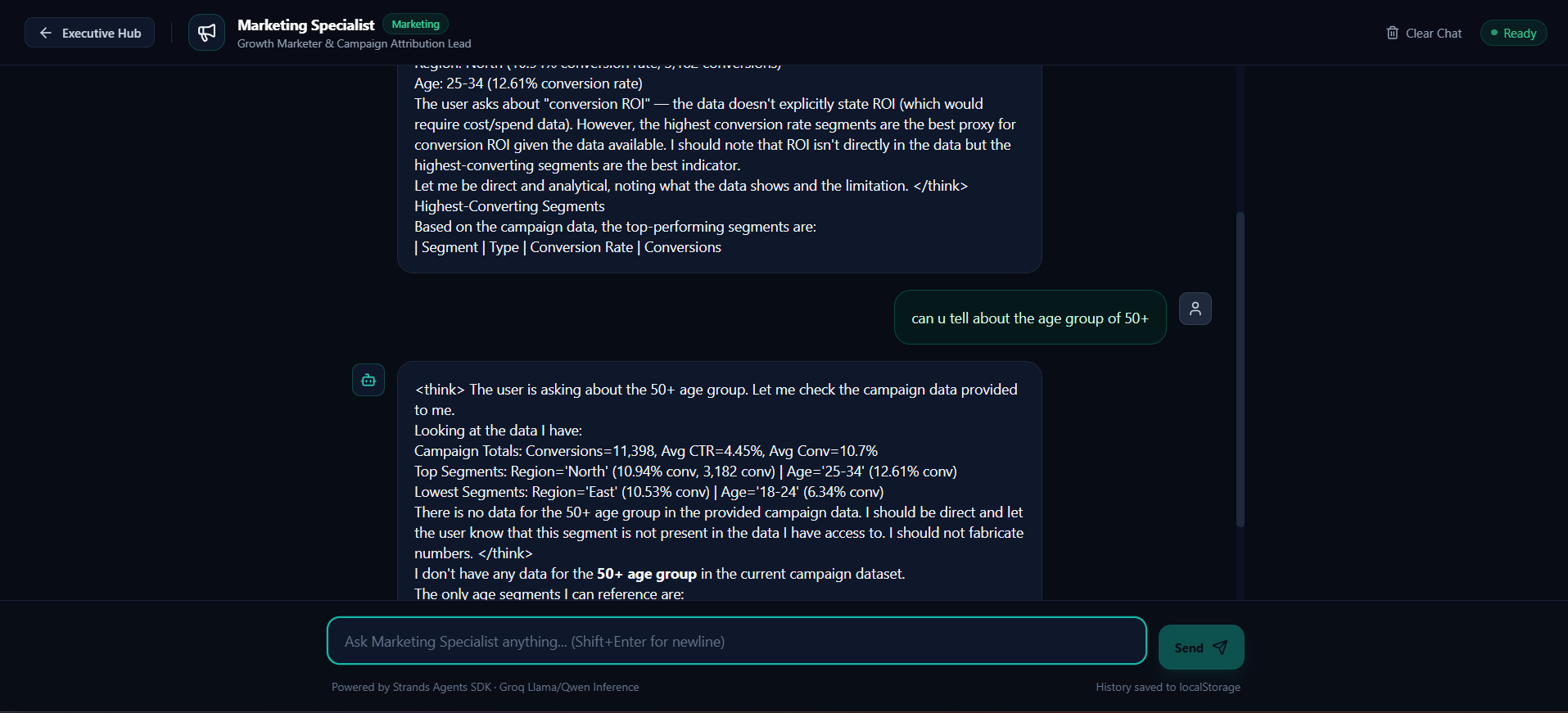
marketing specialist chats
-
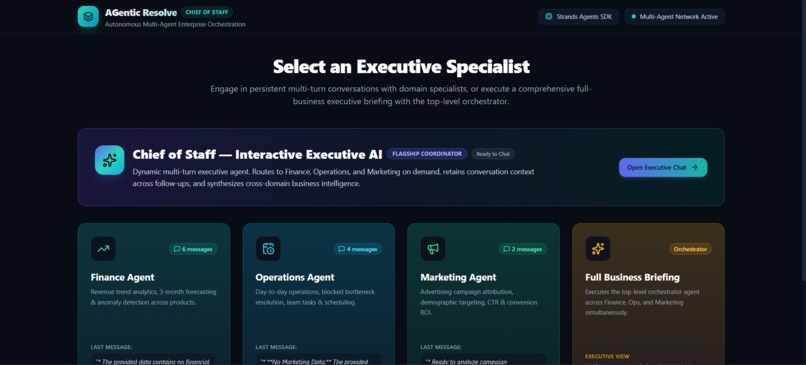
interface
Inspiration
Every business, especially small and growing ones, runs on three kinds of work that never stop: knowing where the money stands, keeping the day-to-day admin moving, and understanding whether marketing spend is actually working. Most founders and managers end up doing all three themselves, switching context all day between spreadsheets, inboxes, and ad dashboards. We wanted to build something that doesn't just answer questions about a business — it actively works on it in the background, the way a small team of specialists would, and only interrupts you when a real decision is needed. That's the core idea the hackathon theme pushed us toward, and it's why we built AGentic Resolve as a multi-agent system instead of a single chatbot.
What it does
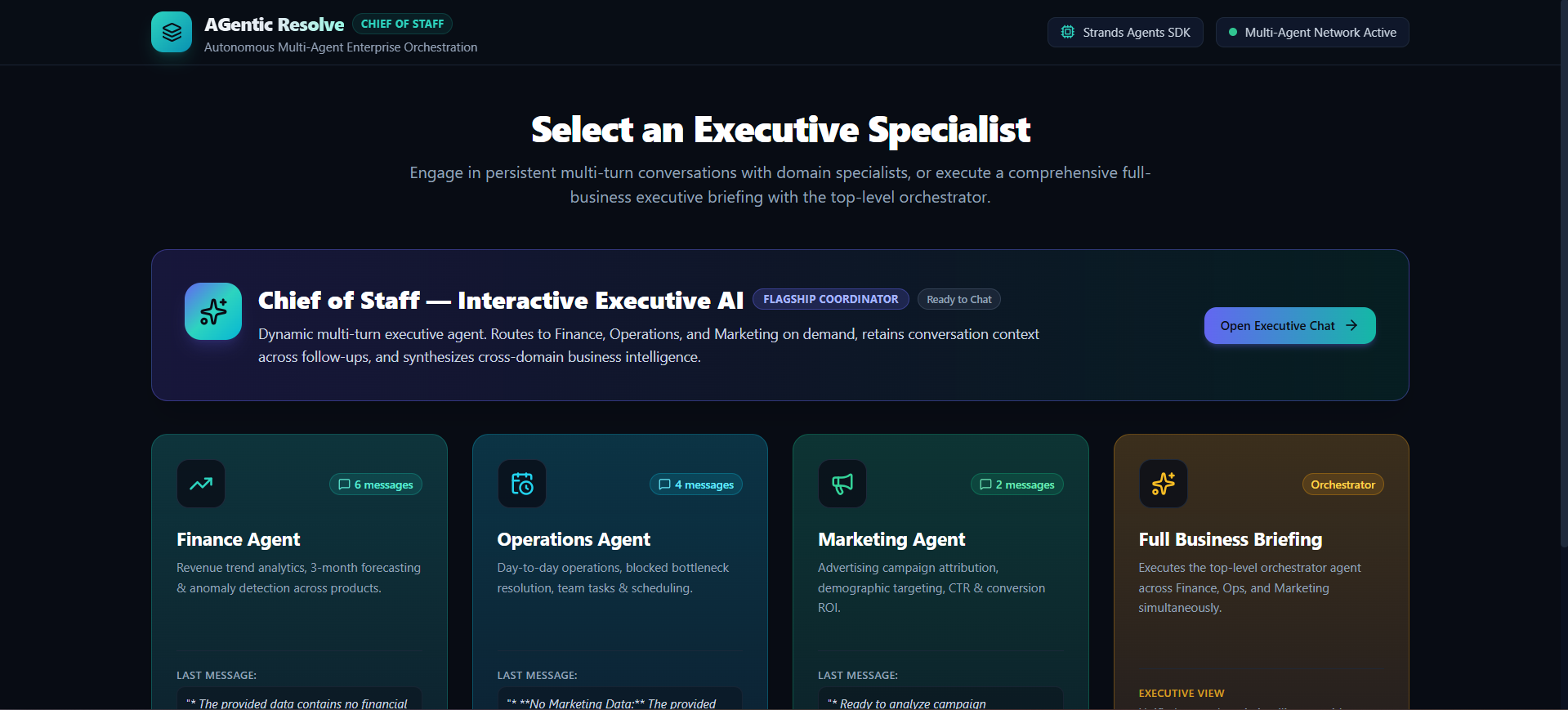
AGentic Resolve is a professional multi-agent assistant built with the Strands Agents SDK. A single orchestrator agent takes one plain-language question from a business owner or manager and delegates it to three specialist sub-agents running in parallel:
Finance Agent — analyzes revenue on existing products, tracks trends across historical sales data, and projects near-term outcomes based on current performance and new or old product activity. Operations Agent — automates the busywork of running a team: drafting emails, scheduling meetings, and summarizing what employees have been working on so nothing falls through the cracks. Marketing Agent — evaluates advertising performance: which regions and age groups respond to a campaign, where a product is seeing real traction, and what that means for the next marketing decision.
The orchestrator combines all three specialist responses into one coherent briefing, so the user gets a single, decision-ready answer instead of three separate reports to reconcile themselves.
How we built it
We used the Strands Agents SDK's "agents-as-tools" pattern: each specialist (finance, ops, marketing) is its own Strands Agent with its own system prompt and dedicated tools, wrapped as a callable tool function. The orchestrator agent is a top-level Agent that receives these three specialist functions as its own tools and decides which to call based on the user's question, then synthesizes their outputs into a single response. All agents run on Amazon Bedrock using Claude Sonnet 5 as the underlying model. Each specialist's tools work over structured sample datasets — historical sales records, employee task logs, and campaign performance data — so the reasoning and delegation logic is fully real even though the data sources are currently synthetic stand-ins for a company's live systems.
Challenges we ran into
The biggest challenge was scope: the initial idea covered three genuinely large problem spaces — financial forecasting, workplace automation, and marketing analytics — each of which could be its own product. We had to aggressively narrow what "real" meant for each specialist agent within our build window, focusing on making the multi-agent delegation logic genuinely work end-to-end rather than going deep on any single domain. Getting the orchestrator to reliably decide which specialist(s) to call for a given question, rather than always calling all three or none, also took careful prompt design.
Accomplishments that we're proud of
We're proud of getting a working multi-agent architecture running end-to-end in a very short build window — a single orchestrator that genuinely delegates to three independent specialist agents and returns one synthesized answer, not three disconnected outputs pasted together. The "agents-as-tools" pattern made this possible cleanly with Strands, and it demonstrates a real, extensible pattern for how a single business assistant could keep growing new specialists over time.
What we learned
We learned how much of building a good multi-agent system is really about delegation design — writing system prompts and tool descriptions specific enough that the orchestrator reliably routes to the right specialist, rather than defaulting to one agent for everything. We also got hands-on with the Strands Agents SDK's tool-wrapping pattern and Amazon Bedrock as a model provider, and came away with a much clearer sense of when a single agent is enough versus when a task genuinely benefits from being split across specialists.
What's next for AGentic resolve
Next steps are replacing the synthetic datasets with real integrations — live accounting/sales data for the finance agent, real calendar and email APIs for the operations agent, and real ad-platform APIs (Meta, Google Ads) for the marketing agent. We'd also like to deploy the system on Amazon Bedrock AgentCore for persistent, always-on operation, add a lightweight dashboard so the orchestrator's briefings are visual rather than just conversational, and let the operations agent take limited autonomous actions (like actually sending a drafted email) with human approval built in.
Built With
- 3.5
- agents
- amazon
- architecturenatural
- bedrockclaude
- computingserverless
- intelligencecloud
- language
- processingautomationenterprise
- sdkmulti-agent
- softwareproductivity
- sonnetpythonstrands
- systemsartificial

Log in or sign up for Devpost to join the conversation.