Inspiration
Researchers, students, and inventors lose days on literature and prior-art searches. Before filing my own patent (an AI-based smart irrigation and nutrient management system), I spent hours digging through patent databases and papers, then manually comparing them against my idea. I wanted an assistant that behaves like a small research team instead of a single chatbot.
What it does
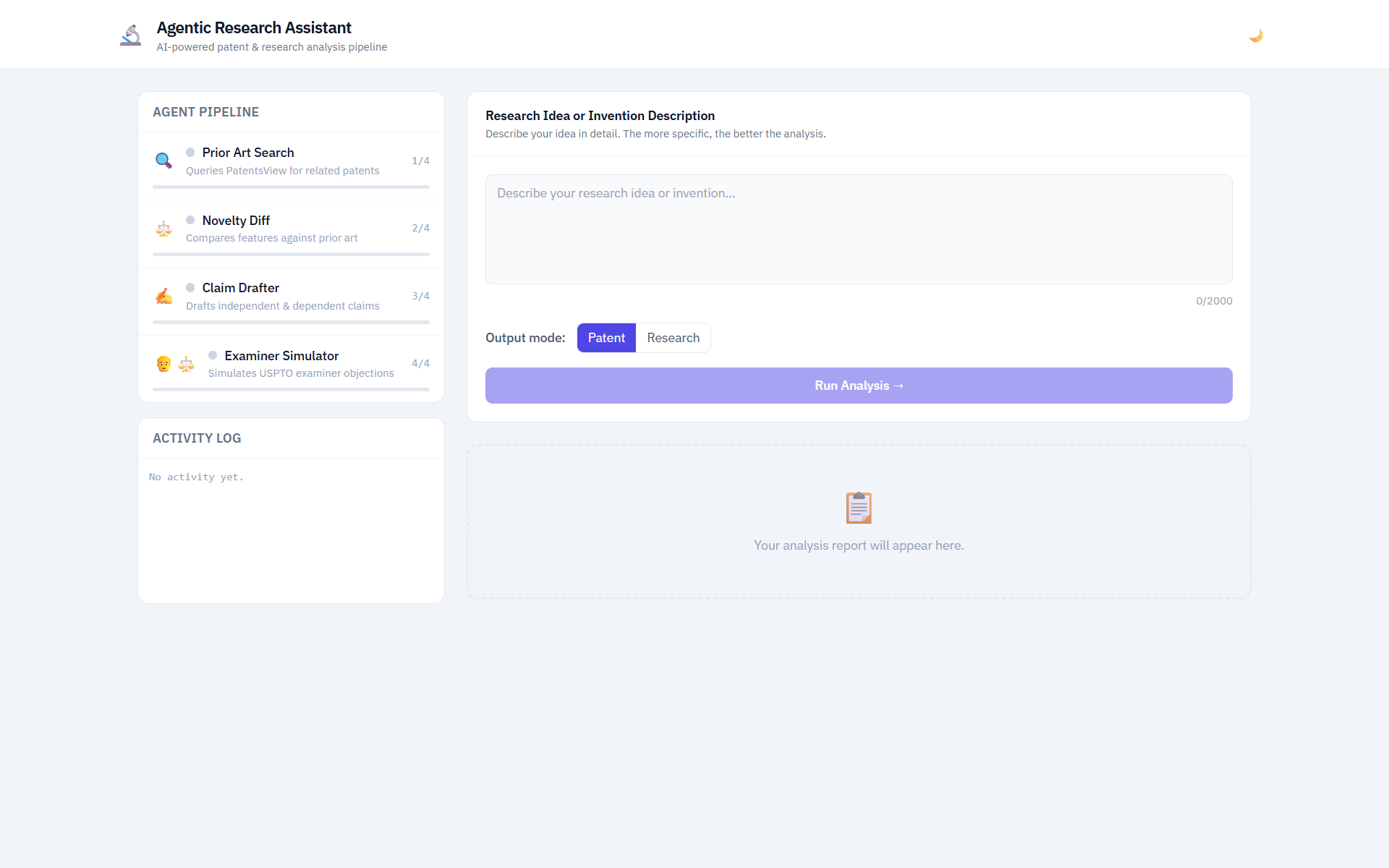
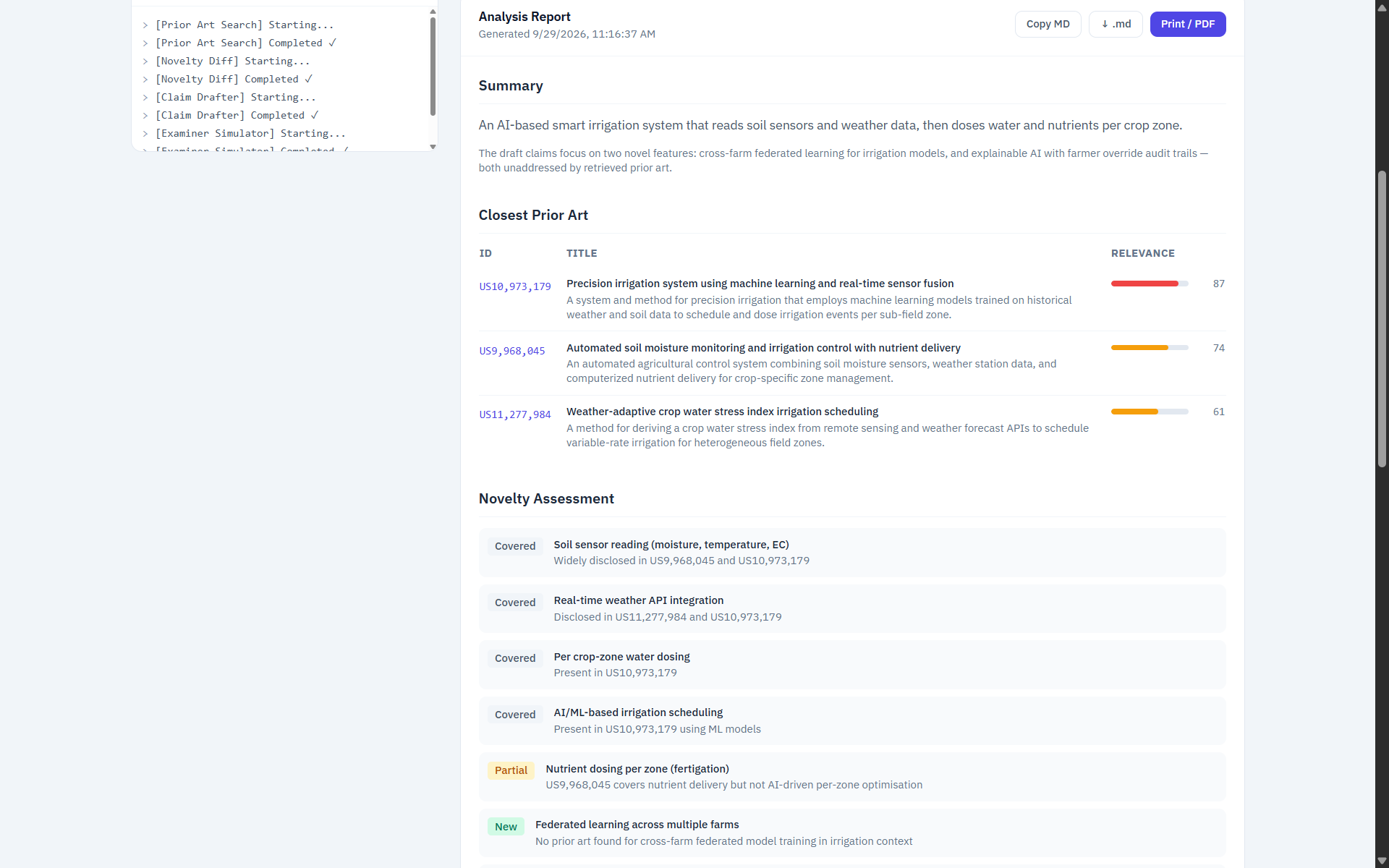
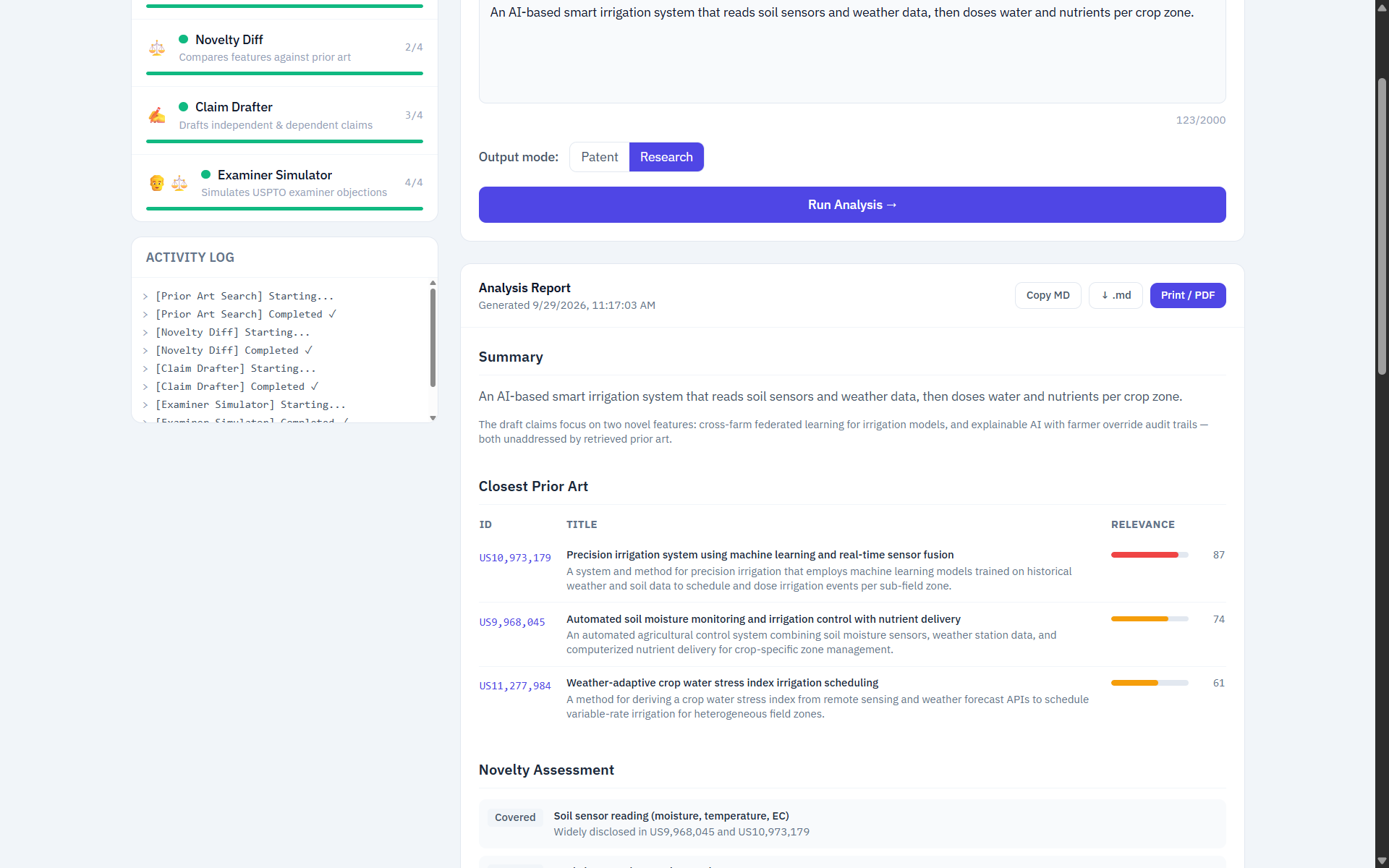
Agentic Research Assistant takes a research question or an invention idea and runs it through a pipeline of specialised AI agents:
- Prior Art Search Agent searches patent and paper sources for related work.
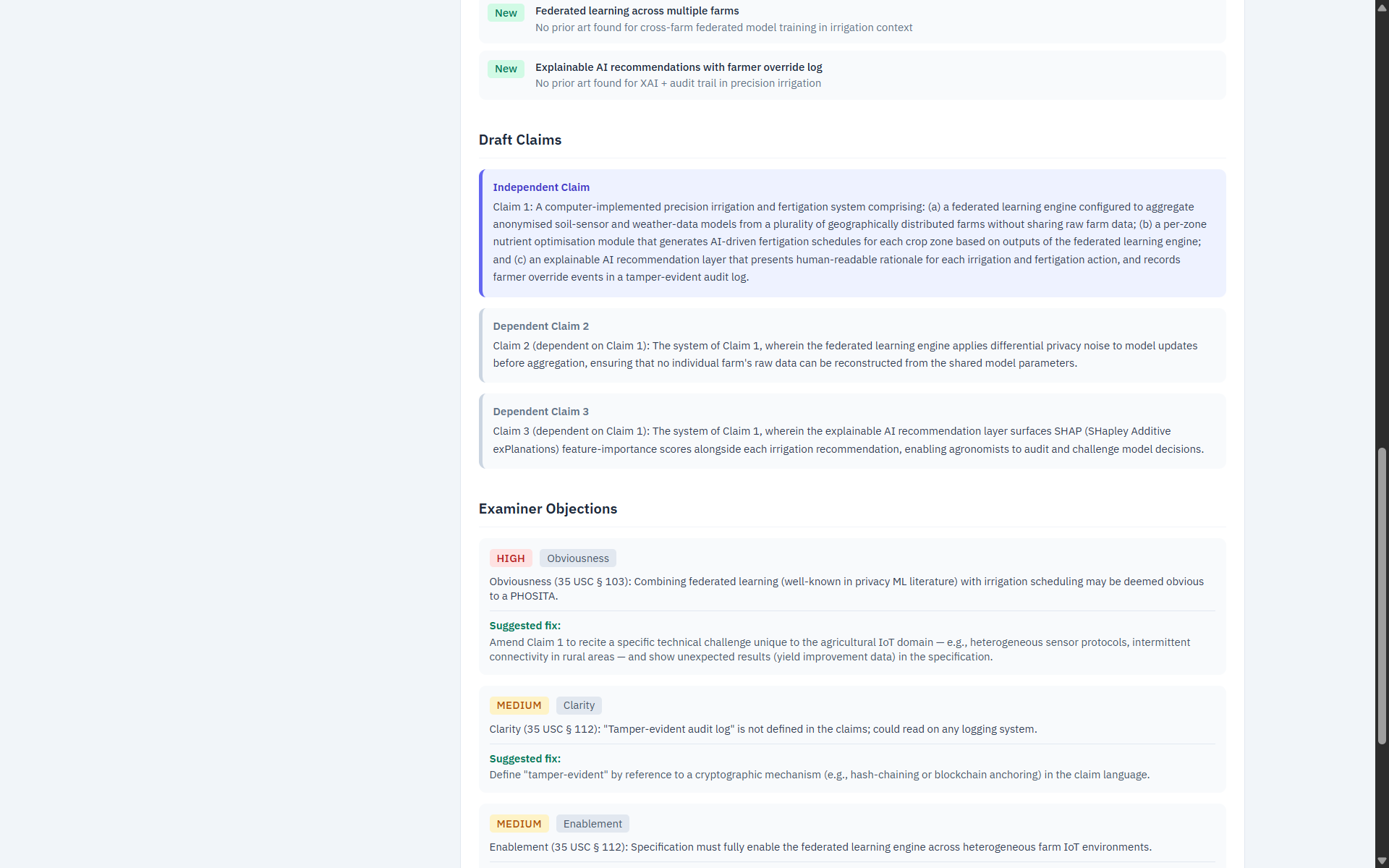
- Novelty Diff Agent compares your idea against each result and highlights what overlaps and what is genuinely new.
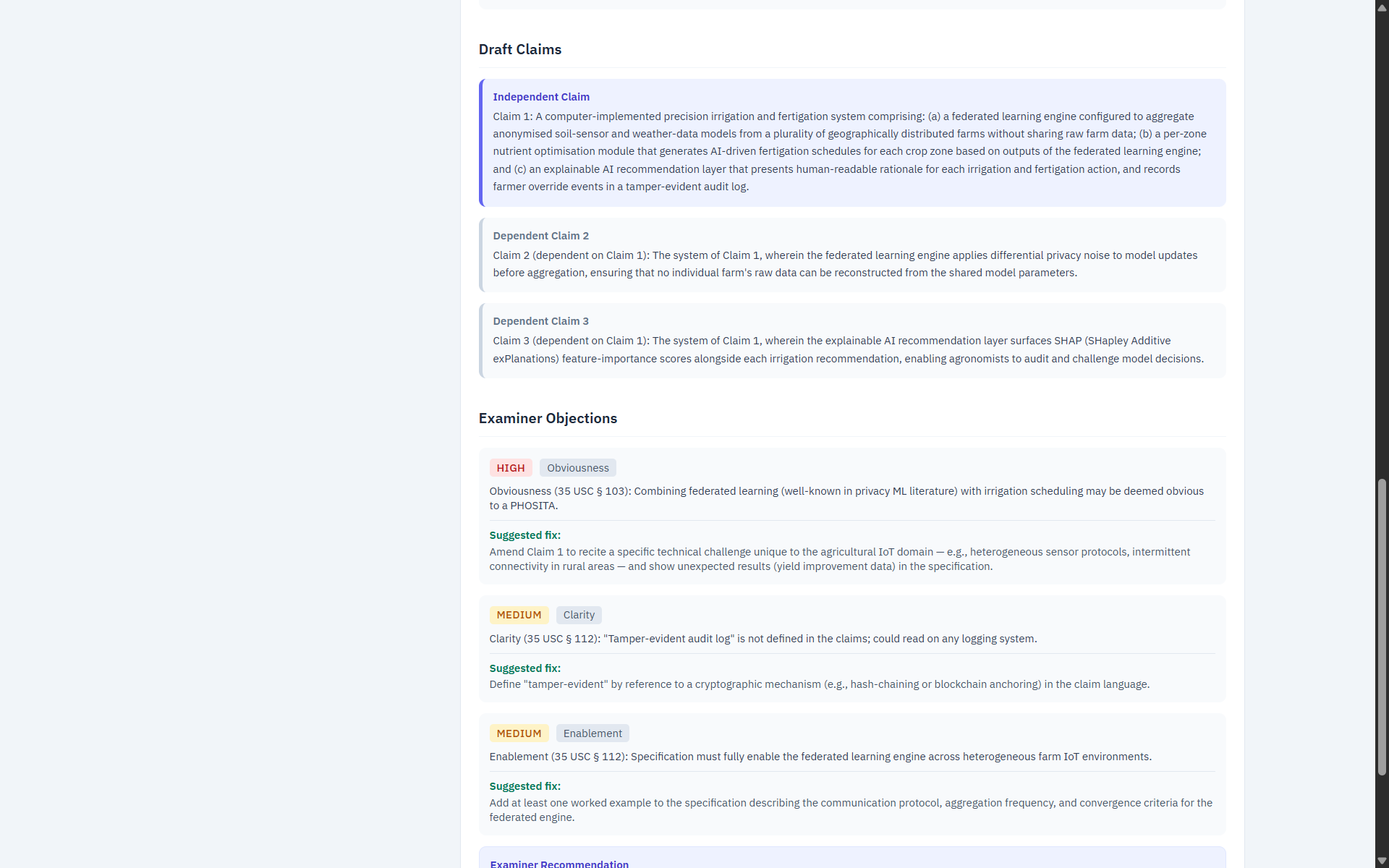
- Claim Drafter Agent drafts structured claims or a cited research brief from the findings.
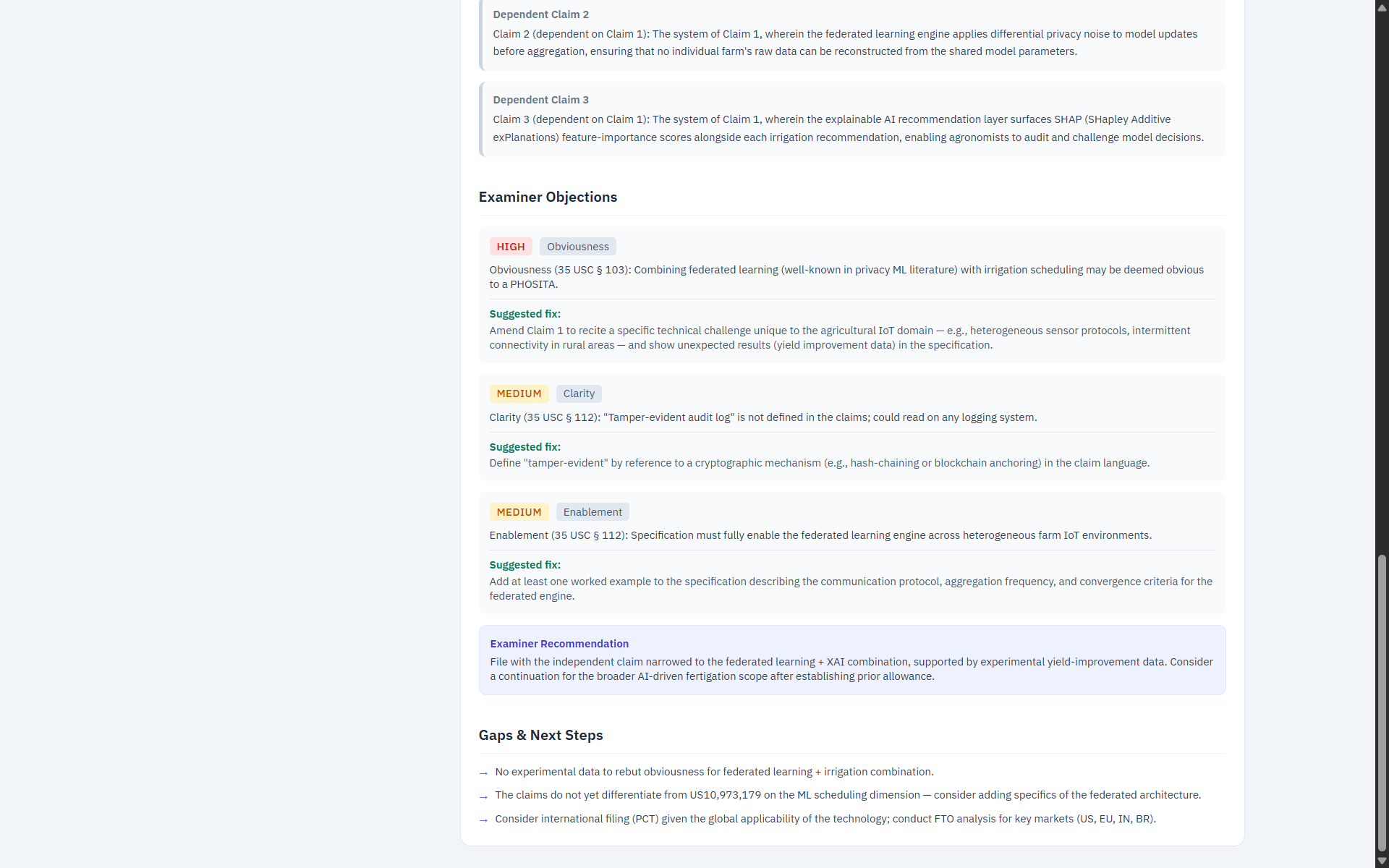
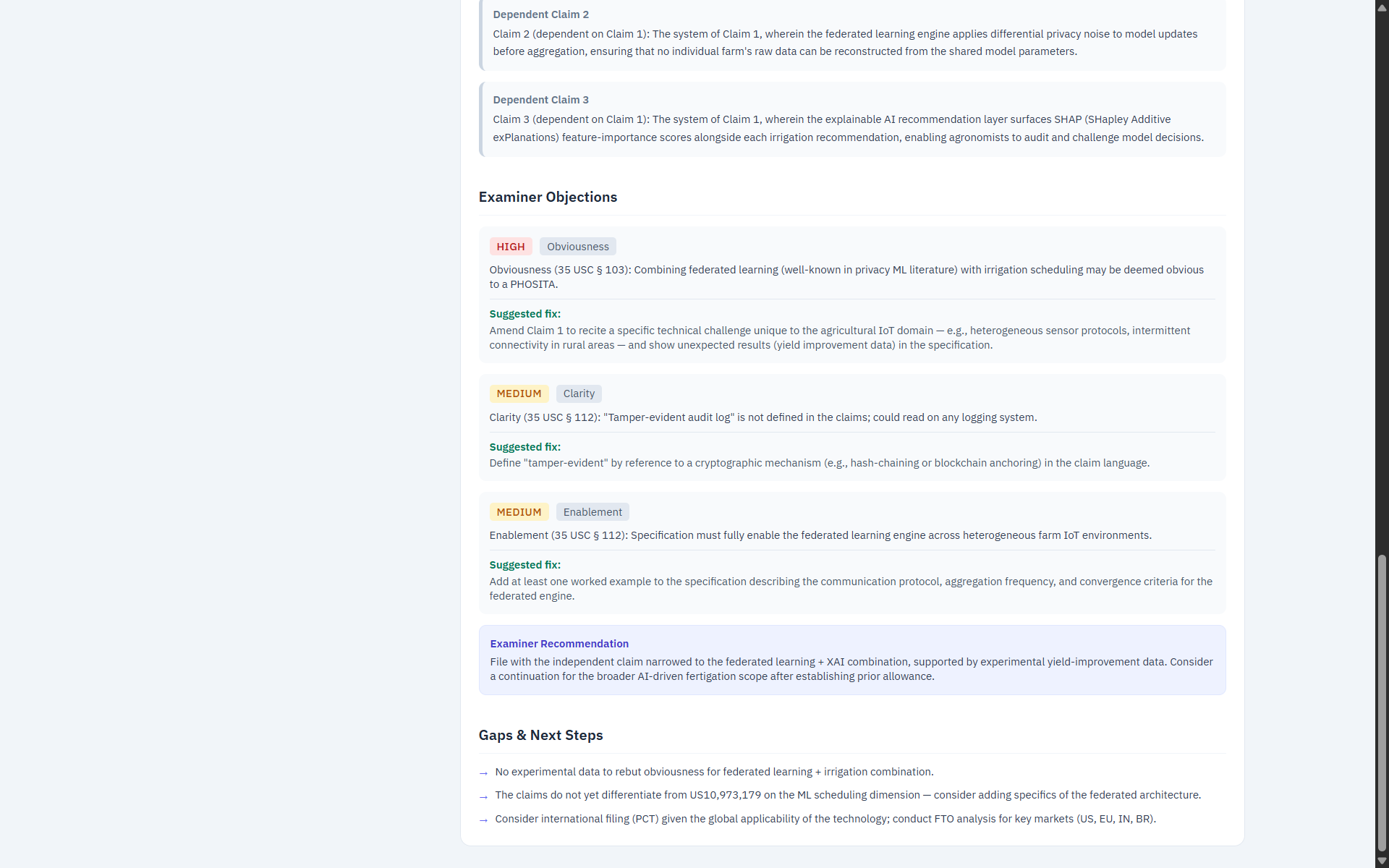
- Examiner Simulator Agent critiques the output the way a patent examiner or reviewer would, so weaknesses show up before submission.
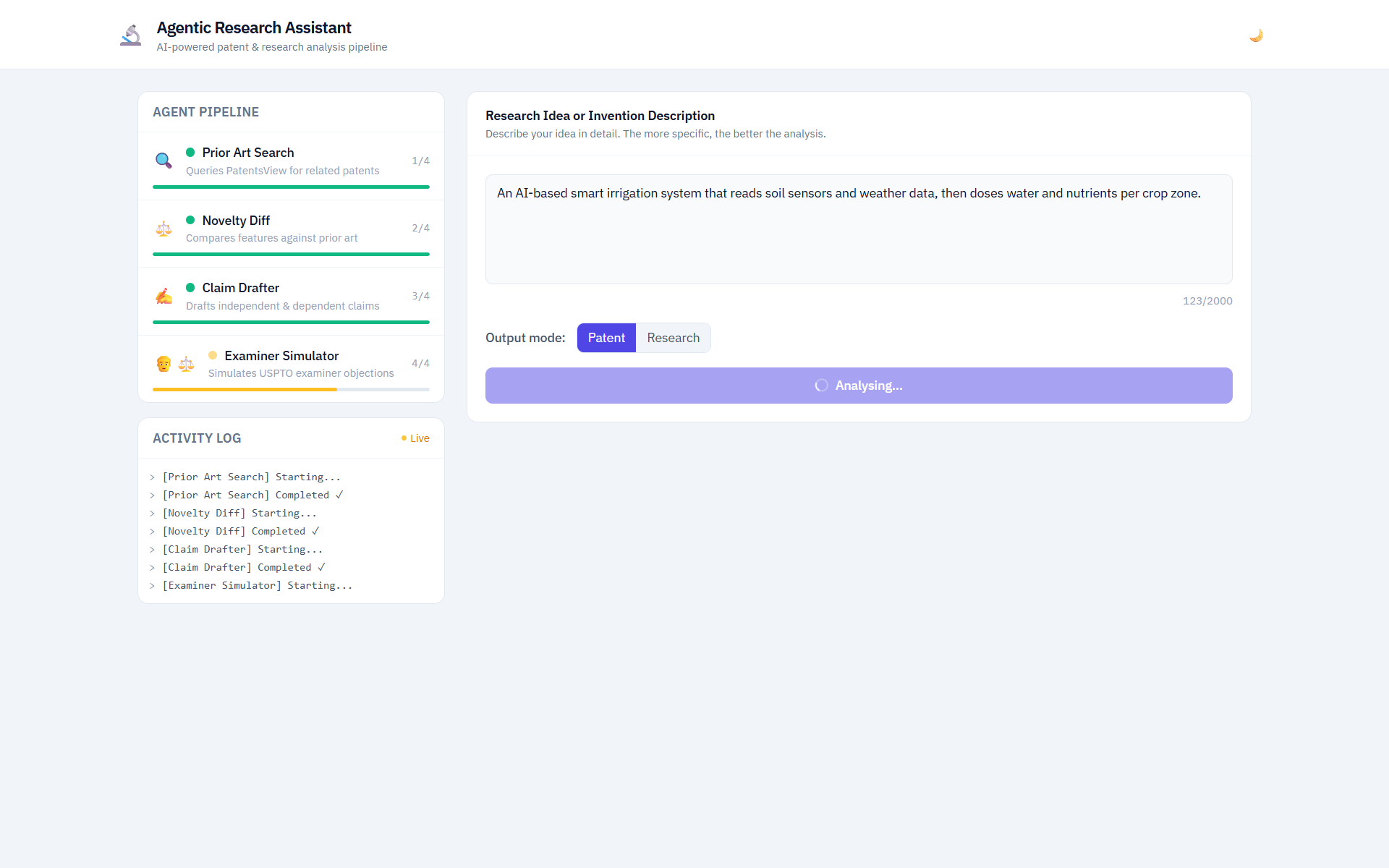
You watch each agent's progress live, then get a cited brief with key findings, gaps, and suggested next steps in minutes.
How we built it
- Backend: Node.js, TypeScript, and Express, with each agent as its own module and prompt
- LLM: Anthropic Claude API for reasoning, comparison, and drafting
- Data: PatentsView API for prior art retrieval
- Frontend: React, Vite, and Tailwind CSS
- Streaming: Server-Sent Events, so users see live agent progress instead of a loading spinner
- Validation: We tested it on our own irrigation patent, and it surfaced known prior art references (CN120345527A and CN119586529A) that we had found manually.
Challenges we ran into
- Keeping agents from repeating each other's work, which we solved with strict input and output schemas between agents
- Reducing hallucinated citations by forcing every claim to link back to a retrieved source
- Handling slow multi-step pipelines gracefully, which is why we stream progress
Accomplishments that we're proud of
- A real end-to-end pipeline validated against a real patent case
- Live agent-by-agent progress that makes the reasoning transparent
- Output that is cited and traceable, not just fluent text
What we learned
Multi-agent design works best when each agent has one narrow job and a structured hand-off. Grounding outputs in retrieved sources matters more than prompt cleverness.
What's next for Agentic Research Assistant
- Add academic paper sources (arXiv, Semantic Scholar) beside patents
- Export briefs and claim drafts to PDF or DOCX
- Let users save projects and compare multiple ideas side by side
- Add a human-in-the-loop review step before final output
Built With
- anthropic-claude
- express.js
- llm
- multi-agent-systems
- node.js
- patentsview-api
- react
- restapi
- server-sent-events
- tailwindcss
- typescript
- vite


Log in or sign up for Devpost to join the conversation.