-
-
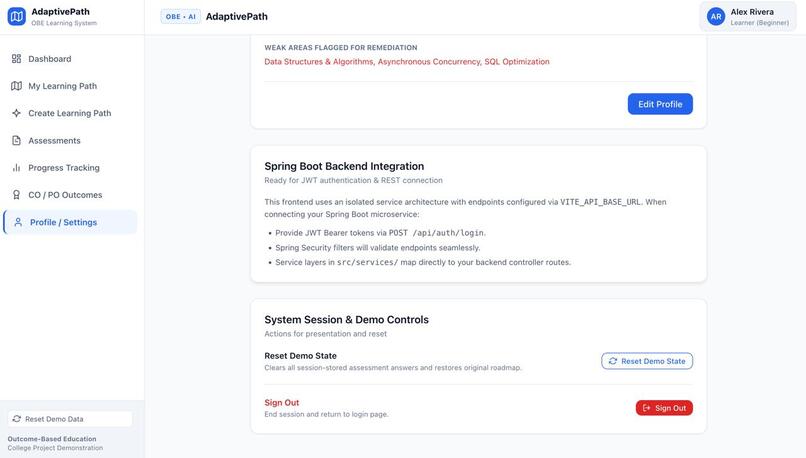
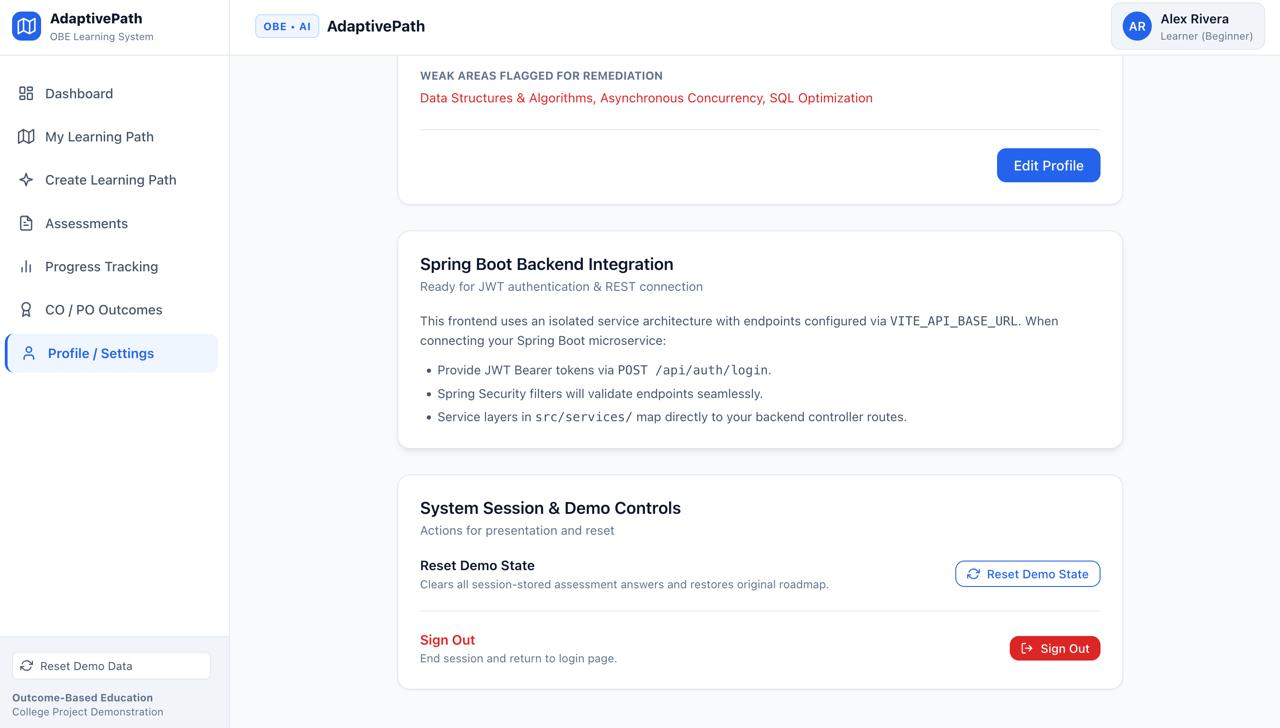
Profile / Settings
-
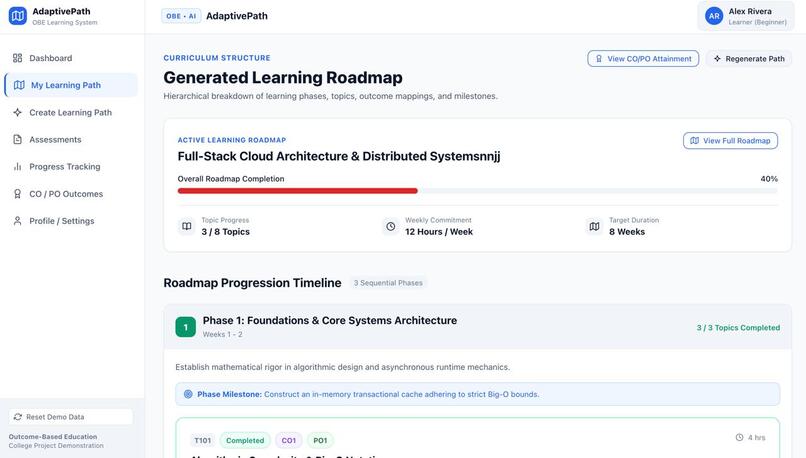
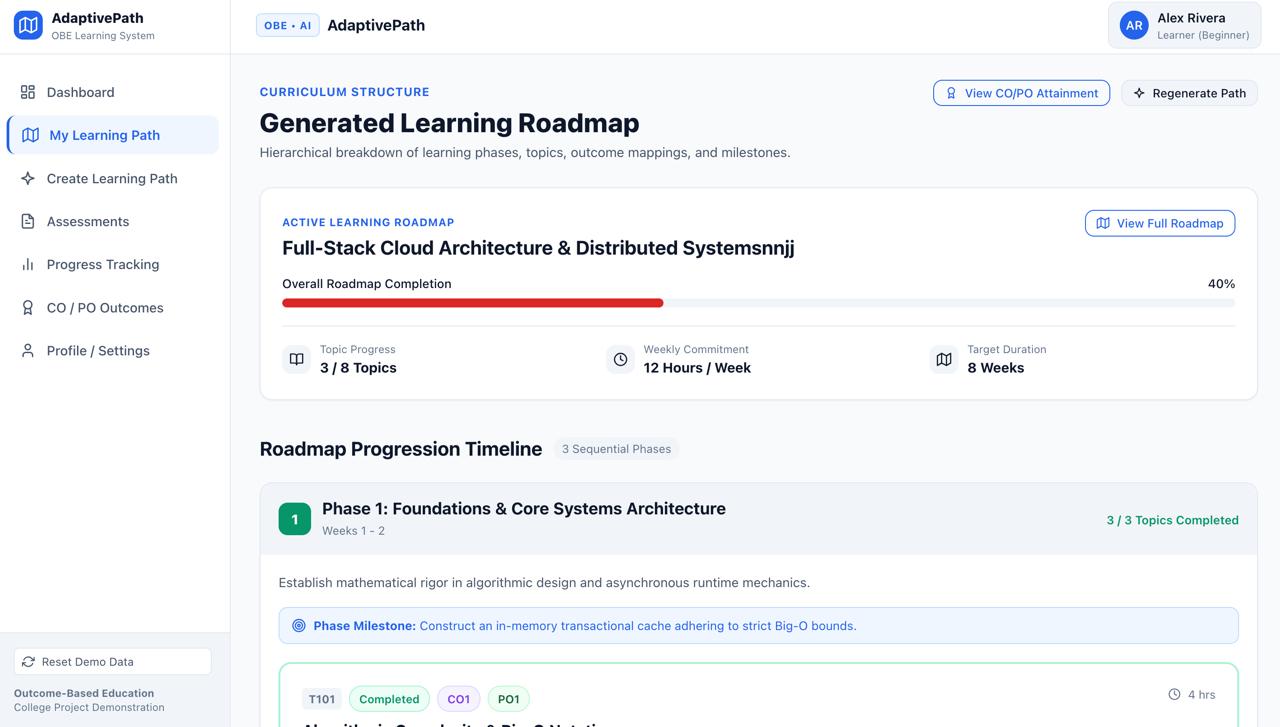
Generated Learning Path
-
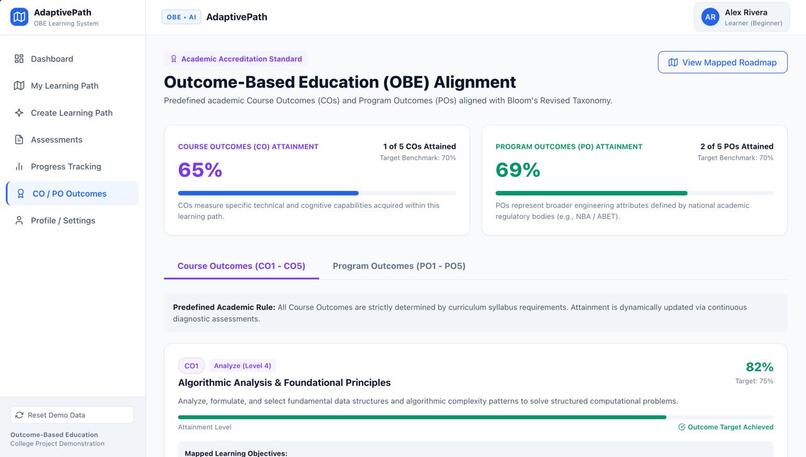
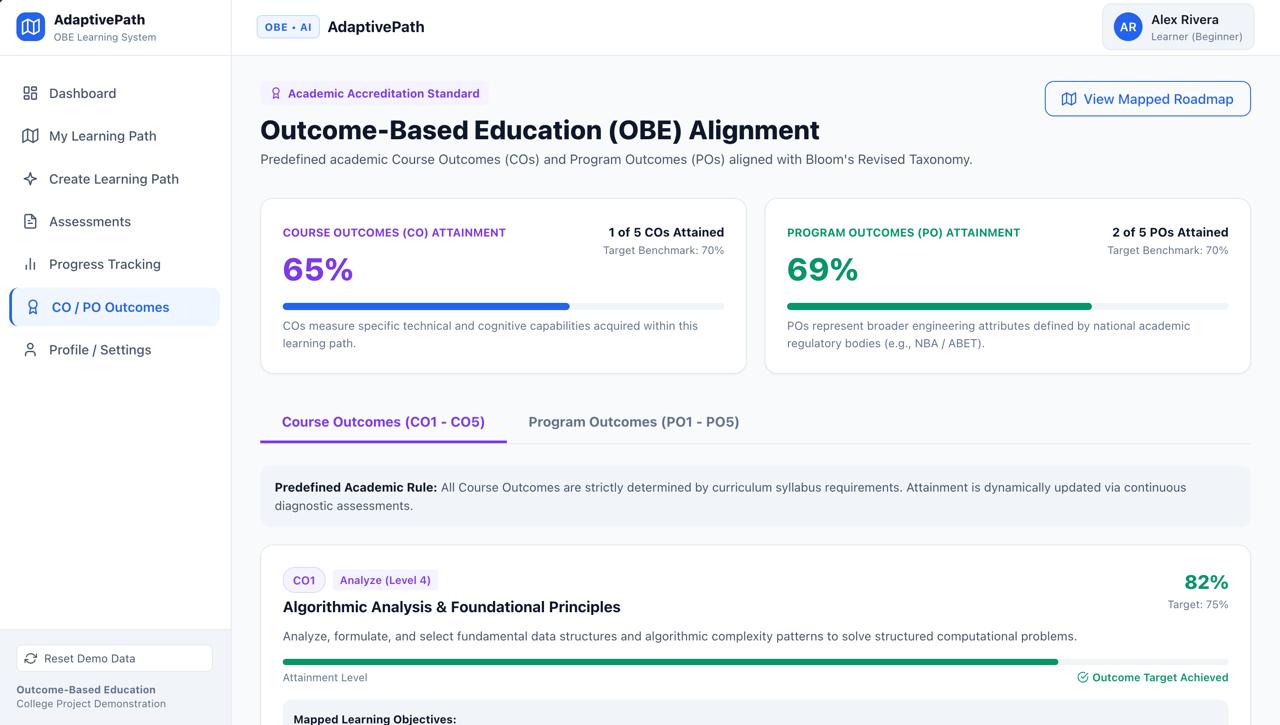
CO / PO Outcomes
-
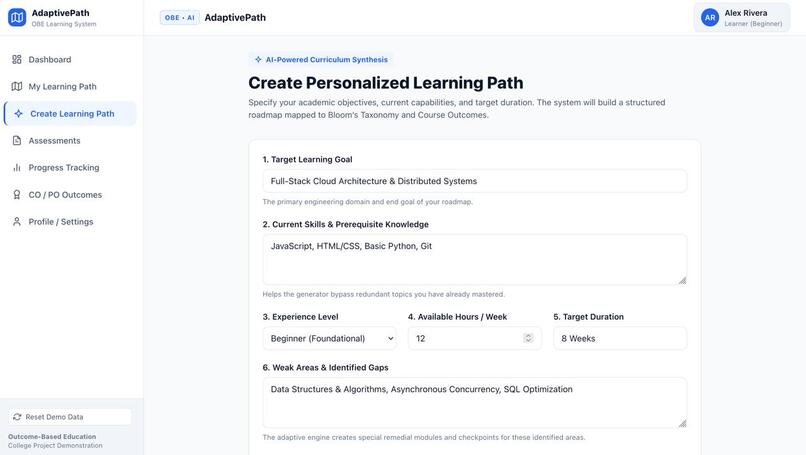
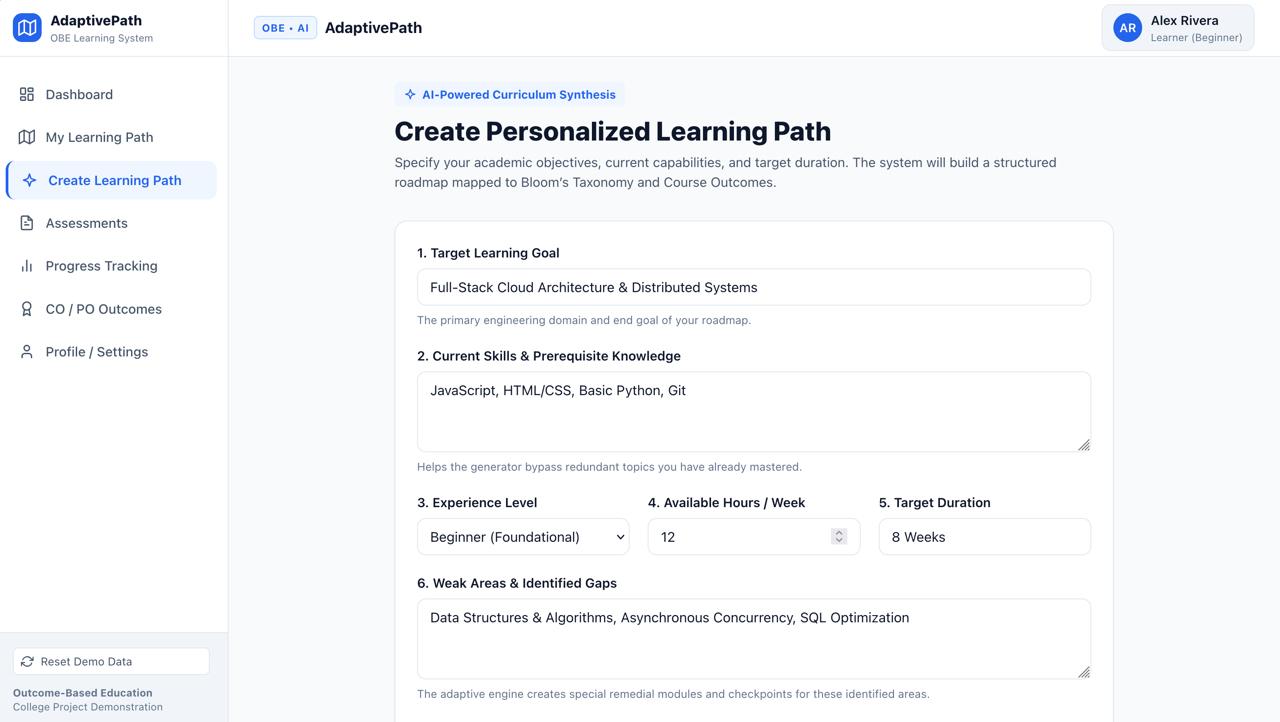
Create Personalized Learning Path
-
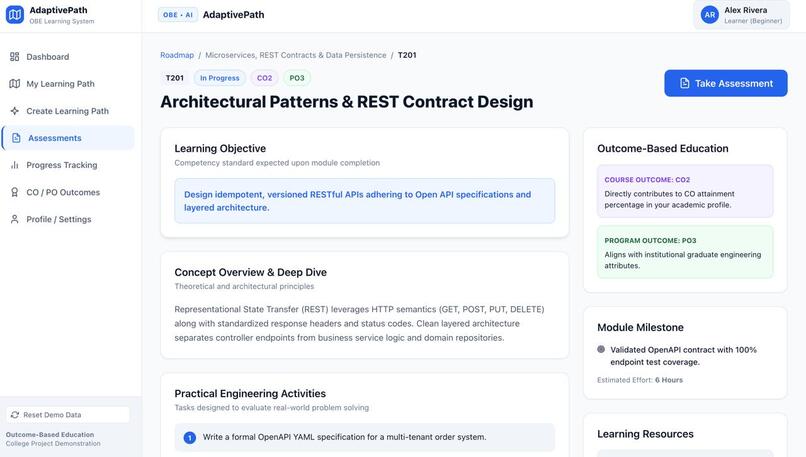
Assessment
-
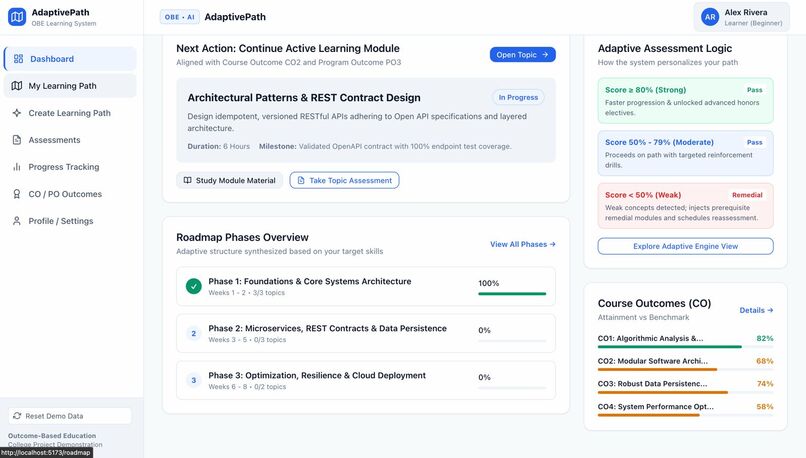
Dashboard
-
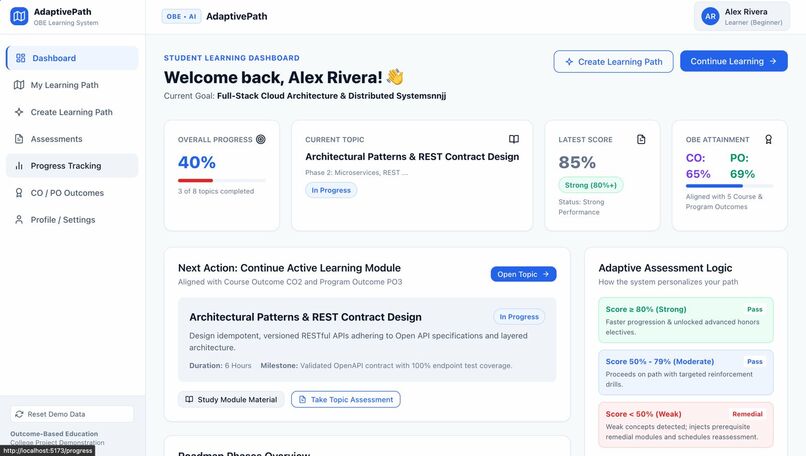
Dashboard
-
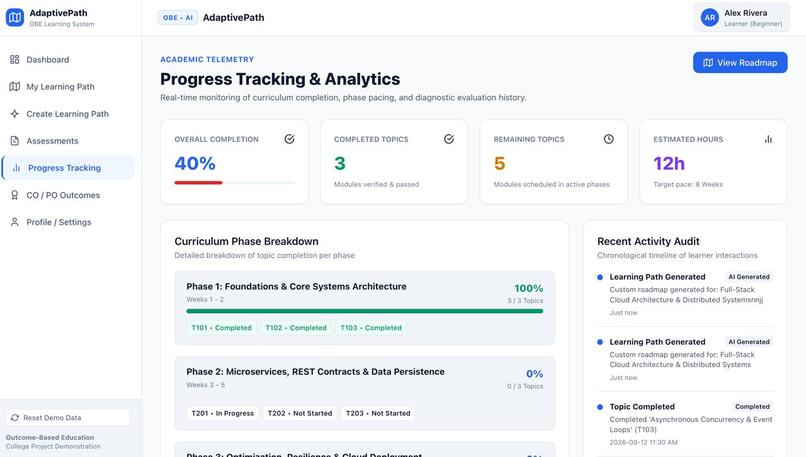
Progress Tracking & Analysis
Inspiration:
Outcome-Based Education (OBE) is how Indian engineering colleges are accredited. Every course is mapped to Course Outcomes (COs) and Program Outcomes (POs). That structure disappears when students learn on their own, whether it’s self-study, upskilling or closing a skill gap before placements. They use Coursera, Khan Academy or a chatbot and get generic recommendations that have nothing to do with the outcomes their curriculum is built around.
We also looked at the CO-PO tools colleges already use. They map faculty-defined, static course content to outcomes for accreditation paperwork. We couldn’t find anything that maps a personalized, AI-generated student learning path to those outcomes, so that became our project.
What it does:
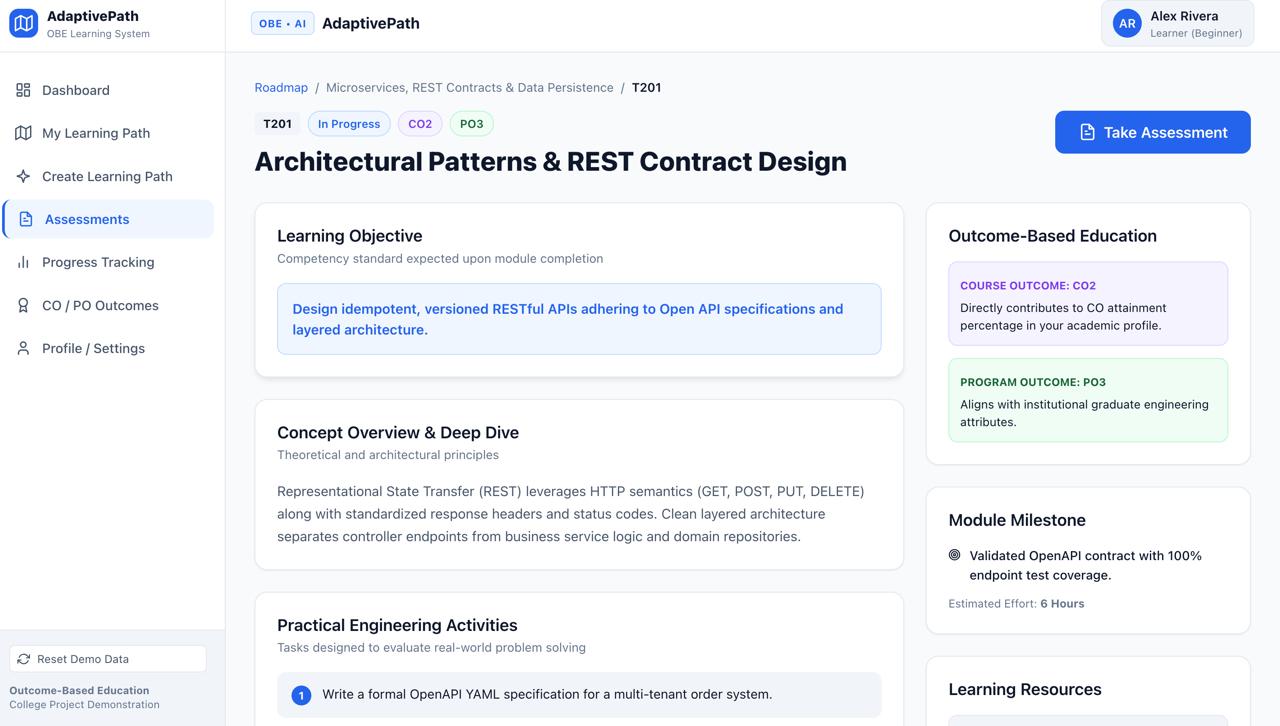
A student enters a goal, current skills, experience level, weak areas and available time. An LLM generates a phase-by-phase roadmap with topics, learning objectives, resources and milestones.
Each learning objective is tagged to a predefined Course Outcome, and a fixed CO-to-PO matrix maintained by the system gives the Program Outcomes. The LLM never invents or assigns these outcomes itself.
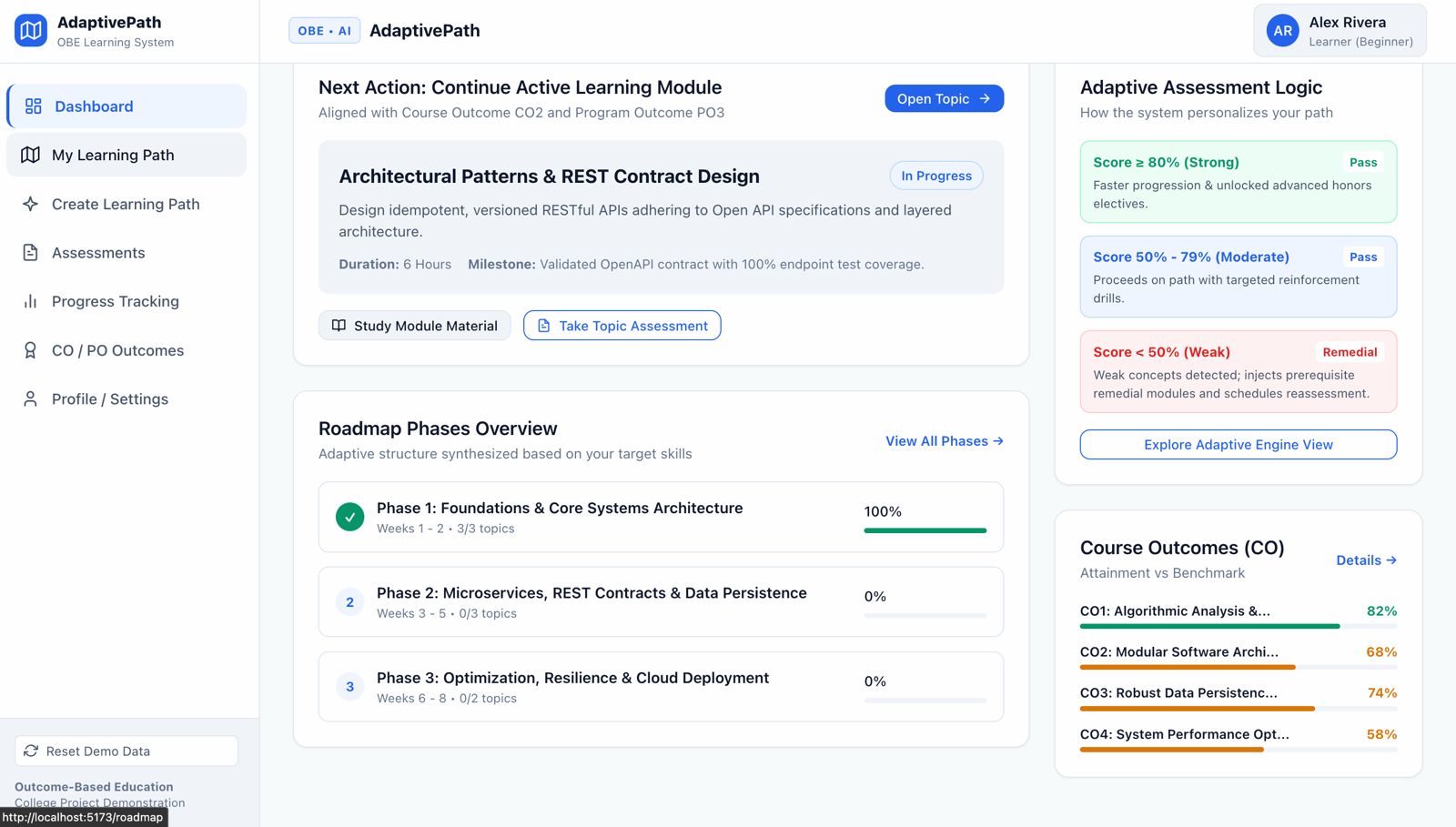
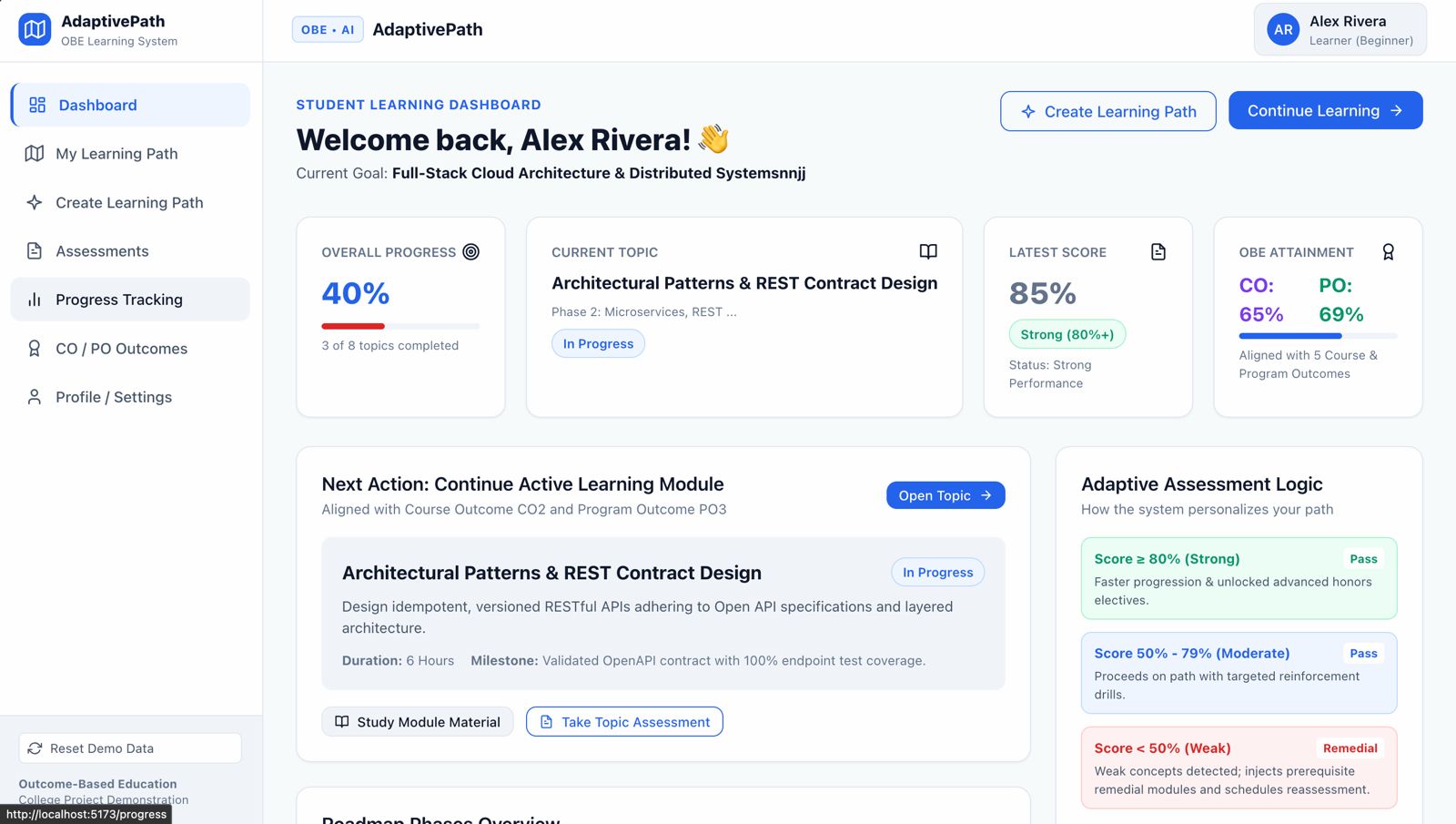
Students then take topic assessments, and the system adapts the remaining roadmap based on the score:
80% or above (strong): skip reinforcement or introduce an advanced topic 50% to 79% (moderate): add extra practice Below 50% (weak): identify weak concepts, insert remedial or prerequisite topics, then reassess
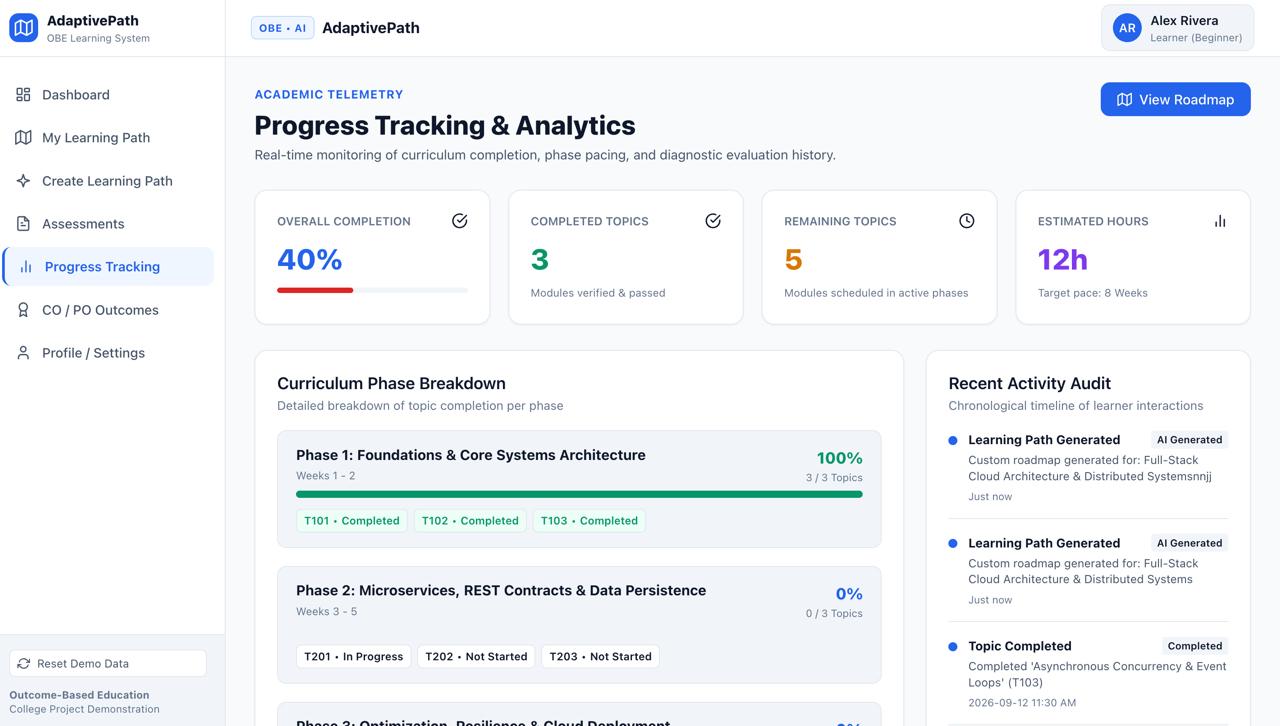
Completed weeks stay intact, and the results update the CO and PO attainment views.
How we built it:
We did the groundwork before writing code. We ran a literature survey across IEEE Xplore, Google Scholar and ResearchGate, comparing our approach with reinforcement-learning adaptive systems and prompt-engineered tutors like GPTutor. That led to a rule we never broke: the LLM generates learning content, but the academic outcome data stays predefined and under backend control.
The frontend is React, Vite and Tailwind CSS. The backend is Spring Boot with Spring Data JPA and Spring Security, with PostgreSQL for storage. The LLM API is called only from the backend so the key is never exposed to the browser. Authentication uses JWT and BCrypt. We started with a Flask backend in the design phase and moved to Spring Boot to match our team’s strengths.
We defined a shared REST API contract between the frontend, backend and AI layers before building, so all three could work in parallel. Adaptation uses deterministic score thresholds instead of a trained model. That keeps it explainable, needs no training data, and avoids the cold-start problem of reinforcement-learning systems, since a full roadmap is generated from a single request.
Challenges we ran into: Reliable CO/PO mapping. Letting an LLM assign academic outcomes freely risked inconsistent, unexplainable results. We constrained it to choosing from a fixed outcome list and keep the CO-to-PO matrix as static data. Scope control. Roadmap generation, assessments, adaptive replanning and outcome dashboards is a lot for one semester. We wrote down what not to build (no admin panel, no custom ML model, no multi-role auth) and prioritized the adaptive loop first. Differentiating from existing work. Our prior-art search showed that CO-PO automation tools already exist commercially in India. We had to narrow our claim to what we found nowhere else: personalized, LLM-generated learning paths tied to outcomes. Prompt reliability. Getting consistent structured JSON from an LLM across very different goals and skill levels took a lot of iteration on prompts and output validation. Non-deterministic output. The same input can produce slightly different roadmaps, so we validate responses against a schema and store every generated roadmap instead of regenerating it. Accomplishments that we’re proud of Checking our novelty claim against real patents, papers and commercial tools before committing to it. A CO/PO design that is explainable by construction. The AI can’t make up an outcome, because the mapping is predefined. A full provisional patent specification, with claims, abstract and block diagrams, for the outcome-aligned adaptive learning method. A complete architecture and API contract that let a three-person team build the frontend, backend and AI layers in parallel.
What we learned:
The hardest part of an AI project is deciding what the AI shouldn’t be trusted to do. Limiting the LLM to what it does reliably, and keeping the academically sensitive parts deterministic, made the system more defensible and more honest about what it can do.
We also learned to compare ideas by measurable criteria like training-data needs, cold-start behavior, plan granularity and explainability, instead of by feature lists.
What’s next for Agentic Personalized Learning Path Generator for OBE: Finish the adaptive replanning loop end to end, from assessment score to a visibly changed roadmap Build the CO/PO attainment visualizations and progress charts Measure the accuracy of objective-to-CO classification on a small labelled set, and pilot with students to tune the 50% and 80% thresholds Pursue the patent filing for the outcome-mapping method through our college’s IPR cell
Built With
- api
- bcrypt
- css
- html
- java
- javascript
- jpa
- jwt
- llm
- postgresql
- prompt
- prompt-engineering
- react
- security
- spring
- tailwind
- vite


Log in or sign up for Devpost to join the conversation.