-
-
Team Agentic Node
-
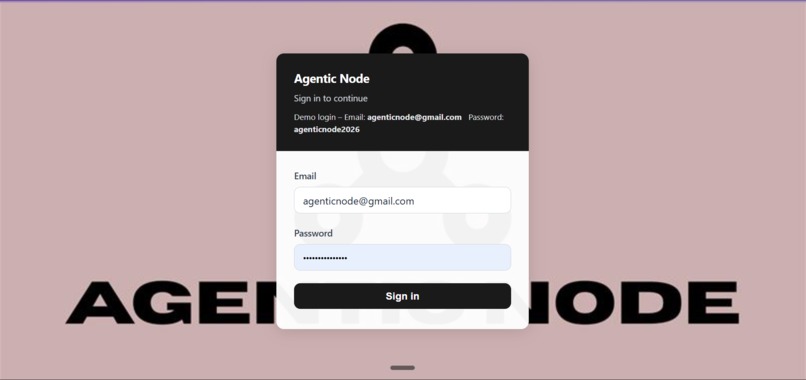
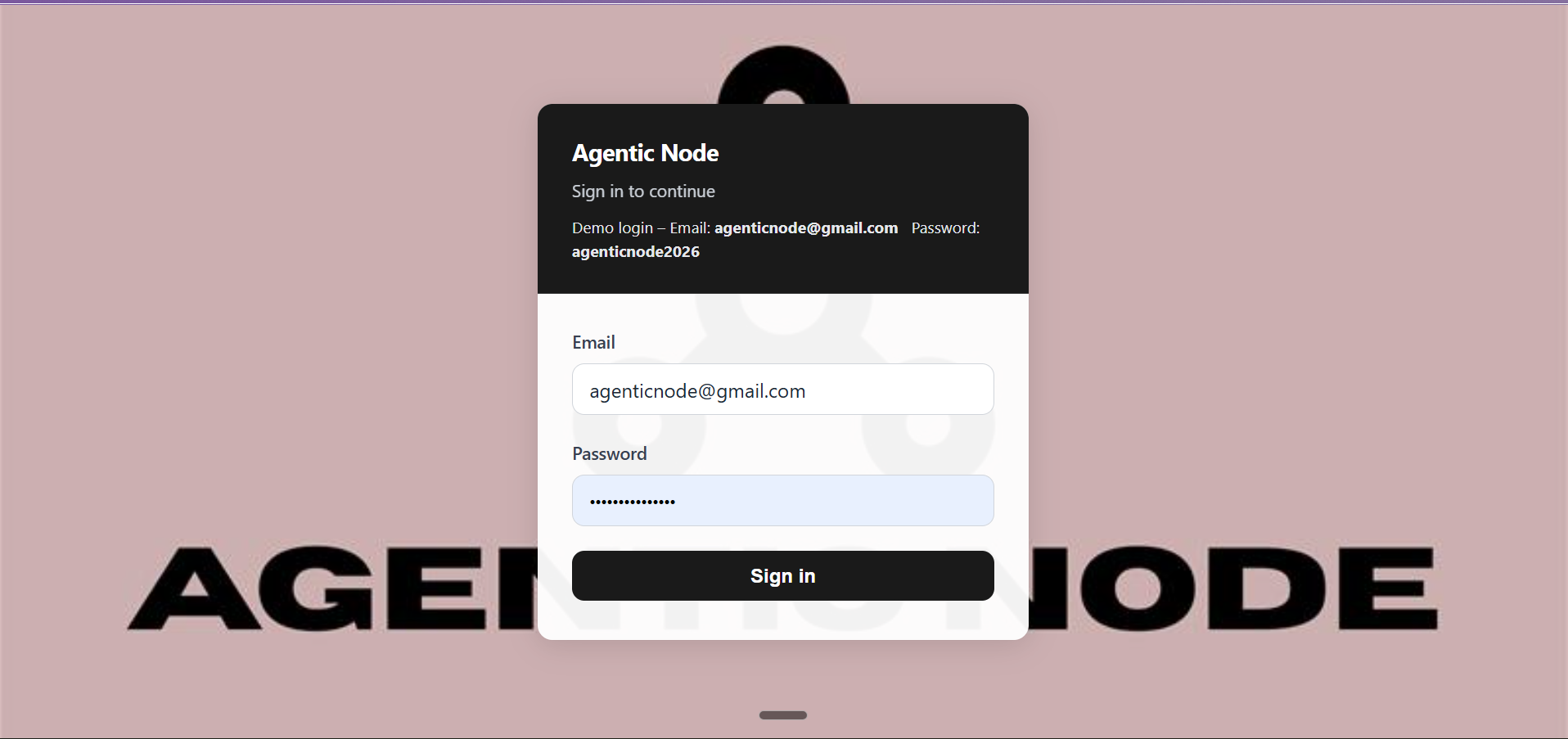
Login Page
-
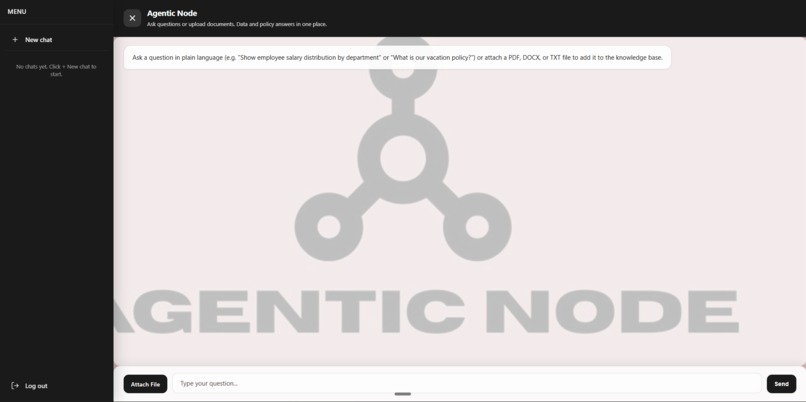
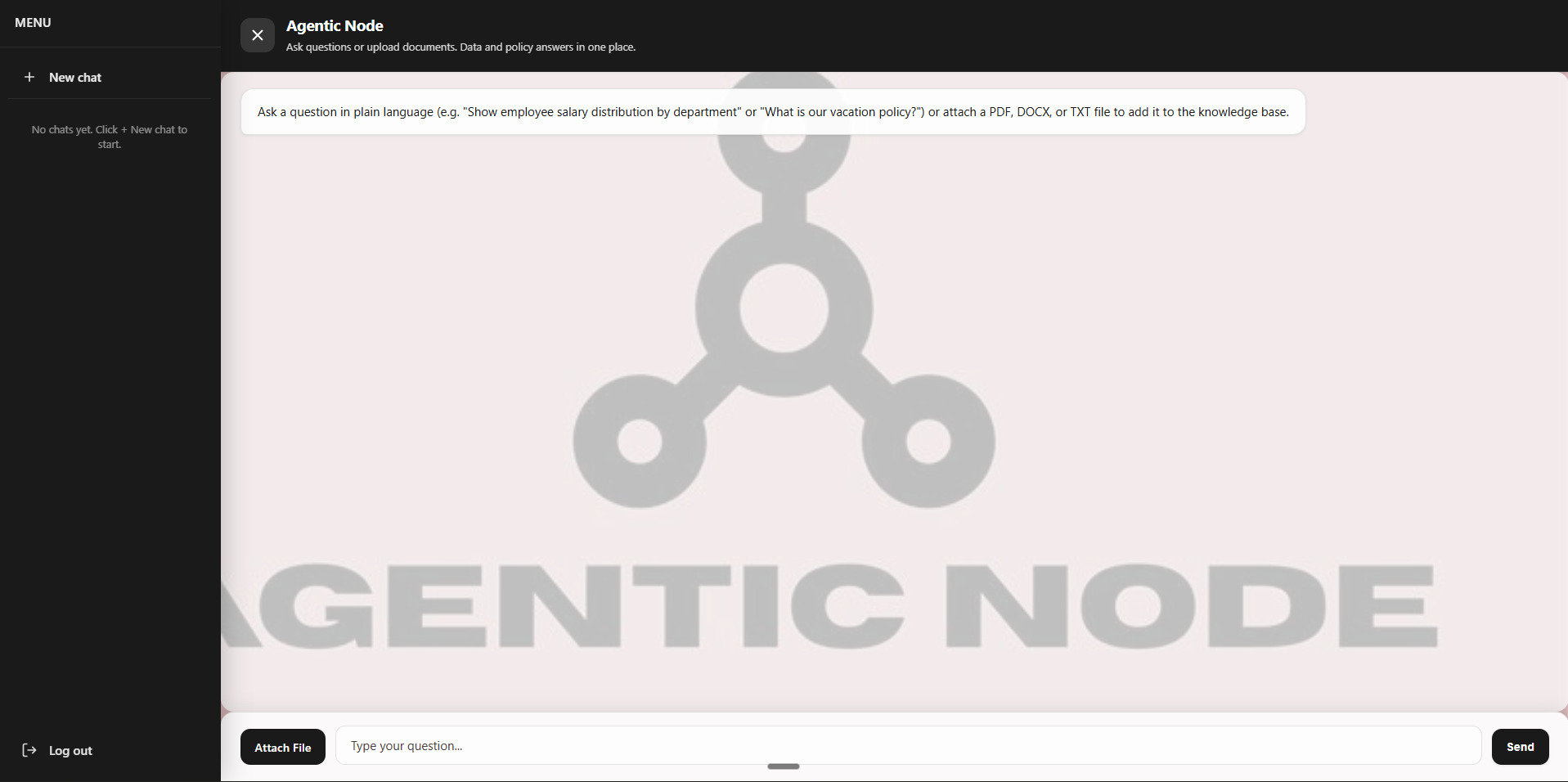
Chat Interface
-
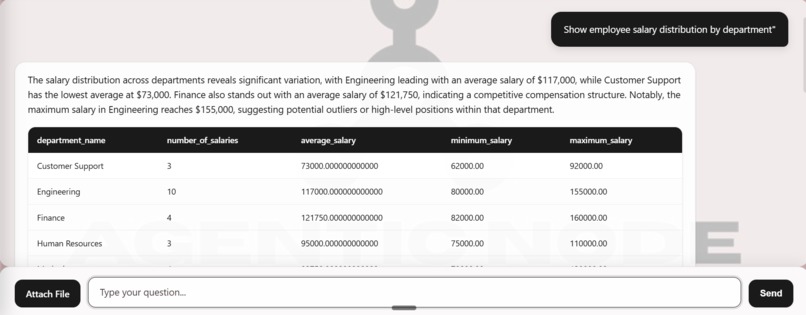
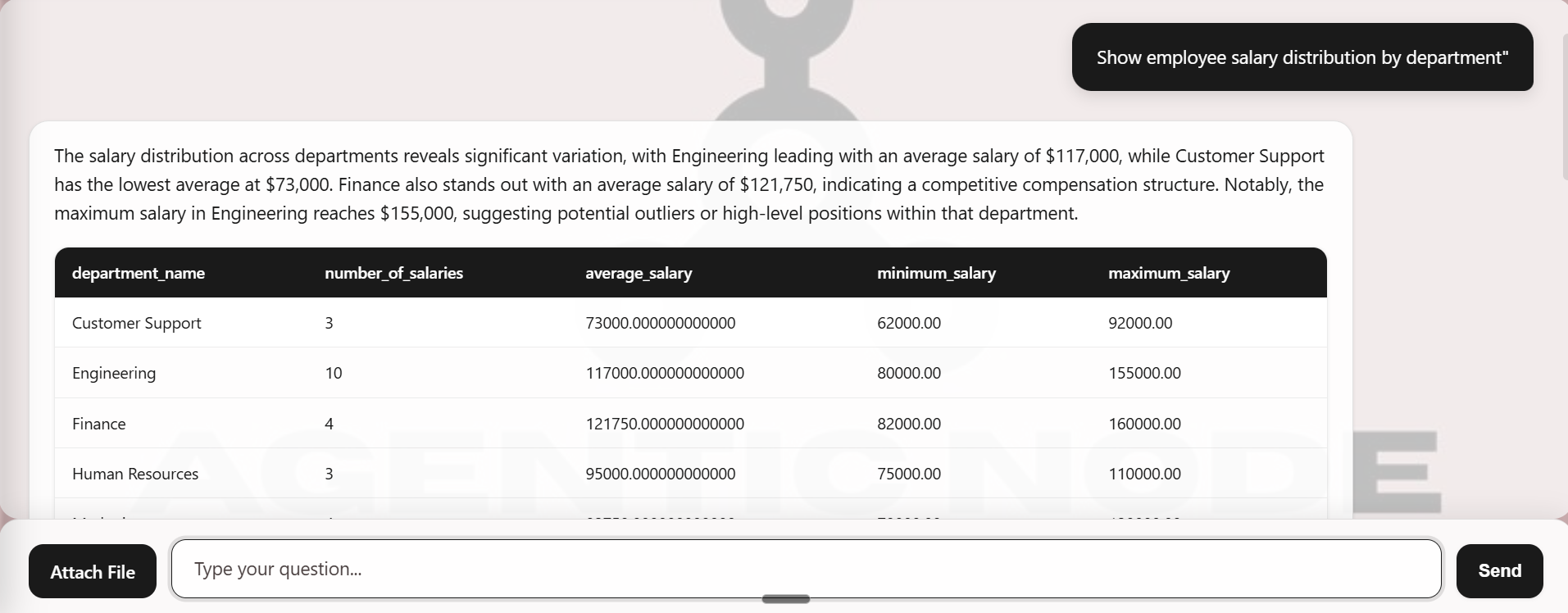
Table Generation via Query
-
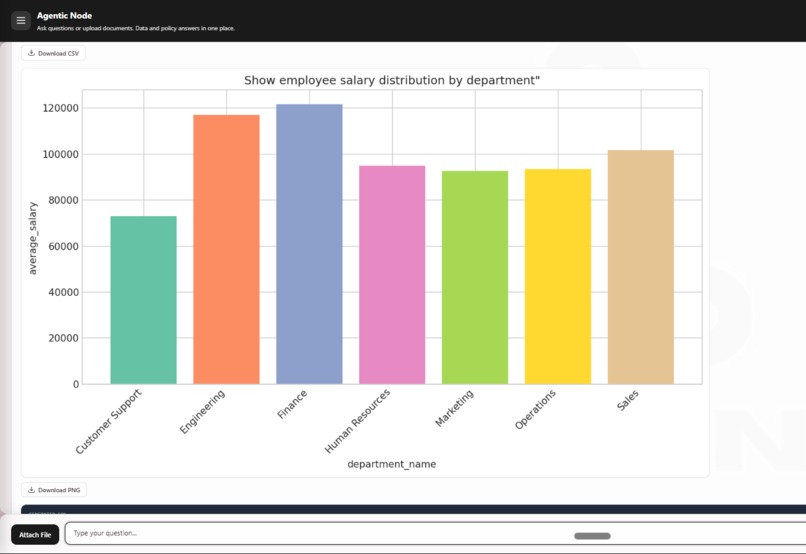
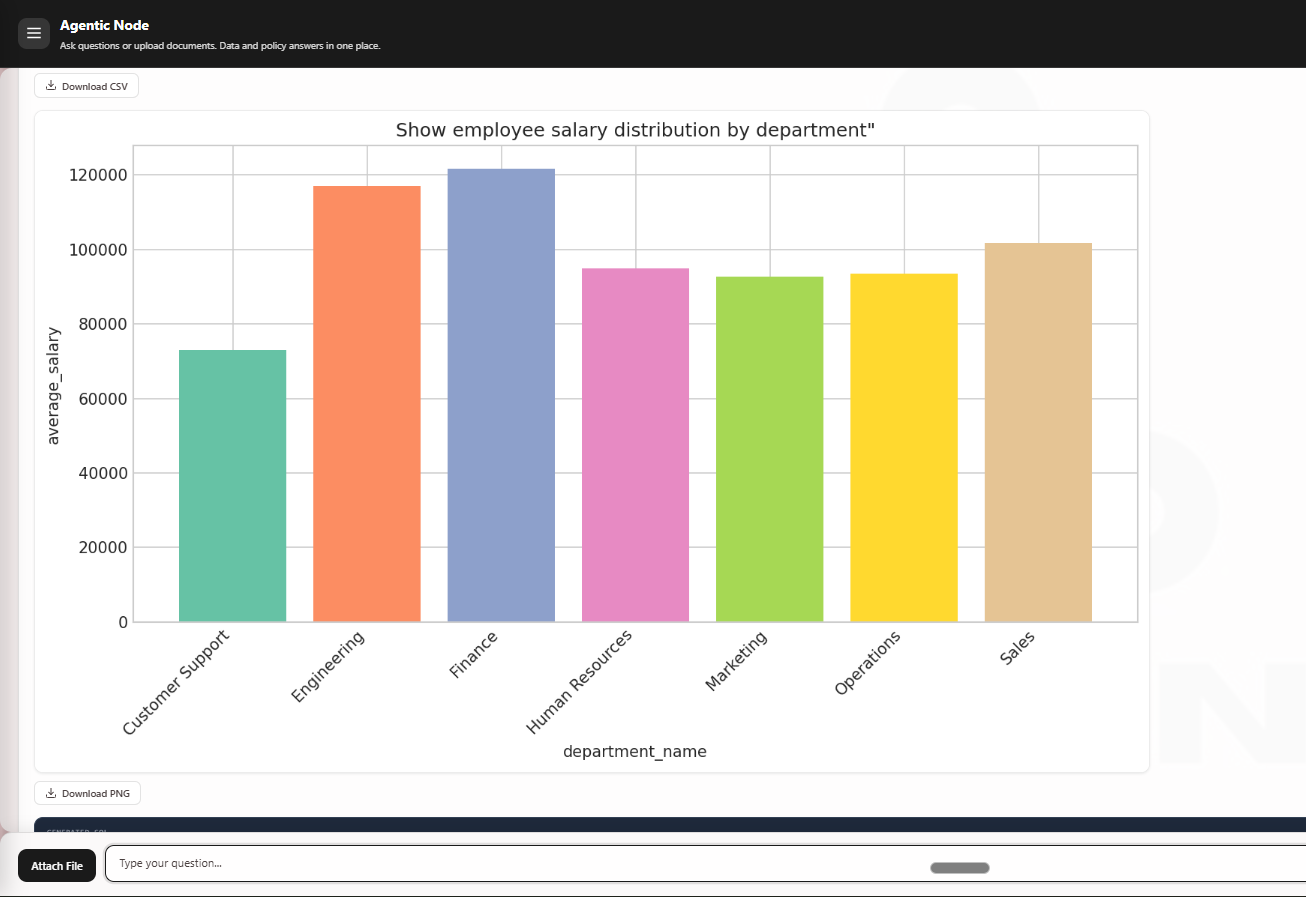
Chart Generation via Query
-
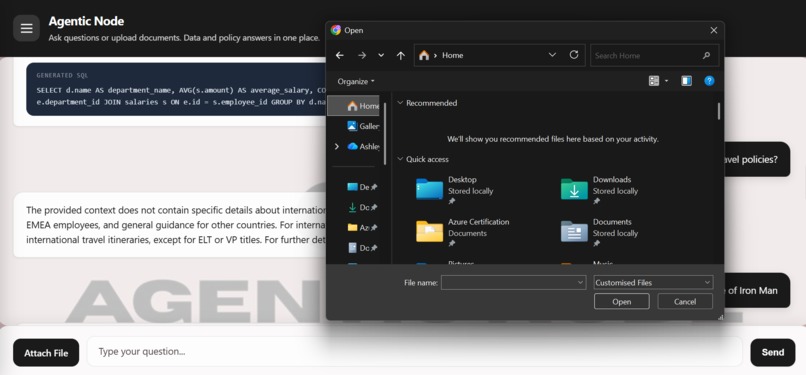
Attaching PDFs for information retrieval
-
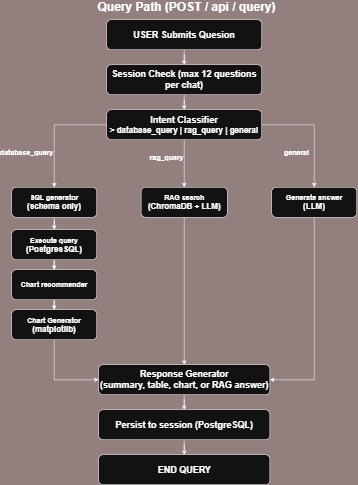
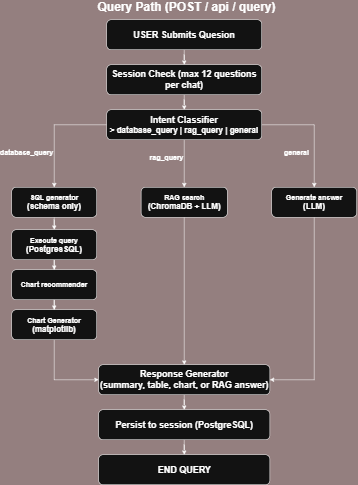
Process Flow Diagram

Inspiration
Data is everywhere in organizations, but accessing it is still surprisingly difficult. Most employees rely on analysts or technical teams to write SQL queries or build dashboards before they can understand what the data is saying. At the same time, companies also store large amounts of information in internal documents that are rarely searchable in an intelligent way.
We wanted to remove that barrier. The idea behind Agentic Node was simple: what if anyone in an organization could ask questions in plain English and instantly get insights from both databases and internal documents?
Instead of building another dashboard, we focused on building an AI-powered backend system that acts like a data analyst.
What it does
Agentic Node allows users to interact with structured databases and internal documents using natural language.
A user can ask questions like “Show employee distribution by department” or “What are the HR policies for leave?” and the system will automatically retrieve the relevant information.
For database queries, the system converts natural language into SQL, securely executes the query, and returns results as text insights, tables, or charts.
For documents, it uses Retrieval-Augmented Generation (RAG) to search uploaded files such as PDFs or policy documents and generate context-aware answers.
The key idea is that users do not need to know SQL, database structure, or where documents are stored. They simply ask questions and receive insights.
How we built it
We designed Agentic Node as a modular backend system powered by agent-based workflows.
The core logic is orchestrated using LangGraph, where different nodes handle specific responsibilities like understanding the user query, generating SQL, executing database queries, and producing visual insights.
The backend APIs are built using FastAPI, allowing external applications or dashboards to interact with the system easily.
For structured data, we used PostgreSQL and SQLAlchemy to manage database operations. Instead of exposing database records to the LLM, we only provide the database schema, allowing the model to generate queries while keeping the data layer secure.
To support document-based queries, we implemented a RAG pipeline that processes uploaded files, generates embeddings, and stores them in a vector database for semantic search.
The result is a backend system that combines data analytics, document intelligence, and agent-based reasoning.
Challenges we ran into
One of the biggest challenges was designing a system where the AI could generate meaningful database queries without having direct access to the data itself. Balancing accuracy with security required careful handling of schema information and query validation.
Another challenge was orchestrating different components—database queries, chart generation, and document retrieval—into a single intelligent workflow. Making these pieces work together in a flexible and modular way took several iterations.
We also had to ensure the system could dynamically decide whether a question should be answered using the database, the document knowledge base, or both.
Accomplishments that we're proud of
What we’re most proud of is building a system that demonstrates how AI agents can interact with real enterprise data systems in a secure and structured way.
Agentic Node successfully combines:
- Natural language to SQL conversion
- Automated chart and insight generation
- Document-based question answering with RAG
- Secure interaction with enterprise databases
Instead of a simple chatbot, we built a backend intelligence layer that can power future analytics tools.
What we learned
Building Agentic Node gave us practical experience with agentic architectures and real-world AI system design.
We learned how to structure complex AI workflows using LangGraph, how to integrate LLM reasoning with traditional backend systems, and how to design AI solutions that respect data security constraints.
More importantly, we saw how powerful AI becomes when it is connected to real data rather than operating in isolation.
What's next for Agentic Node
Agentic Node is just the beginning.
Our next steps are to expand the platform with a visual analytics interface, support for multiple databases, and more advanced charting capabilities. We also plan to introduce role-based access control and real-time query streaming.
The long-term vision is to turn Agentic Node into a universal AI data interface, where organizations can interact with their data systems as naturally as having a conversation.
Built With
- fastapi
- github
- langchain
- langgraph
- openai
- postgresql
- railway
- sqlalchemy


Log in or sign up for Devpost to join the conversation.