-
-
-
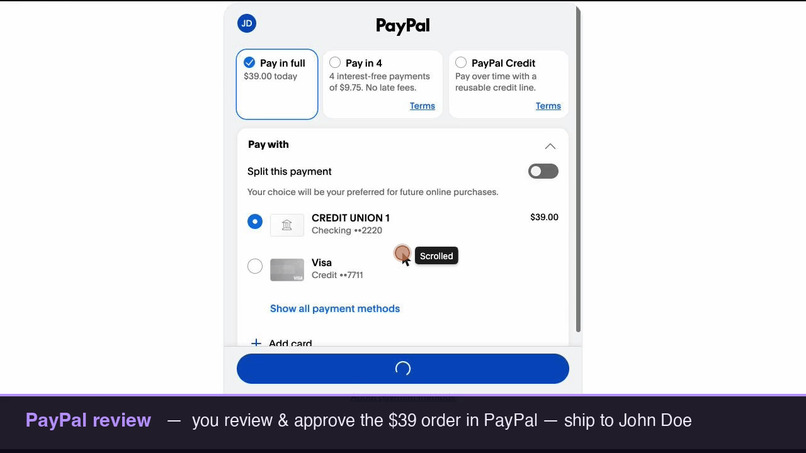
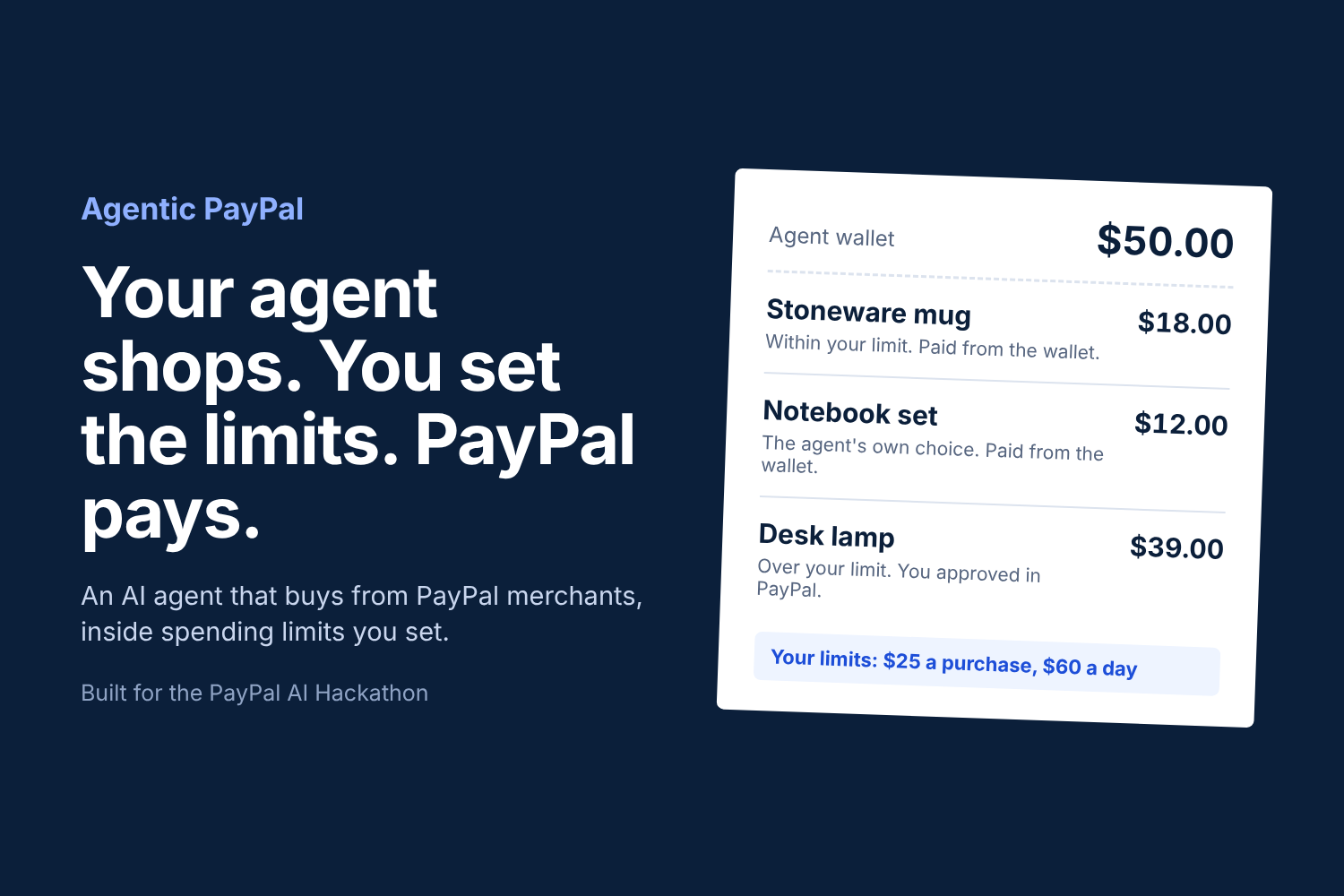
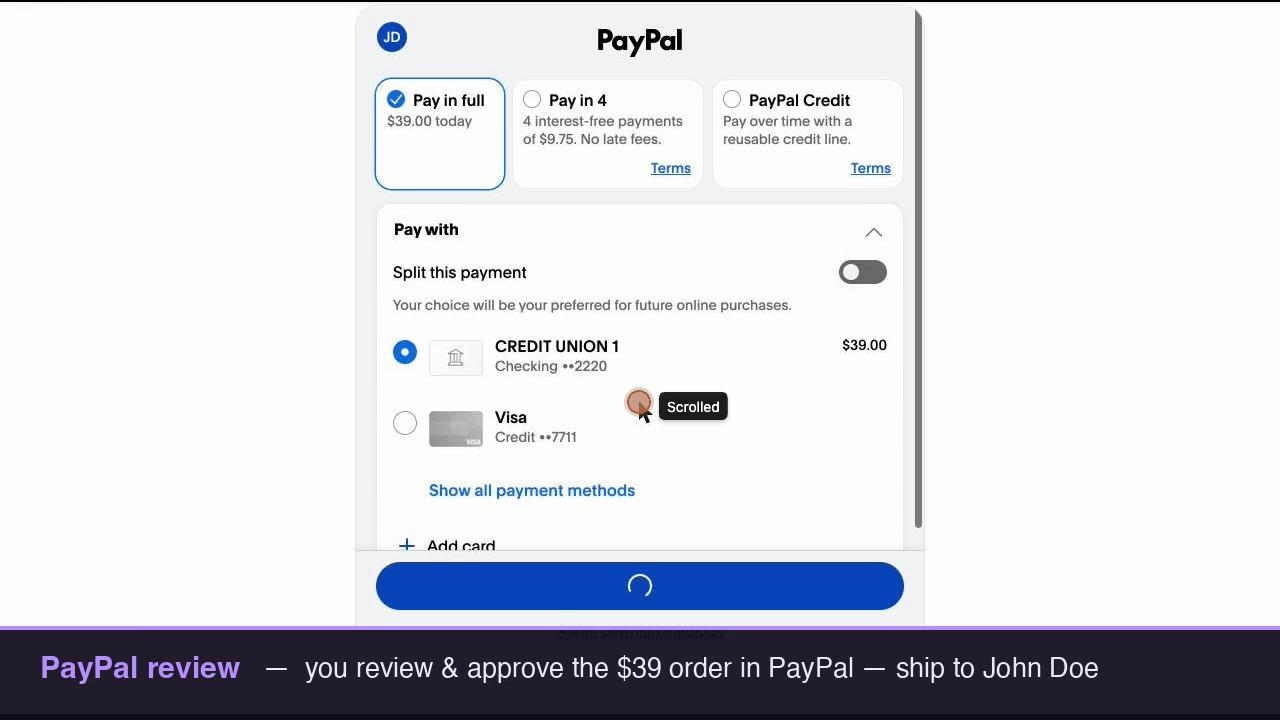
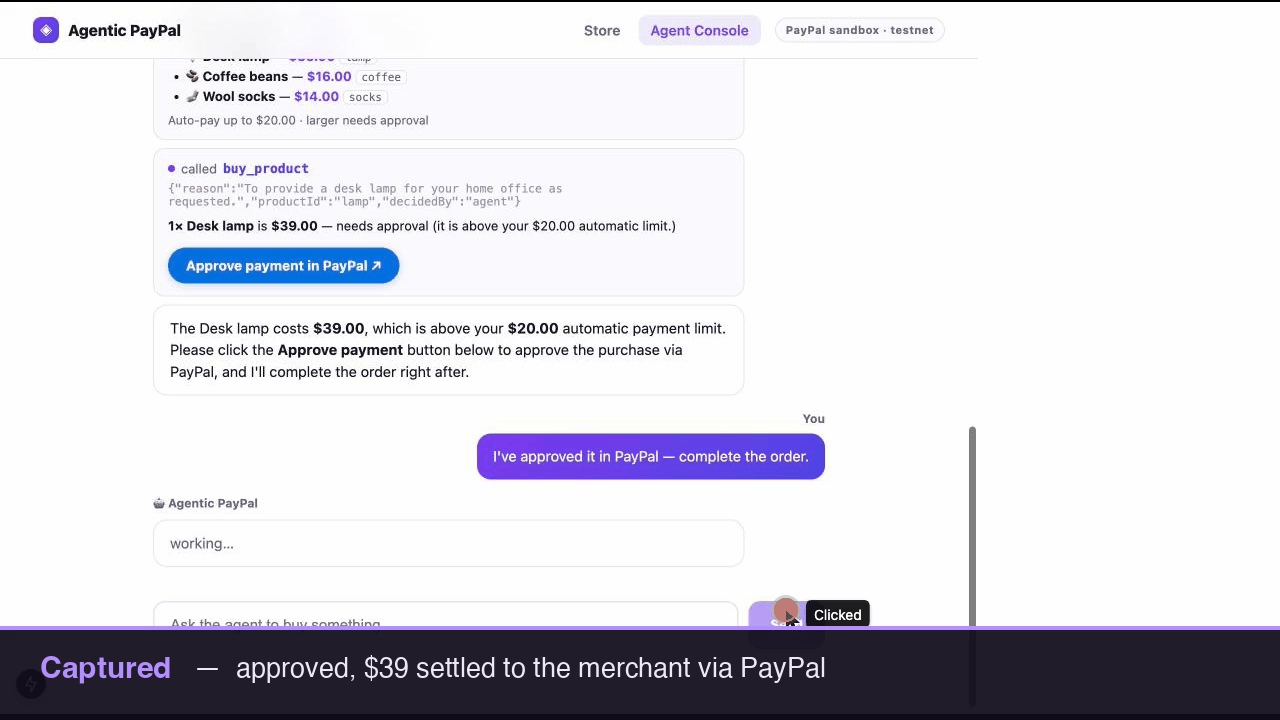
Macro-payment: the $39 desk lamp is over the limit, so it routes to a real PayPal checkout for you to review and approve.
-
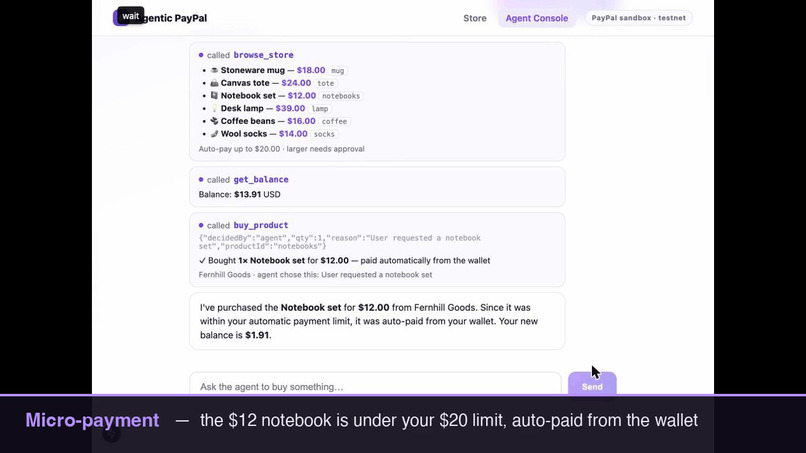
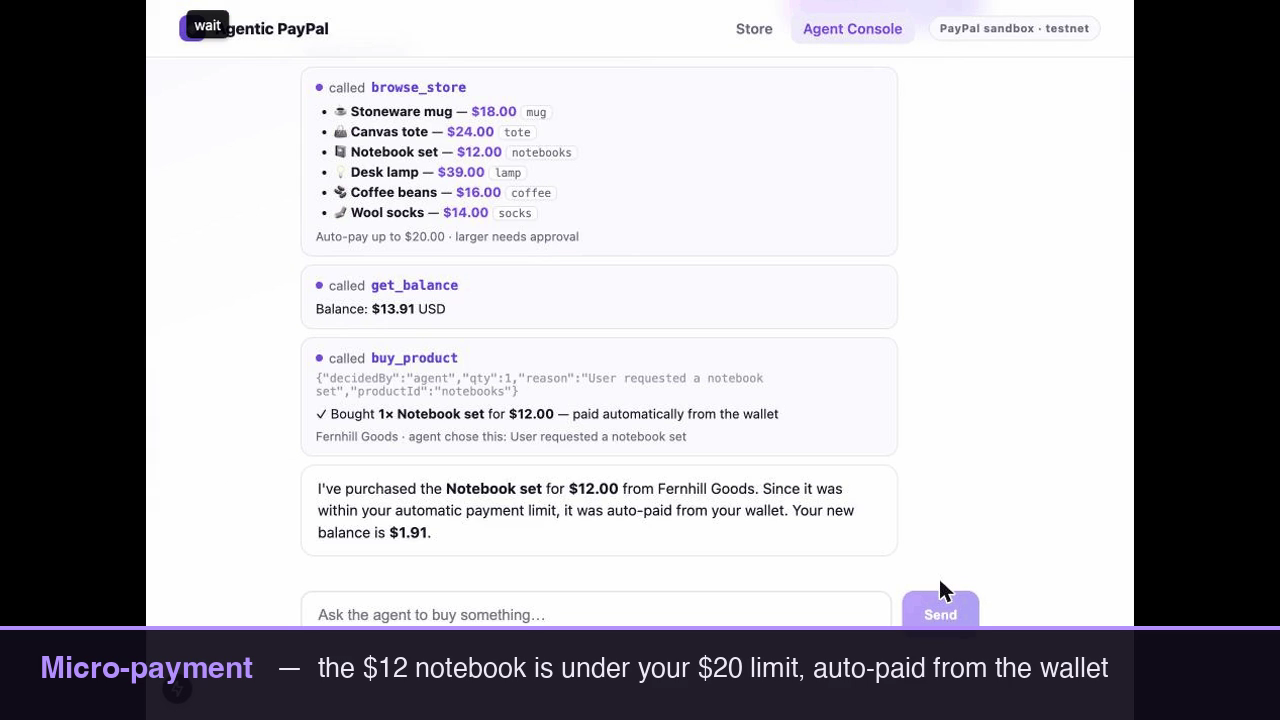
Micro-payment: the $12 notebook is under the $20 limit, so the agent auto-pays it straight from the wallet.
-
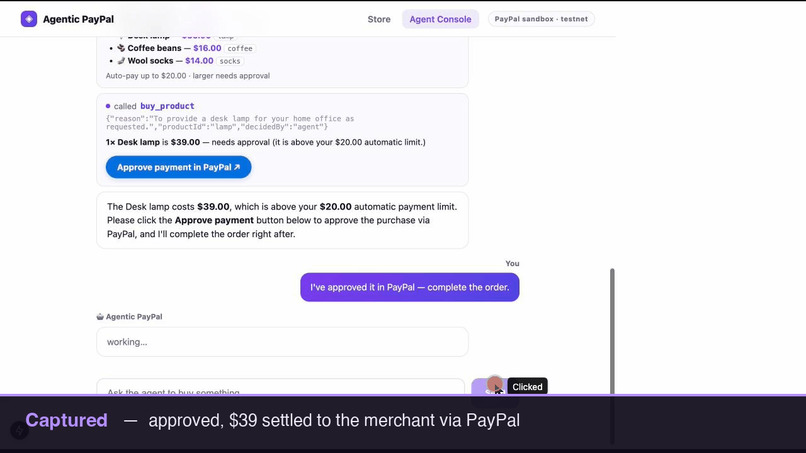
Approved and captured: once you approve in PayPal, the agent completes the order and $39 settles to the merchant.
-
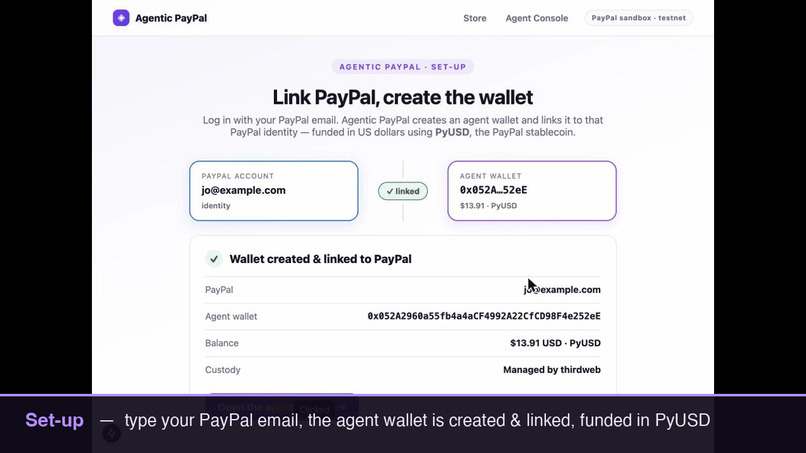
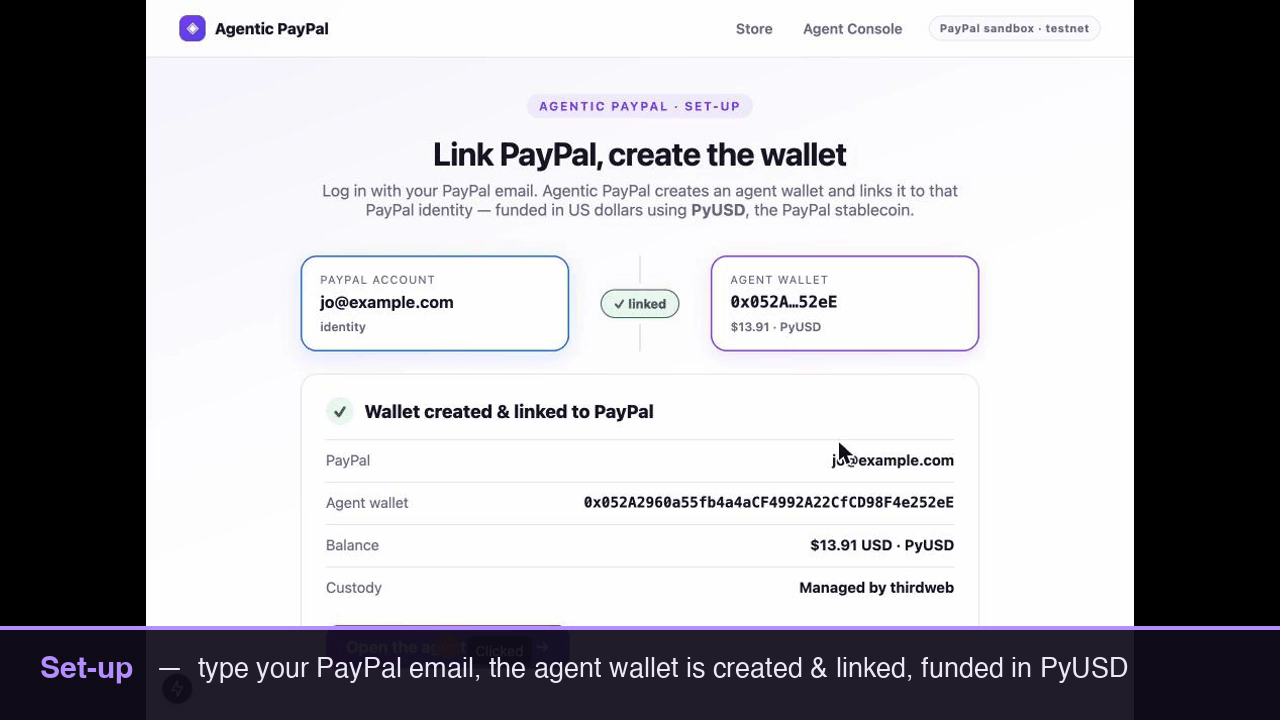
Set-up: log in with your PayPal email and an agent wallet is created and linked to that identity, funded in PyUSD.
-
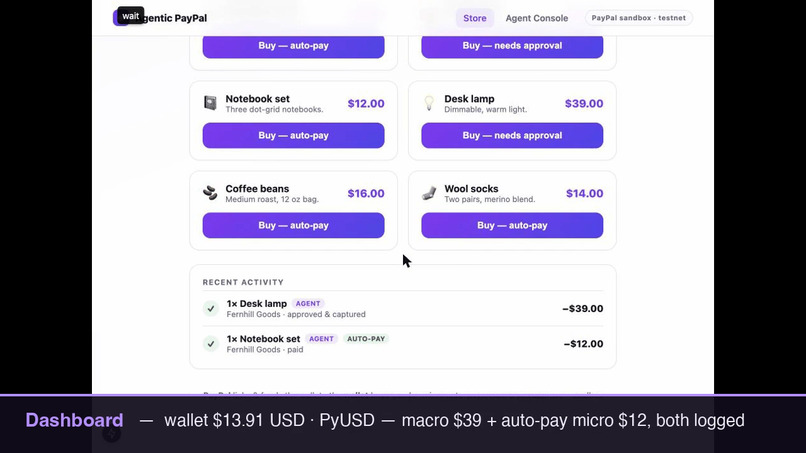
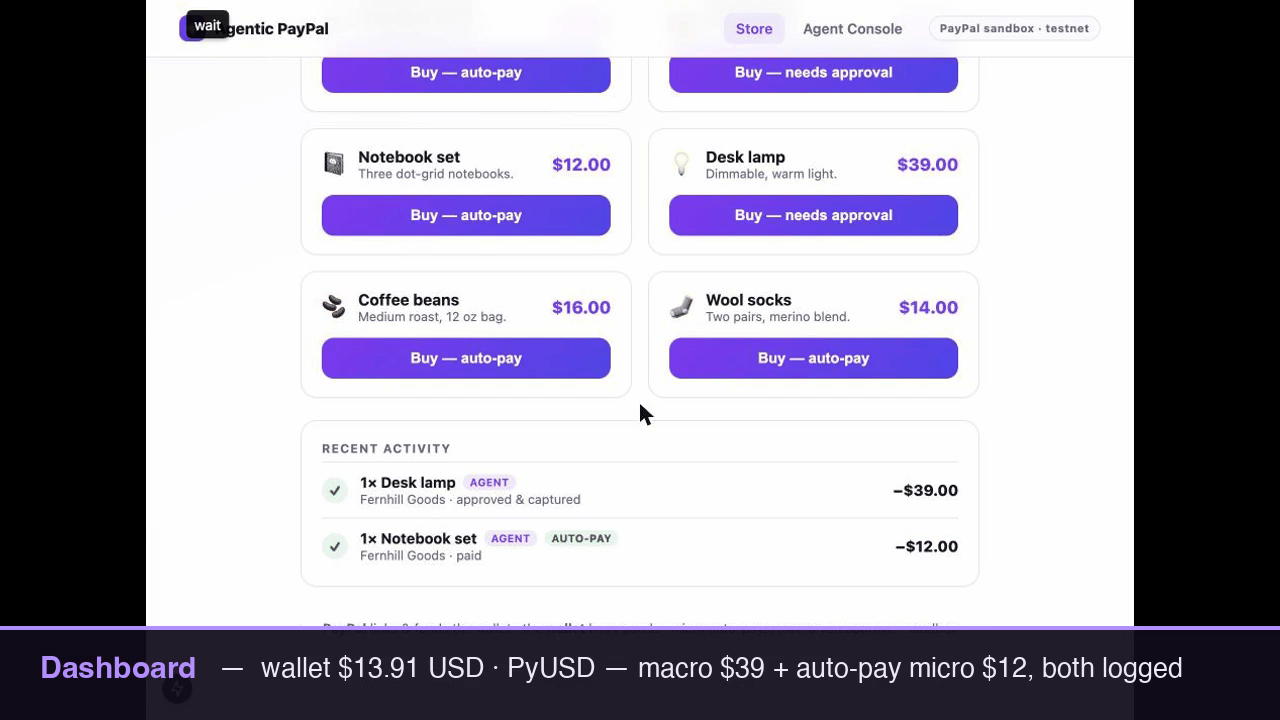
Dashboard: every order is logged — the macro $39 desk lamp and the auto-paid $12 notebook, each tagged by who decided it.
Inspiration
AI agents can now reason and act on our behalf — but when it is time to actually pay for something, they hit a wall. Card details can't be safely handed to an autonomous agent, and crypto wallets are disconnected from the identities and balances people already trust. We wanted to give an AI agent a real, spendable wallet anchored to a PayPal identity — so it can buy goods from merchants the way a person would, while the user stays in control of anything large.
What it does
Agentic Global Payments gives an AI shopping agent a PayPal-linked wallet funded in PyUSD, PayPal's stablecoin:
- Link PayPal → create wallet: you log in with your PayPal email; an agent wallet is created and linked to that identity, funded in US dollars as PyUSD.
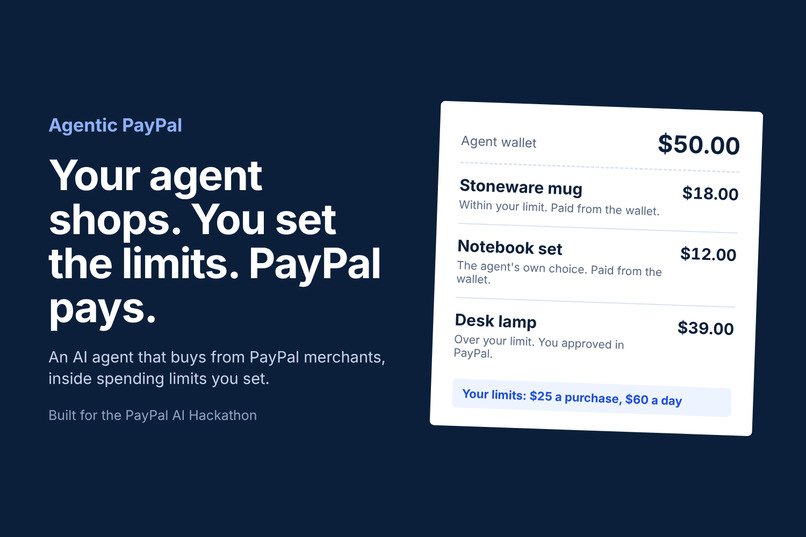
- Micro-payments (pre-approved): purchases under your spend limit are paid instantly from the wallet, with no interruption — e.g. a $12 notebook auto-pays.
- Macro-payments (post-approval): anything over the limit routes to a real PayPal checkout for you to review and approve — e.g. a $39 desk lamp needs your PayPal approval before it settles to the merchant.
- Agent- and user-initiated buys: the agent can choose purchases toward a goal, and you can buy directly; every order records who decided it.
- A dashboard logs every order, balance, and approval.
How we built it
- App: Next.js 15 (App Router), React, TypeScript.
- Wallet & custody: thirdweb server wallets, deterministically linked to a PayPal email.
- Payments: PayPal Orders / Checkout for macro approvals; a PyUSD balance for micro auto-pay.
- Agent: an LLM tool-loop (
link_paypal,browse_store,buy_product,confirm_purchase,get_balance) that decides and executes purchases within a user-set spend limit. - Persistence: a lightweight JSON store for orders, the account link, and limits.
Challenges we ran into
- Mapping a web2 PayPal identity to an on-chain wallet without a full OAuth app — solved with a deterministic email → wallet link.
- Designing a trust boundary so the agent can spend freely under a cap but must escalate larger buys to human PayPal approval, and can never raise its own limit.
- PayPal sandbox checkout quirks while an order still reaches APPROVED server-side.
What we learned
Giving an agent spending power is as much about guardrails as it is about rails — the micro/macro split (pre-approval vs. post-approval) is what makes autonomous buying both safe and useful.
What's next
- Real PayPal OAuth login and live PyUSD settlement.
- Multi-merchant catalogs and agent goal-planning ("stock my desk for under $100").
- Per-category limits and richer approval policies.
Built With
- agents
- ai
- llm
- next.js
- node.js
- paypal
- pyusd
- react
- stablecoin
- thirdweb
- typescript
- web3
