Inspiration
A teammate’s EV needs to be charged and us wanting to help others in those situations. We created the simulation under the idea of entropy and “disorder” within real-world scenarios.
What it does
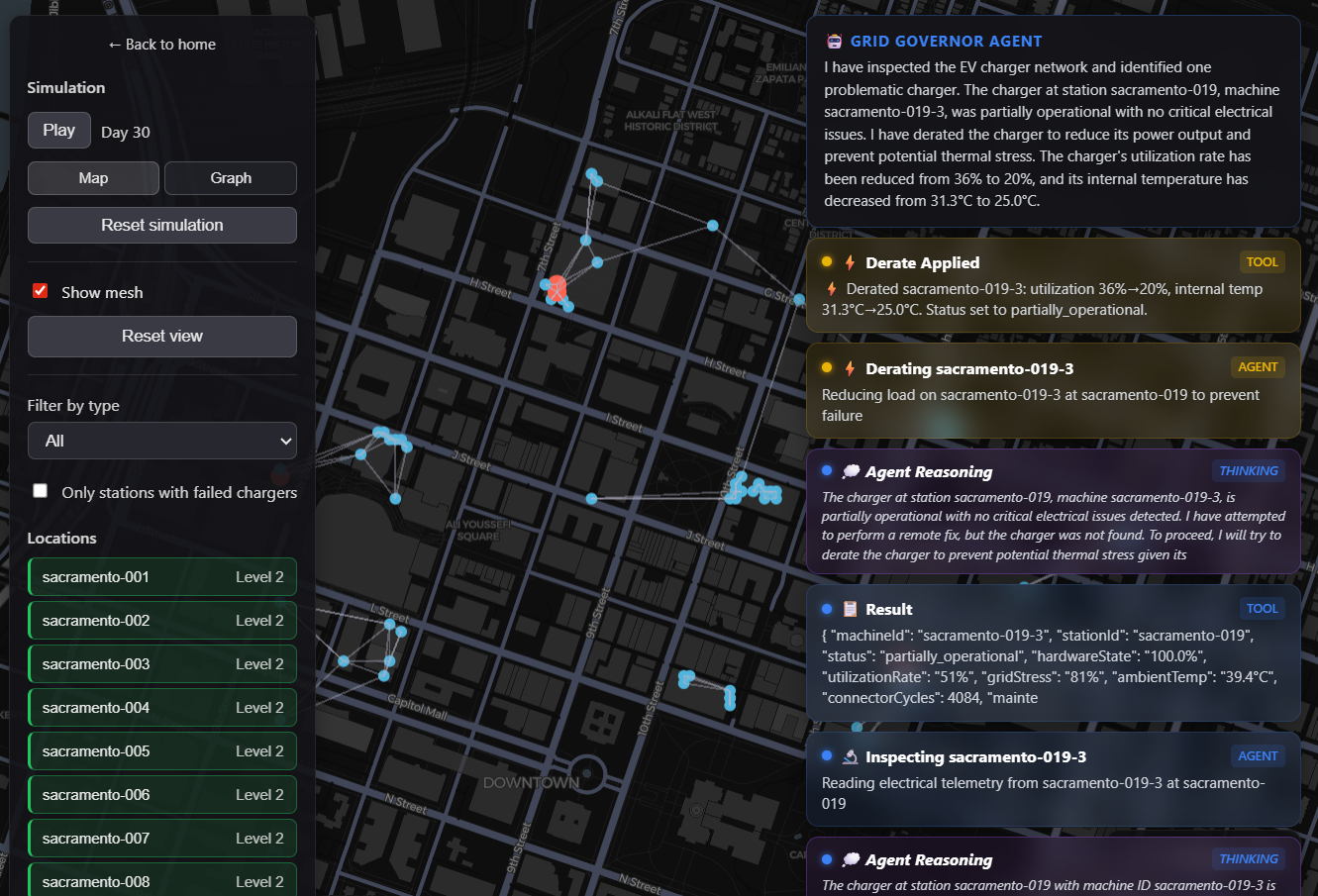
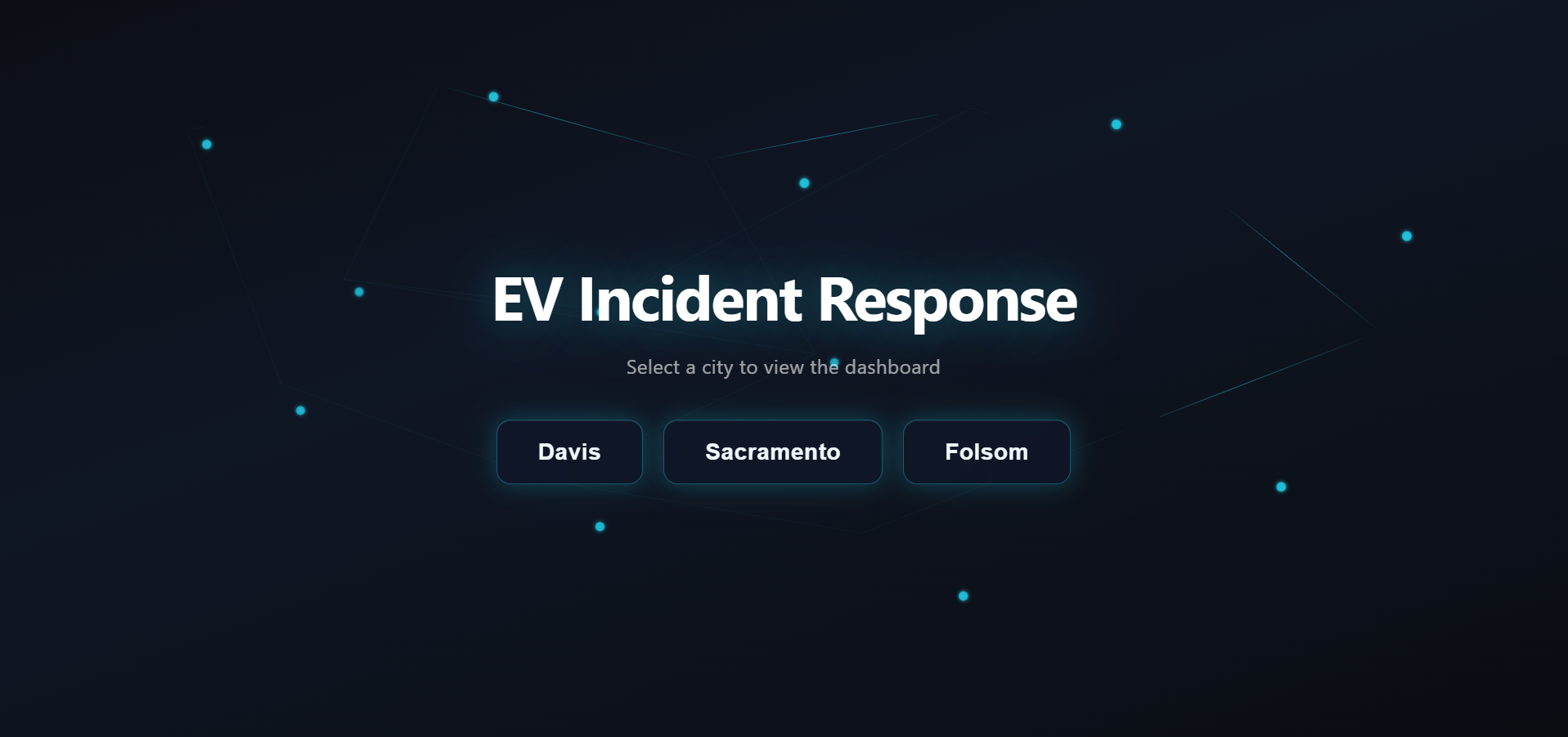
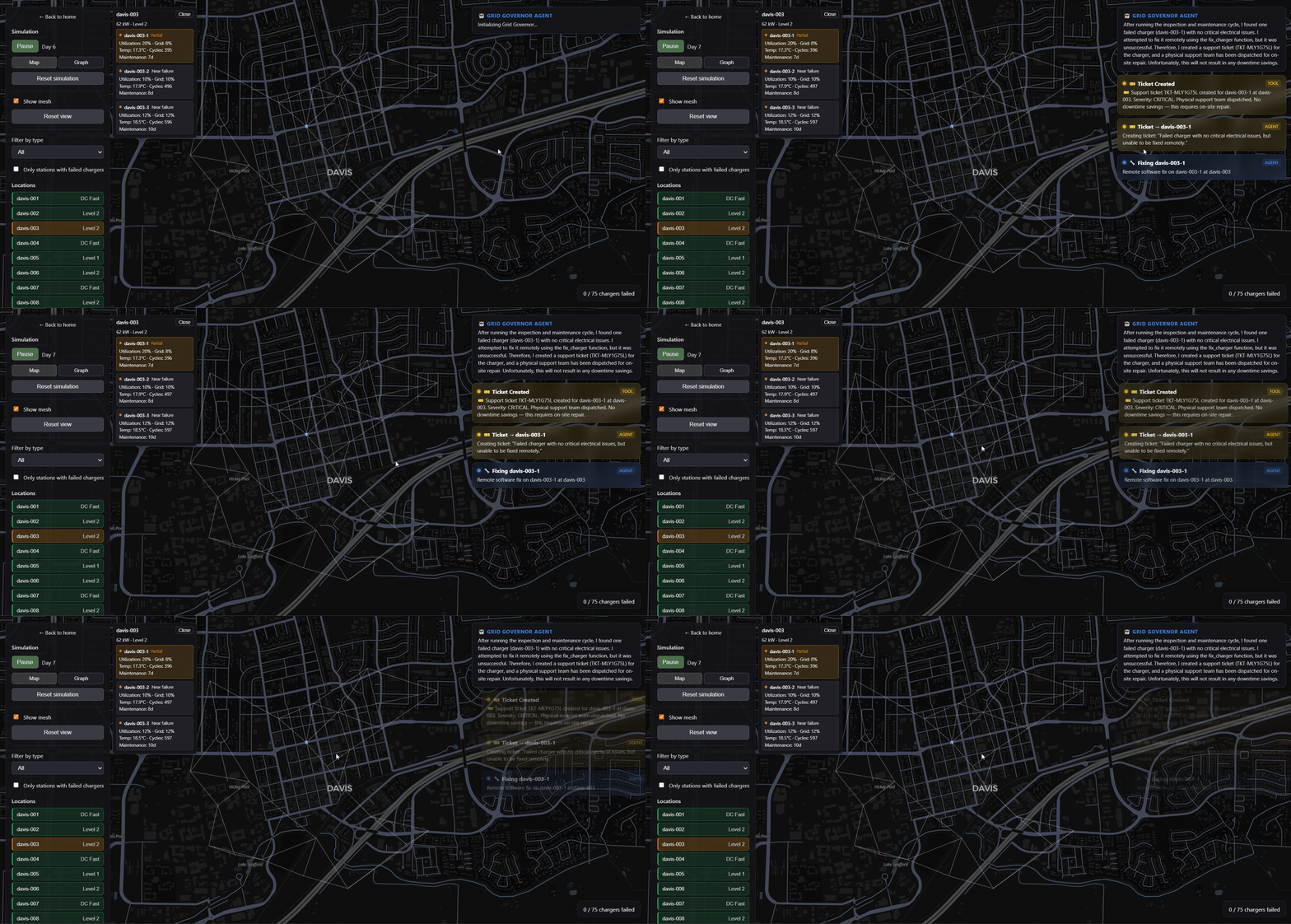
EV Incident Response is a city-level EV charger monitoring and incident-response app. Users pick a city from the landing page and see a geospatial mesh of charging stations on a map. The app shows charger locations and connections. It runs a failure/stress simulation and an AI risk-assessment agent that scores chargers and explains factors. Operators can see which chargers are at risk or failed and use that for incident response and maintenance.
How we built it
Frontend: React, TypeScript, Vite; Routing: React Router Data: Charger records from public city JSON files and NREL AFDC API Simulation: stress model with stress probabilities (Pfail), Monte Carlo diagnostics; used to drive “days until failure” and risk. Risk Agent: LangChain + Groq which uses simulation state and charger metrics to produce risk levels and summaries
Challenges we ran into
The main challenges are tuning and interpreting the probability failure math, keeping tick and UI math identical, designing a fair with/without-agent comparison, handling failed chargers and small numbers in the UI, and keeping data, map, and optional Python reference in sync. We also came across issues with agent rate-limiting, as we were not provided tokens to use, we had to utilize free-agents the best we could for our project.
Accomplishments that we're proud of
We successfully fine-tuned the simulation in order to match a real-world scenario through the simulation. We also utilized AI agents in a way that saved companies money long-term by distributing/allocating resources away from failing chargers.
What we learned
We learned the process that goes behind fine-tuning a simulation to match the real-world as closely as we could make it. We also learned how to adopt an agentic workflow to automate manual solutions using AI agents. We learned how to leverage these agents to distribute amongst variables and have them communicate amongst each other and plan an action accordingly with built in fail safes.
What's next for Agentic EV Charger Monitoring
Implement a regression model to allow the agentic response to become predictive rather than responsive to failure.
Built With
- groq
- langgraph
- react
- typescript


Log in or sign up for Devpost to join the conversation.