-
-
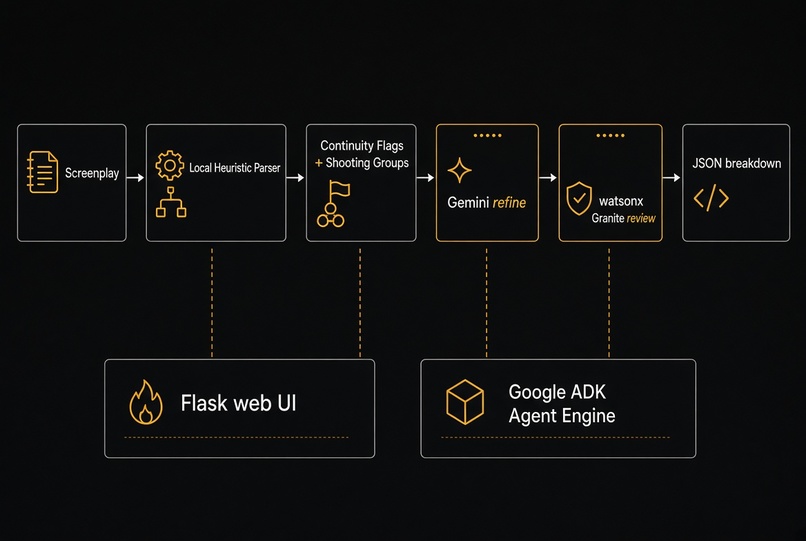
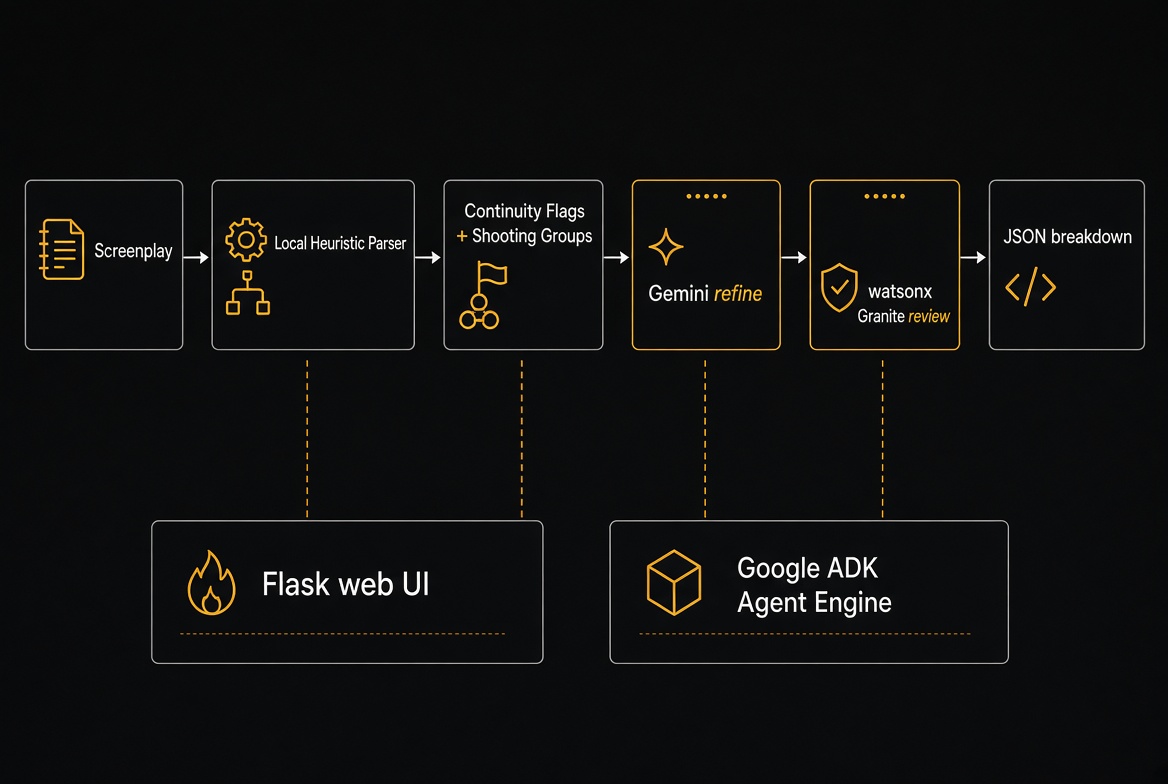
How it runs, screenplay, local parser, flags and shooting groups, optional Flask UI and ADK Agent Engine wrap the same engine.
-
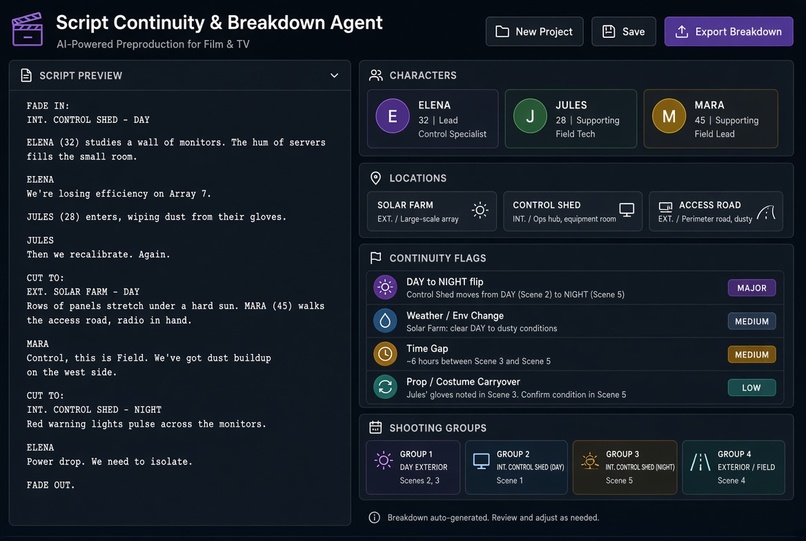
Breakdown UI — paste a production script, get characters, locations, continuity flags, and shooting groups.
-
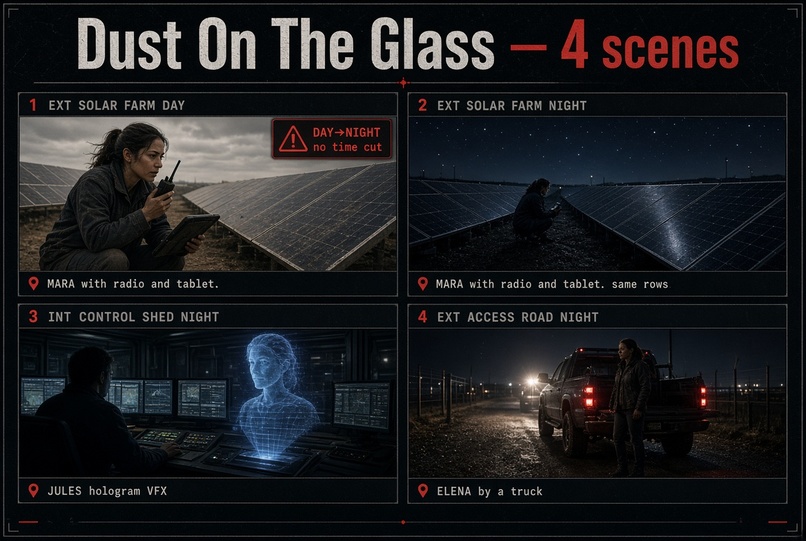
Locked sample, four scenes — day farm → night farm with no time cut, shed hologram, Elena on the access road once.
-

Dust On The Glass — the sample world. Day and night on the same solar farm. That’s the continuity miss the agent flags.
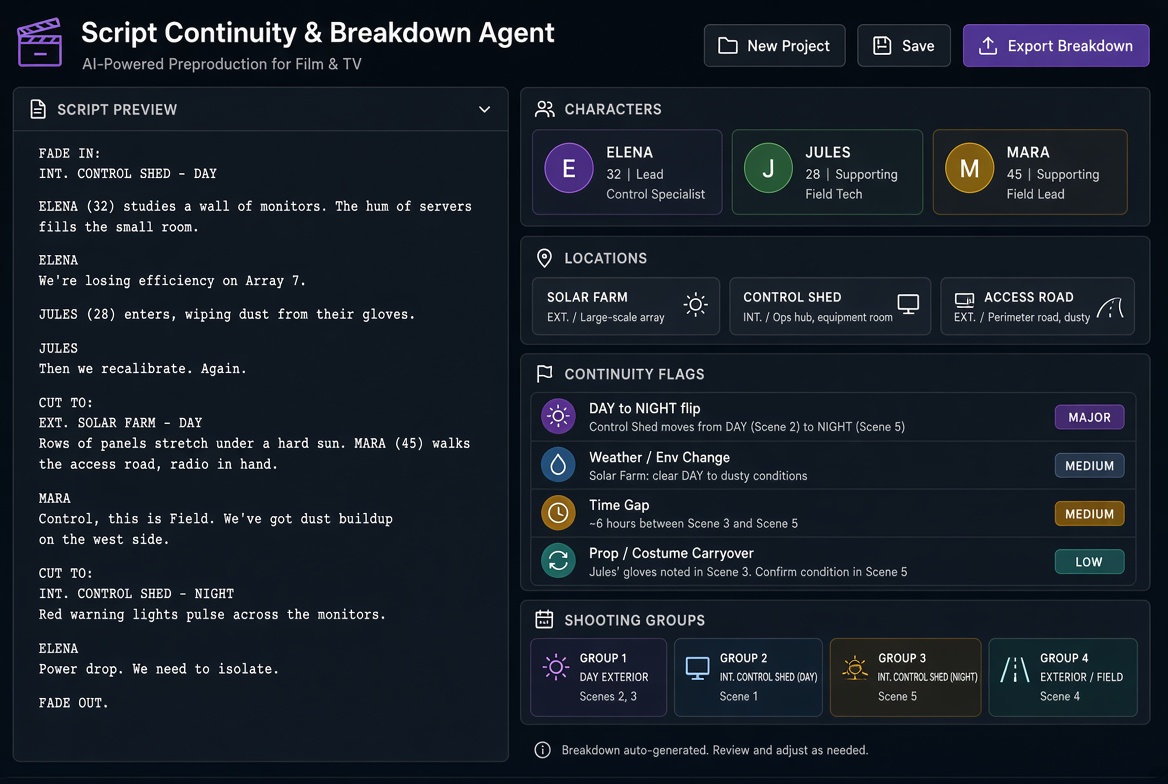
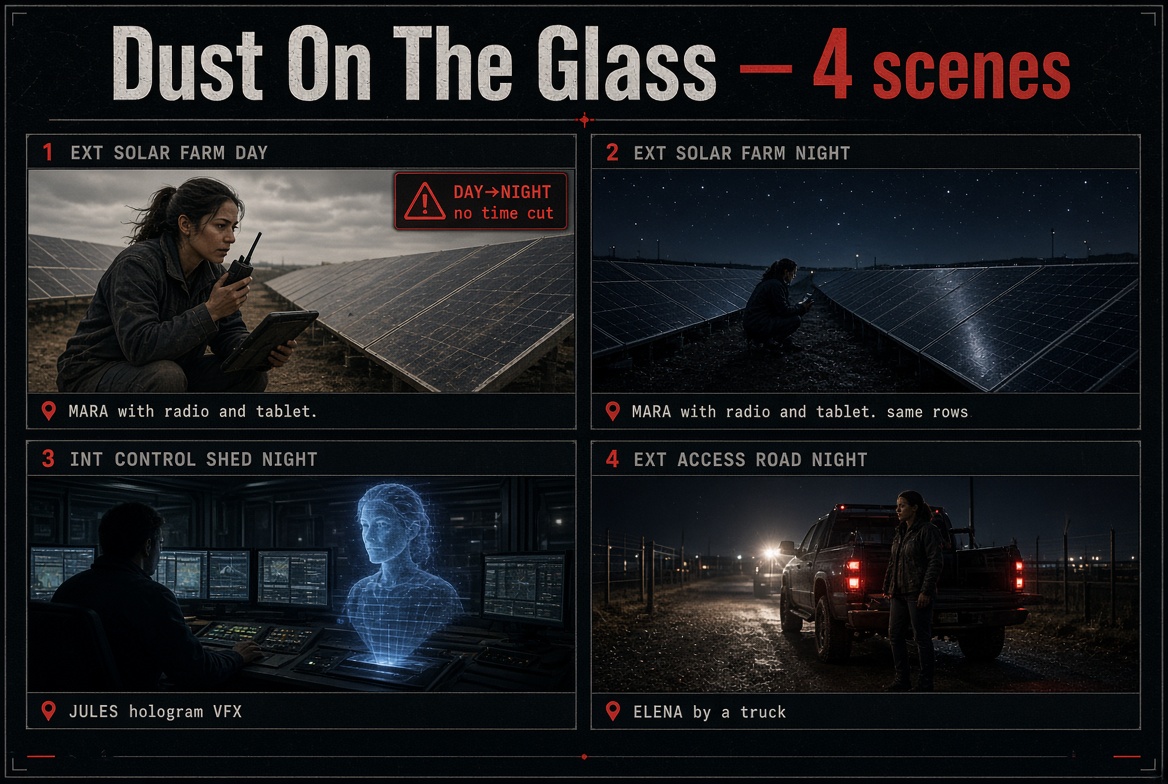

I love the part of filmmaking that happens before anyone yells action: the script on the table, the day that still has to make sense. Continuity is that work. People still do it by hand. A day-to-night flip with no time cut, a character who appears once, a prop that never comes back — those get missed until they burn a shooting day. I wanted a first pass that is fast and honest.
Paste a production-format screenplay. Get a breakdown: characters, locations, props, INT/EXT, day/night, VFX notes, continuity flags, and shooting groups.
The locked sample is Dust On The Glass. Four scenes. Four flags. Four groups. Elena, Jules, Mara. Solar farm, control shed, access road. Flag one: the farm goes DAY to NIGHT with no time cut.
No API key required. Gemini can refine it. watsonx.ai Granite can review it. Same engine behind a Flask page and an ADK agent.
Parser first, models second. Production headings and (O.S.) / (V.O.) / (CONT'D). Continuity and grouping in plain Python so the demo is the same every time. Gemini through google-genai. ADK root_agent for Agent Engine. watsonx Granite fail-closed if IBM keys are missing. IBM Bob on the development sessions — that is in DEVELOPMENT_LOG.md.
IBM Bob is a development requirement, not a runtime import. watsonx is a different product. The log does not mix them up. Agent Engine will not fake a deploy: no GCP project, no deploy. Props only show up if the script says someone picks them up, grabs them, or holds them.
The sample does not drift. Three tests lock it. JULES (O.S.) is Jules. INT and EXT at the same place are different shooting groups. The repo is public. MIT. The demo video is the real run.
A breakdown agent is only useful if you can run it twice and get the same skeleton. The model can enrich that. It should not invent it.
Live Granite review. Agent Engine on a real project. Then wardrobe, eighths, and cast-day clusters. Same job. Deeper pass.
Built With
- agent-engine
- continuity
- flask
- gemini
- google-adk
- gunicorn
- ibm-bob
- ibm-watsonx.ai-granite
- pre-production
- python
- screenplay
- watsonx.ai

Log in or sign up for Devpost to join the conversation.