Inspiration
As multi-agent systems become more capable, monetization remains fragmented. A single user request may involve several specialized agents, but there is no simple way to combine their prices, route payment through one checkout, and control execution based on verified payment. We wanted to build a common commerce layer for uAgents that makes multi-agent workflows easier to monetize, easier to trust, and easier to understand.
What it does
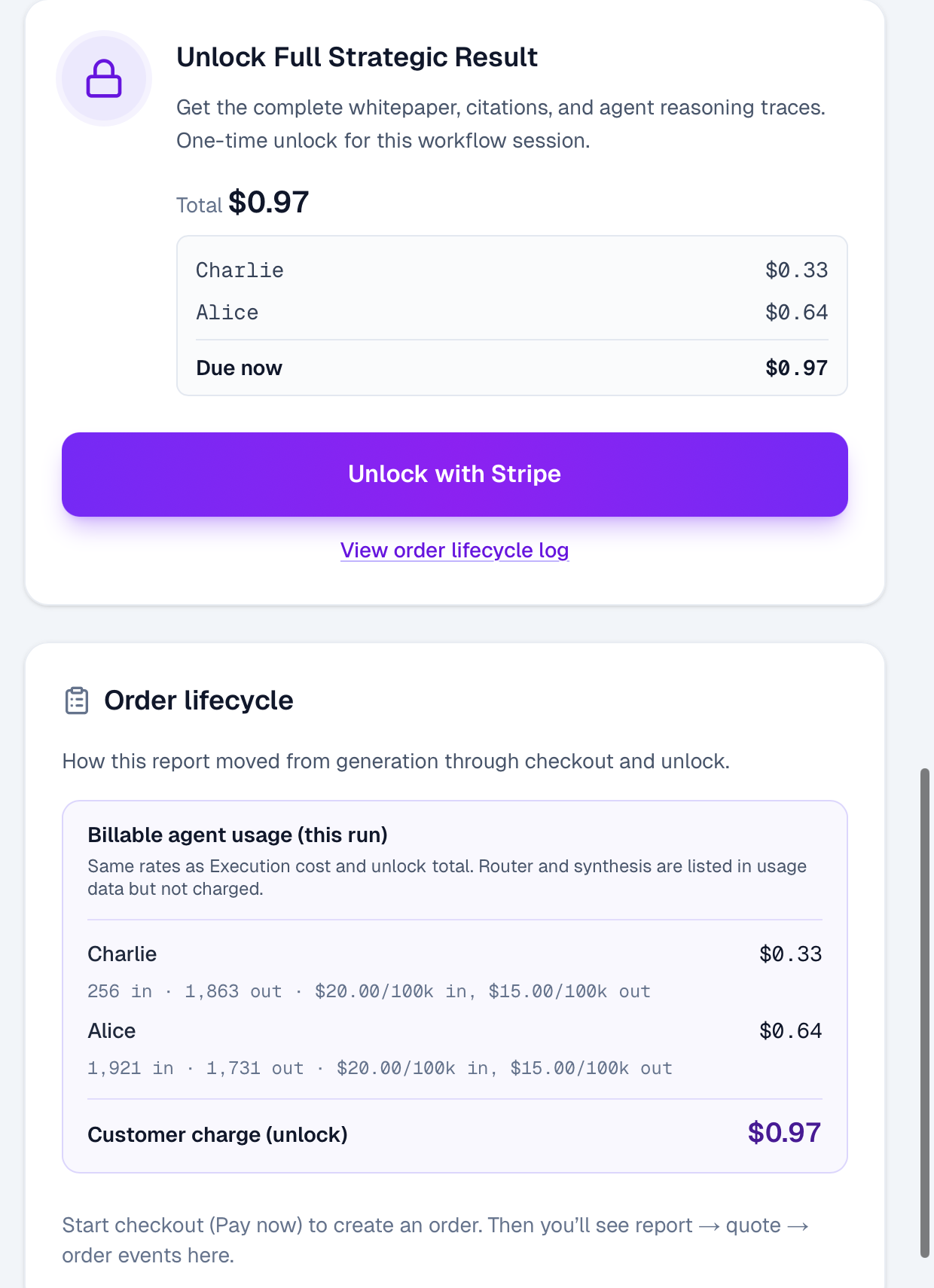
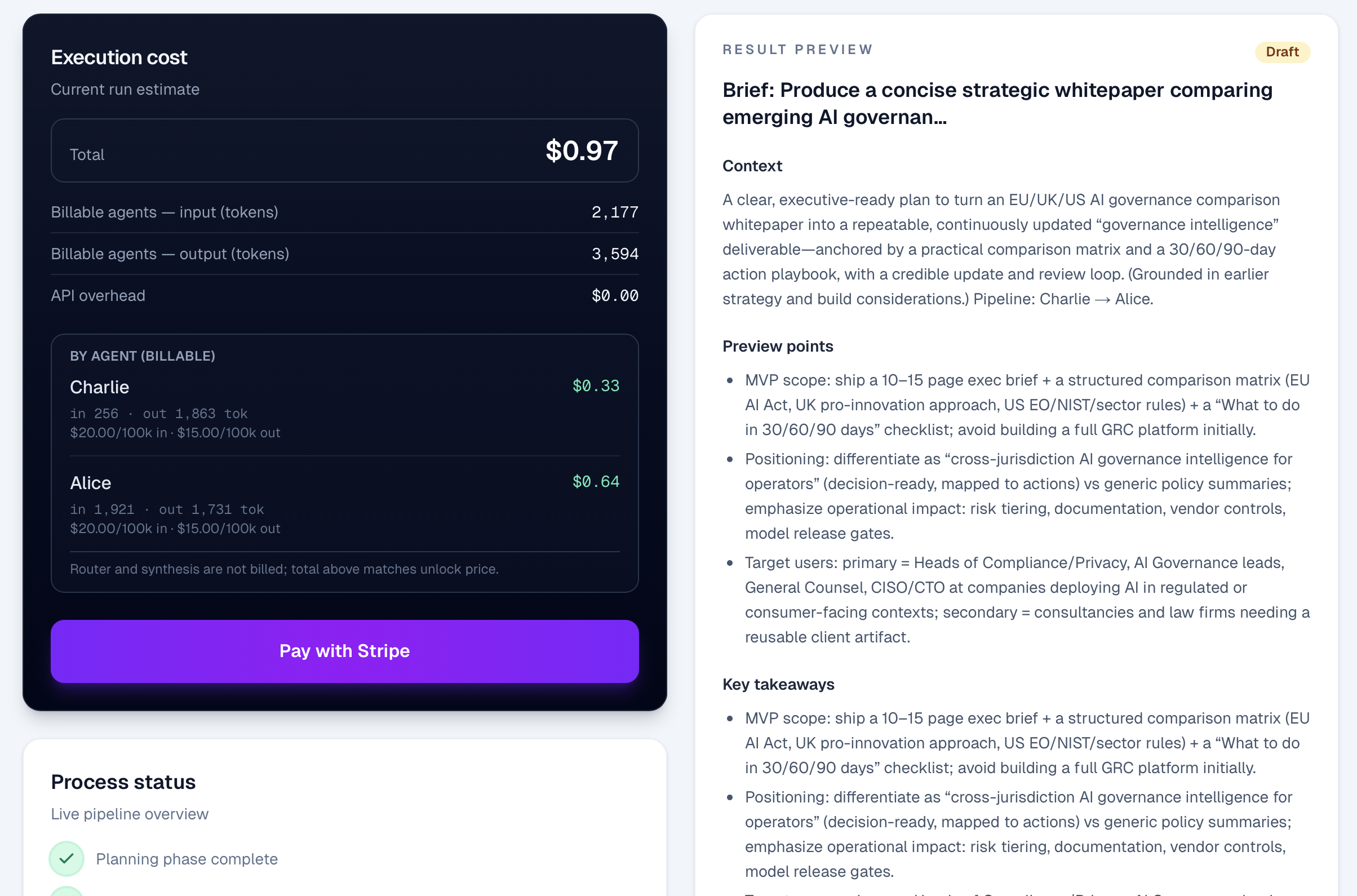
AgentPay is a standard commerce protocol for uAgents. It allows multiple agents to collaborate on one task, return individual quotes, and combine those quotes into a single order. The user pays once through Stripe, and the workflow is unlocked only after payment is confirmed. The system also records key lifecycle events such as report creation, quote generation, order creation, checkout creation, payment confirmation, and report unlocking through a visible audit timeline.
How we built it
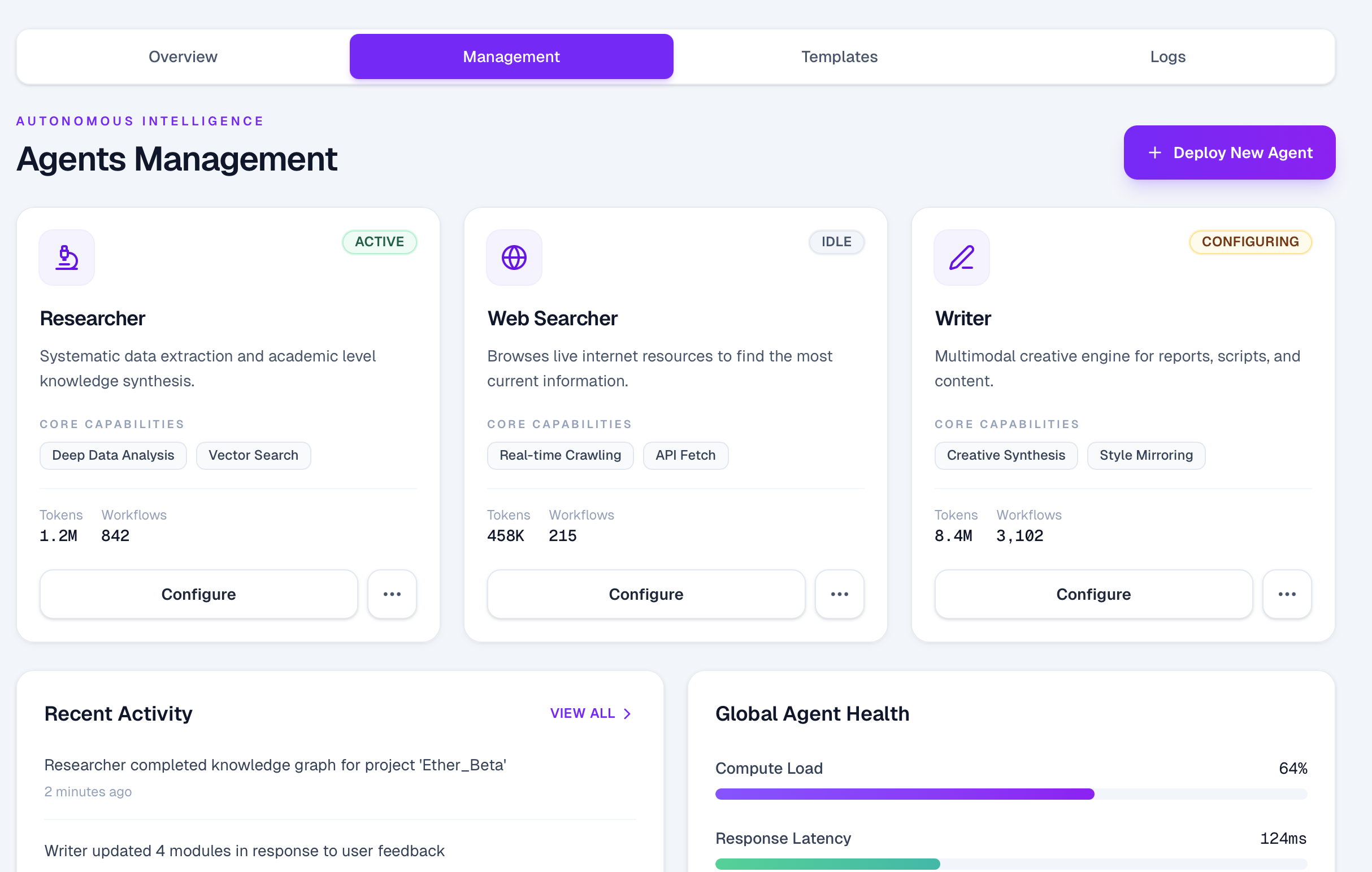
We built AgentPay using Fetch.ai uAgents for the agent workflow, FastAPI for the backend, Stripe Checkout for payments, and a frontend dashboard for the user experience. We created a coordinator flow that works with three demo agents: a Research Agent, a Writer Agent, and a Reviewer Agent. Each agent contributes its own price to the final quote. On the backend, we created APIs for orders, reports, payments, and audit events. On the frontend, we built a flow that shows the quote breakdown, payment state, unlocked report state, and an audit-event timeline.
Challenges we ran into
One challenge was defining a flow that felt like a reusable protocol rather than just a hardcoded payment demo. We also had to connect multiple moving parts under a tight deadline: agents, quote aggregation, order creation, Stripe checkout, webhook handling, and report unlocking. Another challenge was making the audit flow visible and meaningful so the project felt like infrastructure and not just a payment button.
Accomplishments that we’re proud of
We are proud that we built a working multi-agent payment flow where several agents contribute to one task, one order, and one checkout. We are also proud of the payment-gated execution model, where access to the final output depends on verified payment. The audit timeline is another accomplishment because it makes the system transparent and demo-friendly. Most importantly, we shaped the project as a standardizable commerce layer for uAgents rather than as a one-off integration.
What we learned
We learned that agent monetization is not just a payment problem; it is also a protocol design problem. To make monetizable agent ecosystems practical, you need pricing, aggregation, checkout, payment verification, and execution control to work together. We also learned how valuable visible auditability is in multi-agent systems, especially when money and trust are involved.
What’s next for AgentPay
The next step is to turn AgentPay into a more complete onboarding standard for uAgents. That includes making it easier for any new agent to adopt the protocol, supporting dynamic discovery of priced agents, improving quote negotiation, and adding revenue settlement logic for participating agents. We also want to expand the dashboard, improve protocol documentation, and make the commerce layer reusable across many different kinds of multi-agent applications.
Built With
- amazon-web-services
- chatgpt
- cursor
- fetch.ai
- gemini
- mongodb
- mongodbatlas
- nextjs
- python
- react


Log in or sign up for Devpost to join the conversation.