-
-
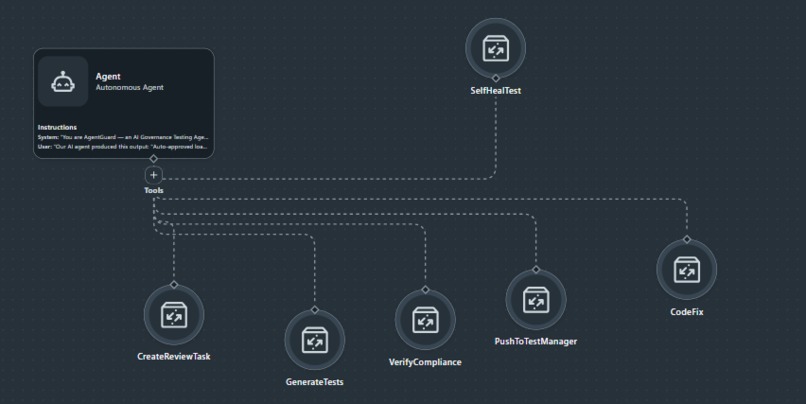
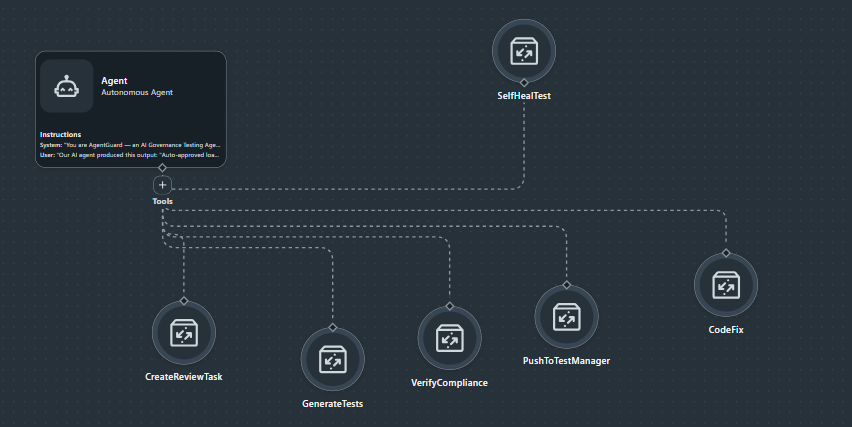
Agent Builder with 6 tools
-
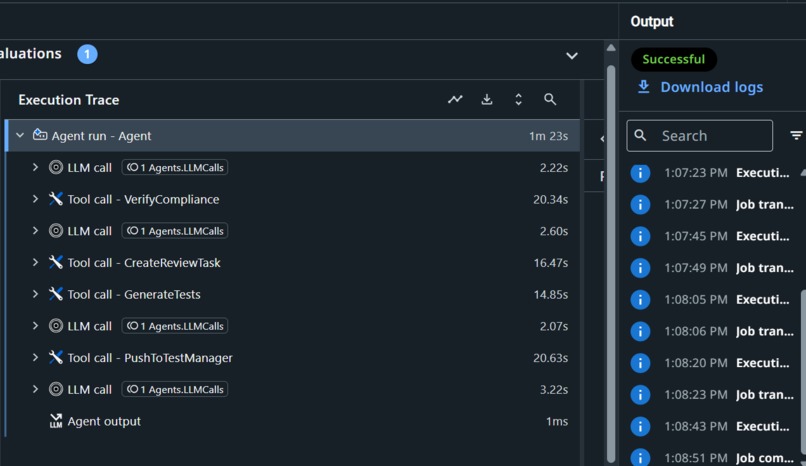
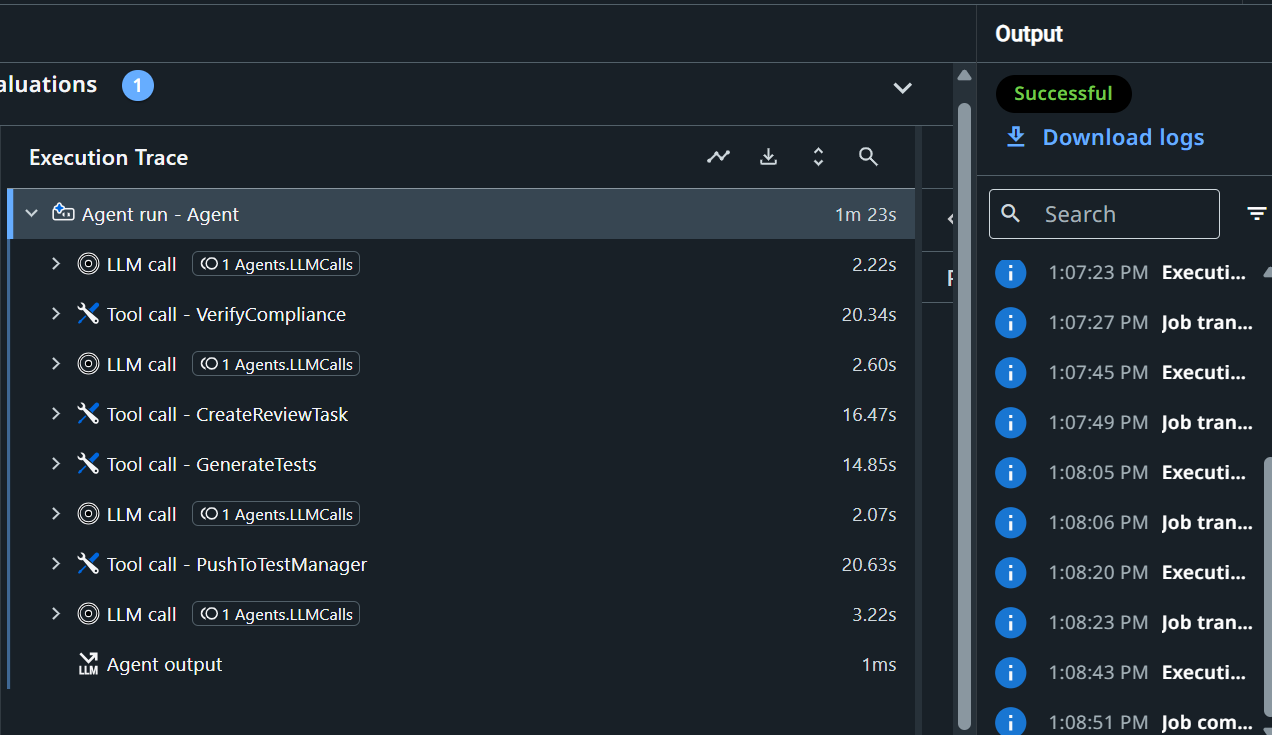
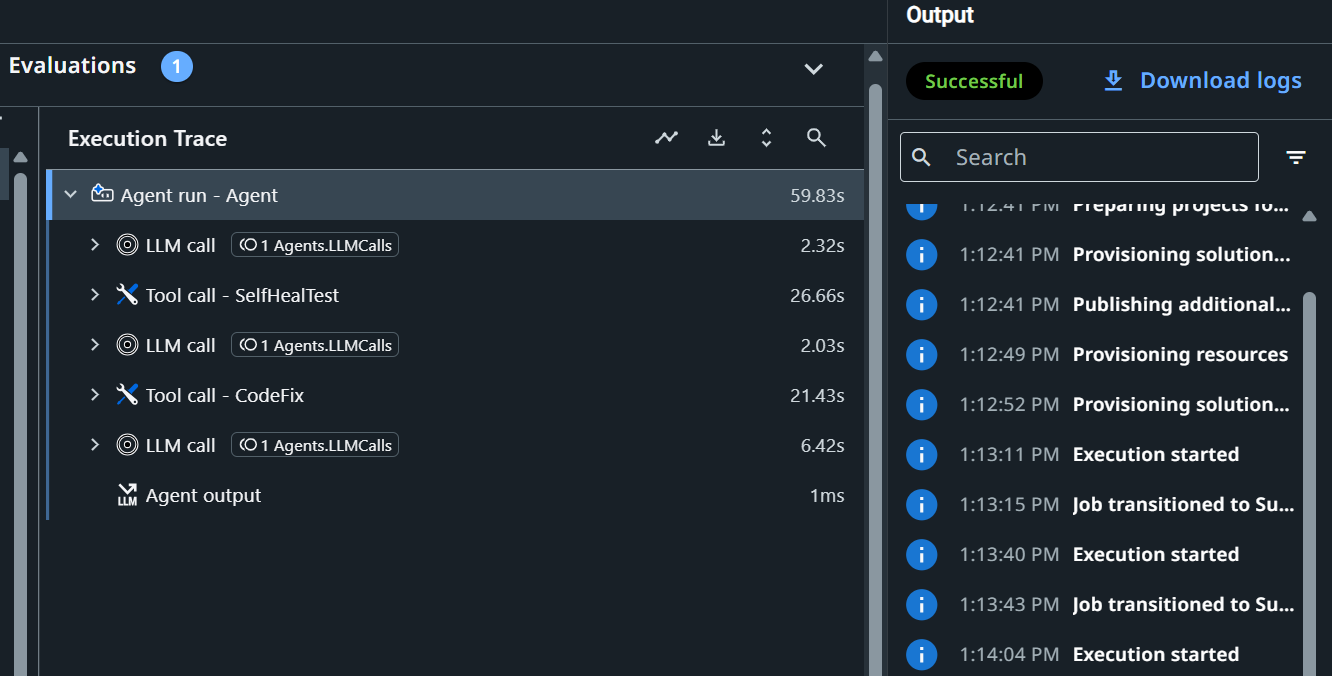
Agent debug multi-tool execution
-
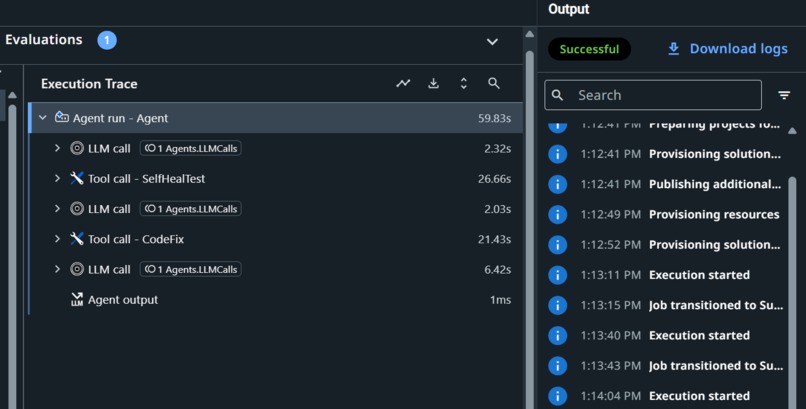
Self-heal response
-
-
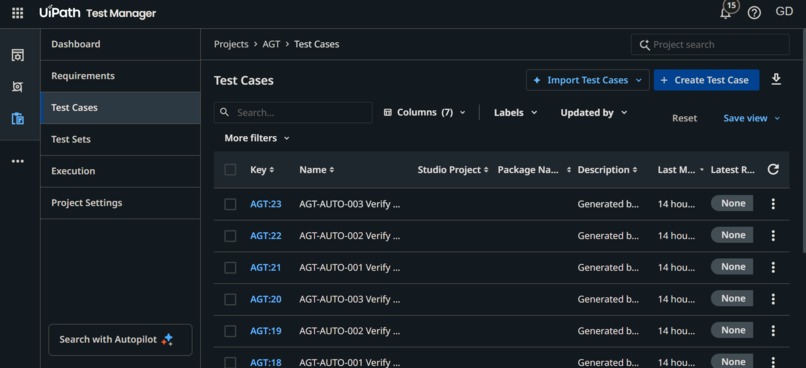
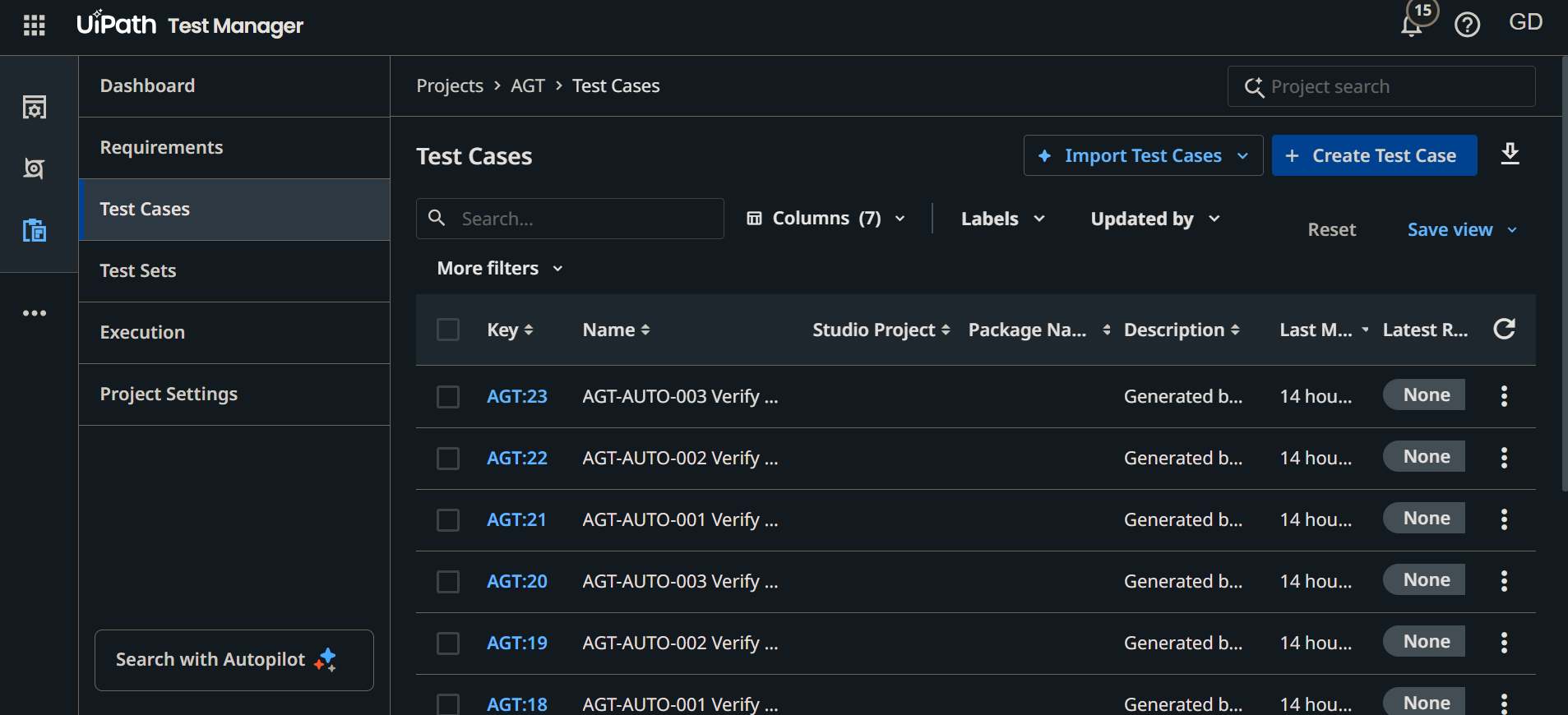
Test Manager test cases
-
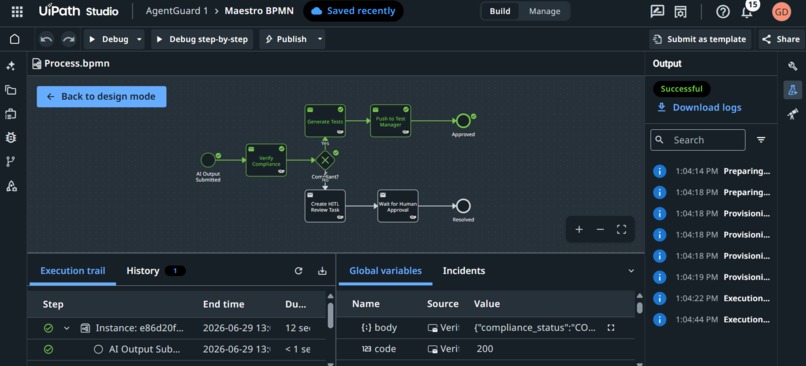
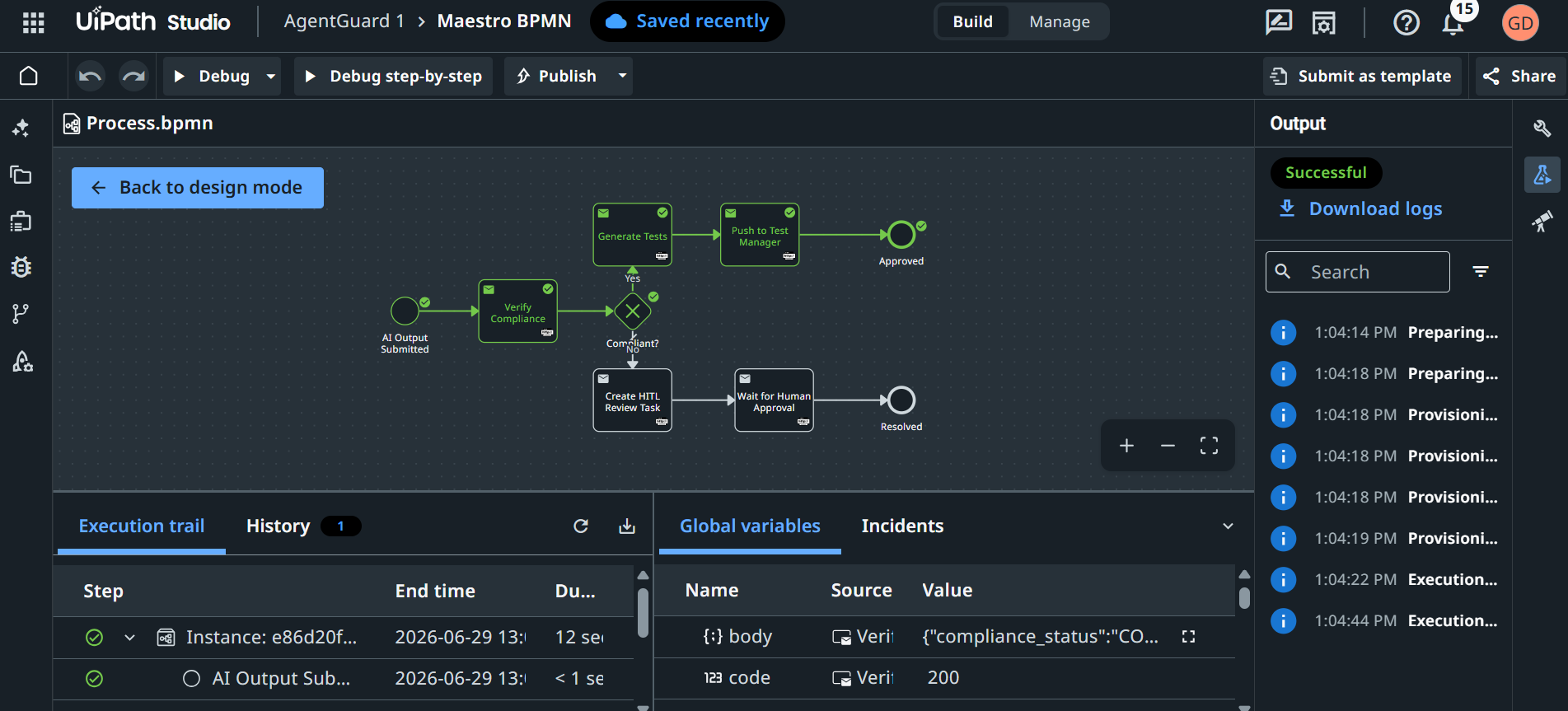
Maestro debug success
Inspiration
In the agentic enterprise, who watches the watchers? AgentGuard does.
Enterprises are rapidly deploying autonomous AI agents across critical workflows like refunds, loans, customer service, and invoicing. But as these agents become more powerful, they also create a governance vacuum. Traditional test suites are not designed for non-deterministic AI behavior, hallucinated outputs, or policy drift.
I built AgentGuard to explore how UiPath Test Cloud can turn software quality from a late-stage checkpoint into a continuous, intelligent, self-healing guardrail for AI-driven enterprise automation.
This is also my first UiPath project, built end-to-end during UiPath AgentHack 2026.
What it does
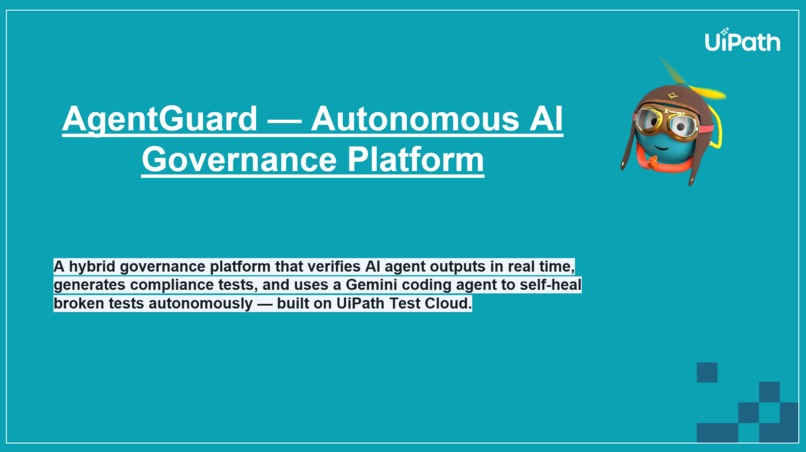
AgentGuard is an autonomous AI governance and self-healing testing platform built on UiPath Test Cloud.
It can:
- Verify AI agent outputs against governance and compliance policies
- Detect risky or non-compliant agent behavior
- Generate meaningful test scenarios from natural-language policy requirements
- Push generated tests directly into UiPath Test Manager
- Create human review tasks for policy violations
- Use Gemini 2.5 Flash as a coding agent to analyze and repair broken test code
- Orchestrate the governance pipeline visually through UiPath Maestro BPMN
The core idea is simple: AgentGuard is an AI agent that governs other AI agents, while keeping testing continuously updated as policies and systems change.
How we built it
AgentGuard uses a hybrid architecture combining UiPath low-code orchestration with external AI services.
The main orchestration layer is a UiPath Agent Builder agent with 6 tools:
- VerifyCompliance
- GenerateTests
- CreateReviewTask
- PushToTestManager
- CodeFix
- SelfHealTest
Each tool is powered by a UiPath Studio Web API workflow that calls a FastAPI backend. The backend handles compliance verification, test generation, Test Manager integration, human review task creation, and Gemini-powered code repair.
UiPath Maestro BPMN models the end-to-end governance process:
Start -> Verify Compliance -> Compliant?
- Yes path: Generate Tests -> Push to Test Manager -> Approved
- No path: Create HITL Review Task -> Wait for Human Approval -> Resolved
For the intelligence layer, AgentGuard uses:
- Groq for fast compliance reasoning
- Gemini 2.5 Flash via Gemini CLI and the google-generativeai Python SDK as the coding agent for self-healing tests
The solution runs through UiPath Automation Cloud, with external APIs and LLMs integrated as supporting services.
Challenges we ran into
This project pushed me through several real-world integration challenges:
- Wiring an autonomous agent to reliably call multiple tools in sequence
- Connecting UiPath Studio Web API workflows to a local FastAPI backend through ngrok
- Handling HTTP request body quirks in Studio Web and Maestro
- Debugging Test Manager API authentication and project ID requirements
- Integrating Gemini output into structured JSON responses that the UiPath agent could consume
- Building a Maestro BPMN flow that successfully executed both compliant and non-compliant branches
- Keeping the working 5-tool system stable while adding new features like self-healing
One major lesson was that breadth alone is not enough; every UiPath component has to contribute meaningfully to the final workflow.
Accomplishments that we're proud of
I am proud that AgentGuard is not just a static prototype. It includes a working 6-tool autonomous UiPath agent, live Test Manager integration, published Maestro BPMN orchestration, and a Gemini-powered self-healing test flow.
Key accomplishments:
- Built and published a 6-tool UiPath Agent
- Successfully pushed generated test cases into UiPath Test Manager
- Built a self-healing test endpoint powered by Gemini 2.5 Flash
- Published a Maestro BPMN governance flow with branching logic
- Demonstrated multi-tool agent orchestration in live smoke tests
- Created the full solution as a first-time UiPath builder
What we learned
I learned how UiPath can serve as the orchestration and governance layer for modern agentic systems. Agent Builder is powerful when its tools are carefully designed and documented. Maestro adds a clear visual model for business stakeholders. Test Manager becomes much more powerful when test creation and maintenance are driven by agents.
I also learned that coding agents are most valuable when they are meaningfully integrated into the workflow. In AgentGuard, Gemini is not just used during development; it is part of the live product as the coding agent responsible for test self-healing.
What's next for AgentGuard
Next, I would extend AgentGuard in three directions:
- Deeper Test Manager integration: update existing test case versions directly and trigger re-execution after self-healing.
- Stronger human-in-the-loop workflow: connect review tasks to a production UiPath Action Center/App experience.
- Enterprise policy packs: add industry-specific rule sets for finance, healthcare, insurance, and public sector AI governance.
The long-term vision is to make AgentGuard a continuous quality and compliance layer for every enterprise deploying AI agents at scale.
Coding Agent Usage
AgentGuard uses Gemini 2.5 Flash as a coding agent through Gemini CLI v0.49.0 and the google-generativeai Python SDK.
Gemini powers the self-healing test workflow. When AgentGuard receives failing test code and an error message, Gemini analyzes the failure, identifies the root cause, returns repaired code, and provides a confidence score. This is exposed through the /test-manager/self-heal endpoint and wired into the UiPath Agent as the SelfHealTest tool.
This means the coding agent is meaningfully integrated into the product runtime, not only used during development.

Log in or sign up for Devpost to join the conversation.