-
-
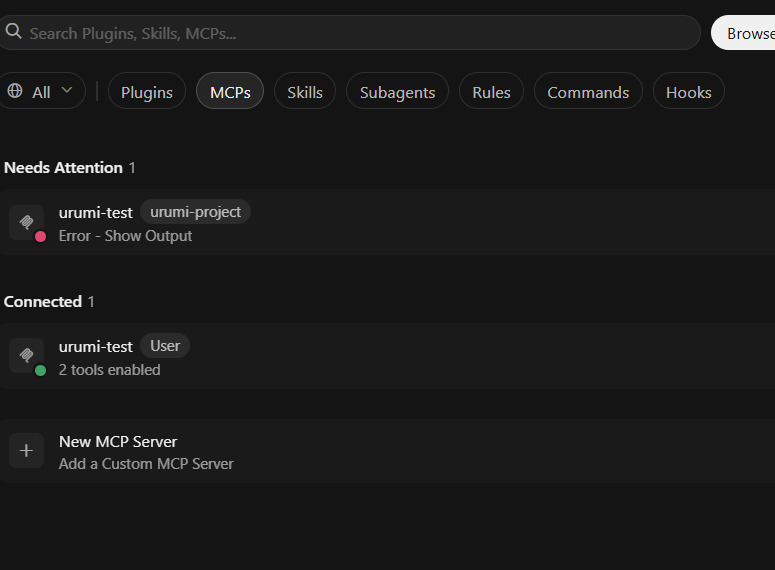
Gateway use by any cursor ai tool
-
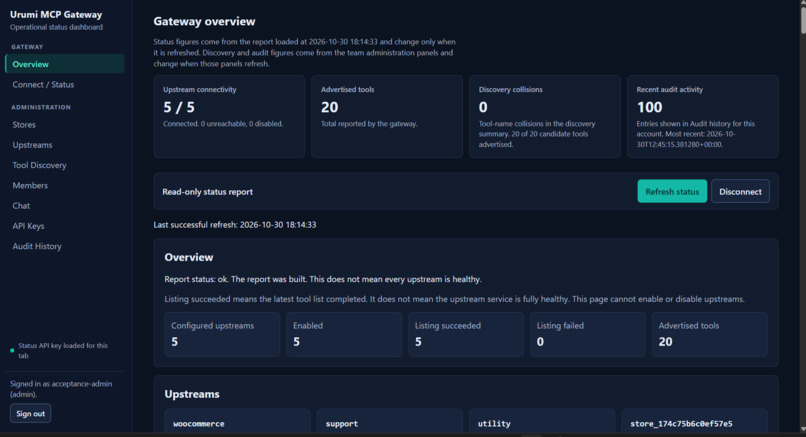
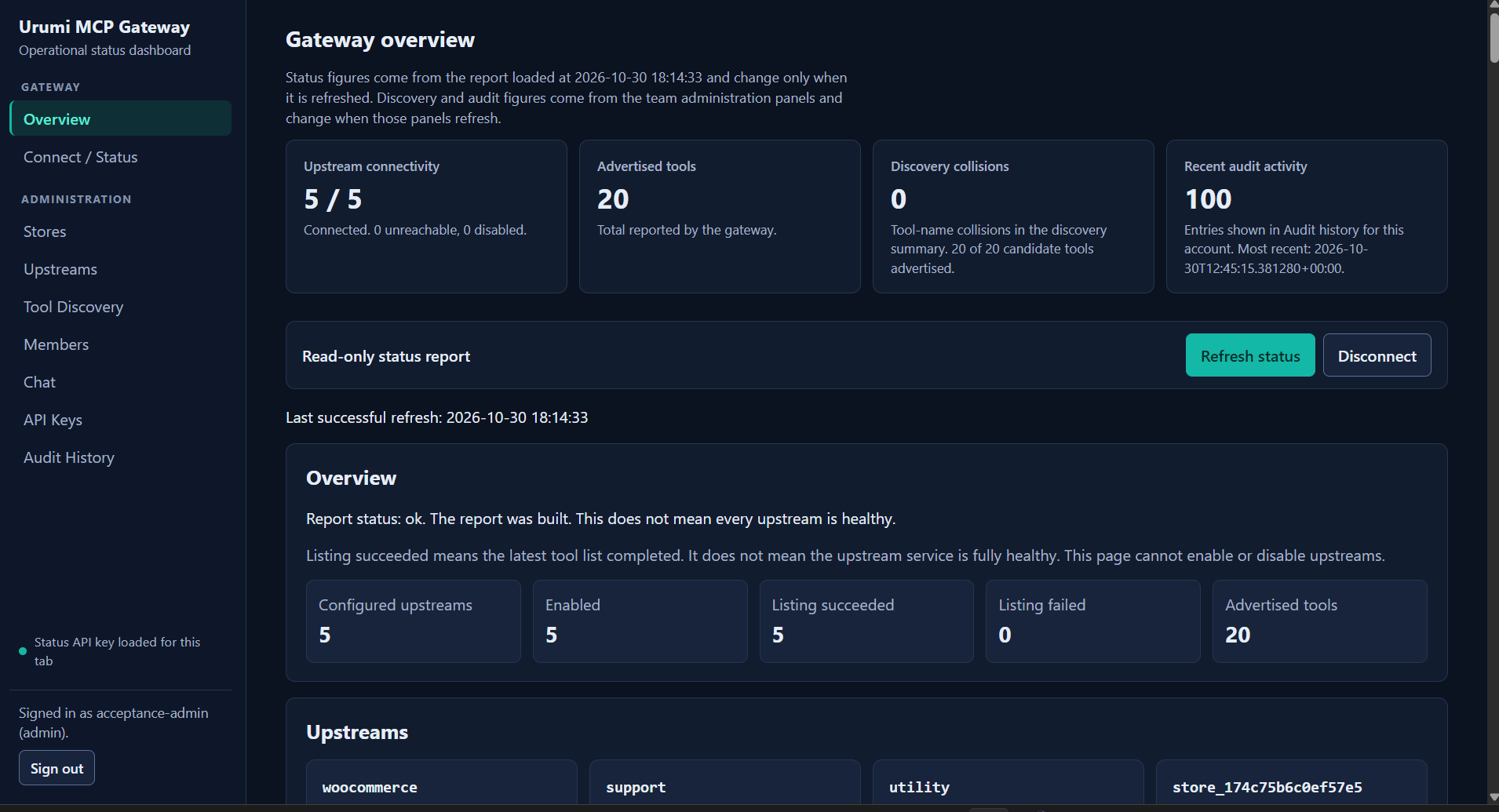
showing tool connectivity status based on the user and admin API key
-
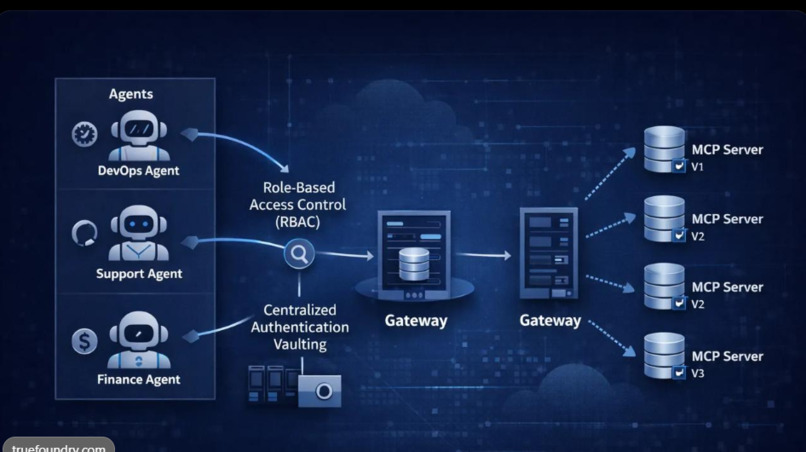
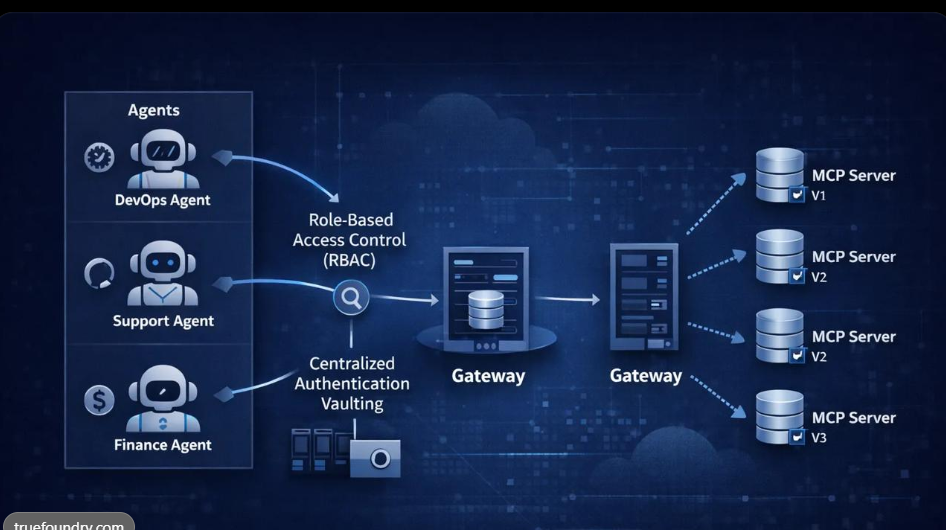
High level architecture
AIFRONT — Secure MCP Gateway for AI-Powered Business Operations
Inspiration
As AI agents become increasingly powerful, their real value lies in their ability to interact with real-world business systems such as e-commerce platforms, databases and internal services.
However, connecting AI agents to multiple business systems creates challenges around integration management, authentication, permissions and credential security. Every upstream service often requires separate configuration, making it difficult for teams to manage and scale their AI-powered workflows.
We wanted to simplify this experience by building AIFRONT — a centralized MCP Gateway that connects multiple business systems through one secure and unified interface.
Our vision was to let developers and teams connect their AI clients once, discover all authorized tools automatically, and interact with business systems without managing individual upstream integrations or exposing sensitive credentials.
What it does
AIFRONT provides a centralized platform for managing MCP integrations and enabling governed AI access to business operations.
Key capabilities include:
- Centralized MCP Gateway: Connect multiple upstream MCP servers through a single gateway.
- Server Management: Register MCP servers, monitor their connection status, inspect available tools, and manage integrations from an admin dashboard.
- Team Management: Invite team members and issue, manage or revoke individual API keys.
- Unified Tool Discovery: Allow team members to connect Claude Code, Cursor or other MCP clients using one gateway URL and their personal API key.
- AI-Powered Dashboard Chat: Interact with connected business systems through natural-language conversations and MCP tools.
- Access Control: Enforce tool-level permissions and protect upstream server credentials.
- Audit and Observability: Track tool executions, including the user, server, tool, timestamp, duration and execution outcome.
- Multi-Store Architecture: Extend the gateway toward independently provisioned WooCommerce stores with automatic MCP registration and Kubernetes-based isolation.
WooCommerce acts as the primary business integration, demonstrating how AI agents can access business operations through a centralized MCP layer.
How we built it
We built AIFRONT using a combination of modern backend, frontend and cloud-native technologies.
Backend and Gateway
- Python
- FastAPI
- Pydantic
- Model Context Protocol (MCP)
- Policy-aware tool discovery and execution
Frontend
- React
- TypeScript
- Vite
- Dashboard for server management, team access, integrations and AI chat
Business Integration
- WooCommerce MCP integration
- Product and order operations
- Multiple upstream server registration and tool discovery
Infrastructure and Deployment
- Docker and containerized services
- Kubernetes and Helm
- Independent namespaces and persistent storage
- Kubernetes Secrets and NetworkPolicies
- ResourceQuota and LimitRange for resource governance
We also developed automated backend and frontend tests and used isolated Kubernetes environments to validate application behavior and deployment changes.
Our development approach emphasized incremental implementation, automated testing, controlled deployments and preserving existing application data.
Challenges we ran into
One of our biggest challenges was designing a centralized gateway that could expose tools from multiple MCP servers while keeping upstream credentials private.
We also had to solve the problem of permission-aware tool discovery. A tool being available on an upstream server should not automatically make it accessible to every user. This required enforcing permissions during both tool discovery and execution.
Another major challenge was designing multi-store provisioning. Each store needs its own namespace, database, credentials, persistent storage and network boundaries. Managing provisioning failures, retries, resource limits and clean teardown introduced significant infrastructure complexity.
Working with Kubernetes in a resource-constrained local development environment also required careful resource management and controlled deployment strategies.
These challenges pushed us to think beyond basic API integration and approach the project as a secure, scalable infrastructure platform.
Accomplishments that we're proud of
- Built a centralized MCP Gateway that brings multiple business integrations behind one interface.
- Developed an administration dashboard for managing MCP servers, tools and team access.
- Implemented individual API-key-based access for team members.
- Developed policy-aware tool discovery and execution checks.
- Integrated WooCommerce as a real-world business use case.
- Built an AI-powered dashboard chat interface for interacting with business tools.
- Implemented audit and observability capabilities for tool execution.
- Designed and implemented Kubernetes-native multi-store provisioning capabilities.
- Established automated backend and frontend testing workflows.
- Strengthened our understanding of building production-oriented AI infrastructure rather than just standalone AI applications.
What we learned
Building AIFRONT taught us that the real challenge in agentic AI is not simply connecting an LLM to external tools. It is building the infrastructure that makes those interactions secure, reliable and manageable.
We gained practical experience with MCP architecture, dynamic tool discovery, authentication, authorization, execution-time policy enforcement and audit logging.
We also deepened our understanding of Kubernetes, Helm, container orchestration, persistent storage, network isolation and multi-tenant infrastructure design.
Most importantly, we learned to approach AI agents as part of a larger software ecosystem, where security, observability, scalability and developer experience are just as important as intelligence.
What's next for AIFRONT
Our next goal is to evolve AIFRONT into a more complete, production-ready MCP infrastructure platform.
Planned improvements include:
- Expanding integrations with more business systems and third-party MCP servers.
- Improving multi-tenant access controls and granular tool-level permissions.
- Completing and strengthening automated multi-store provisioning and recovery.
- Enhancing audit analytics, monitoring and operational observability.
- Adding better provisioning workflows, resource governance and failure recovery.
- Improving AI-agent orchestration and support for more MCP-compatible clients.
- Building a scalable deployment model for teams managing multiple business environments.
Our long-term vision is to make AIFRONT the unified access and governance layer between AI agents and the business systems they operate — one gateway connecting multiple services, teams and workflows securely.
Built With
- agents
- ai
- api
- context
- docker
- fastapi
- git
- helm
- kubernetes
- linux
- llm
- model
- mongodb
- network
- postgresql
- protocol
- pydantic
- python
- rag
- react
- rest
- typescript
- vps
- woocommerce

Log in or sign up for Devpost to join the conversation.