Inspiration
Enterprise automations are becoming faster and more agentic, but release review is still often manual, late, and difficult to audit. A small workflow change can silently break a business control, especially in finance, compliance, or approval-heavy processes.
I built AgentForge TestPilot to explore a simple question: before trusting an automation release, can I make the risk, test evidence, failure reason, human review path, and release decision visible in one place?
What it does
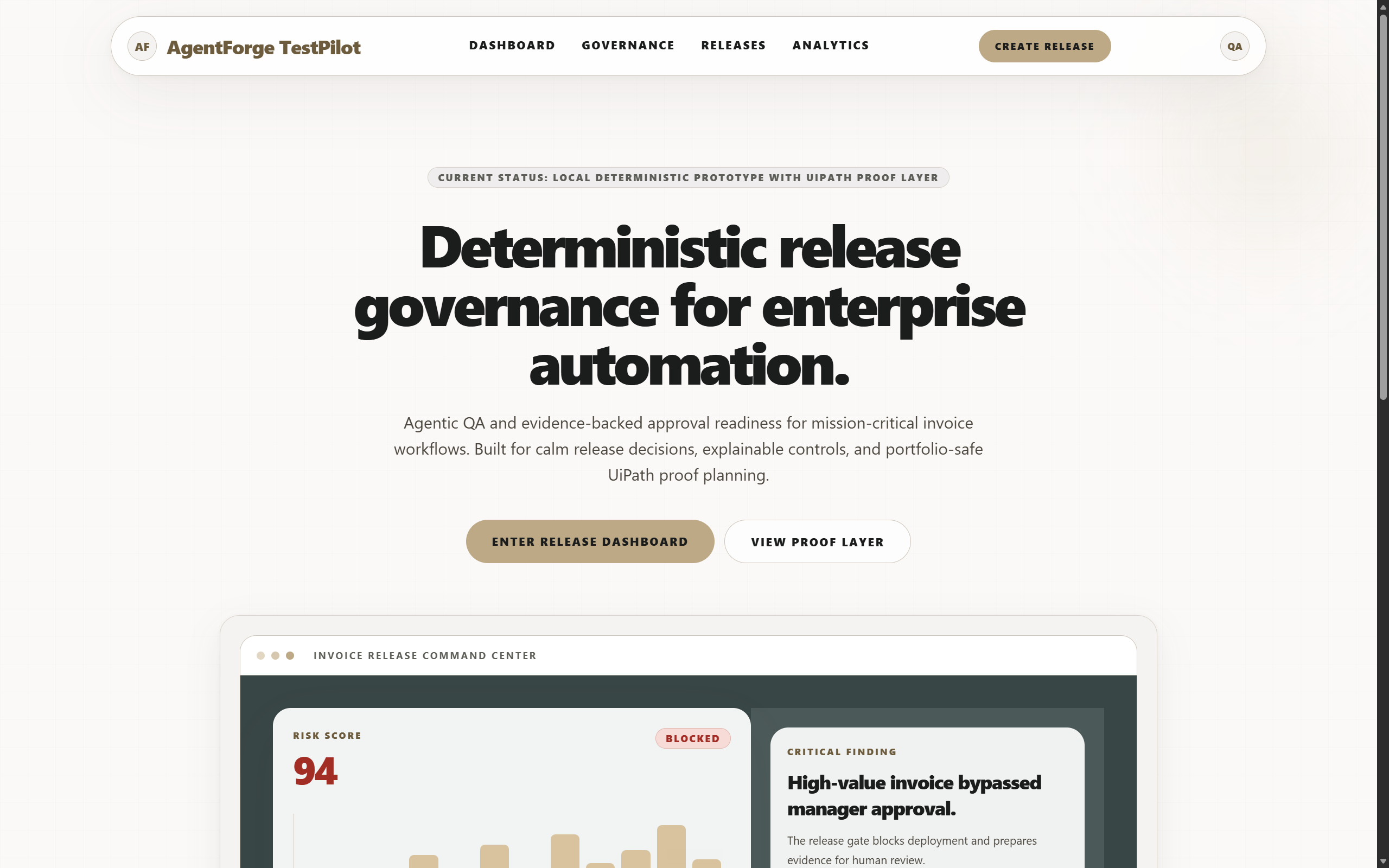
AgentForge TestPilot is an AI-style release governance dashboard for UiPath-style enterprise automations.
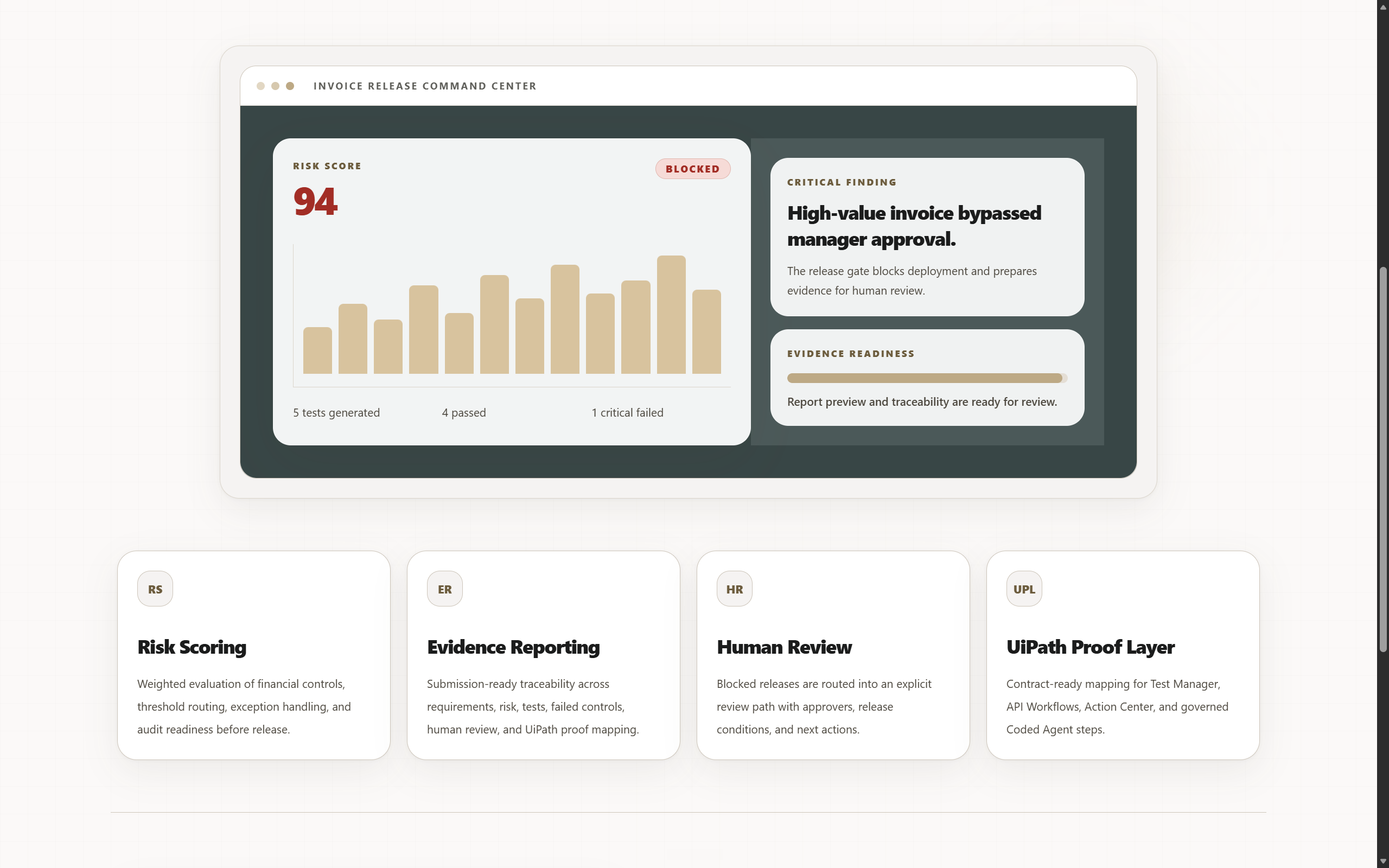
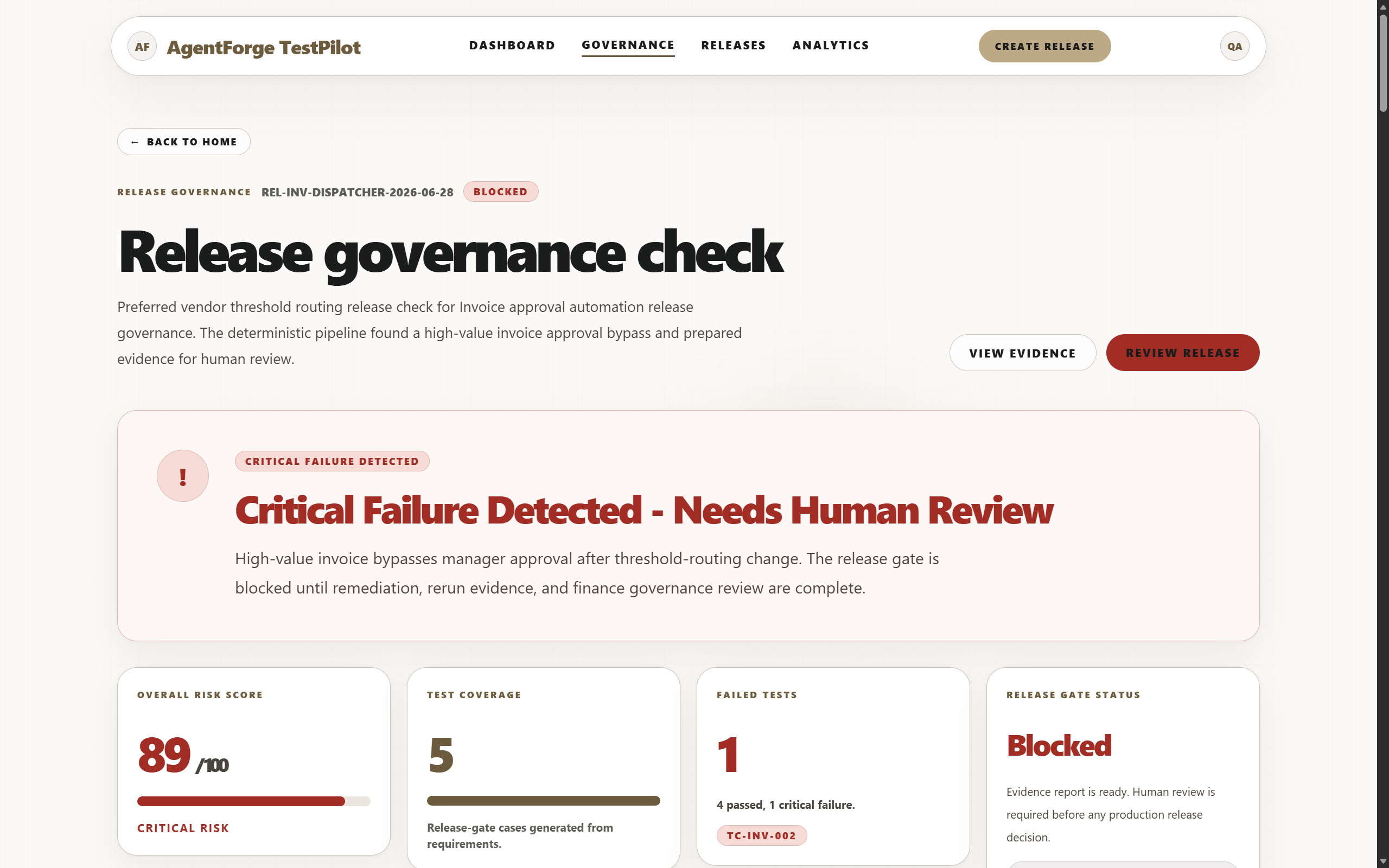
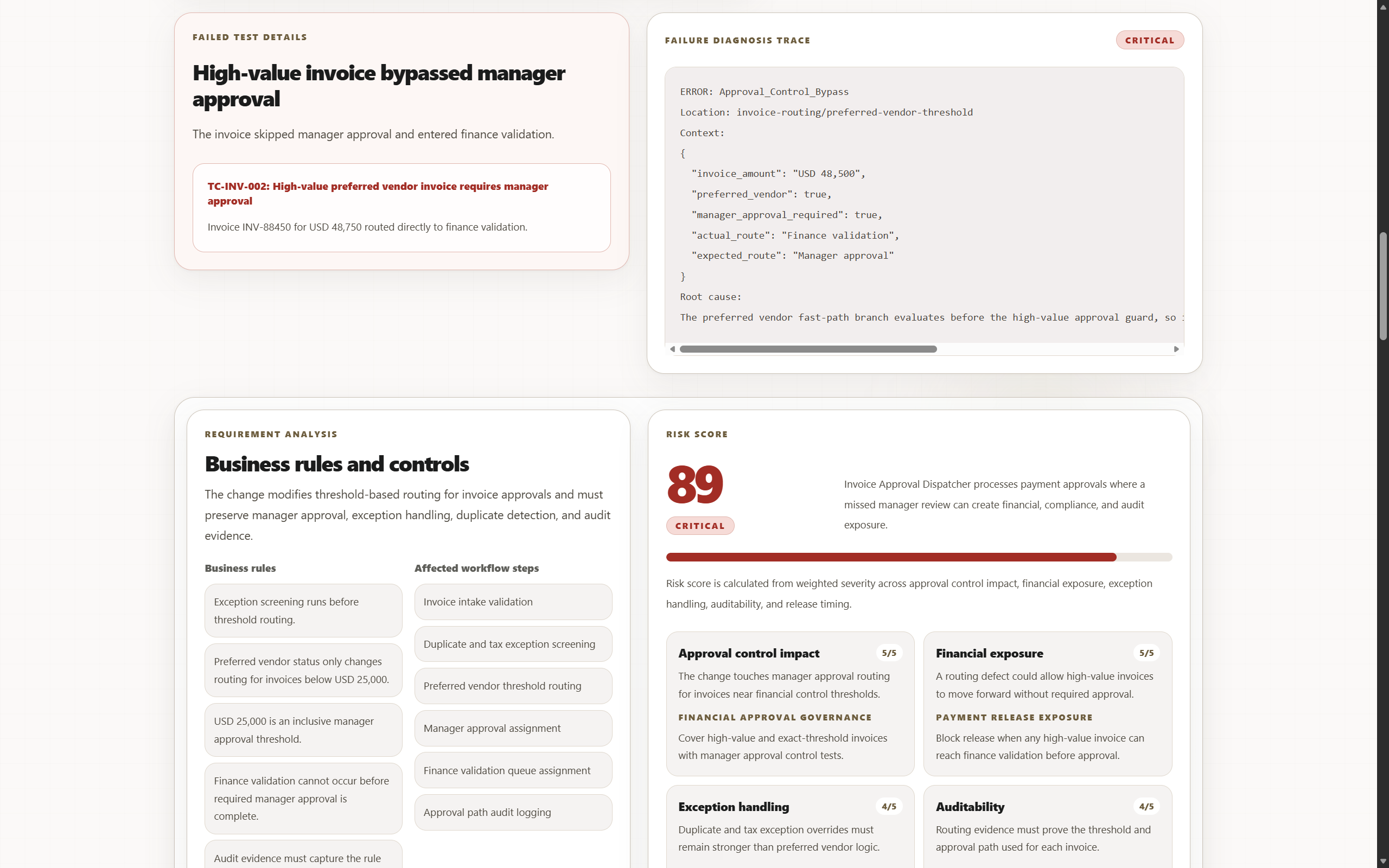
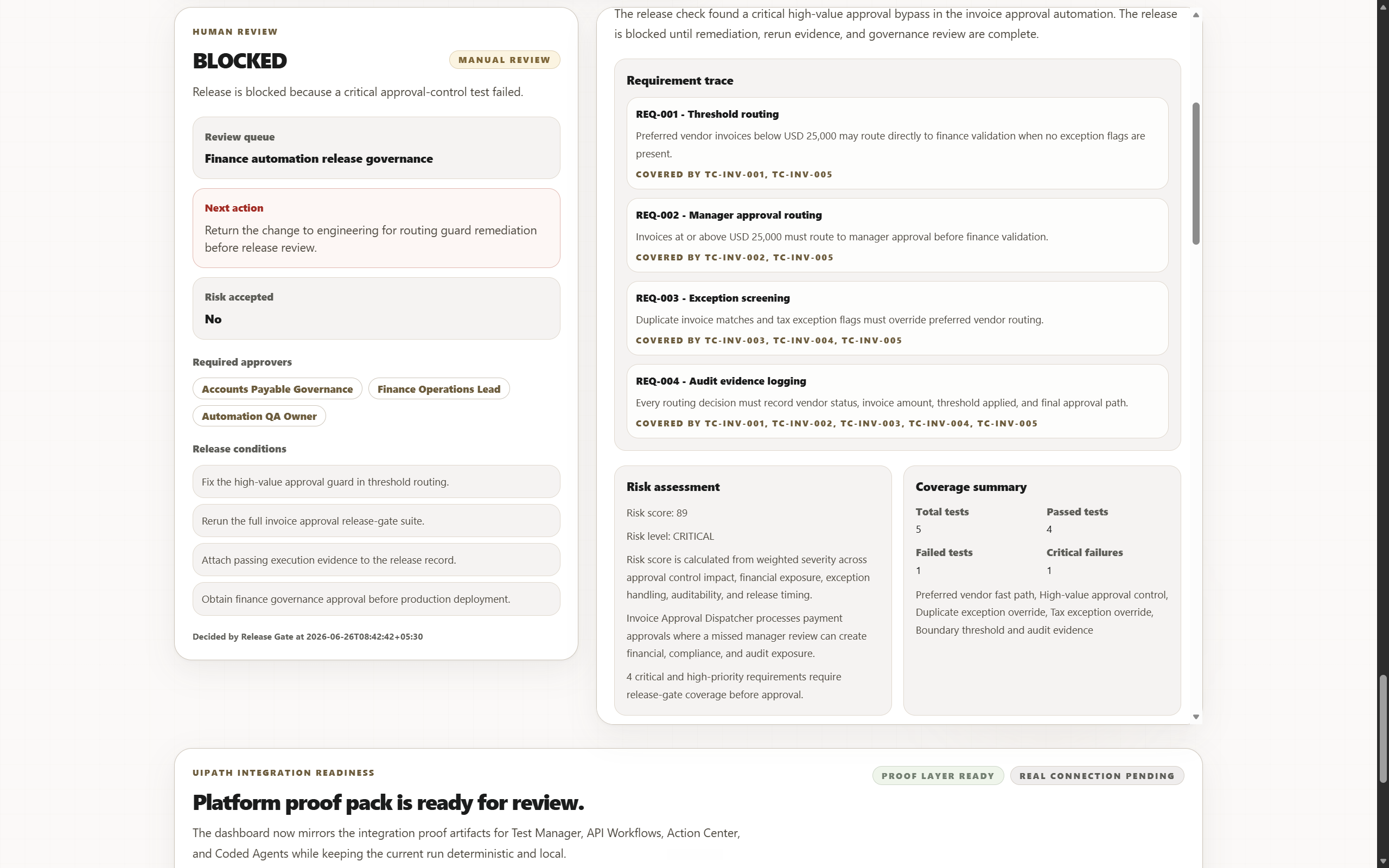
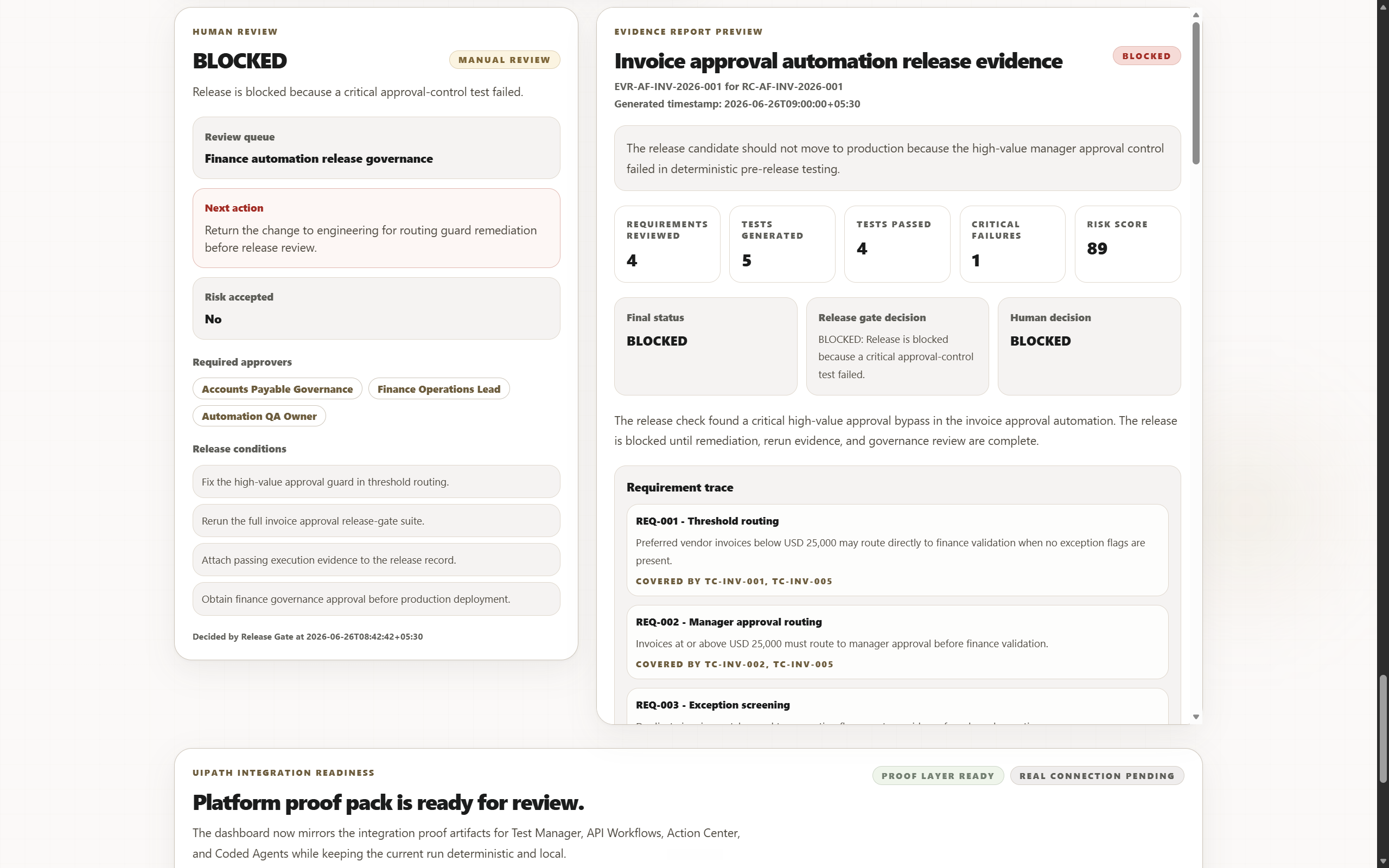
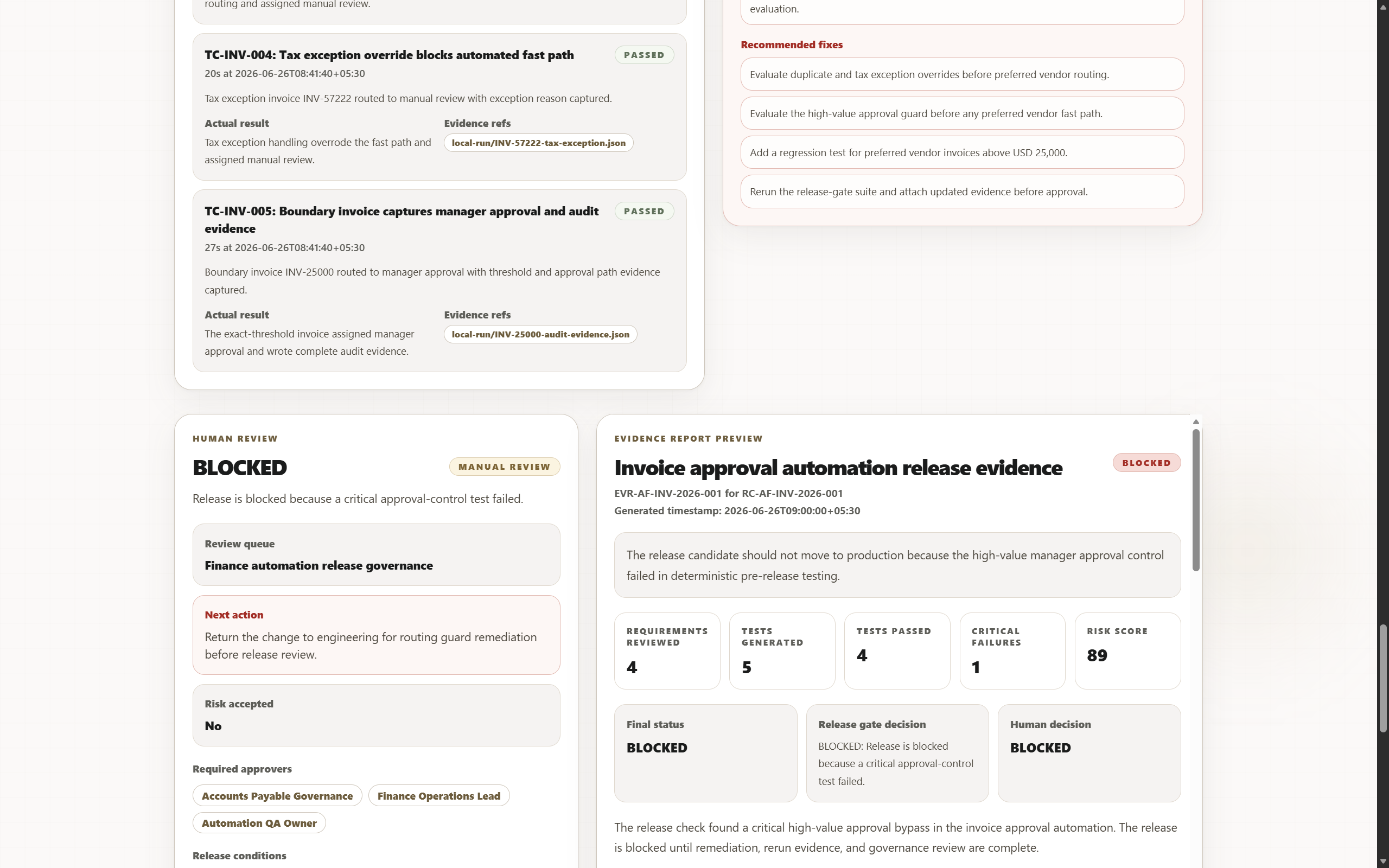
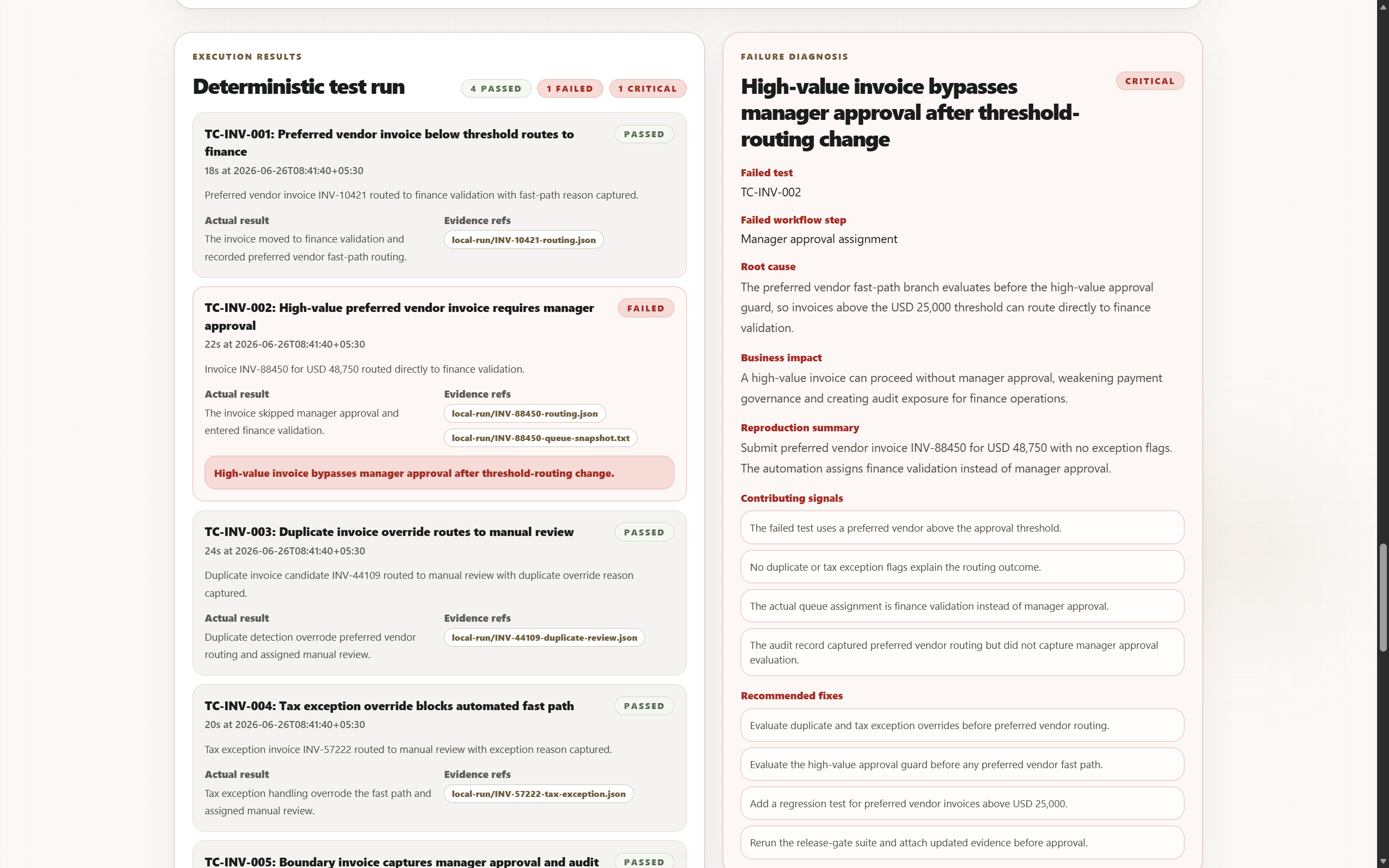
The demo scenario focuses on an invoice approval workflow. A release change causes a high-value invoice to bypass manager approval. AgentForge TestPilot detects the critical failure, assigns release risk, shows the failed test path, explains the root cause, routes the release to human review, and generates an evidence trail.
The app shows:
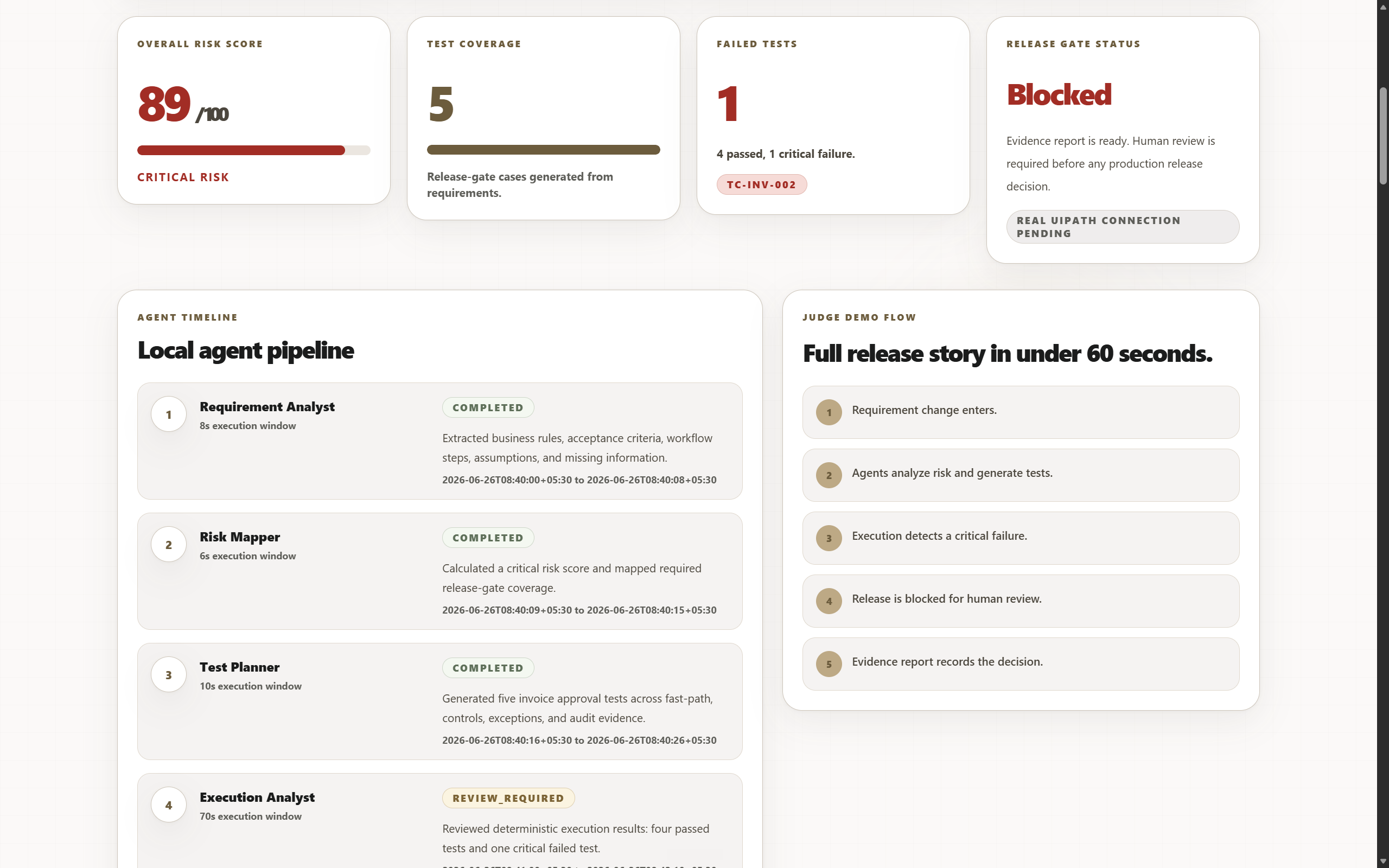
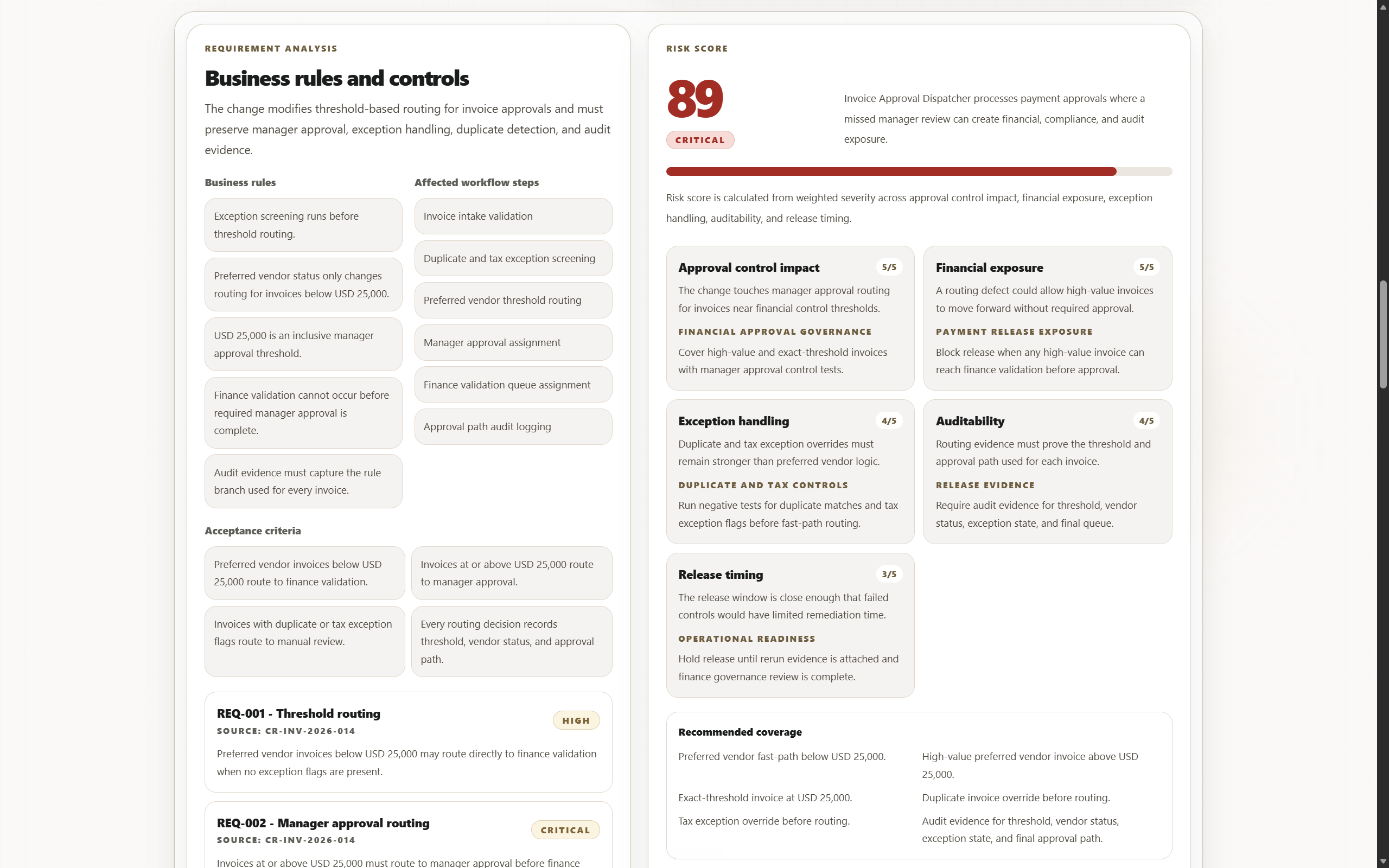
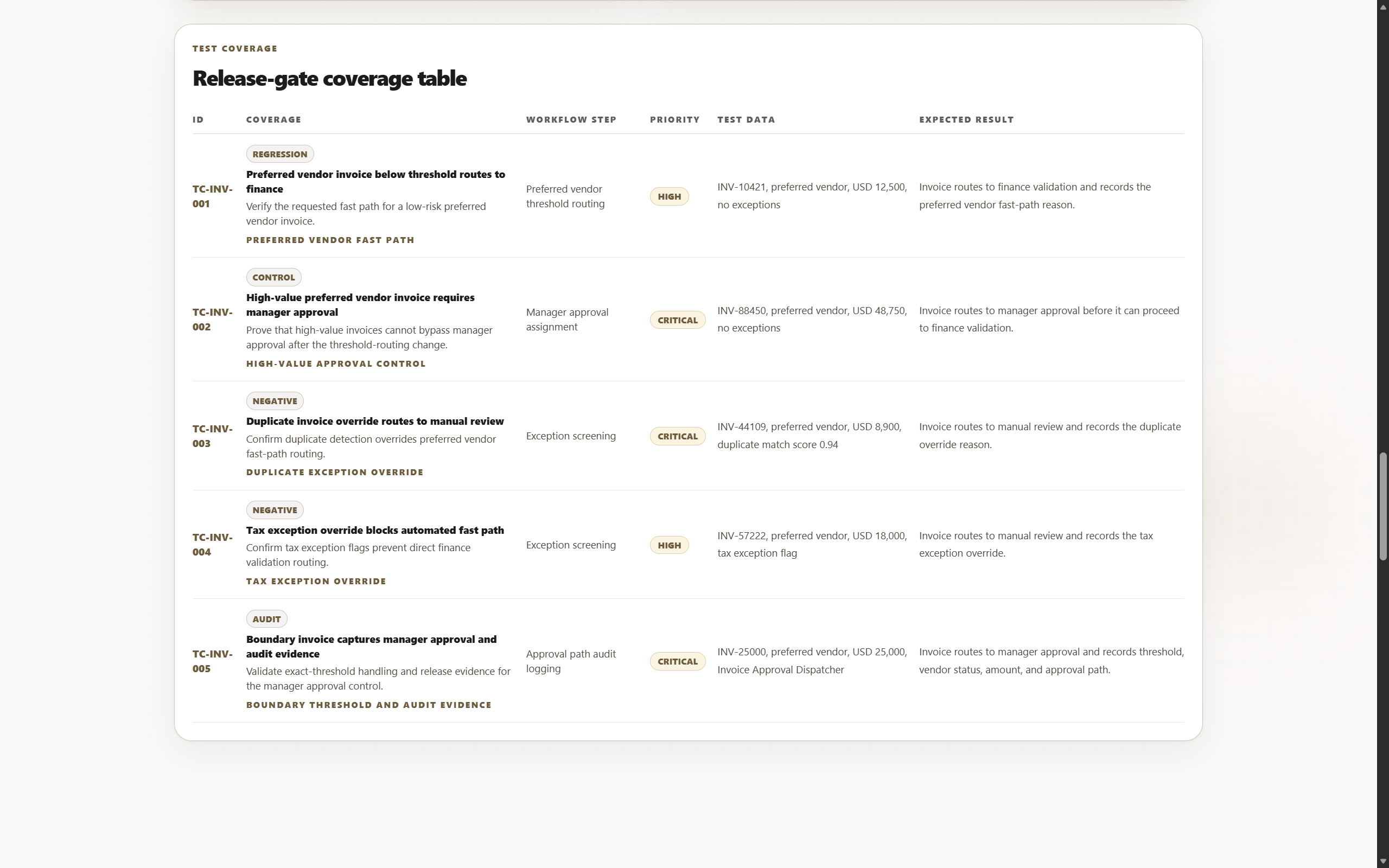
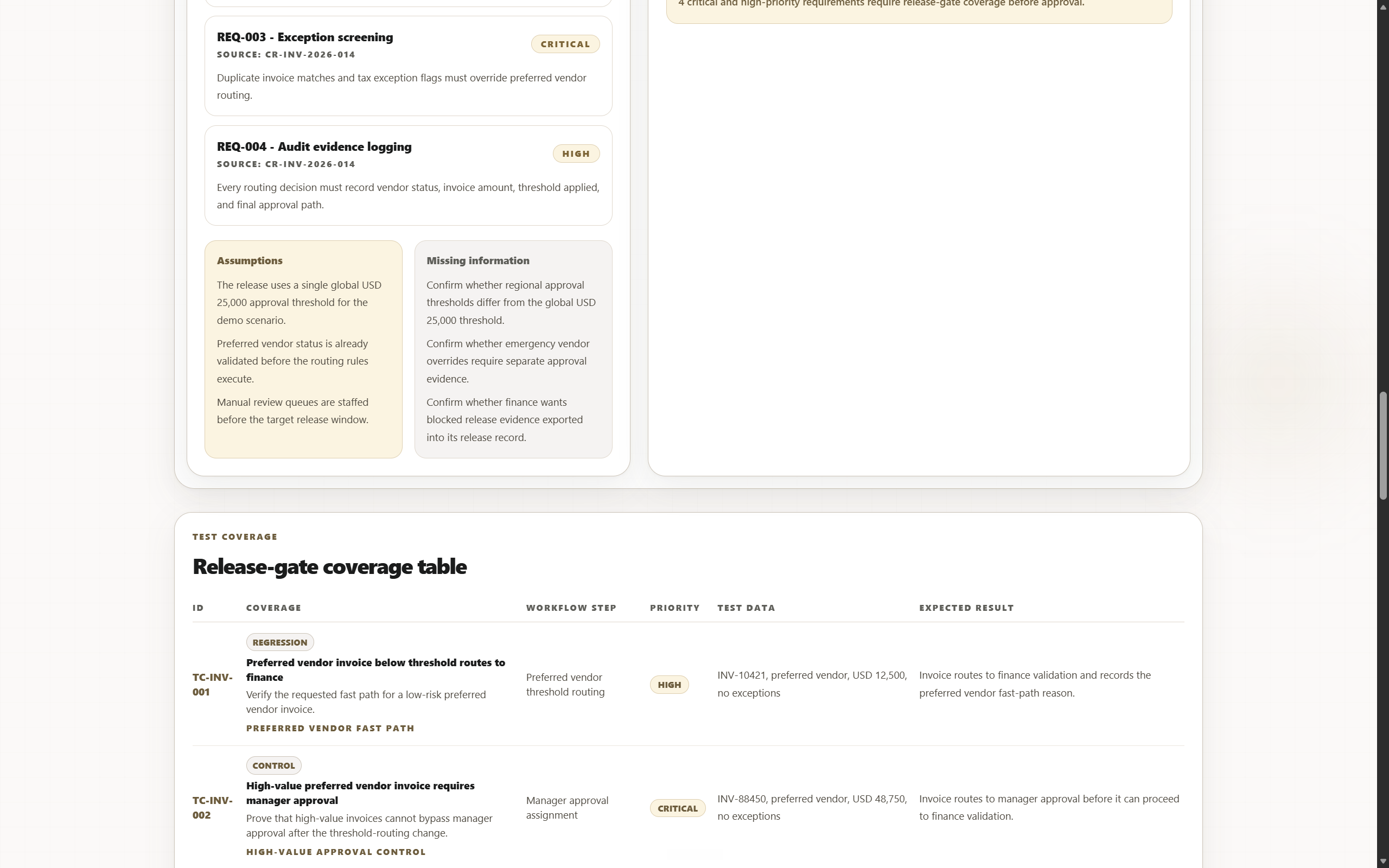
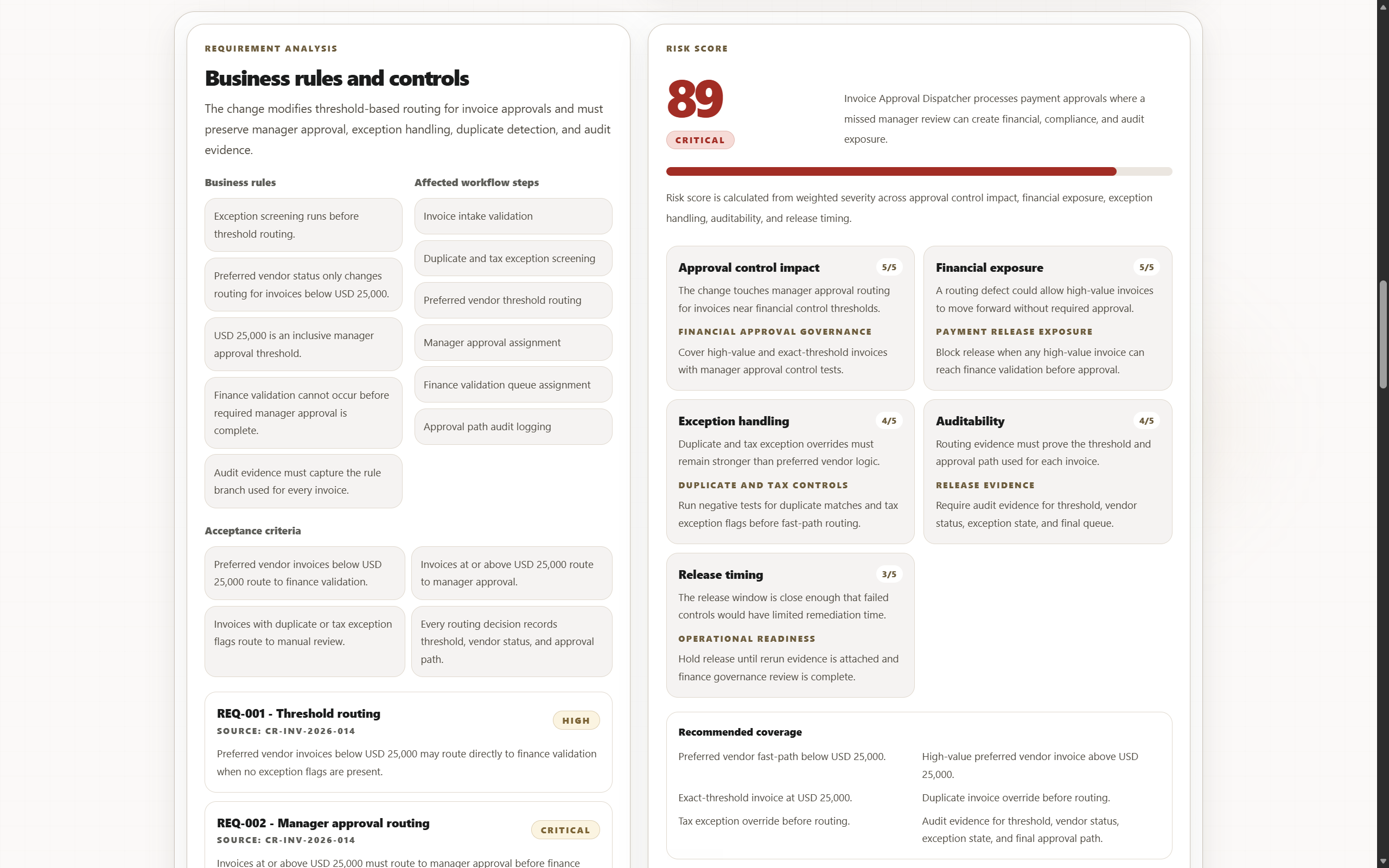
Requirement analysis Risk scoring Test coverage Execution results Critical failure diagnosis Human review readiness Evidence report preview UiPath integration readiness mapping Coding-agent bonus evidence
How we built it
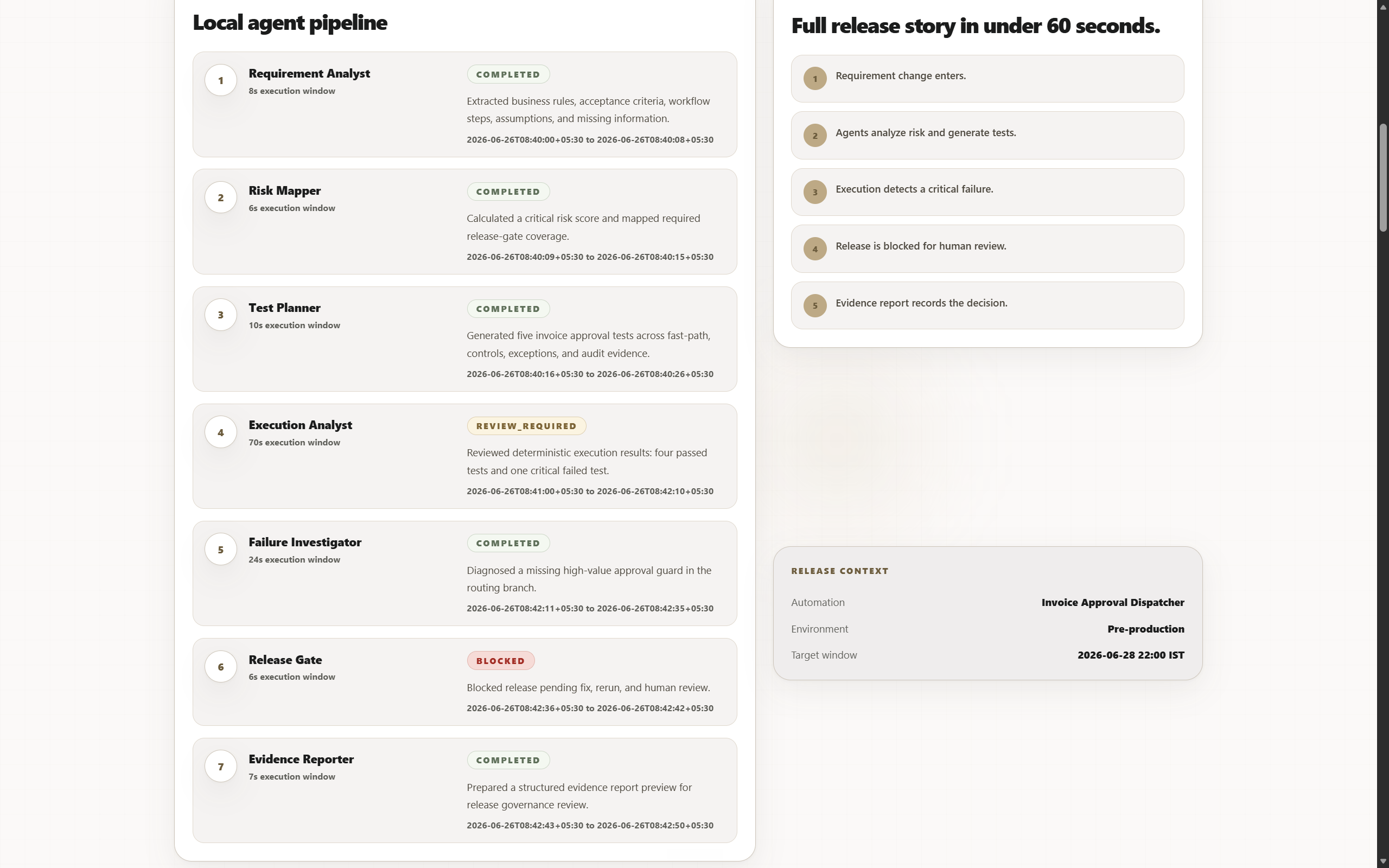
I built the project as a deterministic local prototype using Next.js, TypeScript, and a structured release-check pipeline. The core flow is designed around explainable agent-style steps:
Requirement analysis Risk mapping Test planning Execution analysis Failure investigation Release gate decision Human review and evidence reporting
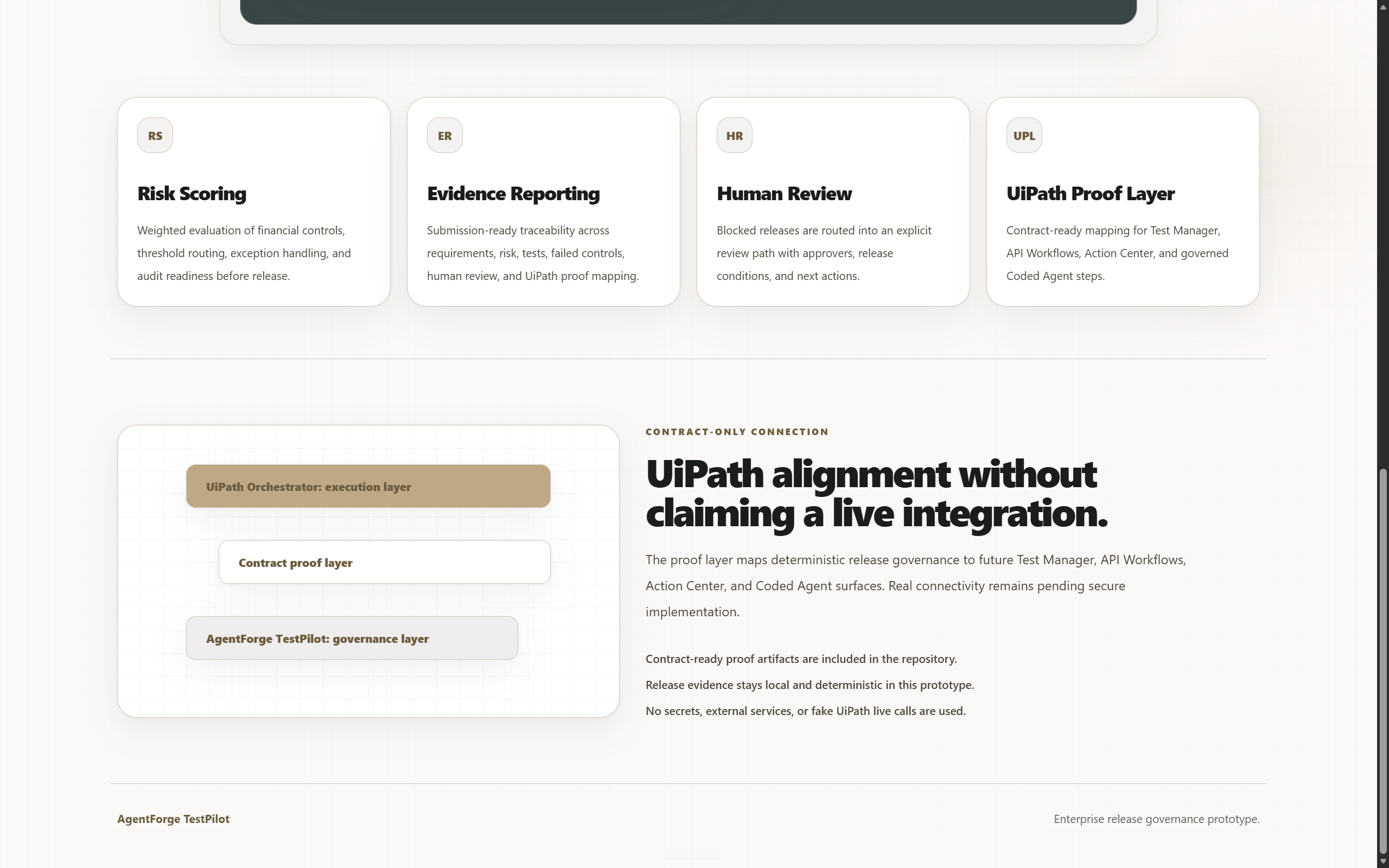
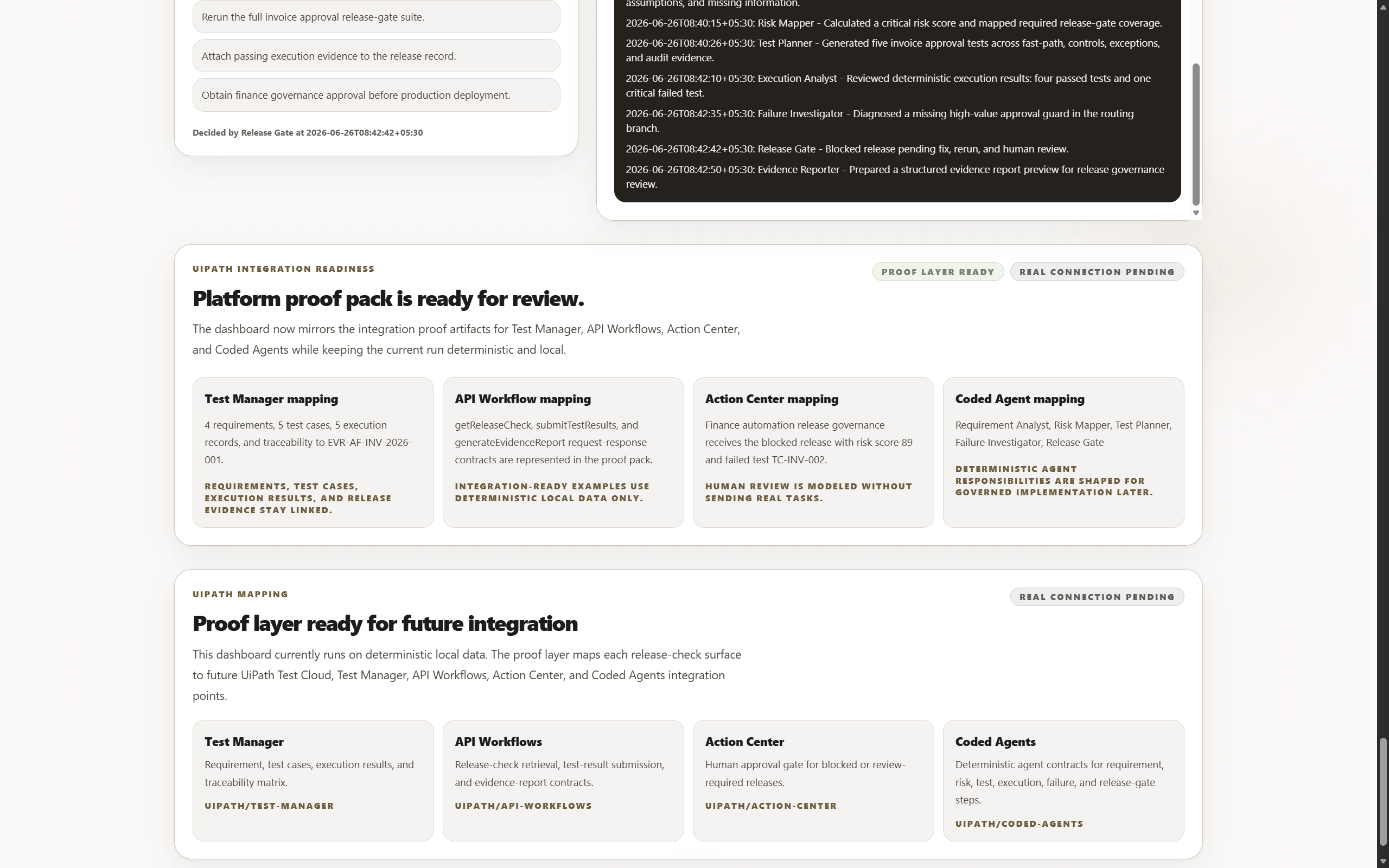
I also added a UiPath proof layer that maps the prototype to UiPath Test Manager, Test Cloud, API Workflows, Action Center, and Coded Agents. The project does not claim live UiPath API execution yet. Instead, it includes integration-ready contracts, adapter shapes, proof artifacts, validation scripts, and a clear future integration path.
UiPath alignment
AgentForge TestPilot is built for Track 3: UiPath Test Cloud.
The project maps to UiPath platform concepts in this way:
Test Manager / Test Cloud: requirements, test cases, execution results, traceability, and release evidence API Workflows: release-check retrieval, test-result submission, and evidence-report generation Action Center: human review and approval gate for risky releases Coded Agents: focused steps for requirement analysis, risk mapping, test planning, failure investigation, and release gating
The current version is a deterministic prototype with a UiPath proof layer. Real UiPath API connection is planned as the next implementation step.
Challenges we ran into
The hardest part was keeping the project honest and useful at the same time. I did not want to build just a beautiful dashboard with fake platform claims. I wanted the repo to clearly show what is implemented now, what is simulated, and what is ready for future UiPath integration.
Another challenge was turning a technical failure into a judge-friendly story. The dashboard had to explain not only that a test failed, but why it matters for business risk, compliance, and release governance.
Accomplishments that we're proud of
I am proud that the project is not just a UI mockup. It includes:
A deployed live app A premium release-check dashboard A deterministic release governance pipeline UiPath proof contracts and platform mapping Evidence bundle and validation scripts Screenshot capture system Repository audit script Proof validation script Coding-agent bonus documentation Clean README and submission checklist
What we learned
I learned how important it is to make AI and automation systems explainable before they are trusted. In enterprise workflows, the final answer is not enough. Teams need evidence: what changed, what was tested, what failed, who reviewed it, and why the release decision was made.
I also learned how to structure a project so it is portfolio-safe, judge-readable, and technically honest.
What's next for AgentForge TestPilot
Next, I want to connect the proof layer to real UiPath services:
Import requirements and test cases into UiPath Test Manager Pull execution results from UiPath Test Cloud Trigger API Workflows for release-check and evidence generation Send high-risk releases into Action Center for human review Extend the AgentForge ecosystem with CLI, desktop, and IDE workflows for evidence-first software trust Coding agent bonus evidence
OpenAI Codex was used as a coding agent for implementation support, iteration, QA automation, screenshot capture, validation scripts, and documentation hardening.
Human review controlled the architecture, scope, acceptance criteria, project direction, and final validation.
Evidence is available in the repository through:
Small logical commit history README documentation docs/coding-agent-bonus.md repo audit script proof validation script screenshot assets submission checklist
No raw prompt logs or private local artifacts are included.
Built With
- coded-agent-contracts
- codex
- motion
- next.js
- openai
- playwright
- react
- tailwind-css
- typescript
- uipath-action-center-schema
- uipath-api-workflow-contracts
- uipath-test-cloud-proof-layer
- uipath-test-manager-mapping
- vercel

Log in or sign up for Devpost to join the conversation.