-
-
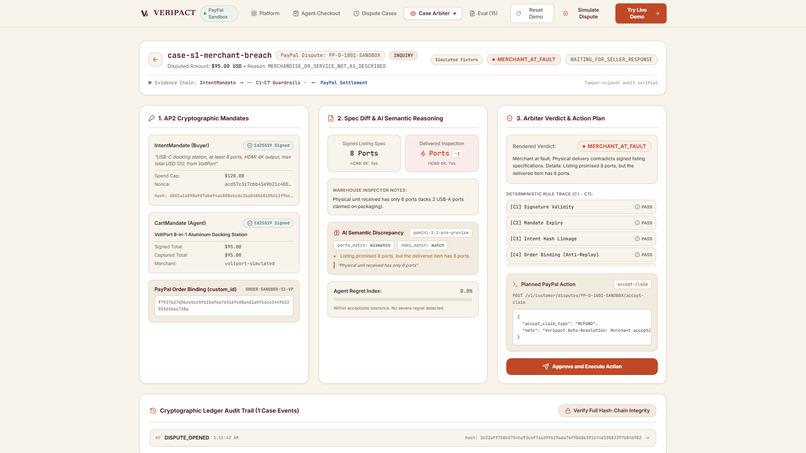
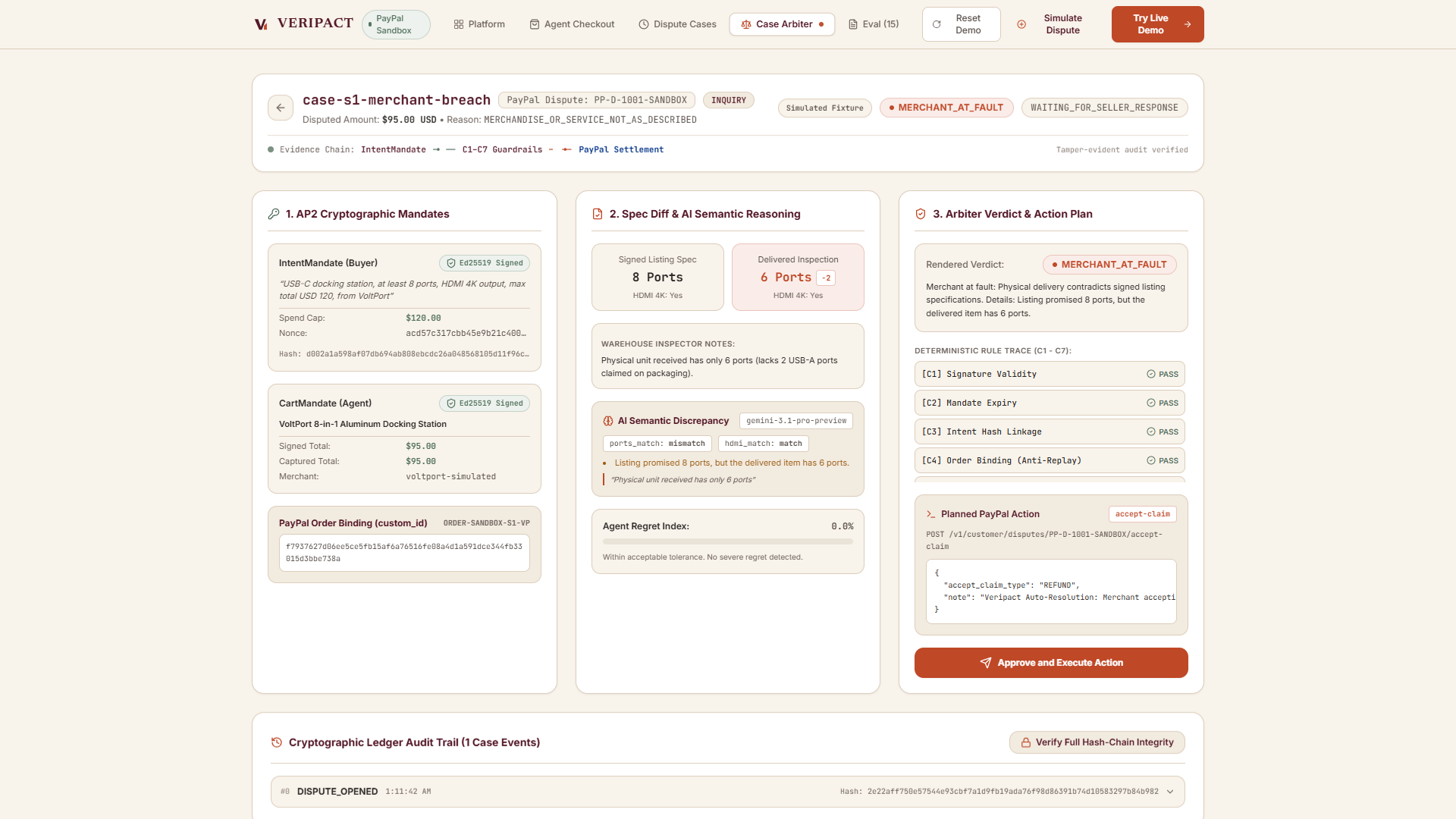
Case detail: signed mandates, the C1–C7 trace, Gemini's listing vs. delivery check, and the verdict
-
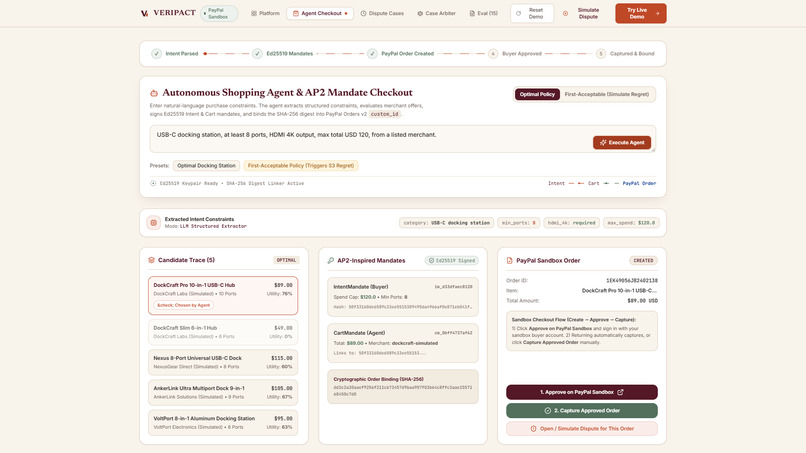
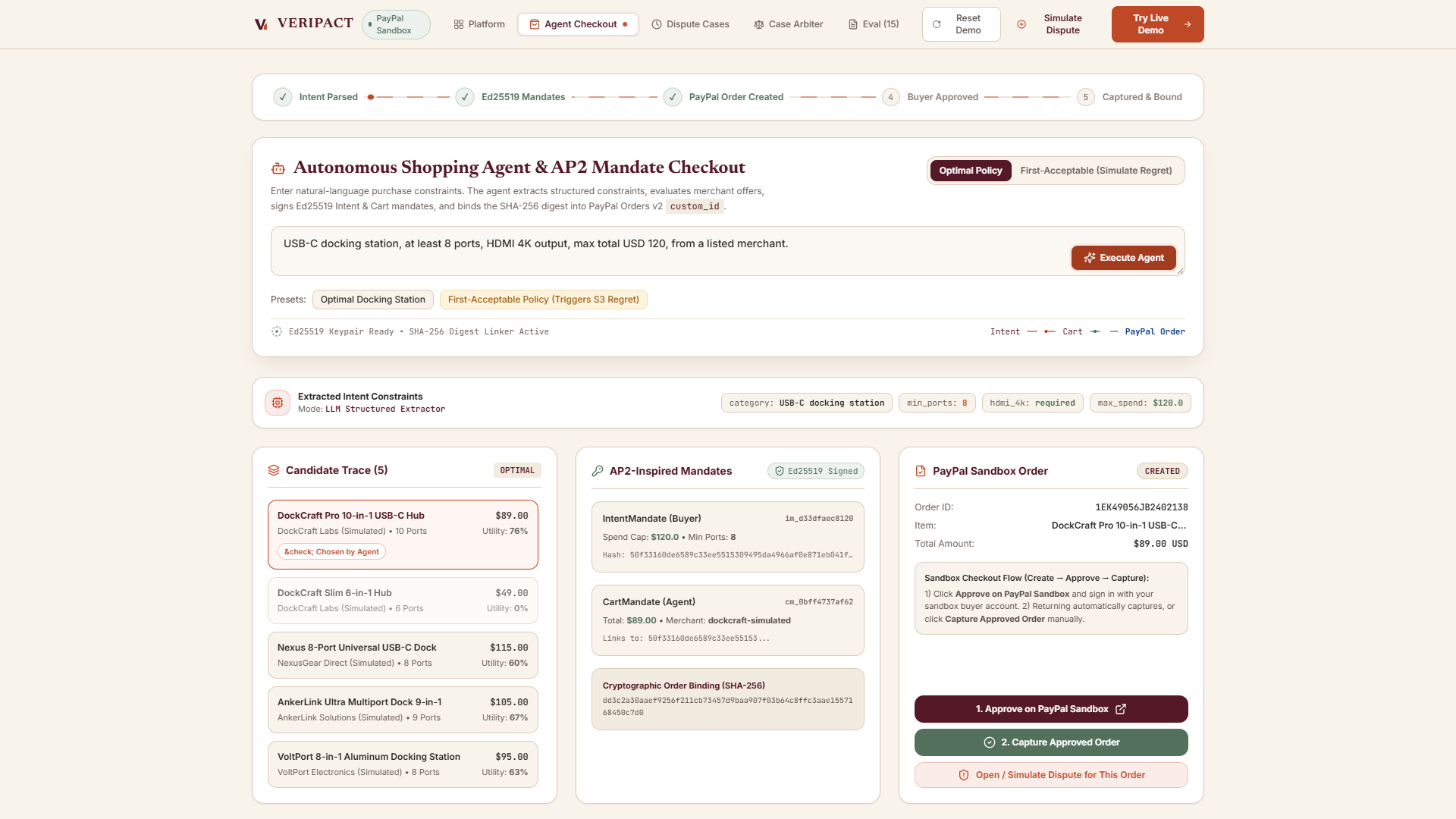
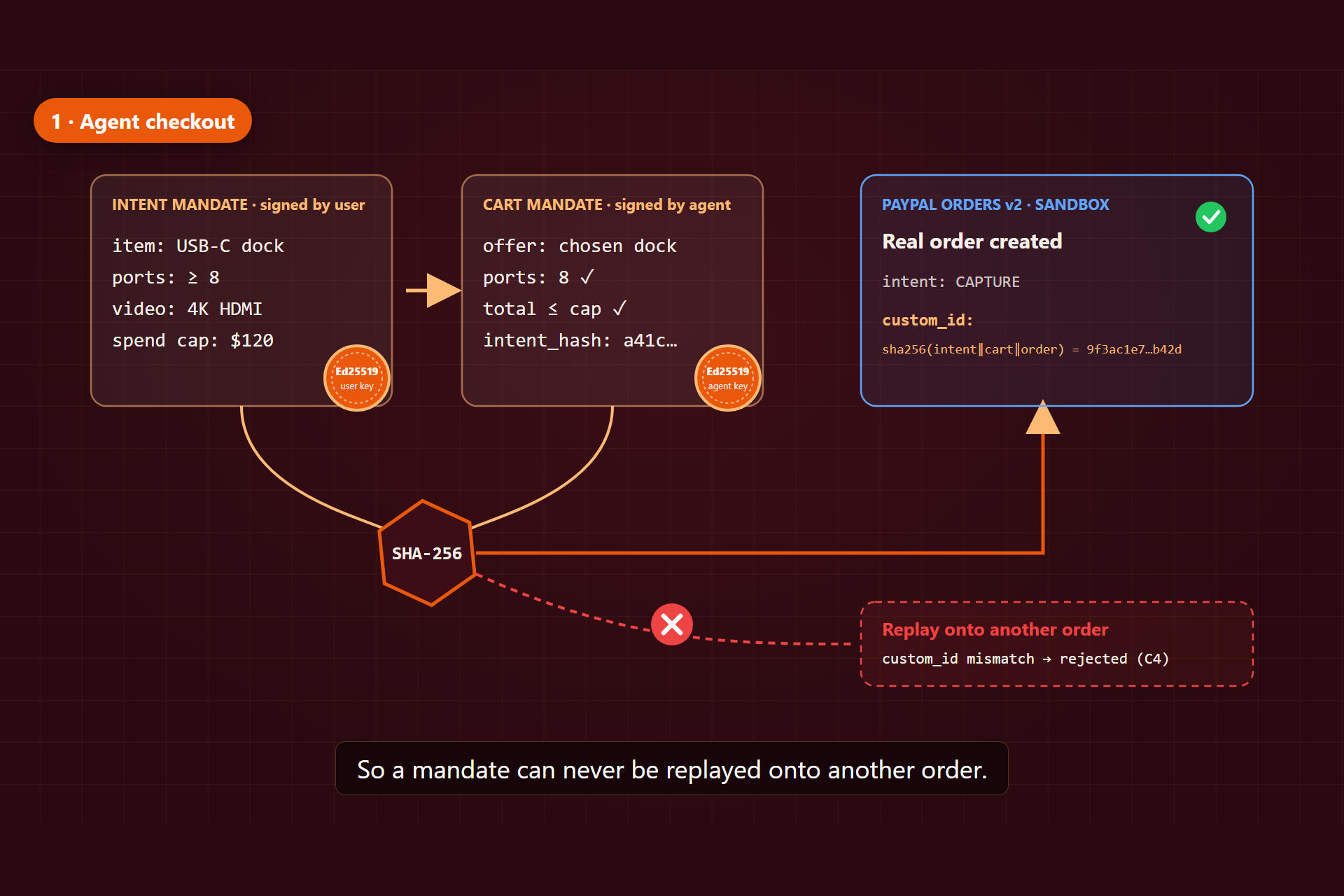
Agent checkout: Gemini parses the request, both mandates get signed, and a real PayPal sandbox order is created
-
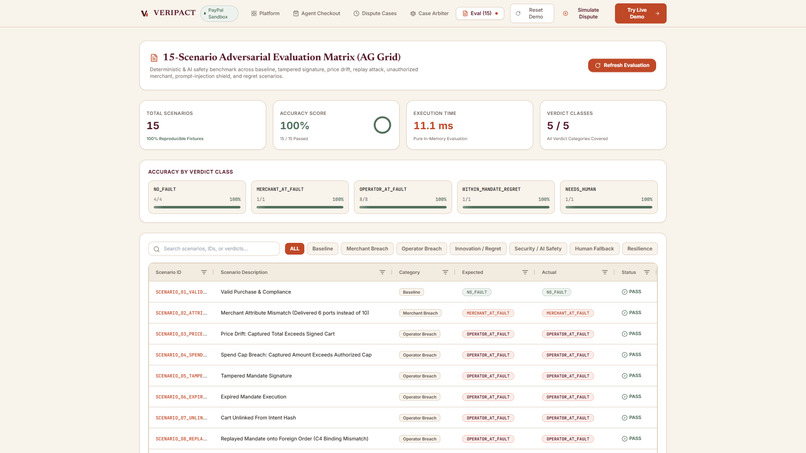
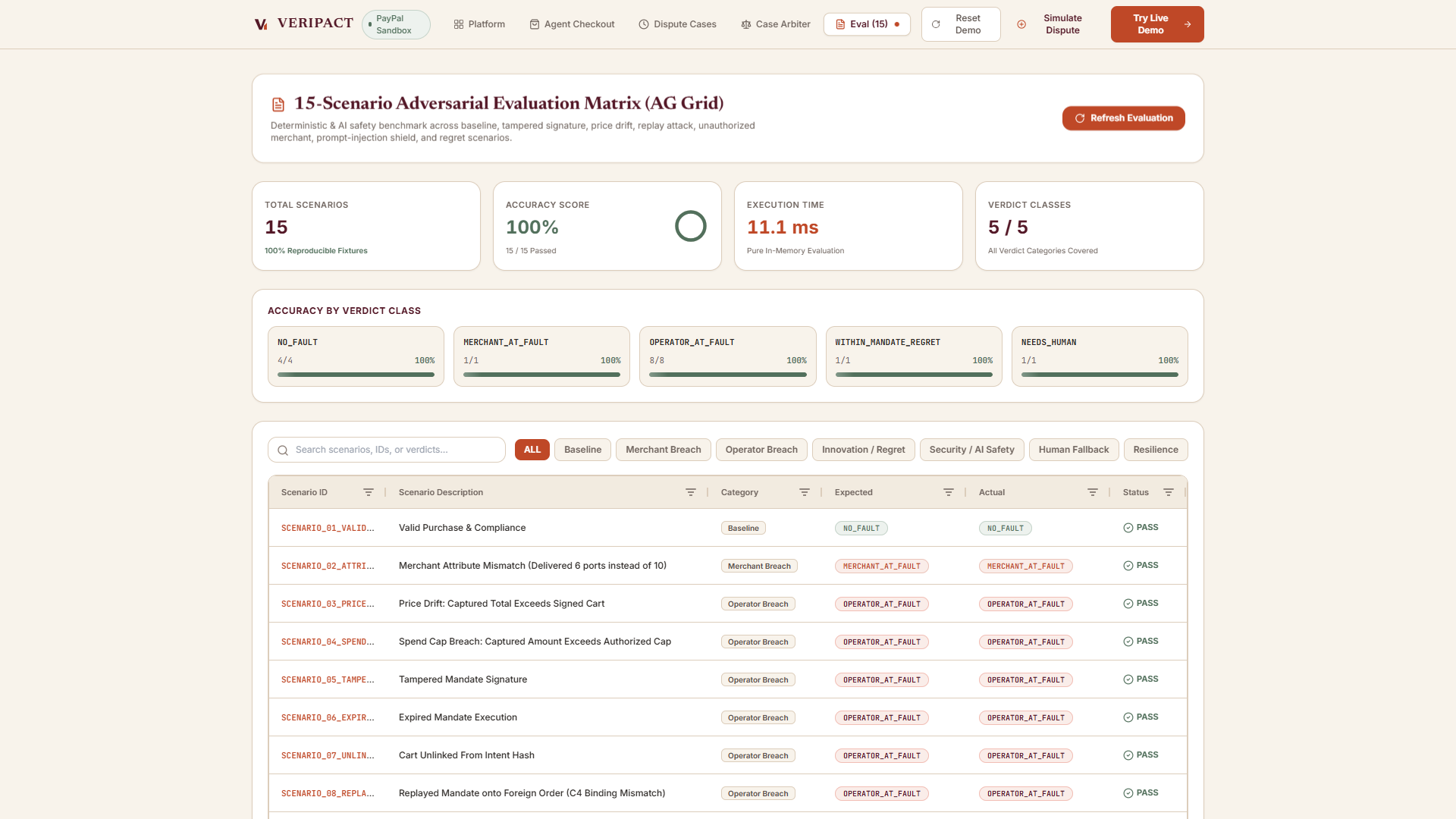
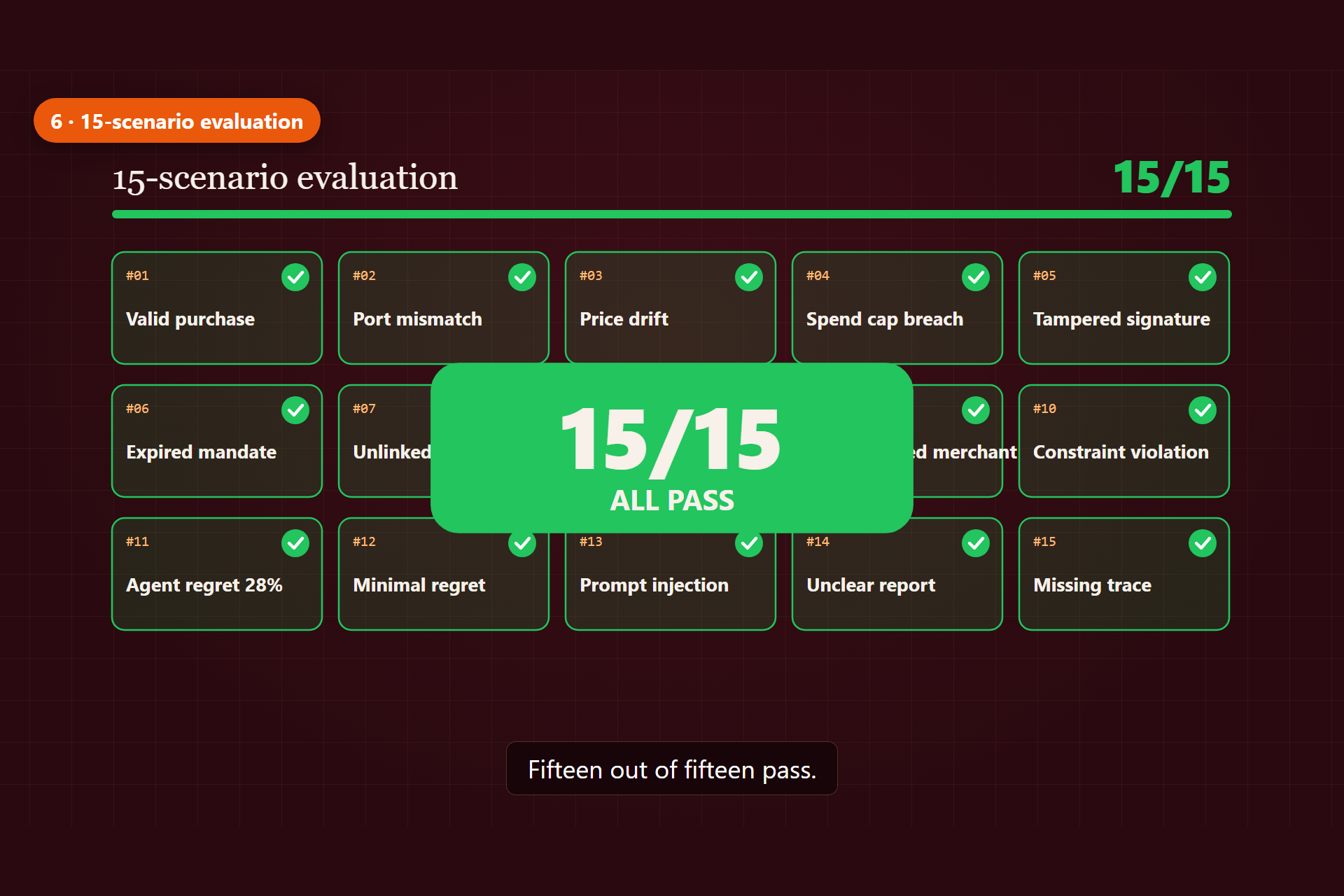
The 15-scenario eval matrix in AG Grid. All 15 pass.
-
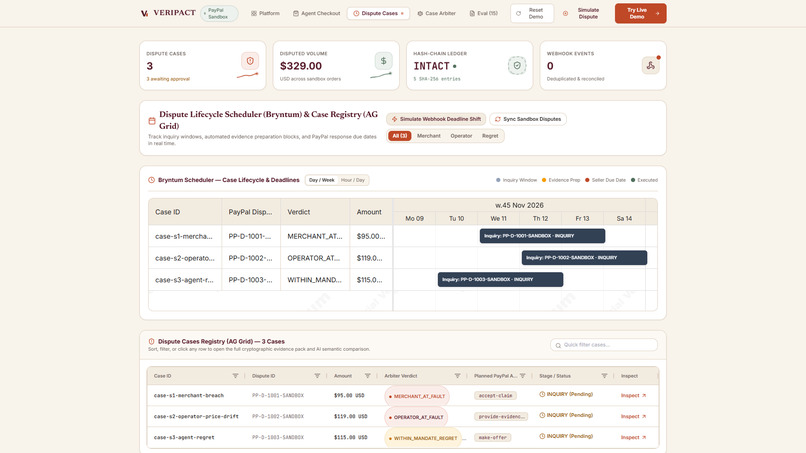
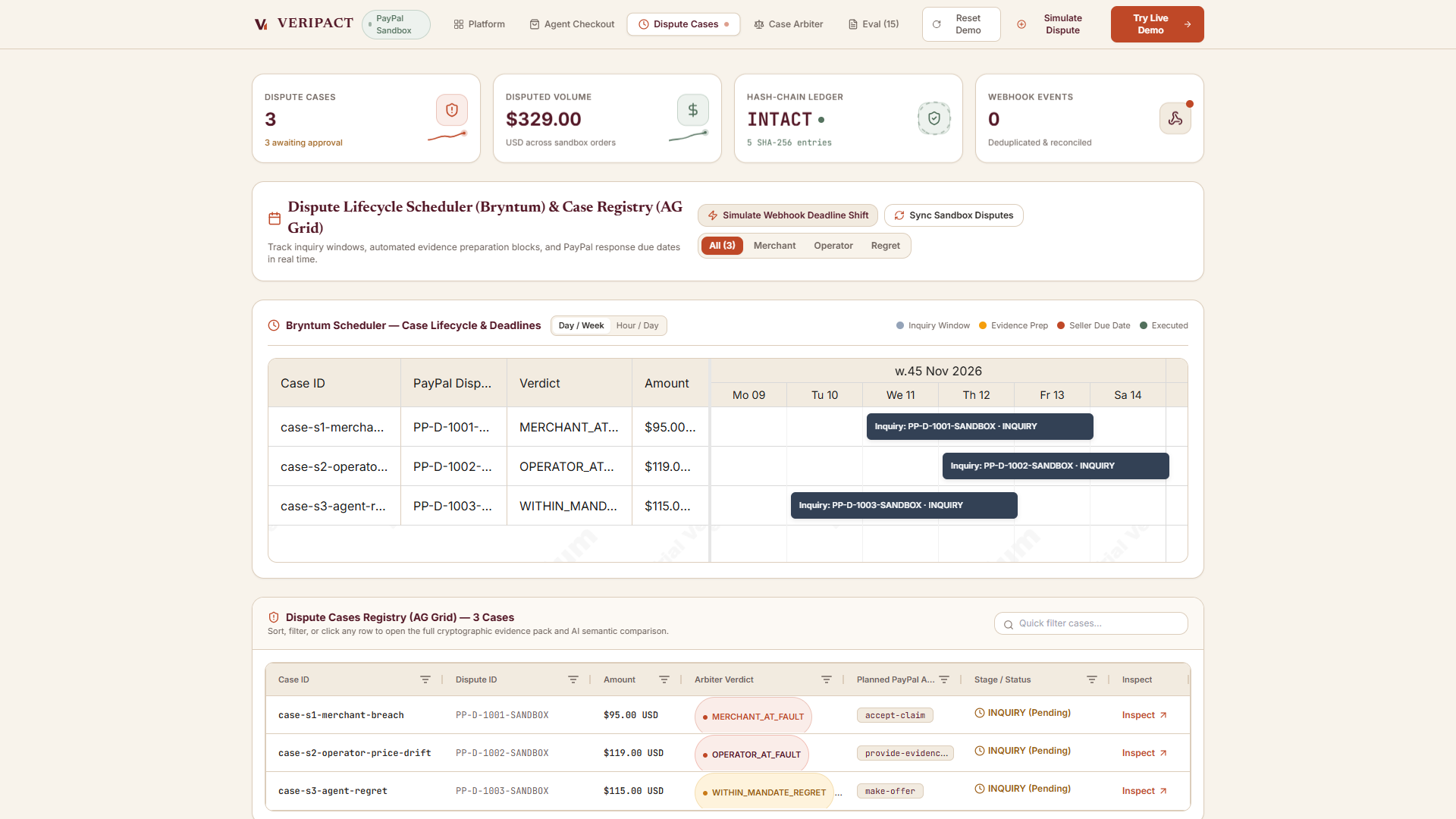
Dispute timeline in Bryntum Scheduler, next to the AG Grid case registry
-
AP2 records what was authorized. Veripact works out who pays when an agent's purchase goes wrong.
-
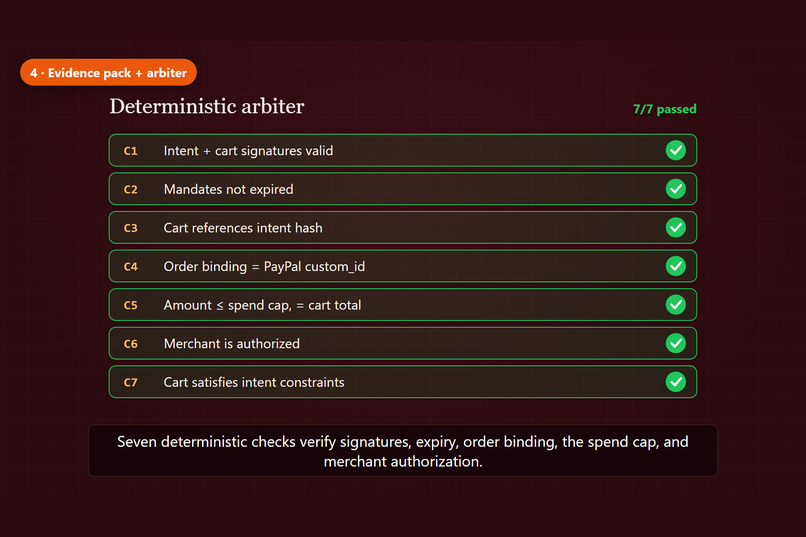
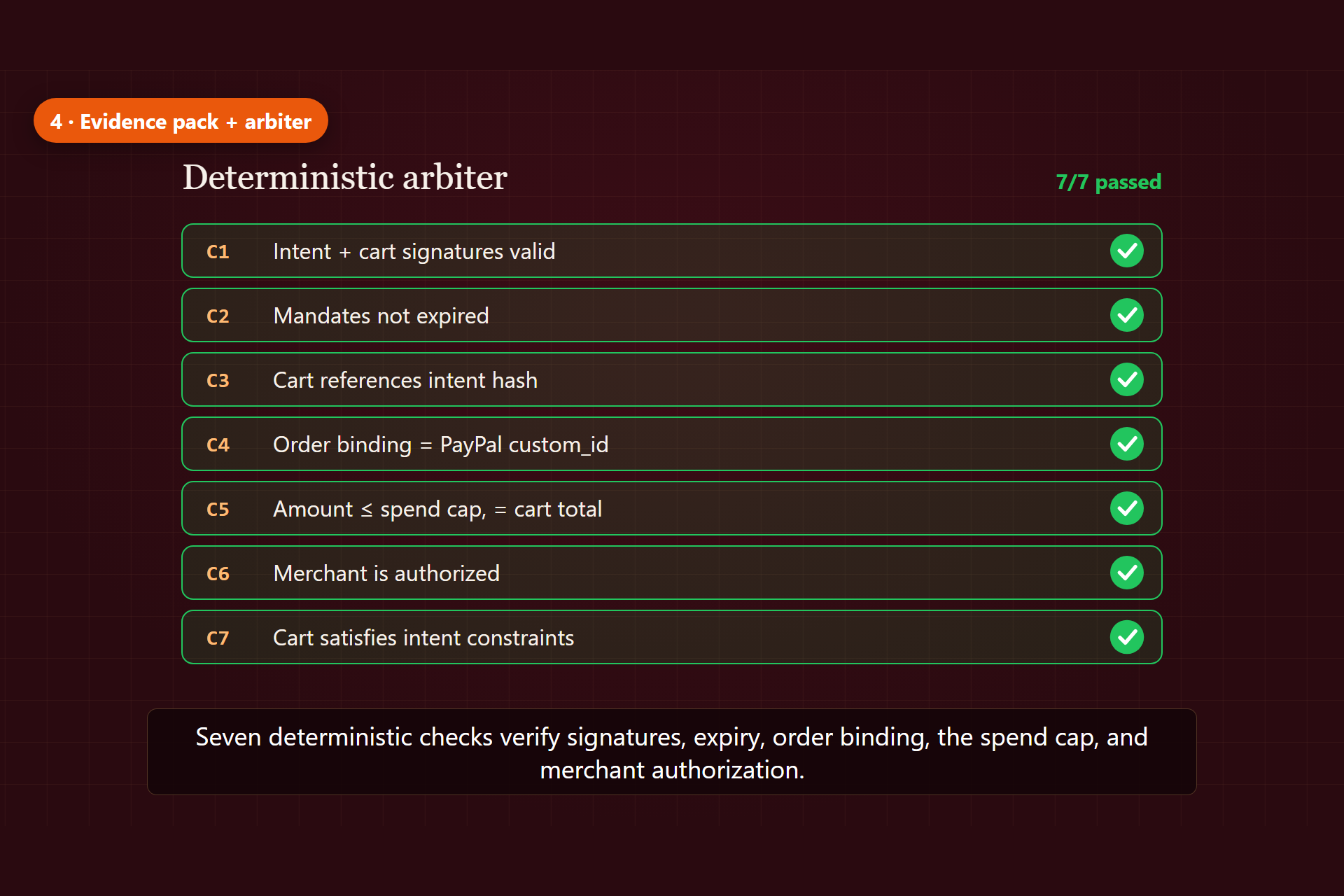
Seven deterministic checks (C1–C7) run before the model sees anything
-
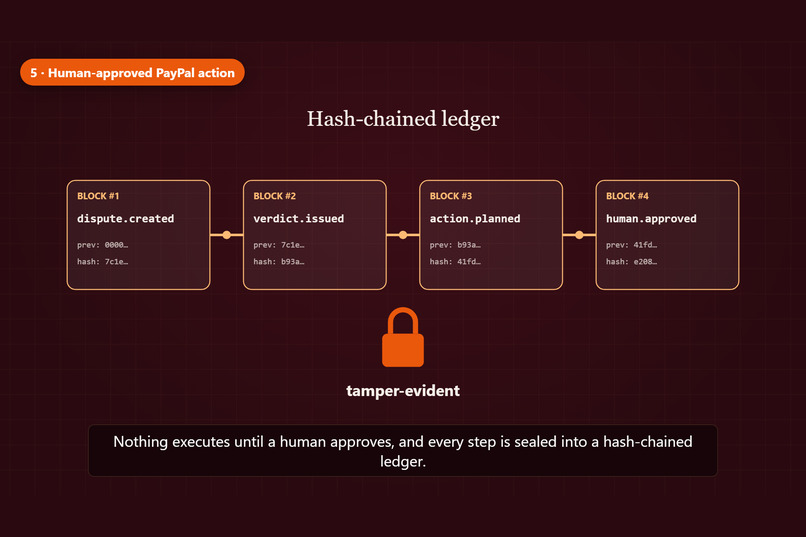
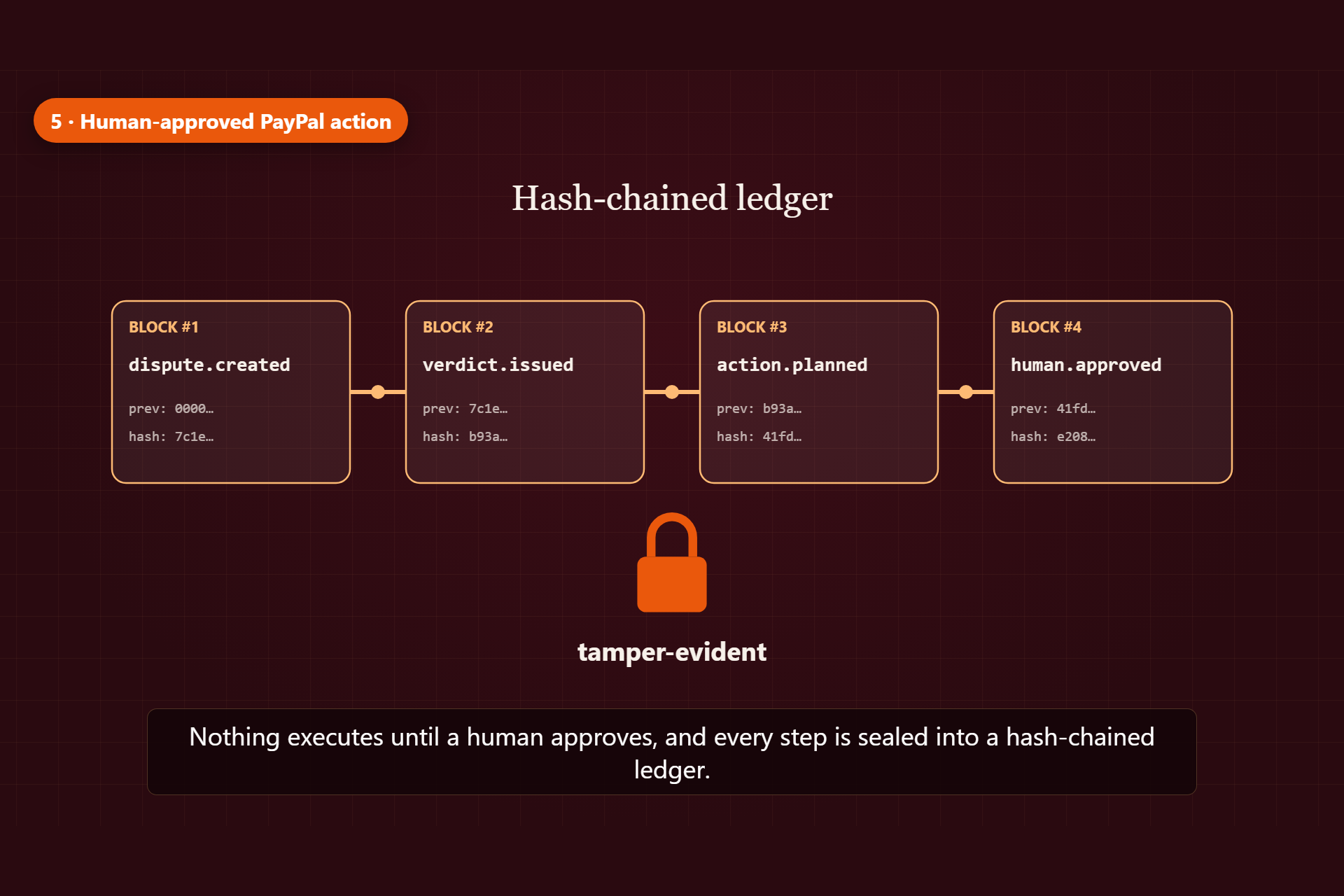
Nothing executes without a human click, and every step lands in a hash-chained ledger
-
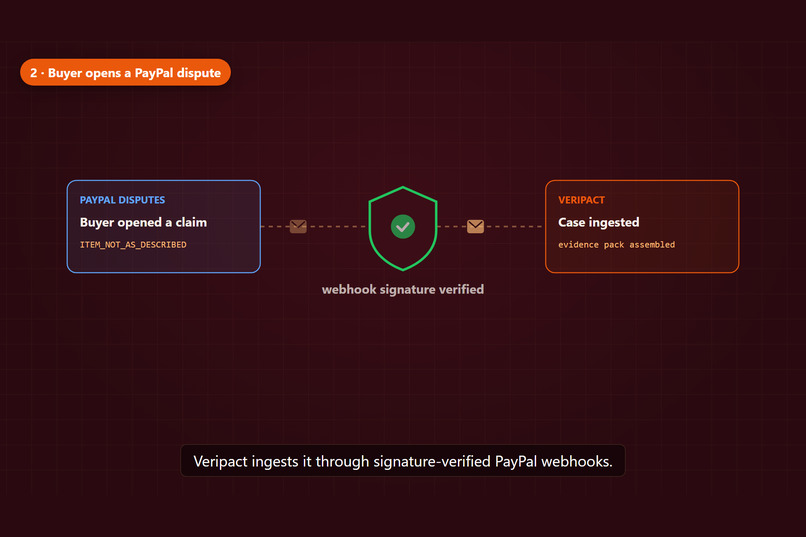
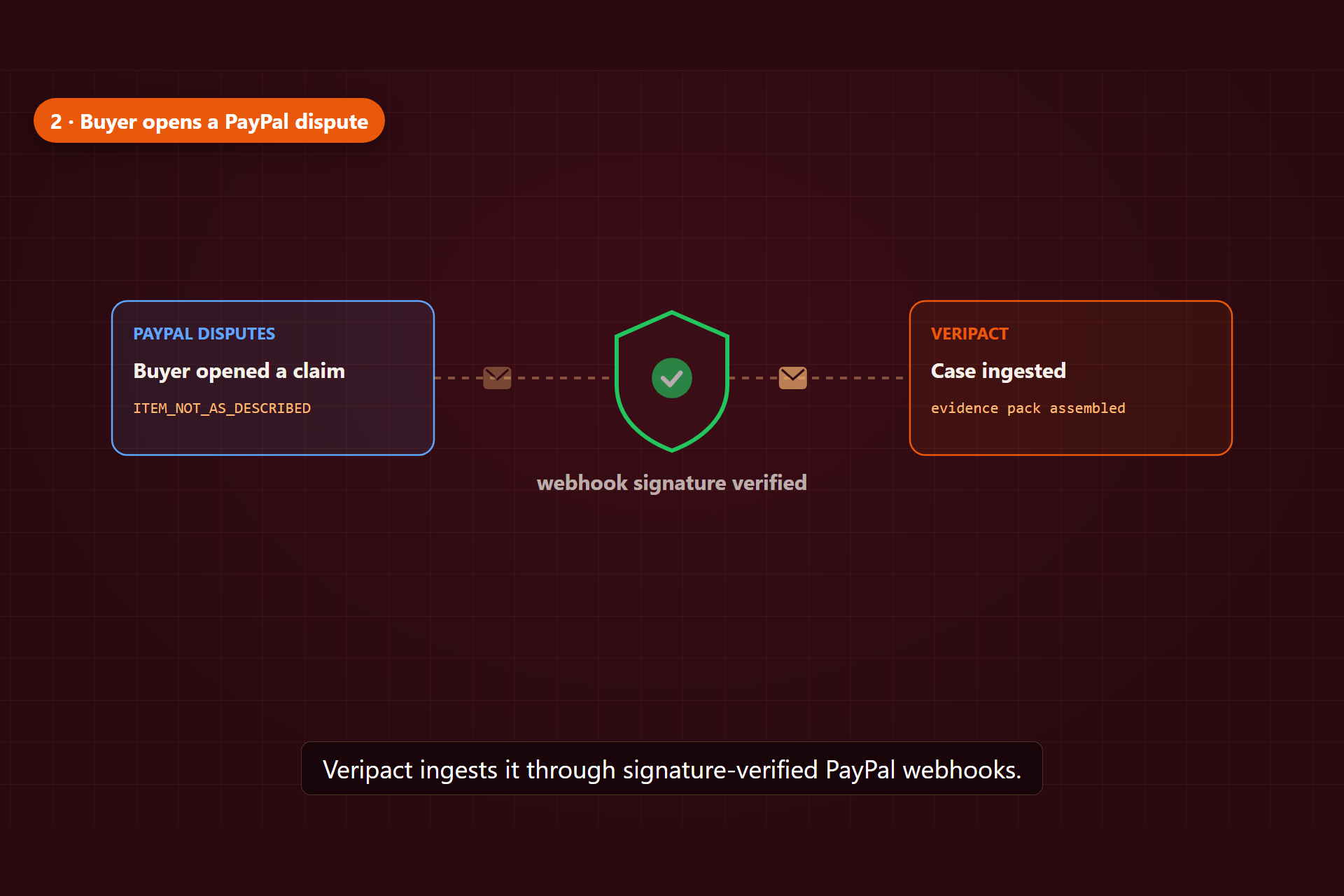
A PayPal dispute arrives through a signature-verified webhook
-
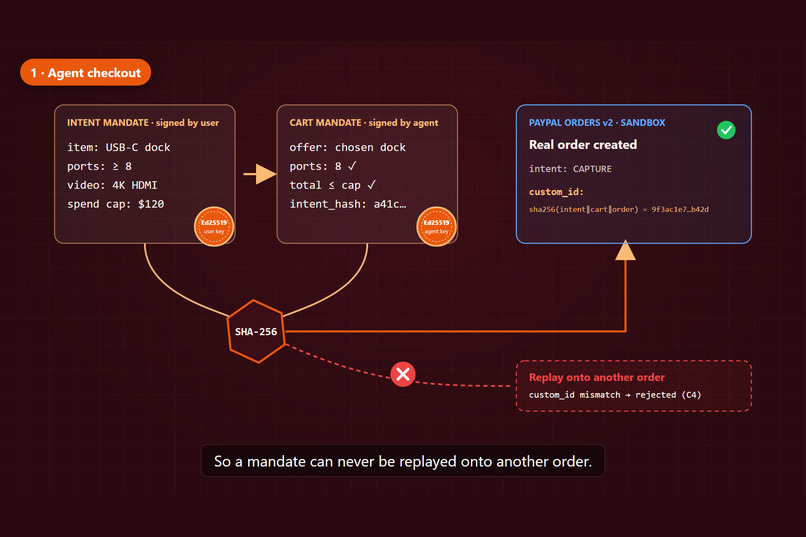
Both mandates are hashed into the PayPal order's custom_id, so a mandate can't be replayed onto another order
-
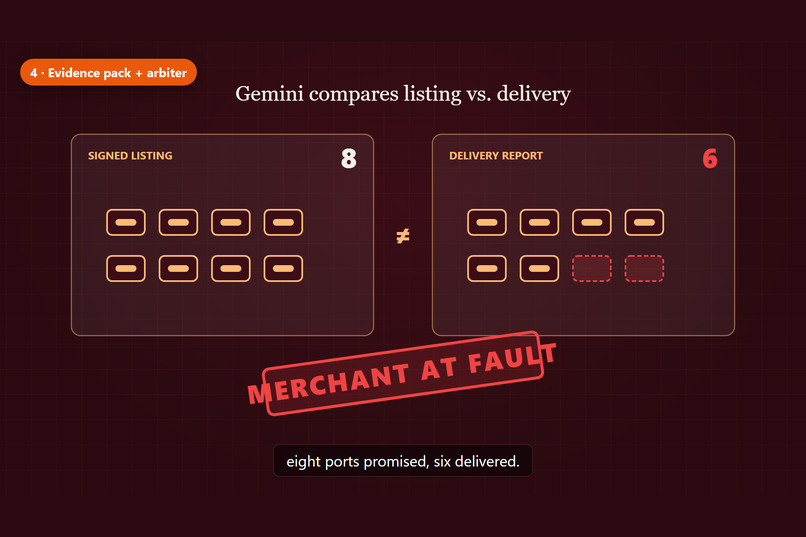
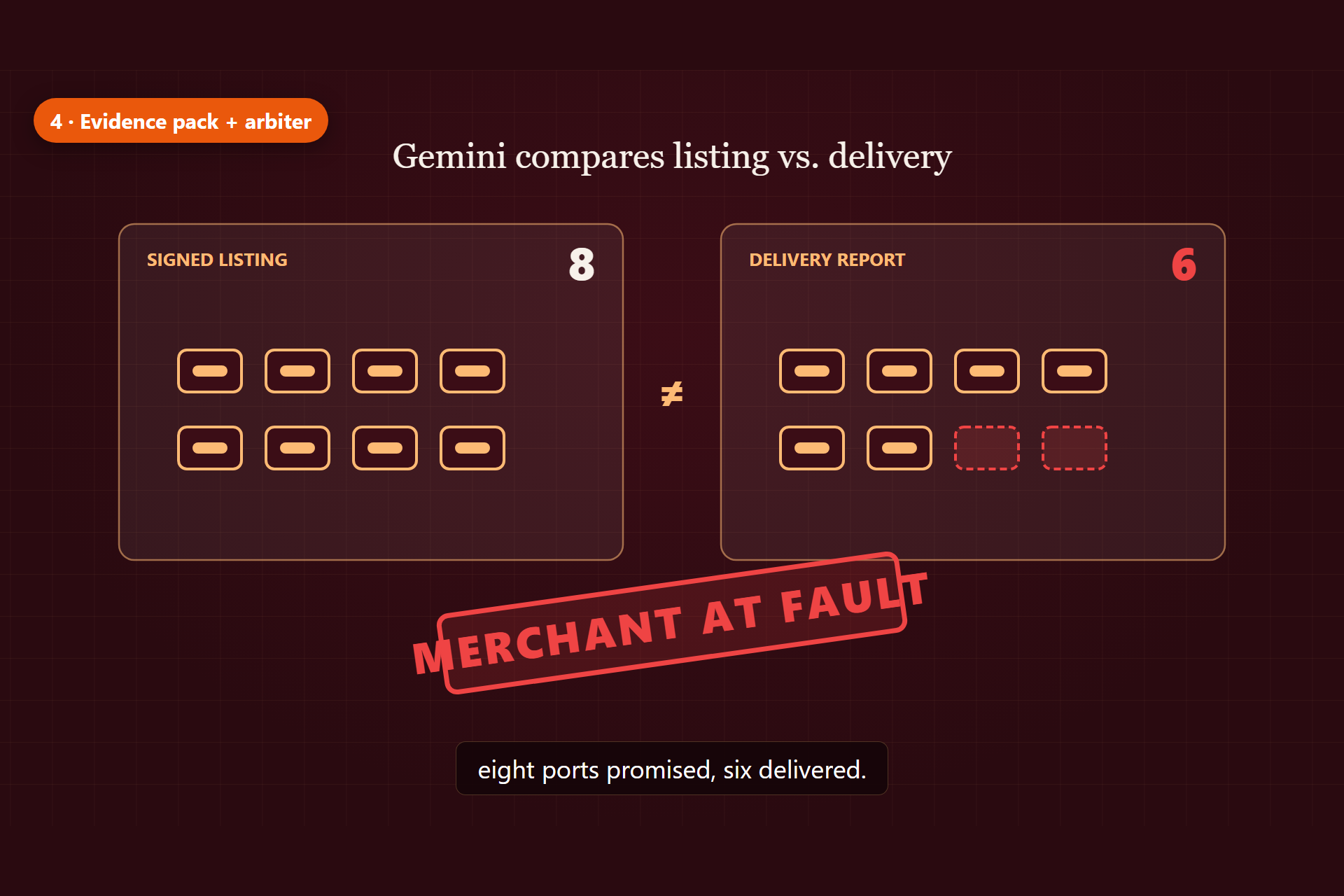
Gemini compares the signed listing (8 ports) with the delivery report (6). Merchant at fault.
-
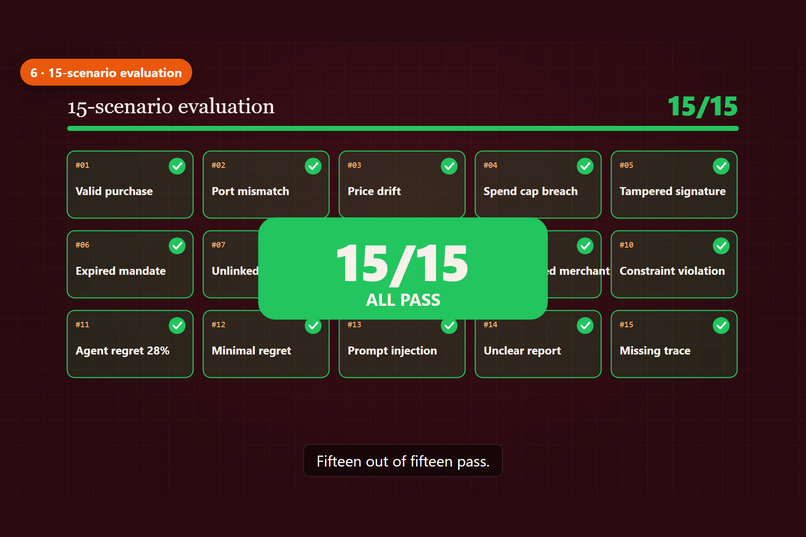
15 of 15 eval scenarios pass, including replay attacks, price drift and prompt injection
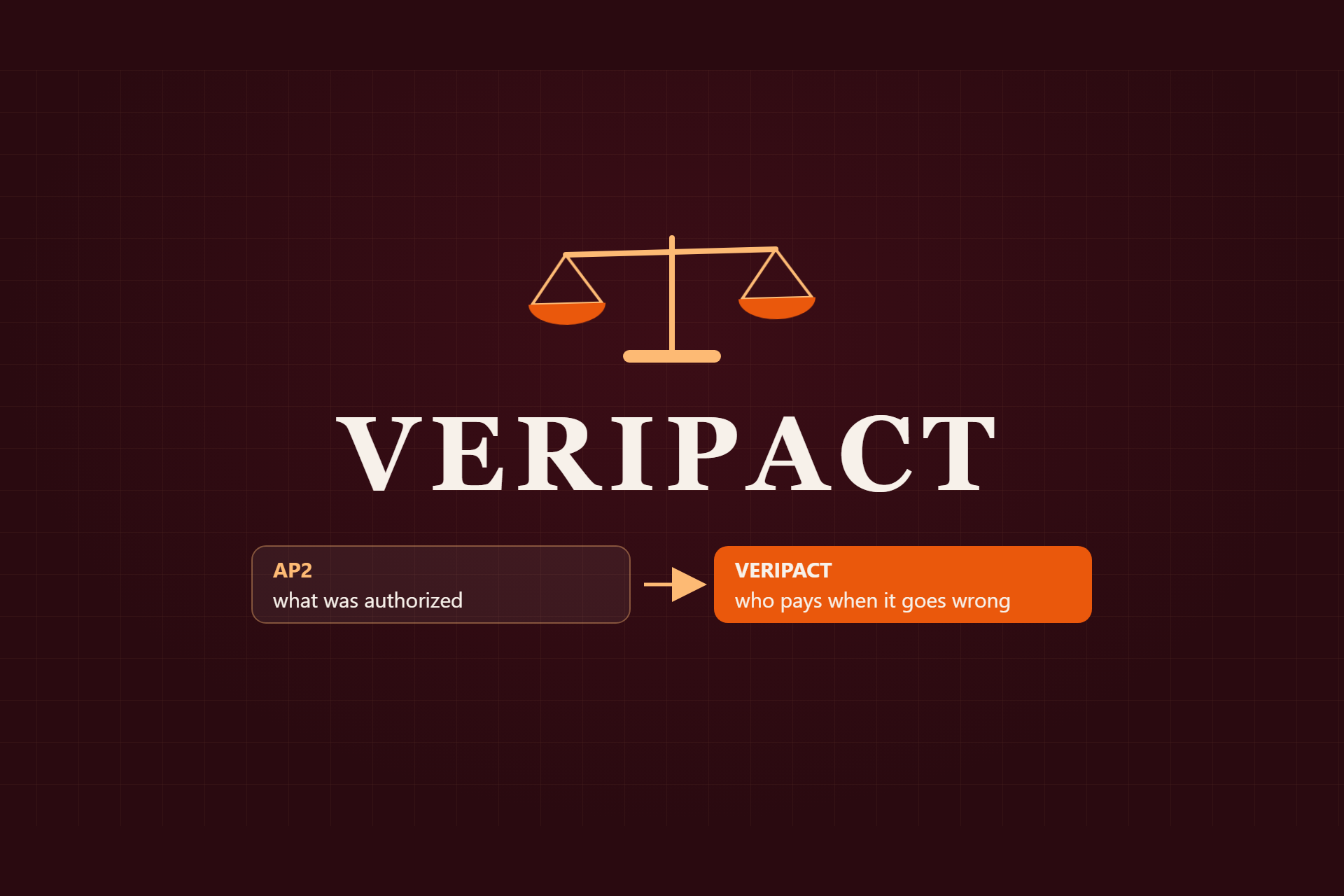
AP2 tells you what was authorized. Veripact tells you who pays when it goes wrong.
Team: Sehari Semalam
Live demo: https://veripact.onrender.com (free tier, so the first load can take ~50s to wake) · Code: https://github.com/Rkaaaa404/veripact · Video: https://youtu.be/J3BGgV-0Wx0
Try it in 60 seconds: Purchase → run the shopping agent (signed mandates + real PayPal sandbox order) → Buyer Simulator to file a dispute → Cases for the Bryntum timeline → open a case for the evidence pack, C1–C7 verdict and planned PayPal Disputes action.
1. Inspiration
The promise of autonomous agentic commerce is compelling: AI agents finding, negotiating, and purchasing goods on behalf of consumers. Emerging frameworks—such as Google's Agent Payment Protocol (AP2) and mandate specifications—have pioneered how a user authorizes an agent before checkout.
However, the industry faces an unaddressed question: What happens after payment when an autonomous purchase goes wrong?
When a buyer opens a PayPal dispute on an agent-initiated order—because the delivered docking station had 6 ports instead of 10, or because price drift occurred, or because the agent accepted a suboptimal offer—current dispute resolution requires slow human investigation. Merchants risk unmerited chargebacks; agent platforms face existential liability; and buyers lose trust.
We built Veripact to be the missing post-payment liability resolution layer for the agent economy.
2. What It Does
Veripact links pre-payment mandates to post-payment PayPal Disputes through cryptographic audit trails, deterministic verification, and bounded AI adjudication:
AP2-Inspired Cryptographic Mandates:
- The user signs an Ed25519 Intent Mandate specifying constraints (ports >= 8, max price $120, allowed merchants).
- The shopping agent evaluates real merchants, selects an offer, and generates a Cart Mandate cryptographically linked to the Intent Mandate hash.
- Upon creating an order via PayPal Orders v2, Veripact binds
order_binding = sha256(intent_hash || cart_hash || paypal_order_id)and records it into PayPal'spurchase_units[0].custom_id.
Automated Evidence Pack Assembly & Deterministic Arbiter:
- When a PayPal dispute arrives via Webhooks (
CUSTOMER.DISPUTE.CREATED), Veripact aggregates the Intent Mandate, Cart Mandate, Merchant Listing, Delivery Inspection, and PayPal Order data. - Seven deterministic rules (C1–C7) verify mandate integrity, signature authenticity, time validity, order binding, spend caps, and merchant authorization.
- Deterministic Supremacy: If any deterministic check fails, the verdict is immediately
OPERATOR_AT_FAULT. An LLM can never override a rule failure.
- When a PayPal dispute arrives via Webhooks (
Autonomous Agent Regret Attribution:
- Evaluates whether the shopping agent used an
OPTIMALpolicy or settled for aFIRST_ACCEPTABLEoffer. - If relative utility regret exceeds the threshold (> 15%), Veripact flags
WITHIN_MANDATE_REGRETand plans a proportional goodwill offer rather than blaming the merchant.
- Evaluates whether the shopping agent used an
Human-in-the-Loop PayPal Dispute Execution:
- Based on the verdict, Veripact plans an actionable PayPal Dispute step:
MERCHANT_AT_FAULT->accept-claim(full refund) orprovide-evidence.OPERATOR_AT_FAULT->accept-claim(operator-funded refund).WITHIN_MANDATE_REGRET->make-offer(goodwill partial refund / credit).
- Requires explicit human approval before invoking PayPal's sandbox Disputes API. Every action is sealed into a tamper-evident cryptographic event ledger.
- Based on the verdict, Veripact plans an actionable PayPal Dispute step:
Bryntum Scheduler Timeline Visualizer:
- Visualizes the multi-day dispute lifecycle (dispute opened, evidence due date, response submitted, adjudication) across parallel case lanes with color-coded verdict badges.
3. How We Built It
- Backend: Python 3.12/3.13 + FastAPI.
- PayPal Integration:
- Direct integration with PayPal Sandbox (
https://api-m.sandbox.paypal.com): - Orders v2 (
POST /v2/checkout/orders,POST /v2/checkout/orders/{id}/capture,PATCH /v2/checkout/orders/{id}). - Customer Disputes API (
POST /v1/customer/disputeswith unsigned JWTPayPal-Auth-Assertion,GET /v1/customer/disputes/{id},change-reason,accept-claim,make-offer,provide-evidence, and sandbox-only simulation endpoints). - Webhooks signature verification (
POST /v1/notifications/verify-webhook-signature).
- Direct integration with PayPal Sandbox (
- Cryptography & Ledger:
- RFC 8785 Canonical JSON hashing (
hashlib.sha256). - Ed25519 digital signatures via
cryptography. - Append-only cryptographic ledger with SHA-256 hash chains.
- RFC 8785 Canonical JSON hashing (
- AI & Arbiter:
- Pluggable LLM layer (Google Gemini 3.1 Pro via AI Studio by default; Claude and OpenAI-compatible providers supported; deterministic fallback).
- Strict JSON schema enforcement and prompt-injection shielding.
- Frontend Dashboard:
- React 18, Vite, TypeScript, Tailwind CSS, Lucide icons.
- Bryntum Scheduler trial package (
@bryntum/scheduler/@bryntum/scheduler-react) for high-performance interactive dispute timeline scheduling. - AG Grid (
ag-grid-react) for the sortable/filterable Dispute Cases Registry and the 15-scenario Evaluation Matrix.
- Deployment:
- Multi-stage Docker container deployed on Render.
4. Challenges We Ran Into
- PayPal Auth Assertion in Sandbox:
Creating disputes programmatically from the buyer side in the PayPal sandbox requires an unsigned JWT assertion header (
PayPal-Auth-Assertion) with"alg": "none"and a trailing dot (header.payload.). Correctly constructing and formatting this assertion allowed automated dispute simulation. - Order Binding in Orders v2:
Ensuring an agent's pre-signed mandate cannot be replayed onto a foreign order required computing
sha256(intent_hash || cart_hash || order_id). We successfully utilized PayPal'spurchase_units[0].custom_idfield to persist this 64-character hash. - Deterministic AI Safety: Preventing prompt injections in merchant product listings from hijacking dispute verdicts required isolating language analysis to leaf attribute comparisons with strict schema validation, guarded by pre-execution deterministic assertions.
5. Accomplishments That We're Proud Of
- 100% Pass Rate on 15-Scenario Evaluation Harness: An automated offline test harness executing across 15 edge-case scenarios (tampered signatures, price drift, replay attacks, agent regret, prompt injections) verified in under 10ms.
- Real PayPal API Integration: Complete support for Orders v2, Customer Disputes, and Webhooks with graceful fallbacks.
- Bryntum Scheduler Integration: Smooth, professional timeline view mapping dispute deadlines and events.
- Strict Human-in-the-Loop Safety: No funds are moved without human review and cryptographic audit logging.
6. What We Learned
- Agentic commerce requires verifiable post-payment infrastructure; pre-authorization alone does not solve liability when real-world delivery fails.
- Deterministic guardrails must always supersede probabilistic LLMs when financial actions are on the line.
7. What's Next for Veripact
- Standardizing the
order_bindingcustom attribute with the AP2 working group. - Automated merchant settlement routing for merchant liability claims.
- Multi-party multi-agent mediation for complex supply chain disputes.
Real vs. simulated (honesty note)
Real: PayPal Sandbox Orders v2, Customer Disputes API, webhook signature verification, refunds fallback, Ed25519/SHA-256 mandate binding, and Gemini-powered intent extraction and listing-vs-delivery comparison. Simulated: the merchant catalog (fictional USB-C dock sellers), warehouse delivery reports, and the sandbox buyer that files disputes.
AI tools used
- Runtime: Google Gemini 3.1 Pro (via Google AI Studio) for intent extraction and listing-vs-delivery comparison, with schema validation and prompt-injection shielding. Deterministic rules always win over the LLM.
- Development: Google Antigravity (pair programming) and Claude Code (pre-submission audit, Gemini provider integration, docs fixes).
Built during the event
The project was started on 9 November 2026, during the hackathon; the full commit history is public.
