-
-
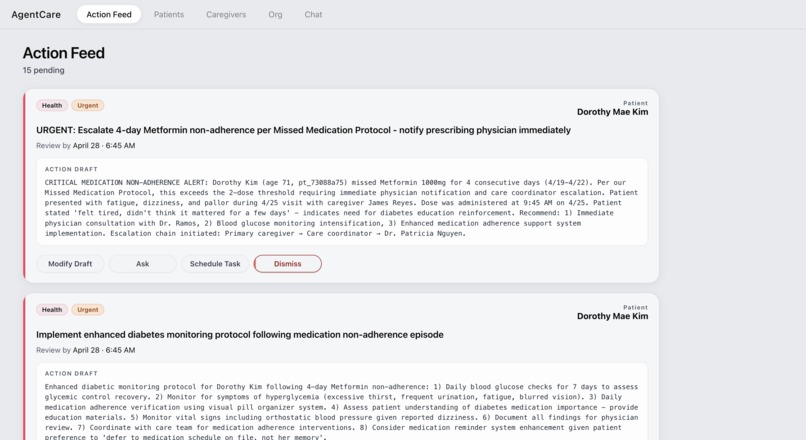
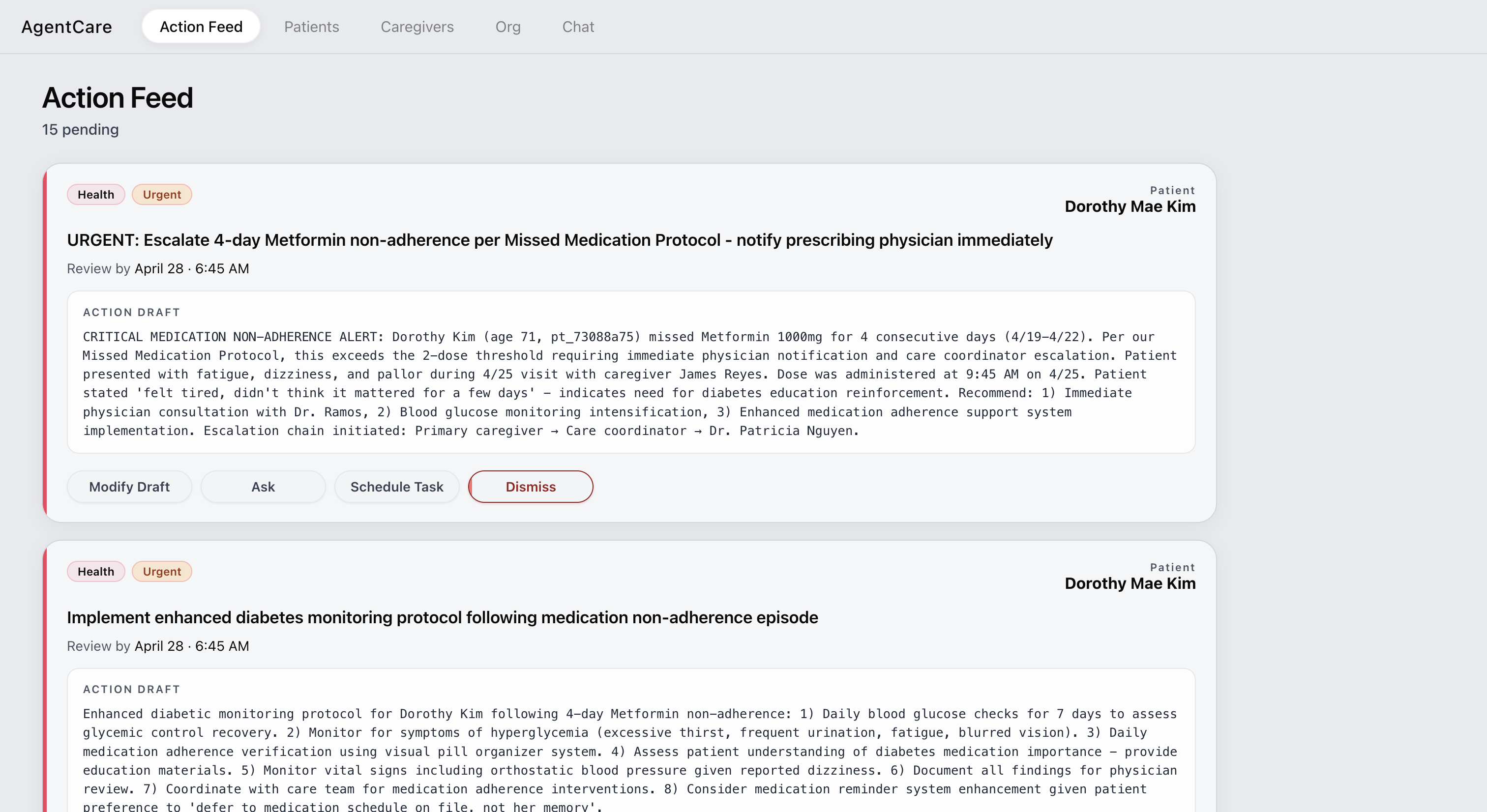
Action Feed Page
-
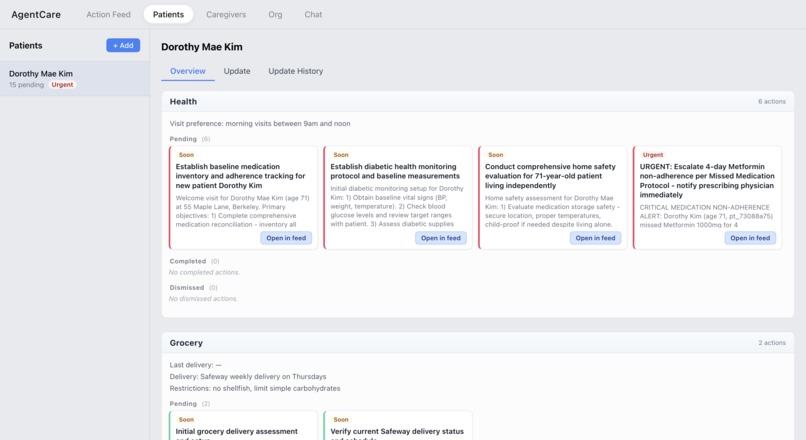
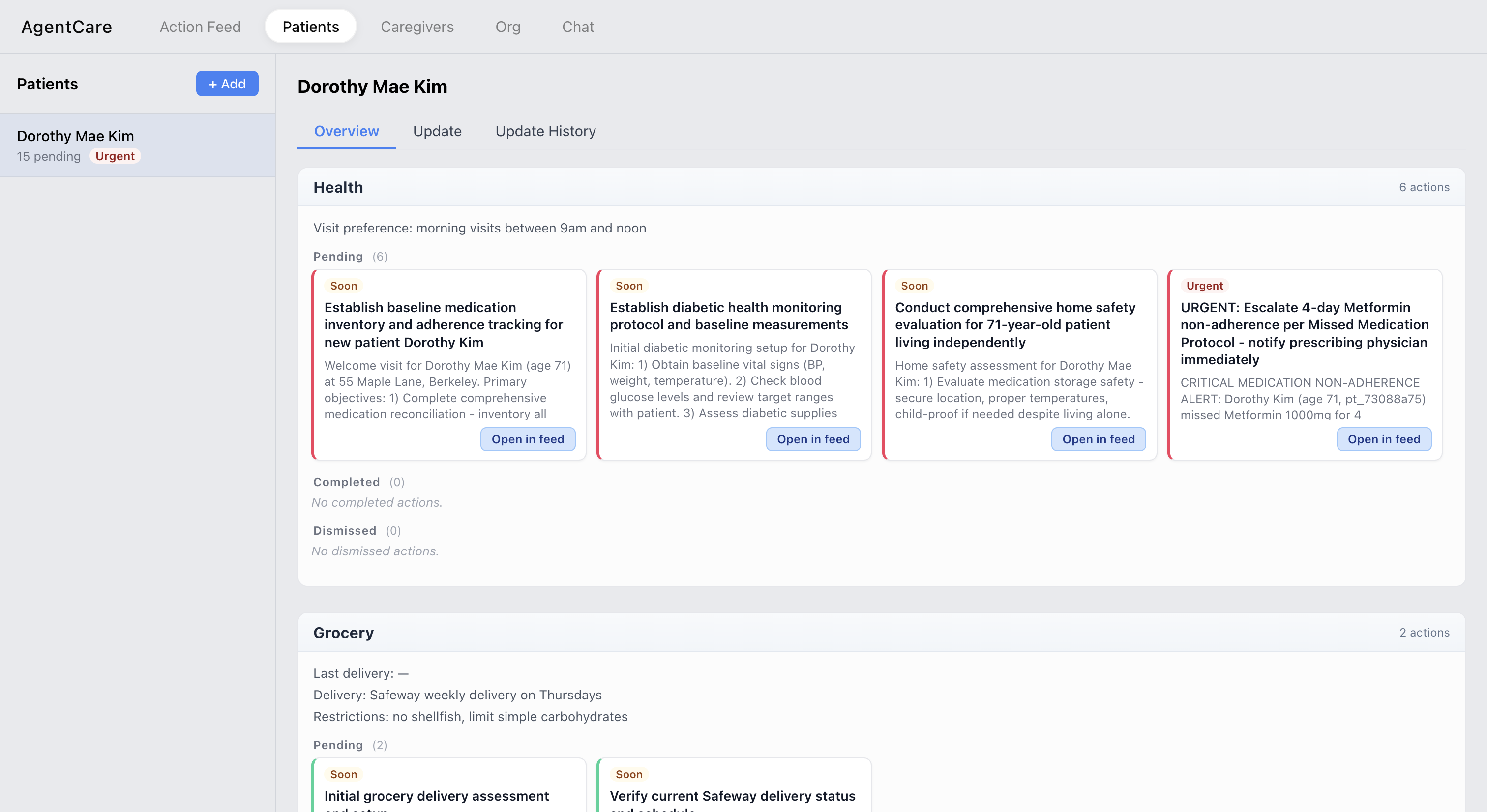
Patients Page
-
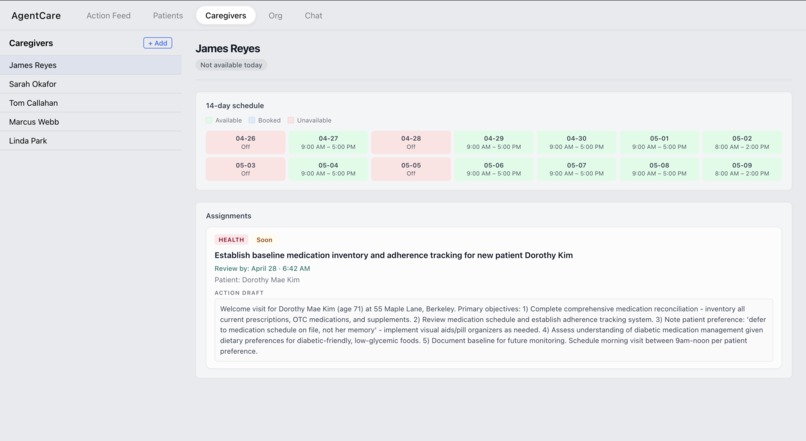
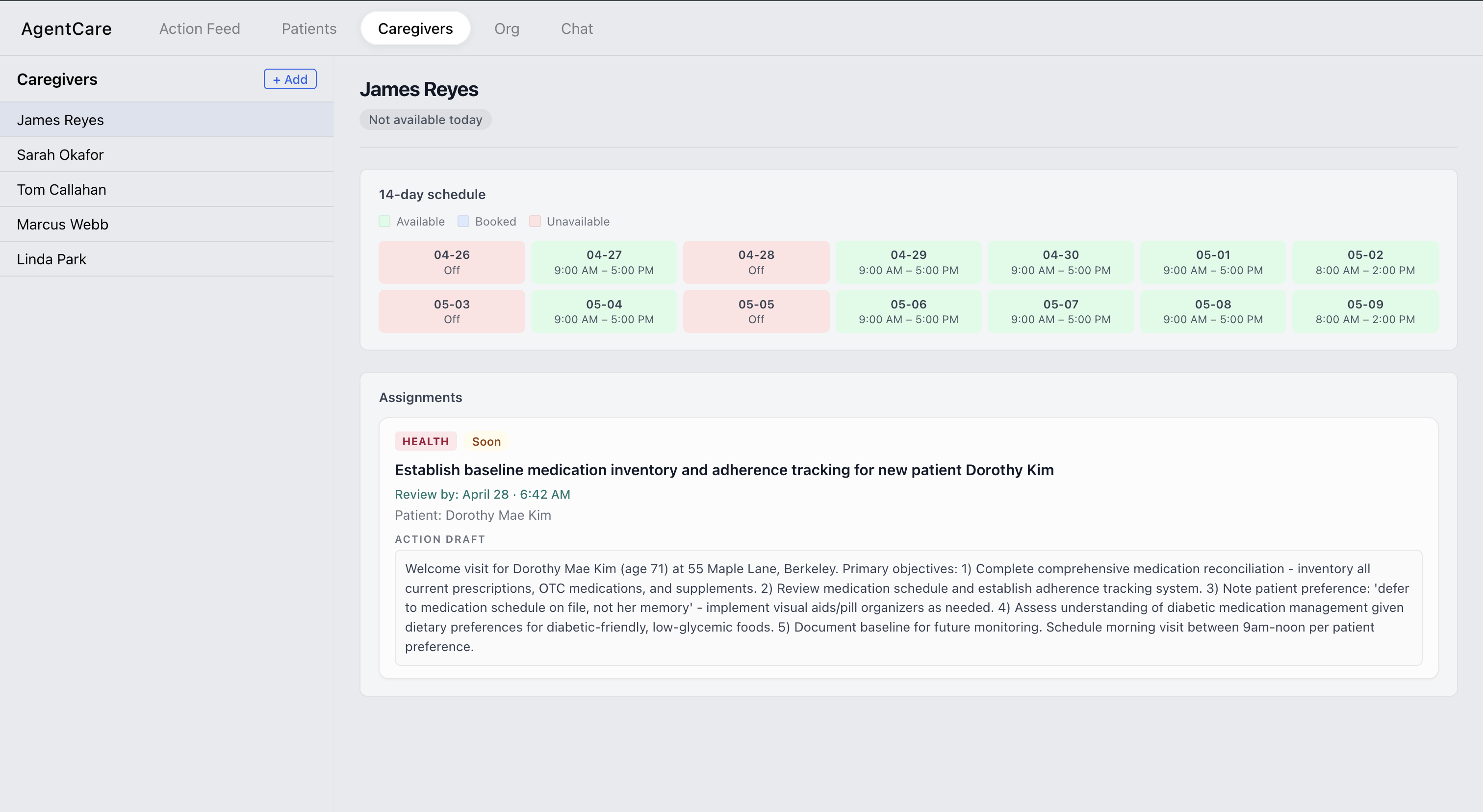
Caregivers Page
-
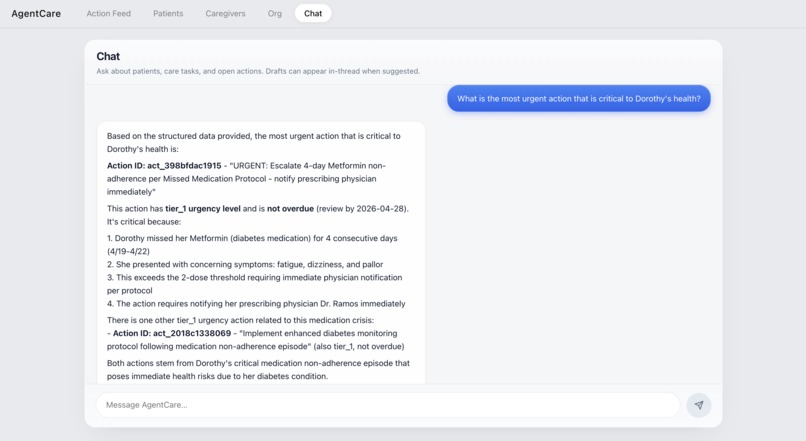
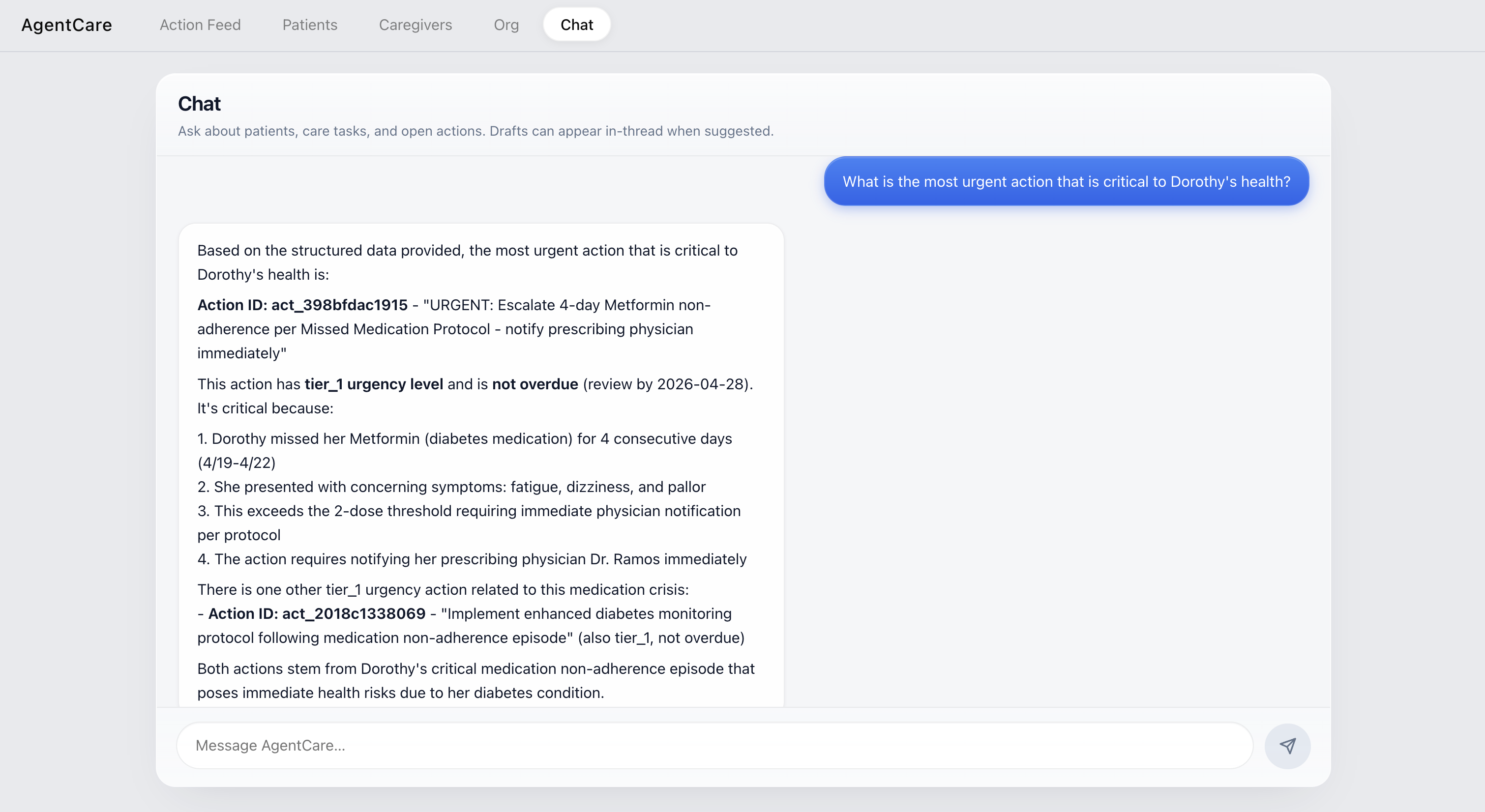
Chat Page
-
-
-
-
-
-
-
About the Project
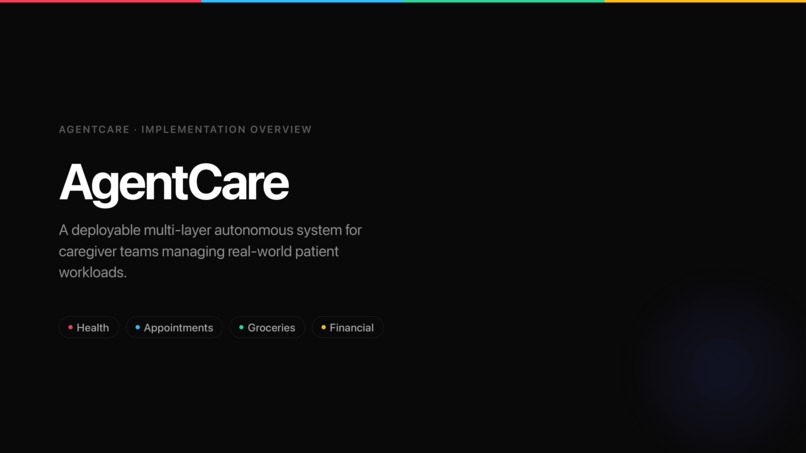
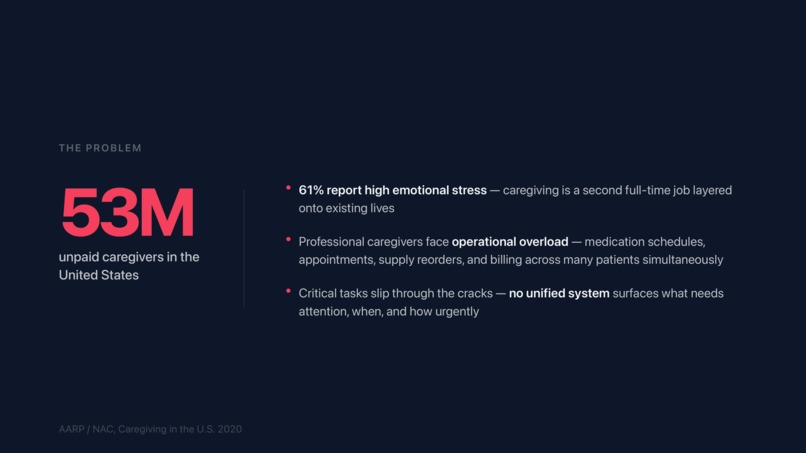
I built AgentCare because I wanted to prove that AI in care operations can be more than a thin wrapper around a single workflow. The goal was to design a powerful multi-agent architecture that can coordinate real day-to-day support tasks for retirement homes, caregivers, and families managing people who need ongoing assistance.
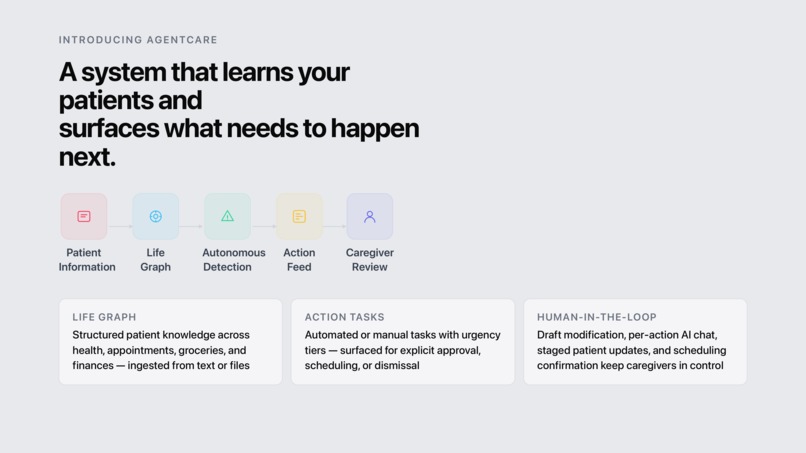
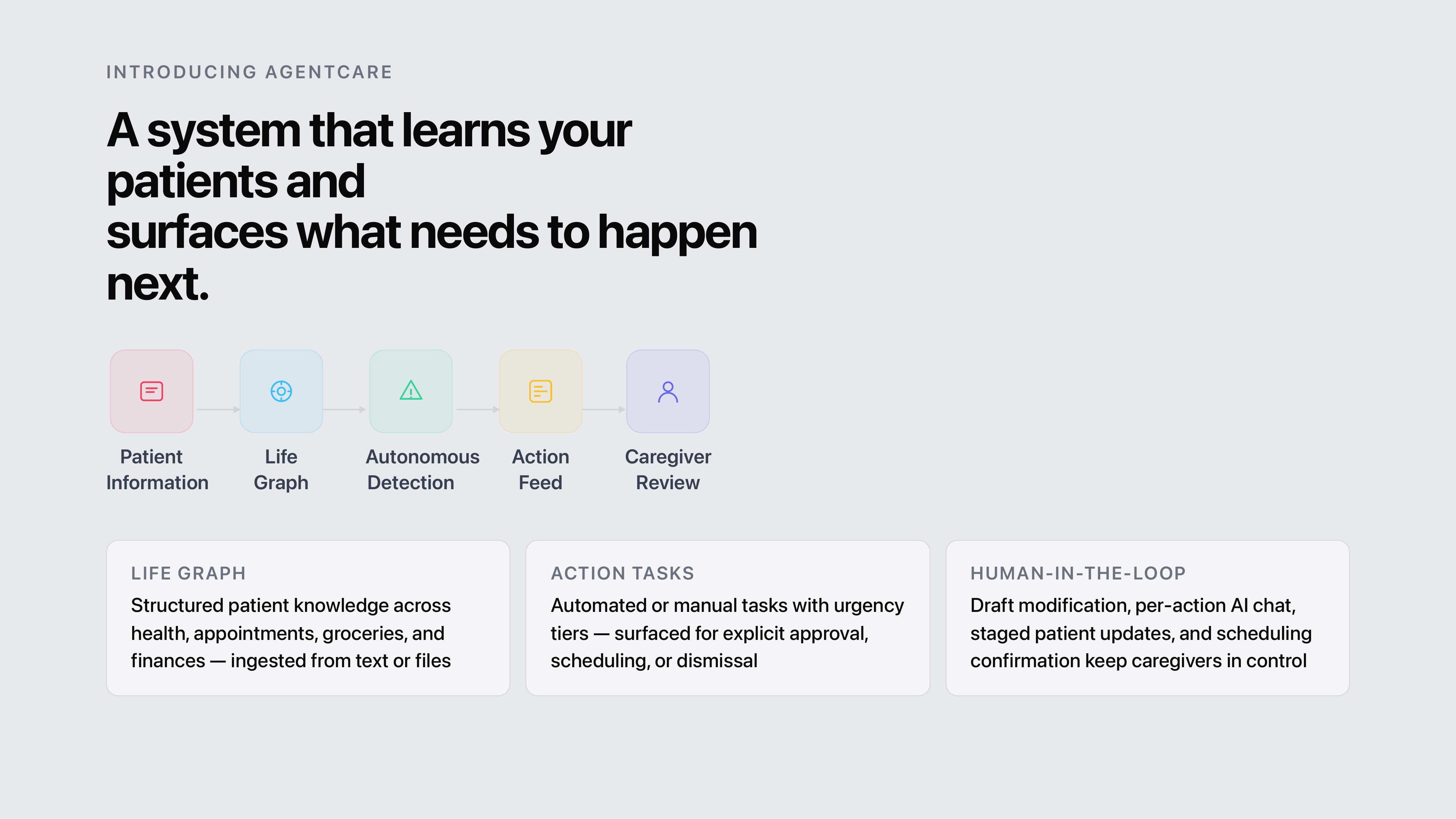
AgentCare helps identify and organize critical daily actions across health, appointments, groceries, and finances in a way that is practical and safe. The core principle is guardrails-first automation: all low-risk actions are staged as automations that require explicit consent by the user, and anything even slightly critical is routed to manual review and explicit approval. intentionally conservative by default.
## How I Built It
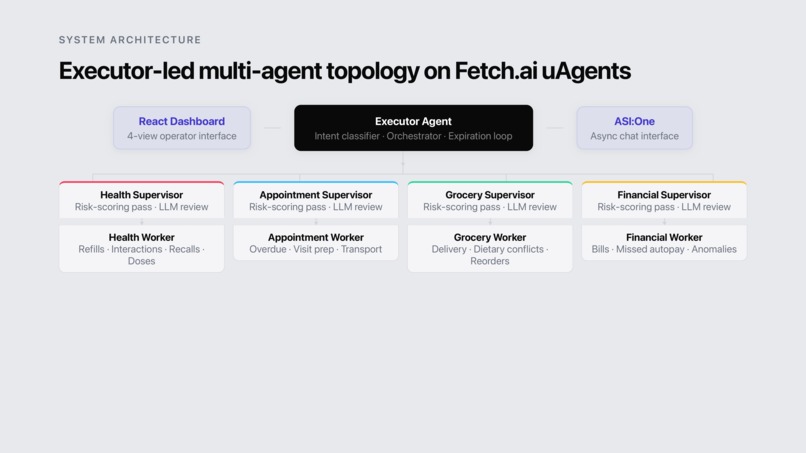
I implemented an event-driven system with:
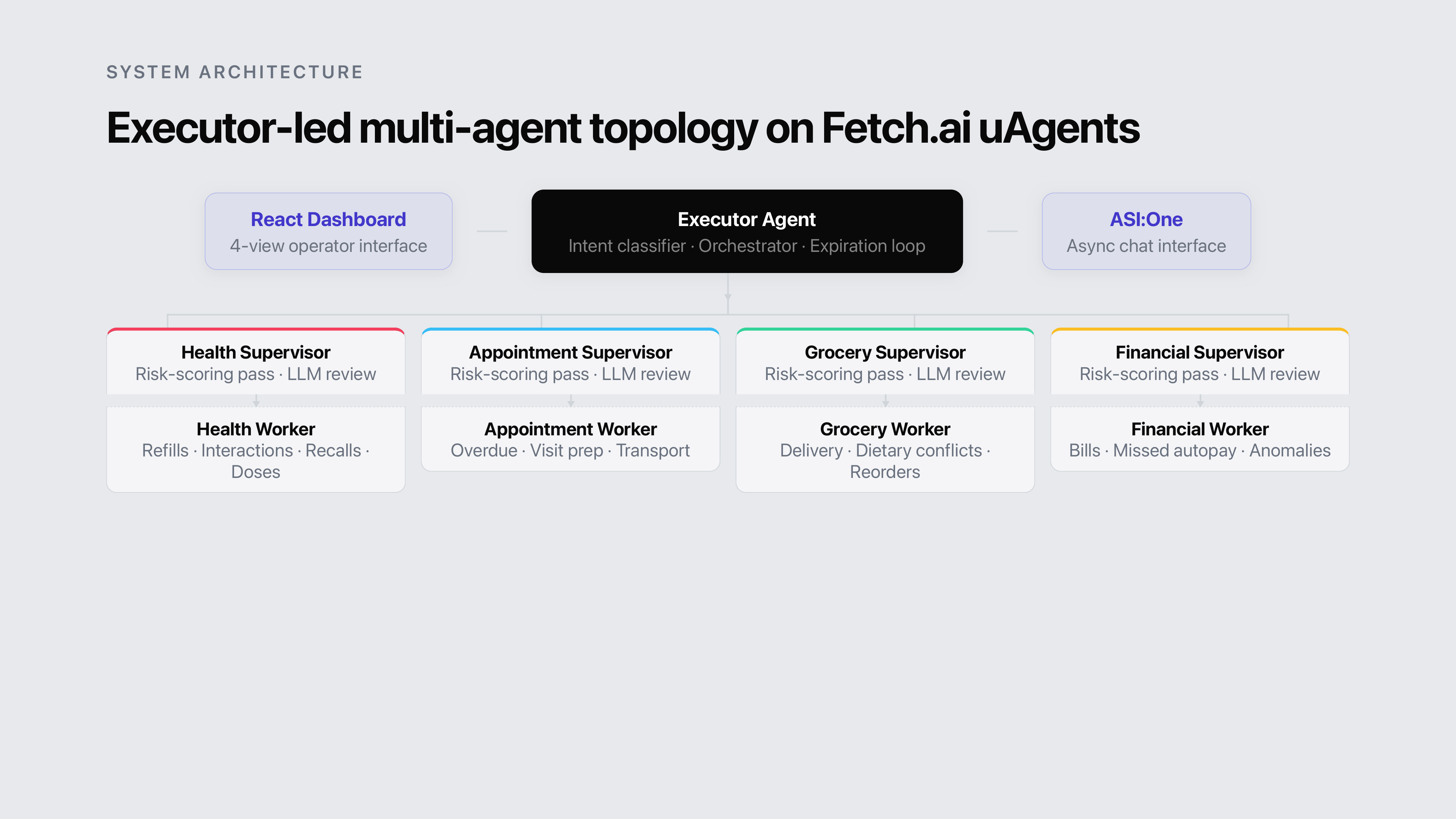
- An executor agent for general routing and task orchestration
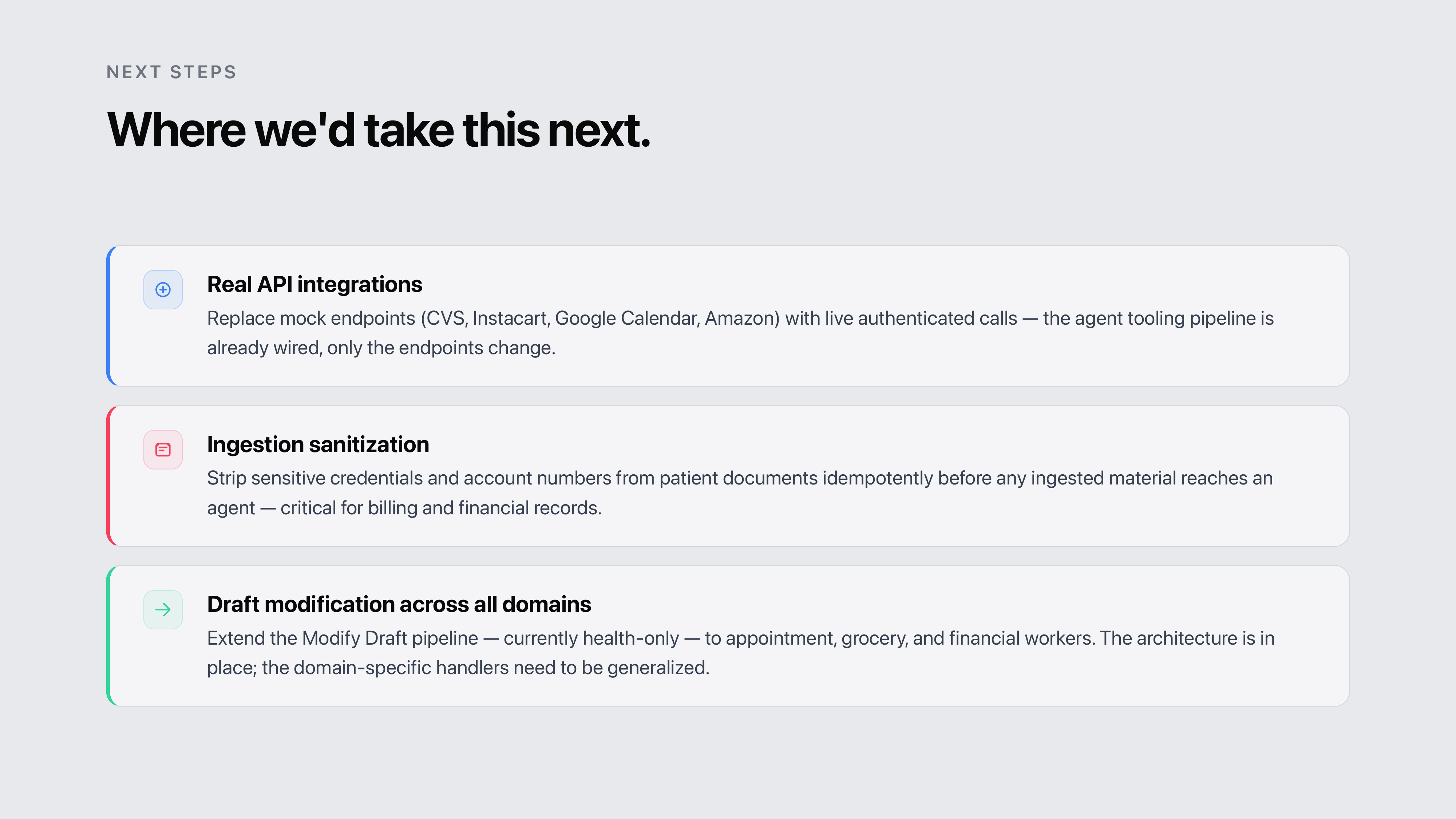
- Domain supervisors/workers for health, scheduling, grocery, and financial workflows, with supervisors instantiating specific payloads to workers, and sanitizing the workers responses before passing them onto the executor which is the endpoint of communication between the client and agency system.
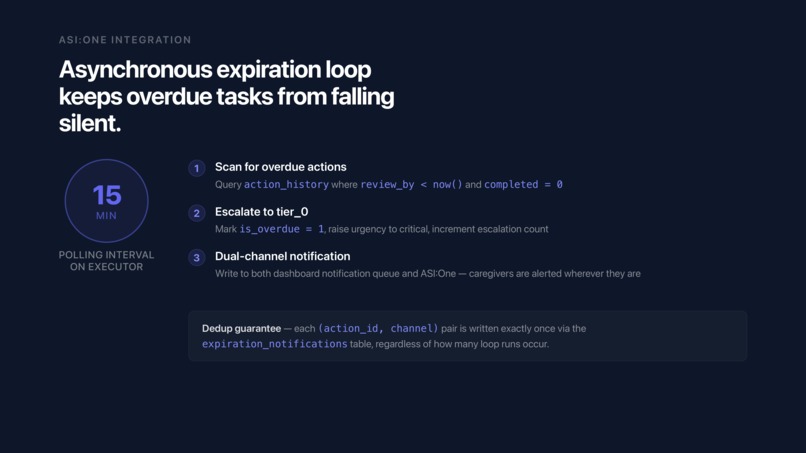
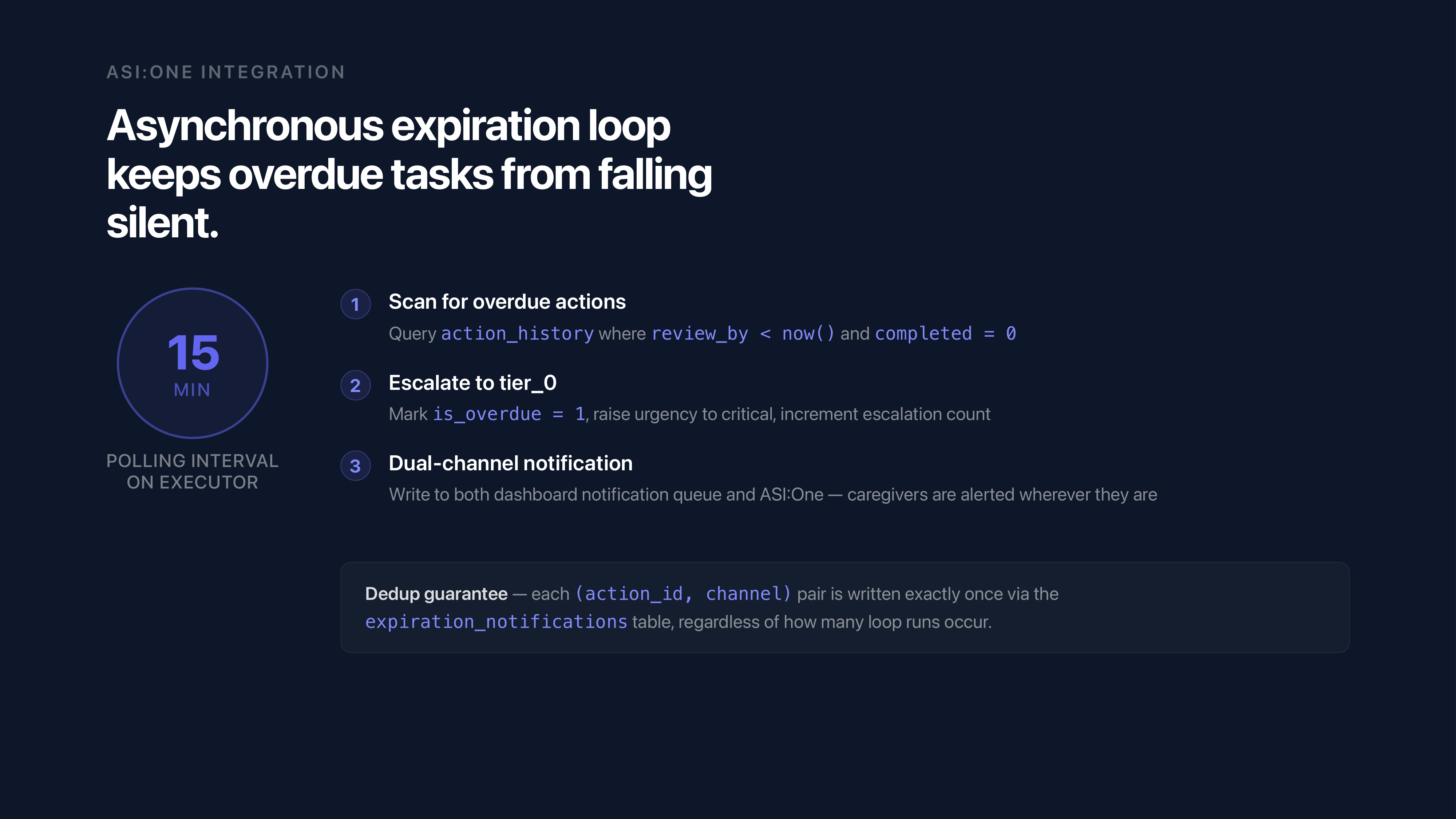
- Deterministic task state tracking, urgency tiers, and overdue escalation
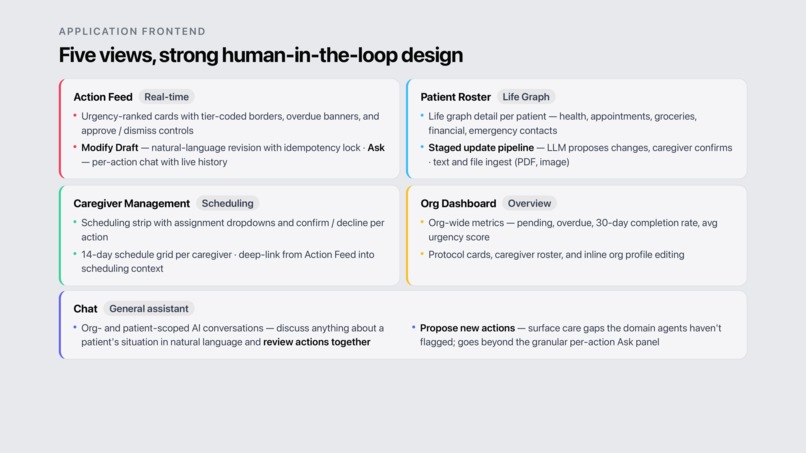
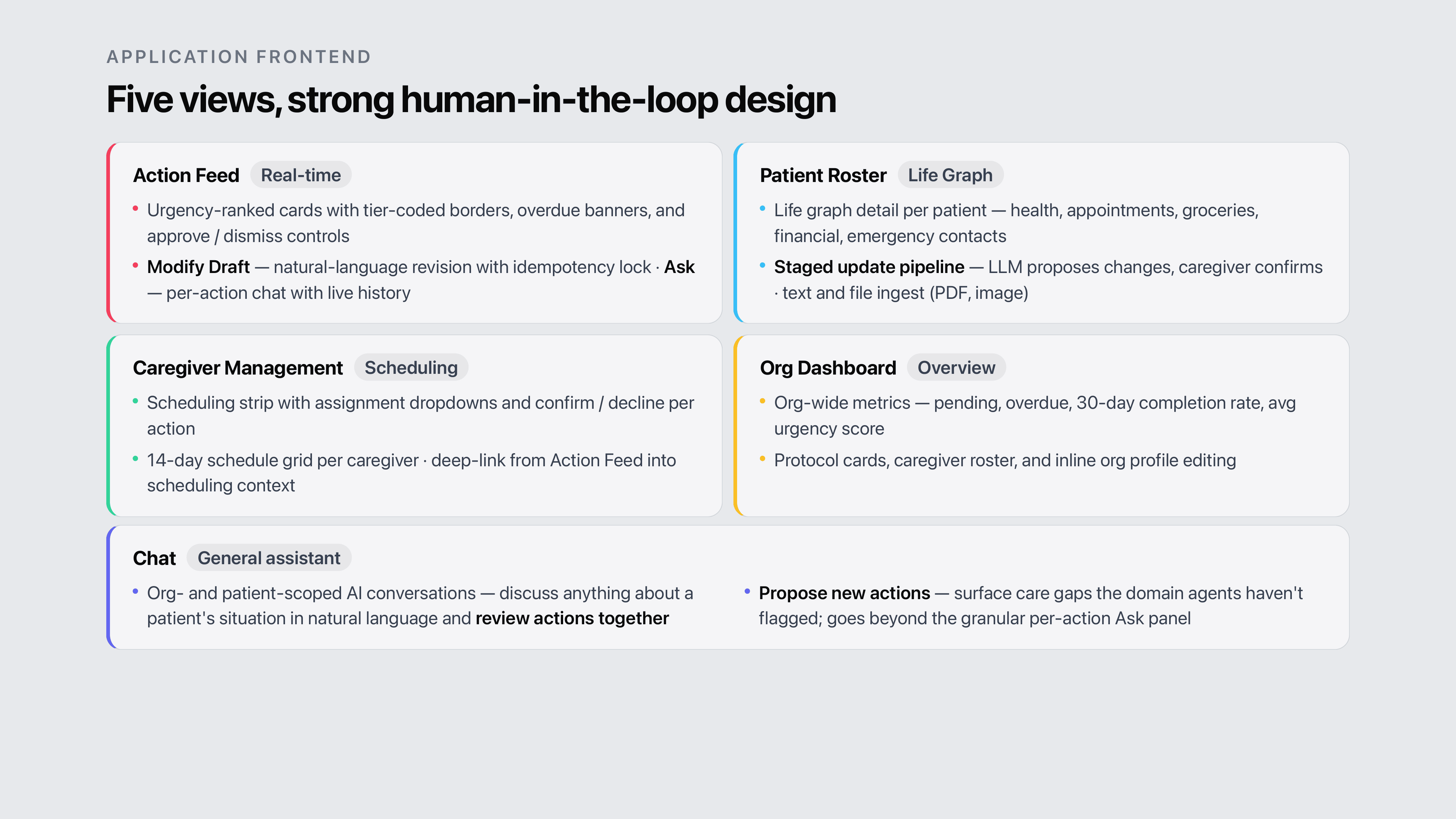
- Caregiver-facing dashboards and explainability interfaces across all actions generated by agents.
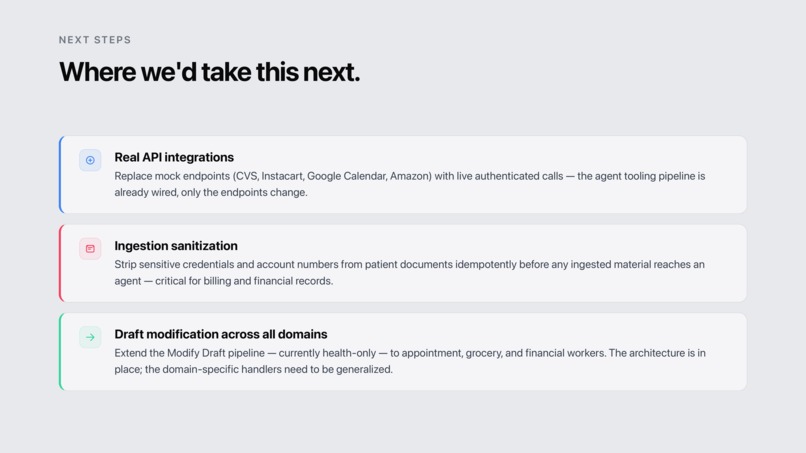
- Mock API toolings to simulate real execution pathways safely and quickly for demonstration purposes.
The operating idea was simple: ingest context, fan out work to domain agents, generate ranked actions, require explicit consent where needed, and maintain transparent reasoning.
Challenges I faced
The most difficult aspect was managing memory across agents while maintaining reliable API–tool integration.
The hardest part was managing memory across agents while ensuring reliable API–tool coupling. In agentic systems, we aim for deterministic outcomes, but true determinism is not realistically achievable; outcome reliability can be thought of as a function of context quality, memory consistency, tool stability, and policy constraints. As the number of agents grows into the tens, coordination complexity increases rapidly, and without strict orchestration and safeguards, system behavior can become unpredictable and chaotic.
What I Learned
I learned that multi-agent power only matters if it is paired with strong governance. Safety policies, state discipline, and explicit approvals are not “extra features”; they are the foundation. AgentCare showed me that real-world AI systems need both autonomy and controlled boundaries to be trusted in care environments.
Built With
- asi:one
- claude
- codex
- fastapi
- fetchai
- playwright
- pytest
- python
- react
- sql
- tailwind
- typescript
- uagents
- vite

Log in or sign up for Devpost to join the conversation.