-
-

Logo
-
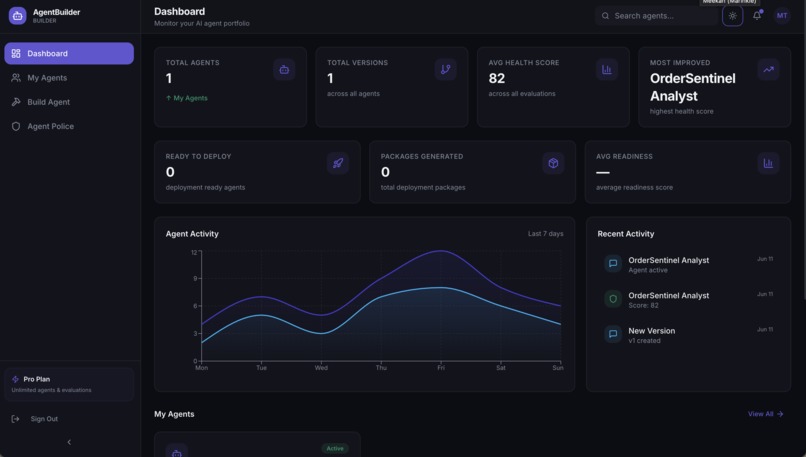
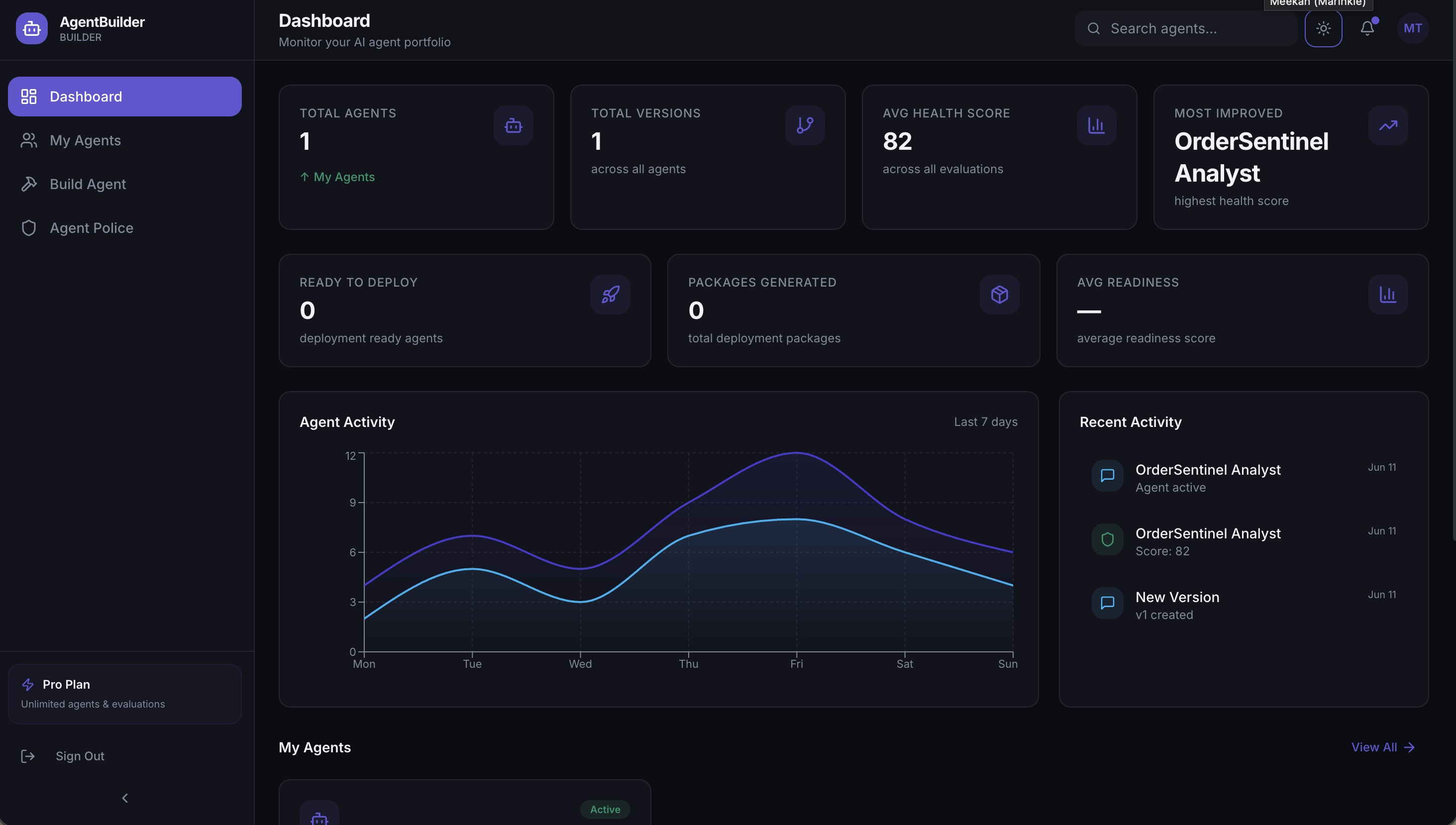
Dashboard View
-
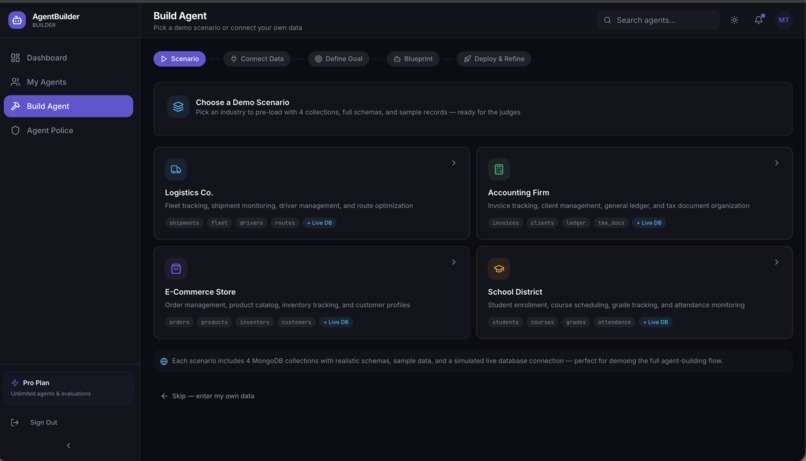
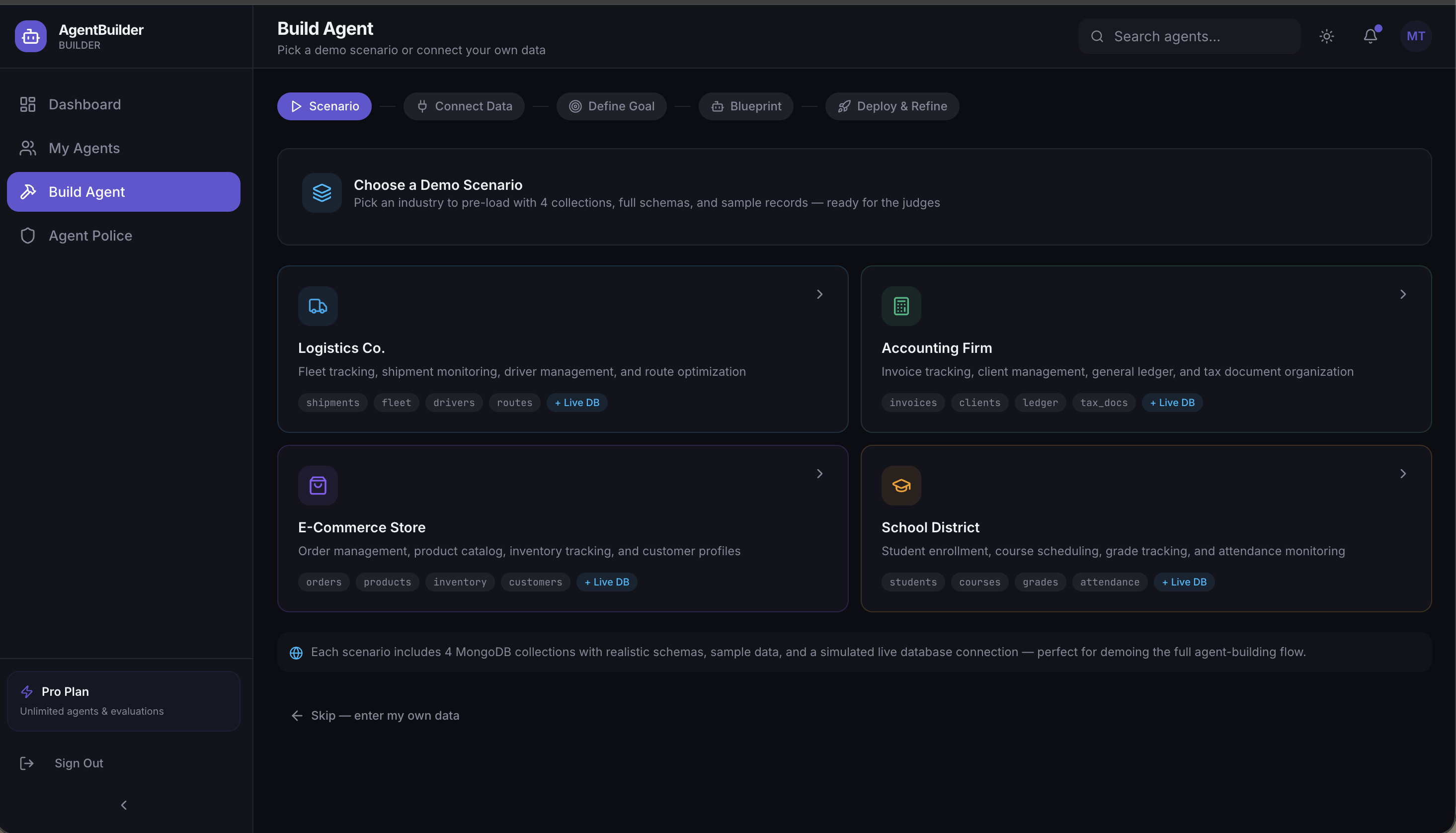
Agent Builder Demo
-
-
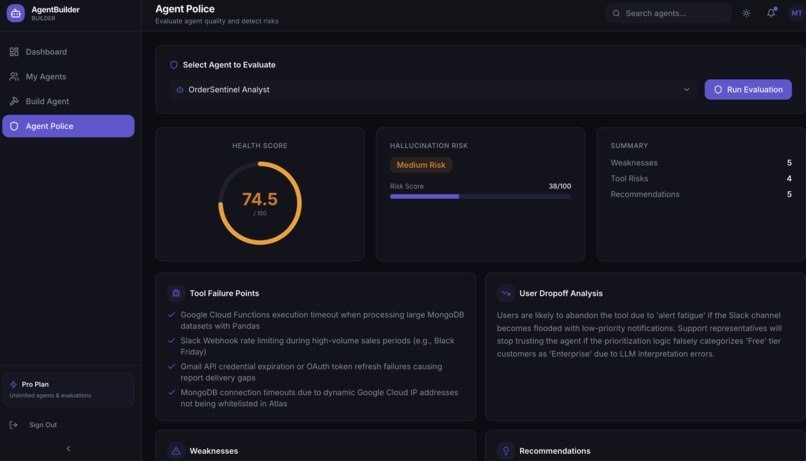
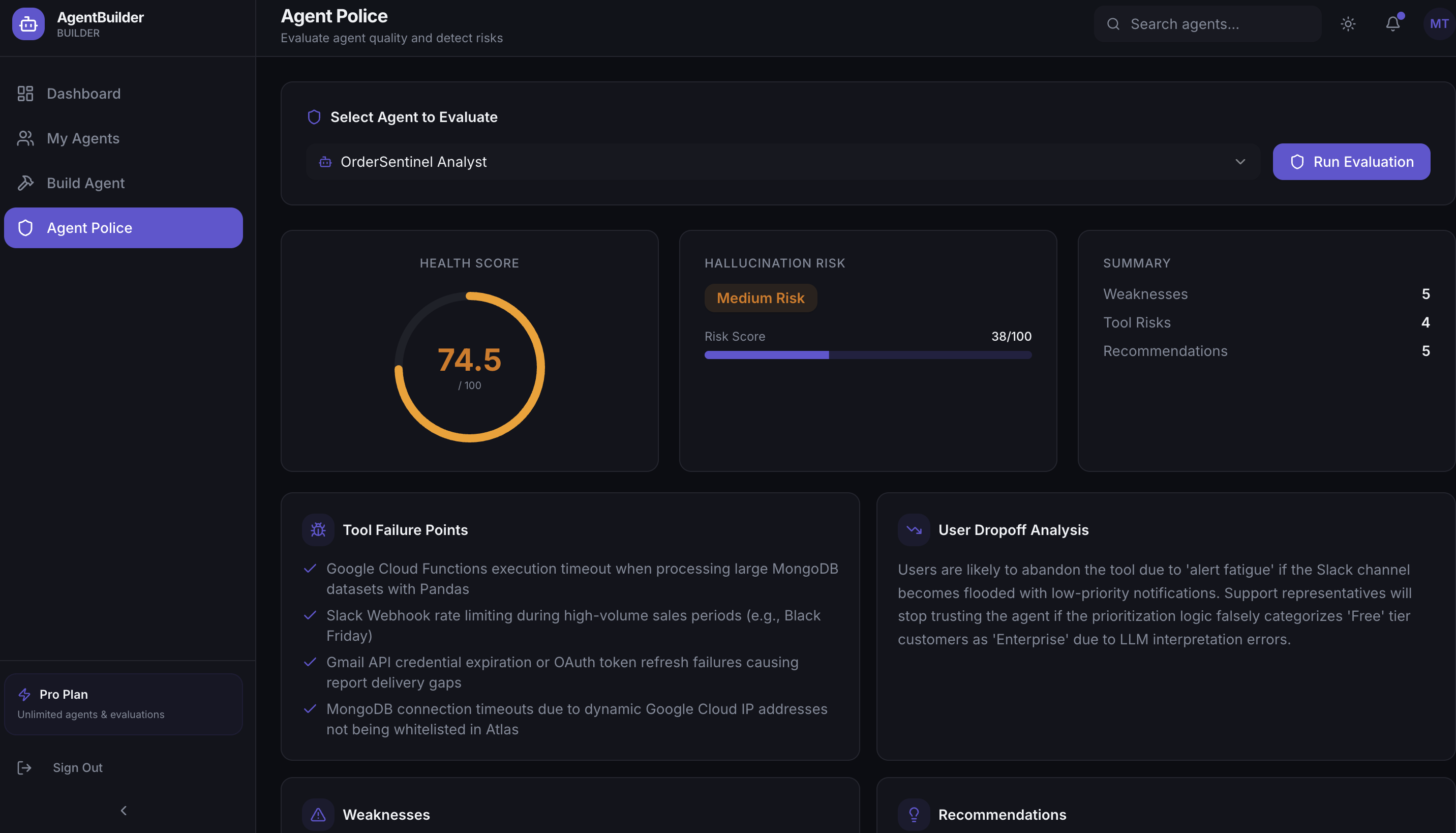
Evaluation Score
-
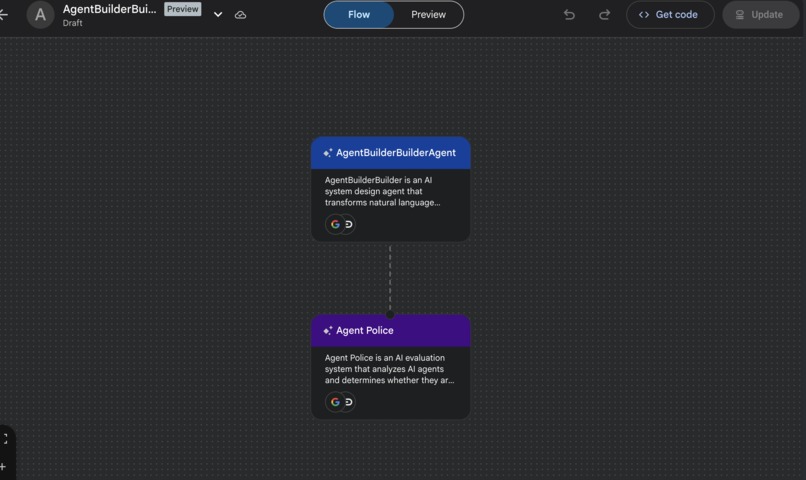
Google Agents

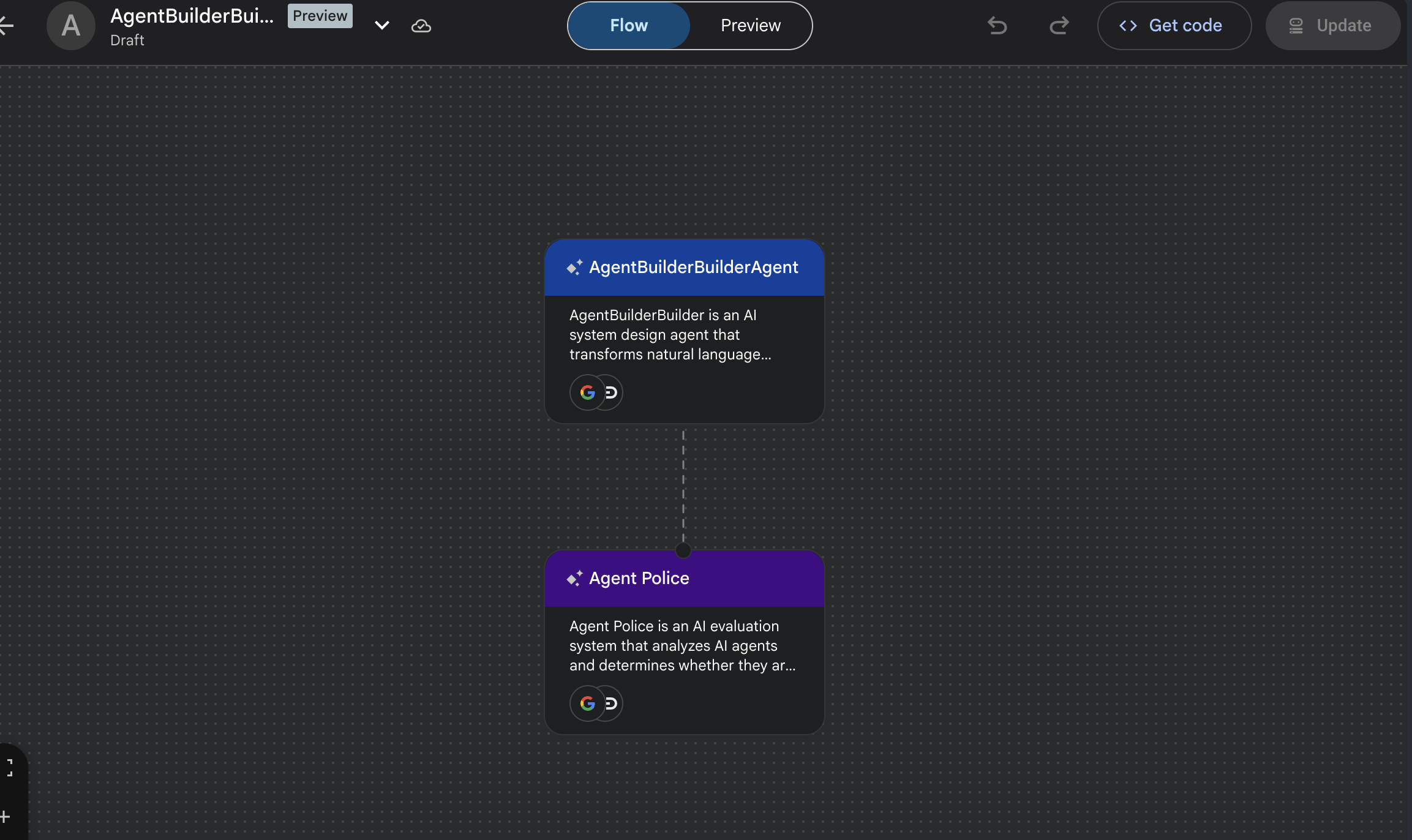
AgentBuilderBuilder
Inspiration
We were inspired by the persistent gap between AI hype and practical implementation.
Many developers and businesses want to build AI agents that interact with their databases, but they struggle to bridge unstructured business goals with structured data schemas. Existing tools often generate generic agent ideas without understanding the underlying data that powers the business.
We wanted to create a manufacturing line for AI agents—a platform that takes raw database schemas and business objectives and transforms them into production-ready AI agent blueprints. By grounding every design in the user's actual data structure, we ensure that the resulting agent understands the business it is meant to serve.
What It Does
AgentBuilderBuilder is a data-first AI Agent Factory.
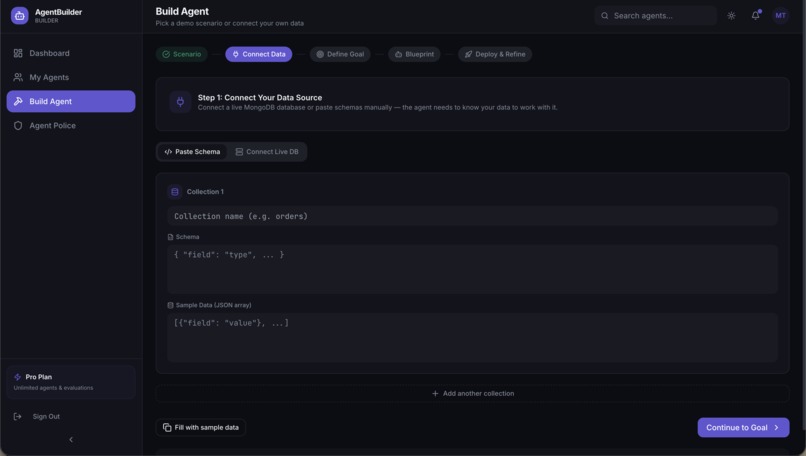
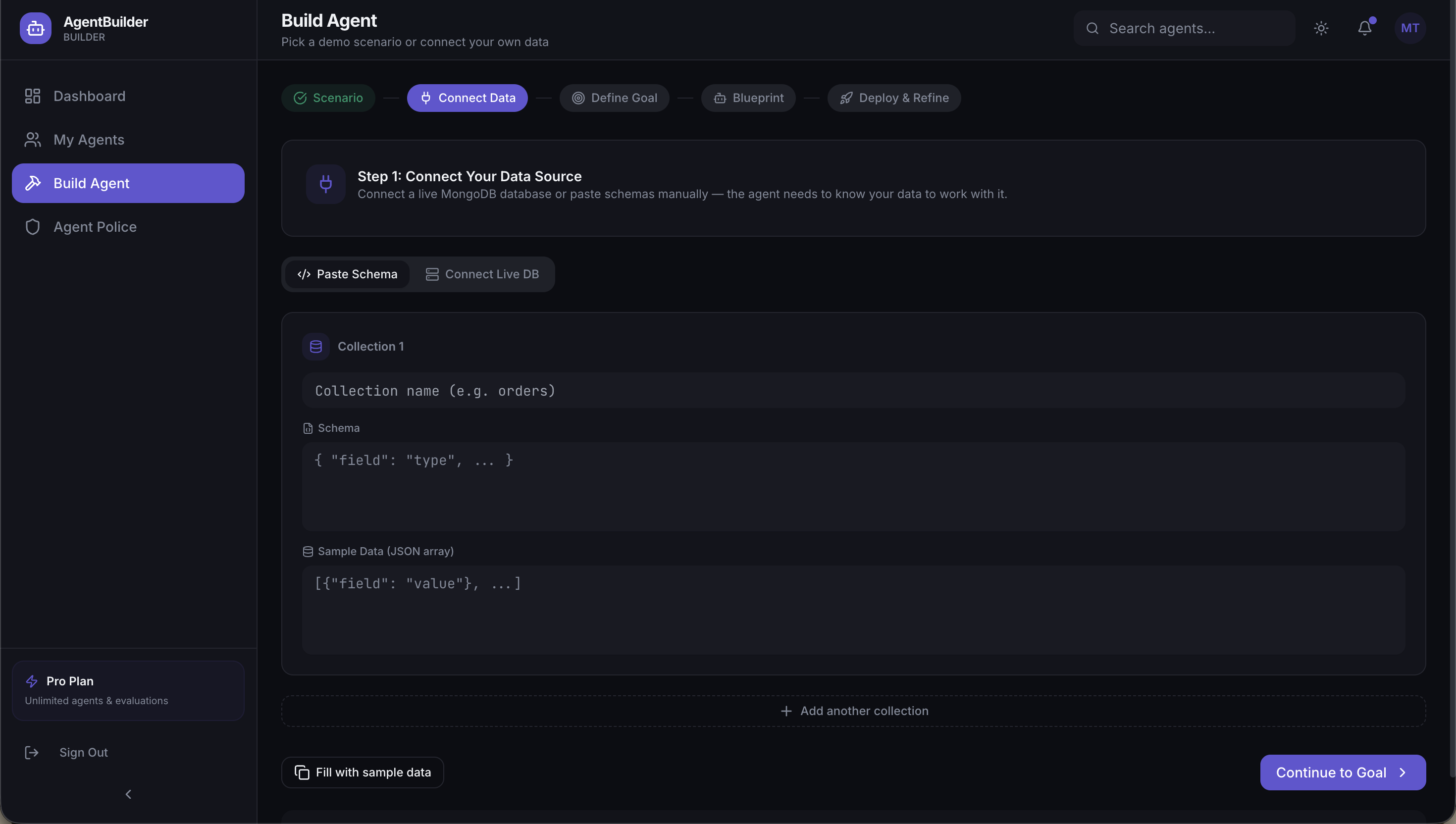
Users provide:
- A database schema
- Sample data
- Business objectives
The platform then generates:
- AI Agent Blueprints
- MongoDB query strategies
- Google Agent Builder configurations
- API integration recommendations
- Deployment roadmaps
- Security and reliability evaluations
At the heart of the platform is Agent Police, an AI auditing system that evaluates generated designs for:
- Hallucination risks
- Missing data requirements
- Security concerns
- Weak business metrics
- Architectural weaknesses
The result is a deployment-ready implementation plan rather than a generic AI concept.
How We Built It
Frontend
- React
- Tailwind CSS
- Responsive dark-first design
Backend
- Application orchestration layer
- Blueprint version management
- Audit tracking
- Agent memory system
Intelligence Layer
Powered by Gemini reasoning models and MongoDB-backed memory.
The platform uses structured prompting to:
- Analyze database schemas
- Understand business objectives
- Generate agent architectures
- Produce deployment-ready implementation recipes
Agent Police acts as an independent auditing agent, reviewing every blueprint against business goals and available data.
Data Layer
MongoDB serves as:
- Blueprint storage
- Agent memory
- Evaluation history
- Template management
- Recommendation engine
Challenges We Ran Into
Our biggest challenge was preventing hallucinated schemas.
Early versions of the system occasionally generated fields and relationships that did not exist in the user's database.
We solved this by:
- Grounding every generation against provided schemas
- Using sample data validation
- Restricting blueprint generation to verified collections and fields
Another challenge was making Agent Police genuinely useful.
Initial evaluations were too generic. Through multiple iterations, we improved the auditing process so that recommendations became actionable and business-focused.
For example:
Instead of:
"This design looks good."
Agent Police now provides insights such as:
"Add timestamp tracking to measure order-status latency and improve operational reporting."
Accomplishments That We're Proud Of
Agent Police
Agent Police became much more than a validator.
It acts as a strategic advisor by identifying:
- Business blind spots
- Missing KPIs
- Data collection gaps
- Architectural risks
Agent Memory
Our MongoDB-powered memory layer allows the platform to learn from previously generated agents and evaluations.
This enables:
- Better recommendations
- Blueprint reuse
- Pattern discovery
- Continuous improvement
Demo Scenarios
We created realistic demo environments covering:
- Construction & Safety
- Logistics
- E-commerce
- Education
- Accounting
This allows users to experience the platform's capabilities immediately.
What We Learned
We learned that AI agents are only as effective as the data grounding behind them.
Even the best reasoning model struggles when it lacks a clear understanding of schema relationships and business context.
We also discovered that blueprint-first development significantly reduces implementation time.
By generating architecture, data mappings, APIs, and deployment plans upfront, teams can move from idea to implementation much faster than through traditional trial-and-error development.
What's Next For AgentBuilderBuilder
One-Click Deployment
Today we generate deployment-ready recipes.
Our next step is allowing users to deploy directly into Google Agent Builder with a single click.
Schema Evolution Recommendations
We are building a Data Schema Evolver that will:
- Analyze existing schemas
- Identify weaknesses
- Recommend database improvements
- Suggest new collections and fields
based on Agent Police findings.
Continuous Learning
Future versions will use accumulated blueprint and evaluation data to improve recommendations automatically, creating a closed-loop system between business data, agent intelligence, and platform learning.
Vision
AgentBuilderBuilder transforms AI agent development from a trial-and-error process into a structured manufacturing workflow.
You bring your schema. We deliver a deployment-ready AI agent blueprint.!!!!!

Log in or sign up for Devpost to join the conversation.