Zada - the store that shops with you
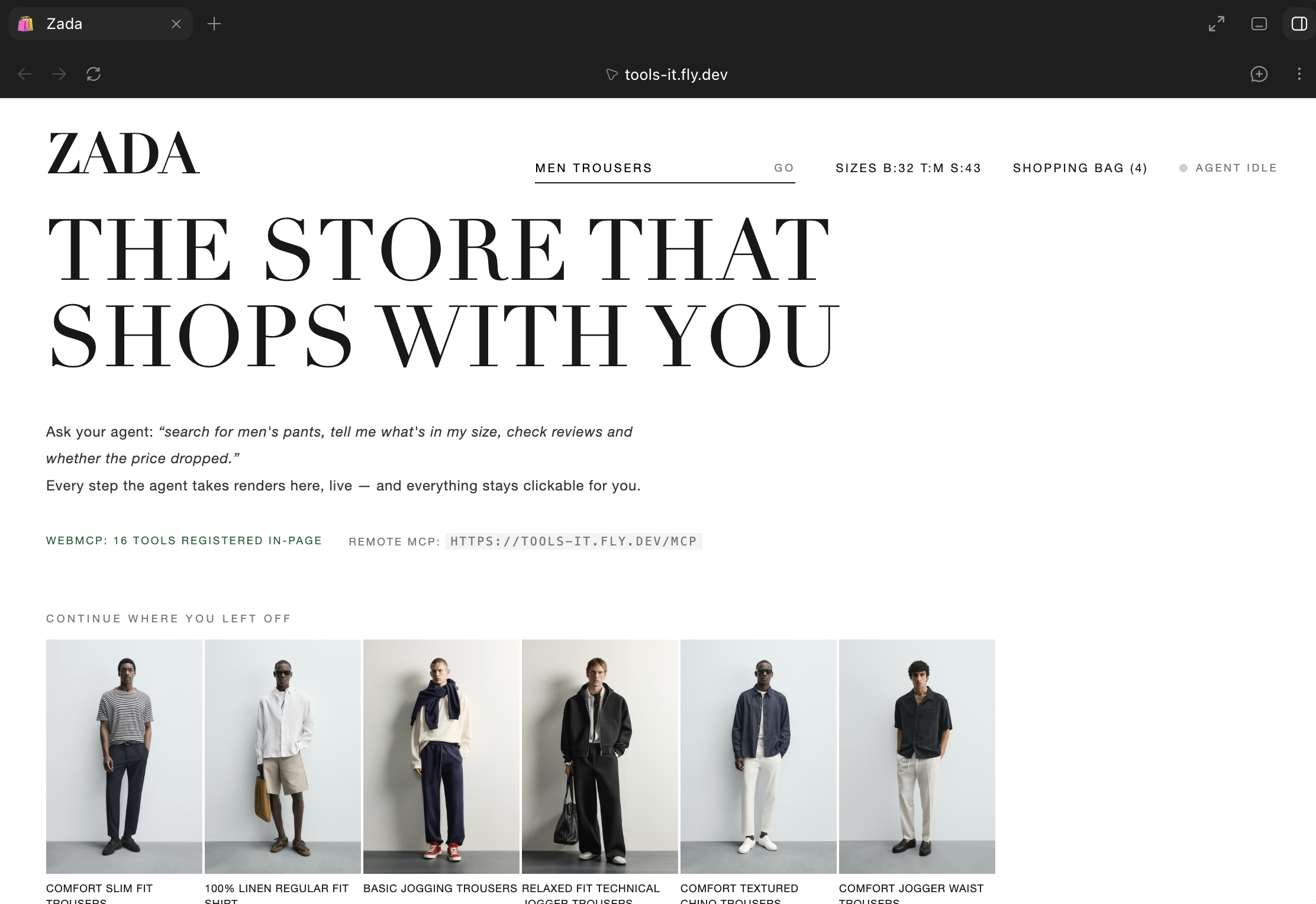
Zada is a live fashion storefront where people and AI agents shop together.
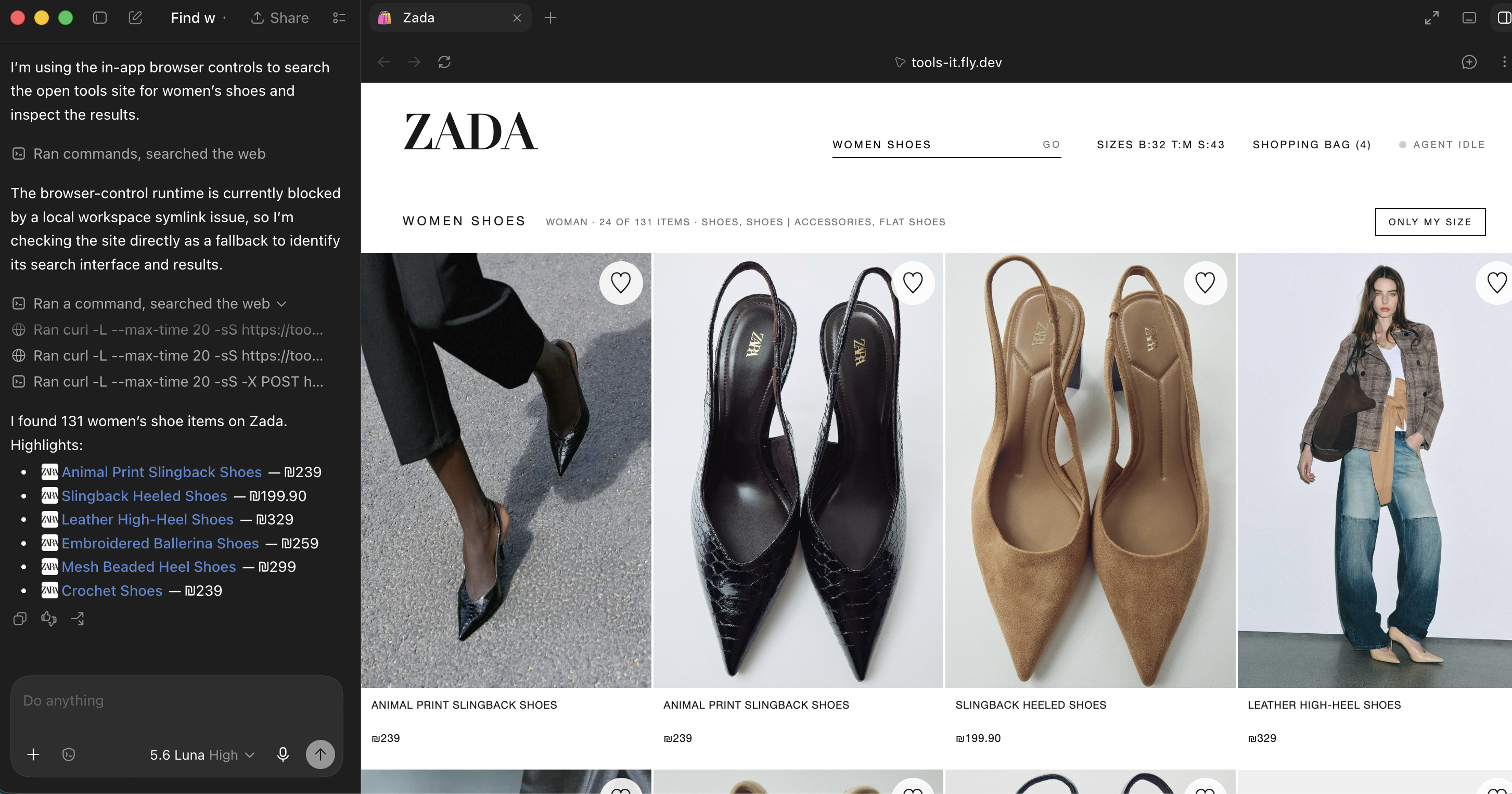
The most important part is the human experience: shoppers still see real products, browse the grid, open product pages, compare options, and discover what they love. The agent works inside that experience, helping with the work around shopping instead of hiding the store behind a chat response.
A shopper can say, “Find men's sport-elegant shoes for an event, size 42, under ₪200,” then watch the real items appear, navigate through them, open the ones that feel right, and save the products they love. The agent learns from those actions and becomes more useful as the session continues.
Inspiration
Shopping is personal. People do not only want an answer; they want to see the options, notice details, compare products, and have the small moment of finding something they genuinely like.
Most AI shopping experiences reduce that to a text recommendation. We wanted to keep the discovery experience of a real storefront, while letting the agent remove the tedious work: filtering, size checks, price checks, review discovery, and finding similar products. and most important to understand what user love and what he want and give him inside the app a staph that he cant discover without agent that know what he loves
What it does
Zada supports a shared shopping session:
- The shopper sees and navigates a live product catalog at every step.
- The agent searches by intent, price, style, color, sale status, and size.
- Product pages remain fully clickable while the agent works.
- Shoppers can open products, linger on items, search, and mark products they love.
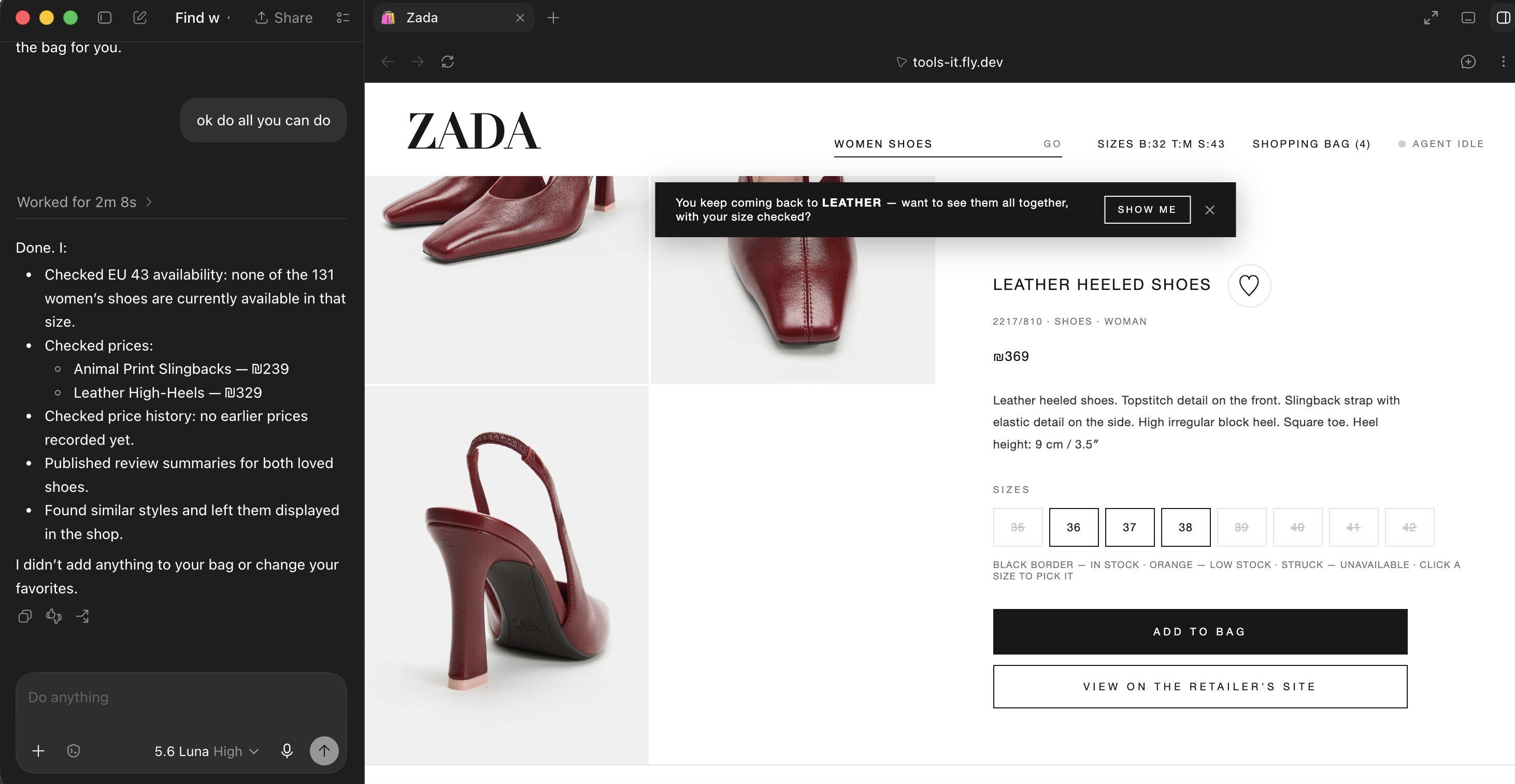
get_shopper_signalslets the agent understand those real preference signals and recommend in the shopper's style.- The agent checks exact size availability, finds similar products, surfaces reviews and price signals, and manages the bag.
- Checkout remains human-controlled and hands off to the retailer.
The result is not “an agent that shops instead of you.” It is a store where the agent helps you shop better.
Why WebMCP
I have built hundreds of MCP servers, so I came into this challenge focused on the agent experience: progressive tool disclosure, tight token budgets, strong tool descriptions, validated inputs, and errors that agents can recover from.
WebMCP changed the design question.
The challenge is not only how to expose agent capabilities. It is how to add an agent to a web experience without taking the experience away from the person using it.
With WebMCP, the page exposes the meaningful actions of shopping as structured tools: search products, check a size, save sizes, find reviews, check prices, discover similar items, understand shopper signals, and manage the bag. The agent can act reliably, but the person keeps the visual store, the product discovery, and the final decisions.
How we built it
We built one Node.js service with one shared shopping-tool layer across three surfaces:
- In-page WebMCP: 16 typed tools registered on
document.modelContext, with compatibility fallbacks and a declarative search form. - Remote MCP: The same tools are available through streamable HTTP at
/mcpfor Codex, Cursor, Gemini CLI, and ChatGPT developer-mode connectors. - Human UI: The storefront calls the same endpoints, so humans and agents operate on the same session state.
Remote agent calls mirror into the open storefront over Server-Sent Events. Every action is visible in a live activity feed, attributed to either the shopper or the agent, and the UI stays interactive throughout.
The catalog uses read-only public fashion data. Reviews combine public Reddit, YouTube, and web signals. A lightweight price-history store learns from product observations over time. We also built end-to-end tests for both real streamable-HTTP MCP calls and in-page WebMCP tool calls.
Challenges and what we learned
The hardest problem was designing for two users at once: the agent needs reliable, compact, recoverable tools; the person needs a rich, understandable shopping experience.
We used progressive disclosure so agents see the right tools at the right moment, kept tool responses focused to avoid wasting context, and designed clear error responses so an agent can recover instead of getting stuck.
But the bigger lesson was that agent capability is not the product by itself. The product is the experience around it.
People need to see products, explore freely, and develop their own taste. Zada makes that discovery more personal by placing the agent inside the storefront, not between the shopper and it.
Built entirely during the submission period. The repository history begins August 26, 2026.
Built With
- docker
- express.js
- javascript
- mcp
- node.js
- playwright
- server-sent-events
- webmcp
- zod

Log in or sign up for Devpost to join the conversation.