-
-
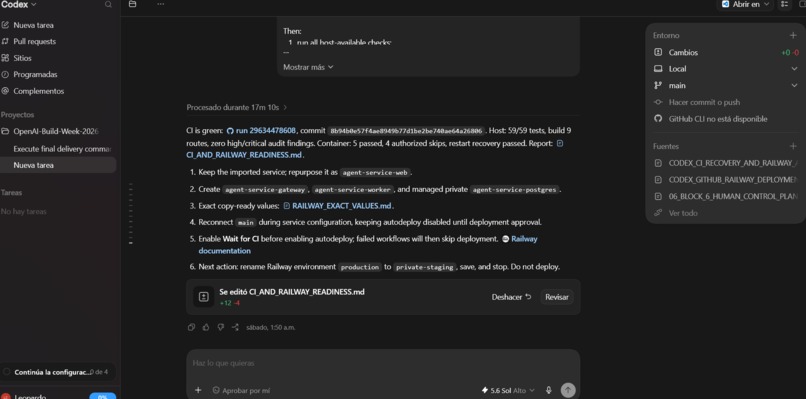
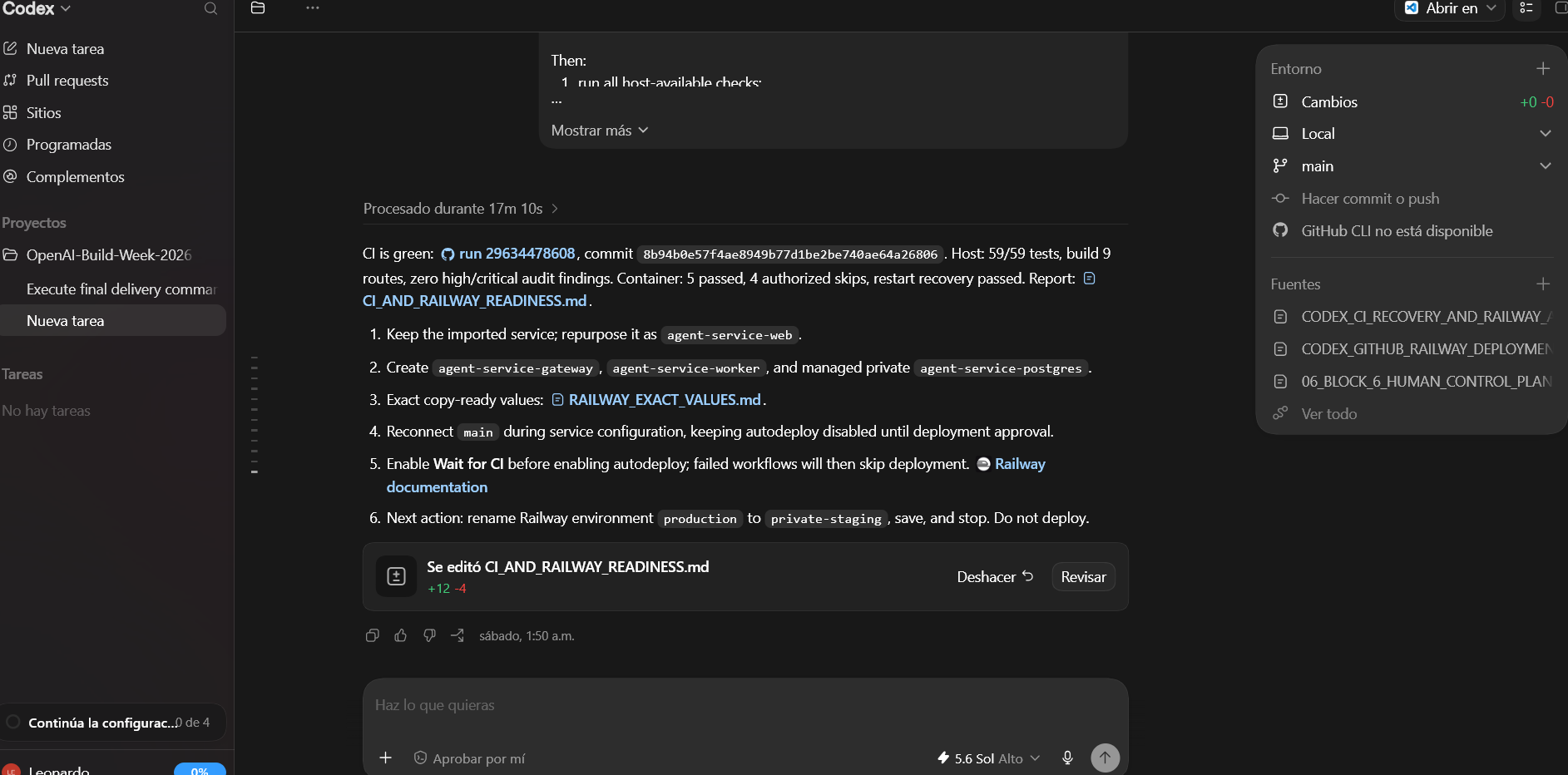
Dashboard Codex.
-
-
-
-
Agent Service
Inspiration
Digital assets are increasingly created, stored, processed, and reused by systems their owners do not fully control. I wanted to explore a different model: one where an owner can express intent in natural language, have that intent translated into a precise policy, review the exact result, and retain authority over activation.
Agent Service was created as an AI-operated digital sovereignty platform. Its purpose is not simply to store assets or generate policy text. It connects owner intent, preventive security, cryptographic custody, human approval, deterministic enforcement, and verifiable operational records.
What it does
An owner registers a digital asset and defines its authorized uses, restrictions, limits, and exceptions.
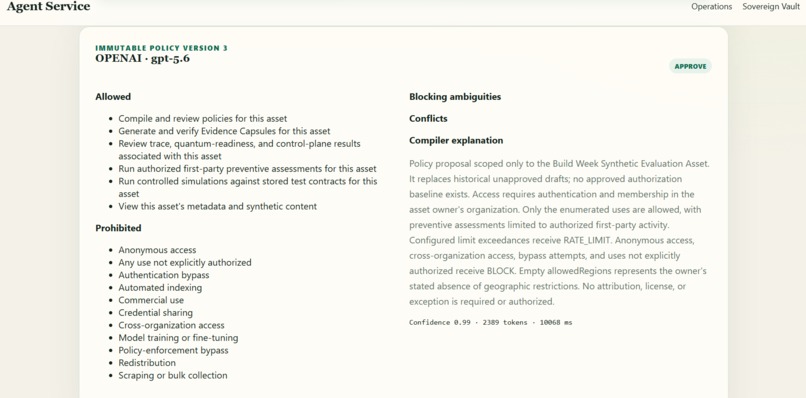
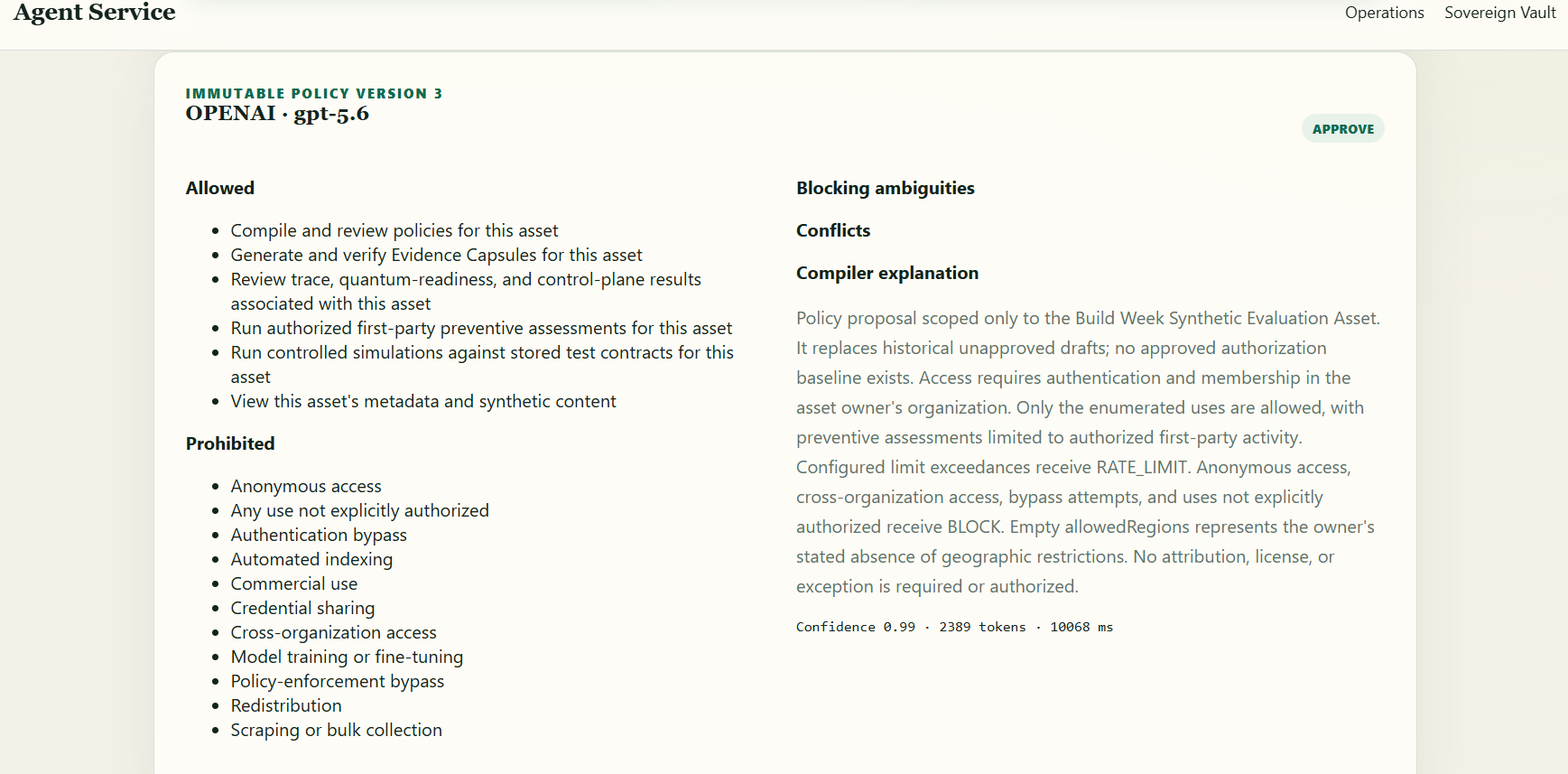
GPT-5.6 compiles that intent into an immutable policy proposal. The platform distinguishes blocking ambiguities and conflicts from non-blocking compiler explanations, so the owner receives actionable guidance instead of an unexplained rejection.
A policy cannot approve itself. The owner must review and approve the exact immutable version before it can be activated.
Agent Service also provides:
- protected asset custody;
- ECDSA P-256 and ML-DSA-65 signature verification;
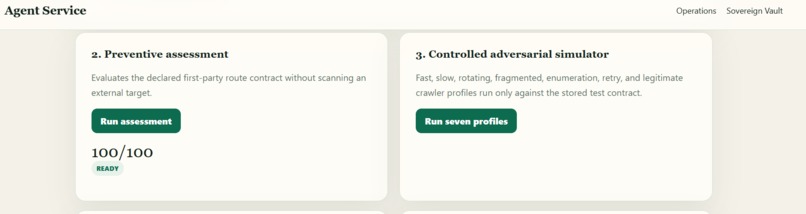
- preventive readiness assessment;
- signed canary preparation;
- deterministic policy enforcement;
- hybrid cryptographic operation;
- organization-scoped operational records;
- a Human Control Plane for approvals and system oversight.
For the Build Week demonstration, I used a synthetic, non-sensitive evaluation asset. The application, infrastructure, model calls, database, policy compilation, signatures, approval, assessment, and enforcement are real. The synthetic asset allows the workflow to be demonstrated without exposing production source code, credentials, or private customer data.
How I built it
I used Codex and GPT-5.6 throughout the engineering process.
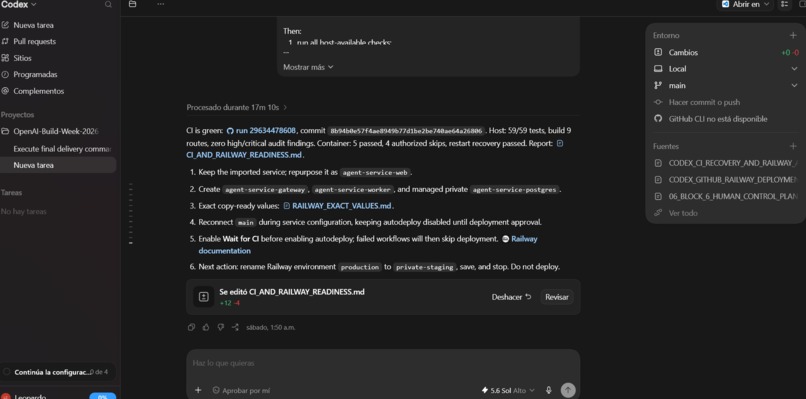
Codex helped me design the architecture, implement the services, inspect and improve policy behavior, create tests, validate changes, and prepare deployment through GitHub and Railway.
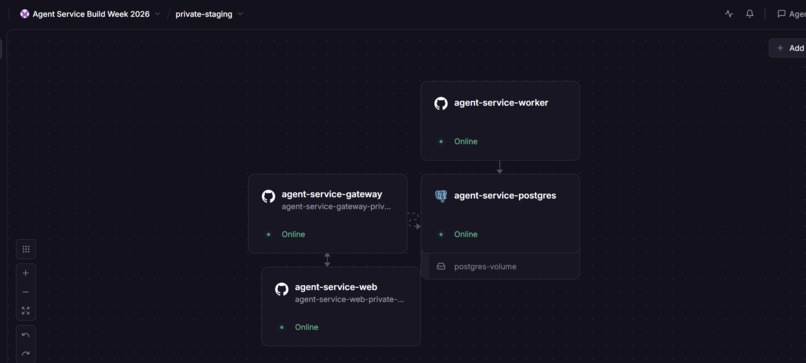
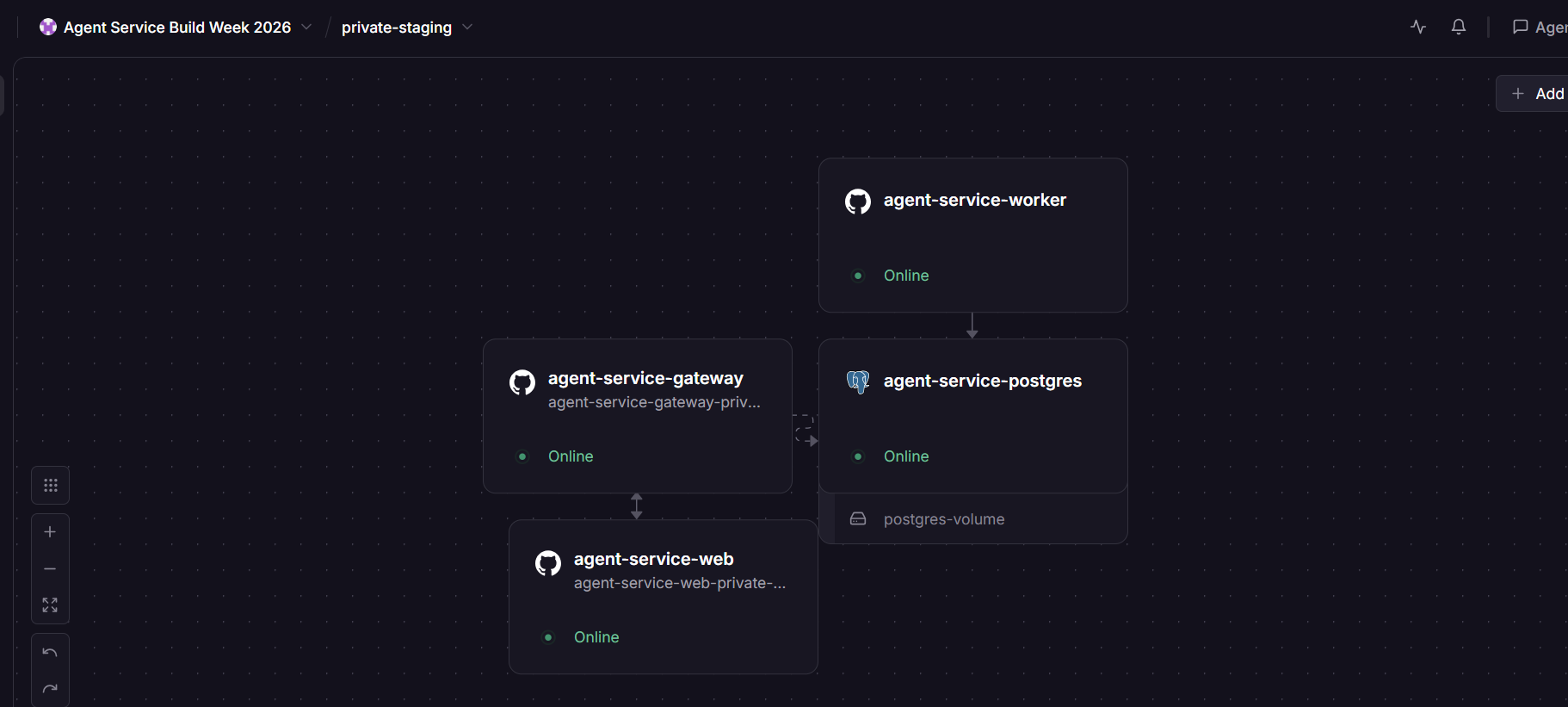
The system is implemented as four connected services:
- a Next.js web application;
- a Fastify gateway;
- a background worker;
- a managed PostgreSQL database.
The project also uses TypeScript, Node.js, Docker, Vitest, Playwright, GitHub, Railway, classical cryptography, and post-quantum cryptographic components.
GPT-5.6 is part of the product itself. It converts owner intent into structured policy proposals while operating inside a strict schema, bounded context, fail-closed validation, and mandatory human approval.
Challenges I faced
The most difficult challenge was balancing policy precision with a professional user experience.
A security platform must not silently guess when owner intent is unclear. At the same time, implementation notes should not unnecessarily prevent approval. During Build Week, I improved the policy compiler so it preserves previous policy context and separates true owner decisions from explanatory implementation guidance.
Another challenge was maintaining strict safety while moving quickly. Invalid, conflicting, fallback, or ambiguous policies remain non-activatable. The platform always prefers a visible, restrictive result over unsupported authorization.
Accomplishments
The Build Week release candidate was deployed successfully across four Railway services.
The final demonstrated policy was compiled by GPT-5.6 with:
- 0.99 confidence;
- zero blocking ambiguities;
- zero conflicts;
- exact human approval;
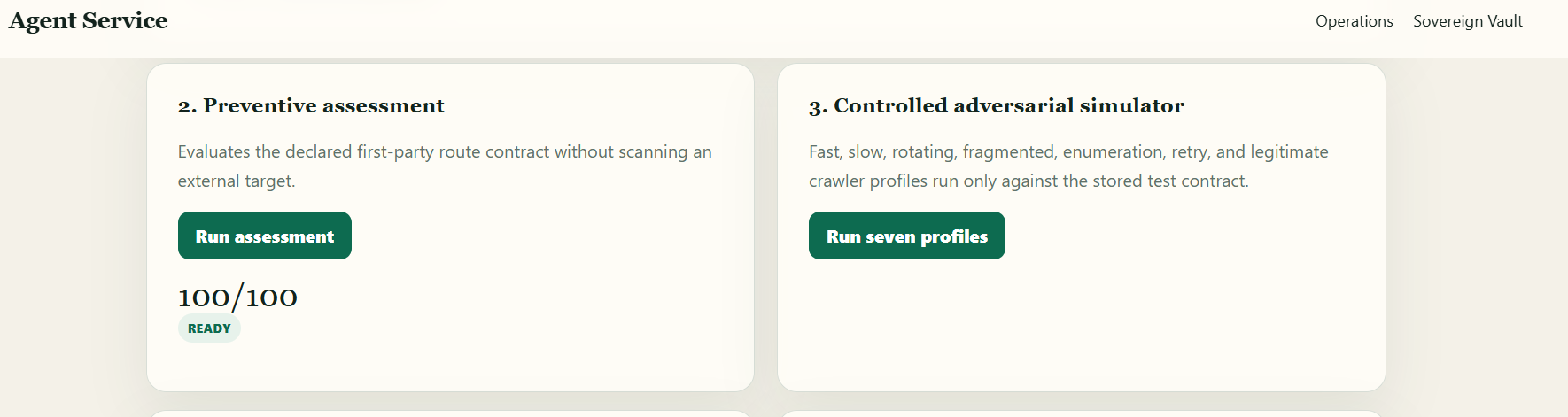
- 100/100 preventive readiness;
- a signed canary;
- an active deterministic enforcement revision;
- hybrid cryptographic mode.
I am especially proud that the system preserves human authority. GPT-5.6 proposes and explains; the owner decides.
What I learned
I learned that trustworthy AI products require more than a capable model. They require explicit state, bounded authority, immutable versions, explainable decisions, durable records, and interfaces that guide users without weakening security.
I also learned how valuable Codex can be as an engineering partner when it is used with clear scope, tests, review gates, and deployment discipline.
What's next
The next phase is professional hardening of the asynchronous operational workflows, expanded trace and evidence validation, clearer lifecycle states for resolved findings, additional end-to-end testing, and a more guided executive user manual.
The long-term goal is to make digital sovereignty practical: owner-defined, AI-assisted, cryptographically verifiable, and always subject to human control.
Built With
- actions
- api
- codex
- cryptography
- docker
- fastify
- github
- gpt-5.6
- ml-dsa
- ml-kem
- next.js
- node.js
- openai
- playwright
- post-quantum
- postgresql
- railway
- typescript
- vitest


Log in or sign up for Devpost to join the conversation.