Inspiration
I am a technical SEO, so I spend a lot of time thinking about how machines understand websites: search crawlers, rich result parsers, AI assistants, and now agentic browsers. Technical SEO has always been about making the web more readable to non-human users.
That made WebMCP immediately exciting to me. Instead of an agent guessing how to use an SEO interface from buttons, screenshots, and page text, the site itself can expose structured SEO tools directly. Agent Search Console came from that idea: what would an SEO tool look like if it was built for both humans and agents from the start?
What it does
Agent Search Console is a WebMCP-powered technical SEO toolkit.
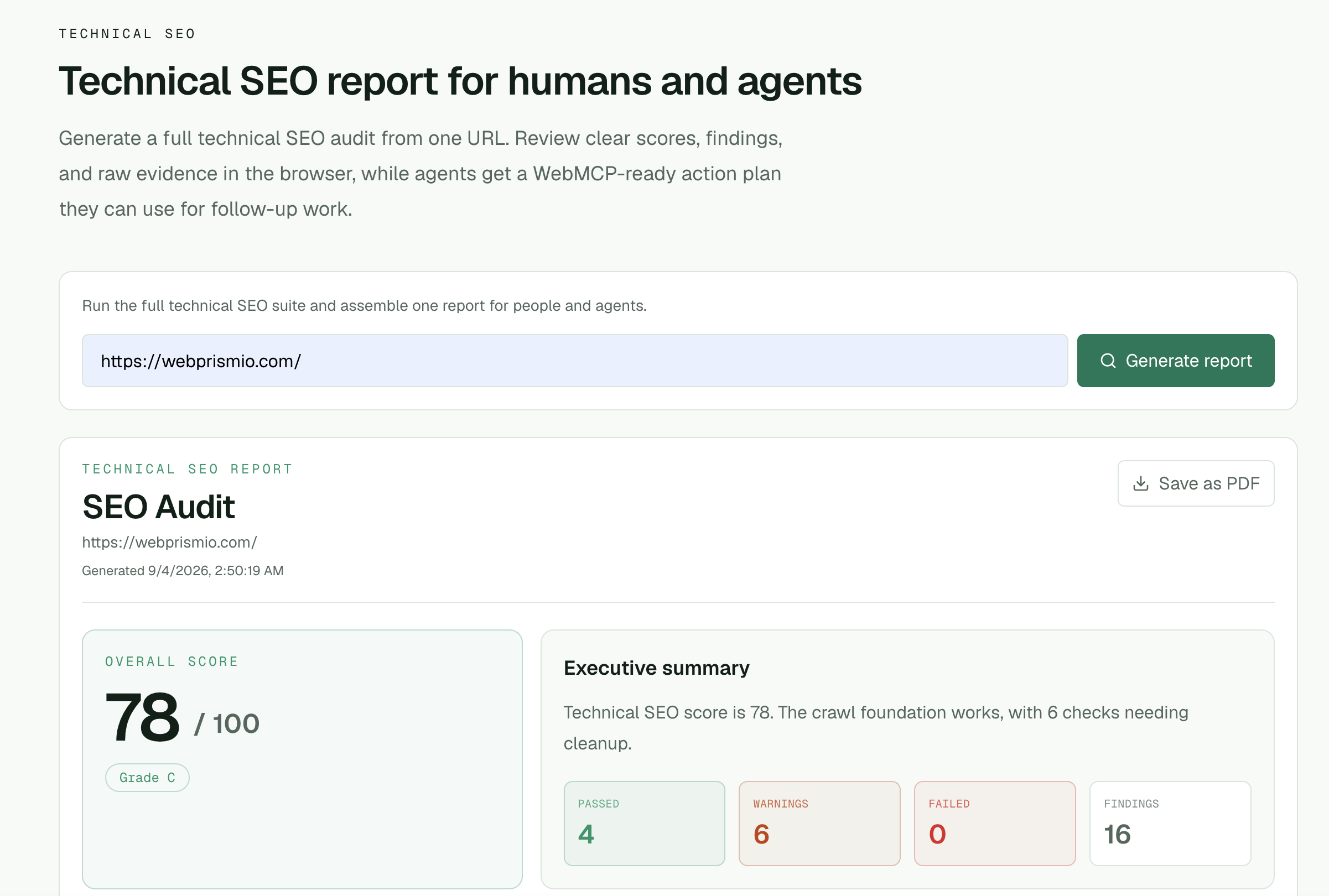
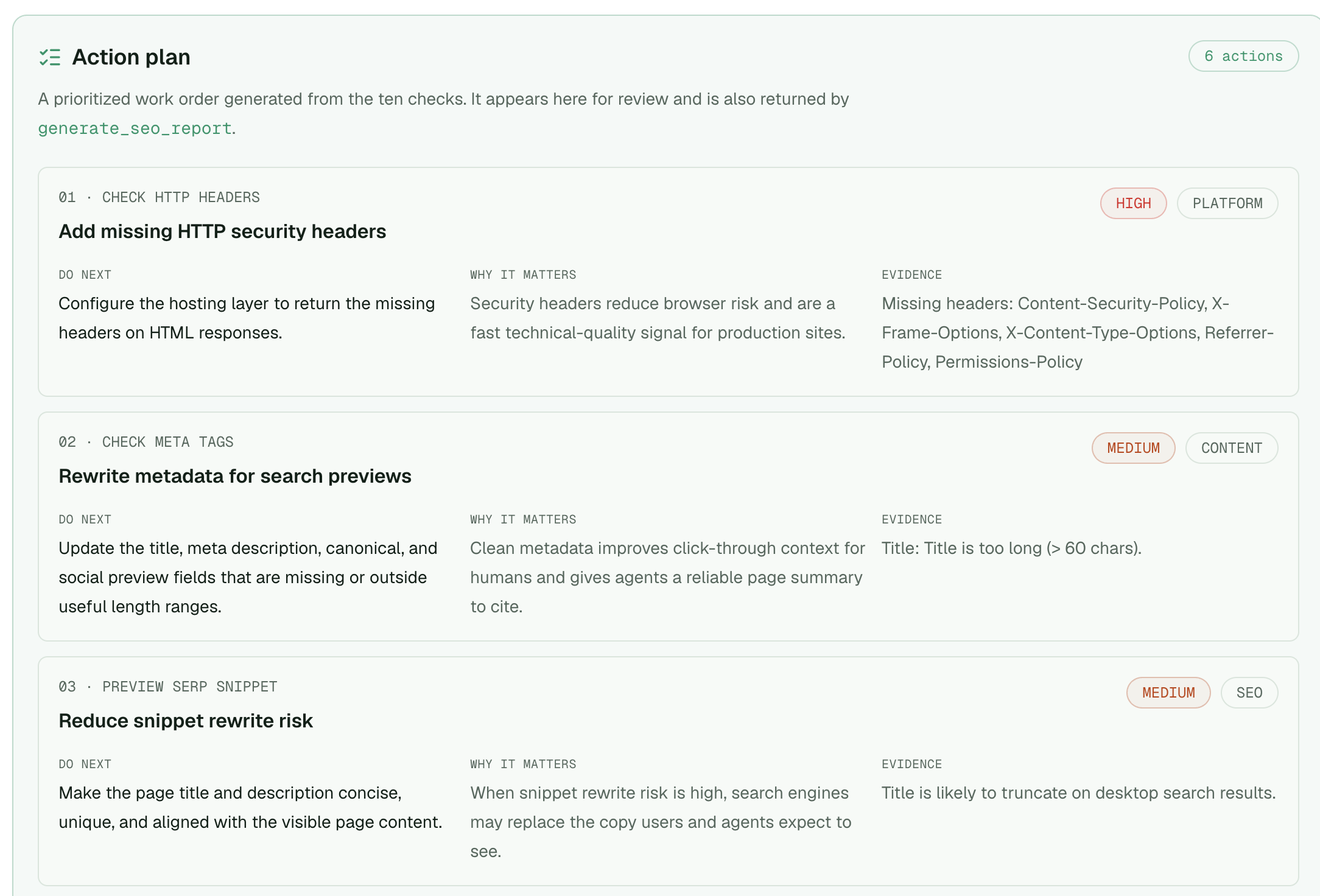
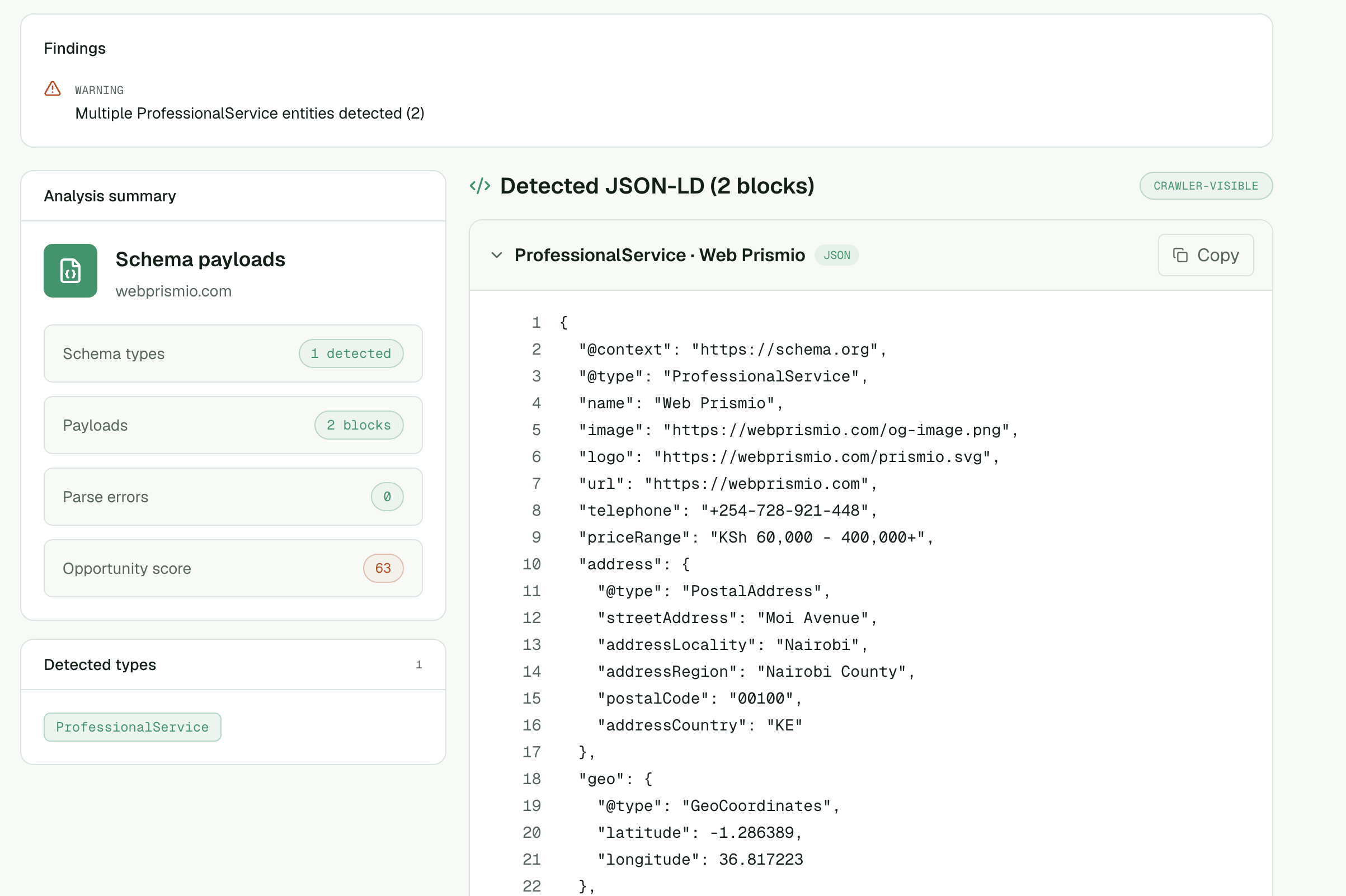
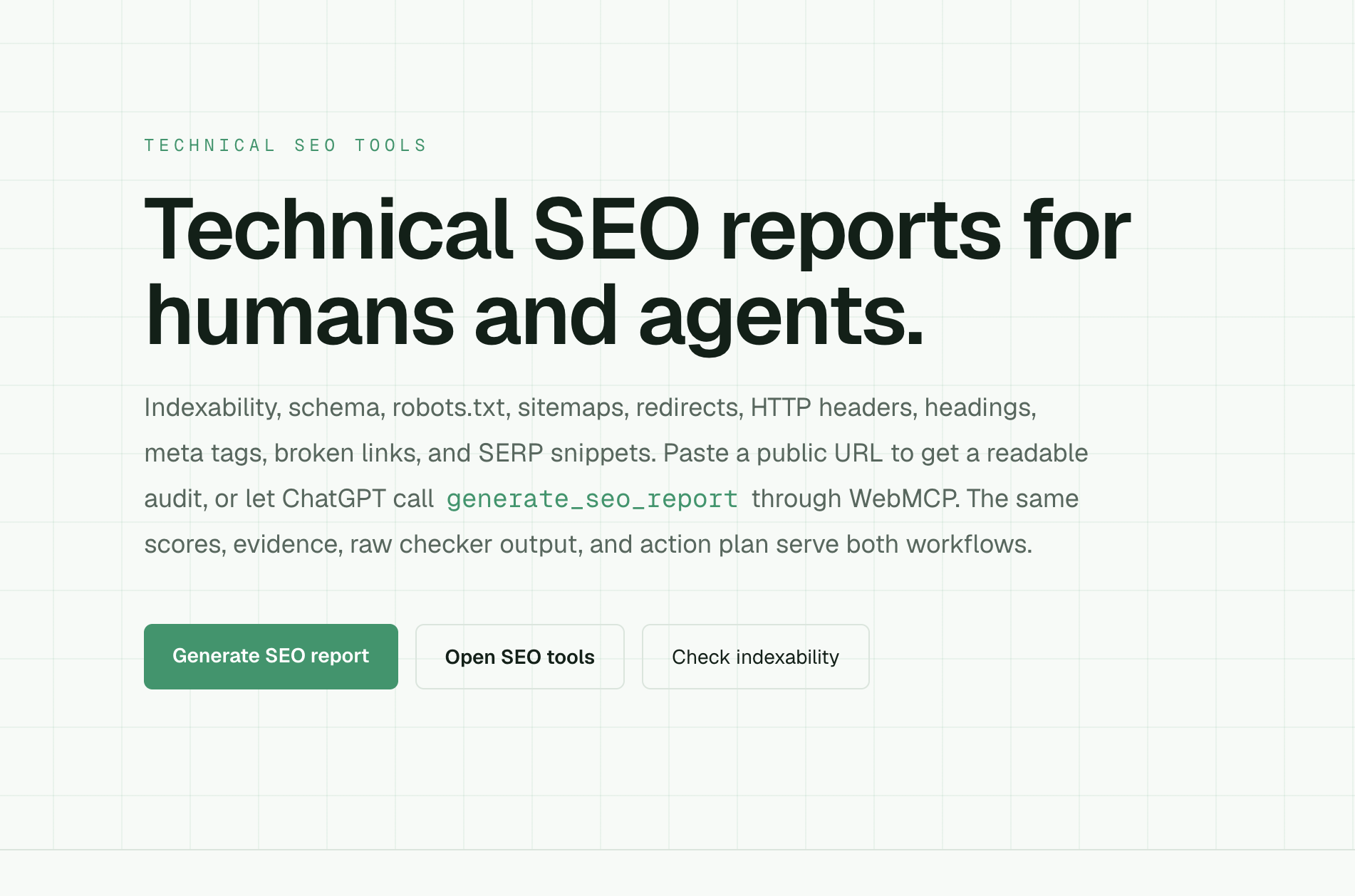
A human can paste a public URL and generate a technical SEO report. The app checks indexability, schema, robots.txt, sitemaps, redirects, HTTP headers, headings, meta tags, broken links, and SERP snippet signals. It then turns those checks into a readable report with scores, findings, raw evidence, and a prioritized action plan.
An agent can call the same functionality through WebMCP. Instead of scraping the UI, the agent can call tools like generate_seo_report, check_indexability, check_schema, or check_robots_txt and receive structured results it can use for follow-up work.
How we built it
The app is built with Next.js, React, TypeScript, and Tailwind CSS.
The SEO checks run on server-side API routes that safely fetch public URLs, parse crawler-visible HTML and headers, and return structured JSON. The full report generator runs the core checks together and creates an executive summary, section scores, detailed findings, raw checker output, and an agentActionPlan.
For WebMCP, the app registers browser tools with document.modelContext.registerTool. The WebMCP surface is intentionally capped at ten tools: one full report generator plus focused technical SEO checkers. The app also exposes static discovery JSON at /webmcp.json and /.well-known/webmcp.json.
Challenges we ran into
The biggest challenge was the steep learning curve around WebMCP itself. The standard is new, and it changes how you think about a web app. I had to stop treating the UI as the only product surface and start thinking about the agent interface as a first-class experience.
Another challenge was output quality. SEO tools often dump raw data, but agents need structured, specific, actionable evidence. A lot of the work went into making the outputs useful: clear statuses, scores, findings, metrics, raw results, and prioritized next steps.
Accomplishments that we're proud of
I am proud that this became a genuinely passionate project, not just a wrapper around a demo API.
Agent Search Console has a real product direction: technical SEO tools at the core, a human-readable report experience, and an agent-readable WebMCP interface. It shows how SEO workflows can become more collaborative when humans review strategy and agents handle structured diagnosis, evidence gathering, and follow-up tasks.
I am also proud of keeping the tool surface focused. Instead of exposing too many generic tools, the app centers on a small set of practical technical SEO checks that map to real SEO work.
What we learned
I learned what WebMCP really is: not just another integration format, but a way for websites to describe what agents can actually do.
The most important shift is that agents should not have to guess. A good WebMCP app gives agents clear tool names, clear input schemas, safe execution boundaries, and useful structured outputs. That makes the web feel less like a visual maze for agents and more like a set of intentional capabilities.
I also learned that agent-facing output design matters as much as human UI design. If the result is vague, too raw, or poorly structured, the agent cannot do much with it.
What's next for Agent Search Console
Next, I want to scale Agent Search Console into a production-grade, comprehensive technical SEO product.
That means deeper crawling, richer schema validation, rendered-page analysis, historical reports, project tracking, issue monitoring, exports, and integrations with real SEO workflows. I also want to expand the WebMCP side so agents can not only diagnose issues, but help create implementation briefs, compare reports over time, and coordinate SEO fixes with developers and content teams.
Built With
- next.js
- vercel

Log in or sign up for Devpost to join the conversation.