-
-
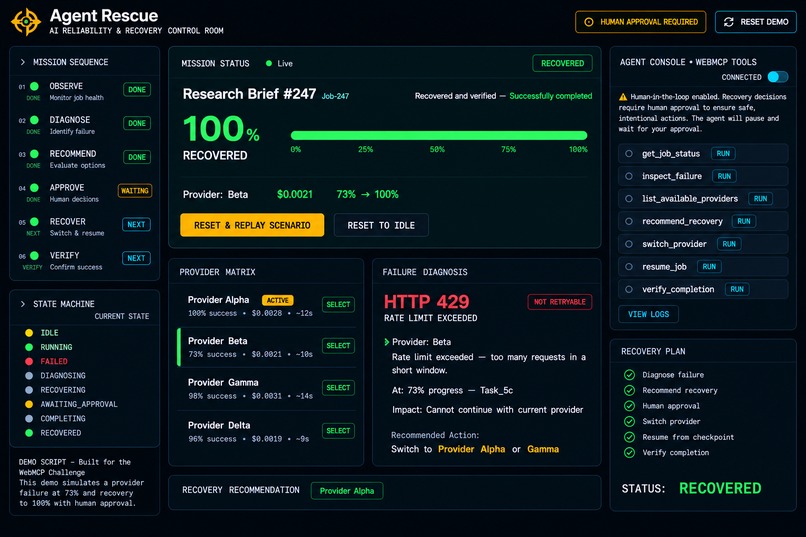
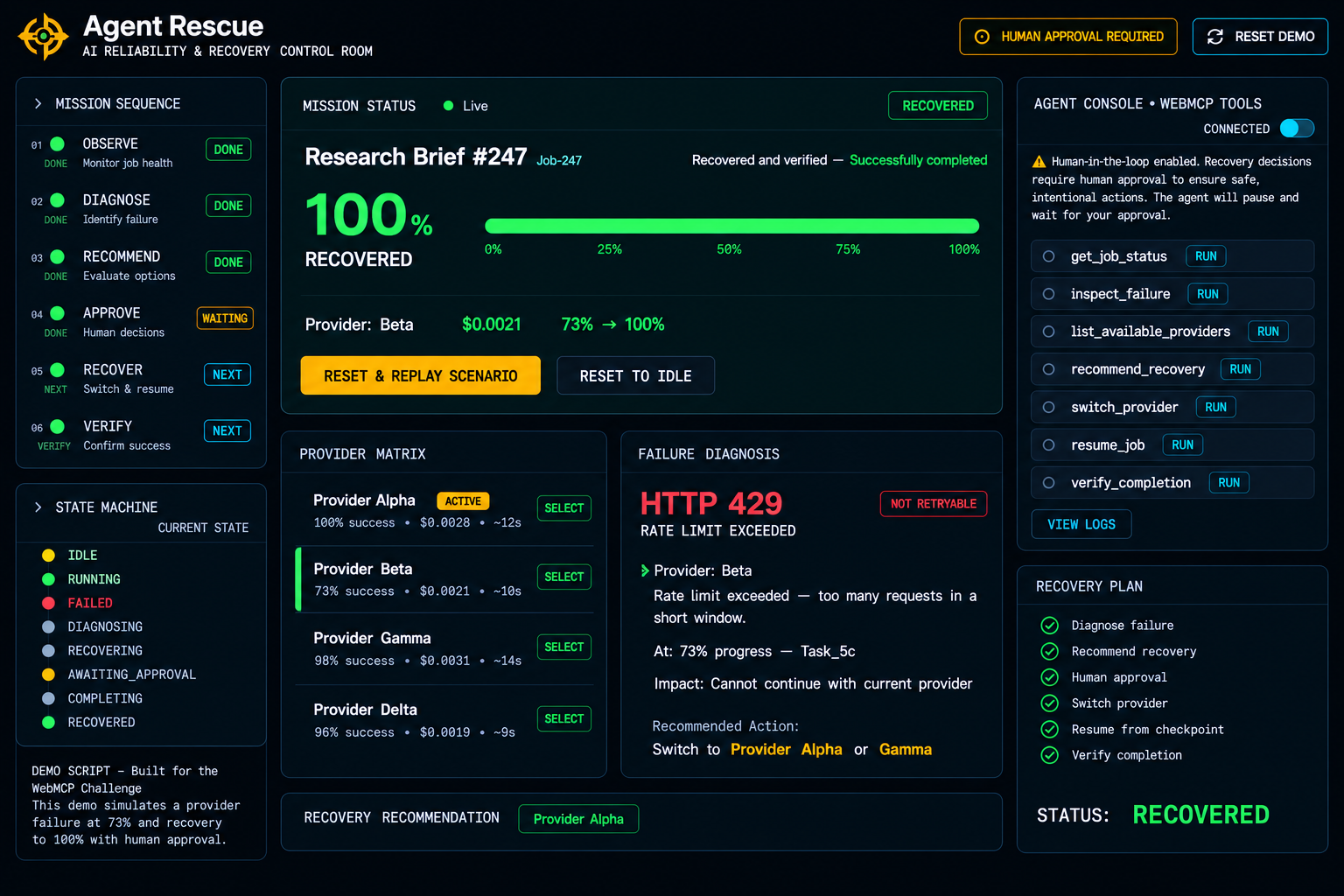
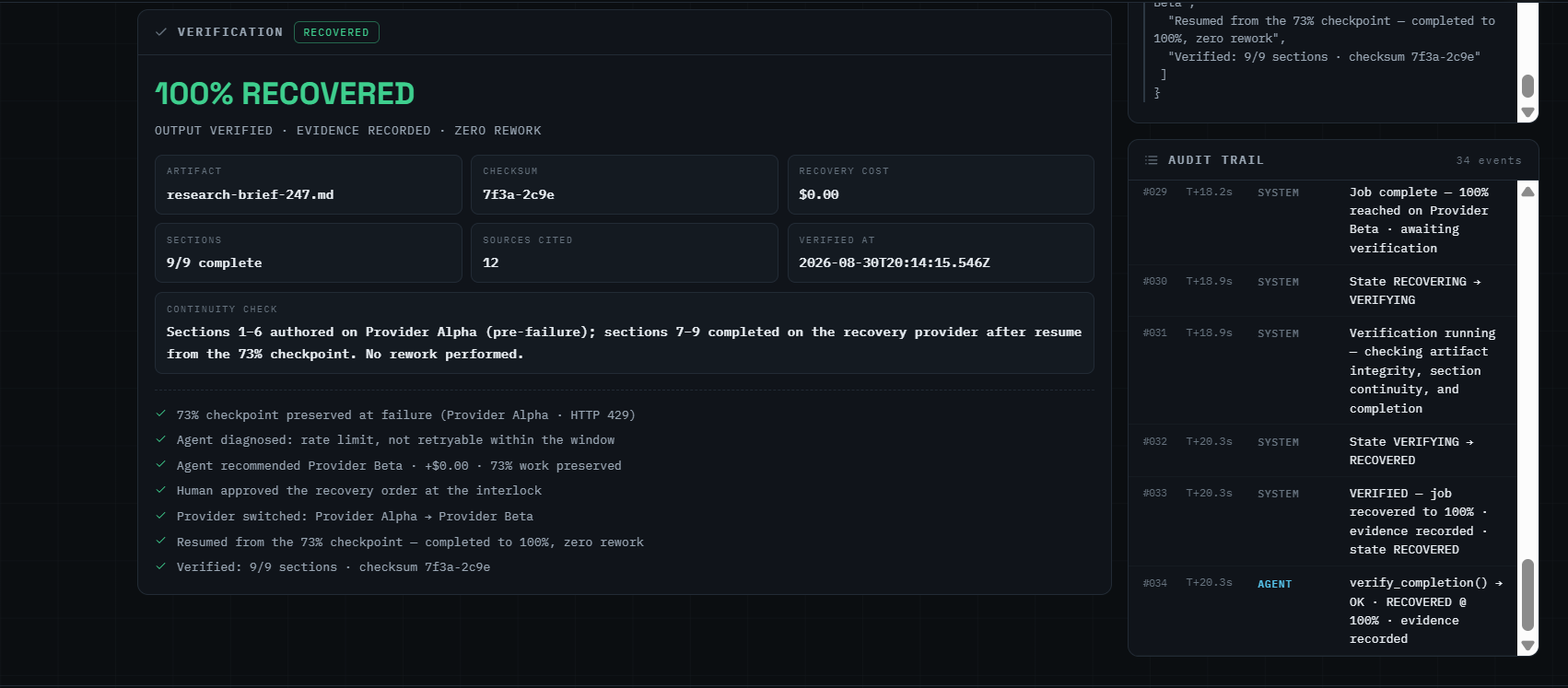
100% RECOVERED: full workflow showing provider recovery, preserved checkpoint, audit trail, and verified completion.
-
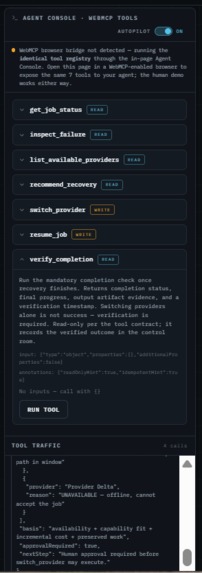
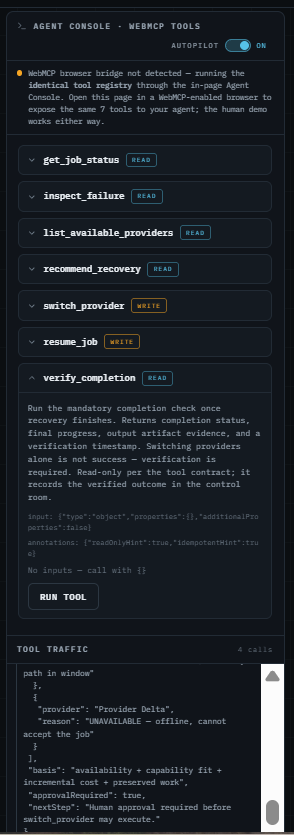
Seven WebMCP tools let the agent diagnose failures, compare providers, recover jobs, and verify completion.
-
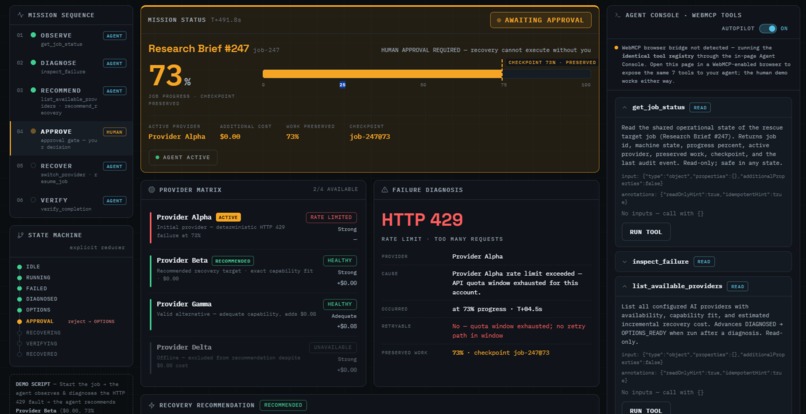
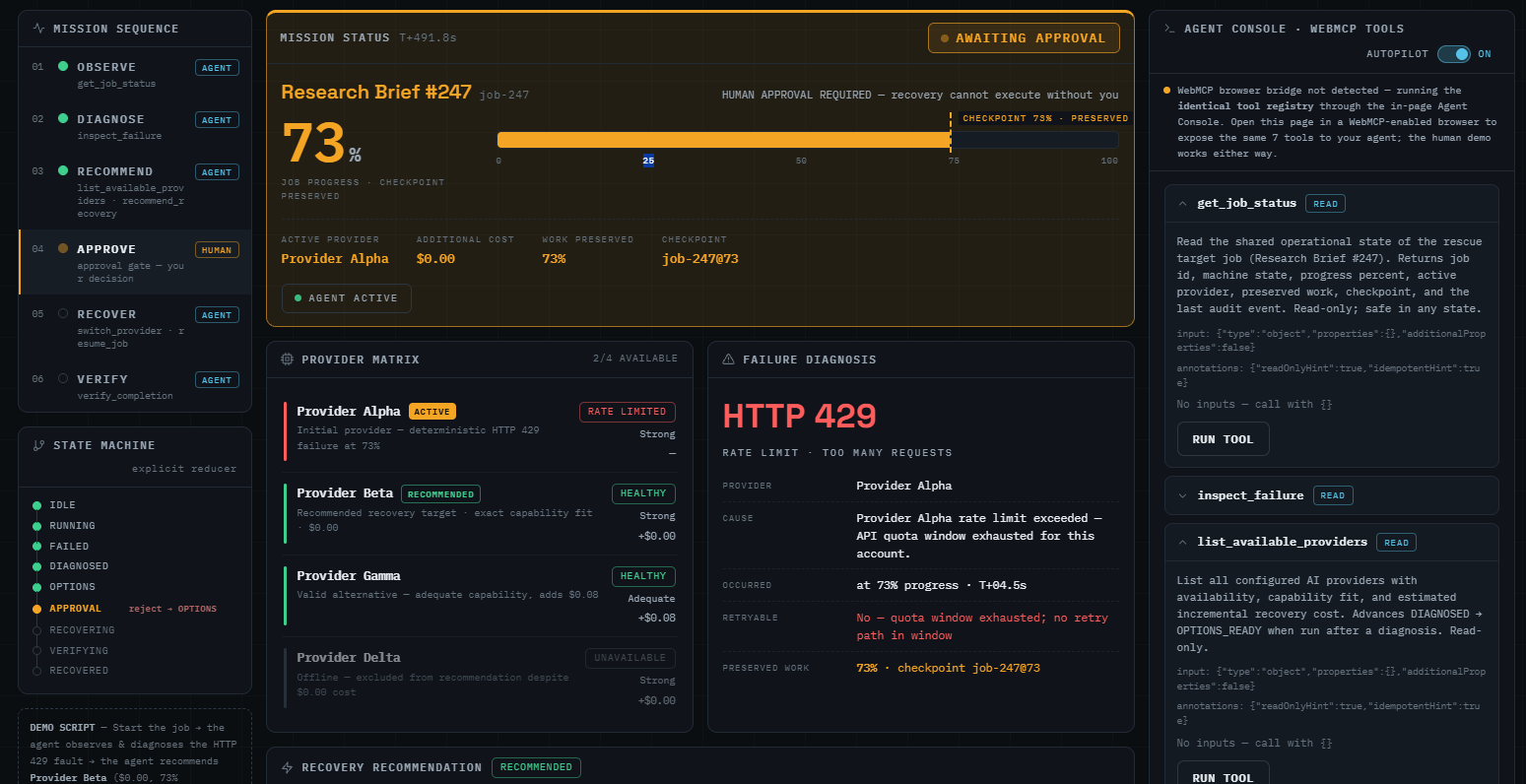
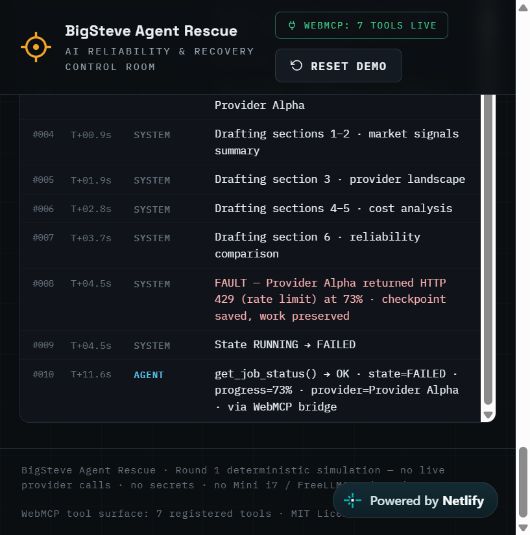
HTTP 429 failure at 73%: Agent Rescue preserves completed work, diagnoses the failure, and evaluates recovery providers.
-
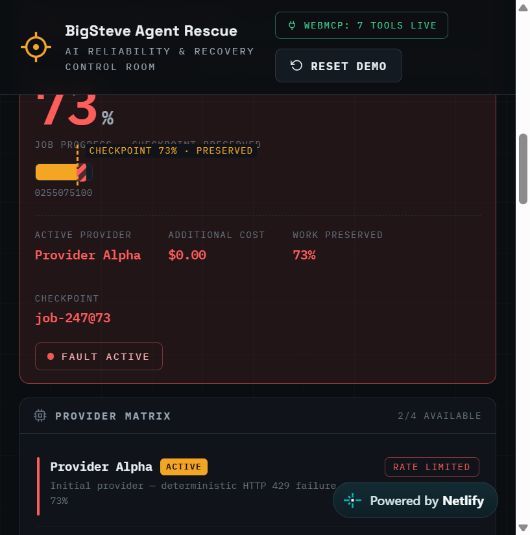
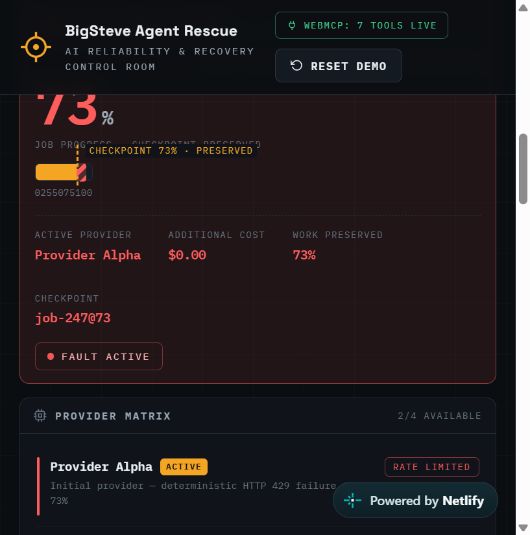
Live WebMCP proof — 7 tools registered, HTTP 429 failure at 73%, checkpoint preserved.
-
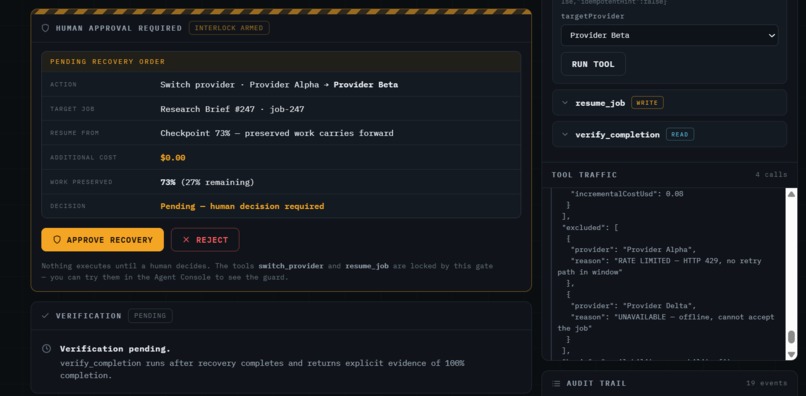
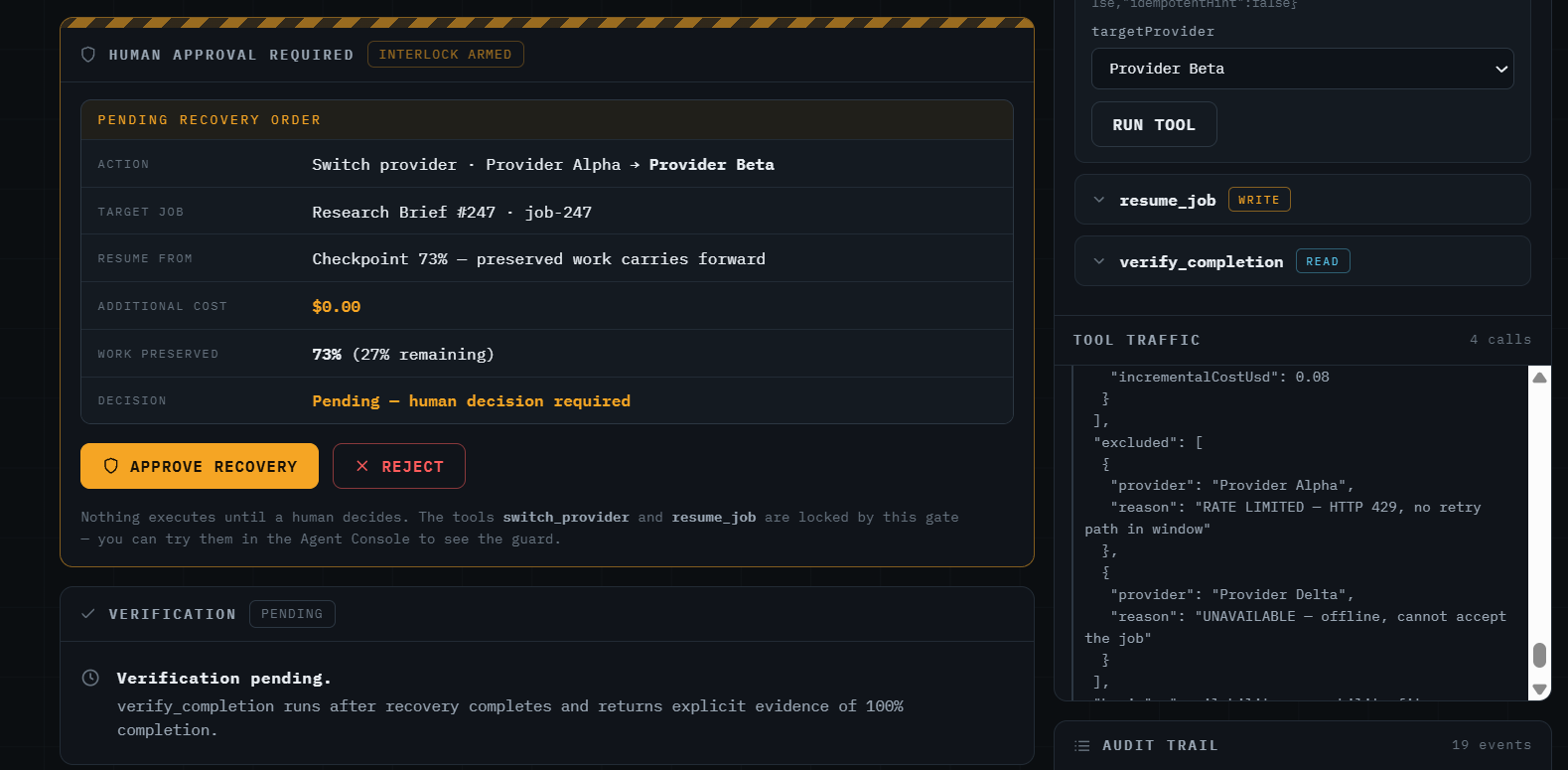
Human approval required before Agent Rescue switches providers, keeping the consequential recovery decision under human control.
-
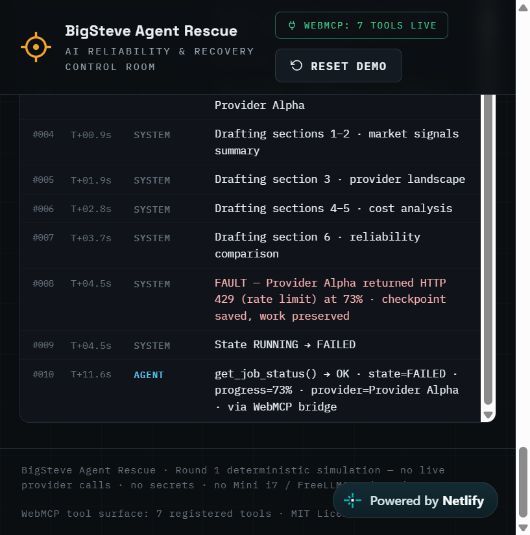
External agent proof — get_job_status returned OK through the WebMCP bridge.
-
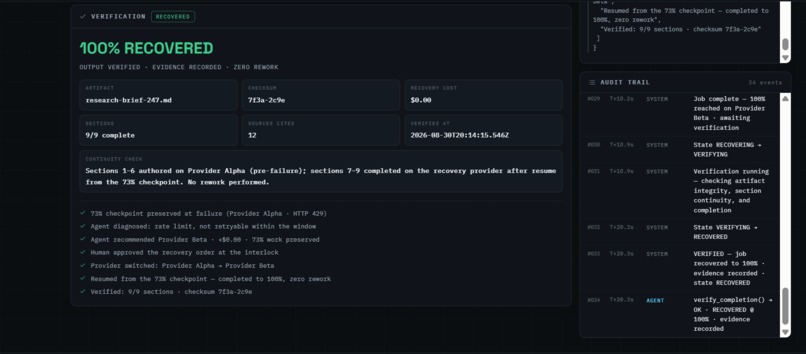
100% RECOVERED: Provider Beta resumed Research Brief #247 from the preserved 73% checkpoint and completed the job.
Inspiration
AI workflows fail. Providers hit rate limits, services become unavailable, and switching resources can mean losing completed work. Agent Rescue explores a better model: let an AI agent diagnose and plan recovery while keeping consequential decisions under human control.
What it does
Agent Rescue is an AI Reliability & Recovery Control Room built around a shared human-agent workflow.
In the demo, Research Brief #247 reaches 73% completion when Provider Alpha fails with an HTTP 429 rate limit. Agent Rescue preserves the checkpoint, diagnoses the failure, discovers available providers, evaluates recovery options, and recommends a recovery path.
Before changing providers, the system stops at HUMAN APPROVAL REQUIRED.
After approval, Agent Rescue switches providers, resumes from the preserved 73% checkpoint instead of restarting, and verifies the job at 100% RECOVERED.
How we used WebMCP
WebMCP gives the agent structured capabilities instead of forcing it to guess its way through the visual interface.
Agent Rescue exposes seven tools:
- get_job_status
- inspect_failure
- list_available_providers
- recommend_recovery
- switch_provider
- resume_job
- verify_completion
The human interface and WebMCP tools operate on the same application state. The agent can observe, diagnose, compare options, recommend recovery, resume work, and verify results while the human retains control over the consequential provider-switch decision.
How we built it
The challenge prototype is a deterministic single-file web application with an explicit recovery state machine, structured tool contracts, an audit trail, provider comparison, checkpoint preservation, and a mandatory human-approval interlock.
The deterministic scenario makes the complete recovery sequence reproducible for judging without requiring accounts, API keys, or external AI-provider credentials.
What's next
The same architecture can extend from the deterministic challenge prototype to real multi-provider AI infrastructure, helping individuals and organizations preserve work, control failover, reduce wasted resources, and improve AI reliability.
Built With
- aiagents
- css
- html
- human-in-the-loop
- javascript
- netlify
- webmcp

Log in or sign up for Devpost to join the conversation.