-
-
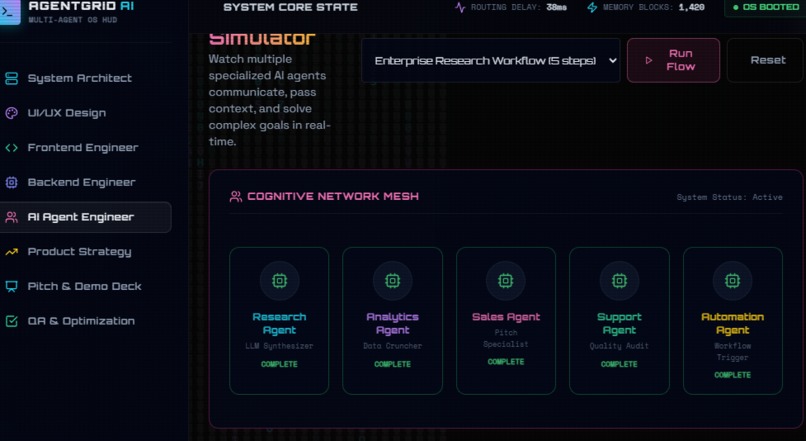
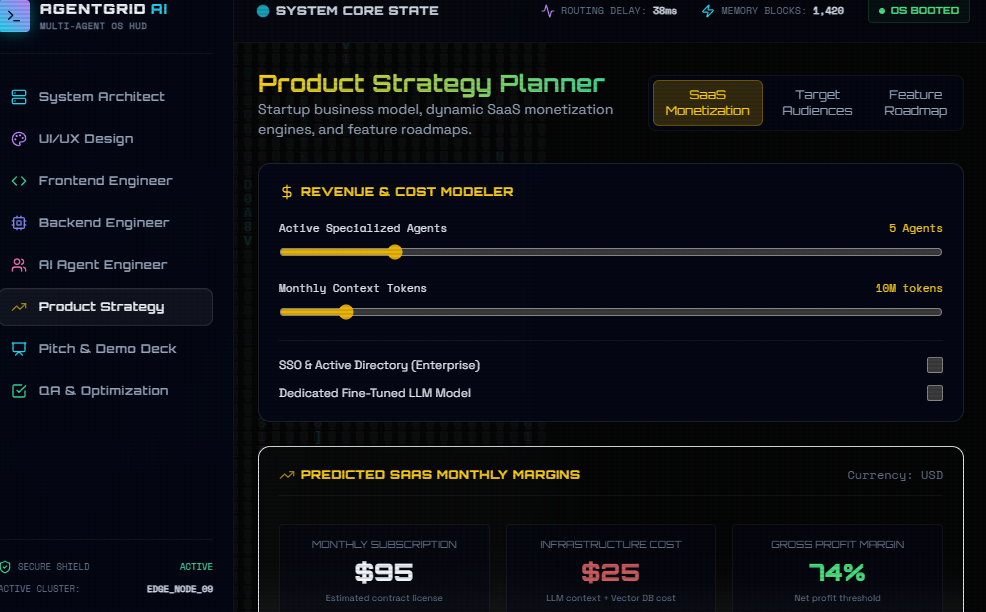
Autonomous AI operations dashboard designed for intelligent task execution, monitoring, and workflow automation.
-
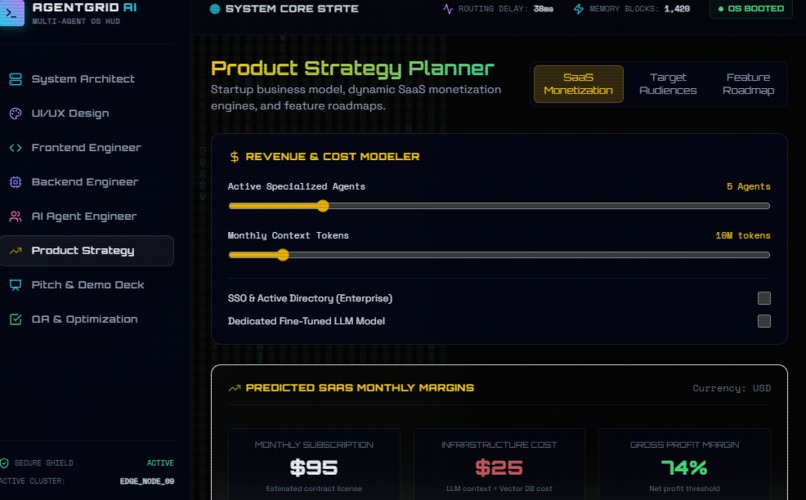
Production-grade QA and performance monitoring dashboard for autonomous AI system validation and optimization.
-
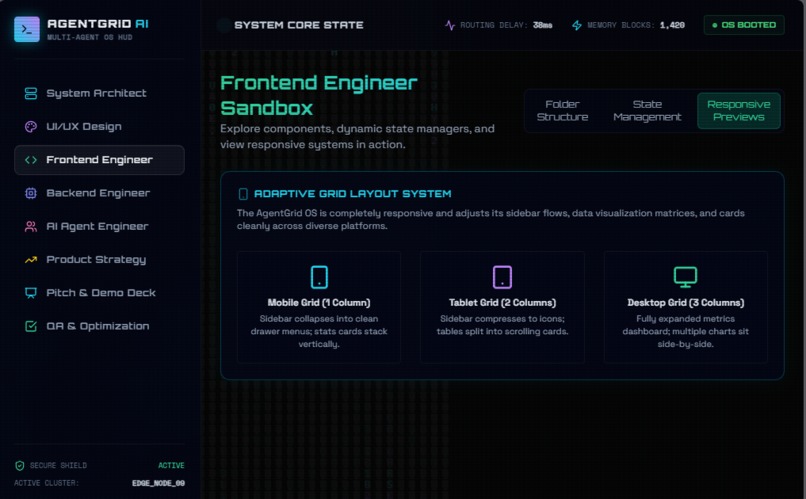
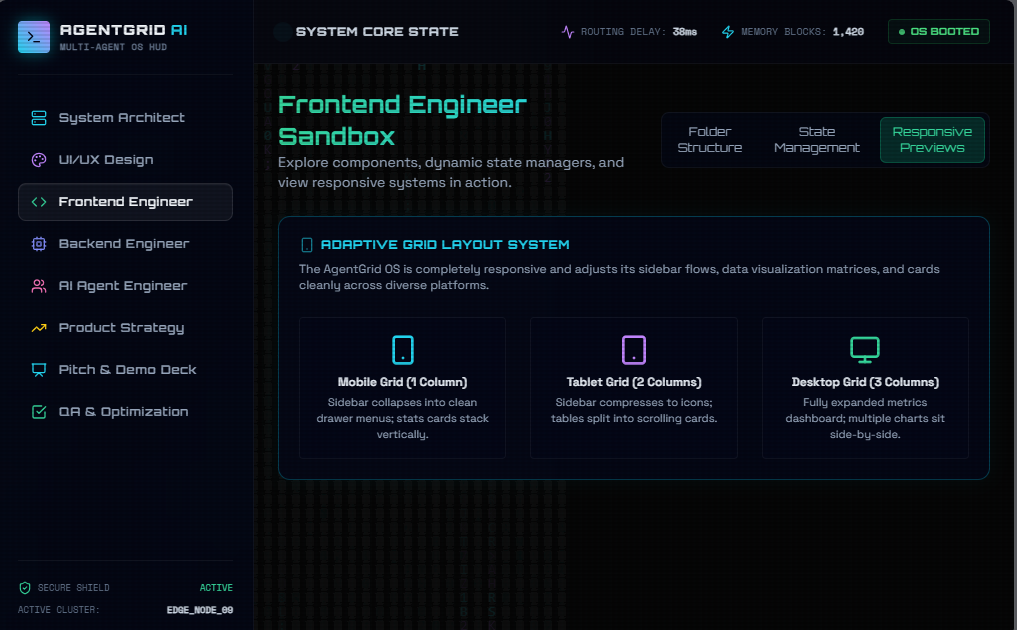
Advanced backend infrastructure panel featuring realtime execution monitoring, semantic memory, and cloud scalability.
-
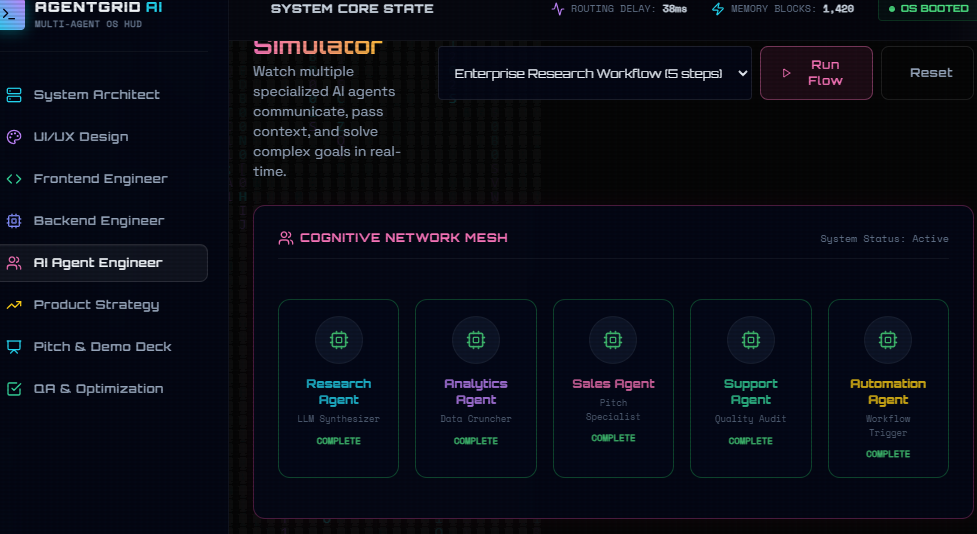
Realtime business workflow orchestration powered by multi-agent AI coordination and Gemini routing systems.
-
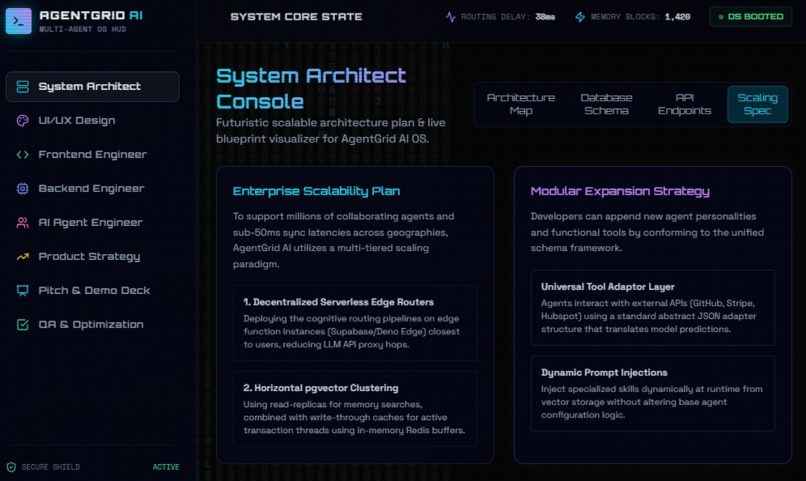
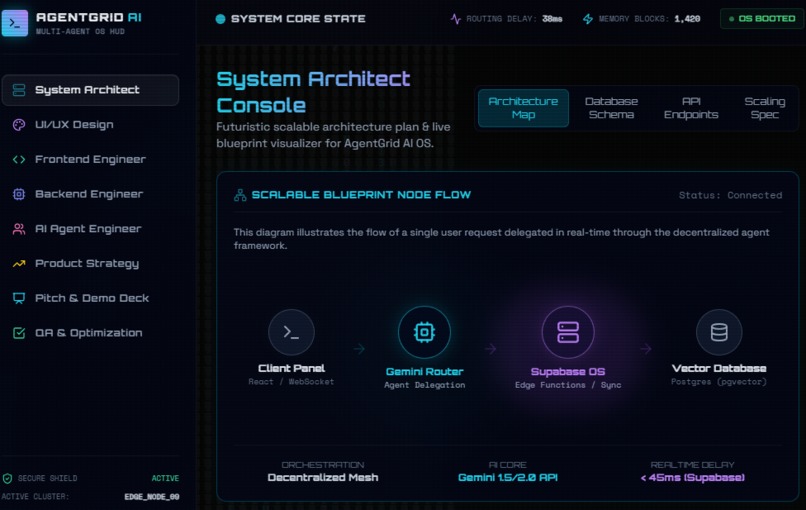
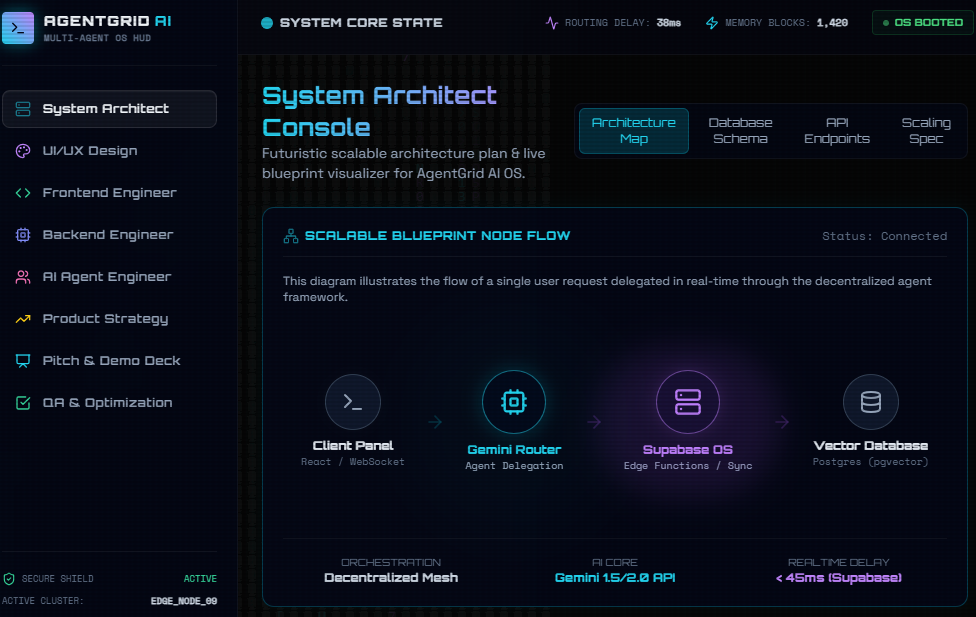
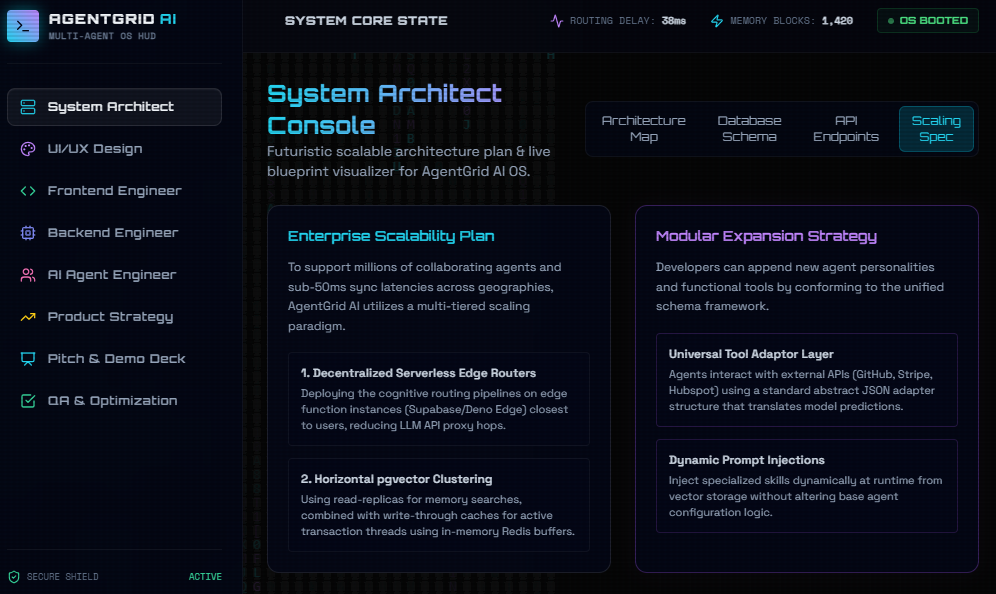
Futuristic system architecture console with realtime AI workflow orchestration and scalable agent infrastructure.
Inspiration
We were inspired by the growing shift toward AI-powered automation and the limitations of existing workflow tools. Most AI systems today work like isolated assistants instead of collaborative operational systems.
We wanted to explore a future where multiple intelligent AI agents could work together in real time — handling workflows, automating tasks, coordinating operations, and reducing repetitive manual work for businesses and creators.
This idea became Agent Grid AI.
What it does
Agent Grid AI is a futuristic multi-agent AI operating system designed for autonomous workflow automation.
The platform allows businesses to:
- manage multiple AI agents
- automate intelligent workflows
- route tasks dynamically
- monitor real time operations
- coordinate autonomous systems from one centralized dashboard
The system combines:
- AI reasoning
- real time orchestration
- semantic memory
- cloud infrastructure
- workflow automation
into a scalable operational ecosystem.
How we built it
We built Agent Grid AI using a modern AI-first architecture.
Frontend:
- React
- Tailwind CSS
- Futuristic dashboard UI
Backend Infrastructure:
- Supa base
- PostgreSQL
- Realtime Web Sockets
- Edge Functions
- vector semantic memory
AI Layer:
- Gemini API
- AI routing engine
- autonomous task orchestration
The platform architecture enables real time communication between workflows, agents, memory systems, and dashboard monitoring.
Challenges we ran into
One of the biggest challenges was designing real time multi-agent coordination while keeping the architecture scalable and responsive.
We also faced challenges around:
- workflow orchestration
- real time synchronization
- semantic memory integration
- low-latency task execution
- designing a production-style UI experience
Another challenge was balancing technical complexity with a clean and intuitive interface.
Accomplishments that we're proud of
We successfully built:
- a working futuristic AI dashboard
- real time workflow orchestration
- multi-agent operational architecture
- semantic AI memory infrastructure
- scalable backend foundations
- cinematic production-ready UI design
We are especially proud of creating a system that feels like a real next-generation AI operating platform rather than just another chatbot interface.
What we learned
During this project, we learned:
- how multi-agent systems can coordinate together
- how real time infrastructures behave under workflow execution
- how semantic memory improves intelligent systems
- the importance of scalable backend architecture
- how much presentation and user experience matter in AI products
We also learned how powerful modern AI tooling has become for rapid innovation and prototyping.
What's next for Agent Grid AI
Our future vision includes:
- autonomous AI collaboration
- voice-enabled AI agents
- advanced memory systems
- AI workflow marketplace
- enterprise automation support
- live agent analytics
- decentralized orchestration systems
- production-grade deployment infrastructure
We believe systems like Agent Grid AI represent the next operational layer for modern businesses powered by autonomous AI ecosystems.

Log in or sign up for Devpost to join the conversation.