-
-
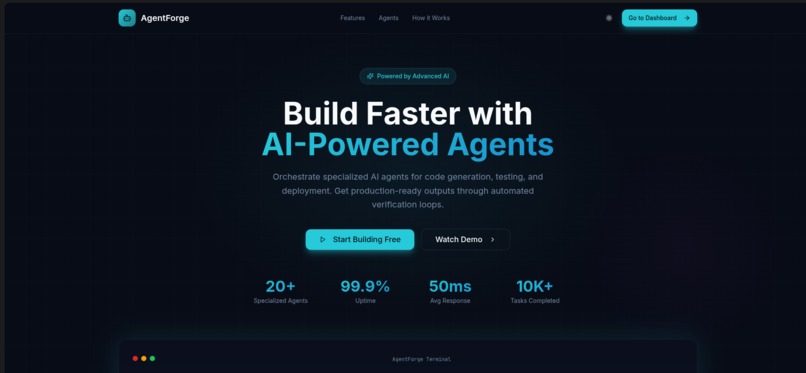
The Landing page of the application
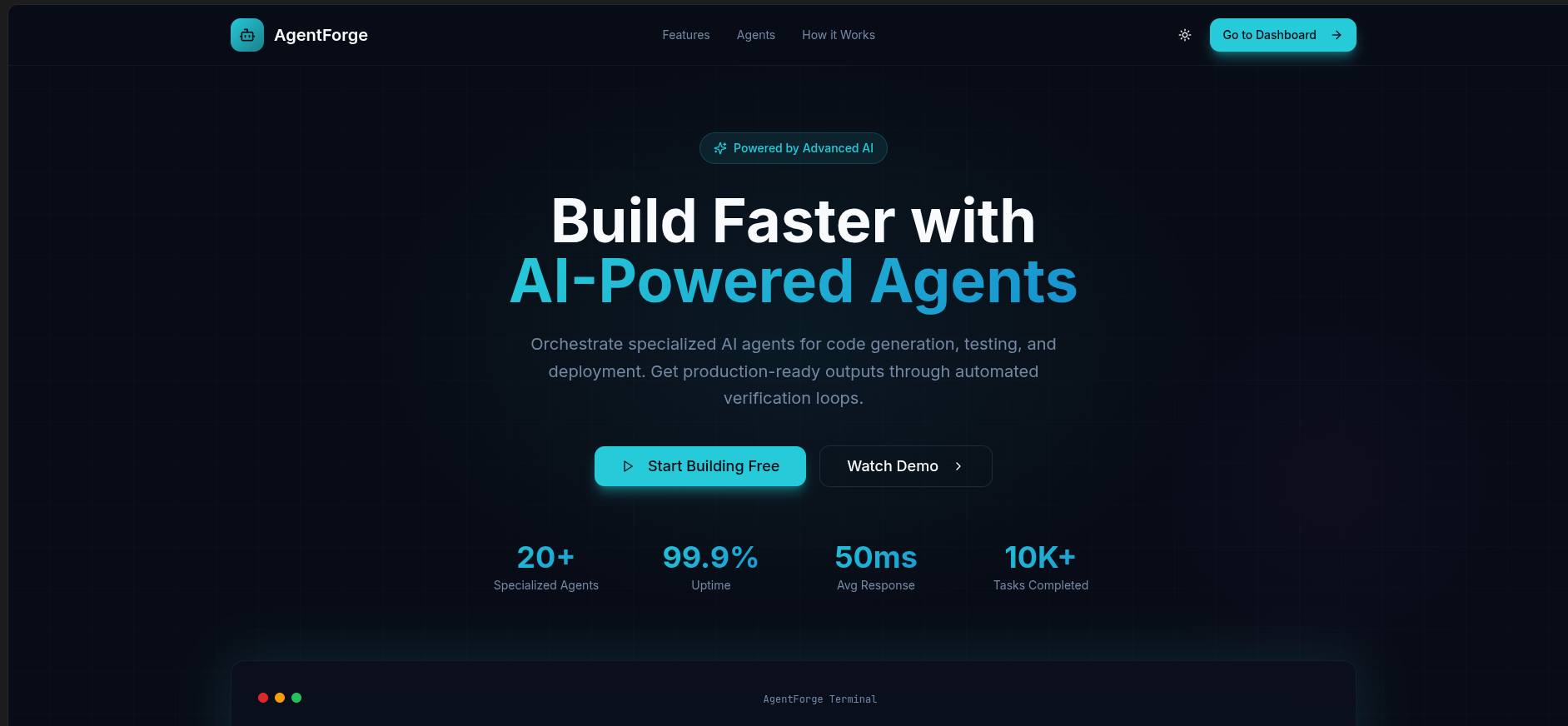
Multi-Agent Development Platform
A contract-first, multi-agent AI development platform that orchestrates specialized AI agents to collaboratively build software through a structured pipeline.
Core Concept
Instead of a single AI writing all code, this platform coordinates multiple specialized agents—each with distinct roles—working together under shared API contracts and security constraints.
Architecture Highlights
5-Phase Pipeline:
- Planning & Memory — Orchestrator decomposes requests and retrieves context from a RAG-powered memory layer (coding standards, past decisions, error patterns)
- Contract Negotiation — Python and JavaScript agents propose/validate API schemas, locked in a Schema Registry before implementation begins
- Implementation — Language-specific agents generate code and tests against the locked contract, while SecOps audits in parallel
- Smart Verification — Sandbox executes code; Verifier classifies errors by severity (auto-fix linting → return to agent → escalate to planner)
- Delivery — Integrator merges artifacts, signs releases, and updates memory for future tasks
How AgentForge Was Built
Tech Stack:
- Frontend: React 18 + TypeScript + Vite for fast development
- Styling: Tailwind CSS with semantic design tokens + shadcn/ui components
- Animations: Framer Motion for smooth transitions
- Code Editor: Monaco Editor (VS Code's engine) for in-browser editing
- Live Preview: react-live for real-time React component rendering
- Backend: Lovable Cloud (Supabase) for auth, database, and edge functions
Architecture Approach:
- Contract-First Design — Schema Registry locks API specs before agents implement
- Modular Components — Small, focused files (verification logic in
src/lib/verification/, verifier UI insrc/components/verifier/) - Dockerized Sandbox — Isolated containers for executing untrusted Python/Node code with resource limits
- RAG Memory Layer — Context injection to maintain coding standards across agent outputs
Key Patterns:
- Route-based code splitting with
React.lazy - Custom hooks for collaboration, conversations, and favorites
- Centralized type definitions for the Unified Task Schema
- Real-time collaboration via Supabase Realtime channels
Add Build Story to Landing Page Create Architecture Diagram
Key Features
- Agent Workspace with Monaco editor, live React preview, and chat interface
- Unified Task Schema tracking status, contracts, security constraints, and subtasks
- Real-time collaboration with live cursors and activity feeds
- Isolated sandbox execution via Docker containers
- Design token sync for exporting styles to CSS/Tailwind/Figma
Purpose
Reduce "spaghetti code" chaos by enforcing interface contracts before implementation, enabling multiple AI agents to work cohesively on complex projects with built-in security scanning and automated repair loops.
Built With
- css
- react
- sonner
- tailwind
- typescript
- vite

Log in or sign up for Devpost to join the conversation.