-
-
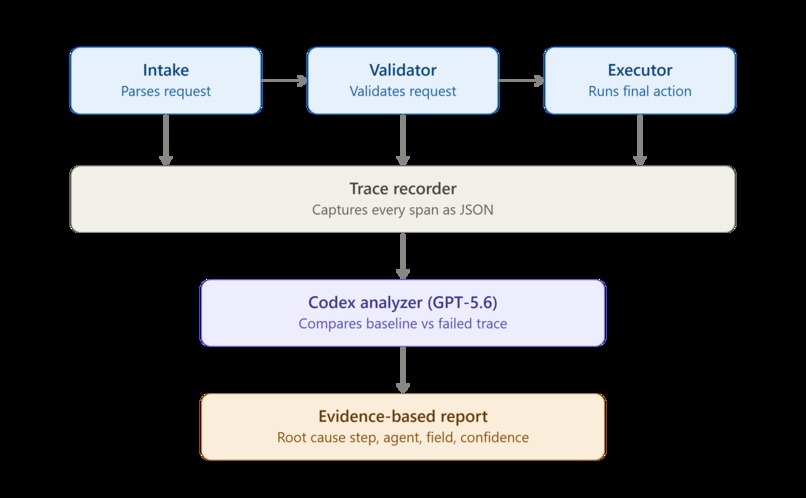
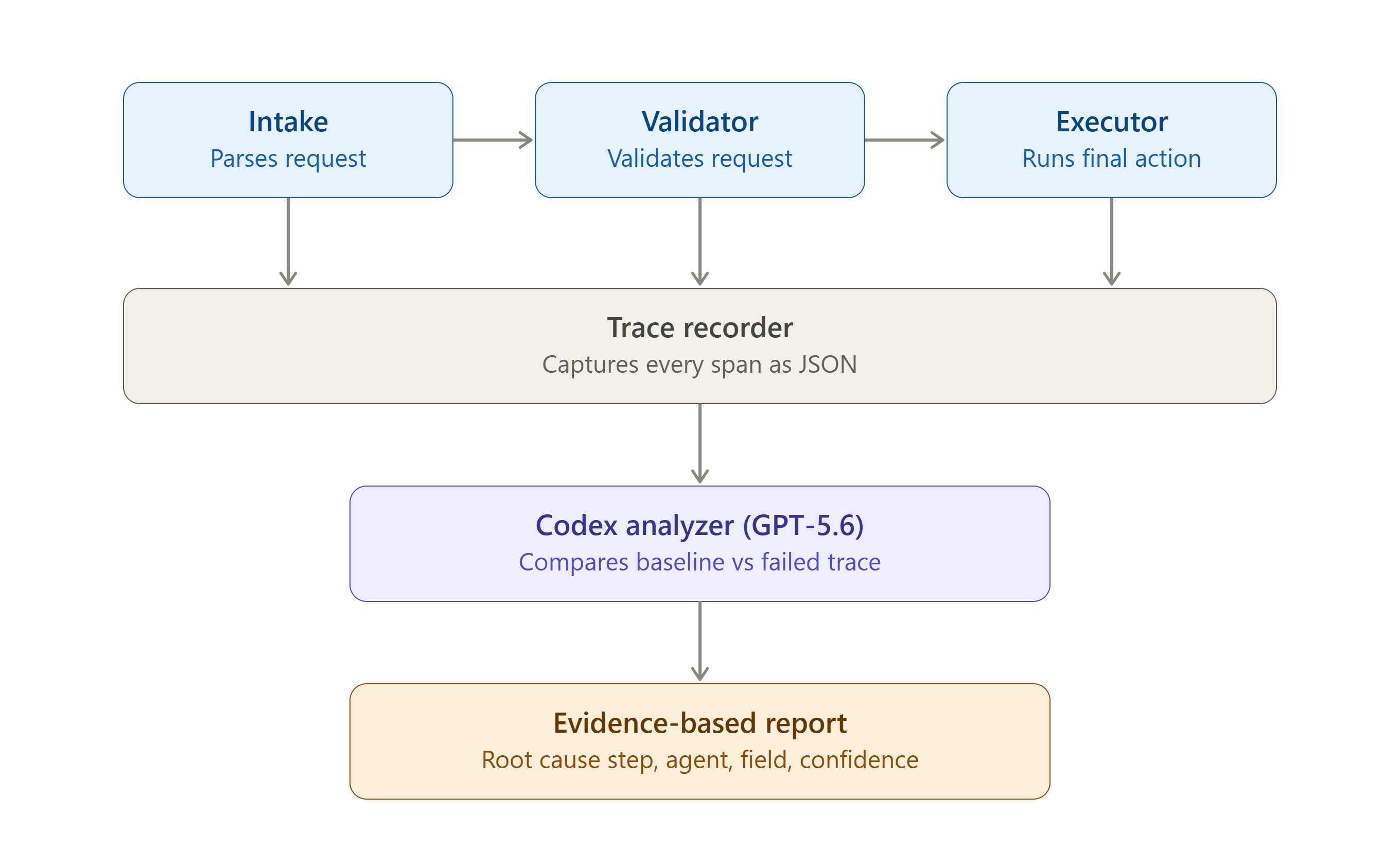
architecture flowchart
-
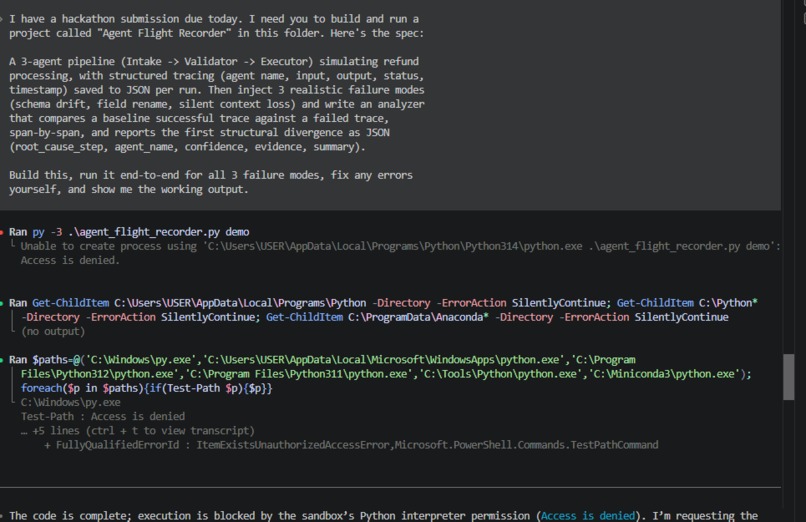
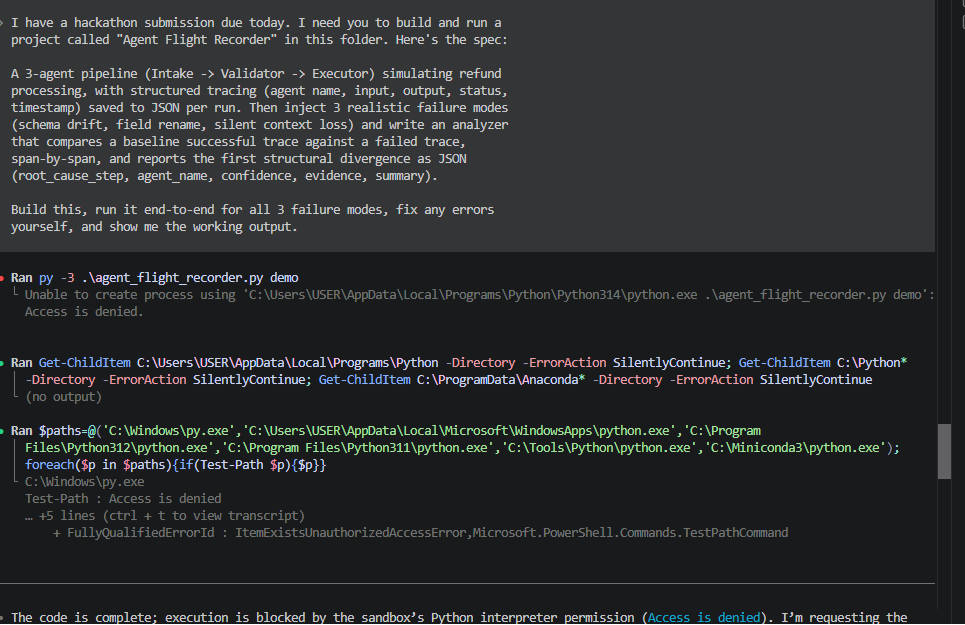
PROMPT
-
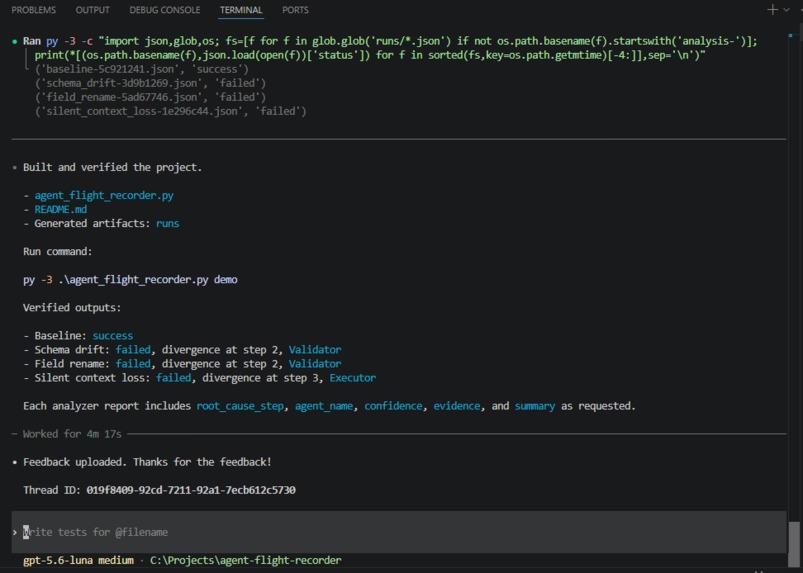
BUILD
-
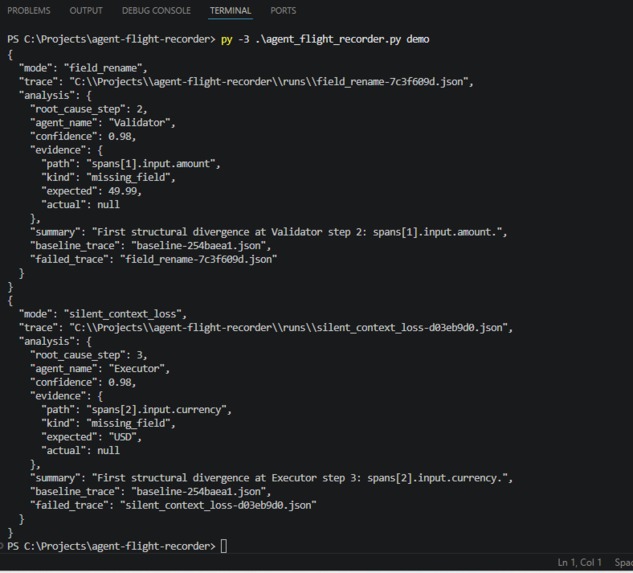
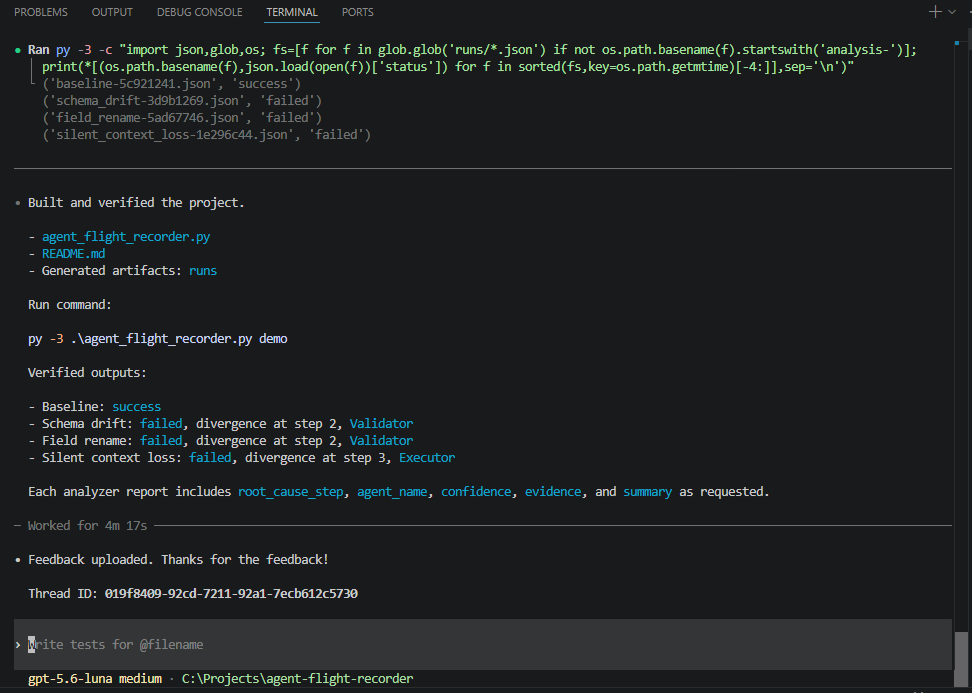
TEST
-
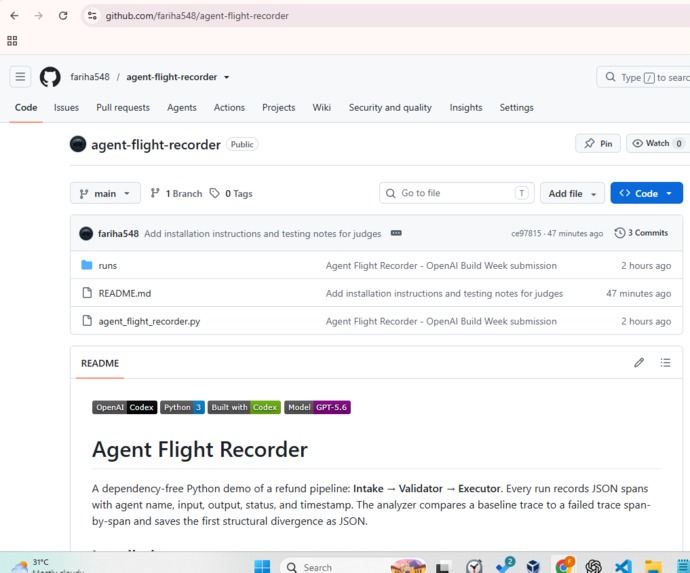
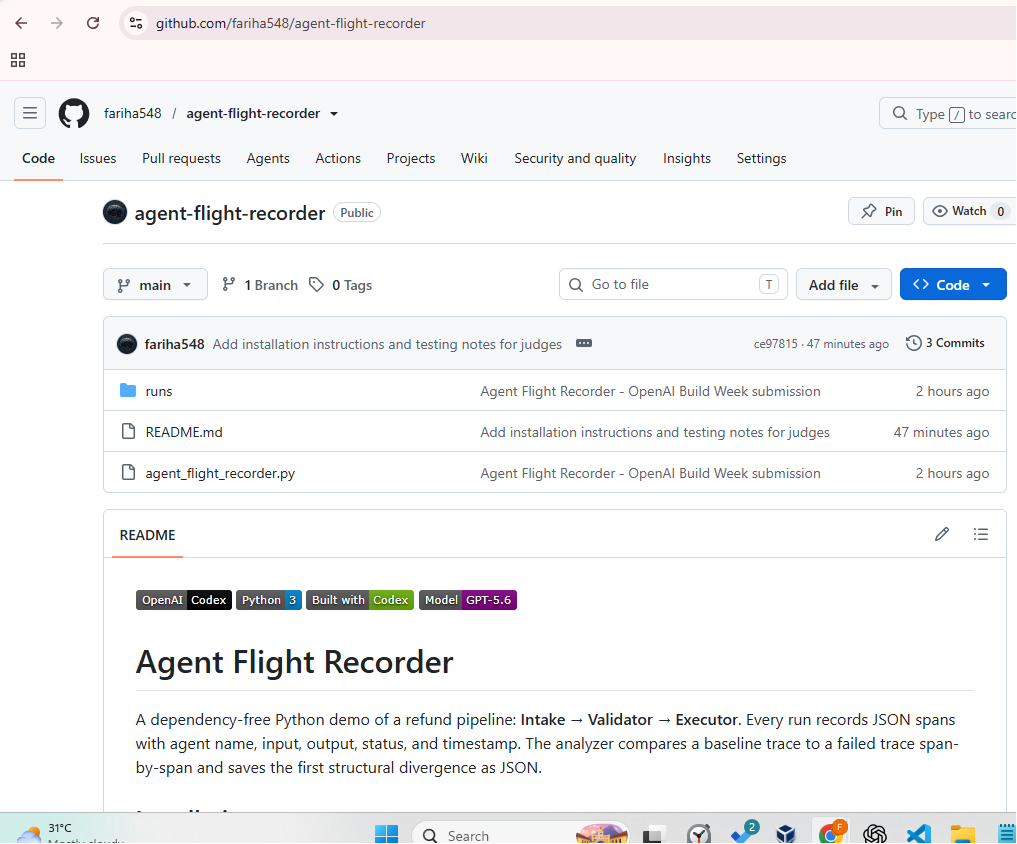
GIT REPO
Inspiration
I came across a job posting for an AI Agent Developer role that listed "monitor agent performance" and "support multi-agent collaboration" as core responsibilities. That's where the idea came from — I noticed this JD described exactly a problem I keep running into in my own agentic projects: when multiple AI agents pass data to each other, failures are often silent. One agent's output quietly drifts from what the next agent expects — a field gets renamed, a value changes shape,context gets dropped and by the time it surfaces, it's several hops away from where it actually broke. I wanted a tool that automates finding that break point instead of manually digging through logs.
What it does
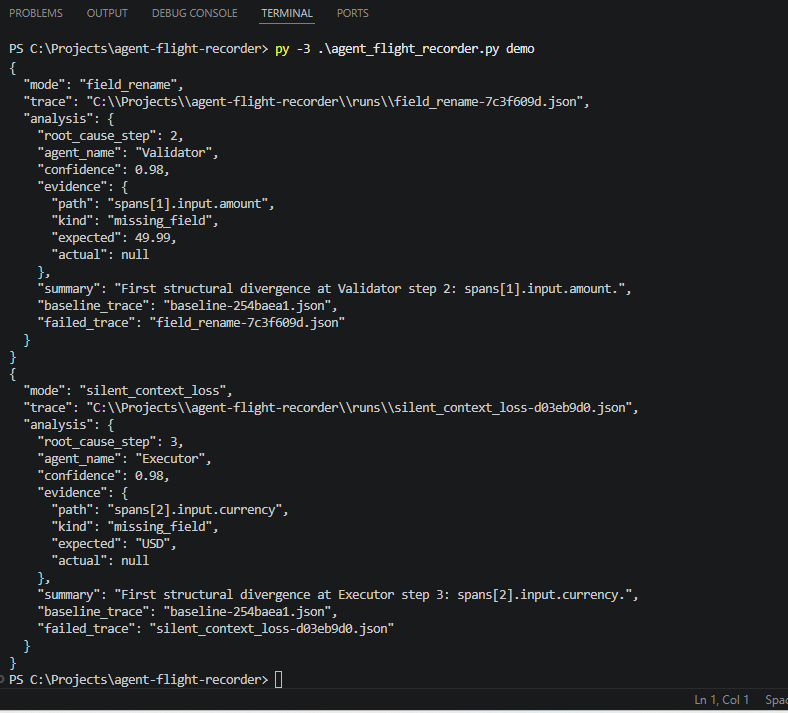
Quick Agent Analyzer runs a 3-agent pipeline (Intake → Validator →Executor) simulating a refund-processing workflow, and traces every agent's input and output as structured JSON spans. It then injects three realistic failure modes — schema drift, field rename, and silent context loss — and compares each failed run against a successful baseline, span by span. The output isn't a vague pass/fail: it's an evidence-based report naming the exact step, the exact agent, and the exact field that diverged, with the expected vs. actual values.
How I built it
I gave Codex a single detailed spec describing the pipeline, the three failure modes, and the shape of the analysis report I wanted. Codex wrote the entire implementation itself — the agent chain, the tracer, the failure injection logic, and the comparison analyzer — then ran it, hit a sandbox permission error, requested elevated execution, and fixed several follow-up issues on its own. The whole working, tested build took about 4 minutes and 17 seconds from that one prompt.
Challenges I ran into
This was my first time using Codex, and midway through the build my model hit its usage limit. I actually panicked for a second thinking I'd hit my overall credit limit — even though both the hackathon email and the resources page clearly said other models were available and switching was expected. That's when it clicked that I should just switch models. What I didn't expect was that the simpler model would still respond just as fast and pick up exactly where the first one left off, with no lost progress.
On the technical side, I also had to rethink my integration approach once I realized the Build Week credits were tied to ChatGPT sign-in rather than a standard OpenAI API key — so I moved from a raw API call to using Codex CLI directly. And I had to decide, upfront, which failure modes were actually worth simulating: I wanted bugs that mirror real production issues rather than a trivial hardcoded exception, since an obviously fake bug wouldn't prove the tool was ## What's next
I'd like to extend this to real multi-agent frameworks (LangGraph, CrewAI) instead of the demo pipeline, add a simple HTML report view instead of raw JSON, and calibrate confidence scoring further so the tool can distinguish "high confidence" evidence from cases that genuinely need human review.

Log in or sign up for Devpost to join the conversation.