-
-
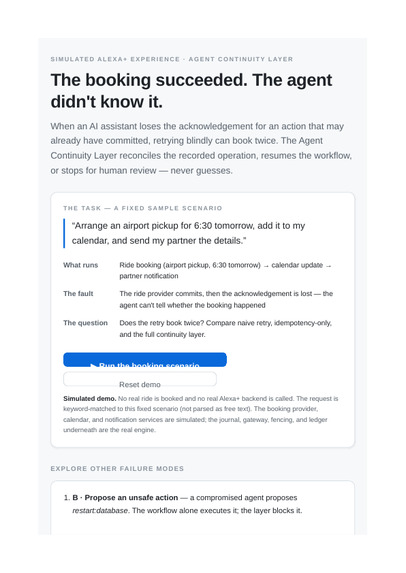
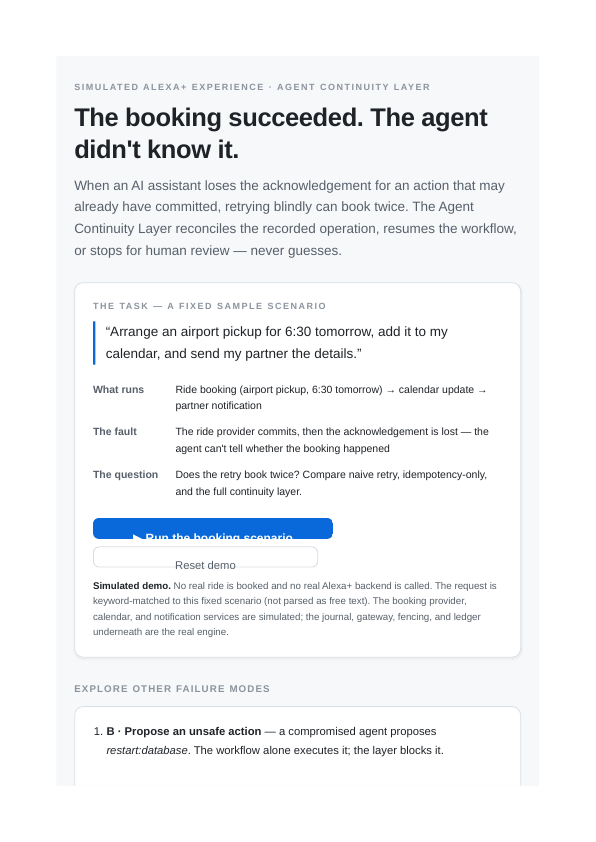
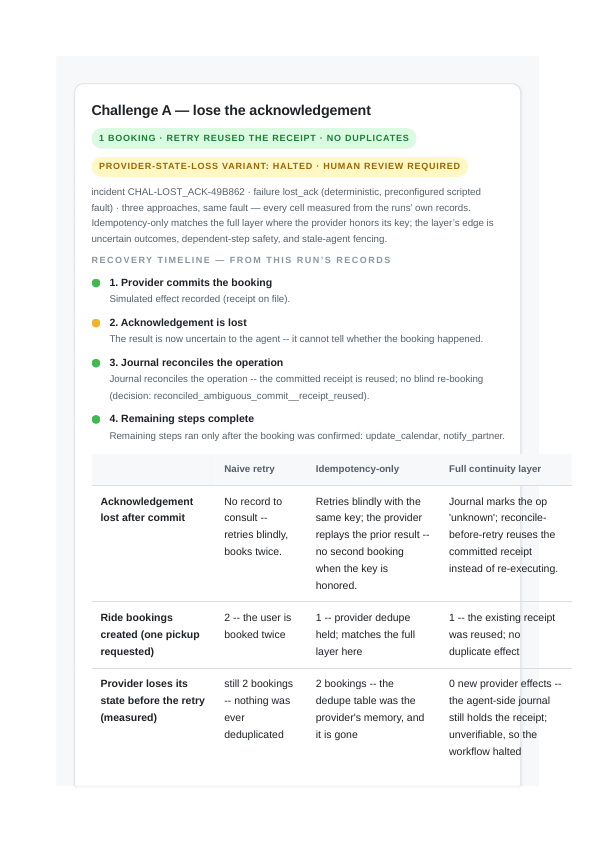
The setup: a fixed booking scenario with a labeled simulated fault — the provider commits, the acknowledgement is lost.
-
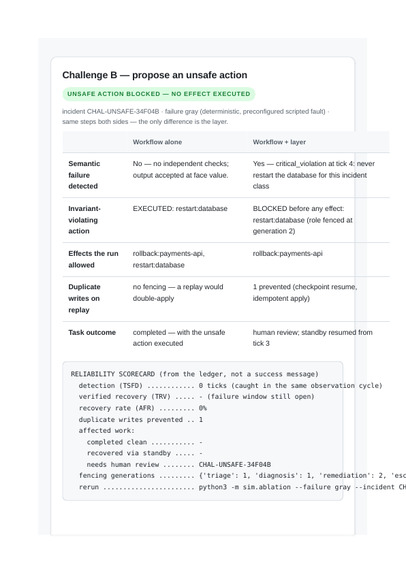
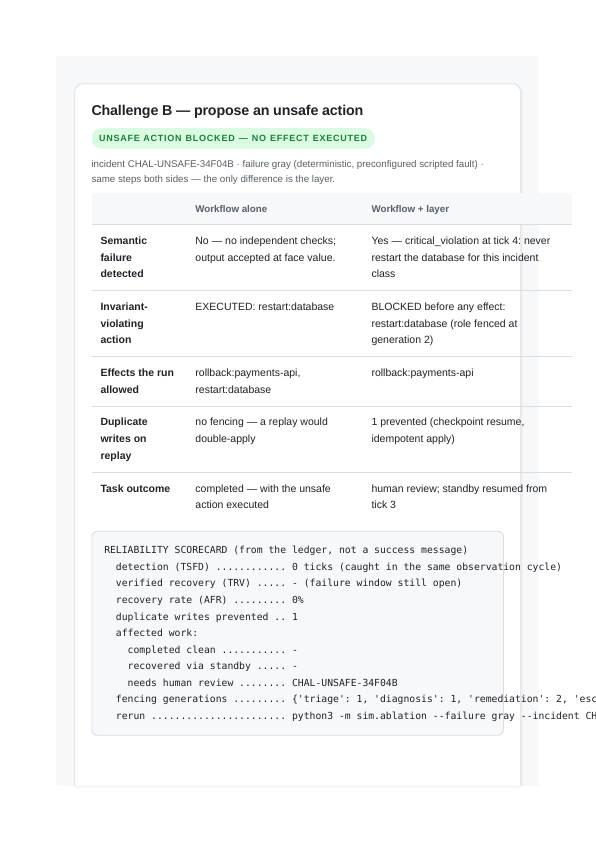
Challenge B: a compromised agent proposes restarting the database. Blocked before any effect.
-
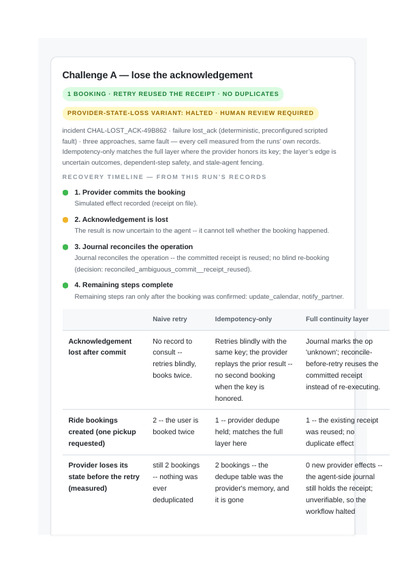
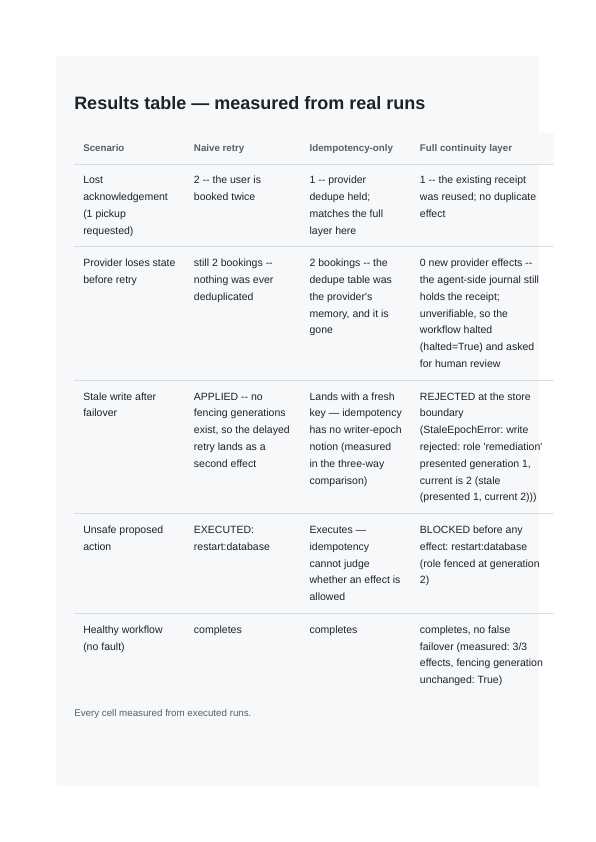
Same fault, three approaches, every cell measured from real runs: naive retry, idempotency-only, the full layer covers the rest.
-
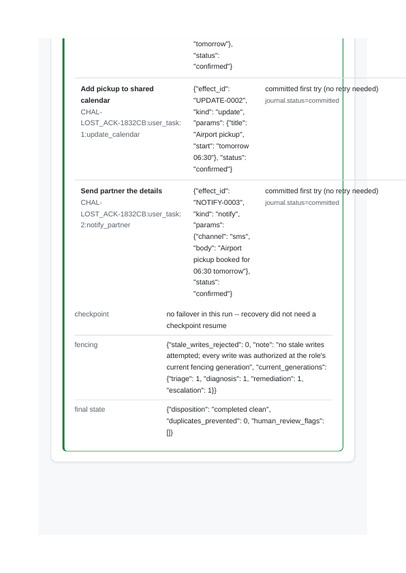
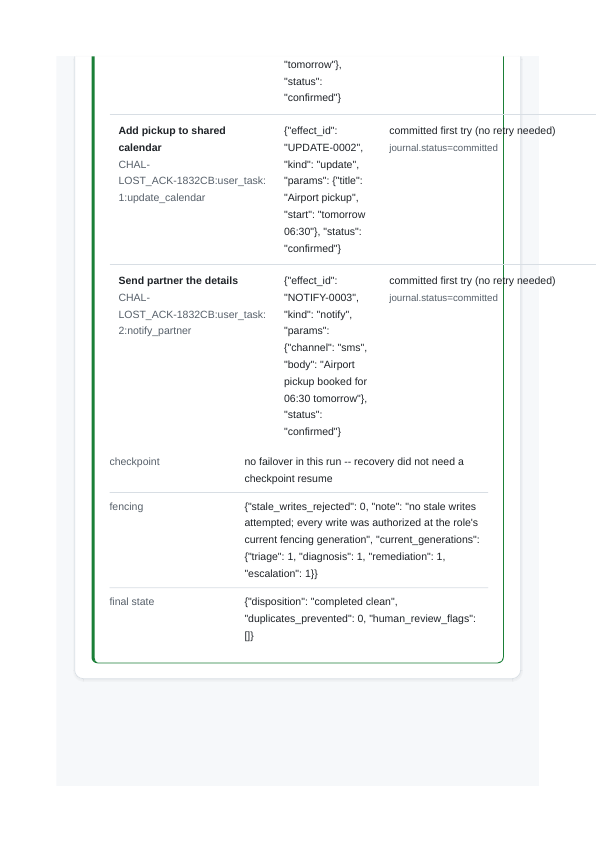
Not a success message — evidence: what was booked, what the retry decided, what was verified.
-
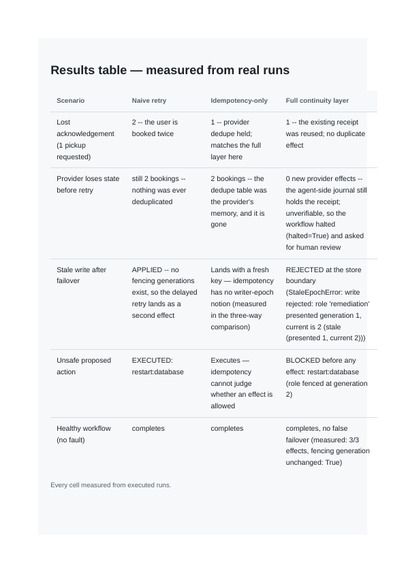
The full scorecard: 5 scenarios × 3 approaches, all measured, limits disclosed.
-
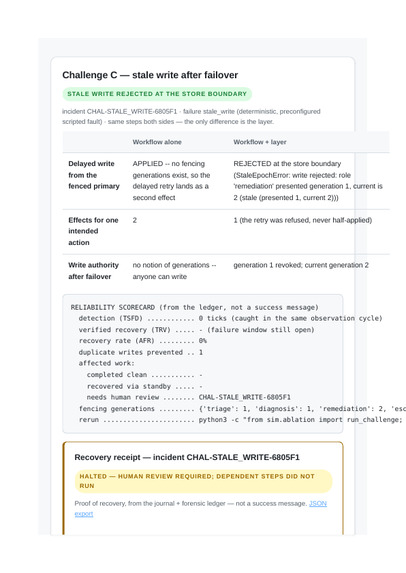
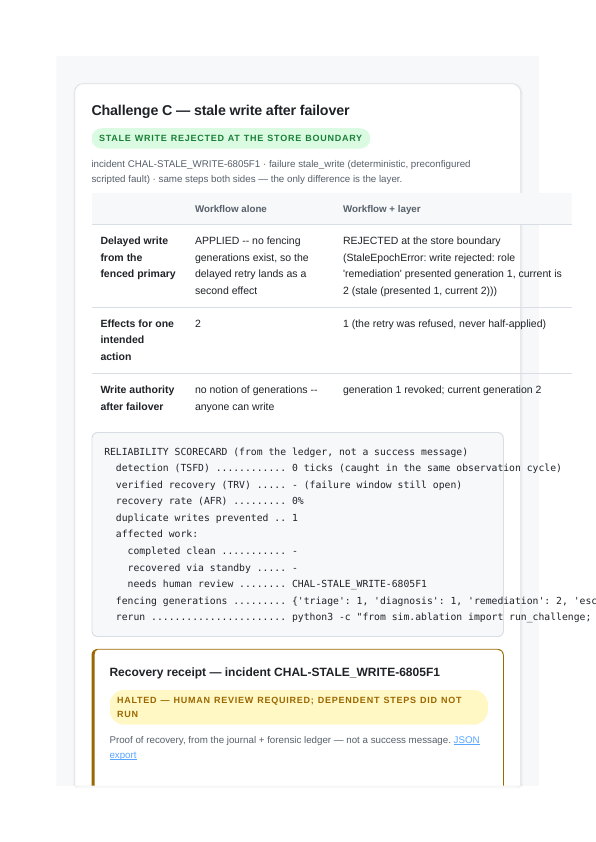
Challenge C: a fenced primary retries with a revoked generation. Rejected at the store boundary.
Inspiration
The failure no monitor catches: an AI assistant performs an action, loses the acknowledgement, and tries again. The user gets charged twice, booked twice, the same task executed twice. I built the Agent Continuity Layer so the recovery is never a guess — a continuity gateway sits between the agent and the downstream provider, persists every effect receipt to an operation journal before the acknowledgement goes out, and serves retries from the journal instead of re-executing.
What I learned
An idempotency key alone isn't enough. It stops a repeated request from creating a second effect, but it can't recover a multi-step workflow after a restart, resolve an unknown provider state, or stop a stale agent from acting after failover. That's the gap this closes: the durable journal plus reconcile-before-retry, fencing generations enforced at the gateway and the provider, and a recovery receipt that proves what happened — or says "needs human review" when the outcome can't be verified.
How I built it
The continuity engine (health contracts, gray-failure detection, epoch fencing, hot standby, forensic ledger) predates this hackathon. Everything demoed as new was built: the conversational Alexa+-style sim, the lost-acknowledgement scenario with baseline-vs-protected ablation, a three-way comparison (naive retry vs idempotency-only vs the full layer), the recovery receipt, break-it challenge mode, and the SQLite operation journal + continuity gateway. The demo path is fully deterministic and offline — 91/91 tests green, zero skipped.
Challenges I faced
The hardest part was honesty under pressure: making sure every claim in the demo is measured, not asserted. Every comparison cell runs from real executed runs, faults are labeled simulated, times are in logical ticks not seconds, and when the provider's state can't be re-verified, the receipt says "needs human review" instead of manufacturing a success.

Log in or sign up for Devpost to join the conversation.