-
-
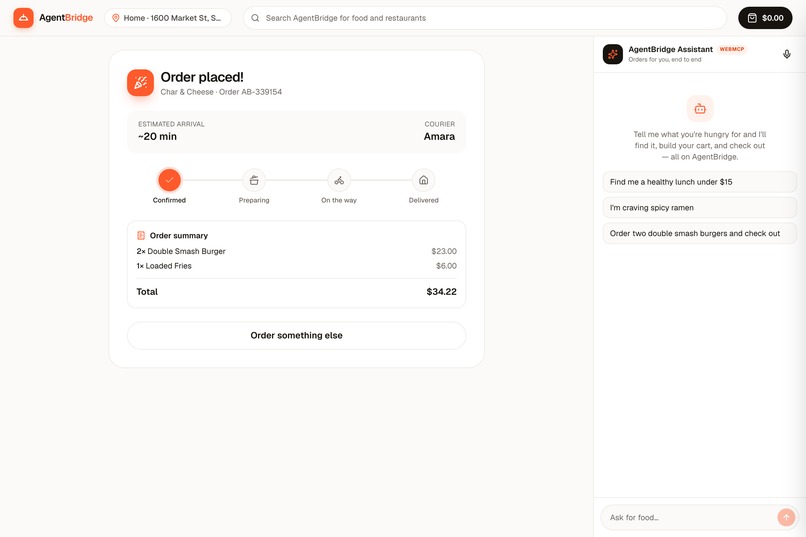
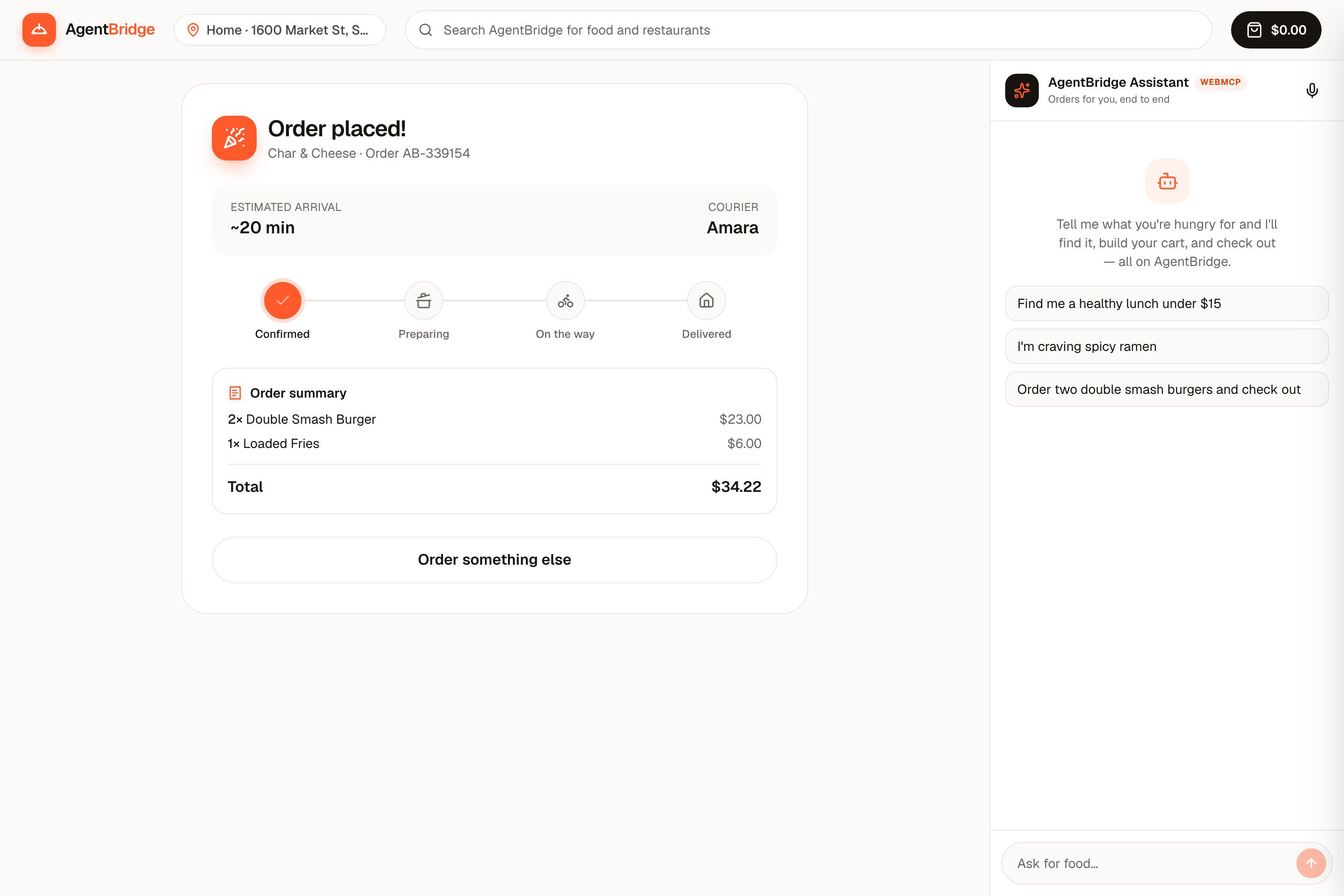
The Order Tracker
-
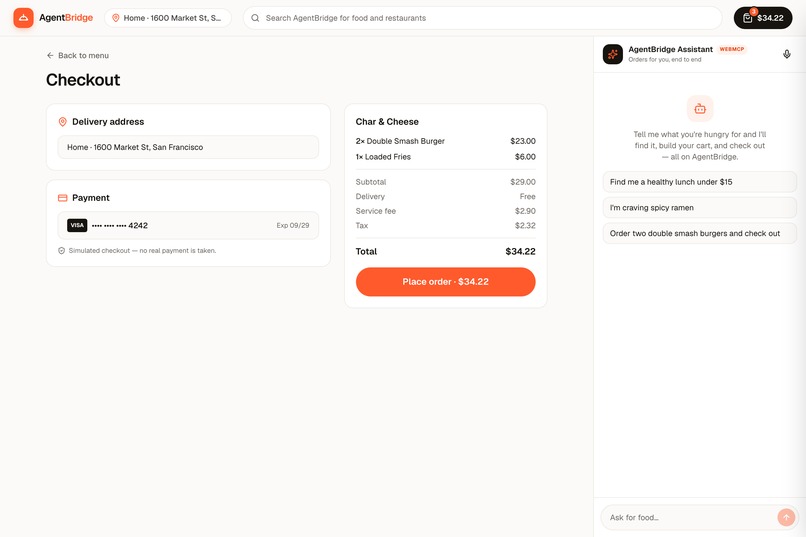
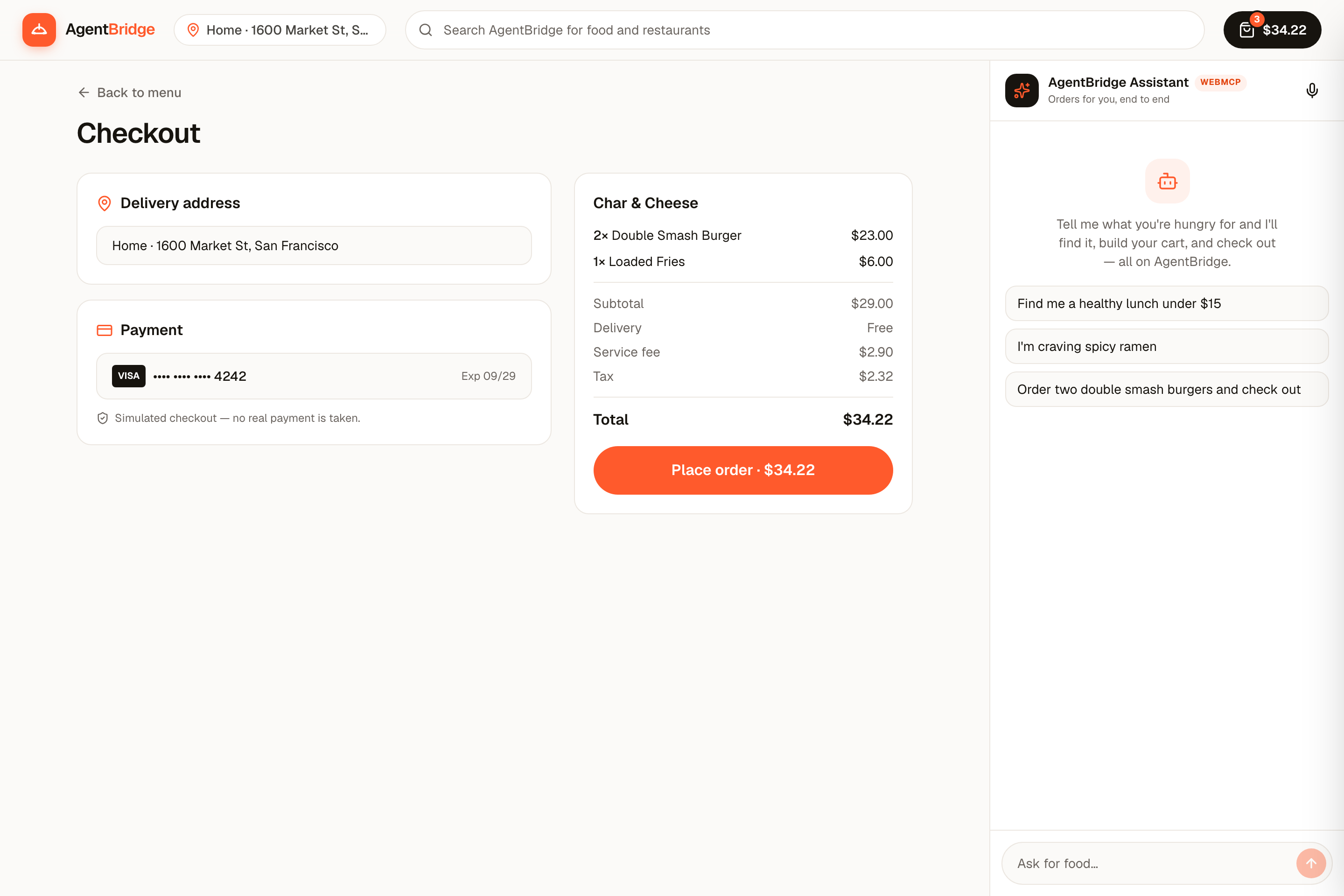
The Checkout UX
-
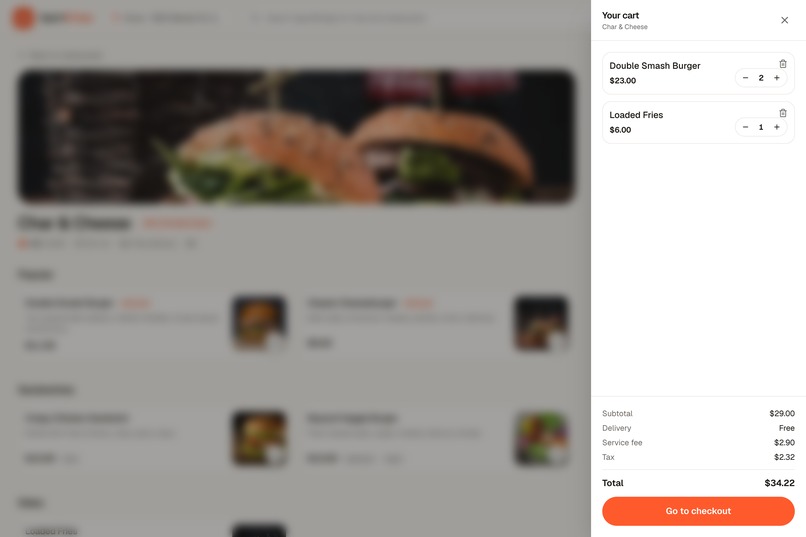
The Cart
-
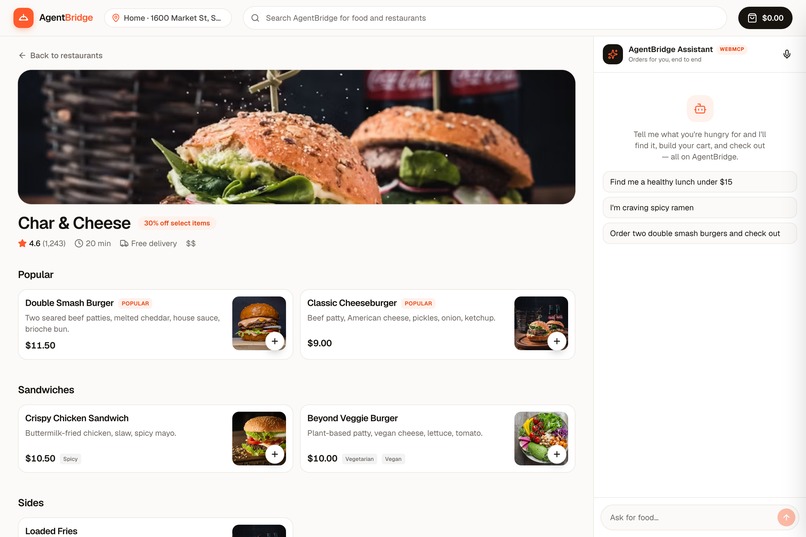
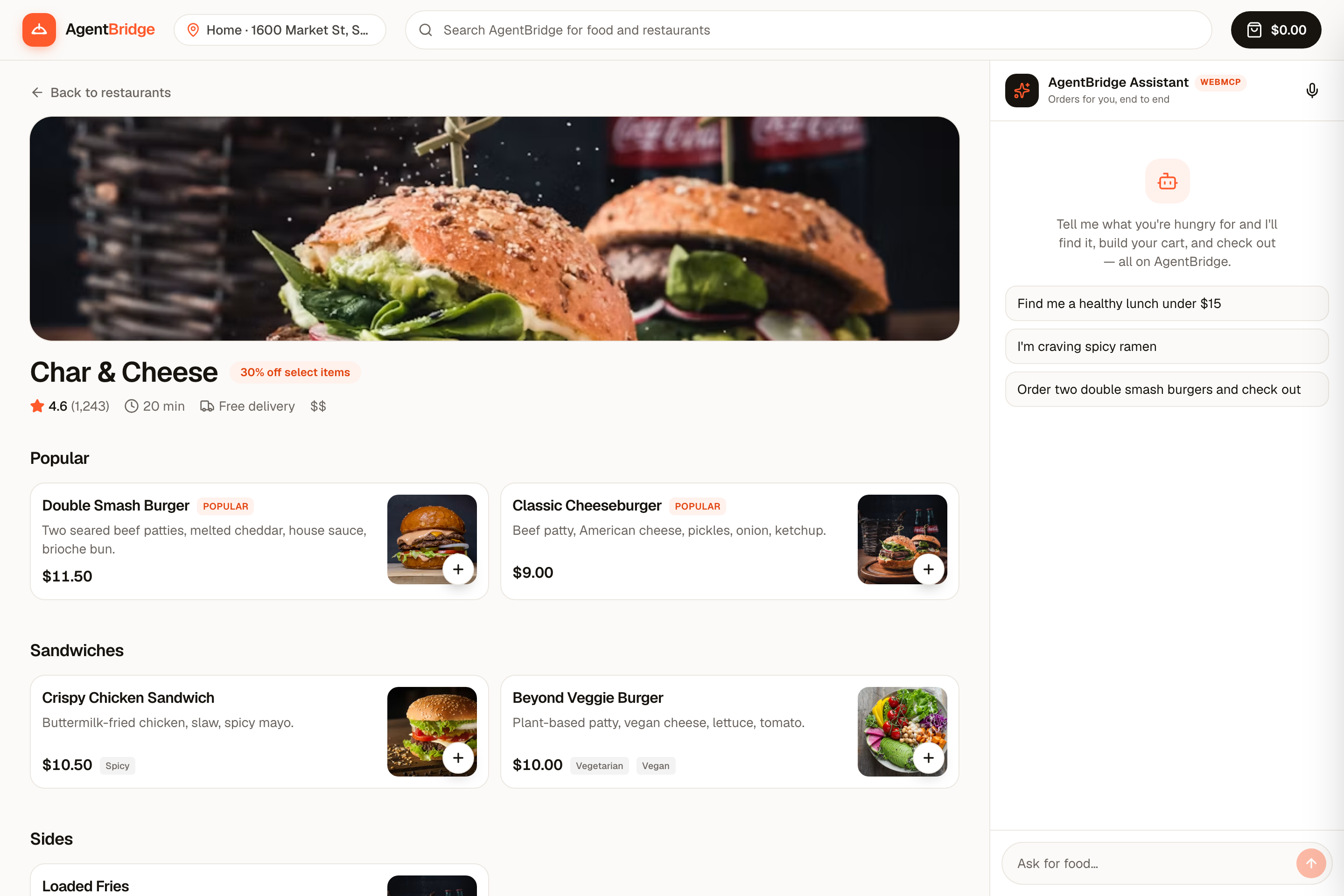
The Restaurant Menu
-
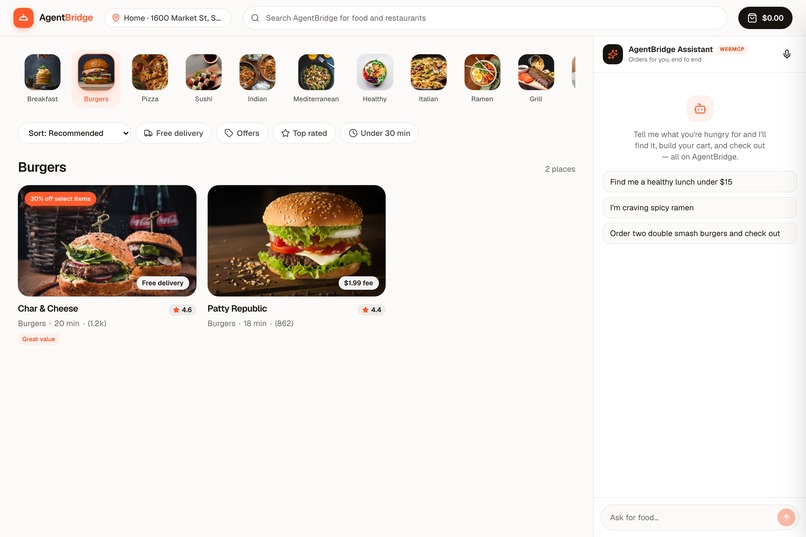
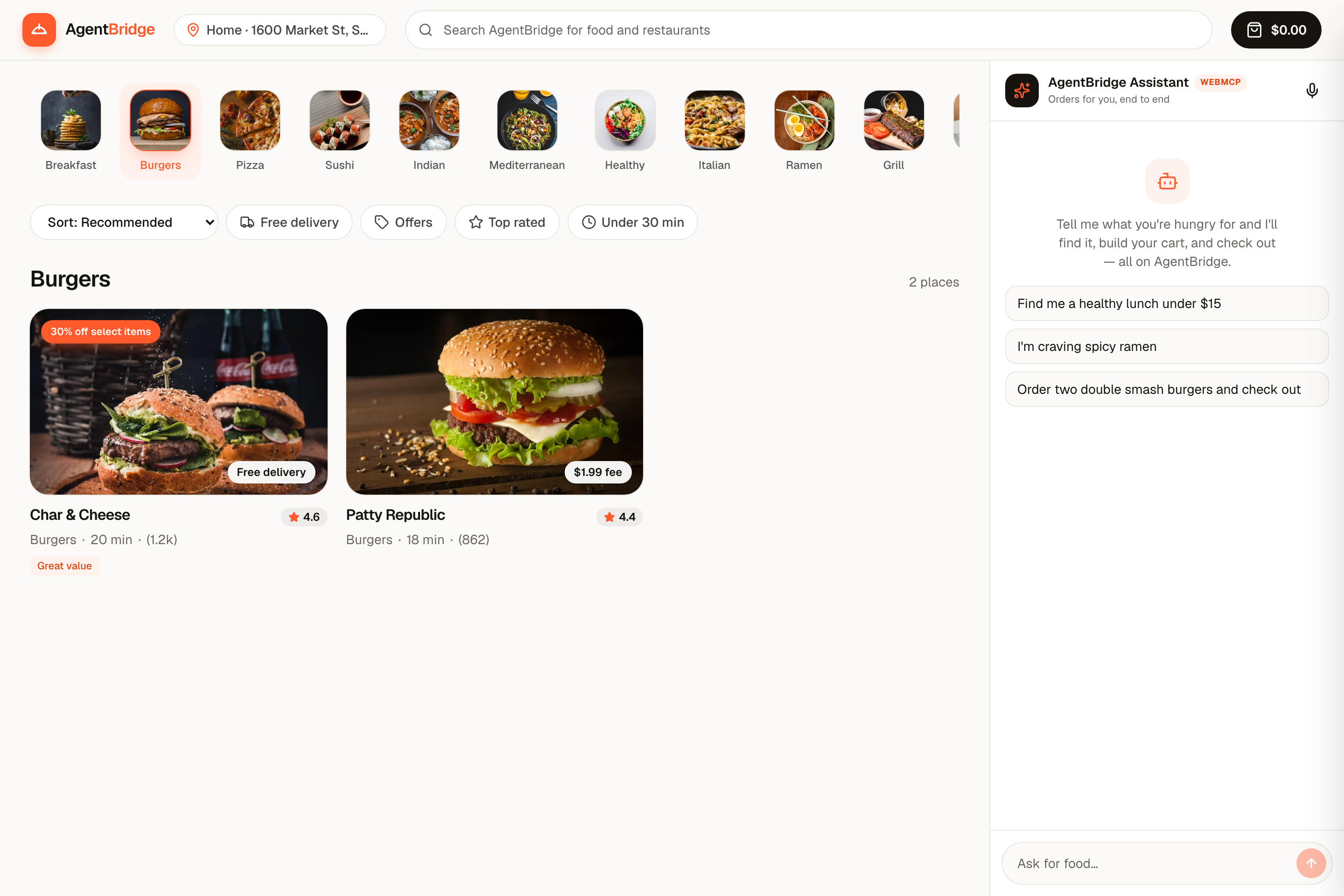
Browse Burgers - An example of an Agent browsing the WebMCP app
-
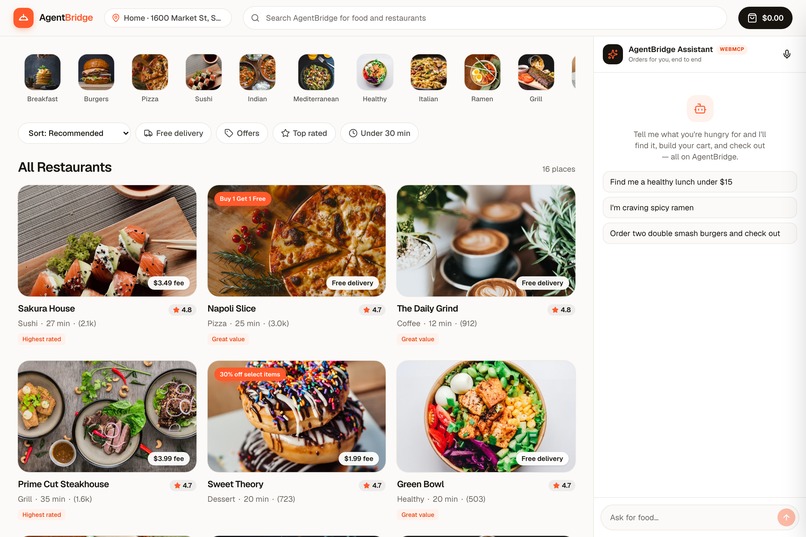
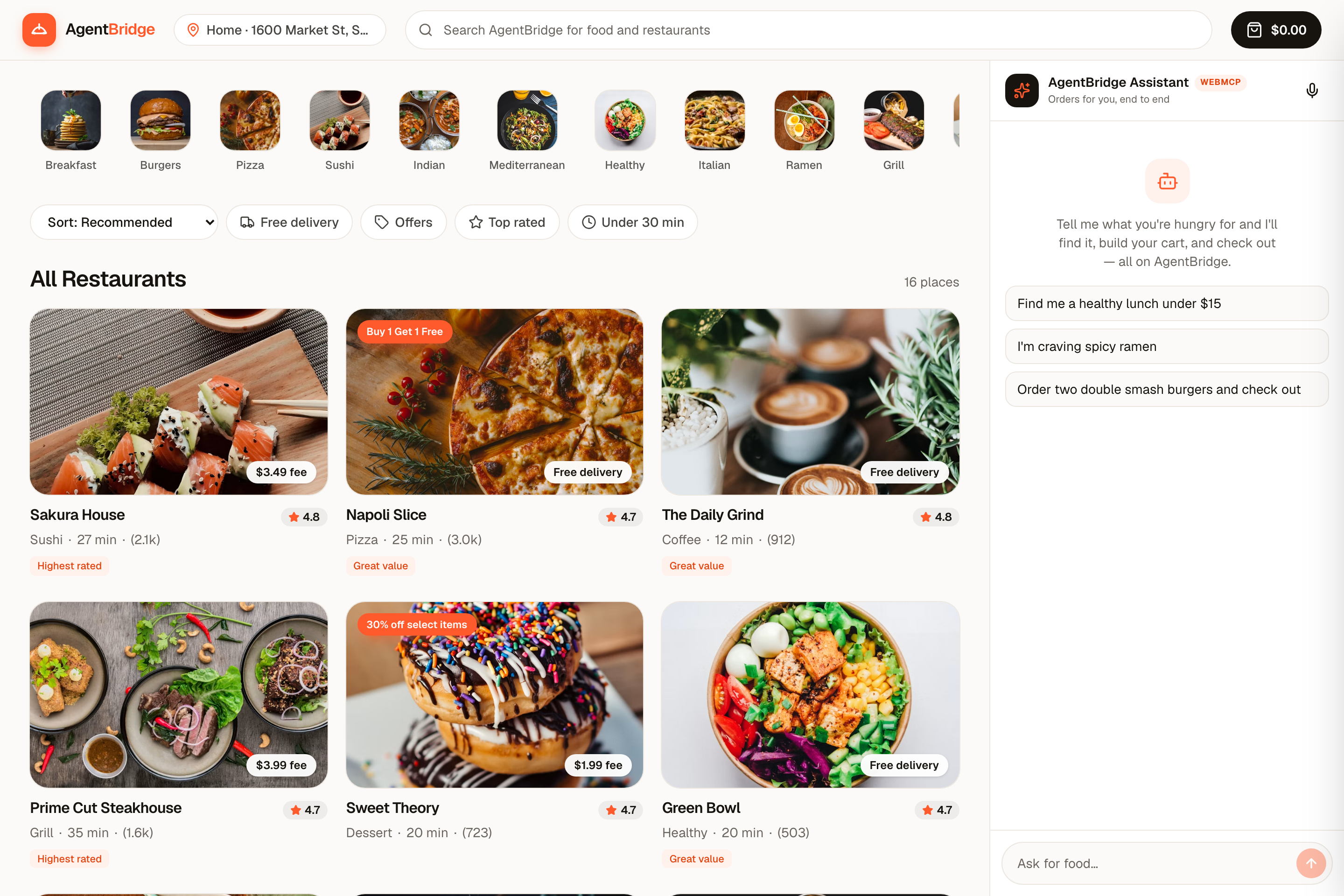
The Storefront UX

Inspiration
My inspiration was motivated by the fact that online shopping is still primarily designed for humans.
If someone wants to order lunch, they normally need to open an app or website, search through restaurants, compare options, check prices, select items, and complete the order.
But now, these days, we have another type of user. What happens when an AI agent wants to help?
Today, AI agents often need to rely on fragile browser automation, visual interfaces, or custom integrations to interact with online stores. I wanted to explore a different approach.
My inspiration was a simple interaction:
"Hey Agent, please get me lunch."
That simple request can involve many decisions.
- What kind of food?
- What is the budget?
- Are there dietary preferences?
- Where should it be delivered?
I wanted to create an experience where a person could simply talk to an AI agent, while the agent handles the complexity of discovering products and interacting with online commerce systems.
This led me to build AgentBridge.
What it does
AgentBridge is an agent-native commerce platform that enables AI agents to interact with online stores through a structured WebMCP layer.
A user can communicate naturally with an AI agent using voice or the WebMCP protocol.
For example:
"Hey Agent, please get me lunch."
The agent then has a conversation with the user to understand the request. It can ask clarifying questions such as:
- What type of food would you like?
- Do you have any dietary preferences?
- What is your budget?
- Would you like delivery or pickup?
Once the agent understands the user's intent, it connects with AgentBridge.
AgentBridge understands how to interact with online stores and exposes structured capabilities through an WebMCP layer on top of its API.
The AI agent can then use those capabilities to:
- Search available meals
- Discover products and restaurants
- Compare options
- Consider the user's preferences and budget
- Select appropriate options
- Prepare the order for the user
The user remains part of the process and can review important decisions before completing a purchase.
My goal is to make online shopping feel more like having a conversation with a helpful assistant than manually navigating multiple websites and applications.
How I built it
I built AgentBridge around three main components.
1. Voice-first AI Agent
The user interacts with the AI agent naturally through audio.
The agent understands the user's request and gathers the information necessary to complete the task through a conversational experience.
Instead of requiring the user to know exactly what to search for, the agent can ask follow-up questions and progressively understand the user's intent.
2. AgentBridge Commerce Platform
AgentBridge acts as the bridge between AI agents and the online store.
The platform understands how to interact with commerce systems and exposes the relevant capabilities through its API.
This creates a layer between the complexity of different online stores and the AI agent (The demo focuses on the AgentBride itself but this concept can be applied to other platforms, so this app becomes effectively a bridge).
3. WebMCP Layer
On top of the AgentBridge API, I expose structured WebMCP capabilities that AI agents can discover and use.
Instead of requiring an agent to visually navigate a website or rely on brittle browser automation, the agent can interact with meaningful commerce capabilities.
For example, an agent can conceptually ask AgentBridge to:
- Search for meals
- Filter products based on preferences
- Compare prices
- Check available options
- Create an order
This gives the AI agent a structured and reliable way to interact with online commerce.
Why WebMCP matters
WebMCP is essential to my vision because I believe the web needs to become easier for AI agents to interact with.
Traditional websites are optimized for human users.
AI agents, however, need a reliable way to understand what actions are available and how they can interact with a service.
AgentBridge helps expose online commerce capabilities in a structured, agent-friendly way.
Instead of an agent trying to understand a visual interface, AgentBridge can communicate meaningful actions directly to the agent.
This creates a cleaner interaction model:
Human → AI Agent → AgentBridge → Online Stores
The human provides intent.
The AI agent understands and plans.
AgentBridge provides structured access to commerce capabilities.
Online stores provide the products and services.
Challenges I ran into
One of our biggest challenges was translating natural human conversation into structured commerce actions.
A request such as:
"Get me lunch."
is not enough information to complete an order.
The agent needs to determine what information is missing and ask the right follow-up questions without making the experience feel complicated or robotic.
Another important challenge was designing the relationship between AI autonomy and human control.
Shopping can involve money and important personal preferences, so I believe the agent should not simply make decisions without the user understanding what is happening.
I designed the experience so the agent can handle complexity while keeping the human involved in important decisions and approvals.
I also faced the challenge of creating a flexible abstraction layer for online stores. Different stores and commerce platforms expose different APIs and capabilities.
AgentBridge helps create a more consistent interface for AI agents.
Accomplishments that I'm proud of
I am proud of creating a working vision for what agent-native commerce could look like.
My favorite moment is the simplicity of the user experience.
The user does not need to search through multiple websites or manually navigate complicated interfaces.
They can simply say:
"Hey Agent, please get me lunch."
The AI agent can then understand the request, gather the necessary information, interact with AgentBridge, discover relevant options, and help move the purchase forward.
I am also proud of using WebMCP to create a more structured relationship between AI agents and online commerce.
What I learned
Building AgentBridge taught us that the biggest challenge for AI agents is not only intelligence.
Agents also need reliable ways to interact with the digital world.
The current web was primarily designed for humans clicking buttons and navigating interfaces.
I believe the next generation of the web will also need to expose capabilities that AI agents can understand and use.
I also learned that conversational AI can dramatically simplify complex workflows.
A person should not need to understand how multiple commerce systems work.
They should be able to describe what they want.
The AI agent can handle the complexity behind the scenes.
Finally, I learned that trust and human control are essential for agentic commerce.
The best experience is not one where the agent replaces the human.
It is one where the human provides intent and judgment while the agent handles discovery, reasoning, and execution.
What's next for AgentBridge
My initial use case is ordering food, but I see AgentBridge becoming a broader infrastructure layer for agent-native commerce.
In the future, I want to support more shopping categories, including:
- Groceries
- Retail products
- Travel
- Local services
- Reservations
- Other online commerce experiences
I also want to expand the number of stores and services that can connect to AgentBridge.
The long-term vision is simple:
Humans should be able to tell AI agents what they want. AI agents should be able to safely discover and interact with the services that can provide it.
AgentBridge is the first step toward making online commerce ready for AI agents.
Built With
- biome
- next.js
- node.js
- openai
- openai-realtime-api
- playwright
- react
- tailwindcss
- typescript
- vercel
- vercel-ai-sdk
- webmcp
- webrtc
- zustand


Log in or sign up for Devpost to join the conversation.