-
-
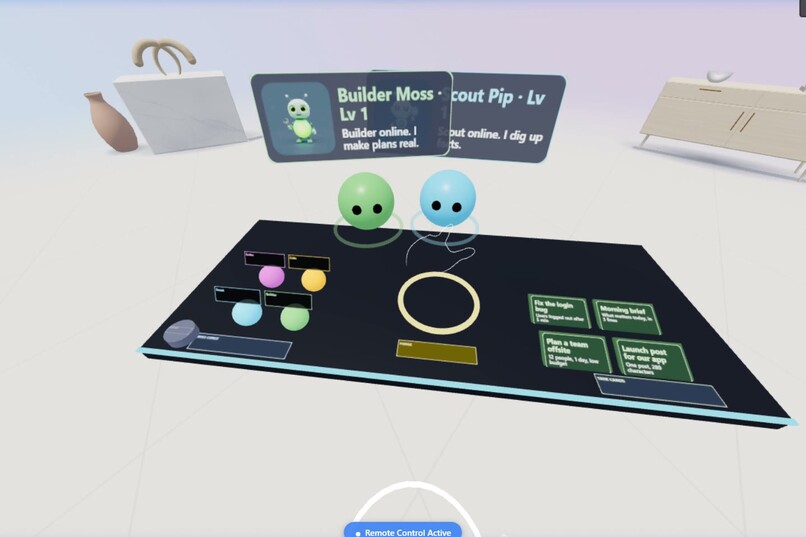
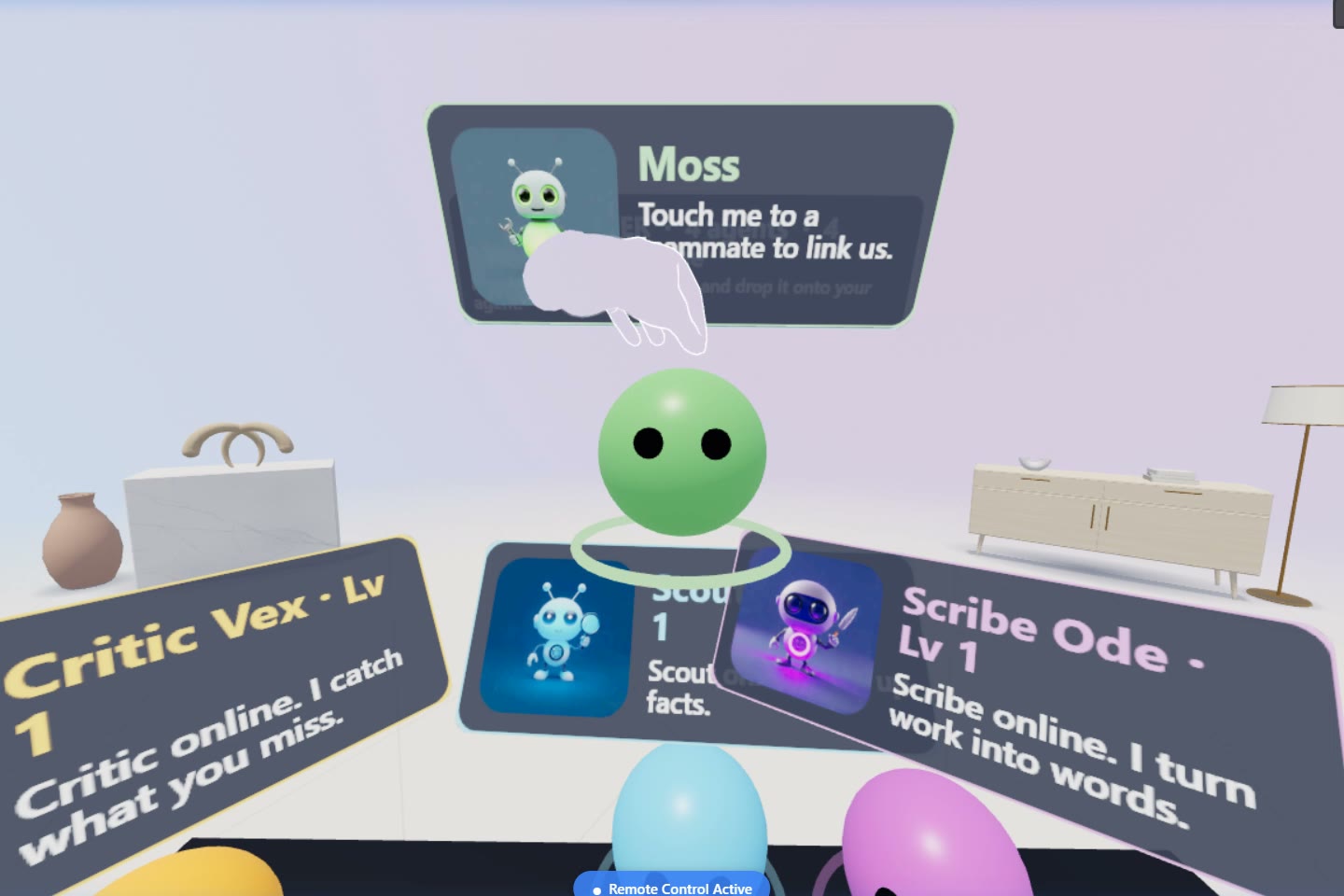
The desk: pinch a role core, drop it on the gold forge, and an agent steps out. Task cards wait on the right.
-
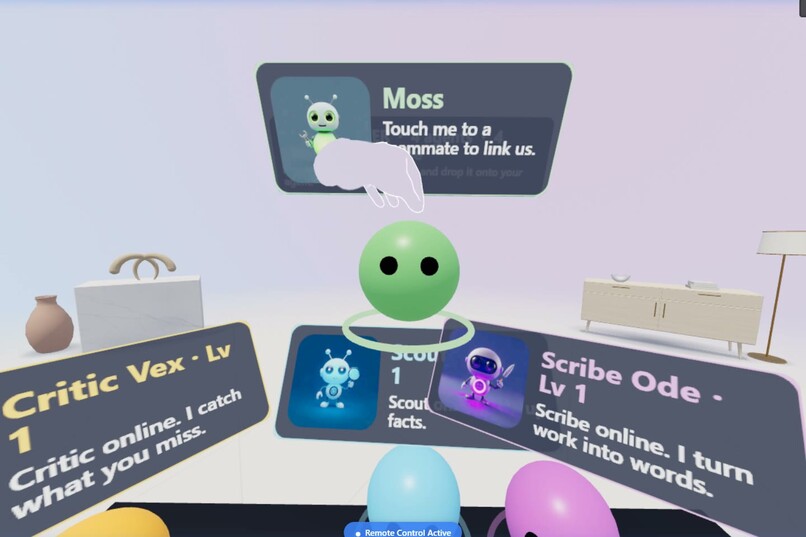
Touch two agents together to form a crew. Each agent has a role, a name and a face: Scout, Builder, Scribe, Critic.
-
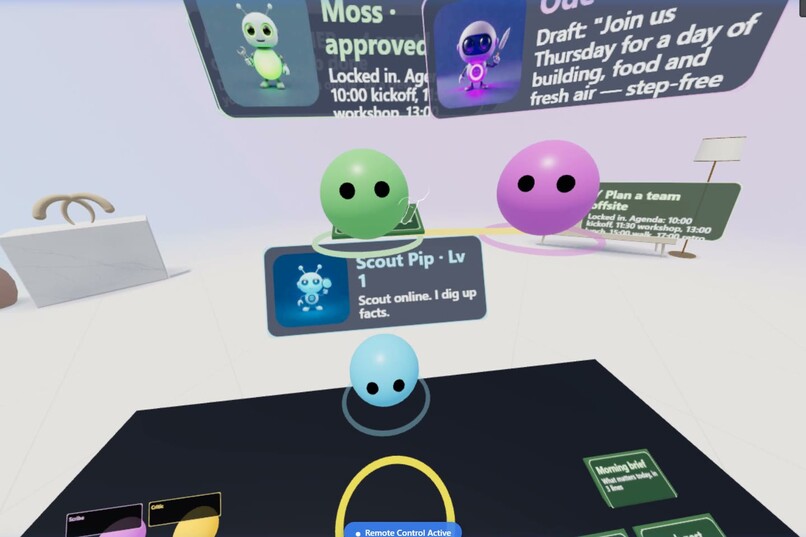
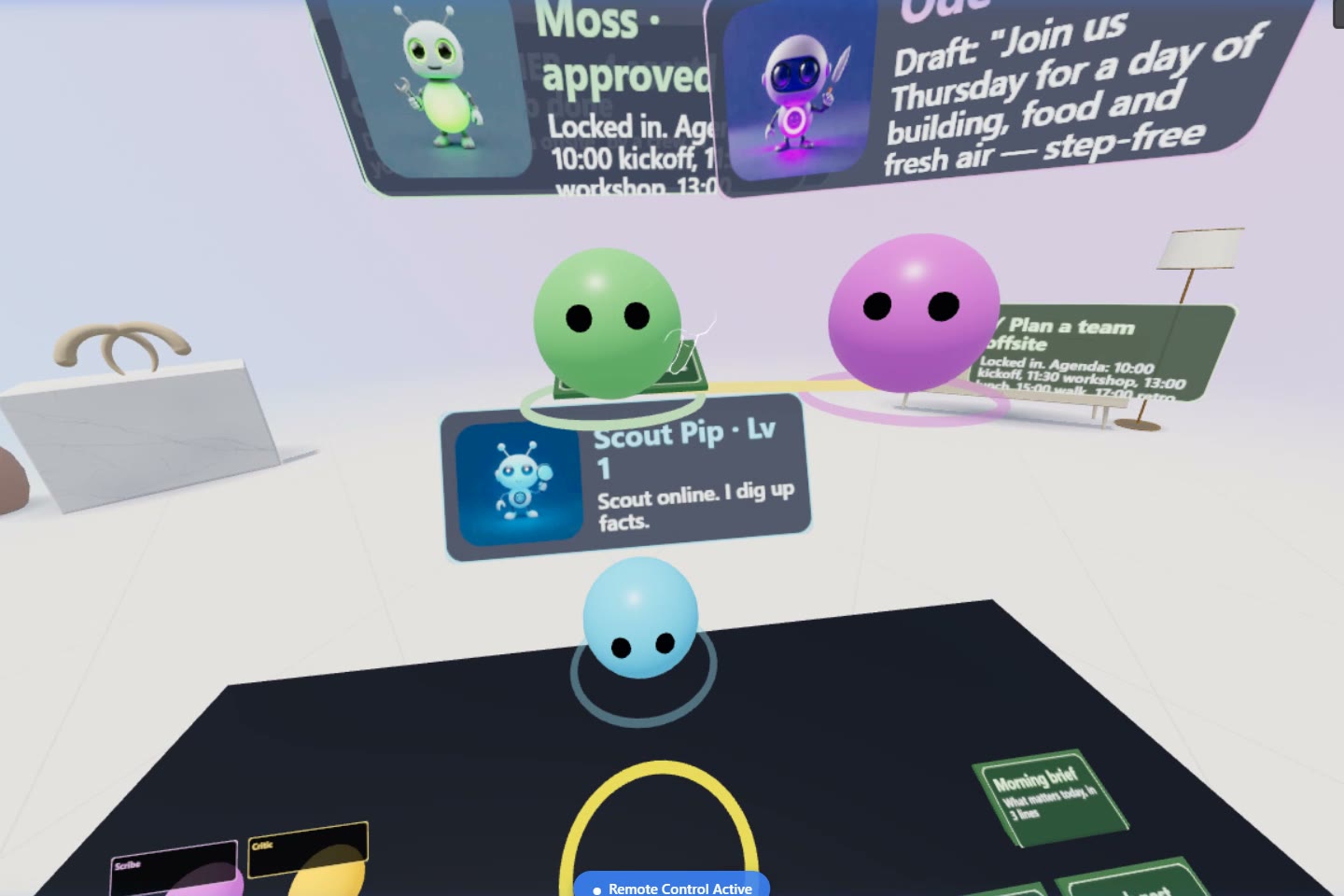
Mid-run: the Builder has been approved, the Scribe is drafting, and finished work lands on the shelf.
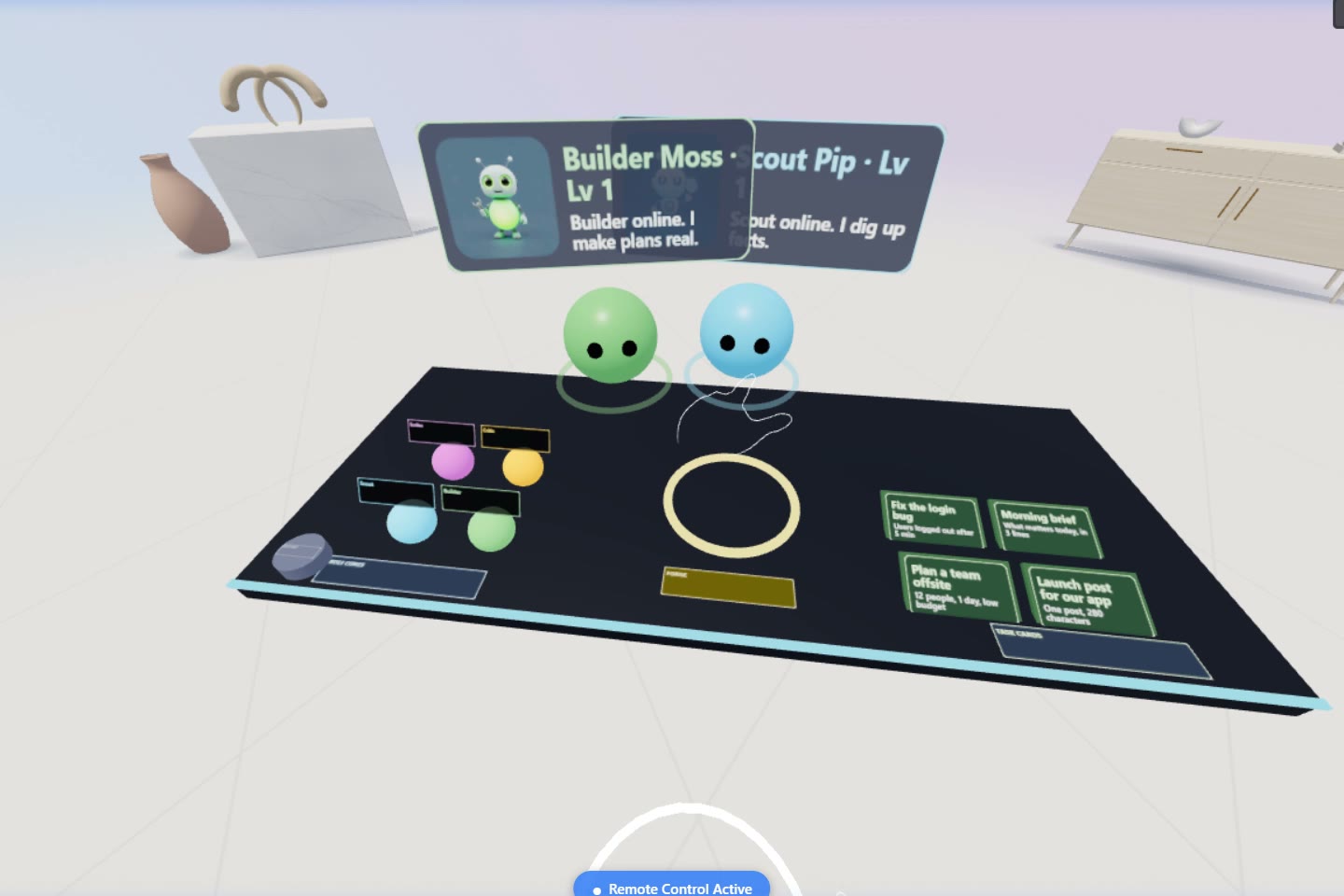
Inspiration
AI agents are multiplying, but they live in a chat column. You cannot see a team of agents, who hands work to whom, or where a human must sign off. VR adds space and hands. In Agent Atelier, agents become characters on your desk, teams become visible threads, and approval becomes a gesture.
What it does
You sit at a virtual desk. On the left are four glowing role cores: Scout, Builder, Scribe and Critic. Pinch one and drop it on the gold FORGE ring, and a named agent appears with a face, a portrait, a halo and a greeting. Pinch an agent and touch it to another, and a glowing thread links them into a crew. Pinch a task card (such as "Fix the login bug") and drop it onto any agent: its whole crew runs in pipeline order, Scout to Builder to Scribe to Critic.
The active agent wobbles, its halo spins, its output appears in a speech bubble, and a light pulse travels to the next agent on handoff. The Builder and the Critic raise a flag and stop for you; press APPROVE or REVISE on the desk and the outcome changes. A board above the desk guides the first five minutes one step at a time.
Your crew, its links, agent XP and finished work are saved in the browser. Agents level up and physically grow with every job, finished results stack on a shelf beside you, and the crew welcomes you back when you return.
How we built it
Agent Atelier is a WebXR app built with IWSDK 1.1.0 (Meta's Immersive Web SDK), TypeScript and Three.js. One ECS system handles the scene, interactions, runs and persistence. Geometry is procedural, labels are drawn to canvas textures, sounds are synthesized with WebAudio, and the four character portraits were generated with Runware.
Agents run on a local deterministic engine. Each role transforms the previous agent's output, so different crew shapes produce visibly different work for the same task. This is deliberate: it works offline, needs no API key in a public page, sends nothing anywhere, and survives any AI service being taken away.
Challenges we ran into
We had no headset. All development and testing was done in IWER, IWSDK's browser XR emulator, using the Meta Quest 3 profile with emulated hand tracking. Seated reach shaped the layout: our first arc put agents out of arm's length, so we pulled everything within reach. Forgiving drop detection also took tuning: forge, team and task drops each have their own distance threshold.
Accomplishments that we're proud of
A full hands-only loop (forge, team, assign, watch, approve, return), with human approval as a physical press.
What we learned
One hand verb per action beats a menu. A face and a place make an agent pipeline readable at a glance.
What's next for Agent Atelier
- Testing on a physical Quest headset.
- Autonomy by distance: pull an agent close to require approval, push it to arm's length to let it run on its own.
- A palm-up "conductor" gesture to pause the whole crew.
- Optional live language-model backends on top of the local engine.
- Passthrough mode: the crew on your real desk.
Built With
- hand-tracking
- iwer
- iwsdk
- meta-quest
- three.js
- typescript
- webaudio
- webxr
