Inspiration
Inspiration
Small agencies and service businesses often receive a client brief and then spend hours manually creating a proposal, delivery plan, task list, onboarding checklist, welcome email and invoice draft. The same information is repeatedly copied across different documents, which creates delays, inconsistencies and missed details.
I built AgencyOS AI to turn one plain-language client brief into a complete, coordinated project workspace in minutes.
What it does
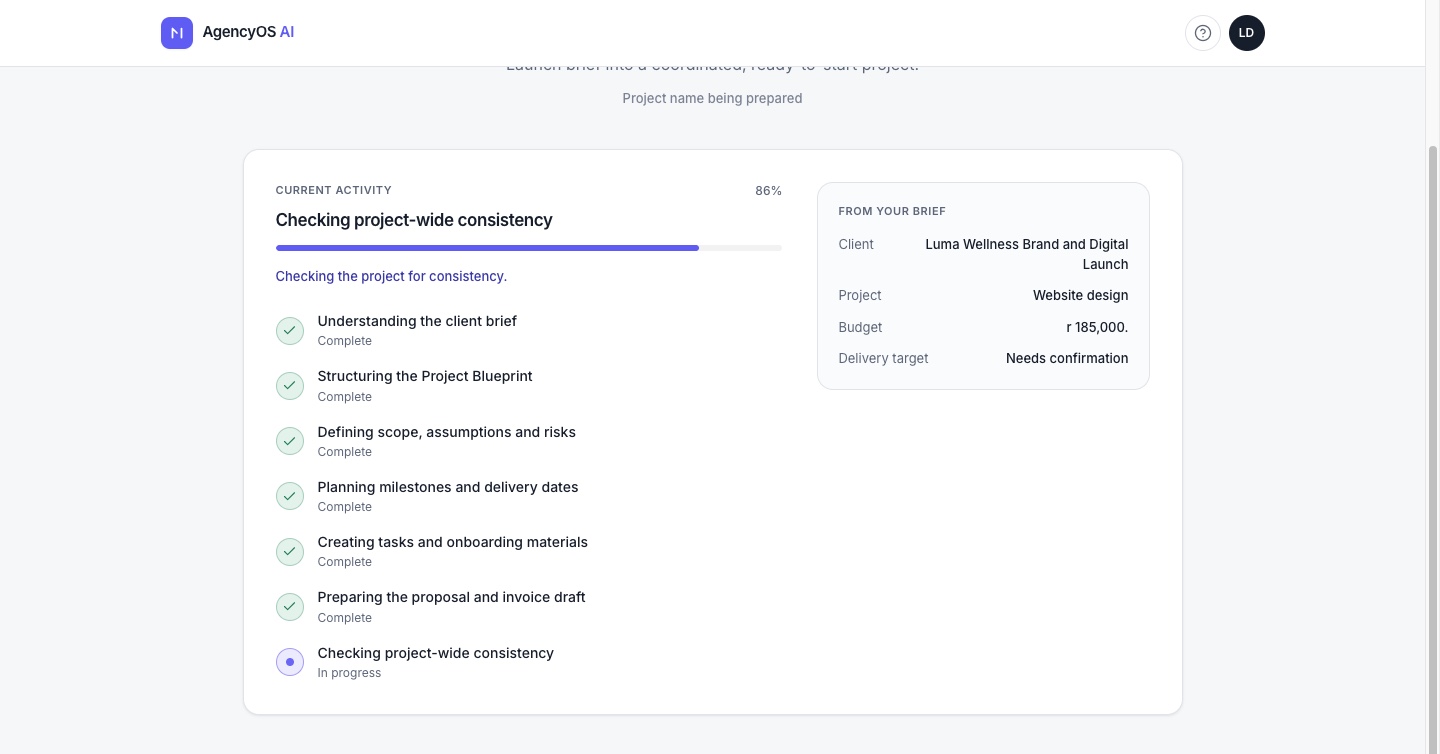
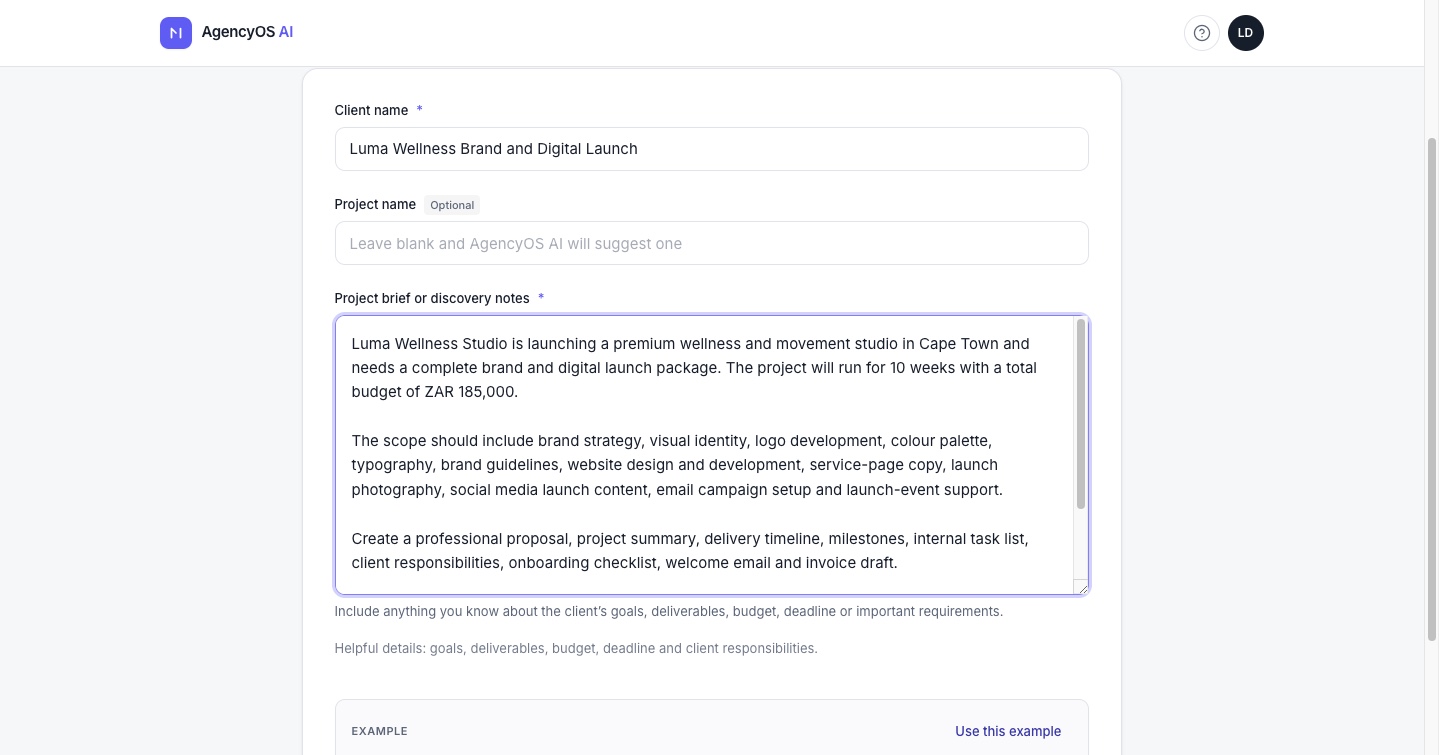
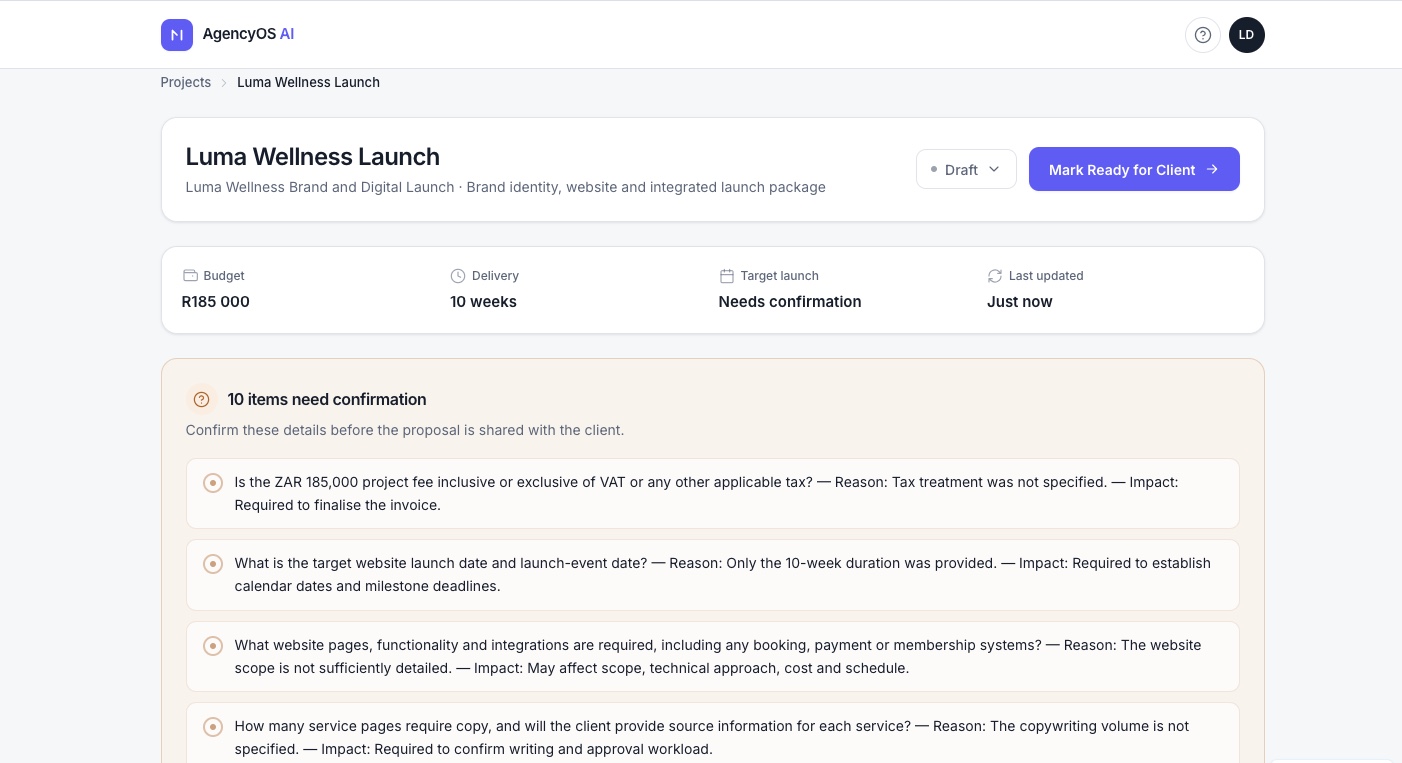
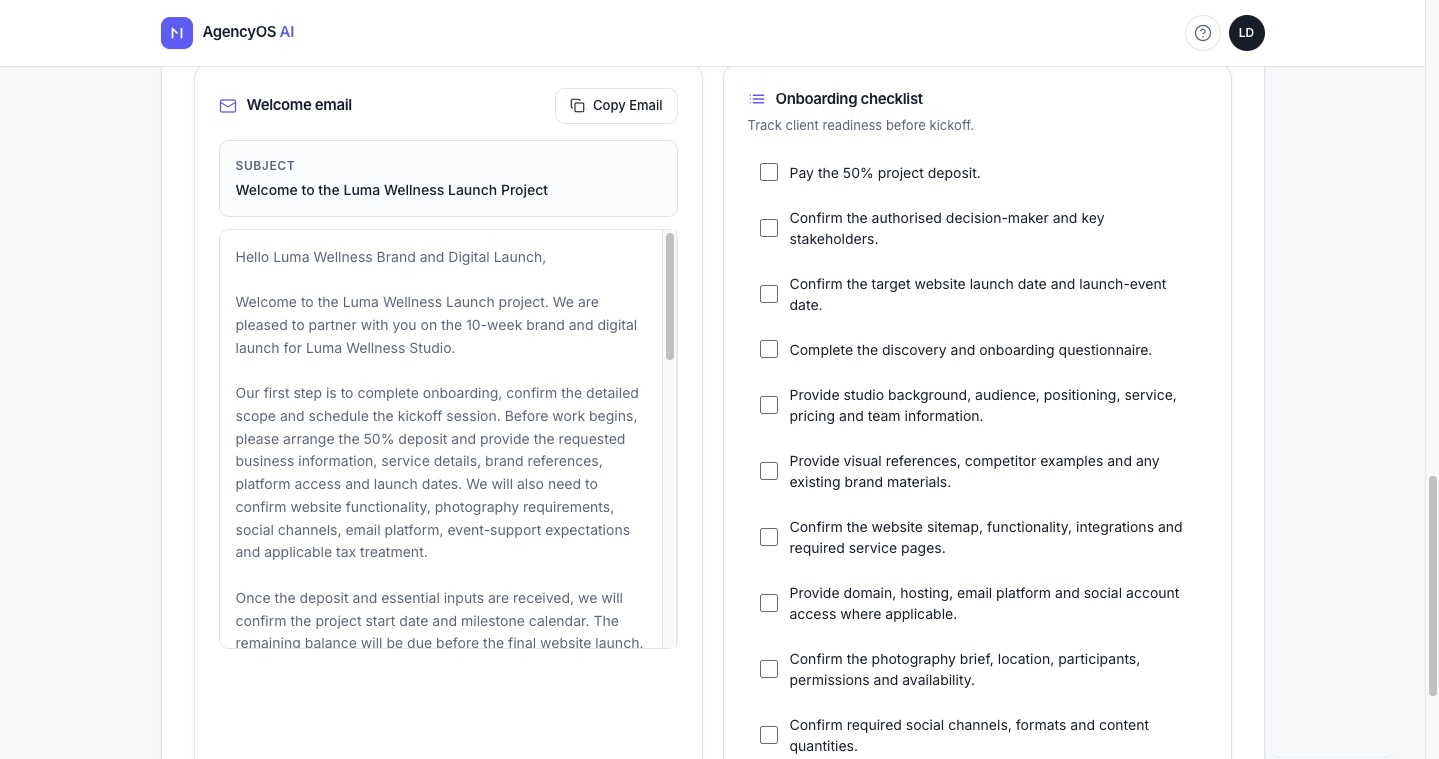
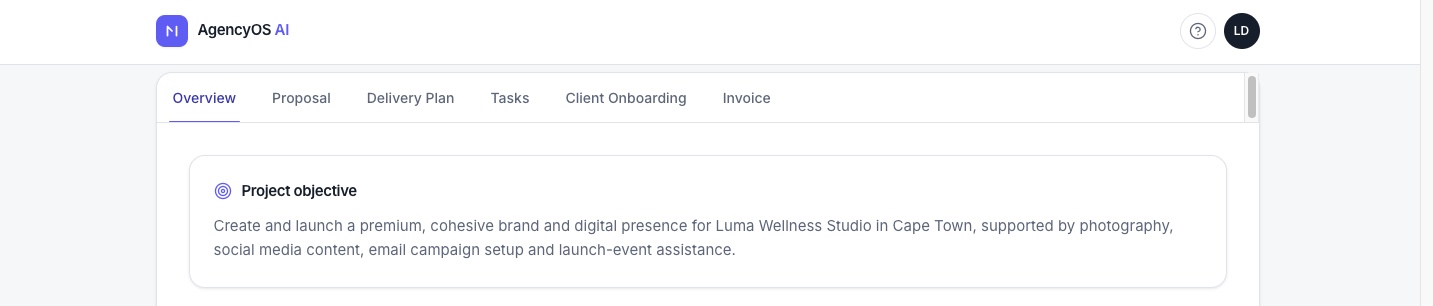
AgencyOS AI allows a user to enter a client name, project name and project brief. GPT-5.6 then transforms the brief into a validated project blueprint containing:
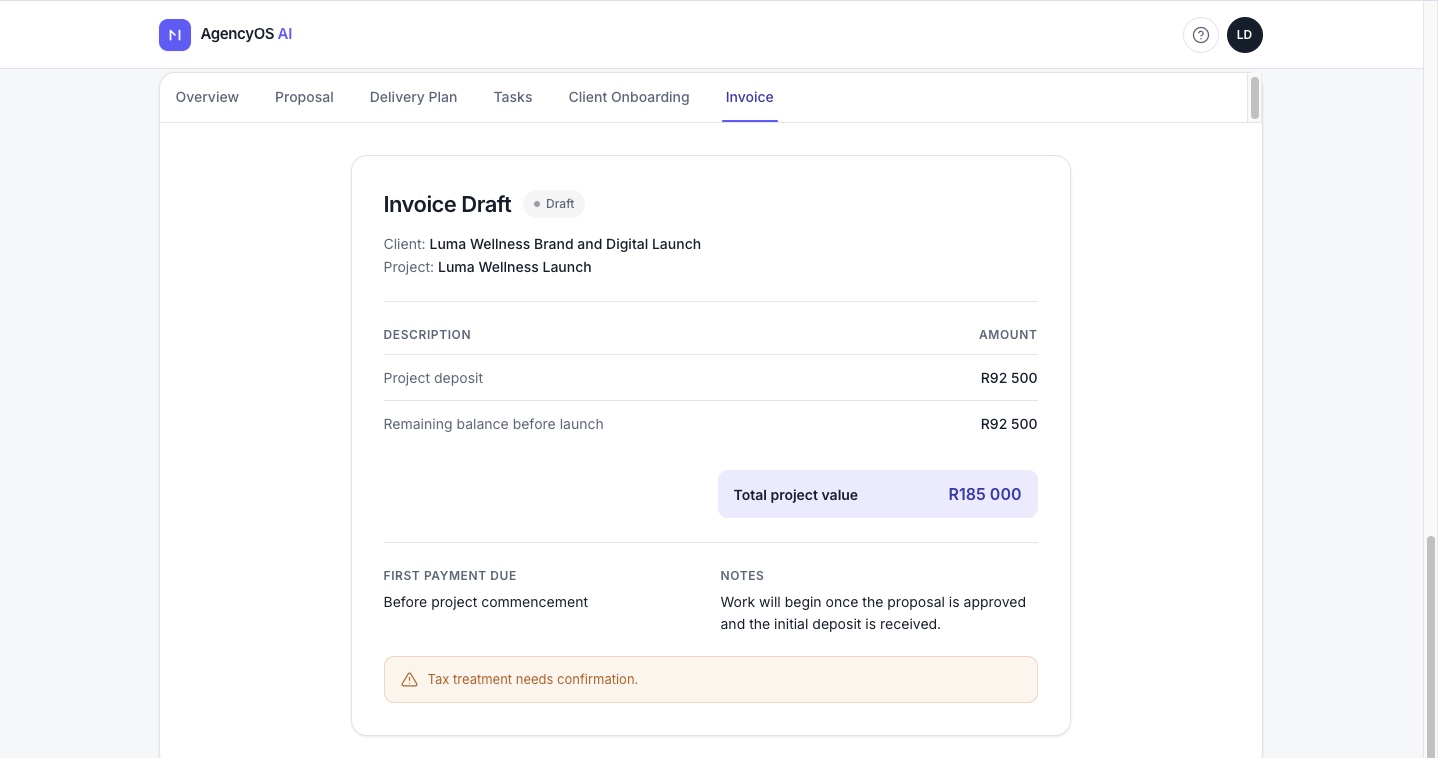
- A professional proposal
- Project summary and objectives
- Scope and deliverables
- Delivery phases and milestones
- Internal tasks with priorities and suggested owners
- Client onboarding checklist
- Welcome email
- Budget, deposit and invoice draft
- Risks, assumptions and confirmation questions
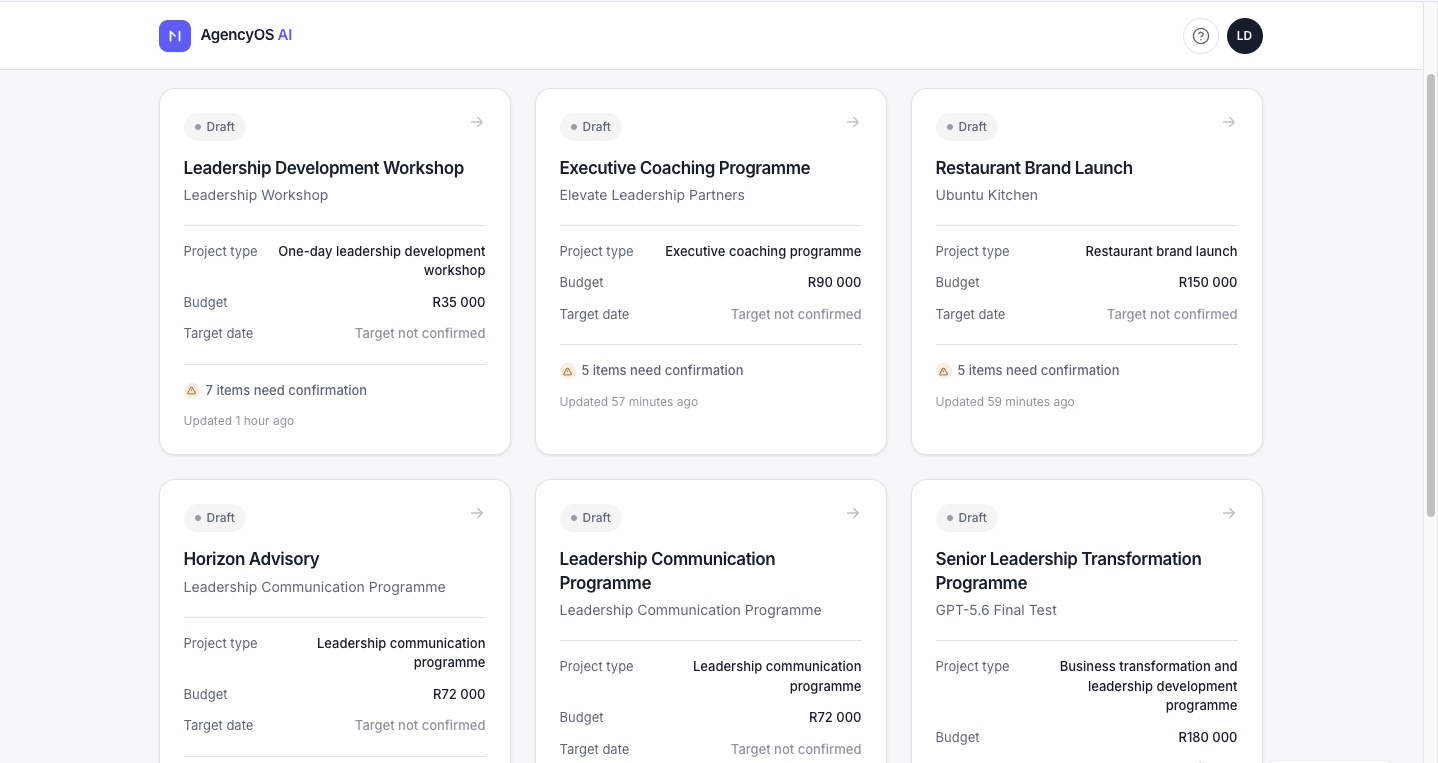
Each generated project is saved independently and can be opened, updated and managed from the project dashboard.
How I built it
The frontend was built with React, TypeScript and Vite in Bolt. A Supabase Edge Function securely connects the application to the OpenAI Responses API.
GPT-5.6 interprets the client brief and returns a strict structured output. Zod validation checks the response before it is transformed into the AgencyOS AI project workspace.
The OpenAI API key remains on the server and is not exposed in the browser.
How I used Codex
Codex was a core part of the development workflow. I used it to inspect the repository, plan and implement the OpenAI integration, connect the frontend to the Supabase Edge Function, and validate generated responses.
Codex also helped me identify and fix a multi-project persistence bug where new projects replaced earlier projects. It improved the storage model so multiple projects could be saved independently and changes remained attached to the correct project.
I also used Codex to strengthen English-language output validation, add automatic retry behaviour for malformed responses, migrate the generation model to GPT-5.6, and run type-checking, linting and production-build checks.
I made the final product, workflow, interface and feature decisions, while using Codex to accelerate implementation, debugging and verification.
Challenges
One major challenge was ensuring that generated content was reliable enough to populate many connected project sections. I addressed this with strict structured outputs, runtime schema validation and user-friendly error handling.
Another challenge was project persistence. The early version stored only one project, so creating a new project overwrote the previous one. This was corrected by introducing collection-based storage and project-specific identifiers.
The application also occasionally produced unexpected foreign-language characters. I added English-only generation instructions, character detection and an automatic retry process.
What I learned
I learned how to move from a product idea to a functioning AI application by combining product design, structured prompting, API integration, validation, persistence, testing and deployment.
I also learned that reliable AI products require more than a prompt. They require carefully designed schemas, secure server-side integration, validation, retries, error handling and clear user workflows.
What's next
The next stage is to develop AgencyOS AI into a secure multi-tenant platform for agencies and consultancies. Planned improvements include user authentication, cloud project storage, team collaboration, branded exports, usage controls, billing and white-label customisation.
What it does
How we built it
Challenges we ran into
Accomplishments that we're proud of
What we learned
What's next for AgencyOS AI
Built With
- api
- bolt
- codex
- edge
- functions
- github
- gpt-5.6
- openai
- react
- responses
- supabase
- typescript
- vite
- zod

Log in or sign up for Devpost to join the conversation.