-
-
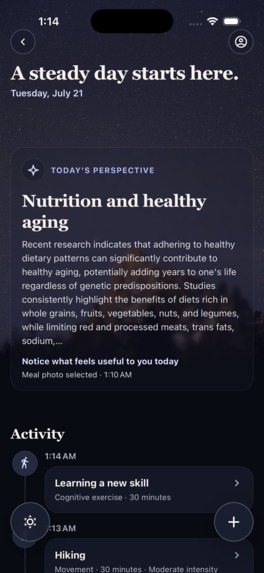
Today's Insight
-
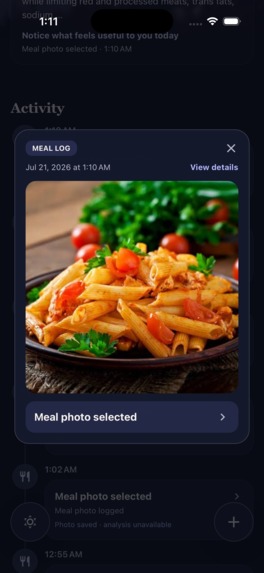
AI Analysis - Real Input - Food Analysis
-
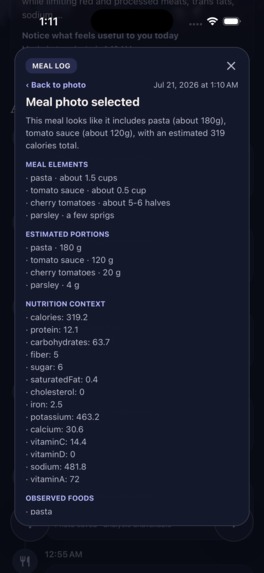
AI Analysis - Real Input - Food Analysis
-
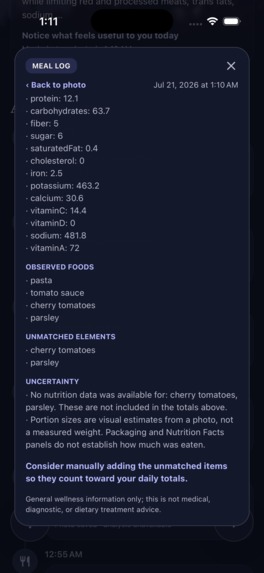
AI Analysis - Real Input - Food Analysis
-
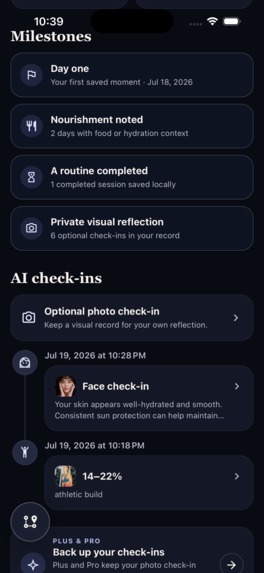
AI Analysis - Real Log - Journey Page
-
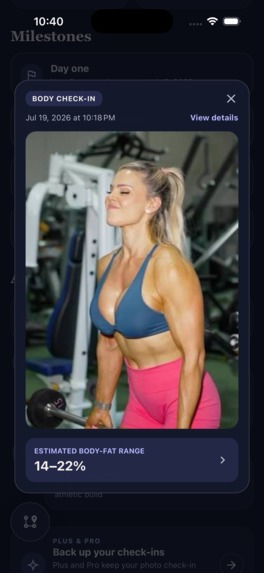
AI Analysis - Real Input - Body Analysis
-
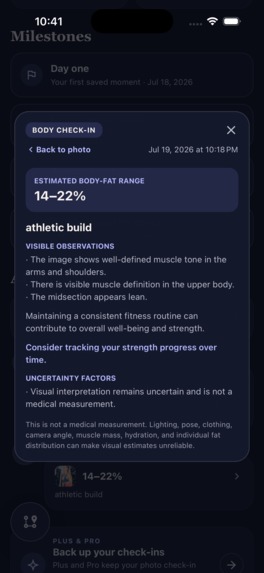
AI Analysis - Real Output - Body Analysis
-
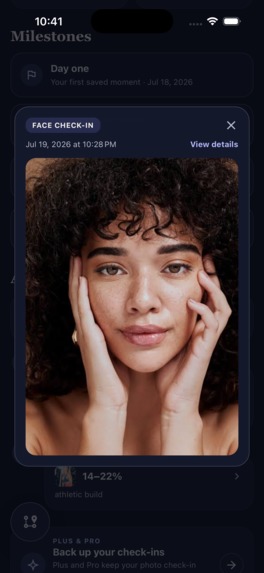
AI Analysis - Real Input - Face Analysis
-
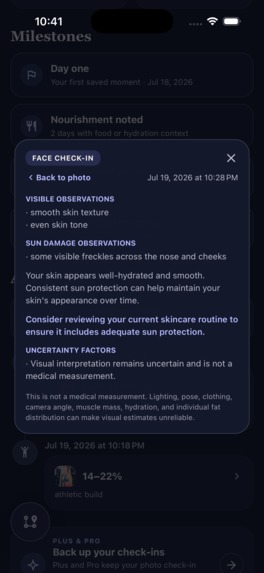
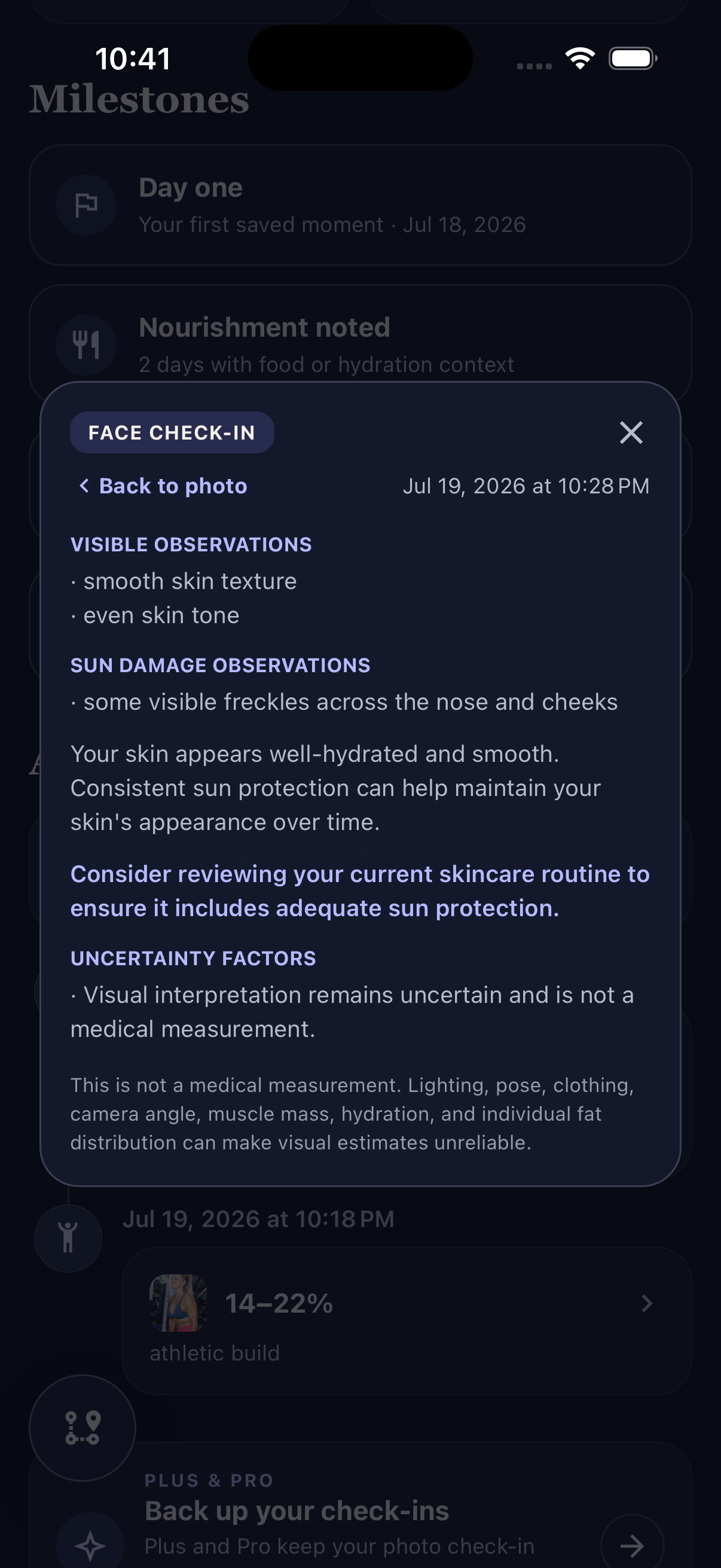
AI Analysis - Real Output - Face Analysis
-
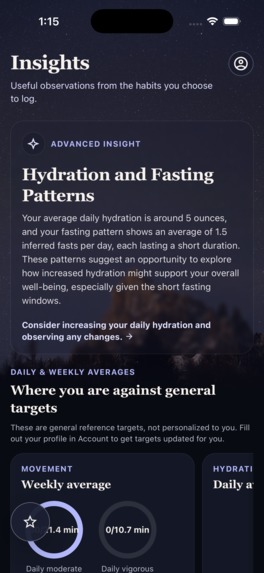
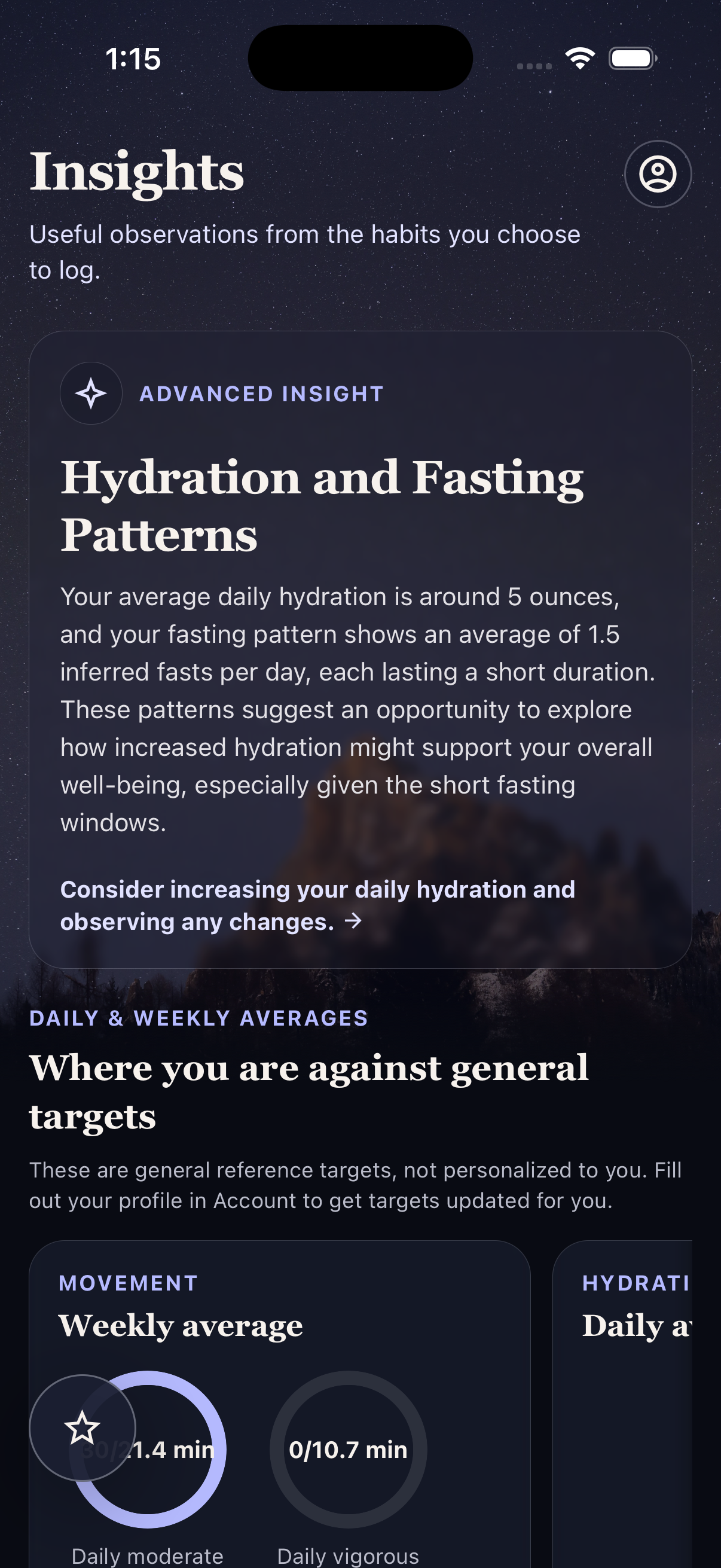
Insights - AI Analysis
-
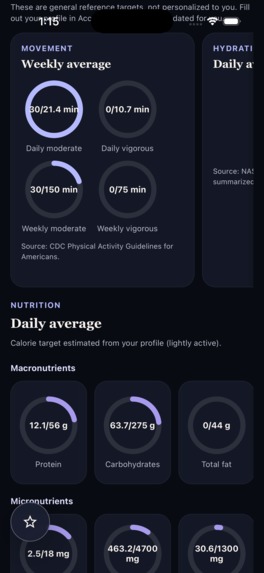
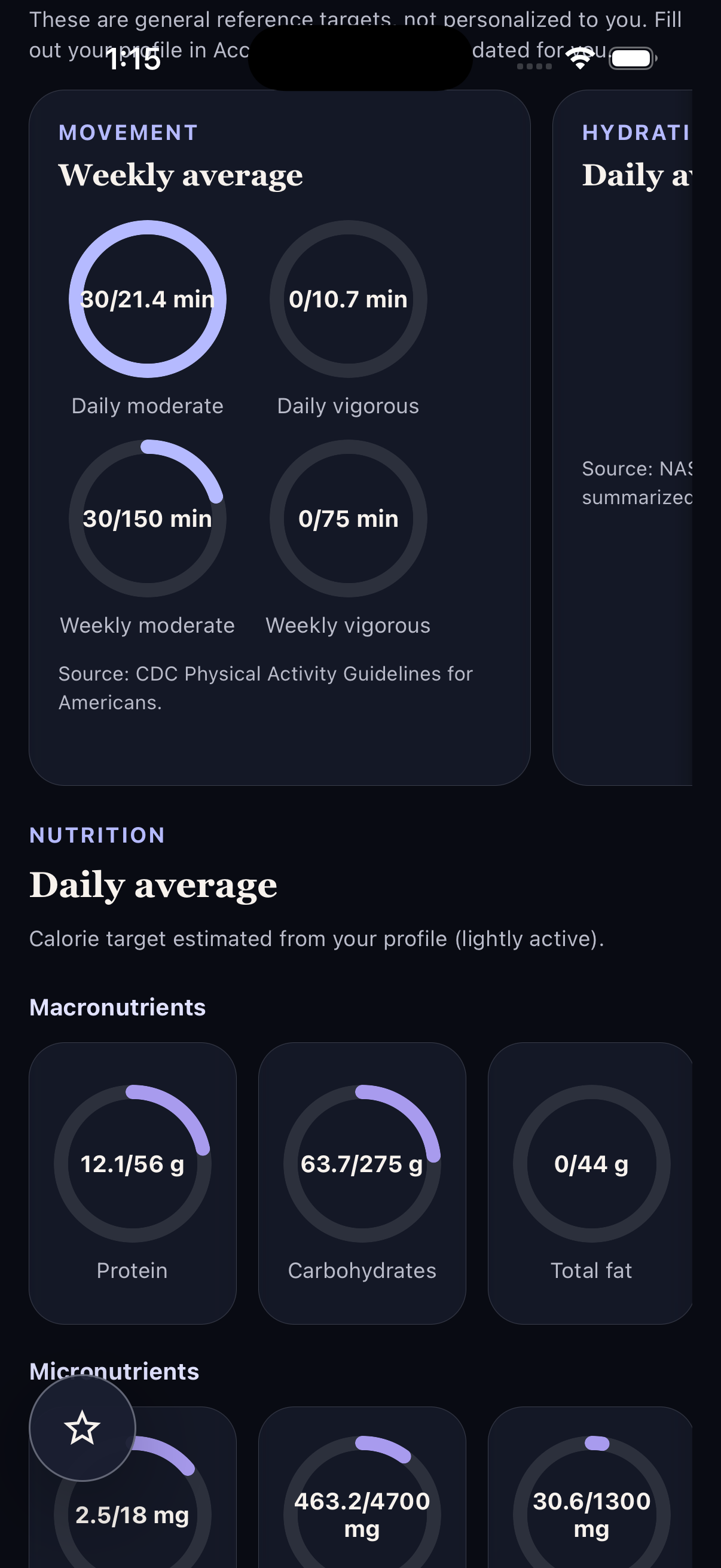
Insights - Computed Metrics
-
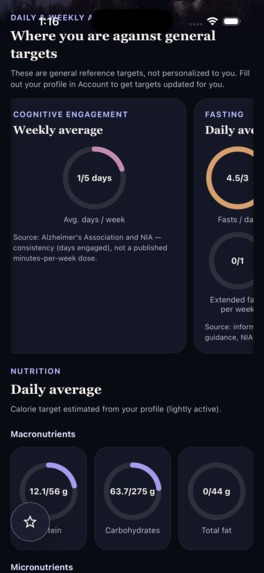
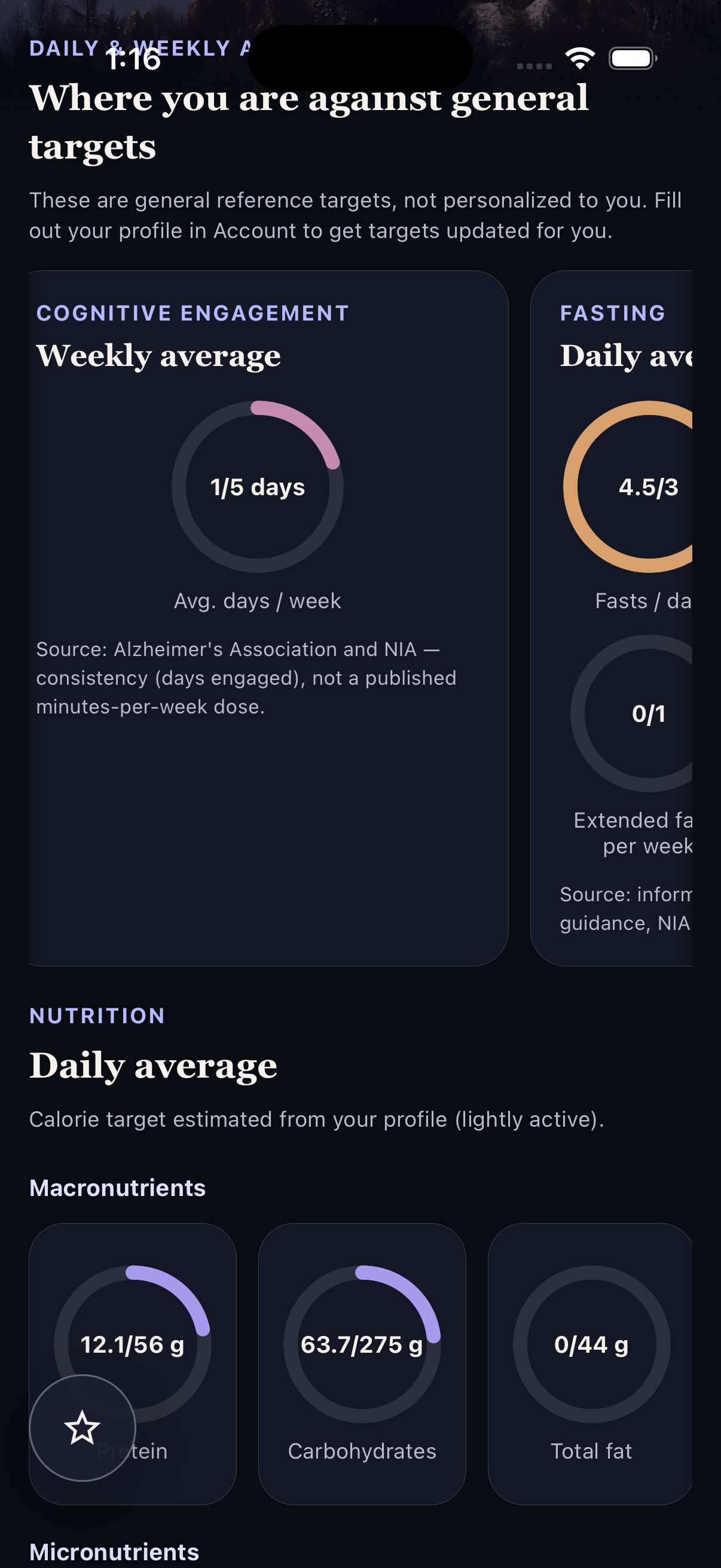
Insights - Inferred Fasting
About the project
Inspiration
This is not just another Health app. Trust me.
Health apps fail in one of two ways: the chatbot makes you do the work, or you have to make sure you ask the right question. AI coaching apps are the same way. A WHOOP user summed it up well: "Don't put the responsibility on me to figure these things out. Provide it to me. That's what I'm paying for." The dashboard fails the opposite way. An AI summary that just restates numbers instead of interpreting them. One Oura user said it plainly: "I've stopped using it altogether. I just rely on the figures."
Every major player in this space owns exactly one input. Oura owns recovery. WHOOP owns strain. Zoe owns the microbiome. MyFitnessPal owns calorie logging. Nobody connects what you eat, how you recover, and how your body is changing. Nobody tells you the one thing that actually matters. That gap is what Ageless strives to close.
What it does
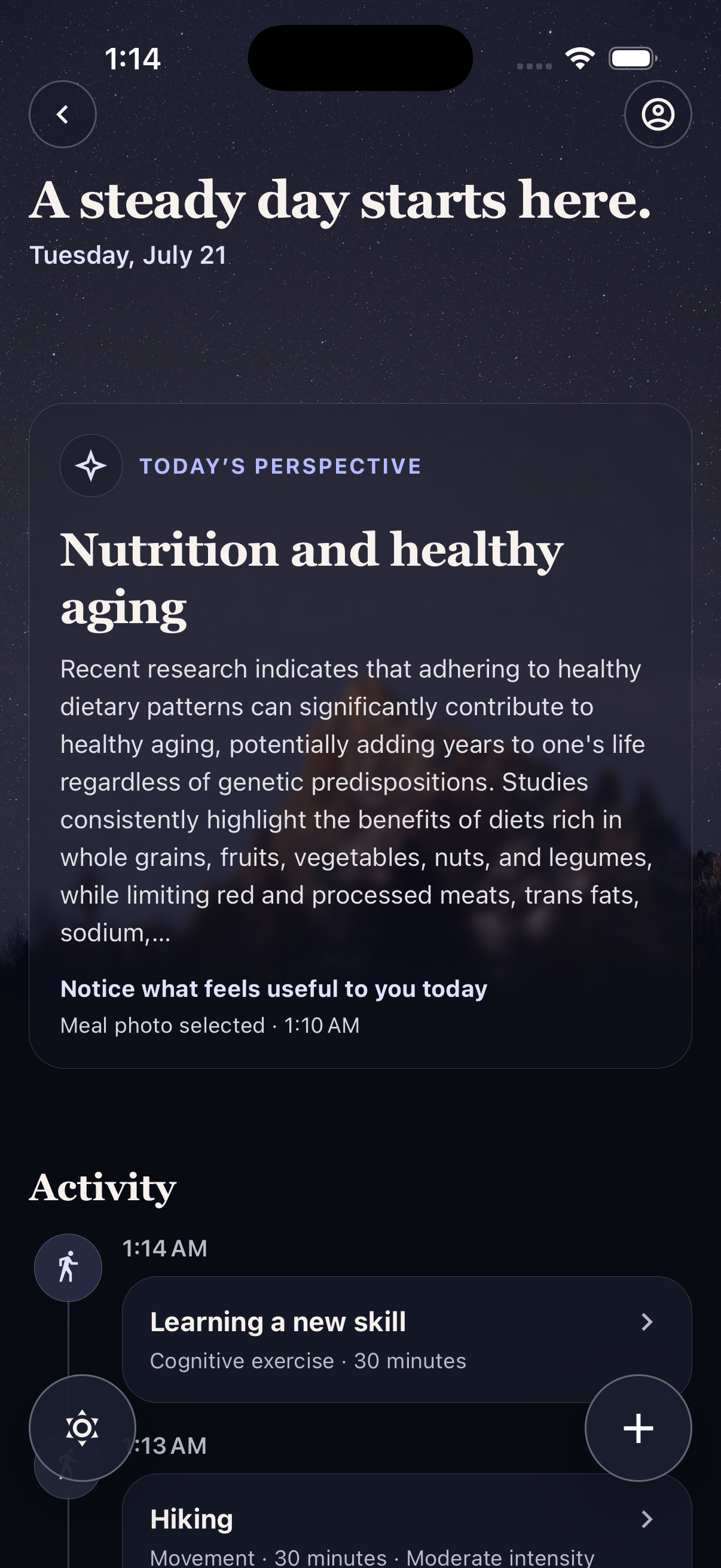
Ageless is not a tracker, not a coach, and not a dashboard. Trackers are already commoditized by a dozen other apps. Coaches create friction that people resent, because they wait for the user to ask. Dashboards get ignored once the novelty of a restated number fades. Ageless works differently. It surfaces one insight first, before the user asks. The full log still sits underneath, for whenever the user wants to review it.
Ageless works today, on both iOS and Android. It already collects the signal breadth an insight engine needs.
- Fasting: a timer with stages and full history.
- Diet and supplements: manual logging with daily nutrient summaries.
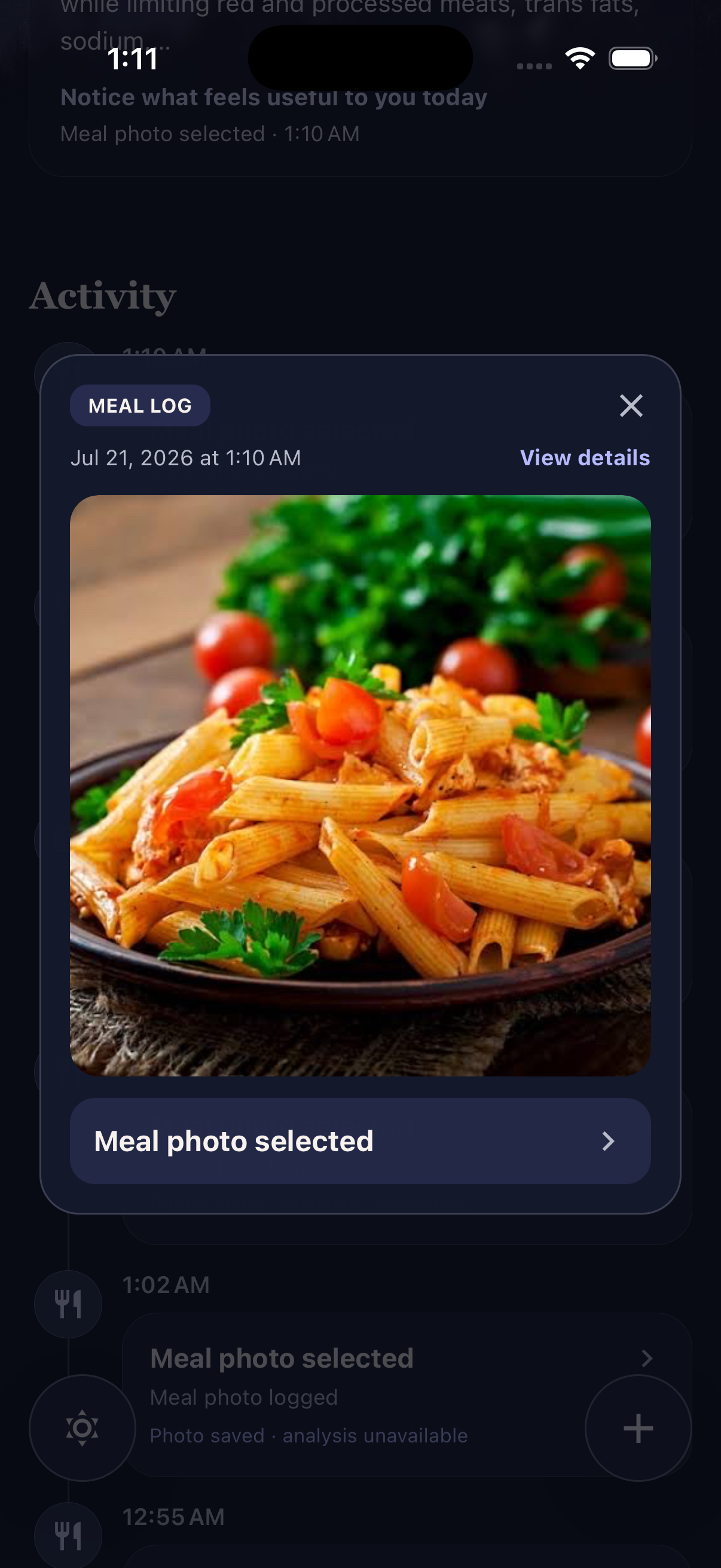
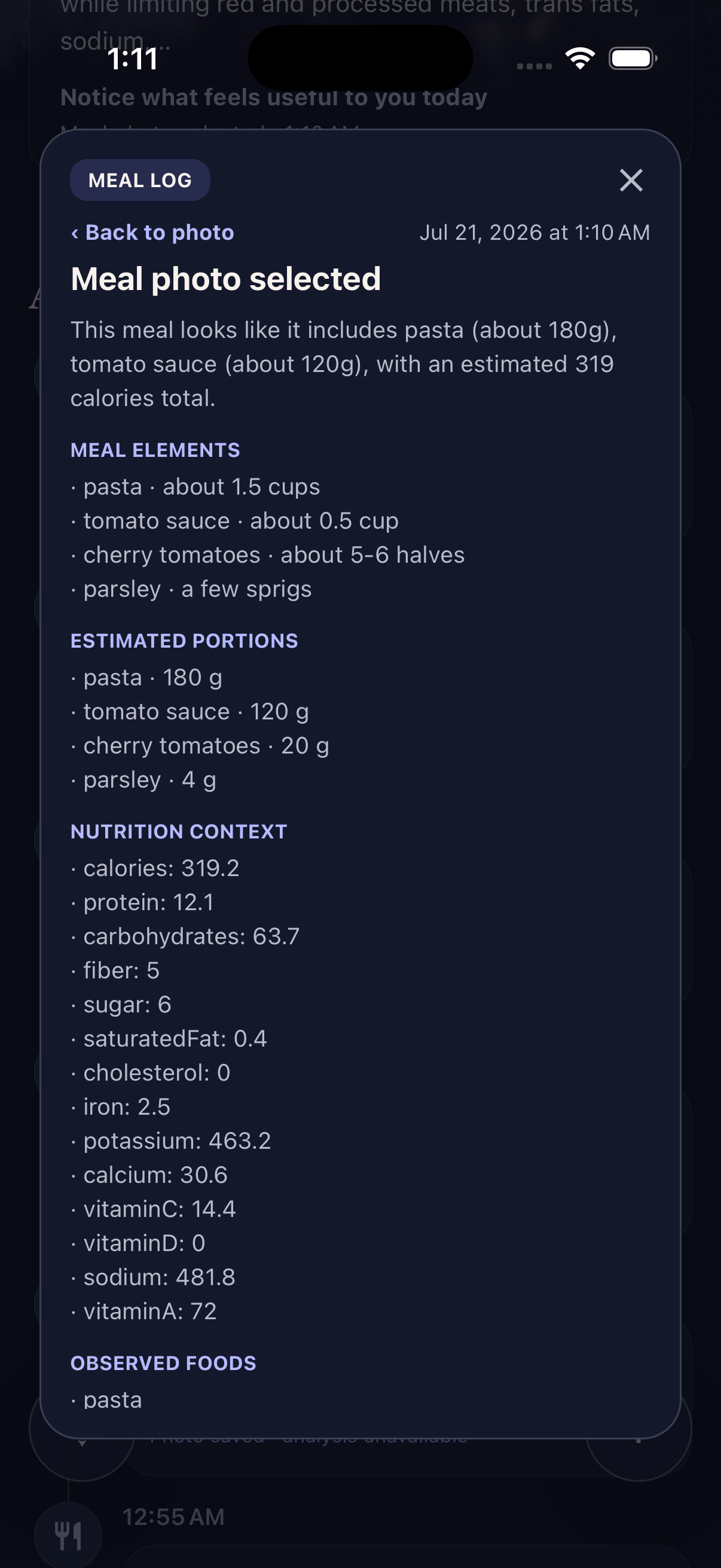
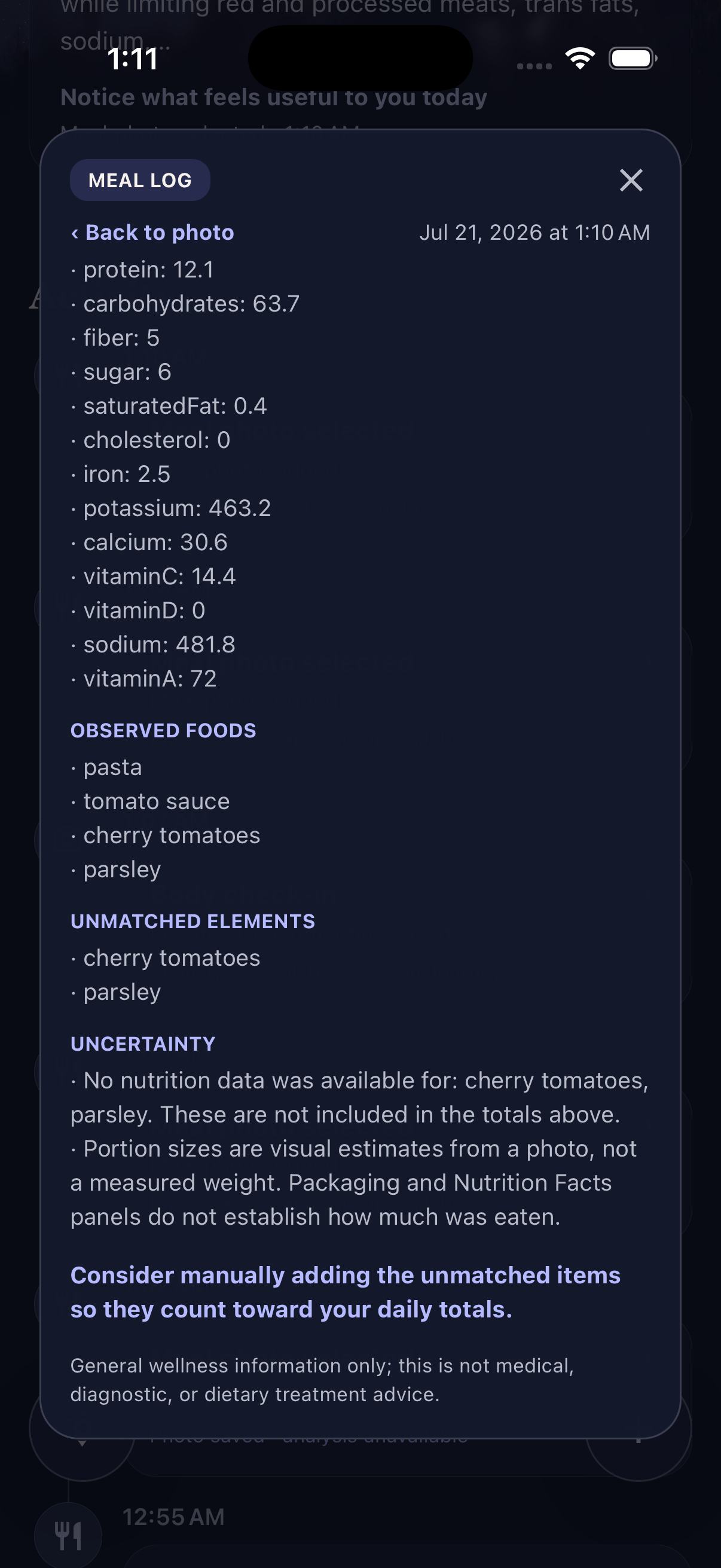
- Meals by photo: instead of typing out ingredients and portions, a person can snap a photo. AI turns it into a structured, logged entry with an estimated nutritional value.
- Hydration: tracking that correctly treats caffeinated and alcoholic drinks as reducing hydration, instead of counting them as water.
- Movement and cognitive exercise: logging and progress tracking.
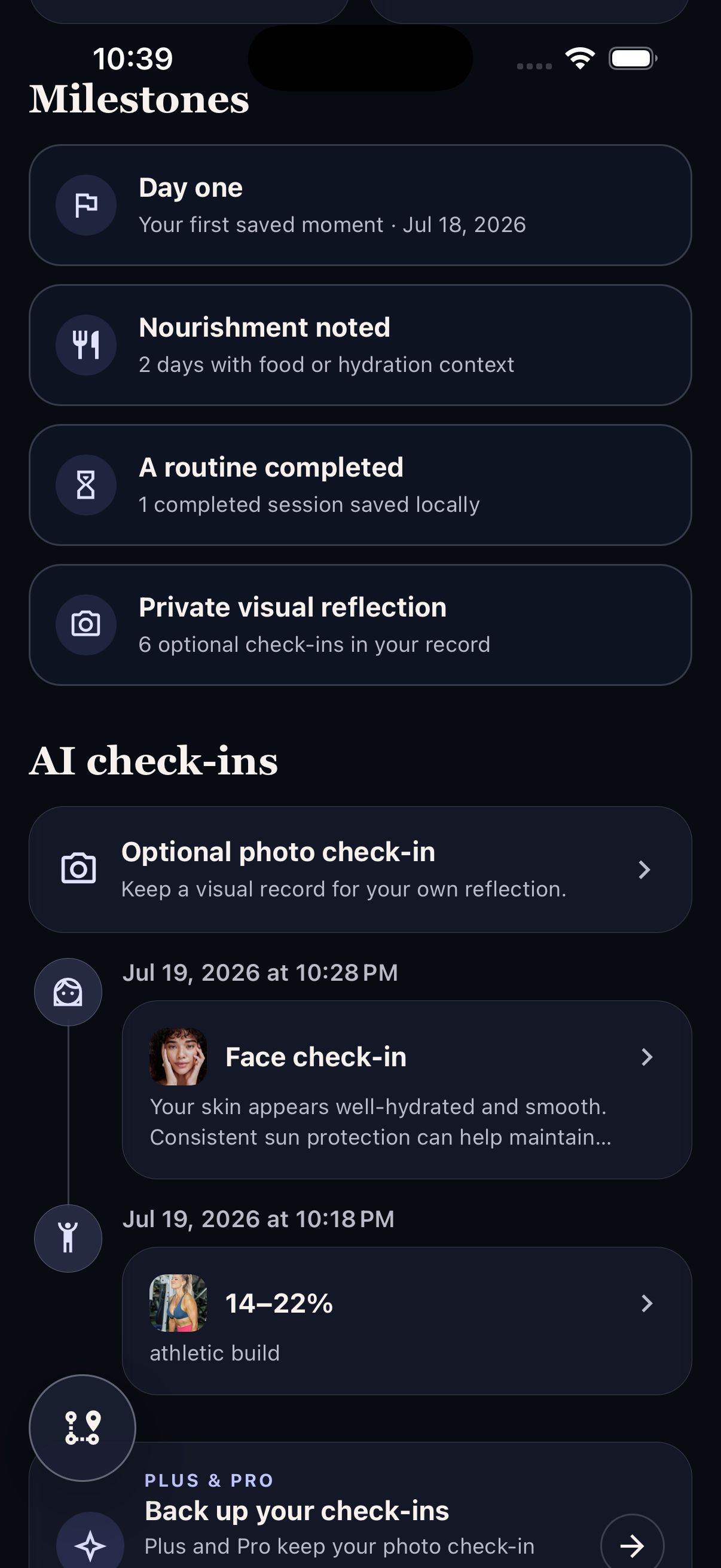
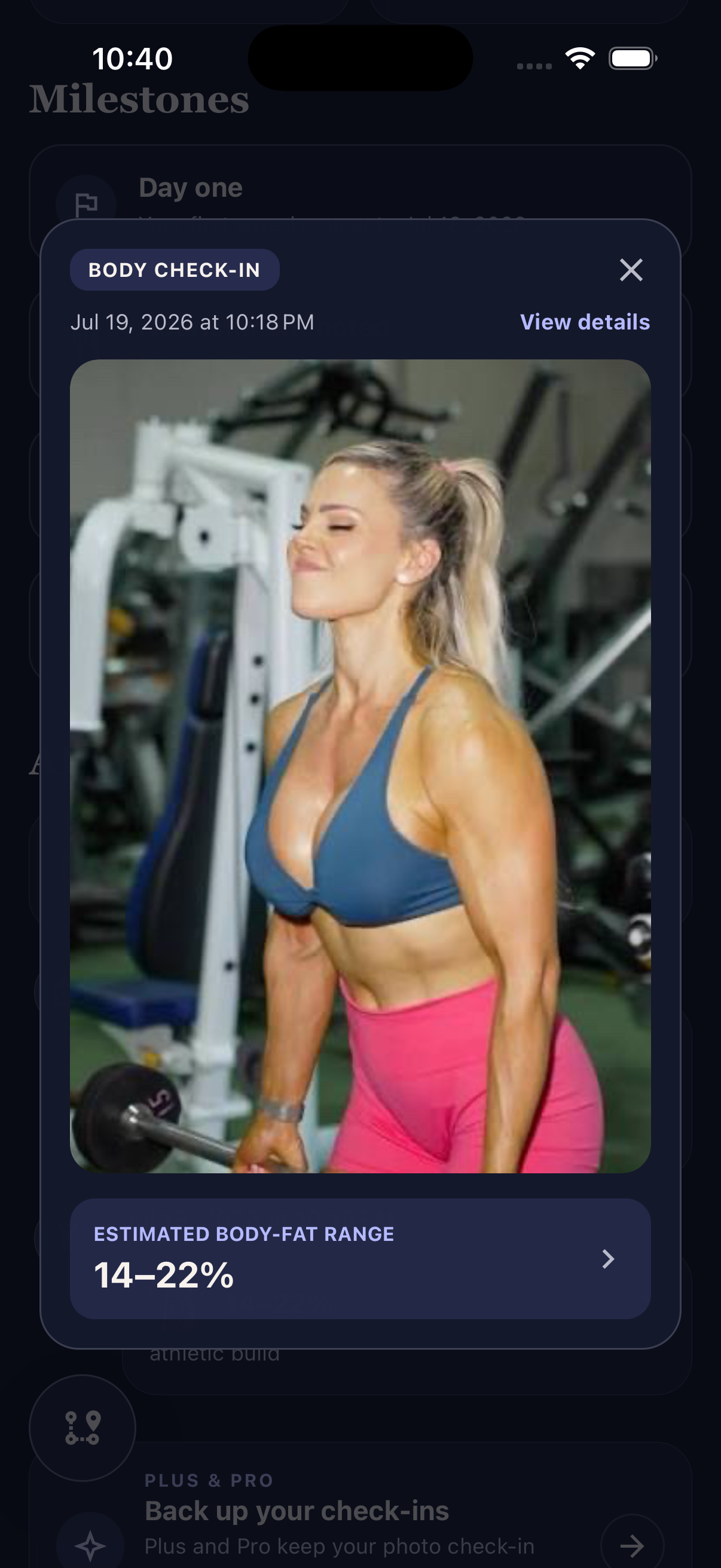
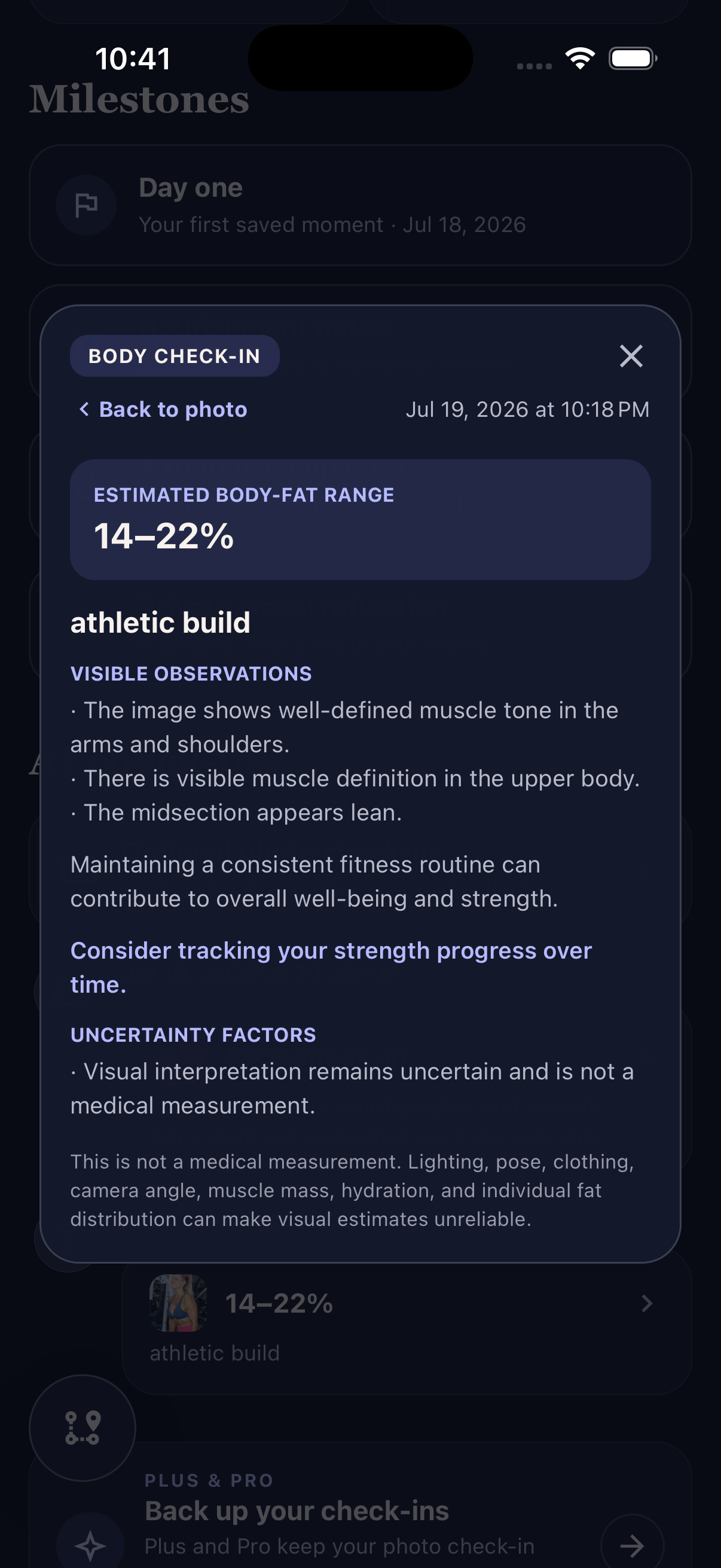
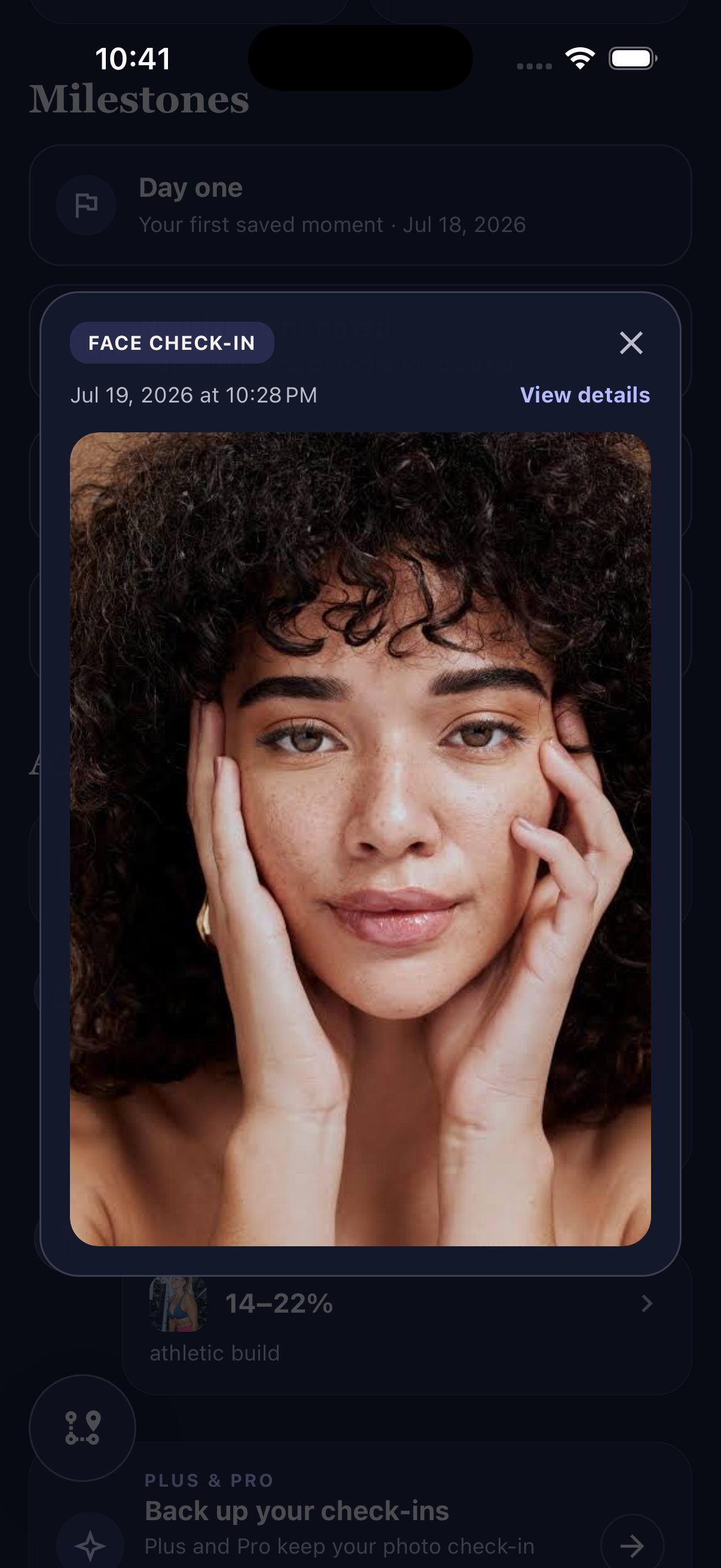
- Photo Check-ins: a person logs a body, face, or hair photo, and the AI returns a structured, comparable record instead of just another picture in a camera roll. It includes:
- a category of visible change, a confidence level, and the specific factors driving that confidence
- concrete visible observations.
- body-composition estimate expressed as a range
- (Where visible) plain-language notes on things like sun spots or hair thinning
- every comparison happens only against the user's own private baseline
- Daily Insights: AI analysis grounded in the latest peer-reviewed research based on your day's data
- Daily Advanced Insights: AI analysis grounded in the latest peer-reviewed research on your overall metrics across the lifetime of your data
- Biological Age Estimate: AI analysis looking across all of your data (including your wearables, AI analyses, and insights)
Everything lives one tap behind a single floating log button, instead of a maze of tabs. No account is required to use the app.
The closest existing product to this idea is WHOOP Journal. It looks across sleep, recovery, strain, and journal entries to find meaningful changes over time. Its blind spot is real. It only tests a hypothesis a person pre-declares. A person has to log that hypothesis at least five times in ninety days before it can find anything. It cannot notice something that wasn't logged. It, also, has no nutrition data, no body composition data, and no photo data. Its correlation universe stops at sleep, recovery, and strain. Ageless is built to find the pattern in things a person never thought to log. It reads nutrition, body composition, recovery, and photos altogether.
How we built it
Ageless started from an existing Expo and React Native codebase, part of the same juliluna app family as our existing yoga app. That codebase already had a working, fully offline health-tracking foundation: fasting, dietary logging, hydration, and movement and cognitive-exercise tracking, all persisted locally. It also had an older four-tab navigation, one tab per tracker, that made logging feel like switching between separate apps rather than using one.
We ran the implementation workflow in three stages, each with a different tool doing a different job. First, we brainstormed the idea and the overall architecture with ChatGPT 5: the navigation rework, the consent-gated photo flow, and the safety rules every AI feature would have to pass before it could run at all. Second, we handed that plan to Codex Luna 5.6, which reviewed it against the existing codebase and broke it into concrete, delegated tasks. Third, Codex Terra 5.6 executed that task list: tearing out the old four-tab layout in favor of the Today / Journey / Insights structure, building the photo check-in flow, and standing up the deployed Vertex AI analysis functions on top of it.
Challenges we ran into
Making health tracking genuinely seamless, without cutting corners on safety, was the hardest part of the build. Every AI surface had to earn the right to say something before it was allowed to speak. That meant writing the refusal conditions before a single model call existed. Resisting the easy move on hardware integration was another challenge. It would have been faster to fake a connected badge for a device we cannot yet fully read. Instead, we built honest messaging and a one-tap manual fallback. We also held ourselves to a hard requirement: preserve all of the existing trackers, fasting, dietary, hydration, exercise, and cognitive, while rebuilding the entire navigation shell around them.
Accomplishments that we are proud of
We built a cross-platform health tracker that makes logging fast enough to actually stick with. It requires no account. We built and deployed a working photo check-in flow with a real local baseline. It returns a structured, comparable record instead of a single fake-precise number. We built an AI feature designed from the ground up to avoid the things that make people distrust AI health tools: invented numbers, false confidence, and diagnostic overreach. We drew a clear, honest line between what is live today.
What we learned
The fastest way to build a trustworthy AI feature is to write down exactly when it should refuse to answer, before writing the prompt that makes it answer. Frictionless logging is the actual product. The insight matters, but if adding a glass of water takes four taps, nobody sticks around long enough to see the insight. ChatGPT 5 was strongest for brainstorming. Codex Luna 5.6 and Codex Terra 5.6 were strongest for scaffolding the backend, and device integration quickly. We held the line ourselves on the parts that could not be rushed: consent, privacy, and non-diagnostic language.
What is next for Ageless
Pursue SOC 2 compliance if it becomes necessary for handling this data at scale. Expand the device support ecosystem beyond the first round of integrations. Submit Ageless to the iOS App Store.
Built With
- android
- apple-sign-in
- async-storage
- cloud-firestore
- codex
- expo-router
- expo.io
- firebase
- firebase-auth
- firebase-functions
- gemini
- google-cloud
- google-sign-in
- ios
- javascript
- openai
- react-native
- react-navigation
- stripe
- typescript
- vertex-ai

Log in or sign up for Devpost to join the conversation.