Great story—it's personal and powerful, which judges like. Below is a clean project story you can paste directly into the sections shown in your screenshot.
Inspiration
Our inspiration came from a real incident in our family. One day, my uncle was close to losing his life due to a gas leak in the kitchen. The gas accumulated without anyone noticing until the situation became dangerous. Thankfully, my grandmother detected the smell early and quickly intervened, preventing a potential explosion.
This experience made us realize that gas leaks are a silent danger in many homes, especially where people rely on cooking gas daily. Many existing solutions only provide alarms, which may not be enough if no one is nearby to react quickly. We wanted to create a system that not only alerts users but also actively protects them.
What it does
AGAS is a smart IoT gas safety system designed to detect gas leaks and automatically prevent dangerous situations.
When the sensor detects a gas leak, the system immediately:
Activates a buzzer to alert people nearby.
Turns on a ventilation fan to remove the gas from the environment.
Uses a servo motor to automatically close the gas valve to stop further leakage.
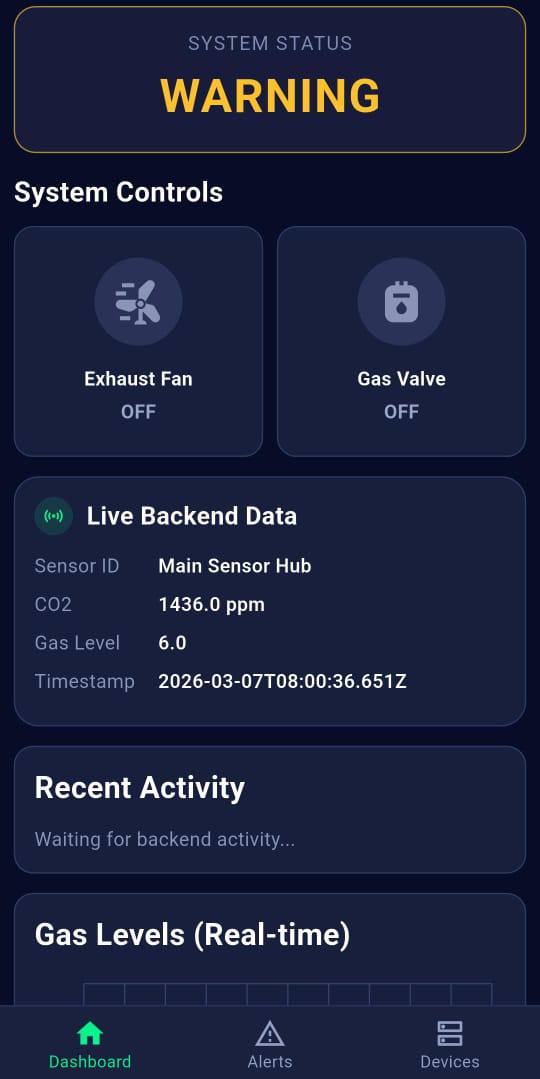
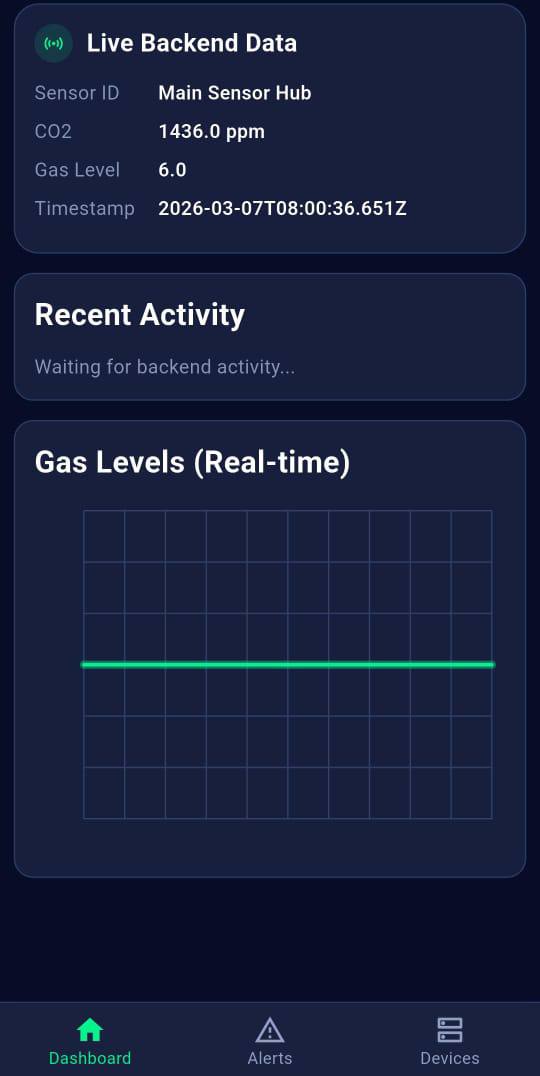
Sends the gas data to a backend system and mobile application for remote monitoring.
This creates a complete safety system, not just an alarm.
How we built it
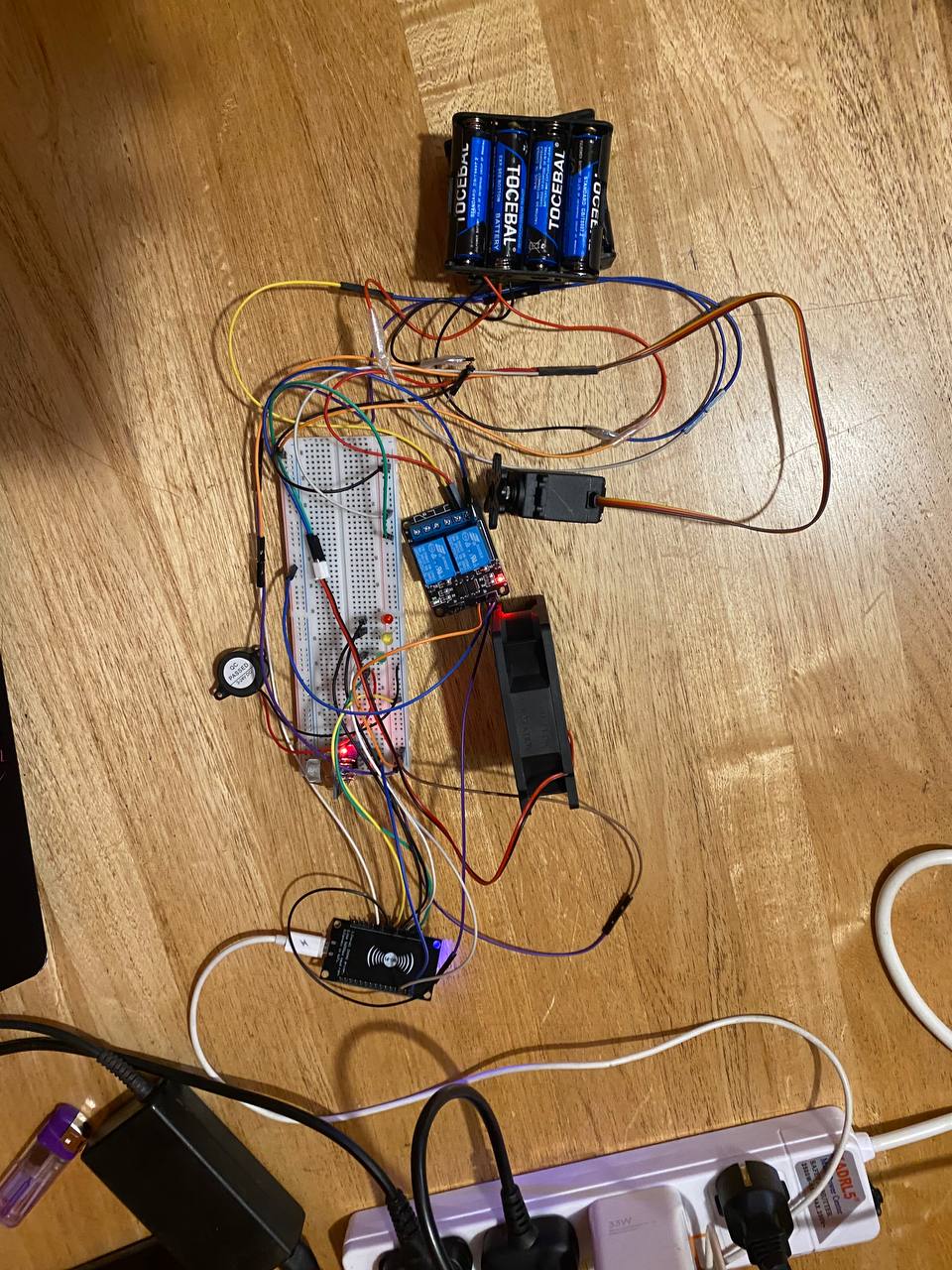
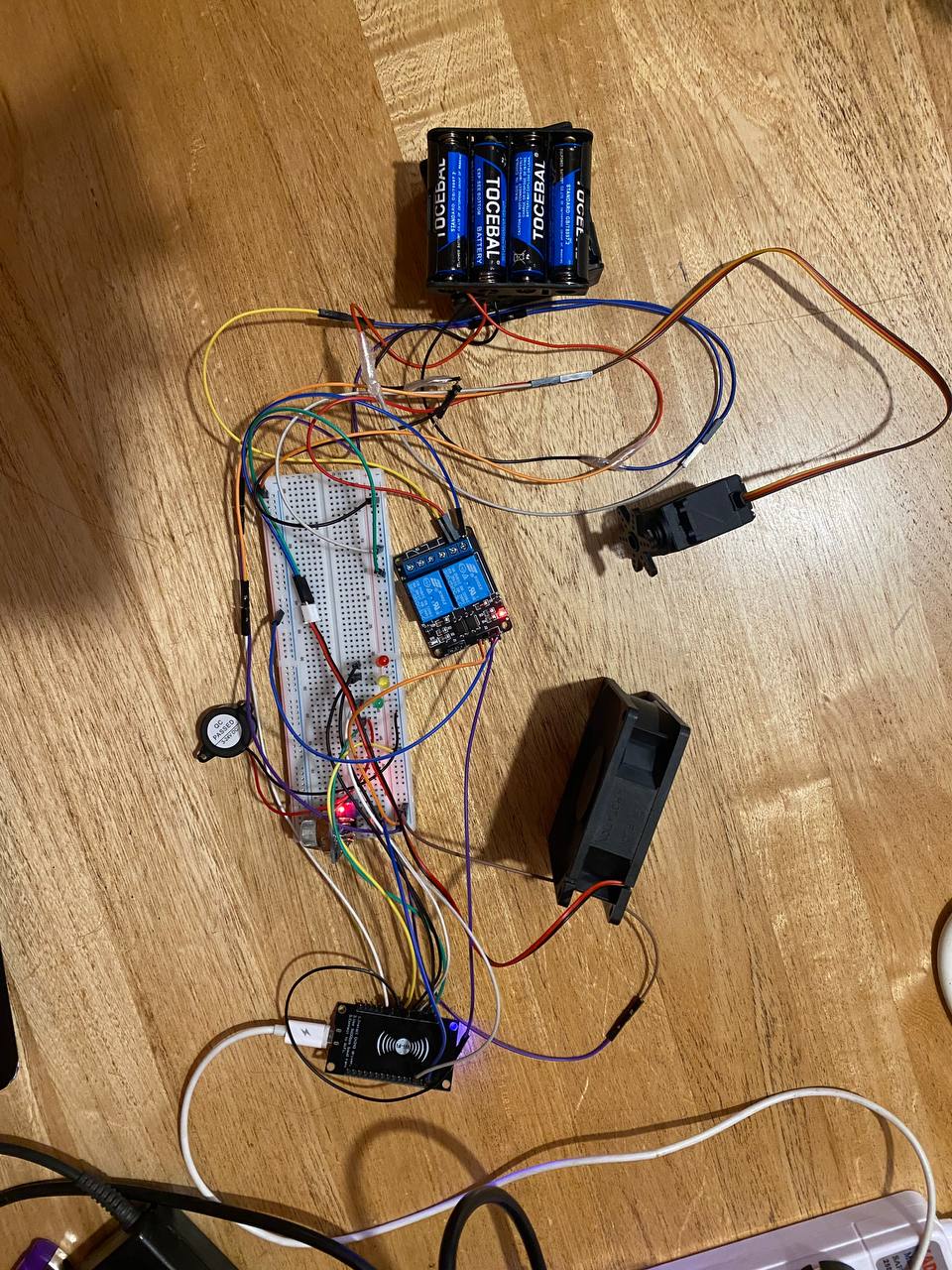
We built the hardware system using:
MQ gas sensor for detecting gas levels
ESP8266 WiFi module for connectivity
Relay module to control the ventilation fan
Servo motor to automatically shut the gas valve
Buzzer for immediate alerts
Batteries and breadboard for power and circuit connections
The ESP8266 collects sensor data and controls the system logic. When gas levels rise above a safe threshold, the system triggers the alarm, activates ventilation, and closes the gas source.
We also developed a backend API and a mobile application using Flutter to visualize gas data in real time.
Challenges we ran into
One of the main challenges was integrating all hardware components together. We had to ensure the relay, fan, servo motor, and sensor worked correctly with the ESP8266.
Power management was also challenging since different components required different voltage levels. Additionally, debugging communication between hardware and the backend required careful testing.
Despite these challenges, we successfully integrated all components into a working prototype.
Accomplishments that we're proud of
We are proud that we built a fully functional safety system that goes beyond simple gas detection.
Our system can:
Detect gas leaks in real time
Automatically activate ventilation
Automatically close the gas valve
Alert users through alarms and remote monitoring
Most importantly, we created a low-cost solution that can be accessible to many households, especially in communities where advanced safety systems are not available.
What we learned
Through this project, we learned how to integrate hardware sensors, microcontrollers, and IoT technologies to solve real-world problems.
We improved our skills in:
Embedded systems and electronics
IoT communication using ESP8266
Backend API integration
Mobile application development using Flutter
This project also taught us the importance of designing technology that directly impacts people's safety.
What's next for AGAS
Our next goal is to transform AGAS into a complete smart safety platform.
Future improvements include:
Real-time mobile notifications
Historical gas monitoring dashboards
Automatic emergency alerts
Integration with smart home systems
Improving the mechanical gas valve shut-off mechanism
Ultimately, we aim to make AGAS a reliable and affordable safety solution that protects families and prevents gas-related accidents.
If you want, I can also help you write the “Built With” section, which is very important for hackathon judging (technologies list).

Log in or sign up for Devpost to join the conversation.