-
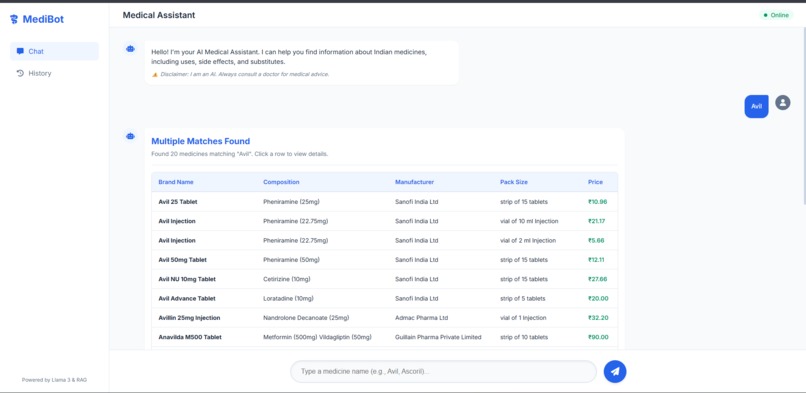
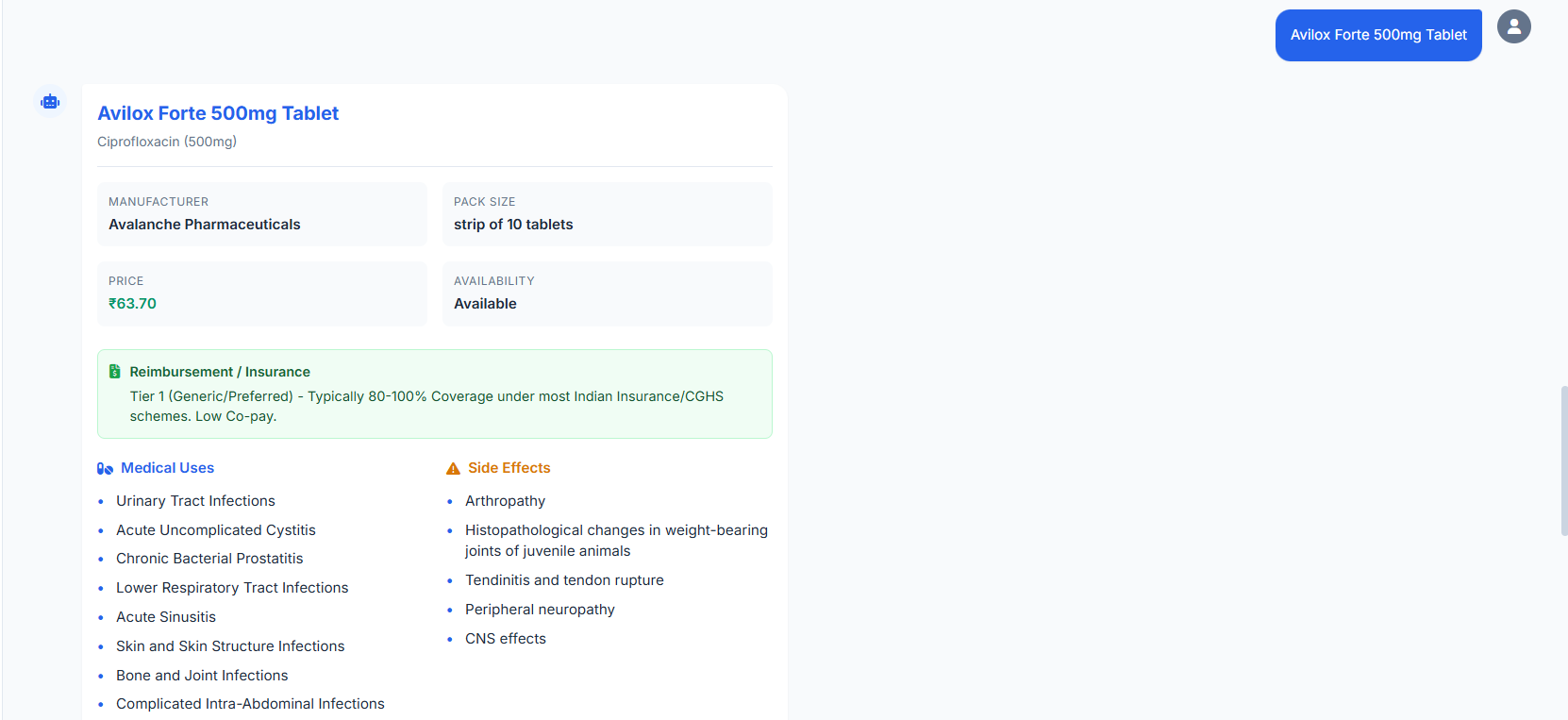
Retrieves all similar drug names from dataset
-
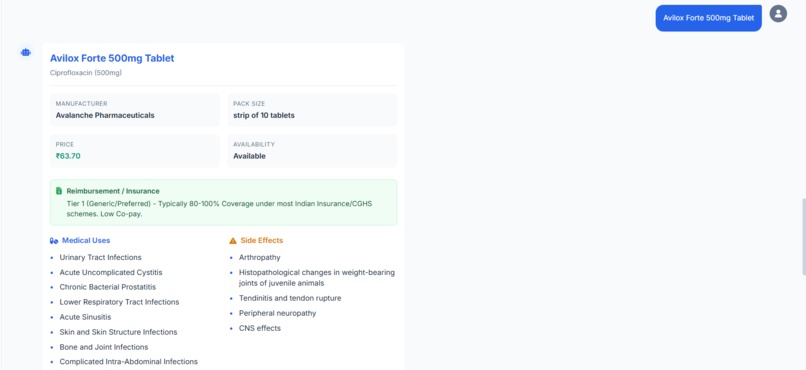
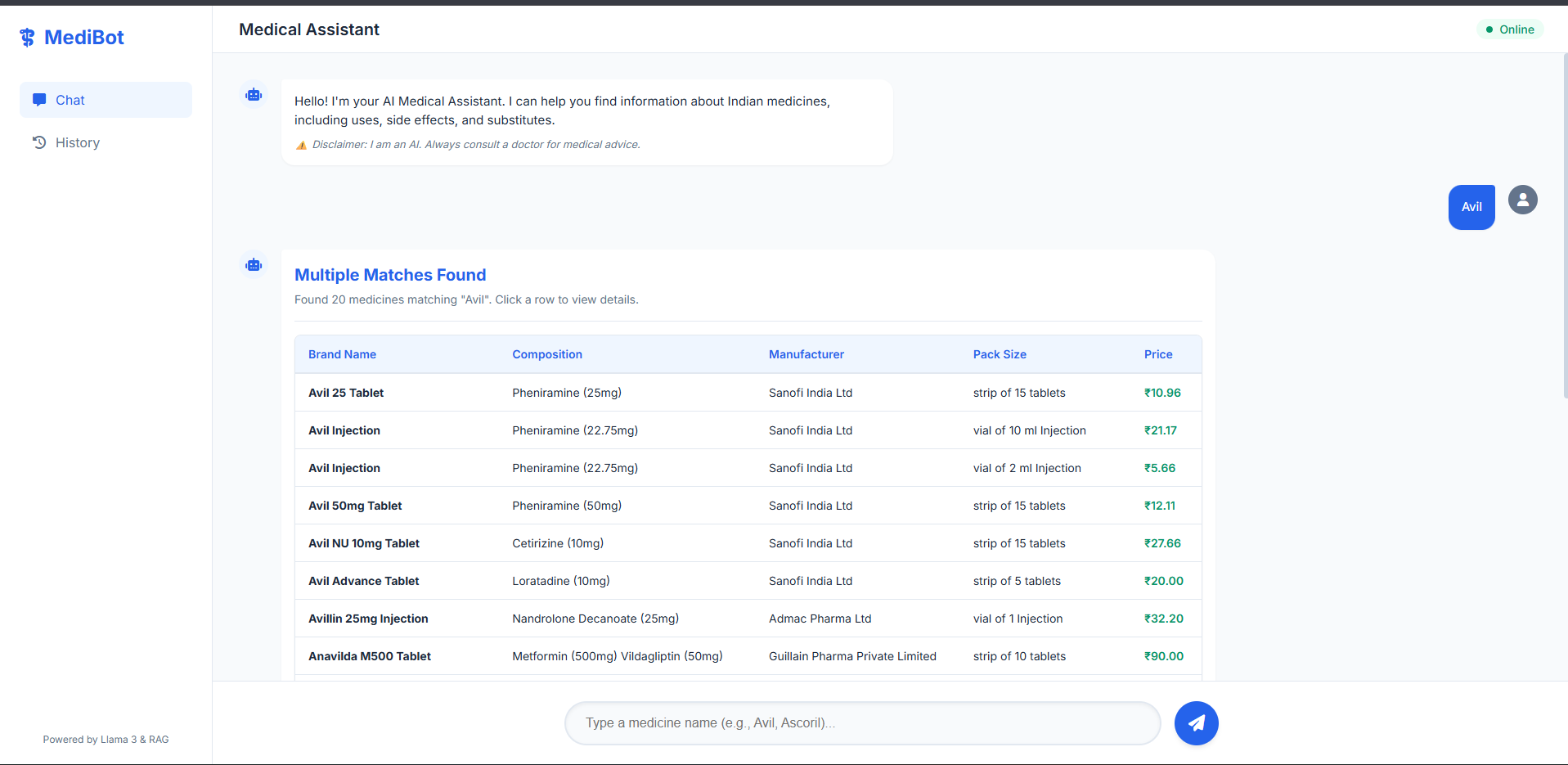
from the list from dataset. User can click on a drug name and press enter for detailed info
-
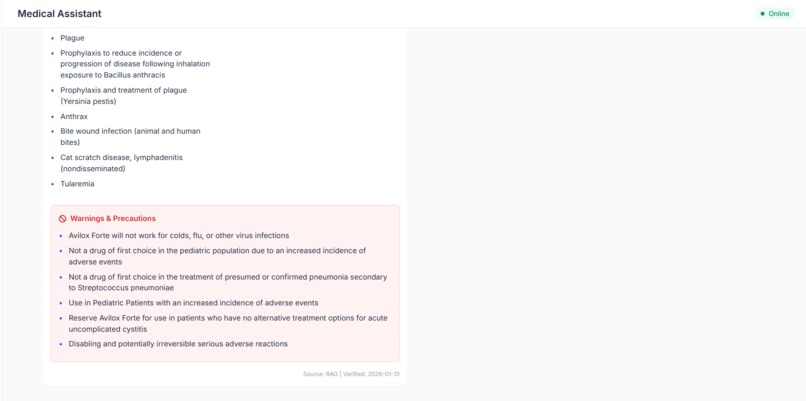
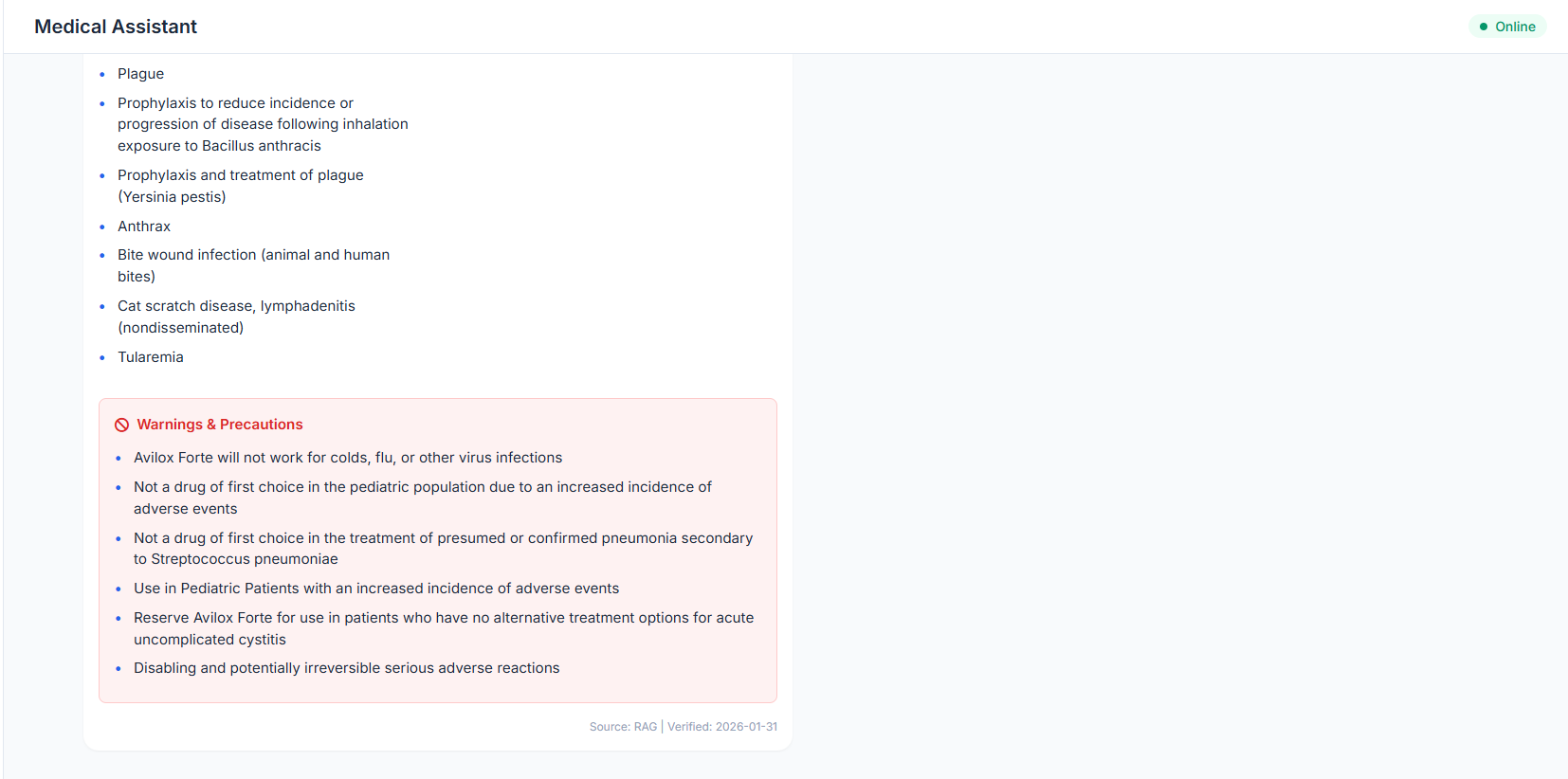
provides price, packsize,manufacturer,medical uses, side effects, warnings and precautions and reimbursement info
Agada: Your Digital Antidote
Digital Medical Representative – An AI Agent for Healthcare Professionals
Inspiration
Healthcare professionals in India operate in fast-paced, high-stakes environments where timely and accurate medical information is critical. While basic drug information is widely available, essential insights—such as drug interactions, reimbursement likelihood, and Indian market–specific context—remain fragmented across multiple sources or locked inside static databases.
We were inspired to build Agada, a Digital Medical Representative that goes beyond simple search. Instead of returning isolated facts, Agada understands, verifies, and synthesizes medical data to deliver actionable insights tailored to Indian healthcare workflows. Our goal is to bridge the gap between static pharmaceutical datasets and the dynamic, safety-critical nature of real-world medical decision-making.
What It Does
Agada is an intelligent medical assistant designed to support doctors and pharmacists with reliable, safety-first information.
Comprehensive Medical Uses
Aggregates indications from multiple trusted medical sources to present a complete and clinically relevant view of what a drug treats.Critical Warnings and Precautions
Explicitly extracts contraindications, pregnancy warnings, and drug–drug interactions, ensuring patient safety is always prioritized.Smart Reimbursement Estimation
Instead of relying on static reimbursement tables, Agada uses a heuristic-based approach. It analyzes a drug’s classification (generic vs. branded) and price point to estimate eligibility tiers under Indian government schemes such as Ayushman Bharat and CGHS, closely simulating real-world insurance desk decision logic.Hybrid Retrieval Strategy
Prioritizes verified local datasets (CSV) and seamlessly falls back to strictly curated web sources (such as 1mg, Apollo, and MedlinePlus) when local data is unavailable.Safe Answer Synthesis
Uses Llama 3 (via Groq) to read multiple medical sources and generate concise, source-grounded summaries without hallucinating facts.
How We Built It
Agada is built using a Hybrid Retrieval-Augmented Generation (RAG) architecture to ensure accuracy, speed, and reliability.
Technology Stack
- Backend: Python, FastAPI
- Large Language Model: Llama 3.3 70B (via Groq API) for low-latency inference
- Search Engine: DuckDuckGo Search with strict medical-domain filtering
- Frontend: HTML with a responsive, medical-grade UI
- Data: Custom Indian Medicine Dataset (CSV) combined with real-time web retrieval
Architecture Flow
Intent Recognition
The agent analyzes the user’s query to determine the required clinical and contextual information.Local Knowledge Base First
Queries a curatedknowledge_base.jsonand CSV dataset containing verified Indian medicine data.Smart Web Search
If required information is missing, a controlled web retrieval process is triggered with an exponential backoff mechanism to handle rate limits gracefully.LLM Synthesis
Retrieved content is passed to the LLM using a strict system prompt to extract structured, source-grounded medical data.Smart Merge
Reliable static data (price, manufacturer) is merged with dynamic web-derived insights (warnings, precautions) to form a comprehensive response.
Challenges We Ran Into
Web Rate Limits
Reliable medical sources frequently trigger search rate limits. This was addressed using a robust exponential backoff retry strategy to handle202rate-limit errors.Data Consistency
Combining structured CSV data with unstructured web content required careful trust boundaries. Static fields are sourced from datasets, while descriptive clinical fields rely on web extraction.Hallucination Risks
To prevent fabricated medical facts, strict source-grounding rules were enforced, allowing the model to extract only information present in retrieved snippets.
Accomplishments
- Sub-Second Latency achieved through Groq’s LPU-based inference
- Robust Error Handling via self-healing web retrieval logic
- Safety-First Design ensuring warnings and precautions are never skipped
- Seamless User Experience hiding backend complexity behind a clean interface
What We Learned
- Hybrid systems outperform purely static or purely web-based approaches
- Low latency is essential for trust in clinical settings
- Medical AI must prioritize contraindications and safety logic by design
What’s Next for Agada
- Multilingual support Hindi, Telugu, Tamil and other Indian Languages for broader accessibility
- Prescription OCR for instant digitization and analysis
- Real-time pharmacy stock integration
- Voice-based interaction for hands-free clinical use

Log in or sign up for Devpost to join the conversation.